American culture, American People., Culture, Media, Philosophy, Technology, United States

Epilogue

see

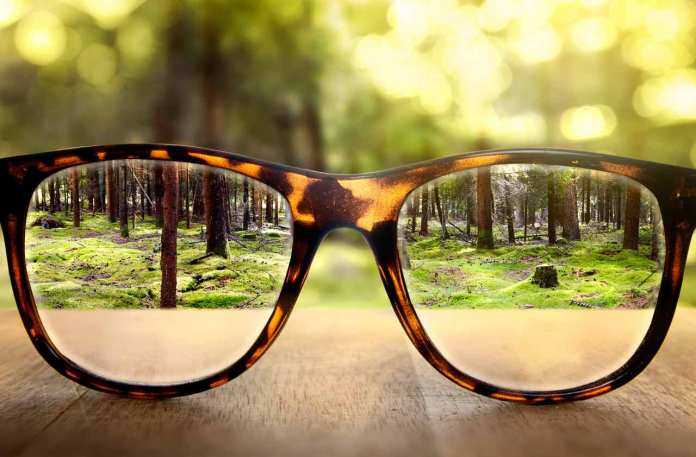
“It’s not what you look at that matters, it’s what you see.” – Henry David Thoreau

Several weeks ago, my oldest child turned and asked me a question I’ve been secretly asking myself for months.

“Why haven’t you written anything lately, Dad?”

I stared blankly back at him, my mind firing off excuses – and truths – as to why I had not done any writing since January. I wanted to give a good answer, something philosophical perhaps.

“Just haven’t, buddy,” I said instead.

Wouldn’t Hemingway would be proud of that eloquent answer?

The truth is I kind of already knew why I had not put anything in this space since I bombastically quit Facebook in my last prose.

In fact, I had drafted about five or six pieces in the months since, but deemed them all too heavy, too poor in quality or just gave up out of lack of motivation to finish a post.

I had something on the horrible events in Las Vegas and our loss of humanity in these senseless moments, I had a piece on grief, a piece on Fake News, and one about all the trivial pursuits we chase in life.

And I shared them with no one.

If I’m honest with myself, the lack of writing over the past year is largely due to feeling like all I’d be doing is repeating the same narrative I’ve spent the last five years writing about: society, social media and the loss of identity (both self and national).

Was this writer’s block, or just boredom?

And then it struck me: This blog was really more like a book – or at minimum a long thesis – on a specific topic with chapters done in real time over the previous four or five years as posts. It’s garbled and not in actual hard copy form, and would require massive amounts of editing, a publisher and probably a hundred other things, but look! I wrote a book!

And any book, as such, deserves an epilogue. A director’s cut outtake of the proceedings. So, let’s let this entry serve as an epilogue to this site over the past four or five years.

Here’s why this thread has to stop for me: I am sick of myself when it comes to writing about social media and its impact on our culture. After all this time, I think I’ve made my feelings known.

But here’s why this topic captured me for such a long period of time: I believe what I write, or at least maybe just I want to. Above all, I want it to be genuine. As I’ve claimed many times, we are not the perfect robotic creations our social media feeds make us appear to be.

You see all the smiling photos, the congratulations, the “I’m so proud” comments, and miss the moments of breakdown in between where life is not nearly as pretty. Because life is not always pretty, and it cannot be hashtagged. And we are beautiful, inherently flawed, imperfect human beings.

And those imperfect human beings do horrible things to each other. Looking back, this began on my old blog, with the overly thought title of The Necker Cube. The site had been a platform for me to keep writing about sports after my sports writing career ended (columns, blogs, magazine).

But I grew tired of the sports narrative and the Sandy Hook tragedy caught my attention in such a moving and painful way that I felt compelled to comment on it.

(Note: if you click on some of the older links to these posts, be aware they were pulled from said former site and have not been edited for spacing – i.e. the lines run on strangely).

The entry prior to a post on the events at Sandy Hook, called The Growing Divide, was first entry in this so-called book. And the archives show a writer flipping back and forth for a time between social commentary and traditional sports commentary. Sometimes I even mixed the two.

And then the Boston Marathon bombing happened and I began thinking about Switzerland. I dealt with the backlash of the Ice Bucket Challenge, and Miley Cyrus leading a mini-Molly revolution of “we do what we want” angst.

There was the time I wrote about (one of probably 20 times I did) how we’d become obsessed through social media of giving our opinion on someone’s else’s opinion (what a wormhole). I spent some time holding us accountable. And gave that narrative some additional thoughts. Basically, a lot of it can be solved with kindness.

But I also tried to unwrap the media’s growing fascination with itself and the media’s ever-expanding use of rumors and unnamed sources. All this in an effort to be first – or to incite ratings and division. And we spend a lot of time being divided. There are also the times when the media blurs the lines of reporting, journalism and the monetary backers propping up these outlets.

Part of my problem has been that I just did not want to see us get swallowed by the groupthink and mob mentality. We’ve spent a lot of time on selfies and allowing ourselves to be marginalized. And that bubbling melting pot has been on the verge of boiling over. In fact, one of my last pieces in this series was after the election (and was the second-most read post I’ve ever made at 1,100 views).

Sadly, it has gotten worse – somehow.

Yet, some of my favorite pieces were about my own family and life in raising a large family during this small era. At times, it was like a dark comedy, cause you have to just laugh at the absurdity of it all. At others, it was a serious test of the blurred lines between media responsibility and parenting, with a key example of a Super Bowl Sunday that went in a direction I did not expect. And there was a life-changing family moment that has ripples personally to this day, that many can relate to: the loss of a loved one. (That one, by far the most popular thing I’ve ever written, has garnered over 1,200 reads to date.)

The biggest takeaway? Be present in your life. Put the phone down, maybe not all the time, because that might be unrealistic in late 2017. But being more aware of your surroundings and engage. A couple weeks ago, we had friends over and I’m not sure the four of us looked at our phones the entire night other than to play music. It was glorious.

Over 2.8 billion people are on social media, 1.9 billion on Facebook alone. And roughly 75 percent of all Facebook users spend at least 20 minutes per day on the platform.

It is a trap to make your life appear only as these shared snapshots of happiness. That has an impact on you – and those in your social media sphere.

First, it creates an illusion of you that cannot be sustained. You come to believe in all the “good” so much so that when something even remotely troubling happens, it becomes earth-shattering. All the while, what you were posting and sharing about yourself was a grand illusion, one that you bought into as much as everyone else. We seem to only care if people look, not if they actually see.

Secondly, to those in your sphere, it creates an illusion that they subconsciously cannot compete with either. I am not terribly certain when exactly this occurred in social media, but it’s certainly there, and there is really no denying it.

An opposing view might hold that it is equally unrealistic to expect people to post “bad” things, for fear of being viewed a malcontent or someone just out for sympathy. And there’s probably truth to that, too.

But when it is all said and done, do any of these things matter? If I’ve learned anything recently, it’s that I will be far more prone to wishing I had five more minutes with my children, my wife, my family and friends that I will wishing I’d let my two cents on Fake News be known.

All that said…you cannot starve yourself of the things that make you you, to go too long without doing what you enjoy. The reason I haven’t been writing is because, well, I haven’t been writing. But I now realize that’s just because I need a new topic. The longer it goes without writing, the farther that piece of me gets away from who I am today.

I must find a new voice in my writing. Because the social media shaming shtick – while still valid – has been played out in this space. And my hope is this post serves as my last reference, my epilogue, to that being an ill of the world.

In a way, I think we all need to change our voice and find new passions and interests existing alongside our old ones.  You can still be you, but life is meant to be explored and pushed, not compartmentalized.

We called our ancestors settlers, but really that isn’t accurate at all. We are the settlers. Settling in and doing the same old things, without pushing ourselves to be a part of a solution – either just for ourselves (and what ails us spiritually, mentality or physically) – or for the greater world we’re a part of.

I reject that notion that we must settle within ourselves and wait for something to happen. This year, I am thankful for a lot of what I’m always thankful for. But maybe I just take it less for granted that I did before.

After a year of searching, I realize I’ll always be searching in small ways, big ways and all the ways in between.

As the quote at the top states, from Thoreau: “It’s not what you look at that matters, it’s what you see.”

So maybe I will find a new voice soon and keep writing. Or maybe I won’t.

One thing is for certain: It is definitely more about the journey – and what we see – than it is what we are looking at.

Time to reawake my soul, open my eyes to see.

Onward – and upward – we go.

Standard
American culture, Facebook, Uncategorized

The Book Without My Face

facebookwarriors1-640x380

In the end, it will not matter or make the least bit of difference to anyone but me.

Yet I believe it will vastly improve my life.

And that is why I’m leaving Facebook.

Starting now, my detox begins. And it is an addiction, no doubt about that. We pretend it is not, but it most certainly is. Whether it’s just deleting the app, or entirely deactivating my account, one way or another it needs to be out of my life for at least a good long while.

My life has not been enriched by Facebook. My faith has not been enriched by Facebook. My family has not been enriched by Facebook. My relationship with my spouse has not been enriched by Facebook. And I certainly interact with the platform far different than I do the other forms of social media I use.

But I finally reached the point where I am just tired. Tired of the correctness, or lack thereof, tired of watching what I say and how I say it because this friend is a liberal and that friend is a conservative, or that person in my feed hates this sports team and I don’t want to start World War III on anything. Tired of wondering if it’s my page and I can say what I want, or if because I post in the public sphere I’m fair game.

I am tired of pretending that most of the people in my feed are my friends to begin with. And I am tired of pretending that I am their friend, too.

That’s meant more wistfully than sarcastically or hurtfully.

At some point, we probably were friends. But there is a reason that before Facebook we didn’t remain close or that those friendships fell aside. For a while, it was fun to see from afar what people I used to know were up to. But reading a post or seeing a picture doesn’t really tell me who someone is now.

I truly wish I knew some of the people in my Friends list better, saw them more. Some of them, I forgot were there, honestly.

But regardless of status, in my mind, this is charade. We’re just pretending to know enough and care a little. My phone is a internet device, with fewer phone calls and texts to take or read than time spent app scrolling. But it brings out some of the worst reactions I have ever seen.

The name of the app itself is Book of Faces. Ever heard to not judge the book by its cover?

Because all Facebook seems to actually do is put even more labels on us, not knowing who the real person is behind the likes and shares and tagged photos.

It would take someone far greater and smarter than me to do the necessarily research and analysis on this, but is there a small chance that part of the apparent growing divide in this country – which at the moment feels like the Grand Canyon – could be caused by our use of social media?

Not only that, but I get tired of myself sometimes. I can’t imagine what other people thought when I mindlessly clicked like on about 25 posts about the New England Patriots winning the AFC Championship Sunday. (Yes, in case you didn’t know, I am a Pats fan – but let’s not open up that can of worms).

fb.jpg

Point being, I just clicked “Like” on every photo I saw. Over. And over. And over. Without even really thinking, “Hey, this is going to show up in everyone’s feed who hasn’t already hidden you.” And that only matters because others, almost with a carnal reaction as well, will inevitably judge you on your likes, your posts and shares.

Lately, it has gotten worse. Now I feel as though what I like, what I post, what I share – or more importantly, what I do not like, post or share – is somehow the only representation or part of me that people see.

And it’s not that that is unexpected or that I’m chiding anyone who’s been guilty of doing that. I have done it, too. We’re humans. We process what we see and react to it. We can’t help it.

But it’s incredibly dangerous for so many reasons. We are not who we always appear to be, for better or worse. And our reactions run the gamut – from idolizing people or couples who we think are “perfect” to despising those we find that do not align with our already rooted bias’.

Again, this somehow makes us feel like we know someone, when we don’t. Facebook has created a mini-celebrity culture, just like the one in Hollywood where the message is controlled and everyone appears a certain, packaged way.

As I’ve written before, I am incredibly guilty myself of not keeping up with my friendships the way I should have or wanted to. But it’s also a two-way street. All I know is that my friendships are worse because of Facebook and the lazy idea that it fills in the gaps.

If we want to truly fix what ails America, it starts with becoming more humble and kind. We treat strangers horribly, but possibly that is because we started treating our friends like strangers first.

I am not naïve. I do not believe my simple decision to leave Facebook will make even the slightest of ripples. The machine will keep turning come tomorrow morning. People will continue to start verbal wars with each other about some of the silliest and inconsequential things, typing things they would never say to someone’s face.

But now, it just won’t include me.

It isn’t necessarily Facebook or social media in general that is bad. It would be tough and certainly irresponsible to blame a program for all this (unless we’re talking about TRON, which we can do, by the way – just give me a call.)

But by and large, social media has given an easy out to the rise of cynicism and criticism. It has provided a megaphone to a platform for a whole different kind of bullying. We like to think and pretend this is teens pressuring classmates. However, we adults make them look boring.

I have watched how we’ve responded to elections, general news, social issues, marches, to statements of opinion and I’ve come to the conclusion that we are worse than our children simply because we cannot handle it if everyone does not agree with us. We cannot even pretend to objectively hear someone else’s opinion because if it disagrees with ours, then we come out with verbal pistols firing like it’s the climax scene in Young Guns II.

And I’m not afraid to admit all of this serves to negatively affect me. I realize that I have allowed someone’s comments or posts to impact my opinion of them. Whether it should or should not is both parts irrelevant and up to whatever values or morals I hold to be important. But the point is, I am letting this platform dictate my opinions without spending the time to hear more about why someone thinks that way. Which is just lazy.

If we can recall such a time without social media, we spent time talking in depth about something. The pictures we shared weren’t captioned, there was a story to them. And hearing the story, seeing the form of emotion on someone’s face telling the story made it a connection point, which built bonds.

We all have enough to worry about in life. It is too short of a ride. Why spend it dealing with the decorum and unwritten rules necessary to circumnavigate a simple post on social media? Why spend it knowing everything and nothing about someone at the same time?

I probably sound old. I probably sound nostalgic for something that perhaps never really was.

So be it.

I know who I am, but I fear we are not taking the time to be present and to build our friendships and relationships because we’re too busy scrolling our News Feeds and posting selfies.

I kind of want people to wonder what I’m doing, what I’m up to – and then if they are inclined – reach out to me for lunch or to hang out and find out for themselves. And I should be willing to do the same for them.

To do that, I think I need to take my Face out of the Book. It’s perhaps the only way for me to truly have friends that know who I am, and not just my latest profile picture.

In the end, it probably will not matter or make the least bit of difference to anyone but me.

So be it.

Standard
American culture, Communications, Society & Culture

Emoji’s & Emotions

Earlier this week, after finishing a family dinner, my wife and I randomly started listening to songs from our younger days while cleaning up.

Acting goofy at first, we probably looked like Ferris Bueller belting out some tunes in his shower at the start of a big day off. We picked a lot of fast paced songs, knowing it would draw some attention from the audience (OK, so it was our kids) if we kept up with the lyrics.

ferris-bueller-singing-in-the-shower

“You know a lot of words to a lot of songs, guys,” said our sweet-hearted 8-year-old daughter.

This comment sparked a conversation about how the words and lyrics to these old songs (weird to say, since most of them were late 90s and early 00s country songs) meant something different to both my wife and I.

As we sang in harmony (well, kinda), our daughter sat and stared for a little while. I could read her mind, and briefly, she seemed impressed that we had remembered and memorized the subtle voice inflections of each song.

Soon enough, her fascination ended and she went back to playing with her younger brothers, who were apparently caught in a game of home many pairs of underwear and ball shorts they could wear at once. They nicknamed themselves Capty Underwears and Capty Shorts, so clearly they weren’t listening to the songs to begin with. (And yes, this what 6-year-old and 3-year-old boys tend to do.) Our eldest son, turning 13 this Sunday, however, listened to the songs, but his eyes never came up from his iPad.

There was one song in particular that we listened to that made me realize how much our society has changed due to the technology advancements of just the past 10-15 years.

As my wife selected The Dixie Chicks “Travelin’ Soldier,” the overall themes found in the tragically sad love story of a young man sent off to Vietnam and the young girl he’d wrote letters to strike a different kind of chord with me.

It is painfully obvious that we’re drifting apart in our communications with each other. I have tackled this topic before, but I must admit, there is a hint of sadness within me that envelopes each advancement in technology and communications.

0418_couple-texting_sm

We don’t write love letters anymore.

We text emoji’s and short, grammatically incorrect phrases. And then we wonder why people don’t “get us” or wonder why we have a hard time communicating in serious relationships.

We don’t visit or call as much, we text and send Facebook messages and post on digital “walls.” And then we wonder why we don’t see our friends anymore.

Never has there been a more appropriate term than a Facebook “wall,” because in essence, I’ve come to realize that is truly what social media does: it builds walls.

We may be more “connected” than ever before in human history, but emotionally and spiritually, we are more disconnected than we can possibly imagine.

Last week, I read this story in the New York Times on the world of Middle School Instagram. Both fascinated and terrified, I couldn’t believe the emotional turmoil that takes place in the world of 7th grade girls and boys over who follows whom, their follower to followed ratios and who is tagged in each delicately planned post.

Look, I remember 7th grade. It’s no picnic. Hormones raging, self-doubt waging a war on perception versus reality. I cannot imagine having to do it in this social media driven world.

When we examine our exposure to and on these channels of communication, we come to find that we’ve often revealed too much for public consumption. I’ve heard many friends say this, and I agree: Had Facebook and Twitter been around in the 90s, I’m not sure I could get a job or be very well regarded today.

It’s not that I did anything illegal or terribly bad, it’s just that the whole world didn’t know about me and my buddies toilet papering a house in the fall of 1997, or the Spring Breaks in Florida, or…you know, I think I’ve proved my point.

It’s not that everything can be shared now so much as it is that not everything should be shared now.

Those private moments between you and some friends, you and a date, you and your wife or loved ones, those are yours. They build bonds and form deep friendship and companionship because you and they were the only ones to experience it, to know what it was like to be in that moment in time.

If you share every moment, trivial or significant, what is left to stand out? Why should the person who sat next to you in freshman algebra, but you haven’t spoken to since, well, freshman algebra, get to share that?

All I know is that I used to have deep, meaningful, philosophical conversations with several people who once meant a great deal to me – and still do. Mentors, family friends, buddies. For quite some time now, that has given way to text messages and birthday posts on a wall, joined by hundreds of other “friends” doing the same.

Time, distance, whatever the case may be, I miss those conversations. I miss those friends and mentors. My fear is that too much time has passed, too much left unspoken. Now, those relationships have been forever changed and altered. All because we stopped talking and started taking the time to take the time.

One of the strongest points of my relationship with my best friend, who happens to be my wife, is our commitment to talking. We started out talking in a college history class in the fall of 2003 and really haven’t shut up since.

I wrote her poems, she left notes on my truck windshield. I keep the first one she ever wrote in my wallet to this day.

note

For generations over, the world has communicated through talking face-to-face or with pen and paper. We had the time to thoughtfully prepare a letter, or a note.

Now, we can barely text 10 words with our thumbs without losing interest. We’re lazy in our friendships and relationships and the cracks are showing.

In the spaces in between TTYL and C YA SOON, lies what is unspoken, what is implied, what is missing. We’re connected, but we’re not connecting. I have fewer new memories with these family friends, buddies and mentors. While no doubt brought on by the busyness of life, we are fractured by what has not been said, what has not been mended or fixed, what lack of time has wrought.

As smiley face cannot replace a face with a smile. LOL cannot replace an a friend actually laughing out loud. These things are just meant to be placeholders until we can meet or talk again. Except for the part where we aren’t really getting together again.

Tonight, and for many more days and nights in the years ahead, my wife and I will try to combat the technological grip on societal interactions through our children. We’ll play music and listen to the words.

We will gather at dinner and talk about our days, our experiences, our frustrations and our successes.

We’ll try to get them to put the phones down and turn the TV off. We will encourage them to write notes and call their friends.

Emoji’s don’t equal emotions.

I’ve got a letter in my wallet that reminds me of that.

Standard
American culture, Life, Logic, Philosophy, Politics, Uncategorized

Upshot with a Downside

And….it just happened.

Another one of those, check yourself before you wreck yourself moments in modern day America.

dunce-capThe New York Times announced yesterday a new site, Upshot, which will essentially explain how to read the news that you, um, well…read. Aside from the whole Globo Gym vibe, what’s not to like, right?

According to their statement, Upshot believes many people do not understand the news as much as they would like [read: apparently we’re idiots]. We want to grasp big, complicated stories – like Obamacare, inequality, political campaigns, real estate and stock markets, but we’re just incapable of doing so, they say.

So the good folks at the totally cool, non-egotistical Times are going to help us all out in order to allow us the privilege of carrying on a conversation with family, friends and co-workers.

Sweet! Thanks, NYT!

Syrup-y sarcasm aside, I do see one reason to do something like this. We’re in the midst of a golden age of data. We’ve got data about data about how we react to data. Sites like FiveThirtyEight are giving us charts, numbers and graphs about all kinds of trends in science, economics, education, politics and sports.

If you truly want to know the numbers behind something – anything – now is your time to bask in the knowledge those numbers exist in droves. The only problem is we cannot keep up.

Before we can comprehend and understand something, there is a new hot topic just waiting to be data-driven into your newsfeeds and give you a headache – to which the data totally will tell you how many Tylenol you should take depending on the placement, angle and duration of said headache.

But there is another problem with the age of information – or several.

Do we need it? I mean, ALL of it? What are we doing with all this newfound information? And how can this education compete with our other obsession? You know, the one where we are celebrity-crazed and self-serving our own interests?

getty460x276Case in point: suppose the data told you that social media was awful for you, would you quit? Or that HBO programming was written to promote a set of Illuminati based ideals? Or what if they said it is unhealthy to have more than 150 friends on Facebook?

What if some set of analysis told us that all of this was trivial and meaningless?

Or how about this one: say some information is unearthed that proves we were better off emotionally in the 1830s, 1950s or 1980s and that all this technology, this rapidly evolving world is actually hindering our enjoyment of life?

Data talks, but we don’t always have to listen, right?

Over the past few years, I’ve been accused of perhaps being a bit too idealist. Generally speaking, I can understand why.

Nowadays, you cannot be too positive. It does not jive with the vibe. Anger, resentment, hostility bring reaction. And as Scott Van Pelt of ESPN said recently on his radio show, about Toronto mayor Rob Ford, it serves as no better proof that the best thing to be is famous, because it brings a reaction.

And we react the most to this culture of celebrity and negativity. Whoever is stirring the pot doesn’t matter as much the fact that we allow it to be stirred.

Which is entirely the reason why writing like this doesn’t get a push for eyeballs from The New York Times or Grantland: it’s not the trending, data-driven, analytical pieces being devoured and shared. Nobody wants to read it, they say.

By no means am I lamenting my status or place in this wired, literary world.

In fact, I am quite content with leaving these pieces for some future generation to unearth : “Look at this guy, it was like he time-traveled 60 years into the future and tried to convince people to proceed with caution and appealed to their common sense and values! What a maroon – those people needed Upshot to explain the news for crying out loud!

The truth is, it is a wired world – and it’s hard to get by with a smile. (Thanks to Cat Stevens for the inspiration to that hokey line.) Regardless, it remains: positivity at best seems to sell a product. Tony Robbins and quite a few out there make a good living encouraging others to stay positive.

That has never been the point of this, though.

Our contributions to society at large, to life in general, do not have to be based on a data set, or be outwardly public and self-serving.

We continue to do ourselves an injustice by ignoring the tipping point, you know, the one where we are farther and farther removed from the crux of our core values. But those are not punch lines, they should not be used as psychological tools.

In the film, The American President, Michael Douglas’ character, Andrew Shepherd has a great retort about how you win elections:

“You gather a group of middle-aged, middle-class, middle-income voters, who remember with longing an easier time, and you talk to them about family and American values and character.”

The response was intended to vilify the opponent who had gone on personal attacks against him, or to address the general perception of American politics in the 1990s and winning elections – which is still very much true today.

But the stark reality is what was missed in that quote, which is that there is truth in it. On some level, it is indeed what people are looking for. It is what might win elections because it is what people actually want: A time where things moved just a shade slower, trusted easier, worried less.

Values and character are not ideals to be strived for, but instead to be lived. They are proven through prudence, rationality, frugality, respect and pragmatism. In short, none of the things we truly are currently in society as a whole.

We assume that all this information will lend us a greater understanding or perspective on any number of topics, certainly of humanity and our role on this planet. It will not, because in some way, the message of Upshot is true: we do not understand everything. We cannot.

We were never probably meant to.

But what we can do is use this data and information to better ourselves. And if we are able to accomplish that, to make our lives better individually, then we’ll gradually make this world a better place, too.

Now that’s an upshot with no downside.

Standard