American culture, Life, Logic, Philosophy, Politics, Uncategorized

Upshot with a Downside

And….it just happened.

Another one of those, check yourself before you wreck yourself moments in modern day America.

dunce-capThe New York Times announced yesterday a new site, Upshot, which will essentially explain how to read the news that you, um, well…read. Aside from the whole Globo Gym vibe, what’s not to like, right?

According to their statement, Upshot believes many people do not understand the news as much as they would like [read: apparently we’re idiots]. We want to grasp big, complicated stories – like Obamacare, inequality, political campaigns, real estate and stock markets, but we’re just incapable of doing so, they say.

So the good folks at the totally cool, non-egotistical Times are going to help us all out in order to allow us the privilege of carrying on a conversation with family, friends and co-workers.

Sweet! Thanks, NYT!

Syrup-y sarcasm aside, I do see one reason to do something like this. We’re in the midst of a golden age of data. We’ve got data about data about how we react to data. Sites like FiveThirtyEight are giving us charts, numbers and graphs about all kinds of trends in science, economics, education, politics and sports.

If you truly want to know the numbers behind something – anything – now is your time to bask in the knowledge those numbers exist in droves. The only problem is we cannot keep up.

Before we can comprehend and understand something, there is a new hot topic just waiting to be data-driven into your newsfeeds and give you a headache – to which the data totally will tell you how many Tylenol you should take depending on the placement, angle and duration of said headache.

But there is another problem with the age of information – or several.

Do we need it? I mean, ALL of it? What are we doing with all this newfound information? And how can this education compete with our other obsession? You know, the one where we are celebrity-crazed and self-serving our own interests?

getty460x276Case in point: suppose the data told you that social media was awful for you, would you quit? Or that HBO programming was written to promote a set of Illuminati based ideals? Or what if they said it is unhealthy to have more than 150 friends on Facebook?

What if some set of analysis told us that all of this was trivial and meaningless?

Or how about this one: say some information is unearthed that proves we were better off emotionally in the 1830s, 1950s or 1980s and that all this technology, this rapidly evolving world is actually hindering our enjoyment of life?

Data talks, but we don’t always have to listen, right?

Over the past few years, I’ve been accused of perhaps being a bit too idealist. Generally speaking, I can understand why.

Nowadays, you cannot be too positive. It does not jive with the vibe. Anger, resentment, hostility bring reaction. And as Scott Van Pelt of ESPN said recently on his radio show, about Toronto mayor Rob Ford, it serves as no better proof that the best thing to be is famous, because it brings a reaction.

And we react the most to this culture of celebrity and negativity. Whoever is stirring the pot doesn’t matter as much the fact that we allow it to be stirred.

Which is entirely the reason why writing like this doesn’t get a push for eyeballs from The New York Times or Grantland: it’s not the trending, data-driven, analytical pieces being devoured and shared. Nobody wants to read it, they say.

By no means am I lamenting my status or place in this wired, literary world.

In fact, I am quite content with leaving these pieces for some future generation to unearth : “Look at this guy, it was like he time-traveled 60 years into the future and tried to convince people to proceed with caution and appealed to their common sense and values! What a maroon – those people needed Upshot to explain the news for crying out loud!

The truth is, it is a wired world – and it’s hard to get by with a smile. (Thanks to Cat Stevens for the inspiration to that hokey line.) Regardless, it remains: positivity at best seems to sell a product. Tony Robbins and quite a few out there make a good living encouraging others to stay positive.

That has never been the point of this, though.

Our contributions to society at large, to life in general, do not have to be based on a data set, or be outwardly public and self-serving.

We continue to do ourselves an injustice by ignoring the tipping point, you know, the one where we are farther and farther removed from the crux of our core values. But those are not punch lines, they should not be used as psychological tools.

In the film, The American President, Michael Douglas’ character, Andrew Shepherd has a great retort about how you win elections:

“You gather a group of middle-aged, middle-class, middle-income voters, who remember with longing an easier time, and you talk to them about family and American values and character.”

The response was intended to vilify the opponent who had gone on personal attacks against him, or to address the general perception of American politics in the 1990s and winning elections – which is still very much true today.

But the stark reality is what was missed in that quote, which is that there is truth in it. On some level, it is indeed what people are looking for. It is what might win elections because it is what people actually want: A time where things moved just a shade slower, trusted easier, worried less.

Values and character are not ideals to be strived for, but instead to be lived. They are proven through prudence, rationality, frugality, respect and pragmatism. In short, none of the things we truly are currently in society as a whole.

We assume that all this information will lend us a greater understanding or perspective on any number of topics, certainly of humanity and our role on this planet. It will not, because in some way, the message of Upshot is true: we do not understand everything. We cannot.

We were never probably meant to.

But what we can do is use this data and information to better ourselves. And if we are able to accomplish that, to make our lives better individually, then we’ll gradually make this world a better place, too.

Now that’s an upshot with no downside.

Standard
Life, Philosophy, Society, Uncategorized

The Tooth of the Matter

A few weeks ago, our precocious five-year-old son lost a tooth.  It was his first, but this tooth was lost unlike any other in family history: in Florida, on some side road just south of Fort Myers, in the rented mini-van, just after Mass.

drydenDarn thing just literally popped right out of his mouth. We could not locate its whereabouts, and in the midst of a family vacation-slash-destination wedding, it became a moment that passed.

But not before it was destined to become a fun mental memento. Really, at the end of a day, a week, a year – a lifetime – what is left but memories?

As I told our children driving home, in 30 years they would randomly remember something that sparks a bunch of other memories about this trip.  Perhaps it would be the bucket we took as a bathroom “back-up”. (Don’t judge.) Maybe it will be the lost tooth, or the family sing-alongs, the stop for breakfast at Cracker Barrel, the boat ride on an ocean inlet, the sunshine, and the smell of the air, a palm tree, their aunt’s wedding or the color of the couch at our condo.

But something will inevitably jog their memory, many years from now, about Spring Break 2014.

It will become just a drop into a bucket full of moments like this in their lives, which I truly hope overflows with smiles and happiness. Really, I wish that for us all.

Over the years – thousands of them – we humans have managed to create quite the environment for ourselves. We have created more types and kinds of work than our ancestors could possibly imagine.

We play with gadgets that were frankly incomprehensible just 10 years ago. We create these elaborate situations ourselves to impress upon others that we are busy, because busy in a universal modern language equates productivity, success, action.

We spend time polarizing ourselves from the world, choosing sides and wrestling with these really intense issues and topics of concern.

The older I get, the more I come to realize that we are more frequently than not alienating ourselves from the entire original theory: life is to be lived.

I think if I had my druthers – and a small fortune – I’d spend the majority of my days living. Oh sure, we all do that now – but I mean Matthew McConaughey-style: L-I-V-I-N.

And while I certainly sound as though I’ve turned into a free-spirited hippie, or someone who’s seen “Dazed and Confused” one too many times, you’re getting caught again in the semantics.

Make no mistake; there is often great value in what we all “do” on the daily. From doctors to teachers to janitors, most all of our professions, chosen or not, serve society in some way. There is certainly nothing wrong with working hard, burning the midnight oil and feeling as though what you are doing is somehow, in some way, making a difference and contributing something positive to society.

But it is a thin line between that emotion and seeing that notification number on our inboxes increase.  If we are honest with ourselves, we have reached a point in the world where we have to take mental stock of where we sit on that line. Are we pushing it in the sand? Have we crossed over it into a domain of obsession and perfectionism over a bunch of tasks that adds up to very little in the end? How can we be sure the side we are currently on is good or bad?

I might suggest it is a matter of faith. Not necessarily a matter of faith in a biblical sense, though that could be appropriate, but just faith in general.

The kind of faith that allows you to rest easy, for example, that the light will stay green. And though your eyes scan the road to verify no cars are running the red light, you put trust and faith in yourself, the rules of the road and others, that allows you to not ride your brakes and go through the intersection.

sunsetWe speak frequently of luck, of someone watching out for us or karma. No matter what you believe in, this faith tends to weaken if something bad happens. I would contend, however, this is not a matter of faith failing us or letting us down.

Something happened, yes, but not all situations have logic and reason. The same way sickness and poverty are not a punishment or a lesson or a curse. Whether or not you accept this relies entirely on your attitude and commitment to that general faith.

Will it be OK in the end? We really don’t know. But it will happen all the same.

Really, the only question in these moments is do we have the fortitude to focus our resolve?

The rest of the world calls this crazy – to believe in what you are doing when no one else does.

But this is my favorite kind of embrace of life. Who is it we are all listening to? Each other, so it would seem.

So, why are we taking financial advice from our friend that we used to sit next to in high school economics and doesn’t even know what TINSTAAFL means? Why are we taking love advice from the neighbor’s dog-walker’s-Aunt, who has been married three times?

Our situations are all generally just different enough that precedent does not really matter.

For everyone who thinks young marriage cannot last, I can show you dear friends of ours who are a shining example of how it can. For anyone that belittles your favorite movie or band, I’m sure we would mutually agree one of theirs was equally questionable.

This whole world we’ve created for ourselves inside the times we live is a byproduct of  the likes and dislikes of someone else, what’s popular and what just did not catch on. This is why wearing sandals in the winter gathers stares (and perhaps a cold): because it is just not normal.

You know what? I say wear your sandals in the winter should you want to – but not out of irony. Being different to be different is missing the point as well. Still, there is much to be praised for being different, for finding the undefined spaces between the lines and making your mark there.

Faith in oneself, in what you believe, is nothing more than a coping mechanism for getting through this world with some sense of a compass in hand. If you believe in something, then you have something to guide you. In this way, you will know deep inside your heart whether or not you are living each day with a purpose – a purpose defined solely for you and no one else.

Kind of unique, right?

This uniqueness, this independence, this idea continues to mold me, shape me and drive me.  We do not know when and where this will all end, only that it will. But in the time between now and then, what will we do to live? Not simply in just breathing and monitoring our day, completing our tasks, but to feel life, to live it?

There is great purpose in simply finding adventure in the day, in smiling, in laughing, in crying.

And yes, in losing a tooth.

Standard
Uncategorized

Win the Day

How was your day?”

A common expression, generally done out of habit at the dinner table or upon arrival home, this little phrase is the first sentence in a Cliff Notes version of your life, written each day.

What comes out is entirely up to you, each and every day.

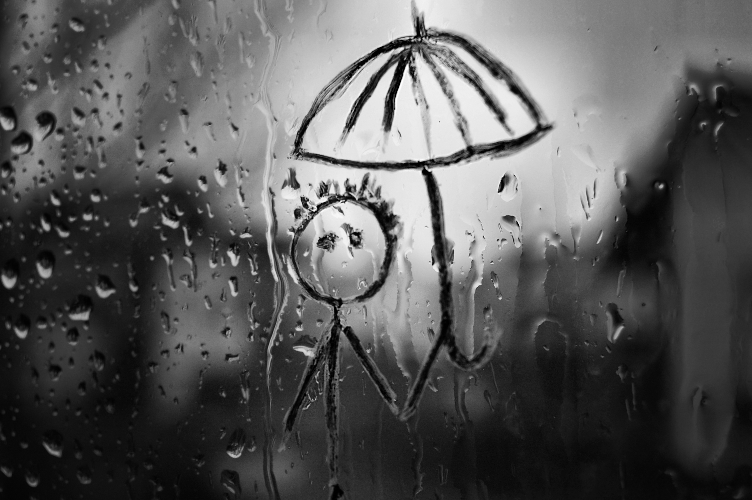
rainydayToo often than not, a series of mishaps, misadventures and stresses come tumbling from our lips. It seems that not so secretly, we have divulged that indeed, it was a miserable day.

Except, upon close, honest inspection, we realize it was not a bad day at all. In fact, most of us don’t experience too many bad days, should we properly define the term.

The problem is we defined a bad day long ago, in our first world sort of way.

The dog chewed up a toy, dinner burned and there are 455 dishes in the sink. We got angry at someone at work that didn’t do what we asked and didn’t think just like we wanted (the nerve, right?). After all, we are perfect and our way is clearly the best way, the only way.

Among my many faults, I have a cleanliness OCD wire in my brain that malfunctions constantly. I can’t enjoy anything without order in the kitchen and living room. And the more I try to let this go, the stronger the grip becomes. It is what I complain about to those that I care about. I’m half-tempted to just completely let go and not touch anything for a month to break my addiction to order and cleanliness.

We’re all guilty of this, it’s just we might have a different wire shorting out upstairs.

For some, other people trigger it, for others, politics might set them off. Could be anything, but the point is, we all have something that sets us down a path that has increasingly made the world a more difficult place to enjoy.

And only we are to blame for this paralyzing negativity that repeats itself and spreads like a disease. In fact, people you didn’t even talk to today or don’t even know are potentially being affected by your negativity – and mine – right now.

Somewhere, a friend is telling their spouse how horrible you are because you snapped at them about not going Dutch at lunch. Your brother is belittling your recent stance on gun control to your aunt, which of course led to a conversation with the cousin you haven’t seen in 10 years about the time you played cowboys as kids and used up all the nerf bullets, making you now, later in life, a hypocrite on gun control.

In turn, you talk about them as a defense mechanism.

And what does this get us? A distressed, angry society on the verge of completely flipping out until one day we do, in the most public of ways, of course, through social media or at a family dinner.

In short (too late), a life wasted.

And we’re already wasting enough of life, in the day-to-day, are we not? Consuming ourselves with gossip of either the civilian, hometown or celebrity kind, or with discussions on Mount Rushmore’s of basketball, the Dolphins locker room environment or if Apple has lost its touch because its latest gadget didn’t change your world and make you even more obsessed with playing with it and thereby ignoring your friends and family for hours on end.

These are all just distractions from the things that you’ll forget to remember when you’re old, should you be so lucky.

I read a fantastic piece in The New Yorker by Roger Angell, a 93-year-old man who still has all his faculties and clearly writes better in his 10th decade on this planet that I will ever. He speaks fluidly, and from the heart, about how much of life is underappreciated until there is nothing left but a wish for more time to appreciate it.

We’re just too busy to notice how eager we are to tell everyone how busy we are.

In truth, we were all wired wrong along the way. At some point, earlier in our lives, we were molded by a litany of different forces all impressing upon us what is and what is not important.

And most likely, it was wrong.

Yes, it’s important to be honest, to be on time, to give your best effort. Perfection is to be strived for, but can never be obtained.

We just are not perfect. And we never will be.

But hey, we’ve been told to “win” the game of life, so perfection can be obtained and will be obtained. Everything shall indeed henceforth be perfect.

Except it won’t.

Success and winning are notions based on what we perceive – what our parents and our friends and family perceived – to define those terms. Money, popularity, awards. These somehow justify that what was done to obtain them is in fact winning and success.

It’s not. We can’t define a game, what it means to win it, when we don’t even know how to play. We’re too busy looking at the scoreboard to notice what’s happening in the moment.

We’re missing it – all of us. We care more about our reputation and what is perceived to the point we don’t even know who we are.

The irony is, while we revel in one breath the success of individuals like Steve Jobs, Mark Twain or Albert Einstein, who thought and acted differently from the crowd, in the next breath we’re heartbreakingly removing those very elements from our lives and those closest to us.

“Act right!”

“Be normal!”

“Don’t embarrass me!”

After you are gone, the world will remember bits and pieces for a while, kept alive by those who knew you, knew of you and that you left your imprint on.

In short, as the saying goes, people remember how you made them feel. They will not remember what kind of gas mileage your environmentally safe car got, or that time your two-year-old pulled a total two-year-old move and threw a tantrum in the toy aisle of Target in front of everyone.

In reality, it wasn’t that bad. A minute or two of screaming on a random Thursday morning, and it wasn’t so much in front of everyone as it was an elderly gentleman four aisles over that you only noticed when he walked by four minutes later.

In short (too late, again), we tend to blow things a bit out of proportion.

sunset1And when you are gone, people might remember that, but only briefly.

The point is, we spend an inordinate amount of time looking at the ground instead of up at the sky. And if you take that as a faith-based metaphor, so be it. If you take that as a more direct reference to an artistic and emotive  world, where there is more beauty in the sky – even on a rainy day – than the ground, then so be that as well.

But are we describing sunsets or potholes in our lives?

What if the world’s problems could be solved if we simply started with ourselves and our four walls? Would discussions of gun control, taxes and the dysfunctional Dolphins locker room still be as relevant or important if we all just got a little happier, took the things that really don’t matter a little less seriously?

Perhaps the Beatles were right, love is all you need.

Smile more, grumble less.

Stop counting down to the next “big day” on your social calendar and realize the ones in between make it worth the wait. Those big dates are just mile markers, but the best stuff happens in the middle, in the daily.

Forget, as best you can, the wiring in your brain telling you to not be a minute late, that this, that and everything in between are really, really, super important. It’s life. It’s kind of all important and not at the same time.

Just enjoy the ride instead of examining the fuel intake ratio.

And the next time someone asks, “How was your day?”

Well, remember it’s all in how you define the answer, not the question.

You might be able to answer that you won today.

Standard
Marcus Smart, NCAA College Basketball

The Smart Move

By now, you have seen it, right?

OK, well, so you didn’t “see” it per se, but you had a reaction to it nonetheless after hearing about it from friends and family, or seeing a .gif about it or one of the other thousands of ways that “news” is circulated in America in 2014.

marcus-smart-shoveJust know that whatever your reaction to Oklahoma State guard Marcus Smart shoving a Texas Tech fan in the waning moments of Saturday’s game, it’s probably wrong.

But by all means, tag your thoughts with #shovegate. It will give them credibility, for sure.

Once again, what happened this weekend highlighted – for what appears to be the one trillionth time – everything that is wrong with America.

Yeah, I know, I know. This is my MO, to tell you just how messed up our society is and can be and why we need to change.

What is funny is that America may be the world’s leader in secondary education. After all, it has eight of the world’s Top 10 universities. But we do not learn very well.

It seems each week we over and under react to something, blowing it out of proportion or sweeping it under the rug. We overanalyze, under analyze and reach a conclusion, a verdict, a judgment. Then, it’s over and we’re on to the terrible conditions of Sochi restrooms or something else.

And we do this in about six hours.

Was Marcus Smart justified in shoving the Tech fan? Of course not.

Look, any athlete – former has been or never was – can tell you that should you choose to pursue a path in competitive sports, you will undoubtedly hear things from fans that will not sit very well with you mentally.

Between the ages of 15-18, I heard everything you might possibly hear from opposing fans. Racial slurs, comments about parents, comments about hairstyles, dress, mannerisms, sexual preferences I didn’t even know existed and really, everything in between.

Now might be a good time to mention I grew up in a relatively tame, relatively small and relatively white (read: predominately white) community.

It didn’t matter. I have had friends, frenemies and random people that shared the floor or field with me look around with the same expression: people are crazy.

The sooner you understand that, the sooner that you make peace with the fact that as an athlete, you are the target of one motive: to get in your head and take your mind off the task at hand. Is it hard? Of course.

Should mentally unstable people, say Ron Artest, be even more mindful of blocking out literally everything they hear, feel or see? Let’s hope so. Because I am certain that for anyone over the age of about 20, there was a flashback to 2004 and the Pacers-Pistons brawl.

Many opinions – including some from my own hand – argued then and now that there was an invisible line that cannot be crossed between performer and spectator.

And Marcus Smart must understand that no matter what they say to you, you just cannot respond. He’s 19, though, so he must be allowed to repent, learn and move on.

But what about those in the stands? That same line exists for all of us spectators. How sad are we? How pathetic is this Tech fan, Mr. Orr, for saying something, anything to a college student. You are a 50-year-old man. Act like it. Why are you calling a successful college athlete with all his hair and defined muscles who has undoubtedly far succeeded what you did on a basketball floor a piece of crap?

noahIf the former has been/never was athlete in me has reared its ugly head, then I apologize. It has always been a difficult proposition to listen to those who don’t, haven’t and never will throw down a cascade of spoken abuse that most would be enraged to hear if it were being spoken to them or someone they love. Fans are short for fanatical, but that does not have to mean flat out insane and crazy, shouting, cursing and throwing up middle fingers as they calmly pass by.

So was Mr. Orr wrong? Absolutely.

Yet there remains the rest of us. And what are we do to from the sidelines? Well, by all means, let’s get involved.

Notice that we are over 600 words into this piece before race was even mentioned? Well, aside from the physical act of the shove, that became the de facto topic of #shovegate.

We are quick to turn nearly everything into a commentary on race, when in reality, this has much more to do with how we interact with each other.

Again, this problem – this dangerous line between the fans in the stands getting to unleash a torrent of verbal abuse on athletes and the inevitable, split-second reaction from someone who’s just heard enough has become razor thin in recent years.

Every situation is different. In this one, a 19-year-old who turned away the NBA to come back to college and mature more found himself in the middle of a crummy month in the middle of a crummy season that has scouts wondering whether or not he can make it in the NBA.

Add to it all the media attention to what is perceived as Smart flopping on defense to get calls and a game against Texas Tech that was slipping away and you find yourself with the 19-year-old breaking down with a superbooster screaming at him after tumbling into the crowd.

Should he have shown restraint? Should the fan?

Of course.

But were would either of them learn their lesson?

Certainly not from the melodramatic, breaking news style SportsCenter updates and the millions of people on social media who turned those five seconds into a 4-hour racial debate.

But we don’t take the time to rationalize any of this. We just react. Suspend Smart, ban the fan, belly moan the spoiled athletes and joke that the fans have it coming.

Maybe next time, before we once again belittle someone else for not thinking clearly, questioning their character or jumping to 1,000 different conclusions, we could just make the smart move and just not.  The smart move is to just shut up.

That’s the smart move, though.

And we just don’t do shutting up very well.

Do we?

Standard