American culture, American People., American Politics, Uncategorized

Bern Notice

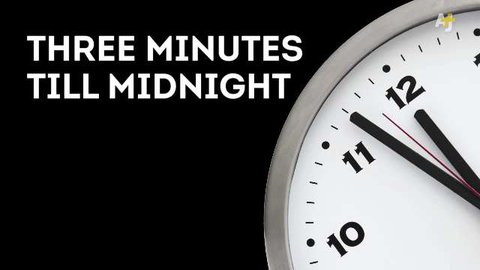
doomsday-clock

How many times can you hear it?

This is the most “important” election of our lifetime.

Are things bad? Sure seems like it. Sure feels like it.

But in the vast history of this, our planet earth, we’ve probably experienced millions of potential tipping points. The clock always seems to read somewhere between five and seven minutes to midnight.

Doomsday is just around the corner.

Propelled by a media that abuses the medium for the purposes of ratings that return a financial windfall, we’re sucked into a web of negativity. And like the sheep we are, we digest this poison and ask for more.

Essentially, we are backfeeding our future, creating a self-fulfilling prophecy of negativity across all forms of relationships. From our unique self “we” to the collective “we” as Americans.

Long before the rise of Donald Trump, we went negative. We went nationalist and extremist and chided others for not thinking like we do. It’s all right there in our social media feeds. We have been doing this dance inside America for a long time. Every time we slam somebody else we’re creating divisiveness. And over some of the most inconsequential topics imaginable – like sports or professions.

So when you act shocked how someone like Donald Trump could be the leading Republican candidate for President of the United States, you shouldn’t be.

Oh, you can be stunned by how it got this far, not vote for him, and not agree with anything he says. Because the truth is, rhetoric is more than just words when it comes from a candidate trying to be elected to one of the highest positions of power in the world.

But understand all the same we created these candidates, and the vacuum that allowed them to waltz into our lives. It’s like a bad joke: “A billionaire, two liars, and a socialist walk into a bar…” – and I don’t think we want to stick around for the punchline.

Ironically, we seem to want someone who plays nice in the sandbox, except we don’t play nice in the sandbox ourselves.
Schermata-2013-12-09-alle-10.12

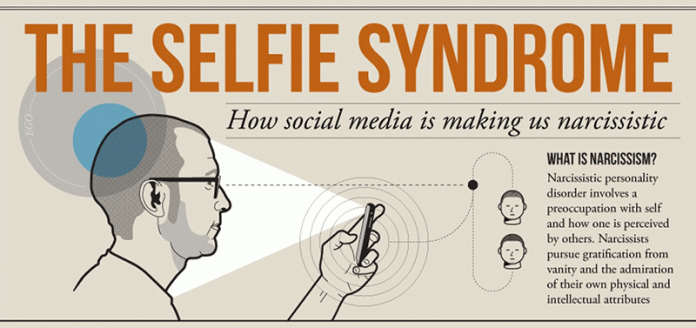
Our celebrity culture, our reality-era need for confrontation paved the way for Trump. Our own inferiority complexes made this possible. We mock Trump for his paranoia over the size of his hands, yet we take five selfies until we get the right angle so our chin doesn’t look fat.

We want to tell people to shut up sometimes. And increasingly with social media, we do. We want to call someone who annoys us, and doesn’t see things our way, something condescending, like, ‘Little Marco’ for instance.

We attack people who we think show too many pictures of their kids. We attack people who we think show too many pictures of their dogs or cats. We attack people who root for another sports team or player or coach we don’t like. We mock, we belittle, we deride with smarm and sarcasm, with passive-aggressive undertones. And then when the other party gets offended, we tell them to relax, that was “all in fun” or just “a joke.”

So, you see, there’s a little bit of The Donald in all of us, like it or not.

It doesn’t mean he’s a quality candidate for President of the United States. It means there is a very obvious reason he’s even a candidate for President of the United States.

This same analysis can be applied to Bernie Sanders. A truly shocking number of people – the vast majority of them young – “feel the Bern.”

And truthfully, this phenomenon should be far more concerning than the “Make America Great Again” reality show of Donald Trump.

The short-term and long-term proposition that millions of young Americans are flocking to the polls to vote for a white socialist in his mid-70s, who has unapologetically defended socialism all over the world, should be beyond frightening for Americans.

Never mind the truth that we’ve neglected to apparently teach millennials what socialism truly is, and what it can do. It reads like a utopia, but looks and smells like a dirty trash can filled with poo.

auf_freedom

Currently, 20 percent of the world’s population continues to live under communist regimes, in China, Vietnam, Cuba, Laos and North Korea. Not surprisingly, they also remain the largest violators of human rights in history. The opposition suppressed, detained, imprisoned, murdered.

You want to really be scared? Nearly 73% of Americans couldn’t tell you the cause of the Cold War just five years ago. That’s a question asked on the test for official U.S. Citizenship. Guaranteed, that number has gone up.

And if you are one of those, put down the Candy Crush and pick-up any text from your junior year high school history class.

How could we ever arrive at a point that we’re falling for the false sirens of socialism? Perhaps it begins with participation ribbons and trophies. We coddle ourselves. We are all special and unique in our own way, sure, but that doesn’t mean little Johnny didn’t work 10 times harder than little Timmy in order to rise to the top of the ranks. And this doesn’t just apply to sports. The valedictorian earned their As, the kid who didn’t study earned their C-.

That’s America. Or at least it was.

Now, we are an America that apparently thinks it is cool to hang out with Cuba, despite their political affiliation, despite their horrid human rights history and despite the violence and unspeakable poverty taking place in the streets outside the stadium where a baseball game was played yesterday, with our president wearing some shades and singing “Take Me Out to the Ballgame” in the stands.

The island in the sun, where everyone is completely equal, and treated equal, and lives a life of equality is a mirage. That mirage is socialism. There is no incentive. What’s yours is mine.

And forget being what you want to be. Want to be a doctor? Tough. Janitor. Want to be a janitor? Sorry, pig farmer. Want to be a pig farmer? Sorry, accountant.

You’ll be told what your role is by someone else. Identity and self-worth are stripped away. You are not an individual; you are just another person to keep the government functioning. A government that provides you with what little you have, which is the exact same as everyone else, no matter how hard you work or what you do, so you might want to watch what you say and where you say it, too. Don’t try and do it through art or music or literature, either.

Our American ancestors fought over 240 years ago for freedom from oppression and tyranny. Countries and citizens of nations the world over have begged and fought for freedom through generations, and once they got it, exposed the horrors of how fascism, socialism and communism ruined their lives, their families and their country.

But no one watches “60 Minutes” anymore, we’re too busy keeping up with Kardashians.

And now we have a majority of a generation who want to bring to that kind of political system to the ultimate beacon of freedom, the United States, just so they don’t have to pay for college or healthcare.

Never mind that it will be a college experience devoid of individual analysis and thought, where subjects and courses will be selected and pre-screened by the government…actually, wait, in socialism, is there even a need for college?

Must be why it’s free.

We are spoiled and entitled brats. Most of you reading won’t finish the 1,700 words in this blog – I know, you’ve got to get back to Facebook’s version of America’s funniest home videos.

But that is the vacuum we created that allowed us to feel the Bern.

Socialism, for in practice often known as communism, strips the mind, the body and the soul of individuality, of incentive, of self-worth.

animal_farm

But we don’t read Orwell anymore. Animal Farm probably invokes thoughts of a children’s book and 1984 is just a year in the past.

When the Cold War ended, there was an enormous drop-off in mass killings around the globe. When the Center for Global Policy at George Mason University researched this through a task force, it found the reason was because millions were freed from communism and police states at that time.

Despite what you read and hear through the media, mass killings around the globe have remained low for over 20 years. In fact, the 2010s are the some of the lowest in history.

But our younger, millennial brethren were born after all this Cold War mumbo jumbo. The Day After Tomorrow is more plausible to younger Americans than WarGames. Anyone younger than 28 doesn’t remember the fall of the Berlin Wall. To them, it is just text and pictures in a book.

Sanders will most likely not win this election. But millenials will take over as the largest sub-demographic of America in the not so distant future. And not one of them ever had a siren test for a nuclear war in grade school. This primary season should serve as warning to the disconnect we’ve created in our society.

We cannot protect and coddle anymore. There are no more participation trophies to give.

To be sure, America has its share of problems and issues. There will never be a utopia here on earth because of the humans that inhabit it. We are not perfect, nor will we ever be. We should always strive to do the best we can to care for one another, to root out injustice wherever possible and reduce the violent nature that stirs within the souls of the lost and help bring hope to the hopeless.

But do not mistake that kindness, that good intent, with willing subjugation.

Americans work hard. We compete. We push ourselves and go for our dreams. Sometimes we win, sometimes we lose. We’re gamblers, boundary-pushers and risk-takers.

But this isn’t Manor Farm.

If we’re going to become the anti-thesis of what we are and what we have been, if we’re going to backfeed into some twisted version of the future that is as dystopian as the media portrays, then I guess given the choice, there is no choice.

Better to let the clock tick to 11:58pm than have a society so lazy and unmotivated it just rolls over and falls back asleep when the alarm goes off.

Hitting snooze doesn’t save us.

Get up, America. It is time to get to work.

This is your Bern Notice.

Standard
American culture, NFL, Peyton Manning, Society & Culture, Tom Brady, Uncategorized

The Intervention of a Sports Addict

Sports are a drug.

They’ve probably always been a drug, and always will be a drug.

They soothe us, distract us, energize us, unite us, divide us, and entertain us.

They also blind us.

Americans are sports junkies.

And what do addicts do?

Deny that a problem or addiction exists in the first place. They ignore the obvious. They defend the indefensible. They keep right on using.

But they’ll ruin you. Mess up your mind.

You don’t believe me, do you?

So how about the fact that sports will make you deify someone you’ve never met? Doubt me?

Let me prove it to you.

How do you feel about Tom Brady? And now, how do you feel about Peyton Manning?

Allow yourself to independently judge both of these legends’ and their recent “situations.”

You couldn’t do it, could you?

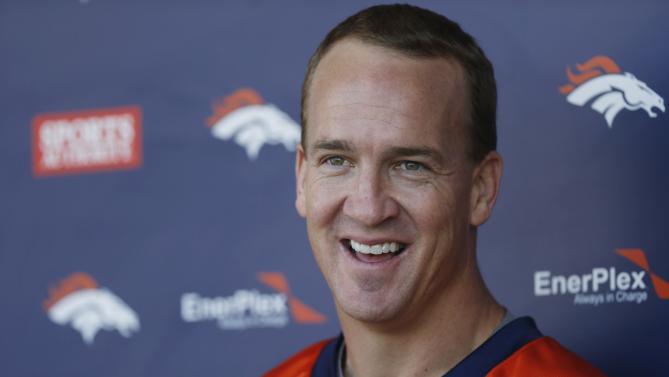
Peyton Manning

Manning’s stories are promptly dismissed as “hit” jobs by people who want to tear him down through accusations of HGH and a young college kid who behaved immaturely.

Yet Brady’s stories are treated as fact, despite the little evidence produced in the 12 months since Deflategate began to actually prove 1) anything actually happened and 2) most importantly as it concerns Brady himself, that he had anything to do with it if the balls were actually deflated by humans.

The NFL still slings it out in court to prove they have the right to punish a player under the CBA, missing the entire point that, you know, you have to actually have proved the player should be punished at all. To do this, they uncovered thousands of e-mails and phone records to try and link Brady to it.

All we found out is he wants to play longer than Manning, he’s got an ego and he weirdly cares a lot about swim pool covers.

On the other side of the coin, Manning has seen his image take a hit over allegations that date back 20 years that he was basically a pervert to a female trainer at the University of Tennessee. This is on top of the allegations that he received several shipments of HGH (or his wife did) that coincide with his neck injury rehabilitation a few years back.

The Tennessee story has been out there since 1996 and Manning has settled the dispute twice – once when it happened and apparently again when he brought the trainer’s name up in a book. Why this is resurfacing now has everything to do with his name being attached to a Title IX lawsuit against Tennessee and it being 2016, the age of rabid, social media heathenry.

Meanwhile, it has been revealed that NFL players were shorted $100 million in revenues. The league office dismissed it as an accounting error. Anybody make a $100 million mistake at their job wouldn’t have a job the next day. Yet this story is not currently gaining much traction. Why?

Because we’ve already given them the money, so we don’t care if the rich players get richer or the rich owners are even richer. It’s monopoly money to us, anyway.

No, no, we addicts, we care about sentiment, about legacy, about being able to emphatically agree on some fantasy ranking of the greatest ever.

And we care about this all because it says a lot about who we are – at least so we think subconsciously.  We attach ourselves to these athletes and these teams so we can go through the pain of losing and the joy of winning together. Brady backers love the underdog story, Manning’s fans stuck by him through all the “he can’t win the big one” years. To us, this loyalty proves something about us.

We can’t like the wrong guy, we can’t be wrong, we can’t have invested in the wrong guy or bought into who he is as a person.

NCAA Football: Alabama at Mississippi

There’s a lot on the line for us average Jill and Joe’s because we’ve convinced ourselves that our fandom matters to other fans. We made it clear who we support – and not only is our guy better, but they are a better person, too.

Except for one, small problem.

It means nothing. We don’t know any of these people. We don’t know what they are like behind closed doors. We don’t know how kind they are or how ruthless they are or how sleezy they might be.

They might be innocent, they might be guilty. The vast majority of us have no clue. And yet we sports junkies feed the beast. We listen to the sports talk shows rattle on and on about it, driving up ratings, making them talk about it more. We click the stories all over social media, prompting more stories to be written about it.

We’re sheep. Inmates in a sports asylum walking around with blinders on, believing in sports and sports figures as if it was a religion. We’re dopes, buying the gear, buying the tickets at astronomical prices, buying into the belief systems and serious manner in which it’s all treated.

We’ve been sucked into world within our world where we think this stuff actually matters, like debating if four minutes is enough of a suspension for Ben Simmons cutting class last week?

I don’t know, and I don’t care anymore. Did that teach Simmons anything? Probably not. Why is he allowed to do that? Why do you care? Didn’t you cut class in college? Does it impact you if he doesn’t go to class?

We want fairness and equality in sports, in college programs? There’s too much money at stake to ever let it happen. We demand from coaches and athletes and administrators that which we ourselves cannot even do in our daily lives. We take shortcuts. We skip out. We complain. We don’t give max effort every single day.

But we sure expect everyone else in sports to. After all, they’ve been given a gift.

So have you.

You just choose to waste it.

Sports and extracurricular activities in general serve in building people in a variety of ways from a young age. They teach teamwork, dedication, commitment, perseverance and hard work to name just a few.

And wanting to be a part of that, as a parent or a fan, or both is good too. But too much of anything can turn into something you never intended – like convincing yourself that someone you’ve never met is good or evil, the embodiment of everything you love about sports – or everything you loathe.

Just be wary of absolutes.

Absolutes lead down a path of yelling at officials at a soccer game for four-year-olds. They make you crazy enough to attack someone physically in the parking lot after a game. Or throw batteries at Santa Claus (we’re looking at you, Philadelphia).

They make you believe in someone else that, like you, is human and fallible. Better yet, these absolutes have led you to wear the jersey of a character, a portrayal, an image of who that person wants you to see and believe.

I know this isn’t easy to admit. I know you think I’m crazy, that sports don’t control your life and that you couldn’t possible “worship” another human being so blindly.

But just go back to the beginning. What do you know and believe about Tom Brady? And what do you know and believe about Peyton Manning. Ask yourself which one is right and wrong, good and evil, guilty or innocent.

And now remember that it’s a trick question: you don’t know them or their situations – only what their enemies or their mouthpieces have allowed you to.

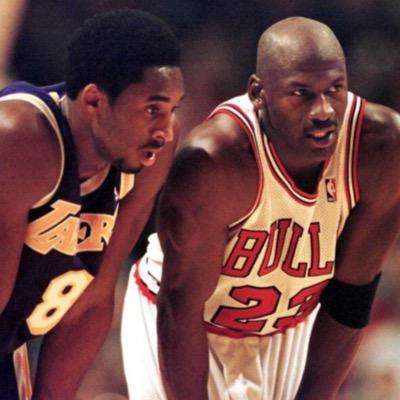
michael and kobe

In other words, you don’t know Peyton Manning or Tom Brady. Or Michael Jordan. Or Tiger Woods. Or Bob Knight. Or Serena Williams. Or Dean Smith. Or Kobe Bryant. Or Tim Duncan. Or LeBron James. Or Andre Aggasi. Or Danica Patrick.

No matter how much you think you do.

The first step is to admit there’s a problem.

Sports are a drug.

They soothe us, distract us, energize us, unite us, divide us, and entertain us.

And they most certainly blind us.

Standard
American culture, Culture, culture war, Politics, pop culture, psychology, race relations, Society & Culture

As The World Burns

It’s beginning to look a lot like Christmas.

That is not such a good thing.

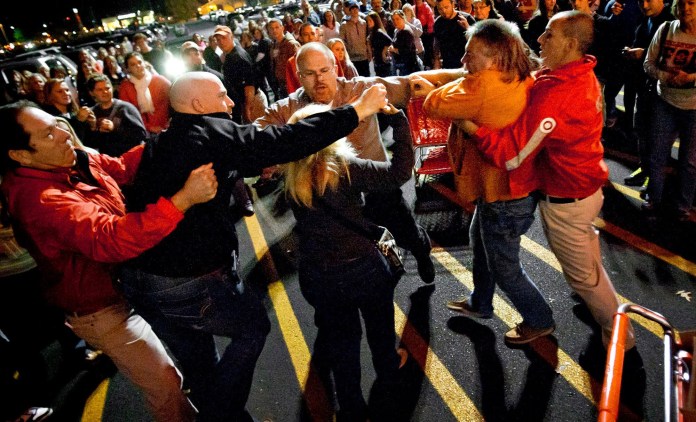
Here we sit, as the world burns around us, and lament the trivial, the inconsequential, the minutia. We fight over saving an extra 20 percent in the Target parking lot. black friday

I have come to the conclusion that we must secretly want it this way. Or we are lazy. Or we do not care. Or it is just easier to ignore it and focus on our first world problems, holiday plans, on the gifts we must buy. We do not really want to talk about it or do anything about it. We just want to complain about it for a hot minute and move on to the next thing.

We put a proverbial Band-Aid over it and hope it goes away?

Oh, you are probably wondering what “it” is. You want to define “it”? Fine, I suppose that is fair.  “It” is undefinable. “It” is everything, anything and nothing at the same time.

“It” is the topic of the day. “It” is immigration, race relations, religion, poverty, politics, international affairs and the economy. “It” is gun control, Hollywood celebrity culture, concussion protocols, domestic violence, locker room language and bullying.

“It” is how families communicate, nuclear and extended. “It” is marriage, divorce, parenting and children. “It” is our increasing reliance on technology. “It” is our jobs, our anxiety, and our fears, our obsessions with the material and immaterial of the world.

“It” is every little thing we deal with on a day-to-day basis.

Perhaps most of all, “it” is you.

Yes, you – the one who thinks I am writing to everyone else and doesn’t think that these (hopefully) thought provoking pieces of less than literary prowess over the past few years are directed at them.

It is directed at you.

It is also meant for me.

When my writing changed a few years ago, it was because the way I think changed and evolved. A funny thing happens as you age, you start paying attention to more than just box scores. You marry, have children and find yourself watching less SportsCenter. Why? Because in the grand scheme of things, it just doesn’t matter as much, while what we are doing to ourselves does as a society matters all that much more.

But a key realization occurred along the way: talking does little. Writing seems to do less. People do not want to hear about the ills of the world, much less so what they can do to improve it. We do quite a bit of talking in our public and private lives. Actually addressing “it” and finding real solutions is a much more difficult proposition.

And this is because we simply do not listen.

We hear, but we don’t listen. We can’t talk about anything that leads to a civilized, give-and-take discussion and solution, because mostly, we’re unwilling to budge on our positions, to meet others halfway. We react, we get angry, we get hostile. To most, an idea of a solution to any problem is agreeing that we are right. It is part ego, part vanity.

Devaluing the ideas, thoughts, and concerns of others while simultaneously self-promoting our own as fact and truth is as dangerous as it is foolish.

To most of us, we might recognize this, so we back-off. It is not worth the argument, the fight. We Band-Aid our lives for the sake of doing the dance. We won’t talk about “it” – whatever “it” happens to be, because all it will end in is hurt feelings, angry words and emotional outbursts.

So we bottle it all up inside, allowing it to take residence in our proverbial mental garbage bin of all the things we’ve ignored, swallowed and tried to forget over the years. These situations become like sticks of unlit dynamite.

And then, at some unknown point in the future, the most meaningless thing sets off the wick and we explode, looking like we need a straight-jacket and some prescription drugs.

We’re all a little crazy.

But that is because we allow ourselves to be. We think we’re saving face. We’re not. Clear and honest communication is a central part, but actually listening and being willing to bend, to meet in the middle on whatever “it” is would most likely serve us all well.

This much is true: if we agreed to disagree from the beginning and worked to a solution that neither feels entirely great about, but comfortable with, we might actually get somewhere in this world.

Our world view is significantly altered by the fact that I am me and you are you. We’re a country and world full of people with specifically engineered lives, with experiences vastly independent from one another.

We share the same period of time and space in this universe, but we experience that time and space in very different ways, which means we do not – and cannot – see the world the same way.

So why are we so surprised when people of opposing viewpoints and political parties, living in different cities, towns and regions, with entirely different life experiences disagree with us?

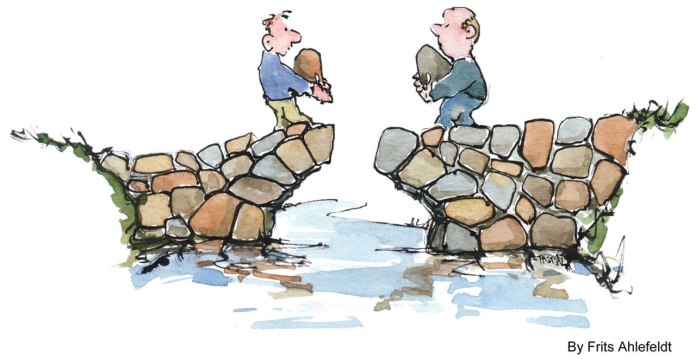
We will never agree on anything because not one of us looks at everything the same way. It is not about forcing someone else to see why they are wrong and you are right.On the contrary, it is an attempt to build a bridge toward the middle where you see where they are coming from.

bridge


That is problem solving. That is relationship management. That is how we were designed to interact. We are not all geniuses in all aspects of life and its infinite mysteries, nor are we complete morons, either. We’re a melting pot of races, religions, ethnicities, social, cultural and economic backgrounds.

We – READ: you and I – would be better off if this were not just a pipe dream, but something we actually exercised ourselves and taught to our children. You – yes, you – will be wrong sometimes. You will be right sometimes.

Sometimes, you might be either, neither or both.

The same goes for me, your parents, in-laws, children, their friends, teachers, your co-workers, the guy working construction and the lawyer on 5th Avenue, the President, Congress, Roger Goodell, Chris Rock and the waiter at your restaurant.

Be in the world, not above it. People are people, their problems are real because they experience them. Don’t shut them down. When we refuse to grow, we refuse to change – and change is largely inevitable. Growth is good. Sticking to your old habits, beliefs and traditions is not necessarily something to be proud of.

So this holiday season, start a new tradition.

Try.

Try to be honest. Try to be kind.

Try to avoid the Social Media tar pits that cannot be one. Try not to take the bait. Try to understand there are people who do not have food, shelter or friends.

Try to not be too swayed – or angry – with those seeking your vote, your money, your donations and your time. Try to give back a little more than you take.

Try to understand the other side, someone else’s perspective as best you can. Try not to shut down or shut out. Try open minded. Try accepting what you can.

I don’t think you should necessarily succumb to the world, give in to all opposing views and beliefs and acknowledge they are somehow right. But the world is not going to fully come your direction, either.

Try to build a bridge.

At least your half of “it,” anyway.

Standard
Bill Simmons, ESPN, Media, Uncategorized

Bye, Bye Byline

You know that old saying about opinions and a certain body part that ends with the punch line “everybody has ‘em?” Well, if the mega media conglomerates continue to silence the voices in writing, pretty soon, only one of those will still be true.

Media has gotten so big, so interconnected, columnists are a dying breed. Perhaps this is just the natural progression of things. First, it was technology impacting media and the death of the traditional newspaper. Next, the 24-hour news cycle and social media have reduced it to a sound bite.

And now, here we are toeing in dangerous, muddied waters were media, journalism, columnists and brands are all hanging out together around the water cooler.

For those who follow sports, writing and media, perhaps you are well aware of the recent events surrounding ESPN’s suspension of popular sports columnist Bill Simmons. If you are not, well, you can catch up by reading this or simply doing a Google search.

The short of it is that Simmons, who founded Grantland.com, and has been one of ESPN’s most popular writers for the past dozen years, was suspended in late September following a podcast where he called NFL Commissioner Roger Goodell a liar in regard to details and facts that led to the Ray Rice suspension.

Simmons taunted ESPN to reprimand him and got three weeks of what he was looking for.

No matter what you think of Simmons, as a writer or as a media figure, what is clearly evident is that this is his “Custer” moment. He’s taking a stand against something he feels is extremely out of sync in the world of media. It got worse on Thursday, when ESPN Radio’s popular morning show, Mike & Mike, played a snippet of a sound bite where Simmons critiqued LeBron James – to which one of the hosts of the show blasted Simmons for, and took a personal shot at Simmons over perceived headline grabbing.

Naturally, Simmons responded by going nuclear on Mike & Mike via Twitter.

Simmons Tweets

This is not the first catfight between “talent” at ESPN – nor will it be the last. But the last six weeks have brought into clear focus what is not only a growing issue in all forms of media, but especially in sports.

ESPN has serious issues to confront behind the scenes right now, and they have very little to do with Bill Simmons. The crossfire happening across platforms and brands happens all the time – and is wildly disconcerting. If you continually mock and belittle your co-workers, you both lose. The audience doesn’t know who to trust and become uncomfortable with the situation and will turn elsewhere for less hysterics.

The Worldwide Leader in Sports cannot cover sports as they should, in large part due to the behemoth brand that is “ESPN” – and perhaps most concerning – due to its massive TV rights contracts with the NBA, NFL and Major League Baseball.

For a long time, these moments have been coming: How do you completely cover a news story or an event if the entity you are covering in said story is also your meal ticket – sorry, “corporate partner”? ESPN pays for the rights to cover these games and find it difficult to dive too deep into sensitive issues and topics for fear they will lose that right down the road.

This is not just an ESPN problem – but as the biggest sports industry media conglomerate, it is the most easily detectable. Whether or not Simmons has the right to say Roger Goodell is a liar should never be in question, but it is because the ESPN brand is in bed with the NFL and the NFL just cannot be questioned like that from its partners.

And this is the same reason why no one can take the NFL Network seriously – it is merely a mouthpiece for the league to package the product and show highlights and retain some money by keeping viewers on their league channel.

The second component of this issue is how poorly we label journalism, reporting and writing in the current age.

Writing is a creative art form, and most other writers I know treat it as such. Opinion based columns are just that – based on someone’s opinion. While there are obligations to writing factual evidence in support of your opinion – an argument, really – it is not to be taken as journalistic reporting of events. And most people know the difference.

The ESPN Ombudsman wrote about this earlier this week, and frankly, I’m not convinced this person understands it either.

(Note: The Ombudsman is an appointed official who investigates complaints against maladministration, in this case, media and journalism.)

Agreeing that Simmons had not met “journalistic obligations” in providing sufficient proof that Goodell was a liar, the ESPN Ombudsman counters those like me who put Simmons in a different category by claiming that “Simmons sometimes acts like a journalist, or at the least seems to want to be taken seriously.”

Is that itself not a potshot from an unbiased appointed official? And further, am I right in taking this to mean that you cannot be an opinion columnist, a jokester or a podcast host and be taken seriously? What about that kind of writing and media means you are a farce in the eyes of the journalism world? Reporting the facts and only the facts would leave many others at ESPN – in print, radio and television – suspended to the point they might not have enough talent to do a show some days.

How do you prove someone a liar, anyway? It is the ultimate he said/she said. People struggle with this in a court of law, let alone a court of public opinion. Many would argue we still do not know all the facts on the Ray Rice situation and subsequent suspension scandal – partly because the NFL has contradicted itself, as well as having other entities in the situation dispute their side of the story.

Would the Ombudsman – or anyone else – have had a problem with the NFL calling the security officials in charge of the tape who claimed they sent it to the NFL liars? They essentially did. But the now-closed Casino didn’t have a television contract with ESPN or the NFL, so who cares about their integrity and side of the story, right? Has anyone come out and vigorously defended Goodell or shown proof that he’s not lying? If so, I must have missed it.

House rules do apply, except that the mansion of ESPN is not the journalistic beacon of integrity to begin with, so their house rules are painted with a heavy coat of bias as well. Should I not take them seriously because they market themselves so heavily?

Better still: how many “Rules of Journalism” were broken during the NBA Free Agency period? Do these sacred rules include quoting unnamed sources which turn out to be completely wrong? No one knew anything, but everyone knew something when it came to where LeBron James was going to choose to play basketball. ESPN printed many of these “rumors” on their website, discussed them at length on the airwaves. No one was suspended or reprimanded or blasted cross-brand for that. No one issued an apology weeks later when it was clear that half of what we heard the first 10 days of July was a mixture of gossip, rumor and lies.

The expectation that Simmons should show journalistic integrity is a farce for that reason and an even more important one: Simmons is not a reporter or a journalist. Just read anything he has written since 2000 – a conglomeration of jokes, analogies, pop culture references and random opinions. It is not journalism, nor was it ever intended to be. He’s no different than Rush Limbaugh or anyone else in that sub-category of media. He’s also not Walter Cronkite.

As the Ombudsman himself writes, “Simmons is a columnist paid for opinions, not a reporter paid to dig up facts.” Well, Simmons opinion was that Roger Goodell is a liar and that LeBron James is not looking like himself early this NBA season. While I personally wouldn’t put up quite the fight Simmons is – there is a bit of grandstanding taking place on his part – how can anyone determine his opinion is right or wrong, since by definition, it’s an opinion?

Some – like the Ombudsman – refer to this as accusatory or slander. That’s stretching those definitions for effect just a bit. There’s at the very least minor pause that can be given to the notion that Goodell was lying about seeing the tape based on what we’ve heard and read up to this point.

It is tough to condone the manner and irreverence of Simmons in these situations, but that was never the point.

We’re confusing what reporting, journalism and writing are. There are subgenres and shades of gray within the media world – and we’re forced to deal with most of them. But you cannot stop people or forbid them from sharing what they are being paid to do.

If this makes your brain hurt, welcome to the club, but more importantly, welcome to the future.

We’ve entered a mysterious world where something is essentially owned by a group that owns four other things that are not all that connected, but treading lightly is required all the same. Sticking with ESPN here: Disney owns Marvel, ABC, ESPN and Grantland – and must identify it as being so.

We chuckle when we think of Big Brother, but this is happening, in chunks and pieces, in different areas of our society. This is just one component, and anyone – like the ESPN Ombudsman – who suggests we simply all need to evolve is one of those already lost to the media machine.

Evolving would be recognizing the various and diverse kinds of writing and journalism that make up the media now, not ordering all good soldiers to fall into line with what the company  – or its partners want.

If that is truly the way we are headed, I fear for our creative writing genre in media.

Soon, even the byline will fade to the mind-numbing “Wire Report,” as if some lifeless droid concocted the cold, hard facts and presented them as such, sans opinion.

And that will truly be a sad day.

If you disagree, call me a liar.

I, for one, will not demand your evidence to the contrary.


[Writer/Editor/Blogger/Site Manager Note: For clarification purposes, this was an opinion piece and in no way, despite fancy links and evidence, should be considered journalism.]

Standard
American culture, money, Uncategorized

The Power of Paper

In America, we are defined by action in virtually everything we do. From how we produce at work to how much we do in our spare time, we attempt to let our actions speak louder than our words.

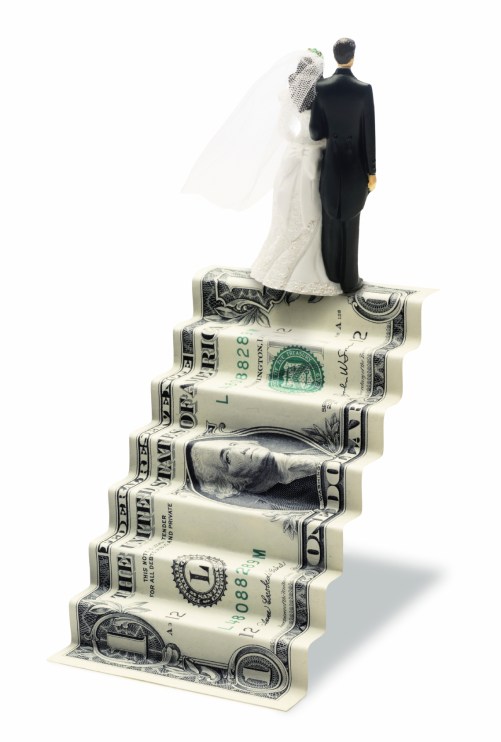
So what does it say about us that a record number of people are choosing to not get married? Further, what does it say about us that the primary reason for this action – or inaction – is due to financial concerns?

It says that while seeking financial windfalls, we have become morally bankrupt in America.

dollar-steps-money-marriage-wedding-bride-groom-bill

This is not a religious soapbox, nor one about the sanctity of marriage. And this certainly is not a statement on who can or should get married.Earlier this week, The Pew Research Center released a report on the decline of marriage in the United States. A record 1 in 5 Americans, aged 25 or older, have never been married – up from 1 in 10 in 1960.

The numbers are further connected by race and gender: men are less likely than women to get married, African-Americans less likely than Hispanics. Education plays in, too, as does employment. A recent survey showed that 78 percent of women polled said it would be “very important” for their prospective spouse to have a steady job.

By 2030, researchers estimate that a 25 percent of 45-t0 54-year olds will never have been married, up from 14 percent right now.

Some may write this off to a weak economy or a recession. Others may reason that because divorce rates are high – and have been for decades – a smarter generation of Americans is emerging that logically wants to make sure all their ducks are in a row and they are safe before they wed. They wish to not make the same mistakes as their ancestors and live a life free of financial stress. In fact, most reports suggest the decision to not marry is in one way or another often tied back to finances.

This fear of financial worry is another ticking time bomb in our current societal and culture implosion.

Our obsession with these numbers, of retirement, of financial freedom, our houses, cars and vacations: do we not understand they are meaningless without someone – or someones – to share it all with?

Humans have written books and produced art for centuries portraying that companionship and love are the true meaning of life. And we are slowly eradicating that by narrowing the human existence down to gross total sums of that sweet paper.

Do we not understand that individually and collectively, we determine all forms of value?

In high school, I had an awesome history teacher who gave an incredible example one day. In explaining how fragile the global economy is, he pulled out a $20 bill.

“All you need to do to completely collapse the infrastructure of any economy is get enough people to agree that this paper in my hand does not actually hold any real value,” he explained. “You see, we’ve all accepted that this is worth twenty dollars, but the paper itself is worthless. It only holds value because we accept the idea that it does. It’s merely a method of exchanging goods and services.”

The teacher went on to explain how we begin this process at a young age, trading a turkey on rye for a PB&J on wheat in the school cafeteria. Each party accepted that the trade was fair and held equal value. Long ago, this trader mentality is how we survived. Furs were traded for grains and so on.

He then ripped the $20 bill up into little pieces, letting it fall like confetti to the ground.

“The moment that any society decides the paper holds no value to them anymore, then the value agreement is broken.”

It could be argued, somewhere along the way, we got lazy and invented a system that would allow others to do the work and we would pay them for services in a standardized, official form.

We perfected this system by then equating time to money, which is really like equating apples to oranges. In essence, we are paid for our time to do and make things others do not in order to purchase things from others that we either don’t do or do not make. One could argue that it is a time saver. But if we’re trading our time anyway, what’s the difference?

While I’m not suggesting ripping up all of your money and proclaiming it has no value (I’m not a barbarian), I am urging us to stop equating apples to oranges. Is money a factor in the world we live in? Of course. Should it be the only one? Never.

We set the market on everything in this world, everything is supply and demand. The minute we stop caring about something, its value drops. We have the power on value, and we’ve had it all along.

We are the ones that buy the gas, the milk, the bread. We’ve deemed these essential to our survival. On the other side of that action, we buy the gossip, the music and movies, the drama of the NFL, the crisis of Apple iPhones bending, politics and the like. Our message is that these things are also essential to us because our actions tell us as much.

The message now, it appears, is that value rules over valuable. Money is more essential than people and relationships, that working together with someone to create a shared profit in the future, one that includes money, but is not of it is just not worth it.

sunset handsMaybe it is just me. From practically the moment I met my wife, I felt a pull that was nearly divine. In a short amount of time, I knew that I needed this woman in my life. I didn’t know exactly what that meant – I couldn’t. I didn’t know how we’d support each other, or a family, in six months, let alone six years – or 60 years.

And that was entirely the point.

I didn’t need to know, because I wanted to try; because all I really needed, was her.

To this writer, at least, marriage isn’t about a solid, well-planned, financial future. It is simply about two people who choose to take on the randomness of the world, its roller coaster ride, as a team – and the emotional, spiritual and physical connection you get from the journey. No amount of monetary value can be placed on that, nor would I accept it if someone tried.

Some do not want to get married, others who do or are already married may not make it ‘til death do them part. It is naïve in America to think that other factors are not at play. It may not always work. I had a conversation with a close, single friend about this very thing, asking him if money would be the primary factor in him choosing to marry someone or not.

“It wouldn’t be the factor, but it would be a factor,” he said.

Fair enough. Money – or lack thereof – can certainly ruin a marriage. But this piece is about the fact we’re increasingly unwilling to even risk getting to the part where we argue with our spouse over money, spending and bills, become bitter and lose the love. This is about the supposedly sweet, gooey part at the beginning. We’re putting the money before that part all together, which means financial planning has replaced the exciting butterflies of falling in love.

It’s a personal decision, but I cannot help but wonder if all that planning for the future will be a future alone, one where we might sacrifice an emotional and physical connection with someone in order to have a larger figure in our bank account. It is a false sense of security in a world where you can never really be financially secure.  The money will come and go. And when you leave, you leave with nothing except what you gave and experienced with others.

Will people remember your bank account figures or how much you paid off in student loans before getting married when your time to go comes? Do we remember that bill from four years ago that had us stressed out? Or who the bill was even from?

It is amazing how much power we’ve given that sweet paper.

I only caution us to find a balance, to be careful. This collective cultural decision to wait for marriage until financially stable means we’re willing to be alone, which ties in closely with the rise of social media.

We’re alone, but we’re pretending to be connected with people. We’re virtually social, we’re virtually getting married. One could argue we’re virtually human. Shakespeare would get laughed out of the room now; Ralph Waldo Emerson, Yeats, Frost, all deemed foolish. Our new poets are Warren Buffett, Suzy Orman and Dave Ramsey.

We have “progressed” to a point in time where we would apparently rather not take the risk of an unhappy, poor future, thus sacrificing the risk of a truly happy, rich future.

I suppose it is all in how a person defines rich and the value equated to that term.

Just try to remember, after all, it’s just paper.

It only holds the value you allow it to.

Standard