Earlier this week, after finishing a family dinner, my wife and I randomly started listening to songs from our younger days while cleaning up.
Acting goofy at first, we probably looked like Ferris Bueller belting out some tunes in his shower at the start of a big day off. We picked a lot of fast paced songs, knowing it would draw some attention from the audience (OK, so it was our kids) if we kept up with the lyrics.

“You know a lot of words to a lot of songs, guys,” said our sweet-hearted 8-year-old daughter.
This comment sparked a conversation about how the words and lyrics to these old songs (weird to say, since most of them were late 90s and early 00s country songs) meant something different to both my wife and I.
As we sang in harmony (well, kinda), our daughter sat and stared for a little while. I could read her mind, and briefly, she seemed impressed that we had remembered and memorized the subtle voice inflections of each song.
Soon enough, her fascination ended and she went back to playing with her younger brothers, who were apparently caught in a game of home many pairs of underwear and ball shorts they could wear at once. They nicknamed themselves Capty Underwears and Capty Shorts, so clearly they weren’t listening to the songs to begin with. (And yes, this what 6-year-old and 3-year-old boys tend to do.) Our eldest son, turning 13 this Sunday, however, listened to the songs, but his eyes never came up from his iPad.
There was one song in particular that we listened to that made me realize how much our society has changed due to the technology advancements of just the past 10-15 years.
As my wife selected The Dixie Chicks “Travelin’ Soldier,” the overall themes found in the tragically sad love story of a young man sent off to Vietnam and the young girl he’d wrote letters to strike a different kind of chord with me.
It is painfully obvious that we’re drifting apart in our communications with each other. I have tackled this topic before, but I must admit, there is a hint of sadness within me that envelopes each advancement in technology and communications.

We don’t write love letters anymore.
We text emoji’s and short, grammatically incorrect phrases. And then we wonder why people don’t “get us” or wonder why we have a hard time communicating in serious relationships.
We don’t visit or call as much, we text and send Facebook messages and post on digital “walls.” And then we wonder why we don’t see our friends anymore.
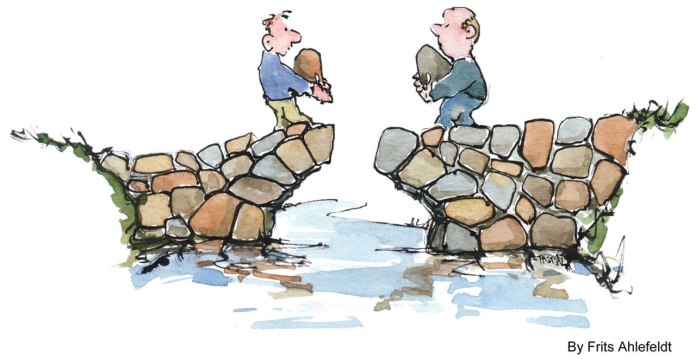
Never has there been a more appropriate term than a Facebook “wall,” because in essence, I’ve come to realize that is truly what social media does: it builds walls.
We may be more “connected” than ever before in human history, but emotionally and spiritually, we are more disconnected than we can possibly imagine.
Last week, I read this story in the New York Times on the world of Middle School Instagram. Both fascinated and terrified, I couldn’t believe the emotional turmoil that takes place in the world of 7th grade girls and boys over who follows whom, their follower to followed ratios and who is tagged in each delicately planned post.
Look, I remember 7th grade. It’s no picnic. Hormones raging, self-doubt waging a war on perception versus reality. I cannot imagine having to do it in this social media driven world.
When we examine our exposure to and on these channels of communication, we come to find that we’ve often revealed too much for public consumption. I’ve heard many friends say this, and I agree: Had Facebook and Twitter been around in the 90s, I’m not sure I could get a job or be very well regarded today.
It’s not that I did anything illegal or terribly bad, it’s just that the whole world didn’t know about me and my buddies toilet papering a house in the fall of 1997, or the Spring Breaks in Florida, or…you know, I think I’ve proved my point.
It’s not that everything can be shared now so much as it is that not everything should be shared now.
Those private moments between you and some friends, you and a date, you and your wife or loved ones, those are yours. They build bonds and form deep friendship and companionship because you and they were the only ones to experience it, to know what it was like to be in that moment in time.
If you share every moment, trivial or significant, what is left to stand out? Why should the person who sat next to you in freshman algebra, but you haven’t spoken to since, well, freshman algebra, get to share that?
All I know is that I used to have deep, meaningful, philosophical conversations with several people who once meant a great deal to me – and still do. Mentors, family friends, buddies. For quite some time now, that has given way to text messages and birthday posts on a wall, joined by hundreds of other “friends” doing the same.
Time, distance, whatever the case may be, I miss those conversations. I miss those friends and mentors. My fear is that too much time has passed, too much left unspoken. Now, those relationships have been forever changed and altered. All because we stopped talking and started taking the time to take the time.
One of the strongest points of my relationship with my best friend, who happens to be my wife, is our commitment to talking. We started out talking in a college history class in the fall of 2003 and really haven’t shut up since.
I wrote her poems, she left notes on my truck windshield. I keep the first one she ever wrote in my wallet to this day.

For generations over, the world has communicated through talking face-to-face or with pen and paper. We had the time to thoughtfully prepare a letter, or a note.
Now, we can barely text 10 words with our thumbs without losing interest. We’re lazy in our friendships and relationships and the cracks are showing.
In the spaces in between TTYL and C YA SOON, lies what is unspoken, what is implied, what is missing. We’re connected, but we’re not connecting. I have fewer new memories with these family friends, buddies and mentors. While no doubt brought on by the busyness of life, we are fractured by what has not been said, what has not been mended or fixed, what lack of time has wrought.
As smiley face cannot replace a face with a smile. LOL cannot replace an a friend actually laughing out loud. These things are just meant to be placeholders until we can meet or talk again. Except for the part where we aren’t really getting together again.
Tonight, and for many more days and nights in the years ahead, my wife and I will try to combat the technological grip on societal interactions through our children. We’ll play music and listen to the words.
We will gather at dinner and talk about our days, our experiences, our frustrations and our successes.
We’ll try to get them to put the phones down and turn the TV off. We will encourage them to write notes and call their friends.
Emoji’s don’t equal emotions.
I’ve got a letter in my wallet that reminds me of that.






 worldbetweenlines.com