American culture, American People., Culture, faith, family, Life, Logic, motivation, philosphy, pop culture, psychology, Society & Culture, Sports, Uncategorized

We Hope for Baseball

Image result for baseball

The collective emotional roller coaster our homes, communities, states, nations and world have experience over the past week cannot be quantified with words.

But damn if it’s not like me to try. Leave it to a pandemic for me to sit down and type my first entry in so long I cannot recall.

The world around us moved so fast last Wednesday that it seemed unreal. The NBA was suspending its season?

Huh.

Thursday saw universities shuttered, college basketball conference tournaments cancelled, high schools move to eLearning.

Um, what?

Friday felt like the bottom fell out, the cancellation of the NCAA Tournament, a new kind of March Madness. Spring sports cancelled – including the College World Series in June – throwing eligibility questions and team rosters for the 2020-21 season into a quagmire that didn’t feel so giggity giggity.

And we thought the news was all filled with doom and gloom before?

I told my wife Friday afternoon that my brain hurt. I couldn’t comprehend much more that day, think of any more angles to cover or next steps after the next steps. I needed wine tequila and a hoodie.

2020 will be forever remembered as when “Social Distancing” became apart of the American lexicon, when everyone from the age of two to 92 could recite proper hand washing protocols.

It will be remembered when we learned everything in our economy is connected, that an essential freeze halted us in our tracks. We quarantined, we worked from home. We overreacted, we under-reacted.

We hoarded toilet paper.

Everything has effectively been put on hold. Youth sports, book clubs. Going out to dinner, a family cookout with grandparents. Spring break. Every Disney Park closed for weeks, every zoo and museum closed. No choir concerts, no parades, no church in person, no events really of any kind.

Everything. Has. Stopped.

But have we learned?

Nothing we didn’t already know.

That faith, hope and love are some good things He gave us, and while the greatest is love, the most important might be hope.

We need to hope we can get back to normal before July. Before June.

We’re holding out hope for high school baseball in our home state. My son, a senior, is a part of a team that won a state championship last season. His friends from his travel teams, scattered across the state, all want the chance to play before college. Most won’t get a chance to play in college, but it is not about that specifically.

It’s about Senior Night. It’s about Prom. It’s about hearing your name called for the final time. Crossing the stage with a diploma at graduation and graduation parties of definitely more than 10 people.

It’s about all we’ve taken for granted. The commute to work filled with podcasts that have fresh content about sports, movies, politics, whatever. Seeing our co-workers, sitting face-to-face in meetings, teaching in a classroom filled with people.

It’s been merely a week, and even the introverts like me don’t think we really understood how significant social distancing could be to the fabric of what it is to be American.

Maybe this is a chance to re-learn, to re-think the daily life and throw our routines out of whack. Are we adaptable? Are we unbeatable? Can we turn a negative, a 100 negatives, into a positive? Are we just catch phrases, or can we rise to the challenge and endure?

We’re always taking about how busy we are (I’m looking at, well, all of us).

Well, how about now? Time to read. Time to listen. Time to think. To take a walk. To get to know our spouses and kids again. To find a way to serve a purpose greater than ourselves.

Maybe this is our wake-up call.

What is truly important, and what is not.

Sure, we’ve clung tight to family. Personally, we haven’t turned into The Shining family around here…yet. And we appreciate our home, our jobs, our friends and our freedoms.

But hope, man.

Hope might be the most fascinatingly human emotion there has ever been. And we need it more than ever.

No matter your beliefs, your political allegiances, whether you call this a hoax or are digging your doomsday bunker as I type, this is history happening for better of worse in real time.

It is a stark reminder we are not in control, not even a little bit, not even at all. But like any good book or movie (that we’ve all probably re-watched or re-read three times by now), hope is a good thing.

It could be the hope we’ll stop losing our ever-loving minds. Hope that those who aren’t taking it serious will wake up to the fact that COVID-19 is a bit more threatening than we thought a week ago, or even a day ago.

Hope is why Hallmark is running Christmas movies in March. It’s why Disney+ put Frozen II up months before they were supposed to. It is why classic sports re-runs are a welcome distraction. Why Tom Brady going to Tampa Bay and leaving New England was something else to talk about for a few hours.

Because we do not know where this going. We do not know the impact on the economy, on our jobs, on our daily lives yet. And we won’t fully for some time.

But we hope.

We hope for the sick, we hope for the cure, for strong leadership, for our friends, for our industries, for our kids.

We hope for an appreciation of the life we lived two weeks ago and for a future that might be close to it.

So, yes, we hope for baseball in this house. And we hold out that hope, because without it, well, it just makes the brain hurt.

Stay safe. Stay informed. Stay good to each other.

Stay hopeful.

Standard
LeBron James, Media, NBA Free Agency, Society & Culture

Searching for Sources

Roughly four years ago, I wrote this piece about unconfirmed stories, rumors and the growing use of “sources” as a complete cop-out.

Oddly enough, four years ago we had the absolute circus known as “The Decision” when we all collectively freaked out because a young man we (fans and media) gave a ton of fame and attention to at a young age chose a new basketball team.

LeBron-James-DecisionFunny how much and how little changes over time.

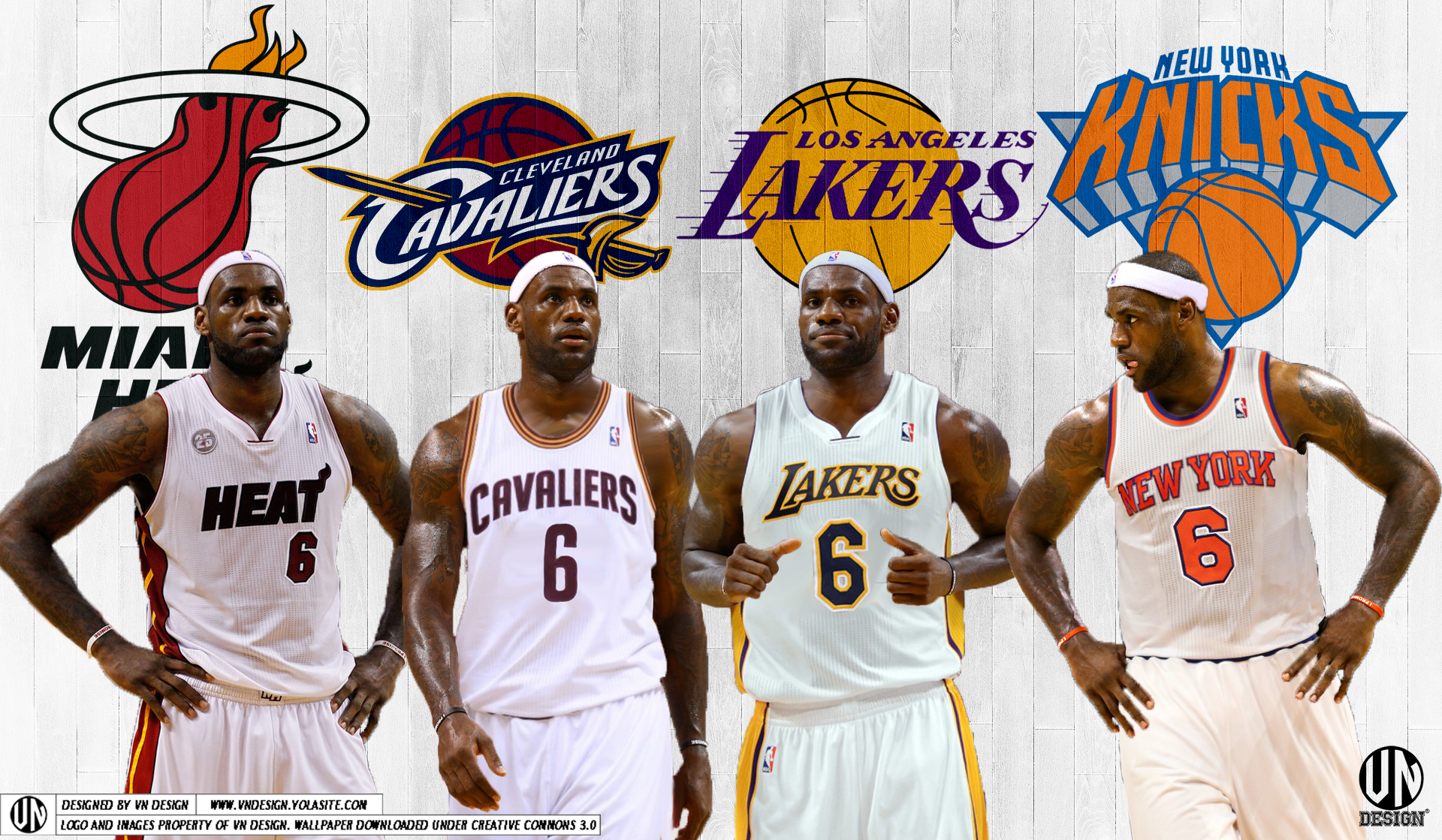
We didn’t like the bombastic manner in which LeBron James joined Chris Bosh and Dwayne Wade in Miami – though in hindsight, the televised event raised over $6 million for charity.

No, we had a problem with the “Welcome Party” the following day – you know, “Not one, not two…

And who wouldn’t, really? The brash, bold, self-aggrandizing manner in which they presented their new union was more than a touch overboard.

Still, did we take the time, in the moment, to analyze what was happening? No, not really. And we rarely do, because we are human. We need and want instant reaction, gratification and resolve. We were all busy burning jerseys, bashing, mocking, and defending.

I was among the masses, proclaiming that the “King” was a bit out of his element, that he hadn’t won anything, that, at 25-years old, he had severely overplayed his hand.

But over time, I accepted this narrative: his handlers had blown the whole TV thing, Jim Gray made it all seem a bit cheesy and most importantly, I thought that James was still in many ways a child-like person, just trying to break out and do something bold.

He never went to college, therefore wasn’t recruited, so it seems logical that he liked the recruiting process of free agency in 2010 – something that after many years in Cleveland, he’d earned the right to do. The Cavs never got him the help he needed. Jordan would not have won titles with that scurvy crew of misfits.

Feeling under-appreciated, feeling boxed-in, James went to Florida, to beaches and Pat Riley’s legendary figure, to Mickey Arison, a hipster dude who owns cruise ships and a basketball team. He went with buddies he made on the Olympic team, guys he knew didn’t suck at the sport of basketball, as it seemed his fellow teammates on the Cavs kind of did.

What was the truth in 2010? Probably a little bit of both.

And now? Well, I’m not sure any of what’s going on with James reasoning matters as much as how much stock we’re putting into reading tea leaves.

We think way too much of our athletes and role models in the public sphere, and yet at the same time, we dehumanize them. They have emotions, they have biases. They have their reasons. We just don’t care about that.

All this is to say, I can see how and why James would want to return to Cleveland now, four years later. A bit more accomplished to say the least, a bit more mature, perhaps even better equipped to handle the ridiculous amount of pressure applied by the greater Cleveland fan base.

I can also see how and why James would stay in Miami, even if for only a year or two.

Does James play into the power trip? Of course. And if you’re waiting for him to not, you are simply in the wrong era of athlete.

What about all of us? What about the fans in Cleveland who burned his jersey, now pleading for his return? What of the owner who comically, sans-ily wrote the most vicious and disgraceful e-mail in the history of people who got picked last? What about the Heat fans who walked out and booed in the Finals? What about our collective reaction to the cramps?

For better or worse, this man cannot win. And we like it that way, for whatever reason. So no matter what this decision yields, we’re ready to lose our minds.

And that is the entire crux of the problem. It feels as though nothing has happened, yet everything is happening.

James himself has done and said little to perpetuate the absolute ridiculous and scary uproar through the media over a possible return to Cleveland.

LeBron James The decision 2014This brings us back to sources.

You’d think we’d have learned something from 2010, from attaching legitimacy to rumors, to giving full credence and exposure to “sources.”

But we haven’t learned a damn thing. If anything, we’re doing it all worse than before. From New York to Miami to Cleveland to Los Angeles, we’re all preparing for way too much joy and way too much anger.

Have you ever seen so many formerly reputable people get so much wrong? And someone reputable will be proven wrong, for sure. There are so many journalists and media types on both sides of the fence that there is no gray area. Reputations will be damaged.

And why? Because they are rushing to get anything out in an effort to provide the smallest morsel of information, to satisfy us. We crave it. We say we don’t, we act annoyed and we pretend like we don’t want it, but we do.

This is our drug. It’s speculation, gossip and the need to know what we don’t really need to. And the addicts need fed. Which is why we’re hearing anything and everything.

Cupcake shop owners claiming it’s a done deal. Moms who say LeBron’s wife’s pregnancy is enough to push him back to Cleveland. Someone who talked to someone in James’ group in Vegas who told a friend that Pat Riley exposed the pregnancy to the media before James had a chance to tell all his family and friends, so now they are mad and hurt.

Web programmers who have found hidden code on his website that shows the color scheme could change to Cavs base colors. People tracking Dan Gilbert’s plane, people watching and staking LeBron’s homes in Miami and Cleveland.

Look at us? Are we not entertained? We asked for it. And we can’t deny it any longer. SportsCenter, talk radio and Twitter are breaking records for viewers, listeners and refreshes per minute. James’ website crashed today. All because we’re seeking another hit, another piece of dubious intel.

And the media, addicted to our clicks because it brings pay raises and job promotions (see Broussard, Chris, 2010), are more than happy to find something, anything to be our dealer.

Is this a harsh or unfair analogy? Maybe, maybe not.

We want the media to check its sources? We should be checking ours.

Our sources, after all, are what permits this whole charade to begin with. A culture obsessed with the dirt and greed produces just that. We’re angry either way with James, then and now, because we’re jealous.

We’re outraged by his greed and the greed of athletes everywhere, but we’d do the same thing. We blast them for taking max deals and the money and playing for owners with less-than high morals, then blast them even more for collaborating with each other to take less and play with their friends and win championships.

We won’t be happy, no matter what. Social media is certainly intensifying the issue. It didn’t exist for Jordan’s playing days, or we would have destroyed him, too.

We’re easily bored, ready to tear down our idols just as fast as we build them up.

And why? Because it makes us feel better about us. Our lives are relatively empty, so it would seem by the way we follow celebrities and blow things completely out of proportion.

We have few true sources of joy and purpose as a society at large, so we do this. We ignore the news and stories that really matter, really make a difference, and throw all our emotions and interest to following adults who play kids games for large amounts of money switch companies to do the same job. We cut people down, and cut people off before we flip them off.

We jump jobs for money, then ask how they have the nerve. We cheat on our spouses, lie to our friends and cut corners, then put them on blast for doing the same. We scream at youth sporting events, officials and blame coaches, then call the pros cowards for doing the same in an interview where they’re goaded into the same. We’re hypocrites and we’ve created this.

‘Merica, right?

So here we are, four years later, having learned really nothing. We still wait with baited breath to find out where LeBron James will spend the next year, two or four, putting a basketball through a metal circle. Until we find what our collective culture is looking for, we’ll just keep on doing in this, in truly mind-numbing ways.

We’re in full-blown instant gratification mode now, seeking resolution merely for the sake of being able to move on with our judgments, our condemnation, our praise and dissection.

Feed the beast, LeBron. We’re hungry.

It’s just what we do now.

Before we blame anyone for this mess, perhaps we are the ones who should check our sources. Because I’m nearly 63.2 percent sure that according to reports, our intentions are dubious at best.

And we are all witnesses.

Standard
American culture, Life, Logic, Philosophy, Politics, Uncategorized

Upshot with a Downside

And….it just happened.

Another one of those, check yourself before you wreck yourself moments in modern day America.

dunce-capThe New York Times announced yesterday a new site, Upshot, which will essentially explain how to read the news that you, um, well…read. Aside from the whole Globo Gym vibe, what’s not to like, right?

According to their statement, Upshot believes many people do not understand the news as much as they would like [read: apparently we’re idiots]. We want to grasp big, complicated stories – like Obamacare, inequality, political campaigns, real estate and stock markets, but we’re just incapable of doing so, they say.

So the good folks at the totally cool, non-egotistical Times are going to help us all out in order to allow us the privilege of carrying on a conversation with family, friends and co-workers.

Sweet! Thanks, NYT!

Syrup-y sarcasm aside, I do see one reason to do something like this. We’re in the midst of a golden age of data. We’ve got data about data about how we react to data. Sites like FiveThirtyEight are giving us charts, numbers and graphs about all kinds of trends in science, economics, education, politics and sports.

If you truly want to know the numbers behind something – anything – now is your time to bask in the knowledge those numbers exist in droves. The only problem is we cannot keep up.

Before we can comprehend and understand something, there is a new hot topic just waiting to be data-driven into your newsfeeds and give you a headache – to which the data totally will tell you how many Tylenol you should take depending on the placement, angle and duration of said headache.

But there is another problem with the age of information – or several.

Do we need it? I mean, ALL of it? What are we doing with all this newfound information? And how can this education compete with our other obsession? You know, the one where we are celebrity-crazed and self-serving our own interests?

getty460x276Case in point: suppose the data told you that social media was awful for you, would you quit? Or that HBO programming was written to promote a set of Illuminati based ideals? Or what if they said it is unhealthy to have more than 150 friends on Facebook?

What if some set of analysis told us that all of this was trivial and meaningless?

Or how about this one: say some information is unearthed that proves we were better off emotionally in the 1830s, 1950s or 1980s and that all this technology, this rapidly evolving world is actually hindering our enjoyment of life?

Data talks, but we don’t always have to listen, right?

Over the past few years, I’ve been accused of perhaps being a bit too idealist. Generally speaking, I can understand why.

Nowadays, you cannot be too positive. It does not jive with the vibe. Anger, resentment, hostility bring reaction. And as Scott Van Pelt of ESPN said recently on his radio show, about Toronto mayor Rob Ford, it serves as no better proof that the best thing to be is famous, because it brings a reaction.

And we react the most to this culture of celebrity and negativity. Whoever is stirring the pot doesn’t matter as much the fact that we allow it to be stirred.

Which is entirely the reason why writing like this doesn’t get a push for eyeballs from The New York Times or Grantland: it’s not the trending, data-driven, analytical pieces being devoured and shared. Nobody wants to read it, they say.

By no means am I lamenting my status or place in this wired, literary world.

In fact, I am quite content with leaving these pieces for some future generation to unearth : “Look at this guy, it was like he time-traveled 60 years into the future and tried to convince people to proceed with caution and appealed to their common sense and values! What a maroon – those people needed Upshot to explain the news for crying out loud!

The truth is, it is a wired world – and it’s hard to get by with a smile. (Thanks to Cat Stevens for the inspiration to that hokey line.) Regardless, it remains: positivity at best seems to sell a product. Tony Robbins and quite a few out there make a good living encouraging others to stay positive.

That has never been the point of this, though.

Our contributions to society at large, to life in general, do not have to be based on a data set, or be outwardly public and self-serving.

We continue to do ourselves an injustice by ignoring the tipping point, you know, the one where we are farther and farther removed from the crux of our core values. But those are not punch lines, they should not be used as psychological tools.

In the film, The American President, Michael Douglas’ character, Andrew Shepherd has a great retort about how you win elections:

“You gather a group of middle-aged, middle-class, middle-income voters, who remember with longing an easier time, and you talk to them about family and American values and character.”

The response was intended to vilify the opponent who had gone on personal attacks against him, or to address the general perception of American politics in the 1990s and winning elections – which is still very much true today.

But the stark reality is what was missed in that quote, which is that there is truth in it. On some level, it is indeed what people are looking for. It is what might win elections because it is what people actually want: A time where things moved just a shade slower, trusted easier, worried less.

Values and character are not ideals to be strived for, but instead to be lived. They are proven through prudence, rationality, frugality, respect and pragmatism. In short, none of the things we truly are currently in society as a whole.

We assume that all this information will lend us a greater understanding or perspective on any number of topics, certainly of humanity and our role on this planet. It will not, because in some way, the message of Upshot is true: we do not understand everything. We cannot.

We were never probably meant to.

But what we can do is use this data and information to better ourselves. And if we are able to accomplish that, to make our lives better individually, then we’ll gradually make this world a better place, too.

Now that’s an upshot with no downside.

Standard