American culture, Chip Kelly, fired NFL coaches, gossip, Hollywood, Philadelphia Eagles, Star Wars, Star Wars: The Force Awakens, Uncategorized

Perceived Perfection

Two thousand sixteen.

We have arrived in this, the future, and it by all accounts resembles the recent past. In some cases, it might even resemble a distant past, too.

As a society, we seem to be tempered in our expectations of what we can accomplish because we see firsthand what we have been unable to accomplish to this point, all the while unaware of the fact we very much hand a part to play in what was unaccomplished all along.

So much displeasure going on all around us. So much lamenting. So much longing for the future, too busy to enjoy the present. A present which will become the past that we will begin to long for.

Ironic.

After all, what kind of malcontents would be if we didn’t endlessly hype how excited we were to be taken back to a galaxy far, far away in film, doll out a collective $1.7 billion in three weeks to see Star Wars: The Force Awakens, only to turn right around and bash it as “unimaginative” and whine about the former film prodigy J.J. Abrams’ lack of originality?

forceawakens4-xlarge

We beg – no, demand – updated classics, then complain when it’s too retro? We want retro Jordan’s and then complain that they are either too identical or not similar enough. Didn’t we skewer Indiana Jones and The Kingdom of the Crystal Skull for being not enough like the other Indy movies?

I can’t keep up. No one, pardon the pun, forced you to see that movie.

The same as no one forced George Lucas to sell the Lucasfilm and Star Wars galaxy for $4 billion to Disney. Those “white slavers” as he calls them.

Didn’t Lucas create Jar-Jar Binks?

Uh, I’ll just leave that out there, Mr. Lucas.

But Lucas is simply much the same as the rest of us in the modern age: immediately regretful of what we no longer have, though we didn’t treat it all that well when we had it and unable to move on to something else until we’ve sufficiently trashed it.

Sadly, the rest of us don’t have the $4 billion to ease the burden of negativity. Careful, George; remember what that path of anger and resentment can lead to?

But there’s another, deeper, more sinister than Sith reason we turned so quickly on Star Wars: The Force Awakens: snark.

The snark is all around us. Our snide remarks are becoming our only remarks as we remove ourselves more and more from the actual world to engaging with the vast majority of people electronically.

Would you really type half of what you do if you were to see the person in a hallway?

And how often has pressure from others led you to comment or fire off at the fingertips that which you wouldn’t have said previously?

Philadelphia Eagles owner Jeffrey Lurie called Chip Kelly a culture-builder, an excellent coach, someone he liked and respected and someone who didn’t need to prove anything to anyone just four months ago, in September 2015.

chip

Last week, Lurie couldn’t fire Kelly fast enough, leaked false info to the press about it, and generally smeared him for 48 straight hours.

Why?

The nameless, faceless social media mobs in full snark attack mode, pushed Lurie – who gave Andy Reid 14 years on the job until hiring Kelly – to do the exact opposite of what he said.

We’re all engaged in social media in some way, yet we’re terrified of it at the same time.

We hate to scroll through the feeds and see nearly 75 percent of what we are subjected to see, but addicted to the habit or the “information” we think we’re getting.

We don’t want to put it down, but we can’t put it up.

For every viral post about a child who had their wish fulfilled or someone doing a good deed for someone, there are 4,553 posts of selfies, quizzes and generally everyone complaining about something.

Better still: a good deed has to go “viral” to get the proper attention for it. Remember, if it is not on social media, it didn’t happen right?

Then again, there’s plenty of jibberish that passes through social media that does not pass the sniff test. Take the endless election cycle, for instance.

I’m not sure what I think about any of the 2016 presidential candidates because of the sensory overload I’ve experienced during the start of the campaign season.

And because I have no idea what they actually want to do through some combination of overexposure and underexposure, I feel completely unprepared to vote in six months, even though my state will vote too late for the primary to actually matter.

There’s both sincerity and sarcasm in that last paragraph. Sadly.

The truth is, I somewhat pity these folks. True, they make these boneheaded mistakes themselves, only to nosedive in polls that I thought everyone agreed three years ago didn’t really matter, but still.

If we thought the era of social media and treading and mea culpas had reached it’s pinnacle, think again. We’re roasting these candidates on the open fire of social media.

You step into the world of snark, you best come ready. Not many survive. And unfortunately, these candidates can’t play it cool like the rest of us: chilling on the sidelines, sharing only what we want to share, what we assume the online world wants to see from us: perceived perfection.

It is what we strive for now, perception. It can be any different types. We can become anything we want online, through our Insta-feeds, Twitter bios and Facebook posts.

We can be funny, we can be mysterious. We can be brooding, we can be political. We can be fit, we can be alcoholics. We can be vain, caring, jet-setters and turbulent.

I am sure it is not that cut and dry. I am certainly guilty of it, too. You can click through status updates and pictures of my five children, my wife and myself and you’d get a bunch of pearly whites and smiles at the intersection of Constant Fun and Perfect Family.

We are only perfect for us, folks. And some days, my neurosis leads me to wonder if I’m even perfect for them that day. We get angry. We cry. We lose our temper when the milk is spilled for the thirtieth time in 12 days.

You might like us for an afternoon or weekend, but we would get on your nerves, I swear. And likewise, I bet you would get on ours, too.

We’re all looking around at each other like we have got it together, but in reality, we are running our day-to-day lives more like the Cleveland Browns than the New England Patriots.

But apparently, life just looks better with a filter.

93831-instagram2-presets-for-lightroom-samples-tree-original-1358439909

Of course it does. Any sunset with palm trees and beaches looks enviable.

If it is your daily life that could use some contrast, sharpness, color and filter adjusted, consider being more social and less media.

Personally, my goal  in 2016 is to be a bit more transparent, to be more positive in my day-to-day life, less anxious and neurotic, and do my best to enjoy the present moment, unfiltered.

Plus, I have got to pay more attention to this presidential election thing.

I still don’t know what they stand for.

The polls say that’s not good, considering my gender, party affiliation, race, breakfast intake, height, income and inclination to watch Friends re-runs with my wife on Netflix.


Standard
American culture, Culture, philosphy

Divided We Fall

There’s nothing I enjoy more than going into the elementary school about a week or so into the school year and seeing the work of our 7-and 9-year old kids and hearing from their teachers what the class is like.

They are eager to learn, they are happy to be there. They share. They are kind. They want to do what’s right and they don’t care what the other kids look like or where they come from.

In the classroom, they’re all equal. They just want to learn about the world.

But as adults, we realize how scary that world is – and how desperately it needs to change. At least this is true for America.

As the most recent horrific event unfolded this week – the assassination on live television of two Virginia-based TV staff – it occurred to me that many Americans are living in entirely different worlds.

Geographically, ideologically, racially, economy, we are divided. Perhaps even more so than ever, because there are just so many of us and we’re filing into categories, marketing profiles of who we are.

For instance, I live in a small city that just graduated from a town, with some racial diversity, but mostly well-to-do. My roads are a mix of heavily traveled commuters to the bigger downtown and back country roads that still wind around cornfields and cemeteries. People are generally friendly, our police do well to protect us, are kind and it’s a big deal if there is a bank robbery.

Then, I see that in Missouri, just outside of St. Louis, there’s a place where my experience is not relatable. It’s like opposite day, every day. There are inner cities and rural towns and places in between all over the United States where customs, rituals, emotions and norms are completely and wholly different from each other. Not one is necessarily better than another, just radically not the same.

And we ask that everyone come together to make decisions that apply to the country as a whole. It should not surprise us – yet somehow does – that we cannot agree on a whole heck of a lot. From gun control to abortion to gambling to gay marriage, we’re trying to yell the loudest in order to sound the strongest and most convinced that our way is the best way.

Except that our way is our way and we’re there’s really only about 25 percent of our society that agrees completely on a certain issue. Think about it: we’re subdivided constantly into these groups, these regions, these states, these cities and towns, so no wonder our primary concern is us and where we live and how we perceive the right way to do something is.

Yet what is good for Baltimore might not work in Chicago. What is good for Racine, Wisconsin might not work in Little Rock, Arkansas. What needs to happen to roadways on the North side of Indianapolis may not apply to the South side of Indianapolis.

We’re so busy coming up with solutions that we’re neglected the root of the questions.

Meanwhile, the big machine believes it has us pegged. Search for something on Google, it shows up for three weeks in your Facebook ad space. It thinks it knows you.

We barely know ourselves. And we don’t apply all our norms and customs accordingly when it doesn’t serve our needs.

Some of us have jobs in a corporate type setting where it would be impermissible and grounds for firing should we use personal e-mail accounts to conduct business. Yet Hilary Clinton can do it and those who support her make outlandish cases why it was OK, why it was justified and why those who question it are out of line and risking national security. Why? Because they want her to win the presidential election in 2016.

There’s no accountability of our officials, so why then would we ever think there is accountability for us in similar serious situations?

Republicans have spouted for years about having a viable, reliable and diverse candidate for president. So naturally, Donald Trump leads the preliminary polling. And naturally, his favorability increases with every outlandish, racially tinged and gender biased thing he says.

trump

Seriously? You’re going to woo swing voters by nominating someone who calls a female anchor on known right-leaning TV station a “bimbo”- and he’s likely running against a woman? Good luck with that. Trump didn’t like questions in the first debate – questions that he dodged and did not answer – about all kinds of real issues.

“How do we expect you to handle X or Y, when in the past you’ve done the complete opposite?” generally sums it up. Trump’s response? Name calling and mockery.

Hardly professional, hardly becoming and hardly convincing, Trump’s “throw stones in glass houses” approach has landed unceremoniously well on a generation of people who use social media in much the same regard.

Don’t agree with someone? Comment and bash them! Are they calling you out? Well, no sir, you shall call them out!

If you haven’t noticed this before, just scroll past the auto-playing videos of live TV murders and cats falling off couches. You’ll find it eventually.

Is this what we have become? Have we lost our collective minds? Is it possible that we take too much seriously and not enough seriously at the same time? We overreact about that which could use some level-headedness and underreact over those things which seem, at least to me, appalling.

Despite all our differences, I would think there is a baseline of acceptability out there for how we act, how we treat each other. But seeing that someone – actually many someones – believed it wise to post a replay of this week’s events in Virginia in the hours after, perhaps now it has become clear that we’ve our baseline has been not just misplaced, but is nowhere to be found.

It’s been wiped away by the need for followers and likes and having something “go viral.”

That’s all it is though.

A fleeting moment for you, a lifetime of hurt for the loved ones who lay down each night knowing that hundreds of millions have seen the grotesque manner in which their friends, family or colleagues died.

Despite my numerous pieces on our fallen angel of American society superiority, I remain hopeful for a better and brighter future. I cling to my personal reality, my world, my roads and my family. I try not to let my mind go down a dark path where I fear every moment for their safety in a world gone truly mad.

I keep hoping that we wake up, snap out of it and start trying to work through the underlying issues first, before we try to take on policies and procedures. I do this not in the hopes that 300 million others in this country agree with me personally, just that we agree that we’re going to disagree, that we can’t get what we want all the time and begin a road of compromise.

Look, I just don’t see 300 million Americans getting together for a large-group therapy session. So, in the absence of such an event, it could be a collective identification of who we are, what we stand for and what we believe.

The groundwork was laid with the Declaration of Independence, the Constitution and the Bill of Rights. But since those early days, Americans have constantly looked for ways to subdivide ourselves in order to find the majority on an issue that will allow them the right to impose their beliefs on the minority.

So perhaps instead of questionnaires and surveys – short of a census – that ask for gender, race, age, ethnicity, religion, city, state, marital status and income ranges, why don’t we just start responding that we’re Americans?

It just might be simple enough to start there and just be a little bit nicer, think of others first from time to time and share, and not care where we came from.

You know, kind of like first graders.

Standard
American culture

Please, Be Kind

Staring into the abyss of another horrific news story, where someone senselessly killed nine others, I’ve nearly ran out of words.

A few years ago, the direction of my writing changed significantly, from sports-related material to pieces that tried to peel back the layers of everyday life and made sense of the world around us.

Most posts are not nearly as funny and entertaining as they once were. I’ve been told that my writing is “too real” and “too heavy” – comments that are understandable. I’d like to believe I’ve grown a bit since I began writing as a career-slash-hobby over 10 years ago. My wife has changed me, my children have changed me. Life changed me.

It was around the time that a Kansas City Chiefs player, Javon Belcher, committed a murder-suicide a few years ago that I suddenly found it less important to debate the greatness of athletes.

The blinders came off and I starting seeing things differently. The outcomes of sporting events and the world within the world of sports that debates stats, stadium funding and “who’s better” seem to matter little now in the grand scheme of life.

Yet I understand the need for others – and myself – to use them as an escape. We need it, we truly do. Sports are a drug for some of us, an emotional high we use to distract us from the problems of our life and the world around us.

When a game is going on, we are thrust into a temporary reality where all that matters is scoring more than the other guys, having stamina, determination, grit and belief. The scoreboard is clear with the outcome. And there is always – always – another chance.

Life doesn’t really work like that. Bills must be paid, jobs must be worked. If you lose a partner, a friend, a family member to death, there is no next season. So sports serve a finite purpose in this world, as do movies, music and television.

Those who know me well know that I am a Disney World fanatic and a Marvel films junkie. These are my distractions. We all have them, and for the most part, that’s perfectly fine.

Except I wonder how far our fantasies will take us? How far have they already gone in creating a society of people who turn further and further away from the problems at hand – in their lives and the larger world in general?

If we are constantly distracting ourselves, then really, in time, life becomes the distraction, the thing we can’t be bothered with because it’s taking our attention away from what we’ve filled our time with.

To everything, there is a season. And sometimes, it’s not social hour. Sometimes, it’s not fun. Sometimes, work has to be done.

We seem to having difficulty with that last one.

The world has always been full of lunacy, of evil intent. But have we ever seemed so indifferent?

As Jon Stewart suggested on “The Daily Show” last night, we’ve gone to war on terrorism. We’ve invaded countries all over the globe to defend freedom and Americans. We’ve lost soldiers in this battle. And yet, what we do and can do to each other in our own country is worse.

Think of all the wars the world has seen. Think of what we are meant to stand for, what the principles of this country are founded upon. And we can’t even be nice to fellow Americans.

We say that these incidents are isolated, that the people conducting these atrocities are “crazy” or that they are racist, or fanatical or whatever. We want to blame guns. We want to blame drugs. We want to blame the culture or the upbringing or whatever.

But we’re all Americans. We’re all human. And we’re doing these things to ourselves.

The media will find a way to turn this into ratings and “debate” several things in the wake of the Charleston, South Carolina church shooting. They will debate old issues, unresolved issues, issues that shouldn’t be issues.

But none of it will change.

The coming presidential election, as most are, will be defined by something that has very little to do with the actual direction of the country. Truth is, we don’t “debate” anything anymore. There are fewer and fewer civilized conversations because neither side, neither party, is willing to admit that the other has a good point – or that they could be (GASP!) wrong.

We’re a bunch of miniature dictators that think we know what’s best for the other 300 million people in our country – and really – for billions around the world.

But honestly, we have very few answers. Look around. We’re a mess in our families, our relationships, our jobs and yet we wonder why others in our nation can do the kind of heinous things that are happening from coast to coast?

We are lazy, intolerant and rude. Worst of all, we’re uniformed by the same medium that promotes the very things that scare us back to reality for a few days.

The older I have the good fortune of becoming, I realize that it is true: everything I really need to know I learned at a very young age.

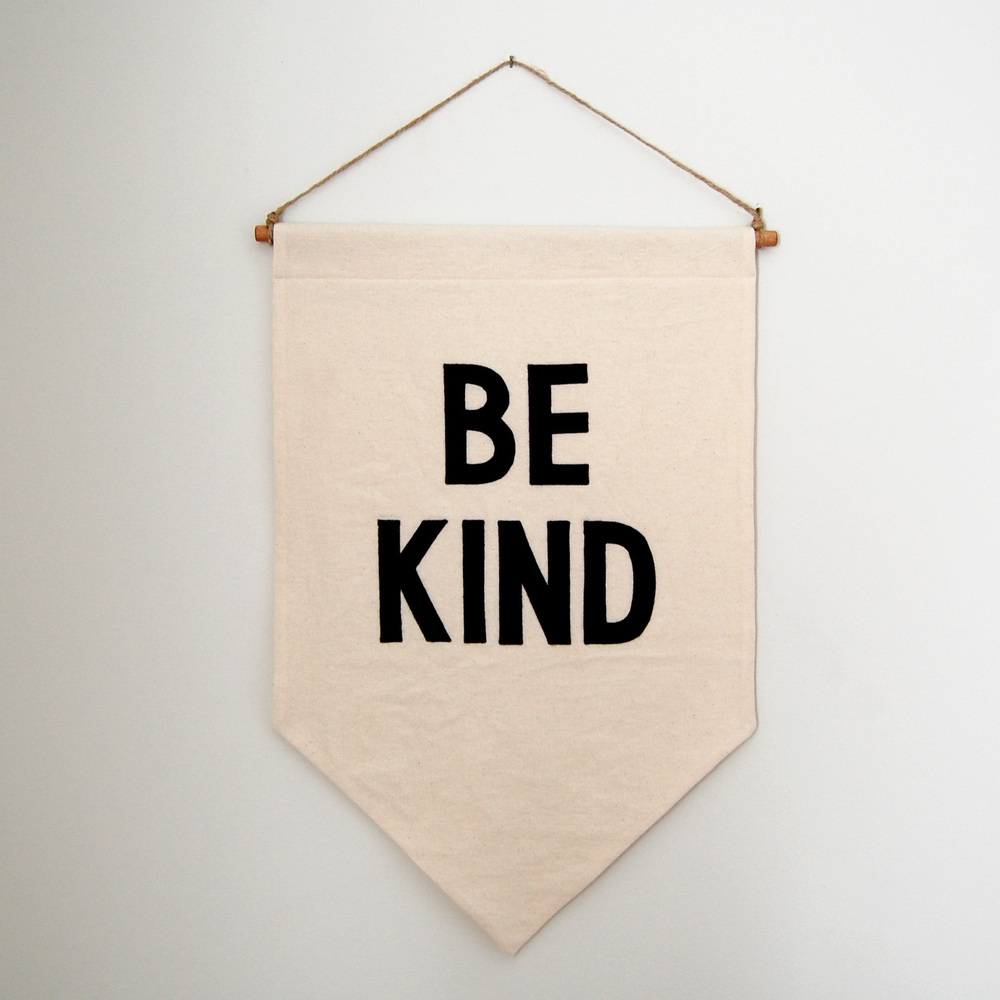
shco_bekind1

Be nice. Be kind. Share. Don’t hit people. Don’t say mean things. Apologize when you do something wrong. Clean up your own mess. Wash your hands. Put things back where you found them. Respect others. Watch out for traffic. Think and learn and play and draw.

Why is this so hard? Why do we complicate these things? I’m running out of words because no matter how complex the issue or the situation, no amount of nuance can mask the simple fact that these are the answers.

They have always been the answers.

We treat ourselves, our problems, our dramas with such reverence, as if they matter more than being kind. I want to believe that people can change people. I want to believe that we’re willing to look past our differences to co-exist.

But we just keep repeating ourselves in the same horrible, unconscionable fashion every few days, weeks or months – which is making it much, much harder for me to keep repeating myself in my writing.

The only words I’ve got left right now are these:

Be kind.

Standard
American culture, Life, Philosophy, Uncategorized

Drunk America

There is a hilarious recurring character on Saturday Night Live called “Drunk Uncle” that shows up from time to time on Weekend Update. Bobby Moynihan delightfully portrays the classic embodiment of every family member we distance ourselves from at holiday gatherings, who might be slightly drunk, slightly racially biased or worse, both.

At least, that was the starting point for the concept of the character. In more recent years and appearances, really Drunk Uncle has become the curmudgeon everyman, sarcastically and unapologetically pointing out how different the world has become through technology. His sweater and jacket combo are the same as his plight: the world kind of sucks right now.

Drunk Uncle – Graduation

As funny as these skits are, it is even funnier that most people laugh at the jokes, then turn around and find themselves doing many of the same things Drunk Uncle is condemning. Whether it is the off-handed slurs or the over-use of technology to promote oneself, we should be laughing at ourselves.

The problem is, we are so narcissistic, we don’t get that we are the punchline.

America is running afoul and we, as citizens, are too concerned with our own image and personal public relations campaign to notice. A misstep and we simply say we’re being individuals. We write off most things by throwing out catchy phrases, as pointed out in this New York Times piece.

“You do you”? “It is what it is”? “Keeping in real”? What the heck does any of that even mean, anyway? Of course you are doing you, who else would you be doing? Wouldn’t you doing someone else just be an imposter? It certainly is not what it is not. And why is there a strong need to keep things real? When did things become fake that we had to tell people we are keeping our feet on the ground?

We are always doing us. Sometimes it’s angry you, depressed you, happy you, volatile you, sarcastic you, hurt you, compassionate you, betrayed you, joyful you, religious you, feisty you, helpful you or spiteful you, but it’s always you.

Oh, but we like to pretend. We enjoy putting on the show of who we want the world to think we are. From trolling comment sections, Facebook posts and Twitter feeds, we’re all about that face.

Being insensitive, being narcissistic, being flat-out self-centered is not a license to write off your actions with “h8trs gonna h8!” This has wormed its way into society like a catchy pop song – oh, wait, it was a catchy pop song.

No, we’re not gonna hate.

We’re not allowed to even remotely look like we’re the eighth cousin, twice removed from hate. Then again, should you slightly, distantly look like you’re heading toward a path of hate, Haterade will rain down in buckets like you just won the national championship of hate.

Just please don’t look at the skeletons in our closet, right? Nothing to see here, move along! You do you, right?

(I did learn, it’s OK, however, to talk about hate in the past tense, as long as it involves Christian Laettner.)

Americans always seem ready and willing to stand and fight injustice – right after we’ve been shown just how bad it is by someone else, all the while ignoring our own issues and faults.

Anyone who tries to take away equality, or slightly resembles to treat different groups without equality is going to see a whole lot of what Indiana saw this past week (and what it will continue to see if something isn’t changed).

indiana law

It makes very little difference any more what is real or true about the bill that was passed, all that matters now is the fallout. The state is in the midst of a PR nightmare, one that has already been lost. The window has closed, the verdict sealed.

The world of social media has tried Indiana, it’s legislators, it’s governor, it’s people and passed down its verdict – there is no stopping the court of public opinion. Forget arguing that you can inform the uninformed, or “convince” anyone anything different than what they’ve already heard and believed.

The media dominates, writes the story, and controls the narrative. It is completely naïve to think otherwise. And the power of the medium allows for quick dissemination of a whole truckload of judgement, condemnation and reaction – and reaction to the reaction of a reaction.

Supporters say the bill is to defend religious freedom, opponents claim the law discriminates. We’ll never truly know.

It’s possibly safest to assume that both sides are correct. It’s always somewhere in the middle – a place we refuse to go or even visit. Compromise is one of the hardest places to find and it’s not labeled on any map. Siri can’t help you. Compromise does not allow it’s picture to be taken. It has too much humility to pose for a selfie, too much dignity to be reduced to a hashtag.

And this is why it eludes us.

We all have a sphere of influence; we just greatly misconstrue what to do with it. Social media allows you to build and sell your brand. Every post you make, every favorite, like, share and retweet.

Now, this may or may not be who you actually are – but that does not really matter. It is what you show the world you are. You are marketing you, and you build your brand.

If you want to change the world, hate won’t beat out hate. Shaming others won’t do it either. You cannot change the world, you can really only change your world – and by doing so, through your sphere of influence, the world around slowly changes over time.

So many people tell us of the ills of society (just check your news feed).  They will complain (check your news feed). They will condemn others who do not think and act as they do (maybe you should check your news feed). They will tell you that you are, in fact, wrong (you might find examples in your news feed). Now how many times when someone told you that you were wrong did it actually change your mind? (Bet it’s not in your news feed.)

I’ll venture a guess: Zero.

The message is half as important as the messenger.

Throughout history, powerful orators – great messengers who would no doubt come up with far better handles and hashtags – have influenced mass amounts of people to do really great things.

They have also persuaded entire populations to do really dumb things, terrible or horrific things.

The difference between disagreeing and intolerance is a thin line, and we are unaware that we have crossed it until it is too late. The same holds true then in how we conduct ourselves with others in person.

Life cannot be done as it is on social media. It is not a hashtag. Some of this stuff is real and important and needs to be treated as such.

Intolerance? Hatred? Unwilling to compromise?

Americans drunk on ego?

That’s not you?

Hopefully, that’s not anybody.

Standard
American culture, Communications, Society & Culture

Emoji’s & Emotions

Earlier this week, after finishing a family dinner, my wife and I randomly started listening to songs from our younger days while cleaning up.

Acting goofy at first, we probably looked like Ferris Bueller belting out some tunes in his shower at the start of a big day off. We picked a lot of fast paced songs, knowing it would draw some attention from the audience (OK, so it was our kids) if we kept up with the lyrics.

ferris-bueller-singing-in-the-shower

“You know a lot of words to a lot of songs, guys,” said our sweet-hearted 8-year-old daughter.

This comment sparked a conversation about how the words and lyrics to these old songs (weird to say, since most of them were late 90s and early 00s country songs) meant something different to both my wife and I.

As we sang in harmony (well, kinda), our daughter sat and stared for a little while. I could read her mind, and briefly, she seemed impressed that we had remembered and memorized the subtle voice inflections of each song.

Soon enough, her fascination ended and she went back to playing with her younger brothers, who were apparently caught in a game of home many pairs of underwear and ball shorts they could wear at once. They nicknamed themselves Capty Underwears and Capty Shorts, so clearly they weren’t listening to the songs to begin with. (And yes, this what 6-year-old and 3-year-old boys tend to do.) Our eldest son, turning 13 this Sunday, however, listened to the songs, but his eyes never came up from his iPad.

There was one song in particular that we listened to that made me realize how much our society has changed due to the technology advancements of just the past 10-15 years.

As my wife selected The Dixie Chicks “Travelin’ Soldier,” the overall themes found in the tragically sad love story of a young man sent off to Vietnam and the young girl he’d wrote letters to strike a different kind of chord with me.

It is painfully obvious that we’re drifting apart in our communications with each other. I have tackled this topic before, but I must admit, there is a hint of sadness within me that envelopes each advancement in technology and communications.

0418_couple-texting_sm

We don’t write love letters anymore.

We text emoji’s and short, grammatically incorrect phrases. And then we wonder why people don’t “get us” or wonder why we have a hard time communicating in serious relationships.

We don’t visit or call as much, we text and send Facebook messages and post on digital “walls.” And then we wonder why we don’t see our friends anymore.

Never has there been a more appropriate term than a Facebook “wall,” because in essence, I’ve come to realize that is truly what social media does: it builds walls.

We may be more “connected” than ever before in human history, but emotionally and spiritually, we are more disconnected than we can possibly imagine.

Last week, I read this story in the New York Times on the world of Middle School Instagram. Both fascinated and terrified, I couldn’t believe the emotional turmoil that takes place in the world of 7th grade girls and boys over who follows whom, their follower to followed ratios and who is tagged in each delicately planned post.

Look, I remember 7th grade. It’s no picnic. Hormones raging, self-doubt waging a war on perception versus reality. I cannot imagine having to do it in this social media driven world.

When we examine our exposure to and on these channels of communication, we come to find that we’ve often revealed too much for public consumption. I’ve heard many friends say this, and I agree: Had Facebook and Twitter been around in the 90s, I’m not sure I could get a job or be very well regarded today.

It’s not that I did anything illegal or terribly bad, it’s just that the whole world didn’t know about me and my buddies toilet papering a house in the fall of 1997, or the Spring Breaks in Florida, or…you know, I think I’ve proved my point.

It’s not that everything can be shared now so much as it is that not everything should be shared now.

Those private moments between you and some friends, you and a date, you and your wife or loved ones, those are yours. They build bonds and form deep friendship and companionship because you and they were the only ones to experience it, to know what it was like to be in that moment in time.

If you share every moment, trivial or significant, what is left to stand out? Why should the person who sat next to you in freshman algebra, but you haven’t spoken to since, well, freshman algebra, get to share that?

All I know is that I used to have deep, meaningful, philosophical conversations with several people who once meant a great deal to me – and still do. Mentors, family friends, buddies. For quite some time now, that has given way to text messages and birthday posts on a wall, joined by hundreds of other “friends” doing the same.

Time, distance, whatever the case may be, I miss those conversations. I miss those friends and mentors. My fear is that too much time has passed, too much left unspoken. Now, those relationships have been forever changed and altered. All because we stopped talking and started taking the time to take the time.

One of the strongest points of my relationship with my best friend, who happens to be my wife, is our commitment to talking. We started out talking in a college history class in the fall of 2003 and really haven’t shut up since.

I wrote her poems, she left notes on my truck windshield. I keep the first one she ever wrote in my wallet to this day.

note

For generations over, the world has communicated through talking face-to-face or with pen and paper. We had the time to thoughtfully prepare a letter, or a note.

Now, we can barely text 10 words with our thumbs without losing interest. We’re lazy in our friendships and relationships and the cracks are showing.

In the spaces in between TTYL and C YA SOON, lies what is unspoken, what is implied, what is missing. We’re connected, but we’re not connecting. I have fewer new memories with these family friends, buddies and mentors. While no doubt brought on by the busyness of life, we are fractured by what has not been said, what has not been mended or fixed, what lack of time has wrought.

As smiley face cannot replace a face with a smile. LOL cannot replace an a friend actually laughing out loud. These things are just meant to be placeholders until we can meet or talk again. Except for the part where we aren’t really getting together again.

Tonight, and for many more days and nights in the years ahead, my wife and I will try to combat the technological grip on societal interactions through our children. We’ll play music and listen to the words.

We will gather at dinner and talk about our days, our experiences, our frustrations and our successes.

We’ll try to get them to put the phones down and turn the TV off. We will encourage them to write notes and call their friends.

Emoji’s don’t equal emotions.

I’ve got a letter in my wallet that reminds me of that.

Standard