
American culture, American Politics, Life, pop culture, Society, Society & Culture, Uncategorized

One of These Days

tree_roots

There are no words, really, though I’ll type a thousand as therapy.

I’ve been staring at that picture of the tree above, with its old, bulky roots, for a few days, as the violence that has once again rocked America has once again led to a chorus of outcry for change. Perhaps what we need is a change in mindset to remember our roots as human beings.

As President John F. Kennedy once said, “For, in the final analysis, our most basic common link is that we all inhabit this small planet. We all breathe the same air. We all cherish our children’s future. And we are all mortal.”

That mortal part, we do not seem to value it enough.

One of these days, we’re going to wake up, I think.

One of these days, we’re going to realize we’re killing each other over senseless anger, I think.

One of these days, a friend will call and simply ask how it’s going, I think.

One of these days, the headlines won’t be filled with both the tragic and the trivial, I think.

I think I might be wrong.

One of these days, we’re going to reap it.

One of these days, someone with their finger on a very important button will go too far.

One of these days, we’ll just stop responding to texts and calls.

One of these days, we’ll just give up.

I hope I am wrong.

Yes, Black Lives Matter. And white lives matter. Asian lives matter. Christian lives matter. Muslim lives matter. Young lives matter. Old lives matter. American lives matter. Russian lives matter. Iraqi lives matter. Women’s lives matter. Men’s lives matter.

Our short-sighted solution to respond to an event by pulling into tighter, highly defined groups of ethnicity, race, gender or religion isn’t working. We’re dividing ourselves further and playing into the devil’s hand of hate.

In 1963, most of the world watched in astonishment as President Kennedy was assassinated in Dallas. Last night, nearly 53 years later, mere blocks from Dealey Plaza where Kennedy was assassinated, five Dallas police officers were assassinated by snipers, on the heels of two men shot to death by police in Minnesota and Louisiana.

We’re regressing, America.

We can argue about guns and who can have them, or if it makes sense to allow military grade weapons available to civilians all day long. We can get snarky about deleted e-mails or business ethics of presidential candidates for months. But that’s not the division that ails us.

Simply put: how do we legislate kindness, compassion – or the simple ability to leave each other alone?

On Monday, the United States celebrated its 240th birthday. As majestic fireworks filled the sky, I doubt I was alone in pondering the sheer awe of time that had passed since those responsible for declaring our independence had put ink to their cause.

I also wondered how long we have left, how much has changed since the late 1700s in the world and how one of the greatest things about being American is not only freedom, but feeling relatively safe in our everyday lives.

We are no longer safe. And if we are no longer safe, we are no longer free.

When guns are fired from downtown skyscraper parking garages (Dallas) or from interstate overpasses (Washington, D.C. many years ago), when people are shot in their cars reaching for their wallets (Louisiana) you start questioning your safety nearly all the time.

All this does is serve to separate us more. We pull back into our homes, our neighborhoods and stay out of the cities and protests. Freedom to assemble shouldn’t have to come from the fear of being shot.

The song remains the same. We’re dividing ourselves.

Technology and social media have put a wedge in our society. We might be perhaps more disconnected that we were hundreds of years ago, when there were far fewer of us and our homes were miles apart.

We all have a voice and opinion and want to be heard.

The problem is, no one is saying anything worth hearing.

We market ourselves in blur of posts and pictures. If the intent was to be connected with people we don’t see as much anymore, maybe that was an itch we didn’t need to scratch if this is all we plan to do with it. If we wanted to see and talk to all those old friends and family more, would distance matter? We could still pick up a phone and catch up.

We’re a nation of creepers on social media, as if a picture of smiles and 140 characters of text tell the whole story. No one is perfect. But we pretend to be, and we’d prefer to take swipes at other people – their errors and mistakes – by calling them out on social media.

We’re jealous and envious of those with seemingly more than us.

It’s either that or the common obsession we have to know who Taylor Swift is dating now. And as much as I think we’re all a little too interested in celebrity boyfriends and girlfriends gossip, it’s probably the former.

We’re on social media to stalk people we used to like or be close to, but aren’t anymore and this is our totally American way of snooping in from time to time on their life.

So many angry people in the world, yet they all look happy in the photos.

What does this have to do with the most recent tragedies in Dallas, Louisiana and Minnesota? The same as it did for Columbine, Sandy Hook, Aurora, Fresno and more.

Simply put, we just don’t treat each other very well and we’re hiding behind two things: a lack of self-esteem and insecurity.

I usually try to come up with a positive message at the end here, to tie it all together, to provide a spark of hope in an otherwise dark moment.

All I can come up with this time is that we can only take care of ourselves. Preaching, lecturing isn’t working. To be the change you want to see in the world, I suppose it’s the Nike tagline.

Just do it.

If we raise our children right, hug our spouse, wave to the neighbors, keep our commitments and just try our best to not stab each other in the back, shutdown the apps a little more, we’ll hopefully lay down an example to the next generation.

It would be nice if we were happy in the life we have, not the life we want others to perceive we have.

Worried about what to do yourself? Want your voice to matter in the world? At a loss of how to raise your children to avoid this in the future?

Start there.

Love yourself, your family and your life. Be proud of who you are and kind to those who aren’t like you. The young ones are watching.

And maybe, one of these days, they will have a chance to save us.

One of these days, I hope I am right.

Standard
American culture, NFL, Peyton Manning, Society & Culture, Tom Brady, Uncategorized

The Intervention of a Sports Addict

Sports are a drug.

They’ve probably always been a drug, and always will be a drug.

They soothe us, distract us, energize us, unite us, divide us, and entertain us.

They also blind us.

Americans are sports junkies.

And what do addicts do?

Deny that a problem or addiction exists in the first place. They ignore the obvious. They defend the indefensible. They keep right on using.

But they’ll ruin you. Mess up your mind.

You don’t believe me, do you?

So how about the fact that sports will make you deify someone you’ve never met? Doubt me?

Let me prove it to you.

How do you feel about Tom Brady? And now, how do you feel about Peyton Manning?

Allow yourself to independently judge both of these legends’ and their recent “situations.”

You couldn’t do it, could you?

Peyton Manning

Manning’s stories are promptly dismissed as “hit” jobs by people who want to tear him down through accusations of HGH and a young college kid who behaved immaturely.

Yet Brady’s stories are treated as fact, despite the little evidence produced in the 12 months since Deflategate began to actually prove 1) anything actually happened and 2) most importantly as it concerns Brady himself, that he had anything to do with it if the balls were actually deflated by humans.

The NFL still slings it out in court to prove they have the right to punish a player under the CBA, missing the entire point that, you know, you have to actually have proved the player should be punished at all. To do this, they uncovered thousands of e-mails and phone records to try and link Brady to it.

All we found out is he wants to play longer than Manning, he’s got an ego and he weirdly cares a lot about swim pool covers.

On the other side of the coin, Manning has seen his image take a hit over allegations that date back 20 years that he was basically a pervert to a female trainer at the University of Tennessee. This is on top of the allegations that he received several shipments of HGH (or his wife did) that coincide with his neck injury rehabilitation a few years back.

The Tennessee story has been out there since 1996 and Manning has settled the dispute twice – once when it happened and apparently again when he brought the trainer’s name up in a book. Why this is resurfacing now has everything to do with his name being attached to a Title IX lawsuit against Tennessee and it being 2016, the age of rabid, social media heathenry.

Meanwhile, it has been revealed that NFL players were shorted $100 million in revenues. The league office dismissed it as an accounting error. Anybody make a $100 million mistake at their job wouldn’t have a job the next day. Yet this story is not currently gaining much traction. Why?

Because we’ve already given them the money, so we don’t care if the rich players get richer or the rich owners are even richer. It’s monopoly money to us, anyway.

No, no, we addicts, we care about sentiment, about legacy, about being able to emphatically agree on some fantasy ranking of the greatest ever.

And we care about this all because it says a lot about who we are – at least so we think subconsciously.  We attach ourselves to these athletes and these teams so we can go through the pain of losing and the joy of winning together. Brady backers love the underdog story, Manning’s fans stuck by him through all the “he can’t win the big one” years. To us, this loyalty proves something about us.

We can’t like the wrong guy, we can’t be wrong, we can’t have invested in the wrong guy or bought into who he is as a person.

NCAA Football: Alabama at Mississippi

There’s a lot on the line for us average Jill and Joe’s because we’ve convinced ourselves that our fandom matters to other fans. We made it clear who we support – and not only is our guy better, but they are a better person, too.

Except for one, small problem.

It means nothing. We don’t know any of these people. We don’t know what they are like behind closed doors. We don’t know how kind they are or how ruthless they are or how sleezy they might be.

They might be innocent, they might be guilty. The vast majority of us have no clue. And yet we sports junkies feed the beast. We listen to the sports talk shows rattle on and on about it, driving up ratings, making them talk about it more. We click the stories all over social media, prompting more stories to be written about it.

We’re sheep. Inmates in a sports asylum walking around with blinders on, believing in sports and sports figures as if it was a religion. We’re dopes, buying the gear, buying the tickets at astronomical prices, buying into the belief systems and serious manner in which it’s all treated.

We’ve been sucked into world within our world where we think this stuff actually matters, like debating if four minutes is enough of a suspension for Ben Simmons cutting class last week?

I don’t know, and I don’t care anymore. Did that teach Simmons anything? Probably not. Why is he allowed to do that? Why do you care? Didn’t you cut class in college? Does it impact you if he doesn’t go to class?

We want fairness and equality in sports, in college programs? There’s too much money at stake to ever let it happen. We demand from coaches and athletes and administrators that which we ourselves cannot even do in our daily lives. We take shortcuts. We skip out. We complain. We don’t give max effort every single day.

But we sure expect everyone else in sports to. After all, they’ve been given a gift.

So have you.

You just choose to waste it.

Sports and extracurricular activities in general serve in building people in a variety of ways from a young age. They teach teamwork, dedication, commitment, perseverance and hard work to name just a few.

And wanting to be a part of that, as a parent or a fan, or both is good too. But too much of anything can turn into something you never intended – like convincing yourself that someone you’ve never met is good or evil, the embodiment of everything you love about sports – or everything you loathe.

Just be wary of absolutes.

Absolutes lead down a path of yelling at officials at a soccer game for four-year-olds. They make you crazy enough to attack someone physically in the parking lot after a game. Or throw batteries at Santa Claus (we’re looking at you, Philadelphia).

They make you believe in someone else that, like you, is human and fallible. Better yet, these absolutes have led you to wear the jersey of a character, a portrayal, an image of who that person wants you to see and believe.

I know this isn’t easy to admit. I know you think I’m crazy, that sports don’t control your life and that you couldn’t possible “worship” another human being so blindly.

But just go back to the beginning. What do you know and believe about Tom Brady? And what do you know and believe about Peyton Manning. Ask yourself which one is right and wrong, good and evil, guilty or innocent.

And now remember that it’s a trick question: you don’t know them or their situations – only what their enemies or their mouthpieces have allowed you to.

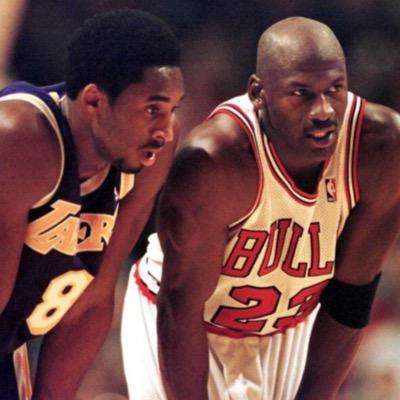
michael and kobe

In other words, you don’t know Peyton Manning or Tom Brady. Or Michael Jordan. Or Tiger Woods. Or Bob Knight. Or Serena Williams. Or Dean Smith. Or Kobe Bryant. Or Tim Duncan. Or LeBron James. Or Andre Aggasi. Or Danica Patrick.

No matter how much you think you do.

The first step is to admit there’s a problem.

Sports are a drug.

They soothe us, distract us, energize us, unite us, divide us, and entertain us.

And they most certainly blind us.

Standard
American culture, Culture, philosphy

Divided We Fall

There’s nothing I enjoy more than going into the elementary school about a week or so into the school year and seeing the work of our 7-and 9-year old kids and hearing from their teachers what the class is like.

They are eager to learn, they are happy to be there. They share. They are kind. They want to do what’s right and they don’t care what the other kids look like or where they come from.

In the classroom, they’re all equal. They just want to learn about the world.

But as adults, we realize how scary that world is – and how desperately it needs to change. At least this is true for America.

As the most recent horrific event unfolded this week – the assassination on live television of two Virginia-based TV staff – it occurred to me that many Americans are living in entirely different worlds.

Geographically, ideologically, racially, economy, we are divided. Perhaps even more so than ever, because there are just so many of us and we’re filing into categories, marketing profiles of who we are.

For instance, I live in a small city that just graduated from a town, with some racial diversity, but mostly well-to-do. My roads are a mix of heavily traveled commuters to the bigger downtown and back country roads that still wind around cornfields and cemeteries. People are generally friendly, our police do well to protect us, are kind and it’s a big deal if there is a bank robbery.

Then, I see that in Missouri, just outside of St. Louis, there’s a place where my experience is not relatable. It’s like opposite day, every day. There are inner cities and rural towns and places in between all over the United States where customs, rituals, emotions and norms are completely and wholly different from each other. Not one is necessarily better than another, just radically not the same.

And we ask that everyone come together to make decisions that apply to the country as a whole. It should not surprise us – yet somehow does – that we cannot agree on a whole heck of a lot. From gun control to abortion to gambling to gay marriage, we’re trying to yell the loudest in order to sound the strongest and most convinced that our way is the best way.

Except that our way is our way and we’re there’s really only about 25 percent of our society that agrees completely on a certain issue. Think about it: we’re subdivided constantly into these groups, these regions, these states, these cities and towns, so no wonder our primary concern is us and where we live and how we perceive the right way to do something is.

Yet what is good for Baltimore might not work in Chicago. What is good for Racine, Wisconsin might not work in Little Rock, Arkansas. What needs to happen to roadways on the North side of Indianapolis may not apply to the South side of Indianapolis.

We’re so busy coming up with solutions that we’re neglected the root of the questions.

Meanwhile, the big machine believes it has us pegged. Search for something on Google, it shows up for three weeks in your Facebook ad space. It thinks it knows you.

We barely know ourselves. And we don’t apply all our norms and customs accordingly when it doesn’t serve our needs.

Some of us have jobs in a corporate type setting where it would be impermissible and grounds for firing should we use personal e-mail accounts to conduct business. Yet Hilary Clinton can do it and those who support her make outlandish cases why it was OK, why it was justified and why those who question it are out of line and risking national security. Why? Because they want her to win the presidential election in 2016.

There’s no accountability of our officials, so why then would we ever think there is accountability for us in similar serious situations?

Republicans have spouted for years about having a viable, reliable and diverse candidate for president. So naturally, Donald Trump leads the preliminary polling. And naturally, his favorability increases with every outlandish, racially tinged and gender biased thing he says.

trump

Seriously? You’re going to woo swing voters by nominating someone who calls a female anchor on known right-leaning TV station a “bimbo”- and he’s likely running against a woman? Good luck with that. Trump didn’t like questions in the first debate – questions that he dodged and did not answer – about all kinds of real issues.

“How do we expect you to handle X or Y, when in the past you’ve done the complete opposite?” generally sums it up. Trump’s response? Name calling and mockery.

Hardly professional, hardly becoming and hardly convincing, Trump’s “throw stones in glass houses” approach has landed unceremoniously well on a generation of people who use social media in much the same regard.

Don’t agree with someone? Comment and bash them! Are they calling you out? Well, no sir, you shall call them out!

If you haven’t noticed this before, just scroll past the auto-playing videos of live TV murders and cats falling off couches. You’ll find it eventually.

Is this what we have become? Have we lost our collective minds? Is it possible that we take too much seriously and not enough seriously at the same time? We overreact about that which could use some level-headedness and underreact over those things which seem, at least to me, appalling.

Despite all our differences, I would think there is a baseline of acceptability out there for how we act, how we treat each other. But seeing that someone – actually many someones – believed it wise to post a replay of this week’s events in Virginia in the hours after, perhaps now it has become clear that we’ve our baseline has been not just misplaced, but is nowhere to be found.

It’s been wiped away by the need for followers and likes and having something “go viral.”

That’s all it is though.

A fleeting moment for you, a lifetime of hurt for the loved ones who lay down each night knowing that hundreds of millions have seen the grotesque manner in which their friends, family or colleagues died.

Despite my numerous pieces on our fallen angel of American society superiority, I remain hopeful for a better and brighter future. I cling to my personal reality, my world, my roads and my family. I try not to let my mind go down a dark path where I fear every moment for their safety in a world gone truly mad.

I keep hoping that we wake up, snap out of it and start trying to work through the underlying issues first, before we try to take on policies and procedures. I do this not in the hopes that 300 million others in this country agree with me personally, just that we agree that we’re going to disagree, that we can’t get what we want all the time and begin a road of compromise.

Look, I just don’t see 300 million Americans getting together for a large-group therapy session. So, in the absence of such an event, it could be a collective identification of who we are, what we stand for and what we believe.

The groundwork was laid with the Declaration of Independence, the Constitution and the Bill of Rights. But since those early days, Americans have constantly looked for ways to subdivide ourselves in order to find the majority on an issue that will allow them the right to impose their beliefs on the minority.

So perhaps instead of questionnaires and surveys – short of a census – that ask for gender, race, age, ethnicity, religion, city, state, marital status and income ranges, why don’t we just start responding that we’re Americans?

It just might be simple enough to start there and just be a little bit nicer, think of others first from time to time and share, and not care where we came from.

You know, kind of like first graders.

Standard
American culture, Donald Sterling, NBA, Uncategorized

A Wrong to Write

Over the past week, as Donald Sterling’s disturbing remarks came to light and the world reacted, I watched it unfold. From the statements to the ban to the talk of boycotts, I just listened, read and absorbed.

But for the first time, I wrote nothing.

It was not for lack of something to say, an angle or an opinion. Anyone who has read what I write about knows that I have no problem diving into a topic, sensitive or not, and navigating through it with thoughtful intent.

Donald SterlingOn Thursday, I finally had a complete, nuanced outline in my head of what I wanted to say on Sterling and the entire situation. About halfway through putting it from brain to laptop, a dear friend texted me and asked me what I thought and why I had not posted something about it.

I bounced my draft his way. It was a thought-provoking piece about race, racism, and the new social media justice that has evolved into a speedy, mob mentality that we should be fearful of should the topic not be something we could universally agree on (you know, like Donald Sterling being a slumlord scumbag who should certainly not own a basketball team.)  I asked if there was anything in it that could somehow be misconstrued or viewed as insensitive – certainly the last thing anyone wants, but especially on this topic.

His response was probably more thought-provoking than my piece.

It’s good, and you certainly spent a good enough amount of time making sure it was crystal clear that you didn’t agree with Sterling while making an entirely valid point. Freedom of speech and this social media component are an important distinction from this particular topic, but some might not make that distinction. You have to ask is it worth it for you? The sad part to me is that you even have to think about it.”

It wasn’t the response I was expecting, and it affected me. Why was I struggling to post it? Why did I wait so long? Was it because of the topic?

That’s not me – or at least it used to not be. More frequently than ever, I pass on stories that I feel I have a well-informed, researched and thought provoking opinion on. The mental war over what the fallout of negativity might be is just not worth it. This makes me slightly sad.

Are there more out there like me? Writers and journalists and bloggers afraid to post about certain topics because of the mob mentality of social media and the speed of judgment made now in America? I re-read my draft on the Sterling situation and found at least eight different instances where I used multiple adjectives to describe how disgusting I personally found the man to be – whilst trying to make a broader point about being careful how quickly we react. I was so concerned to make one thing clear (I’m not racist) that it was interfering with my other points (social media has changed how we react, is this a good thing?, etc.).

Do I really need to guard myself that much?

This is my passion. I admired and devoured the work of Frank Deford, Tony Kornheiser, Gary Smith, Ralph Wiley, Malcolm Gladwell, Chuck Klosterman and Bill Simmons growing up. I favorite author is probably George Orwell. Kornheiser’s piece on Nolan Ryan from the 1980 Sporting News is perhaps one of the finest pieces of long-form I’ve ever read. And Deford’s “The Deer Hunter” piece on Bob Knight in the fall of 1980 for Sports Illustrated rivals it.

Wiley’s catalog stands next to most as some of the best, thought-provoking and ingenious writing I’ve ever come across. I was deeply saddened when he passed away too young. Simmons was the first to use the internet, pop-culture and sports and wrap it up into a massive piece that left you laughing for hours.

Writing is an art. It is powerful. It has always inspired me because I believe words can inspire others, sway them, inform them and move them. Which is why I was perplexed by my hesitation to post what I knew would be a good take on this mess with Donald Sterling, the NBA, race and social media.

But I didn’t feel safe enough to post it because frankly – regardless if it was this topic or not – free speech is dying, if not dead. There are too many topics that immediately spark a response – no matter what the take or angle, no matter how thoughtful and sincere. You’re better off making fun of PED users, bad calls and questioning the NCAA than you are to actually discuss the nuanced issues facing both sports and society.

The reason free speech is dying is because of the very place that would seem to promote its use the most: the Internet.

Twitter and Facebook have caused a rapid shift in society and our culture. You can share whatever you want, but whatever you share is spread more rapidly than ever before. And it is not only shared, but dissected and rapidly responded to.

On the surface, this seems good. We tend to associate speed with progress – like the swift speed of booting Sterling from the NBA in 72 hours. In 1914, this would have taken months, if not years. In 2014, we do it in a matter of hours.

And as I said in the Sterling piece I will not be posting, that’s just fine in this instance. But is it fine because we all agree on who it was and what was said? What happens if the topic is more ambiguous next time? Will we still move so rapidly towards the decision?

How many times do you write something snarky on someone’s Facebook post or reply to a Tweet without truly thinking about what you are saying? What implications there might be in 10 minutes, 10 hours or 10 days? You don’t think, because you are reacting. And reacting is 100 percent emotional and spontaneous.

Social media has increased the speed and the volume of reaction and therefore emotion. We have a lot of emotion in the social media world today. This emotion, this anger over your opinion, mine and theirs is what leads to the reduction of use of free speech.

Free speech is a principle. You may not agree with it in its various forms, but the point it supposed to be that it is allowed. Like so many, I cannot fathom how Donald Sterling thinks the way he does in 2014. It is beyond insensitive, beyond embarrassing and beyond rational.

Free speech is also not something to hide behind. You cannot run from your words, or avoid a fallout. There can and will be consequences for the things we say – as there were and should be for Sterling. But if the person still wants to say something, under the Bill of Rights, it is allowed.

The absolute key, however, is that to check and balance this, we must make sure we do not lump in allowance with tolerance or permanence. They are each separate entities.

A principle has to be defended because it is a principle, not because we all happen to agree in this instance it was violated was for a perfectly good reason. The Sterling situation is obvious; what do we do and how do we react if this happens again, but it’s not about race? Are religious comments OK? How about sexual orientation? What happens when there are other shades of gray and moral ambiguity involved?

Why we must practice some patience is because of that very thing: next time. Here, the punishment and the reaction were befitting and deserving in this instance because we all agree it was offensive and there is no place for racism in this country.

But we must be aware it will now serve as a reference point to any and all future situations that may not be so unifying.  Better still, how do we feel about social media being able to so quickly affect decisions in this country, in our society?

This is a real thing, and it’s a reason that someone like me, who loves writing more than most and has been doing it for years, is left wondering whether I should or can freely express my opinions anymore.

Then again, I guess I just did.

Sigh.

I should have just scraped this whole thing and wrote jokes about quarterbacks and crab legs.

Twitter loves that sort of thing.

Standard
American culture, Life, Logic, Philosophy, Politics, Uncategorized

Upshot with a Downside

And….it just happened.

Another one of those, check yourself before you wreck yourself moments in modern day America.

dunce-capThe New York Times announced yesterday a new site, Upshot, which will essentially explain how to read the news that you, um, well…read. Aside from the whole Globo Gym vibe, what’s not to like, right?

According to their statement, Upshot believes many people do not understand the news as much as they would like [read: apparently we’re idiots]. We want to grasp big, complicated stories – like Obamacare, inequality, political campaigns, real estate and stock markets, but we’re just incapable of doing so, they say.

So the good folks at the totally cool, non-egotistical Times are going to help us all out in order to allow us the privilege of carrying on a conversation with family, friends and co-workers.

Sweet! Thanks, NYT!

Syrup-y sarcasm aside, I do see one reason to do something like this. We’re in the midst of a golden age of data. We’ve got data about data about how we react to data. Sites like FiveThirtyEight are giving us charts, numbers and graphs about all kinds of trends in science, economics, education, politics and sports.

If you truly want to know the numbers behind something – anything – now is your time to bask in the knowledge those numbers exist in droves. The only problem is we cannot keep up.

Before we can comprehend and understand something, there is a new hot topic just waiting to be data-driven into your newsfeeds and give you a headache – to which the data totally will tell you how many Tylenol you should take depending on the placement, angle and duration of said headache.

But there is another problem with the age of information – or several.

Do we need it? I mean, ALL of it? What are we doing with all this newfound information? And how can this education compete with our other obsession? You know, the one where we are celebrity-crazed and self-serving our own interests?

getty460x276Case in point: suppose the data told you that social media was awful for you, would you quit? Or that HBO programming was written to promote a set of Illuminati based ideals? Or what if they said it is unhealthy to have more than 150 friends on Facebook?

What if some set of analysis told us that all of this was trivial and meaningless?

Or how about this one: say some information is unearthed that proves we were better off emotionally in the 1830s, 1950s or 1980s and that all this technology, this rapidly evolving world is actually hindering our enjoyment of life?

Data talks, but we don’t always have to listen, right?

Over the past few years, I’ve been accused of perhaps being a bit too idealist. Generally speaking, I can understand why.

Nowadays, you cannot be too positive. It does not jive with the vibe. Anger, resentment, hostility bring reaction. And as Scott Van Pelt of ESPN said recently on his radio show, about Toronto mayor Rob Ford, it serves as no better proof that the best thing to be is famous, because it brings a reaction.

And we react the most to this culture of celebrity and negativity. Whoever is stirring the pot doesn’t matter as much the fact that we allow it to be stirred.

Which is entirely the reason why writing like this doesn’t get a push for eyeballs from The New York Times or Grantland: it’s not the trending, data-driven, analytical pieces being devoured and shared. Nobody wants to read it, they say.

By no means am I lamenting my status or place in this wired, literary world.

In fact, I am quite content with leaving these pieces for some future generation to unearth : “Look at this guy, it was like he time-traveled 60 years into the future and tried to convince people to proceed with caution and appealed to their common sense and values! What a maroon – those people needed Upshot to explain the news for crying out loud!

The truth is, it is a wired world – and it’s hard to get by with a smile. (Thanks to Cat Stevens for the inspiration to that hokey line.) Regardless, it remains: positivity at best seems to sell a product. Tony Robbins and quite a few out there make a good living encouraging others to stay positive.

That has never been the point of this, though.

Our contributions to society at large, to life in general, do not have to be based on a data set, or be outwardly public and self-serving.

We continue to do ourselves an injustice by ignoring the tipping point, you know, the one where we are farther and farther removed from the crux of our core values. But those are not punch lines, they should not be used as psychological tools.

In the film, The American President, Michael Douglas’ character, Andrew Shepherd has a great retort about how you win elections:

“You gather a group of middle-aged, middle-class, middle-income voters, who remember with longing an easier time, and you talk to them about family and American values and character.”

The response was intended to vilify the opponent who had gone on personal attacks against him, or to address the general perception of American politics in the 1990s and winning elections – which is still very much true today.

But the stark reality is what was missed in that quote, which is that there is truth in it. On some level, it is indeed what people are looking for. It is what might win elections because it is what people actually want: A time where things moved just a shade slower, trusted easier, worried less.

Values and character are not ideals to be strived for, but instead to be lived. They are proven through prudence, rationality, frugality, respect and pragmatism. In short, none of the things we truly are currently in society as a whole.

We assume that all this information will lend us a greater understanding or perspective on any number of topics, certainly of humanity and our role on this planet. It will not, because in some way, the message of Upshot is true: we do not understand everything. We cannot.

We were never probably meant to.

But what we can do is use this data and information to better ourselves. And if we are able to accomplish that, to make our lives better individually, then we’ll gradually make this world a better place, too.

Now that’s an upshot with no downside.

Standard