American culture, Life, Logic, Philosophy, Politics, Uncategorized

Upshot with a Downside

And….it just happened.

Another one of those, check yourself before you wreck yourself moments in modern day America.

dunce-capThe New York Times announced yesterday a new site, Upshot, which will essentially explain how to read the news that you, um, well…read. Aside from the whole Globo Gym vibe, what’s not to like, right?

According to their statement, Upshot believes many people do not understand the news as much as they would like [read: apparently we’re idiots]. We want to grasp big, complicated stories – like Obamacare, inequality, political campaigns, real estate and stock markets, but we’re just incapable of doing so, they say.

So the good folks at the totally cool, non-egotistical Times are going to help us all out in order to allow us the privilege of carrying on a conversation with family, friends and co-workers.

Sweet! Thanks, NYT!

Syrup-y sarcasm aside, I do see one reason to do something like this. We’re in the midst of a golden age of data. We’ve got data about data about how we react to data. Sites like FiveThirtyEight are giving us charts, numbers and graphs about all kinds of trends in science, economics, education, politics and sports.

If you truly want to know the numbers behind something – anything – now is your time to bask in the knowledge those numbers exist in droves. The only problem is we cannot keep up.

Before we can comprehend and understand something, there is a new hot topic just waiting to be data-driven into your newsfeeds and give you a headache – to which the data totally will tell you how many Tylenol you should take depending on the placement, angle and duration of said headache.

But there is another problem with the age of information – or several.

Do we need it? I mean, ALL of it? What are we doing with all this newfound information? And how can this education compete with our other obsession? You know, the one where we are celebrity-crazed and self-serving our own interests?

getty460x276Case in point: suppose the data told you that social media was awful for you, would you quit? Or that HBO programming was written to promote a set of Illuminati based ideals? Or what if they said it is unhealthy to have more than 150 friends on Facebook?

What if some set of analysis told us that all of this was trivial and meaningless?

Or how about this one: say some information is unearthed that proves we were better off emotionally in the 1830s, 1950s or 1980s and that all this technology, this rapidly evolving world is actually hindering our enjoyment of life?

Data talks, but we don’t always have to listen, right?

Over the past few years, I’ve been accused of perhaps being a bit too idealist. Generally speaking, I can understand why.

Nowadays, you cannot be too positive. It does not jive with the vibe. Anger, resentment, hostility bring reaction. And as Scott Van Pelt of ESPN said recently on his radio show, about Toronto mayor Rob Ford, it serves as no better proof that the best thing to be is famous, because it brings a reaction.

And we react the most to this culture of celebrity and negativity. Whoever is stirring the pot doesn’t matter as much the fact that we allow it to be stirred.

Which is entirely the reason why writing like this doesn’t get a push for eyeballs from The New York Times or Grantland: it’s not the trending, data-driven, analytical pieces being devoured and shared. Nobody wants to read it, they say.

By no means am I lamenting my status or place in this wired, literary world.

In fact, I am quite content with leaving these pieces for some future generation to unearth : “Look at this guy, it was like he time-traveled 60 years into the future and tried to convince people to proceed with caution and appealed to their common sense and values! What a maroon – those people needed Upshot to explain the news for crying out loud!

The truth is, it is a wired world – and it’s hard to get by with a smile. (Thanks to Cat Stevens for the inspiration to that hokey line.) Regardless, it remains: positivity at best seems to sell a product. Tony Robbins and quite a few out there make a good living encouraging others to stay positive.

That has never been the point of this, though.

Our contributions to society at large, to life in general, do not have to be based on a data set, or be outwardly public and self-serving.

We continue to do ourselves an injustice by ignoring the tipping point, you know, the one where we are farther and farther removed from the crux of our core values. But those are not punch lines, they should not be used as psychological tools.

In the film, The American President, Michael Douglas’ character, Andrew Shepherd has a great retort about how you win elections:

“You gather a group of middle-aged, middle-class, middle-income voters, who remember with longing an easier time, and you talk to them about family and American values and character.”

The response was intended to vilify the opponent who had gone on personal attacks against him, or to address the general perception of American politics in the 1990s and winning elections – which is still very much true today.

But the stark reality is what was missed in that quote, which is that there is truth in it. On some level, it is indeed what people are looking for. It is what might win elections because it is what people actually want: A time where things moved just a shade slower, trusted easier, worried less.

Values and character are not ideals to be strived for, but instead to be lived. They are proven through prudence, rationality, frugality, respect and pragmatism. In short, none of the things we truly are currently in society as a whole.

We assume that all this information will lend us a greater understanding or perspective on any number of topics, certainly of humanity and our role on this planet. It will not, because in some way, the message of Upshot is true: we do not understand everything. We cannot.

We were never probably meant to.

But what we can do is use this data and information to better ourselves. And if we are able to accomplish that, to make our lives better individually, then we’ll gradually make this world a better place, too.

Now that’s an upshot with no downside.

Standard
Life, Philosophy, Society, Uncategorized

The Tooth of the Matter

A few weeks ago, our precocious five-year-old son lost a tooth.  It was his first, but this tooth was lost unlike any other in family history: in Florida, on some side road just south of Fort Myers, in the rented mini-van, just after Mass.

drydenDarn thing just literally popped right out of his mouth. We could not locate its whereabouts, and in the midst of a family vacation-slash-destination wedding, it became a moment that passed.

But not before it was destined to become a fun mental memento. Really, at the end of a day, a week, a year – a lifetime – what is left but memories?

As I told our children driving home, in 30 years they would randomly remember something that sparks a bunch of other memories about this trip.  Perhaps it would be the bucket we took as a bathroom “back-up”. (Don’t judge.) Maybe it will be the lost tooth, or the family sing-alongs, the stop for breakfast at Cracker Barrel, the boat ride on an ocean inlet, the sunshine, and the smell of the air, a palm tree, their aunt’s wedding or the color of the couch at our condo.

But something will inevitably jog their memory, many years from now, about Spring Break 2014.

It will become just a drop into a bucket full of moments like this in their lives, which I truly hope overflows with smiles and happiness. Really, I wish that for us all.

Over the years – thousands of them – we humans have managed to create quite the environment for ourselves. We have created more types and kinds of work than our ancestors could possibly imagine.

We play with gadgets that were frankly incomprehensible just 10 years ago. We create these elaborate situations ourselves to impress upon others that we are busy, because busy in a universal modern language equates productivity, success, action.

We spend time polarizing ourselves from the world, choosing sides and wrestling with these really intense issues and topics of concern.

The older I get, the more I come to realize that we are more frequently than not alienating ourselves from the entire original theory: life is to be lived.

I think if I had my druthers – and a small fortune – I’d spend the majority of my days living. Oh sure, we all do that now – but I mean Matthew McConaughey-style: L-I-V-I-N.

And while I certainly sound as though I’ve turned into a free-spirited hippie, or someone who’s seen “Dazed and Confused” one too many times, you’re getting caught again in the semantics.

Make no mistake; there is often great value in what we all “do” on the daily. From doctors to teachers to janitors, most all of our professions, chosen or not, serve society in some way. There is certainly nothing wrong with working hard, burning the midnight oil and feeling as though what you are doing is somehow, in some way, making a difference and contributing something positive to society.

But it is a thin line between that emotion and seeing that notification number on our inboxes increase.  If we are honest with ourselves, we have reached a point in the world where we have to take mental stock of where we sit on that line. Are we pushing it in the sand? Have we crossed over it into a domain of obsession and perfectionism over a bunch of tasks that adds up to very little in the end? How can we be sure the side we are currently on is good or bad?

I might suggest it is a matter of faith. Not necessarily a matter of faith in a biblical sense, though that could be appropriate, but just faith in general.

The kind of faith that allows you to rest easy, for example, that the light will stay green. And though your eyes scan the road to verify no cars are running the red light, you put trust and faith in yourself, the rules of the road and others, that allows you to not ride your brakes and go through the intersection.

sunsetWe speak frequently of luck, of someone watching out for us or karma. No matter what you believe in, this faith tends to weaken if something bad happens. I would contend, however, this is not a matter of faith failing us or letting us down.

Something happened, yes, but not all situations have logic and reason. The same way sickness and poverty are not a punishment or a lesson or a curse. Whether or not you accept this relies entirely on your attitude and commitment to that general faith.

Will it be OK in the end? We really don’t know. But it will happen all the same.

Really, the only question in these moments is do we have the fortitude to focus our resolve?

The rest of the world calls this crazy – to believe in what you are doing when no one else does.

But this is my favorite kind of embrace of life. Who is it we are all listening to? Each other, so it would seem.

So, why are we taking financial advice from our friend that we used to sit next to in high school economics and doesn’t even know what TINSTAAFL means? Why are we taking love advice from the neighbor’s dog-walker’s-Aunt, who has been married three times?

Our situations are all generally just different enough that precedent does not really matter.

For everyone who thinks young marriage cannot last, I can show you dear friends of ours who are a shining example of how it can. For anyone that belittles your favorite movie or band, I’m sure we would mutually agree one of theirs was equally questionable.

This whole world we’ve created for ourselves inside the times we live is a byproduct of  the likes and dislikes of someone else, what’s popular and what just did not catch on. This is why wearing sandals in the winter gathers stares (and perhaps a cold): because it is just not normal.

You know what? I say wear your sandals in the winter should you want to – but not out of irony. Being different to be different is missing the point as well. Still, there is much to be praised for being different, for finding the undefined spaces between the lines and making your mark there.

Faith in oneself, in what you believe, is nothing more than a coping mechanism for getting through this world with some sense of a compass in hand. If you believe in something, then you have something to guide you. In this way, you will know deep inside your heart whether or not you are living each day with a purpose – a purpose defined solely for you and no one else.

Kind of unique, right?

This uniqueness, this independence, this idea continues to mold me, shape me and drive me.  We do not know when and where this will all end, only that it will. But in the time between now and then, what will we do to live? Not simply in just breathing and monitoring our day, completing our tasks, but to feel life, to live it?

There is great purpose in simply finding adventure in the day, in smiling, in laughing, in crying.

And yes, in losing a tooth.

Standard
Life, NCAA College Basketball, NCAA Tournament, Philosophy, positive thinking

Addition by Distraction

When Wichita State guard Fred VanVleet’s last second heave bounced helplessly off the rim in the final moments of a historic and emotionally draining loss to Kentucky, it was over.

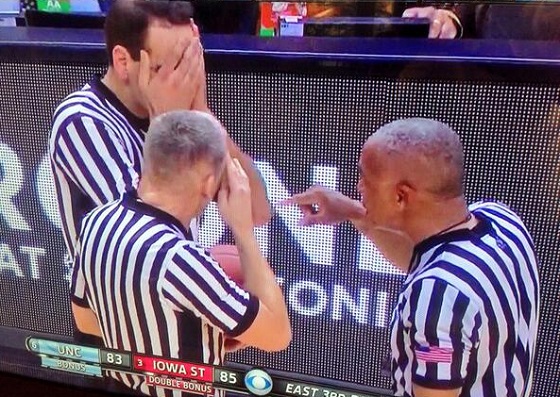
referees-iowa-state-north-carolinaWhen the refs of the Iowa State – North Carolina tilt got together shortly after the horn sounded, for what felt like another long NCAA Tournament commercial break, and decided that yes, in fact the math of delayed clocks starts and timeouts evened out, it was over.

Just like our upcoming Spring Break, my sister-in-laws pending nuptials, my son’s just-underway baseball season and that movie you have been dying to see.

These are all distractions, and they will eventually end. Many of them happy, of course, but what lies beyond?

We use these distractions, these things, these events in life as markers and moments to look forward to, to enjoy, knowing full well that nothing can last forever, but being just a tiny bit saddened when the reality sets in that the moment has indeed passed.

Time stops for no man, as they say.

Now, you can take this one of two ways. You can be saddened by this fact that everything ends and spend your days locked in nostalgia and reliving the past.

Or, you can choose to enjoy each moment for what it is. You can be here, now. You can choose to actively be present in your life. Immerse yourself in the good and the bad of it all and let the negativity and drama wash away.

As the great Dr. Seuss said, those who mind don’t matter and those who matter don’t mind. (I could be paraphrasing here.)

This is life and too much of it is spent on the trivial details that don’t really matter. The hard part is we rely on distractions to help us pass the time. We go from New Year’s to NFL Playoffs to College Basketball and March Madness to Baseball and Spring Break to summer cookouts, concerts, vacations, football of all levels to the Holidays. And then we repeat.

Mostly, we’re just trying to get through the day until the day becomes the end of the week. And we’re passing along through this life without truly getting the point.

Now, I do not pretend to know what the point is. And I’ve spent several hours writing about it in a variety of similar ways. I am still working on it. And that’s just it; you never really stop working on it. Life is kind of a long education.

So for the friends and readers who get tired of the motivational, introspective mumbo-jumbo I’ve been producing, that is perfectly understandable. I’ll give you the same advice I give myself, friends, family and colleagues all the time: choose something else.

Change your distractions so they are not subtracting from your life. Let your distractions be additions to your life.

Case in point: if friends on Facebook are annoying you with selfies and negativity, then hide them. Defriend them. Do whatever you gotta do. But at the end of the day, that is a you problem. It is their page and they can post 400 pictures of their kids, their vacations and as many happy quotes as they want. You don’t have to look at it.

Same goes for Twitter. If you don’t like my stream of Disney World construction photo retweets, surfing photos and random sports commentary that is perfectly OK. I’m a weird dude, and I am OK with it. But if you are not, then stop following me. We can still be friends.

But we tend to lock in on things and get stuck on repeat, focusing more on the other party (and what they do not even know they are doing to annoy you) than our own issues. In these cases, our distractions become our obsessions.

It is a fine line we toe between rooting for our favorite college basketball team to win a game – and getting into fisticuffs with a fan from a rival team…during dialysis treatments.

Distraction is being more than curious about what happened to the Malaysia flight that has still yet to be found. Crazy obsession is pretending to fly the plane like a five-year-old in his backyard on cable news.

We are constantly battling these two sides of ourselves. Distractions give life spice and variety, something to enjoy, something to look forward to, something to focus on. Hone in on them too much, though, and we become wild beasts obsessing over the material goods of the world.

Sadly, much the world has become about the material.

It occurred to me, somewhat rather recently, that the past few years have been nothing but a growth stage for me. I did not particularly think I had much left to do in the ways of growth, but I have felt as though my heart was physically expanding, my head hurting with new thoughts and new ideas, knowledge that I did not know I did not have.

And all this time – at least the past two years – I’ve been writing to myself in many ways. Trying to remind myself of what I value or at least what I should, what I need to keep valuing and what I need to let go, all for the sake of finding a positive path for myself and my family on this crazy road of life. It calms me and helps me remember that your destination is not a collection of trinkets, but instead of memories of time well spent collecting life.

Others, including some of those who are or were once quite dear to me, seem to disagree. And of course, to each his own. We can only control what we can control, which is just ourselves.

If you are bothered by the fact that someone you know has changed, then you miss the point. We all should change. Who wants to remain stagnant? Change implies motion, staying the same means there is nothing new to you, and I’m not a fan of reading the same book twice.

bakerGo onward, upward; get new experiences. Old friendships should serve to fuel new adventures, not rehashing old mistakes and slights. Either you can move on, forgive and forget or you cannot. But it does no good to remain in the status quo.

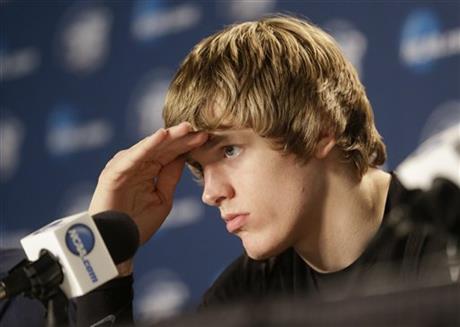
Not long after Wichita State had it’s perfect season ended at 35-0, redshirt sophomore Ron Baker, who had a fabulous game, blankly looked at the press and gave a great explanation of dealing with the loss to Kentucky.

“You’re going to go through some humps in your life, kind of like this one. It’s tough to see us go out like this,” Baker said. “At the end of the day, someone’s got to go home.”

It’s somewhat of a strangely put together quote, with a tinge of sadness, yet a grounded sense of optimism. And really, it’s true. You hate to see it end – whatever it is. Coming home from vacations are rough, the loss of a long friendship is rough, the end of a season that you’ve poured yourself into, is indeed tough.

But life is not over, it continues on. How you approach the next distraction, where you place it on the scale of overall importance can affect you for a large portion of time in this life. And I have somehow arrived at a point where I have mildly convinced myself that as long as it is, it is also quite short.

I like Kevin Bacon’s idea, frankly.

This is a party. Let’s dance.


Standard
Life, NFL, Philosophy, pop culture, positive thinking, Rashard Mendenhall

Pulling a Mendenhall

Last week, I heard a story on the radio that rated the Midwest, specifically the major metropolitan close to the suburb I reside in, as one of the hardest working cities in America.

No doubt, many who heard this locally puffed their chests out a little bit with pride. Others perhaps slightly lamented this fact, as they thought about the hours put in to their specific jobs and all the things they’d rather be doing. Both these groups and anyone in the middle carried on with their day, which was likely spent trying to impress someone else.

The brutal truth is this: We cede power of our self-worth to someone else’s opinion. In fact, we care way too much about what people think of us. We spend too much time wracking our brains over a comment someone makes, spinning it out of control in our own mind to the point of obsession.

Sadly, we let this define us. From our self-worth to emotional balance, we are infinitely more worried about someone’s opinion reign supreme over what we say we value.

Actions must always speak louder than words, and sometimes you’d be amazed at where you will find a voice of reason. I’d never given much thought to Rashard Mendenhall, an NFL running back who just announced over the weekend he was retiring at age 26. I did not know what his likes or his interests were, nor that they would even be close to my own.

In fact, upon hearing of his retirement, the immediate reaction I heard on talk radio was that of ridicule, mostly because why would someone throw away a promising NFL career at 26? All that money! All that fame!

mendenhallThen, you read Mendenhall’s thoughtful comments, delivered without a press conference or fanfare, and you get it. Or at least you should. He speaks of the changes in our society and not finding a way to fit in:

Today, game-day cameras follow the most popular players on teams; guys who dance after touchdowns are extolled on Dancing With the Starters; games are analyzed and brought to fans without any use of coaches tape; practice non-participants are reported throughout the week for predicted fantasy value; and success and failure for skill players is measured solely in stats and fantasy points. This is a very different model of football than the one I grew up with. My older brother coaches football at the high-school and youth level. One day he called me and said, “These kids don’t want to work hard. All they wanna do is look cool, celebrate after plays, and get more followers on Instagram!” I told him that they might actually have it figured out.

And he is absolutely correct. Times have changed, rapidly so, over the past 10 to 15 years. The increasingly connected world we have created through technology makes it a more social place, but a less emotional one. We do just kinda want to look cool.

If we look hard-working, put together and speak well, watch all the right shows and drive the right cars, then we’ve got what exactly? A meaningless, consumer-driven existence that we have built solely on what others think is meaningful or cool.

And that group of “others” is a rabid bunch, documenting every up-and-down. One minute, you are beloved, the next, a bum. In this constant over analysis, we forget there are no experts, just opinions. And as we know, Americans have lots of opinions – and we are paid and unpaid to share them.

As Mendenhall says:

There is a bold coarseness you receive from non-supporters that seems to only exist on the Internet. However, even if you try to avoid these things completely — because I’ve tried — somehow they still reach you. If not first-hand, then through friends and loved ones who take to heart all that they read and hear. I’m not a terribly sensitive person, so this stuff never really bothered me. That was until I realized that it actually had an impact my career. Over my career, I would learn that everything people say behind these computer and smartphones actually shape the perception of you — the brand, the athlete and the person.

Perception shaping reality? Around these parts? No… you don’t say. There is a snowball effect to perception, one of the lessons we did not learn from early educational books. And when we start to feel its effects, it damages us in many, many ways.

From our parents, to our coaches, our teachers and friends, we begin to rapidly care about what other people think of us. In a vacuum, influence is not necessarily a bad thing. When it changes who we are, why we do or do not do certain things, then influence holds too much power over us.

It strips away individuality that produces well-balanced and centered people. There is certainly enough room for all of us, with our various likes and interest, just not enough acceptance. We’re all like the movie “Mean Girls” and life continues to operate like the cool kids table in the cafeteria. That is, if you let it.

Mendenhall is getting out of professional football, at least to my understanding of what he’s saying because he is a person of various interests who wants to live a full and complete life. He’s done the NFL and it was fun, but now, it’s time for something else.

Over my career, because of my interests in dance, art and literature, my very calm demeanor, and my apparent lack of interest in sporting events on my Twitter page, people in the sporting world have sometimes questioned whether or not I love the game of football. I do. I always have. I am an athlete and a competitor. The only people who question that are the people who do not see how hard I work and how diligently I prepare to be great — week after week, season after season. I take those things very seriously. I’ve always been a professional. But I am not an entertainer. I never have been. Playing that role was never easy for me. The box deemed for professional athletes is a very small box. My wings spread a lot further than the acceptable athletic stereotypes and conformity was never a strong point of mine. My focus has always been on becoming a better me, not a second-rate somebody else. Sometimes I would suffer because of it, but every time I learned a lesson from it. And I’ll carry those lessons with me for the rest of my life.

steve-jobsThese are lessons we have all previously learned and now ignored. How many times are you questioned? Daily? Weekly? If you do not do whatever everyone else is doing or how they would do it, then obviously you must not love it or care about it, right? There is an unprecedented level of competition that has entered our minds – a battle between others and ourselves. A game of one-upsmanship, where anything you can do I can do better. I care more about my job than you do because you did not respond to the “urgent” e-mail at 10:05pm last night.

But rarely is that so. Most of us care. Most of us try. But this fight to keep perspective, it is a challenging one. It would be nice – yet unrealistic – if we all just believed when someone said they were working on it, taking care of it or that they tried their best.

Let your actions be your words.

Worried about your height and if people think you are too short or too tall? Worrying about it won’t make you grow, or shrink. Your ancestors and the gene pool took care of that long before now.

Worried about what clothes you wear, what car you drive, how you talk or what others will say when you meekly admit to having never watched “The Wire” or “Breaking Bad”? Why? What does any of that mean or say about you anyway?

To be proud of who you are and what you like is to be an individual, which means you are different. You are not just one of the crowd. We are not cattle, to be prodded toward unity. In the modern age, ridicule and harsh words are used as scorching prods and we are well branded by each other.

Mendenhall’s final statement rings most true:

As for the question of what will I do now, with an entire life in front of me? I say to that, I will LIVE! I plan to live in a way that I never have before, and that is freely, able to fully be me, without the expectation of representing any league, club, shield or city. I do have a plan going forward, but I will admit that I do not know how things will totally shape out. That is the beauty of it! I look forward to chasing my desires and passions without restriction, and to sharing them with anyone who wants to come along with me!

I could not think of anything better: a decision to be and live freely, without worry of judgment without expectation of what everyone else thinks.

We all kind of have a plan, but cannot begin to predict how it will play out. Uncool and unpopular and un-put together as that may seem, we could all afford to be called some of the most passionate people on the planet, who follow dreams and see what the road of life has in store. What if we were called some of the most relaxed, or even-keel, down-to-earth people in America?

Now that would be a statistic based on opinion I could learn to care about.

Standard
Uncategorized

Win the Day

How was your day?”

A common expression, generally done out of habit at the dinner table or upon arrival home, this little phrase is the first sentence in a Cliff Notes version of your life, written each day.

What comes out is entirely up to you, each and every day.

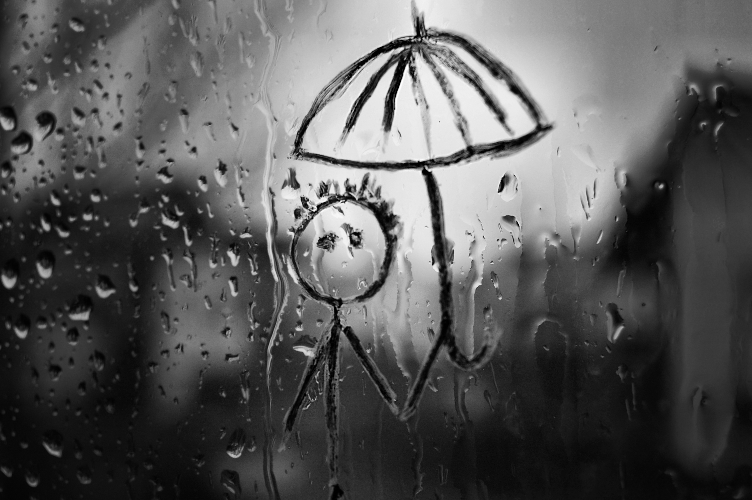
rainydayToo often than not, a series of mishaps, misadventures and stresses come tumbling from our lips. It seems that not so secretly, we have divulged that indeed, it was a miserable day.

Except, upon close, honest inspection, we realize it was not a bad day at all. In fact, most of us don’t experience too many bad days, should we properly define the term.

The problem is we defined a bad day long ago, in our first world sort of way.

The dog chewed up a toy, dinner burned and there are 455 dishes in the sink. We got angry at someone at work that didn’t do what we asked and didn’t think just like we wanted (the nerve, right?). After all, we are perfect and our way is clearly the best way, the only way.

Among my many faults, I have a cleanliness OCD wire in my brain that malfunctions constantly. I can’t enjoy anything without order in the kitchen and living room. And the more I try to let this go, the stronger the grip becomes. It is what I complain about to those that I care about. I’m half-tempted to just completely let go and not touch anything for a month to break my addiction to order and cleanliness.

We’re all guilty of this, it’s just we might have a different wire shorting out upstairs.

For some, other people trigger it, for others, politics might set them off. Could be anything, but the point is, we all have something that sets us down a path that has increasingly made the world a more difficult place to enjoy.

And only we are to blame for this paralyzing negativity that repeats itself and spreads like a disease. In fact, people you didn’t even talk to today or don’t even know are potentially being affected by your negativity – and mine – right now.

Somewhere, a friend is telling their spouse how horrible you are because you snapped at them about not going Dutch at lunch. Your brother is belittling your recent stance on gun control to your aunt, which of course led to a conversation with the cousin you haven’t seen in 10 years about the time you played cowboys as kids and used up all the nerf bullets, making you now, later in life, a hypocrite on gun control.

In turn, you talk about them as a defense mechanism.

And what does this get us? A distressed, angry society on the verge of completely flipping out until one day we do, in the most public of ways, of course, through social media or at a family dinner.

In short (too late), a life wasted.

And we’re already wasting enough of life, in the day-to-day, are we not? Consuming ourselves with gossip of either the civilian, hometown or celebrity kind, or with discussions on Mount Rushmore’s of basketball, the Dolphins locker room environment or if Apple has lost its touch because its latest gadget didn’t change your world and make you even more obsessed with playing with it and thereby ignoring your friends and family for hours on end.

These are all just distractions from the things that you’ll forget to remember when you’re old, should you be so lucky.

I read a fantastic piece in The New Yorker by Roger Angell, a 93-year-old man who still has all his faculties and clearly writes better in his 10th decade on this planet that I will ever. He speaks fluidly, and from the heart, about how much of life is underappreciated until there is nothing left but a wish for more time to appreciate it.

We’re just too busy to notice how eager we are to tell everyone how busy we are.

In truth, we were all wired wrong along the way. At some point, earlier in our lives, we were molded by a litany of different forces all impressing upon us what is and what is not important.

And most likely, it was wrong.

Yes, it’s important to be honest, to be on time, to give your best effort. Perfection is to be strived for, but can never be obtained.

We just are not perfect. And we never will be.

But hey, we’ve been told to “win” the game of life, so perfection can be obtained and will be obtained. Everything shall indeed henceforth be perfect.

Except it won’t.

Success and winning are notions based on what we perceive – what our parents and our friends and family perceived – to define those terms. Money, popularity, awards. These somehow justify that what was done to obtain them is in fact winning and success.

It’s not. We can’t define a game, what it means to win it, when we don’t even know how to play. We’re too busy looking at the scoreboard to notice what’s happening in the moment.

We’re missing it – all of us. We care more about our reputation and what is perceived to the point we don’t even know who we are.

The irony is, while we revel in one breath the success of individuals like Steve Jobs, Mark Twain or Albert Einstein, who thought and acted differently from the crowd, in the next breath we’re heartbreakingly removing those very elements from our lives and those closest to us.

“Act right!”

“Be normal!”

“Don’t embarrass me!”

After you are gone, the world will remember bits and pieces for a while, kept alive by those who knew you, knew of you and that you left your imprint on.

In short, as the saying goes, people remember how you made them feel. They will not remember what kind of gas mileage your environmentally safe car got, or that time your two-year-old pulled a total two-year-old move and threw a tantrum in the toy aisle of Target in front of everyone.

In reality, it wasn’t that bad. A minute or two of screaming on a random Thursday morning, and it wasn’t so much in front of everyone as it was an elderly gentleman four aisles over that you only noticed when he walked by four minutes later.

In short (too late, again), we tend to blow things a bit out of proportion.

sunset1And when you are gone, people might remember that, but only briefly.

The point is, we spend an inordinate amount of time looking at the ground instead of up at the sky. And if you take that as a faith-based metaphor, so be it. If you take that as a more direct reference to an artistic and emotive  world, where there is more beauty in the sky – even on a rainy day – than the ground, then so be that as well.

But are we describing sunsets or potholes in our lives?

What if the world’s problems could be solved if we simply started with ourselves and our four walls? Would discussions of gun control, taxes and the dysfunctional Dolphins locker room still be as relevant or important if we all just got a little happier, took the things that really don’t matter a little less seriously?

Perhaps the Beatles were right, love is all you need.

Smile more, grumble less.

Stop counting down to the next “big day” on your social calendar and realize the ones in between make it worth the wait. Those big dates are just mile markers, but the best stuff happens in the middle, in the daily.

Forget, as best you can, the wiring in your brain telling you to not be a minute late, that this, that and everything in between are really, really, super important. It’s life. It’s kind of all important and not at the same time.

Just enjoy the ride instead of examining the fuel intake ratio.

And the next time someone asks, “How was your day?”

Well, remember it’s all in how you define the answer, not the question.

You might be able to answer that you won today.

Standard