
American culture, American People., American Politics, Uncategorized

Bern Notice

doomsday-clock

How many times can you hear it?

This is the most “important” election of our lifetime.

Are things bad? Sure seems like it. Sure feels like it.

But in the vast history of this, our planet earth, we’ve probably experienced millions of potential tipping points. The clock always seems to read somewhere between five and seven minutes to midnight.

Doomsday is just around the corner.

Propelled by a media that abuses the medium for the purposes of ratings that return a financial windfall, we’re sucked into a web of negativity. And like the sheep we are, we digest this poison and ask for more.

Essentially, we are backfeeding our future, creating a self-fulfilling prophecy of negativity across all forms of relationships. From our unique self “we” to the collective “we” as Americans.

Long before the rise of Donald Trump, we went negative. We went nationalist and extremist and chided others for not thinking like we do. It’s all right there in our social media feeds. We have been doing this dance inside America for a long time. Every time we slam somebody else we’re creating divisiveness. And over some of the most inconsequential topics imaginable – like sports or professions.

So when you act shocked how someone like Donald Trump could be the leading Republican candidate for President of the United States, you shouldn’t be.

Oh, you can be stunned by how it got this far, not vote for him, and not agree with anything he says. Because the truth is, rhetoric is more than just words when it comes from a candidate trying to be elected to one of the highest positions of power in the world.

But understand all the same we created these candidates, and the vacuum that allowed them to waltz into our lives. It’s like a bad joke: “A billionaire, two liars, and a socialist walk into a bar…” – and I don’t think we want to stick around for the punchline.

Ironically, we seem to want someone who plays nice in the sandbox, except we don’t play nice in the sandbox ourselves.
Schermata-2013-12-09-alle-10.12

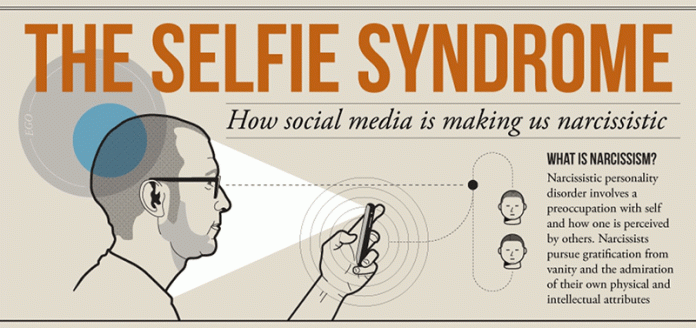
Our celebrity culture, our reality-era need for confrontation paved the way for Trump. Our own inferiority complexes made this possible. We mock Trump for his paranoia over the size of his hands, yet we take five selfies until we get the right angle so our chin doesn’t look fat.

We want to tell people to shut up sometimes. And increasingly with social media, we do. We want to call someone who annoys us, and doesn’t see things our way, something condescending, like, ‘Little Marco’ for instance.

We attack people who we think show too many pictures of their kids. We attack people who we think show too many pictures of their dogs or cats. We attack people who root for another sports team or player or coach we don’t like. We mock, we belittle, we deride with smarm and sarcasm, with passive-aggressive undertones. And then when the other party gets offended, we tell them to relax, that was “all in fun” or just “a joke.”

So, you see, there’s a little bit of The Donald in all of us, like it or not.

It doesn’t mean he’s a quality candidate for President of the United States. It means there is a very obvious reason he’s even a candidate for President of the United States.

This same analysis can be applied to Bernie Sanders. A truly shocking number of people – the vast majority of them young – “feel the Bern.”

And truthfully, this phenomenon should be far more concerning than the “Make America Great Again” reality show of Donald Trump.

The short-term and long-term proposition that millions of young Americans are flocking to the polls to vote for a white socialist in his mid-70s, who has unapologetically defended socialism all over the world, should be beyond frightening for Americans.

Never mind the truth that we’ve neglected to apparently teach millennials what socialism truly is, and what it can do. It reads like a utopia, but looks and smells like a dirty trash can filled with poo.

auf_freedom

Currently, 20 percent of the world’s population continues to live under communist regimes, in China, Vietnam, Cuba, Laos and North Korea. Not surprisingly, they also remain the largest violators of human rights in history. The opposition suppressed, detained, imprisoned, murdered.

You want to really be scared? Nearly 73% of Americans couldn’t tell you the cause of the Cold War just five years ago. That’s a question asked on the test for official U.S. Citizenship. Guaranteed, that number has gone up.

And if you are one of those, put down the Candy Crush and pick-up any text from your junior year high school history class.

How could we ever arrive at a point that we’re falling for the false sirens of socialism? Perhaps it begins with participation ribbons and trophies. We coddle ourselves. We are all special and unique in our own way, sure, but that doesn’t mean little Johnny didn’t work 10 times harder than little Timmy in order to rise to the top of the ranks. And this doesn’t just apply to sports. The valedictorian earned their As, the kid who didn’t study earned their C-.

That’s America. Or at least it was.

Now, we are an America that apparently thinks it is cool to hang out with Cuba, despite their political affiliation, despite their horrid human rights history and despite the violence and unspeakable poverty taking place in the streets outside the stadium where a baseball game was played yesterday, with our president wearing some shades and singing “Take Me Out to the Ballgame” in the stands.

The island in the sun, where everyone is completely equal, and treated equal, and lives a life of equality is a mirage. That mirage is socialism. There is no incentive. What’s yours is mine.

And forget being what you want to be. Want to be a doctor? Tough. Janitor. Want to be a janitor? Sorry, pig farmer. Want to be a pig farmer? Sorry, accountant.

You’ll be told what your role is by someone else. Identity and self-worth are stripped away. You are not an individual; you are just another person to keep the government functioning. A government that provides you with what little you have, which is the exact same as everyone else, no matter how hard you work or what you do, so you might want to watch what you say and where you say it, too. Don’t try and do it through art or music or literature, either.

Our American ancestors fought over 240 years ago for freedom from oppression and tyranny. Countries and citizens of nations the world over have begged and fought for freedom through generations, and once they got it, exposed the horrors of how fascism, socialism and communism ruined their lives, their families and their country.

But no one watches “60 Minutes” anymore, we’re too busy keeping up with Kardashians.

And now we have a majority of a generation who want to bring to that kind of political system to the ultimate beacon of freedom, the United States, just so they don’t have to pay for college or healthcare.

Never mind that it will be a college experience devoid of individual analysis and thought, where subjects and courses will be selected and pre-screened by the government…actually, wait, in socialism, is there even a need for college?

Must be why it’s free.

We are spoiled and entitled brats. Most of you reading won’t finish the 1,700 words in this blog – I know, you’ve got to get back to Facebook’s version of America’s funniest home videos.

But that is the vacuum we created that allowed us to feel the Bern.

Socialism, for in practice often known as communism, strips the mind, the body and the soul of individuality, of incentive, of self-worth.

animal_farm

But we don’t read Orwell anymore. Animal Farm probably invokes thoughts of a children’s book and 1984 is just a year in the past.

When the Cold War ended, there was an enormous drop-off in mass killings around the globe. When the Center for Global Policy at George Mason University researched this through a task force, it found the reason was because millions were freed from communism and police states at that time.

Despite what you read and hear through the media, mass killings around the globe have remained low for over 20 years. In fact, the 2010s are the some of the lowest in history.

But our younger, millennial brethren were born after all this Cold War mumbo jumbo. The Day After Tomorrow is more plausible to younger Americans than WarGames. Anyone younger than 28 doesn’t remember the fall of the Berlin Wall. To them, it is just text and pictures in a book.

Sanders will most likely not win this election. But millenials will take over as the largest sub-demographic of America in the not so distant future. And not one of them ever had a siren test for a nuclear war in grade school. This primary season should serve as warning to the disconnect we’ve created in our society.

We cannot protect and coddle anymore. There are no more participation trophies to give.

To be sure, America has its share of problems and issues. There will never be a utopia here on earth because of the humans that inhabit it. We are not perfect, nor will we ever be. We should always strive to do the best we can to care for one another, to root out injustice wherever possible and reduce the violent nature that stirs within the souls of the lost and help bring hope to the hopeless.

But do not mistake that kindness, that good intent, with willing subjugation.

Americans work hard. We compete. We push ourselves and go for our dreams. Sometimes we win, sometimes we lose. We’re gamblers, boundary-pushers and risk-takers.

But this isn’t Manor Farm.

If we’re going to become the anti-thesis of what we are and what we have been, if we’re going to backfeed into some twisted version of the future that is as dystopian as the media portrays, then I guess given the choice, there is no choice.

Better to let the clock tick to 11:58pm than have a society so lazy and unmotivated it just rolls over and falls back asleep when the alarm goes off.

Hitting snooze doesn’t save us.

Get up, America. It is time to get to work.

This is your Bern Notice.

Standard
American culture, NFL, Peyton Manning, Society & Culture, Tom Brady, Uncategorized

The Intervention of a Sports Addict

Sports are a drug.

They’ve probably always been a drug, and always will be a drug.

They soothe us, distract us, energize us, unite us, divide us, and entertain us.

They also blind us.

Americans are sports junkies.

And what do addicts do?

Deny that a problem or addiction exists in the first place. They ignore the obvious. They defend the indefensible. They keep right on using.

But they’ll ruin you. Mess up your mind.

You don’t believe me, do you?

So how about the fact that sports will make you deify someone you’ve never met? Doubt me?

Let me prove it to you.

How do you feel about Tom Brady? And now, how do you feel about Peyton Manning?

Allow yourself to independently judge both of these legends’ and their recent “situations.”

You couldn’t do it, could you?

Peyton Manning

Manning’s stories are promptly dismissed as “hit” jobs by people who want to tear him down through accusations of HGH and a young college kid who behaved immaturely.

Yet Brady’s stories are treated as fact, despite the little evidence produced in the 12 months since Deflategate began to actually prove 1) anything actually happened and 2) most importantly as it concerns Brady himself, that he had anything to do with it if the balls were actually deflated by humans.

The NFL still slings it out in court to prove they have the right to punish a player under the CBA, missing the entire point that, you know, you have to actually have proved the player should be punished at all. To do this, they uncovered thousands of e-mails and phone records to try and link Brady to it.

All we found out is he wants to play longer than Manning, he’s got an ego and he weirdly cares a lot about swim pool covers.

On the other side of the coin, Manning has seen his image take a hit over allegations that date back 20 years that he was basically a pervert to a female trainer at the University of Tennessee. This is on top of the allegations that he received several shipments of HGH (or his wife did) that coincide with his neck injury rehabilitation a few years back.

The Tennessee story has been out there since 1996 and Manning has settled the dispute twice – once when it happened and apparently again when he brought the trainer’s name up in a book. Why this is resurfacing now has everything to do with his name being attached to a Title IX lawsuit against Tennessee and it being 2016, the age of rabid, social media heathenry.

Meanwhile, it has been revealed that NFL players were shorted $100 million in revenues. The league office dismissed it as an accounting error. Anybody make a $100 million mistake at their job wouldn’t have a job the next day. Yet this story is not currently gaining much traction. Why?

Because we’ve already given them the money, so we don’t care if the rich players get richer or the rich owners are even richer. It’s monopoly money to us, anyway.

No, no, we addicts, we care about sentiment, about legacy, about being able to emphatically agree on some fantasy ranking of the greatest ever.

And we care about this all because it says a lot about who we are – at least so we think subconsciously.  We attach ourselves to these athletes and these teams so we can go through the pain of losing and the joy of winning together. Brady backers love the underdog story, Manning’s fans stuck by him through all the “he can’t win the big one” years. To us, this loyalty proves something about us.

We can’t like the wrong guy, we can’t be wrong, we can’t have invested in the wrong guy or bought into who he is as a person.

NCAA Football: Alabama at Mississippi

There’s a lot on the line for us average Jill and Joe’s because we’ve convinced ourselves that our fandom matters to other fans. We made it clear who we support – and not only is our guy better, but they are a better person, too.

Except for one, small problem.

It means nothing. We don’t know any of these people. We don’t know what they are like behind closed doors. We don’t know how kind they are or how ruthless they are or how sleezy they might be.

They might be innocent, they might be guilty. The vast majority of us have no clue. And yet we sports junkies feed the beast. We listen to the sports talk shows rattle on and on about it, driving up ratings, making them talk about it more. We click the stories all over social media, prompting more stories to be written about it.

We’re sheep. Inmates in a sports asylum walking around with blinders on, believing in sports and sports figures as if it was a religion. We’re dopes, buying the gear, buying the tickets at astronomical prices, buying into the belief systems and serious manner in which it’s all treated.

We’ve been sucked into world within our world where we think this stuff actually matters, like debating if four minutes is enough of a suspension for Ben Simmons cutting class last week?

I don’t know, and I don’t care anymore. Did that teach Simmons anything? Probably not. Why is he allowed to do that? Why do you care? Didn’t you cut class in college? Does it impact you if he doesn’t go to class?

We want fairness and equality in sports, in college programs? There’s too much money at stake to ever let it happen. We demand from coaches and athletes and administrators that which we ourselves cannot even do in our daily lives. We take shortcuts. We skip out. We complain. We don’t give max effort every single day.

But we sure expect everyone else in sports to. After all, they’ve been given a gift.

So have you.

You just choose to waste it.

Sports and extracurricular activities in general serve in building people in a variety of ways from a young age. They teach teamwork, dedication, commitment, perseverance and hard work to name just a few.

And wanting to be a part of that, as a parent or a fan, or both is good too. But too much of anything can turn into something you never intended – like convincing yourself that someone you’ve never met is good or evil, the embodiment of everything you love about sports – or everything you loathe.

Just be wary of absolutes.

Absolutes lead down a path of yelling at officials at a soccer game for four-year-olds. They make you crazy enough to attack someone physically in the parking lot after a game. Or throw batteries at Santa Claus (we’re looking at you, Philadelphia).

They make you believe in someone else that, like you, is human and fallible. Better yet, these absolutes have led you to wear the jersey of a character, a portrayal, an image of who that person wants you to see and believe.

I know this isn’t easy to admit. I know you think I’m crazy, that sports don’t control your life and that you couldn’t possible “worship” another human being so blindly.

But just go back to the beginning. What do you know and believe about Tom Brady? And what do you know and believe about Peyton Manning. Ask yourself which one is right and wrong, good and evil, guilty or innocent.

And now remember that it’s a trick question: you don’t know them or their situations – only what their enemies or their mouthpieces have allowed you to.

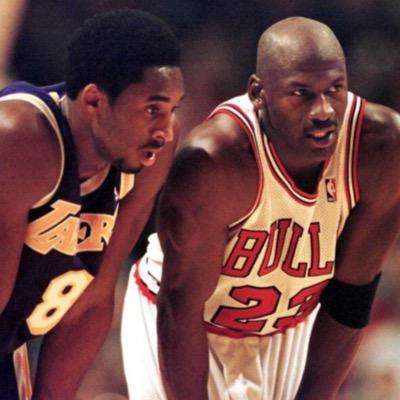
michael and kobe

In other words, you don’t know Peyton Manning or Tom Brady. Or Michael Jordan. Or Tiger Woods. Or Bob Knight. Or Serena Williams. Or Dean Smith. Or Kobe Bryant. Or Tim Duncan. Or LeBron James. Or Andre Aggasi. Or Danica Patrick.

No matter how much you think you do.

The first step is to admit there’s a problem.

Sports are a drug.

They soothe us, distract us, energize us, unite us, divide us, and entertain us.

And they most certainly blind us.

Standard
American culture, Chip Kelly, fired NFL coaches, gossip, Hollywood, Philadelphia Eagles, Star Wars, Star Wars: The Force Awakens, Uncategorized

Perceived Perfection

Two thousand sixteen.

We have arrived in this, the future, and it by all accounts resembles the recent past. In some cases, it might even resemble a distant past, too.

As a society, we seem to be tempered in our expectations of what we can accomplish because we see firsthand what we have been unable to accomplish to this point, all the while unaware of the fact we very much hand a part to play in what was unaccomplished all along.

So much displeasure going on all around us. So much lamenting. So much longing for the future, too busy to enjoy the present. A present which will become the past that we will begin to long for.

Ironic.

After all, what kind of malcontents would be if we didn’t endlessly hype how excited we were to be taken back to a galaxy far, far away in film, doll out a collective $1.7 billion in three weeks to see Star Wars: The Force Awakens, only to turn right around and bash it as “unimaginative” and whine about the former film prodigy J.J. Abrams’ lack of originality?

forceawakens4-xlarge

We beg – no, demand – updated classics, then complain when it’s too retro? We want retro Jordan’s and then complain that they are either too identical or not similar enough. Didn’t we skewer Indiana Jones and The Kingdom of the Crystal Skull for being not enough like the other Indy movies?

I can’t keep up. No one, pardon the pun, forced you to see that movie.

The same as no one forced George Lucas to sell the Lucasfilm and Star Wars galaxy for $4 billion to Disney. Those “white slavers” as he calls them.

Didn’t Lucas create Jar-Jar Binks?

Uh, I’ll just leave that out there, Mr. Lucas.

But Lucas is simply much the same as the rest of us in the modern age: immediately regretful of what we no longer have, though we didn’t treat it all that well when we had it and unable to move on to something else until we’ve sufficiently trashed it.

Sadly, the rest of us don’t have the $4 billion to ease the burden of negativity. Careful, George; remember what that path of anger and resentment can lead to?

But there’s another, deeper, more sinister than Sith reason we turned so quickly on Star Wars: The Force Awakens: snark.

The snark is all around us. Our snide remarks are becoming our only remarks as we remove ourselves more and more from the actual world to engaging with the vast majority of people electronically.

Would you really type half of what you do if you were to see the person in a hallway?

And how often has pressure from others led you to comment or fire off at the fingertips that which you wouldn’t have said previously?

Philadelphia Eagles owner Jeffrey Lurie called Chip Kelly a culture-builder, an excellent coach, someone he liked and respected and someone who didn’t need to prove anything to anyone just four months ago, in September 2015.

chip

Last week, Lurie couldn’t fire Kelly fast enough, leaked false info to the press about it, and generally smeared him for 48 straight hours.

Why?

The nameless, faceless social media mobs in full snark attack mode, pushed Lurie – who gave Andy Reid 14 years on the job until hiring Kelly – to do the exact opposite of what he said.

We’re all engaged in social media in some way, yet we’re terrified of it at the same time.

We hate to scroll through the feeds and see nearly 75 percent of what we are subjected to see, but addicted to the habit or the “information” we think we’re getting.

We don’t want to put it down, but we can’t put it up.

For every viral post about a child who had their wish fulfilled or someone doing a good deed for someone, there are 4,553 posts of selfies, quizzes and generally everyone complaining about something.

Better still: a good deed has to go “viral” to get the proper attention for it. Remember, if it is not on social media, it didn’t happen right?

Then again, there’s plenty of jibberish that passes through social media that does not pass the sniff test. Take the endless election cycle, for instance.

I’m not sure what I think about any of the 2016 presidential candidates because of the sensory overload I’ve experienced during the start of the campaign season.

And because I have no idea what they actually want to do through some combination of overexposure and underexposure, I feel completely unprepared to vote in six months, even though my state will vote too late for the primary to actually matter.

There’s both sincerity and sarcasm in that last paragraph. Sadly.

The truth is, I somewhat pity these folks. True, they make these boneheaded mistakes themselves, only to nosedive in polls that I thought everyone agreed three years ago didn’t really matter, but still.

If we thought the era of social media and treading and mea culpas had reached it’s pinnacle, think again. We’re roasting these candidates on the open fire of social media.

You step into the world of snark, you best come ready. Not many survive. And unfortunately, these candidates can’t play it cool like the rest of us: chilling on the sidelines, sharing only what we want to share, what we assume the online world wants to see from us: perceived perfection.

It is what we strive for now, perception. It can be any different types. We can become anything we want online, through our Insta-feeds, Twitter bios and Facebook posts.

We can be funny, we can be mysterious. We can be brooding, we can be political. We can be fit, we can be alcoholics. We can be vain, caring, jet-setters and turbulent.

I am sure it is not that cut and dry. I am certainly guilty of it, too. You can click through status updates and pictures of my five children, my wife and myself and you’d get a bunch of pearly whites and smiles at the intersection of Constant Fun and Perfect Family.

We are only perfect for us, folks. And some days, my neurosis leads me to wonder if I’m even perfect for them that day. We get angry. We cry. We lose our temper when the milk is spilled for the thirtieth time in 12 days.

You might like us for an afternoon or weekend, but we would get on your nerves, I swear. And likewise, I bet you would get on ours, too.

We’re all looking around at each other like we have got it together, but in reality, we are running our day-to-day lives more like the Cleveland Browns than the New England Patriots.

But apparently, life just looks better with a filter.

93831-instagram2-presets-for-lightroom-samples-tree-original-1358439909

Of course it does. Any sunset with palm trees and beaches looks enviable.

If it is your daily life that could use some contrast, sharpness, color and filter adjusted, consider being more social and less media.

Personally, my goal  in 2016 is to be a bit more transparent, to be more positive in my day-to-day life, less anxious and neurotic, and do my best to enjoy the present moment, unfiltered.

Plus, I have got to pay more attention to this presidential election thing.

I still don’t know what they stand for.

The polls say that’s not good, considering my gender, party affiliation, race, breakfast intake, height, income and inclination to watch Friends re-runs with my wife on Netflix.


Standard
Uncategorized

Cups Runneth Over

red cups

So we’re really doing this with the red Starbucks cups, huh?

I mean, this is where we plant our flag and draw our line in the sand? What will we think of to be offended by next? And when, if ever, will we see the hypocrisy in what we say versus what we do.

In the current age, words speak louder than action.

My social media feed is filled with cup lovers and cup haters. One post complaining about the media bias, the next post is a shared link to a story from the media.

I see Republicans, Libertarians and Democrats. I see Colts fans, Patriots fans, Bears fans, Packers fans, Pacers fans, Eagles fans, Cowboy fans. I see shared stories of someone having their last wish granted before dying of cancer, and someone telling us that bacon causes cancer and to never eat it again. I see Life Lessons from Garth Brooks and a post on how Bro Country is dead thanks to Chris Stapleton.

Well, does it matter to you that I ate some bacon last weekend? That I am not a Colts fan? That I find Florida Georgia Line’s music catchy?

What exactly is our obsession with a futile attempt at making others believe and think as we do?

I have no feelings about a red holiday cup, from an overpriced coffee shop, based out of Seattle, whose sole purpose is to make money off coffee concoctions. But it appears many others do have feelings. Very strong ones.

We’ve been warned of groupthink, of suppression, of fear-mongering, of the mob mentality many times over and long before now.

orwell

Ever read 1984? We still have not learned these lessons, and during a presidential election cycle, you’re bound to hear more references to Orwell’s warning on Big Brother.

Basically, the principles of 1984 are simple:

  1. Pervasive surveillance.
  2. Censorship and re-writing history.
  3. Consistent fear-mongering of an unseen, vague enemy.

Do we live in an era where the world depicted in 1984 is our reality? That is for you to decide. I see the similarities all around me, though.

Nearly all the major blockbuster action movies (Marvel’s Captain America: The Winter Soldier, Avengers: Age of Ultron, James Bond’s latest outing in Spectre, most of the Die Hard and Mission: Impossible films and roughly 4,211 other movies over the last decade focus on government or universal surveillance.

And this doesn’t have to be in art – stories across the news deal with spies, spying, security breaches and hacking.

Often, Nos. 1 and 3 are combined: we need to watch everyone do everything because there is an enemy lurking in the shadows that we must stop. It’s “for our own good.” Just like getting those forsaken red cups off the market is for our own good, right? Because whatever you believe is right, must be so.

How many times must censorship occur before we truly recognize it? This founding principle of the United States has been violated many times over – by some of the greatest and worst leaders in our history. Why? Because of the claim that it protects us from the enemy (No. 3). So we change the press release, we limit the information (like the Kennedy assassination, perhaps) or re-write it entirely (No. 2).

History is written by the winners, yes – but it’s also written by the ones holding the pen.

Freedom is not a slogan. Freedom means the ability to find out the facts. If we censor those, we lose our freedom. Yet we must allow ourselves to believe in it entirely. This means the freedom of someone else to love red cups. This means the freedom of someone to not celebrate Christmas as you do. Your rights and mine are protected because theirs are and vice-versa.

Do certain sections of our society feel marginalized by the politically correct culture? Certainly. But for all the wrong reasons.

It is not about how loud your faith and beliefs can be that makes you right and another person or group wrong. The loudest have the most to lose in most cases, feel the most threatened and probably are scared of being marginalized the most. No mattering creates the coiled snake reaction. You feel cornered, so you lash out.

But none of this makes you right.

If you truly believe in what you are doing, then the belief itself should be enough.

We fight the wrong battles.

It matters not who your war is with, as long as there is someone direct your opposition to, then people can be easily manipulated and will willingly go along with things they would otherwise morally oppose.

Do we even know what we agree with? We disagree and oppose so much that who can keep track? We miss the chances in our daily lives to show people the kindness of our particular brands of faith, of our parenting, of our race or gender.

With all that in mind: is there a war on Christmas? Are we really that afraid that Christmas will be marginalized? Do we really fear the unseen enemy meant to destroy the holidays with non-secularly designed coffee cups? Or are we being manipulated into buying more stuff to prove how faith based we are?

Up to you to decide.

Just keep in mind that someone – a pastor – actually suggested going to Starbucks and buying a beverage in the red cup and make them write “Merry Christmas” on it. He asked everyone to join him.

That’ll do it!

Convince others that’s the best way to show your displeasure by spending money in a place you disagree with and a cup you are upset with. Line their pockets with money.

That will most assuredly teach that particular barista – who just needs a job to put themselves through school and who’s never met anyone on the Starbucks marketing team – a lesson in the true meaning of Christmas.

Meanwhile, the guy behind you is “Mike” and all he wants is to get his drink and get out of there.

Starbucks – and any other retailer – is not responsible for spreading the gospel of one religion. Their goals and objectives are to make money for their shareholders in the most cost effective manner possible.

The simple fact is that Christmas has been honored and recognized as a religious holiday for thousands of years by those who believe in it.

It survived the time before mass commercialization.

It survived before the Santa Claus Coca-Cola campaign, before Norman Rockwell painted it, before the shopping mall was invented, before Bing Crosby sang “White Christmas” – and yes, before Starbucks made Peppermint Mocha Lattes.

I think it will manage to endure beyond the #RedCups saga of 2015.

We The People, on the other hand, could still use some work.

Standard
Uncategorized

Well Fed

When I first walked through the front door of the house that, unknowingly at the time, would help shape and define my adulthood, I smelled food.

Once I actually got into the kitchen, I saw copious amounts of it. I was flattered, really, that the parents of the girl I had just started dating would go to such trouble for little old me.

The massive kitchen table had bowls filled with all kinds of deliciousness: fruits, steamed vegetables, rolls, seasoned potatoes, chips, dips, salad, and like five kinds of dressing. There, in the middle, sat what must have been half a cow.

I could hang here – oh, I could definitely hang here.

family 5

Coming from a small family of three – just my parents and I – I’d never seen that much food for a Tuesday night dinner at home unless it was a holiday.

The family sat down – all seven of them – and proceeded to say grace and eat maybe half of the food on the table. For a little bit, I thought that perhaps someone had not joined us, a friend of a sibling, another family member I did not know about yet, or they were simply trying to empty the fridge of some items that were nearing expiration.

About a week later, I was back (sweet! I scored a return invite!), and the same thing happened again.

With what I can assume was roughly half a chicken farm plopped into the middle of the table, surrounded again by sides, sides of sides, distant cousins of sides, multiple grains of bread options and sauces for whatever your palette desired, I dove in.

Once again, there were plenty of leftovers.

Once again, the family said grace.

It didn’t take me long to realize that I enjoyed being well fed.

Soon, I understood that it had little to do with the food.

I quickly fell in love with the woman who became my wife, but I also fell in love with everything that made her, well, her: her faith and her family.

Soon, I began attending Sunday Mass with her and her family, just so I could stay a little longer. Confused on when to stand and when to kneel, but feeling like it was where I was meant to be, my soul began to feel well fed, too.

Her parents and siblings were loud and full of jokes and constantly moving. In general, my life became well fed with activity, with a sense of belonging to them.

When our marriage combined our families, I’d like to think we were well fed here, as well. My parents parties, quirks and traditions merged with my wife’s and vice versa. My parents and my in-laws merged together well.

As my wife and I started to expand our family, we noticed these little things that made us feel so, well, fed. Little gestures, little moments, tokens and symbols.

family 3

Many of these things came from my mother-in-law, perhaps one of the most quietly kind, thoughtful and caring women I’ve ever met. And when I say quiet, she never wanted anyone to know, her gestures and love were personal and to be shared with the people she was sharing with, not for external praise or gratitude.

Protective of her first-born daughter, she had to make sure I would stay, that I would be good, that I would be strong for her child. And once I proved that, well, the tokens and gestures of appreciation for how happy I made her daughter came in waves.

Once, a few months after we were married, I casually mentioned in the course of conversation how functional and cool I thought NorthFace fleece jackets were at one of our Sunday afternoon meals at their house.  I quietly mentioned to my wife I’d like to get one in the future, as I had not had one before, but it would be good for the fall and early winter.

My mother-in-law had overheard this, and a few days later, quietly handed me a bag with a new NorthFace jacket in it.

“Hey Bri, I saw this while I was out the other day and grabbed it, hope it fits and is what you were thinking of,” she said.

I was stunned. It wasn’t Christmas or my birthday, and I didn’t even think she had heard me. I thanked her repeatedly, but she just smiled and waved it off.

“It’s no big deal,” she said, moving into the kitchen to – you guessed it – prepare a smorgasbord.

These moments were frequent over the years: favorite meals, pumpkin pies, random clothing bags – and obviously, not just for me. For everyone. Meals remained large. Guests, friends of friends, all were welcome to the table, no matter the hour.

They did this for everyone, from friends of friends to people they had never even met. And it was always time to grab a beer or a glass of wine.

At restaurants, they picked up the check every time, without hesitation. If you are fast – which I think happened about five times in 12 years – you could get the bill and pay for it before they did. Of course, then they were on to you and they’d ensure before we even ordered that the bill would be going to them at every meal for the next year.

Well fed, indeed.

The giving never stopped, through three weddings, several graduations, and numerous births of grandchildren. They helped watch our children so my wife could work, re-arranging schedules to help accommodate ours. We’d walk in to watch a football game at their house to find a massive box of diapers sitting by the back door.

“Can never have too many of those!” they’d laugh.

The giving never stopped, not even after my mother-in-law was diagnosed with cancer in late 2013. She kept her illness quiet for the majority of the battle, forging through treatment, chemo, and surgeries. Through it all, they kept giving. Giving to their children, to extended family, to strangers.

They just kept feeding us.

family 6

The weekly meals never really stopped. The gifts, tokens, gestures never stopped. Mass on Sunday never stopped.

Our hearts were broken however, when the cancer took my mother-in-law to Heaven last month.

But in our grief, there is a realization that the cancer did not win. We won’t let it. Though the past 30 days have been incredibly difficult at times, now, I feel like I understand what this has all been about, what it is all for.

We were well fed.

In my writing, I rarely speak of faith and scripture.

But these days, it feels like it jumps out of everything I see and do. My mother-in-law’s life can be best described simply by Matthew 28:19. You see, she went and made disciples, people who would give, who would love, who would make those around them well fed.

family 1

This begins with her children. My brothers-in-law, good men who give back in their own uniquely talented way, through church, through friends, to their family. My wife’s sister, to dogs in need of rescue, to friends in need of a hug, of love and support, to her husband, to her gym. My wife, to her children, to her friends, her church, through coaching and teaching history, health and nutrition.

And they, in turn, have made disciples with their spouses. This is life, this is what we were meant to do: leave the world better than we found it. Someway, somehow. We often doubt we’re making an impact, we can grow frustrated at the mundane, the imperfect world around us. But on further review, we’re impacting others’ lives every day in the ways that matter the most: consistent love.

We live on in how we lived in the first place.

Today, somewhere in place I can only dream and imagine of, my mother-in-law is now the one well fed, perhaps hearing what can only be described as long deserved:

“Well done, my good and faithful servant. You have been faithful in handling this small amount, so now I will give you many more responsibilities. Let us celebrate together.”

Now, it is our turn.

We celebrate her life by doing our best to carry on that legacy and doing our small part to make the world well fed in mind, body and spirit, each in our own way.

There’s a reason we always had food leftover.

Others need to be well fed, too.

Because there is always room for more at a table of plenty.

Standard