This has to be the best week of Jim Nantz’ year, right? First, he waxes poetic at the NCAA Final Four, then he heads to Augusta to host The Masters.
He has a great job, to be sure, but as a friend and I were discussing this week, at this point, Nantz has become a caricature of himself. Jim Nantz now just does Jim Nantz. He’s a brand now, like many who’ve been in the business for 30-plus years, and really, you know what you’re getting at this point.

Which led me to wonder, as golf’s most revered event tees off tomorrow: is Tiger Woods just doing Tiger Woods now?
For the first time since his wild Thanksgiving weekend a few years ago, he’s the favorite – once again the world’s No. 1 golfer. And for the first time in a long time, people are asking, “who do you take, Tiger or the field”?
Yes, Woods is back, for sure, rounding into form and winning tournaments again. He remains four shy of Jack Nicklaus’ all-time total for majors won and said this week he feels he can win four or five more, but doesn’t want to stop there.
“I feel comfortable with every aspect of my game,” Woods said. “I feel that I’ve improved and I’m far more consistent.”
After hearing this, and much of his conversation with Mike Tirico, I couldn’t help but wonder: Tiger feels things? Even when talking about golf?
Woods has always been this enigma, even before his marital infidelity derailed his career. The tournaments he played in – few and far between for a period of about 12-16 months – showed us a Woods who looked like he was either in agony or constipated. Or both.
The whole saga made him seem both more human and inhuman at the same time. His press conferences, solemn as you would expect, seemed to lack real context or meaning behind his words, his apologies.
Kind of like how he acted the previous decade, just without all the sex scandal stuff. Woods always seemed measured, collected and calculated. This very thing is what made him the most dominant golfer I’ll ever see. It’s what brought on that incredible streak from 1999-2001 where he literally obliterated the golf world.
But this calculating, measured, robotic personality also kept him somewhat distant from us.

We never really know who these athletes are or what they do when they aren’t wowing us with their incredible skills and talents, and we’ve kind of become alright with that. It’s best for us to just let their results sit in a separate place from any judgment we place on how they live their life privately. After all, would we want people to judge us?
Americans love the dirty details and deeds of public personas. Always have, always will – and that’s not an endorsement. In fact, that’s part of a larger cultural problem we face.
However, public people like Tiger Woods and Louisville coach Rick Pitino, who just secured his second national championship a few years after a similar situation to Woods’, also must understand they have some accountability in the media frenzy that ensues.
You can’t soak up the spotlight, comport yourself a particular way and engage in your own branding that further establishes the narrative of “who you are” and then when you’re exposed to have personal flaws, act self-righteous or indigent to the reaction or the coverage. Well, actually, you can, I suppose do anything you want, you just look like Steve Martin in The Jerk.
Because the idea presented the whole time was you were someone to be held up as an example of the right way to do things, of hard work, of a person who did right and acted a certain way outside of the realm of sports, then you fed the beast, pal.
To be fair, the word role model is overused and says more about the people who need them than it does the person being flaunted as one. If you need a role model in a sports or public figure, you’re probably looking in the wrong place and have bigger problems – or you are under the age of 16.
Yet it remains clear that its simply not enough to engage in promoting oneself as a brand, an image or a persona – and then get defensive when the coverage turns negative because of something you did in your personal life.
The problem becomes when you come to realize that these people really arejust like us – except they are extremely talented in one specific area that we’ve all universally agreed is somehow interesting to us. In essence, they don’t always know what they are doing, who they are, what they believe. The face dilemmas, they go through family problems, financial troubles.
Our own expectations for sports and public figures has rested in a bit of a Fantasyland, a constant dream state of ideal people doing wonderfully cool and exciting things. We expect more from them than we do ourselves because they aren’t human to us in the sense we can’t even begin to relate to them. Which begs the question, who do they relate to? What’s normal for them? What keeps them grounded? What are their lives and goals beyond random sports accomplishments?
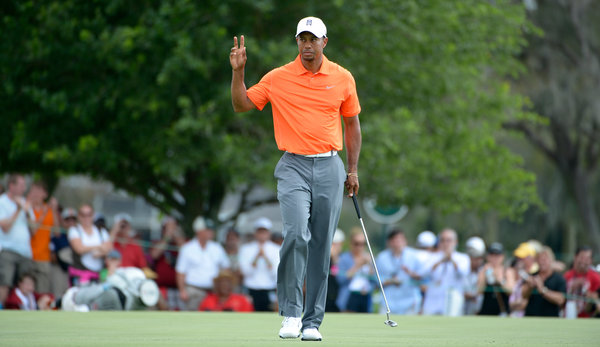
Tiger himself has always remained a curious case. He’s on a different plane than even most celebrities, most sports figures. What drives him? He’s like some programmed golf-droid, yet he’s one of the few golfers who showed emotion, both good and bad, on the course. He speaks of swing changes, of making putts, of the nuances of Augusta National and so on.
What drives him? What makes Tiger want to win five more majors? Is it just the number and passing Jack? The idea that he would then be considered the greatest ever? That’s good enough for me – but I’m simply curious, is it good enough for him?
Tiger says winning fixes everything (at least his new Nike ad does). This has upset some, but it’s true. We like winners, and winners with flaws are still more likeable and forgivable than losers with flaws. The winning is enough for us now. The pursuit of majors, of the drama of a Sunday major is all we really want because once we found out what we always wanted to know about Tiger, as is often the case with our public heroes, we didn’t like everything we saw.
We can continue to dream a dream of a perfect world where our sports icons don’t cheat – in their marriages or on the field of play – where they don’t curse, or party late into the night or make bad decisions with their money, their bodies, their minds. It may be unrealistic, but many dreams are a representation of what we want to be, not what is.
Still, it comes back to this all not really ever being about us. On the eve of The Masters, even if it sounds a little too Nantz-ian, you have to wonder:
What do Tigers dream of?




 worldbetweenlines.com