
“It’s not what you look at that matters, it’s what you see.” – Henry David Thoreau
Several weeks ago, my oldest child turned and asked me a question I’ve been secretly asking myself for months.
“Why haven’t you written anything lately, Dad?”
I stared blankly back at him, my mind firing off excuses – and truths – as to why I had not done any writing since January. I wanted to give a good answer, something philosophical perhaps.
“Just haven’t, buddy,” I said instead.
Wouldn’t Hemingway would be proud of that eloquent answer?
The truth is I kind of already knew why I had not put anything in this space since I bombastically quit Facebook in my last prose.
In fact, I had drafted about five or six pieces in the months since, but deemed them all too heavy, too poor in quality or just gave up out of lack of motivation to finish a post.
I had something on the horrible events in Las Vegas and our loss of humanity in these senseless moments, I had a piece on grief, a piece on Fake News, and one about all the trivial pursuits we chase in life.
And I shared them with no one.
If I’m honest with myself, the lack of writing over the past year is largely due to feeling like all I’d be doing is repeating the same narrative I’ve spent the last five years writing about: society, social media and the loss of identity (both self and national).
Was this writer’s block, or just boredom?
And then it struck me: This blog was really more like a book – or at minimum a long thesis – on a specific topic with chapters done in real time over the previous four or five years as posts. It’s garbled and not in actual hard copy form, and would require massive amounts of editing, a publisher and probably a hundred other things, but look! I wrote a book!
And any book, as such, deserves an epilogue. A director’s cut outtake of the proceedings. So, let’s let this entry serve as an epilogue to this site over the past four or five years.
Here’s why this thread has to stop for me: I am sick of myself when it comes to writing about social media and its impact on our culture. After all this time, I think I’ve made my feelings known.
But here’s why this topic captured me for such a long period of time: I believe what I write, or at least maybe just I want to. Above all, I want it to be genuine. As I’ve claimed many times, we are not the perfect robotic creations our social media feeds make us appear to be.
You see all the smiling photos, the congratulations, the “I’m so proud” comments, and miss the moments of breakdown in between where life is not nearly as pretty. Because life is not always pretty, and it cannot be hashtagged. And we are beautiful, inherently flawed, imperfect human beings.
And those imperfect human beings do horrible things to each other. Looking back, this began on my old blog, with the overly thought title of The Necker Cube. The site had been a platform for me to keep writing about sports after my sports writing career ended (columns, blogs, magazine).
But I grew tired of the sports narrative and the Sandy Hook tragedy caught my attention in such a moving and painful way that I felt compelled to comment on it.
(Note: if you click on some of the older links to these posts, be aware they were pulled from said former site and have not been edited for spacing – i.e. the lines run on strangely).
The entry prior to a post on the events at Sandy Hook, called The Growing Divide, was first entry in this so-called book. And the archives show a writer flipping back and forth for a time between social commentary and traditional sports commentary. Sometimes I even mixed the two.
And then the Boston Marathon bombing happened and I began thinking about Switzerland. I dealt with the backlash of the Ice Bucket Challenge, and Miley Cyrus leading a mini-Molly revolution of “we do what we want” angst.
There was the time I wrote about (one of probably 20 times I did) how we’d become obsessed through social media of giving our opinion on someone’s else’s opinion (what a wormhole). I spent some time holding us accountable. And gave that narrative some additional thoughts. Basically, a lot of it can be solved with kindness.
But I also tried to unwrap the media’s growing fascination with itself and the media’s ever-expanding use of rumors and unnamed sources. All this in an effort to be first – or to incite ratings and division. And we spend a lot of time being divided. There are also the times when the media blurs the lines of reporting, journalism and the monetary backers propping up these outlets.
Part of my problem has been that I just did not want to see us get swallowed by the groupthink and mob mentality. We’ve spent a lot of time on selfies and allowing ourselves to be marginalized. And that bubbling melting pot has been on the verge of boiling over. In fact, one of my last pieces in this series was after the election (and was the second-most read post I’ve ever made at 1,100 views).
Sadly, it has gotten worse – somehow.
Yet, some of my favorite pieces were about my own family and life in raising a large family during this small era. At times, it was like a dark comedy, cause you have to just laugh at the absurdity of it all. At others, it was a serious test of the blurred lines between media responsibility and parenting, with a key example of a Super Bowl Sunday that went in a direction I did not expect. And there was a life-changing family moment that has ripples personally to this day, that many can relate to: the loss of a loved one. (That one, by far the most popular thing I’ve ever written, has garnered over 1,200 reads to date.)
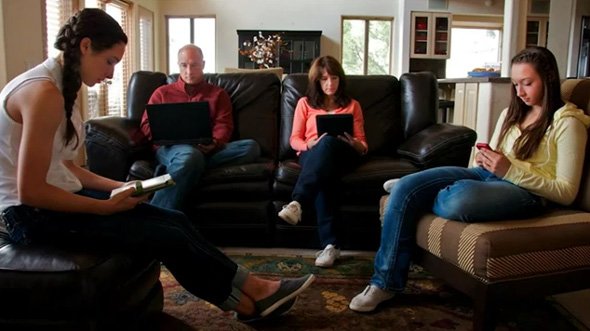
The biggest takeaway? Be present in your life. Put the phone down, maybe not all the time, because that might be unrealistic in late 2017. But being more aware of your surroundings and engage. A couple weeks ago, we had friends over and I’m not sure the four of us looked at our phones the entire night other than to play music. It was glorious.
Over 2.8 billion people are on social media, 1.9 billion on Facebook alone. And roughly 75 percent of all Facebook users spend at least 20 minutes per day on the platform.
It is a trap to make your life appear only as these shared snapshots of happiness. That has an impact on you – and those in your social media sphere.
First, it creates an illusion of you that cannot be sustained. You come to believe in all the “good” so much so that when something even remotely troubling happens, it becomes earth-shattering. All the while, what you were posting and sharing about yourself was a grand illusion, one that you bought into as much as everyone else. We seem to only care if people look, not if they actually see.
Secondly, to those in your sphere, it creates an illusion that they subconsciously cannot compete with either. I am not terribly certain when exactly this occurred in social media, but it’s certainly there, and there is really no denying it.
An opposing view might hold that it is equally unrealistic to expect people to post “bad” things, for fear of being viewed a malcontent or someone just out for sympathy. And there’s probably truth to that, too.
But when it is all said and done, do any of these things matter? If I’ve learned anything recently, it’s that I will be far more prone to wishing I had five more minutes with my children, my wife, my family and friends that I will wishing I’d let my two cents on Fake News be known.
All that said…you cannot starve yourself of the things that make you you, to go too long without doing what you enjoy. The reason I haven’t been writing is because, well, I haven’t been writing. But I now realize that’s just because I need a new topic. The longer it goes without writing, the farther that piece of me gets away from who I am today.
I must find a new voice in my writing. Because the social media shaming shtick – while still valid – has been played out in this space. And my hope is this post serves as my last reference, my epilogue, to that being an ill of the world.
In a way, I think we all need to change our voice and find new passions and interests existing alongside our old ones. You can still be you, but life is meant to be explored and pushed, not compartmentalized.
We called our ancestors settlers, but really that isn’t accurate at all. We are the settlers. Settling in and doing the same old things, without pushing ourselves to be a part of a solution – either just for ourselves (and what ails us spiritually, mentality or physically) – or for the greater world we’re a part of.
I reject that notion that we must settle within ourselves and wait for something to happen. This year, I am thankful for a lot of what I’m always thankful for. But maybe I just take it less for granted that I did before.
After a year of searching, I realize I’ll always be searching in small ways, big ways and all the ways in between.
As the quote at the top states, from Thoreau: “It’s not what you look at that matters, it’s what you see.”
So maybe I will find a new voice soon and keep writing. Or maybe I won’t.
One thing is for certain: It is definitely more about the journey – and what we see – than it is what we are looking at.
Time to reawake my soul, open my eyes to see.
Onward – and upward – we go.
 worldbetweenlines.com