American culture, American People., Culture, faith, family, Life, Logic, motivation, philosphy, pop culture, psychology, Society & Culture, Sports, Uncategorized

We Hope for Baseball

Image result for baseball

The collective emotional roller coaster our homes, communities, states, nations and world have experience over the past week cannot be quantified with words.

But damn if it’s not like me to try. Leave it to a pandemic for me to sit down and type my first entry in so long I cannot recall.

The world around us moved so fast last Wednesday that it seemed unreal. The NBA was suspending its season?

Huh.

Thursday saw universities shuttered, college basketball conference tournaments cancelled, high schools move to eLearning.

Um, what?

Friday felt like the bottom fell out, the cancellation of the NCAA Tournament, a new kind of March Madness. Spring sports cancelled – including the College World Series in June – throwing eligibility questions and team rosters for the 2020-21 season into a quagmire that didn’t feel so giggity giggity.

And we thought the news was all filled with doom and gloom before?

I told my wife Friday afternoon that my brain hurt. I couldn’t comprehend much more that day, think of any more angles to cover or next steps after the next steps. I needed wine tequila and a hoodie.

2020 will be forever remembered as when “Social Distancing” became apart of the American lexicon, when everyone from the age of two to 92 could recite proper hand washing protocols.

It will be remembered when we learned everything in our economy is connected, that an essential freeze halted us in our tracks. We quarantined, we worked from home. We overreacted, we under-reacted.

We hoarded toilet paper.

Everything has effectively been put on hold. Youth sports, book clubs. Going out to dinner, a family cookout with grandparents. Spring break. Every Disney Park closed for weeks, every zoo and museum closed. No choir concerts, no parades, no church in person, no events really of any kind.

Everything. Has. Stopped.

But have we learned?

Nothing we didn’t already know.

That faith, hope and love are some good things He gave us, and while the greatest is love, the most important might be hope.

We need to hope we can get back to normal before July. Before June.

We’re holding out hope for high school baseball in our home state. My son, a senior, is a part of a team that won a state championship last season. His friends from his travel teams, scattered across the state, all want the chance to play before college. Most won’t get a chance to play in college, but it is not about that specifically.

It’s about Senior Night. It’s about Prom. It’s about hearing your name called for the final time. Crossing the stage with a diploma at graduation and graduation parties of definitely more than 10 people.

It’s about all we’ve taken for granted. The commute to work filled with podcasts that have fresh content about sports, movies, politics, whatever. Seeing our co-workers, sitting face-to-face in meetings, teaching in a classroom filled with people.

It’s been merely a week, and even the introverts like me don’t think we really understood how significant social distancing could be to the fabric of what it is to be American.

Maybe this is a chance to re-learn, to re-think the daily life and throw our routines out of whack. Are we adaptable? Are we unbeatable? Can we turn a negative, a 100 negatives, into a positive? Are we just catch phrases, or can we rise to the challenge and endure?

We’re always taking about how busy we are (I’m looking at, well, all of us).

Well, how about now? Time to read. Time to listen. Time to think. To take a walk. To get to know our spouses and kids again. To find a way to serve a purpose greater than ourselves.

Maybe this is our wake-up call.

What is truly important, and what is not.

Sure, we’ve clung tight to family. Personally, we haven’t turned into The Shining family around here…yet. And we appreciate our home, our jobs, our friends and our freedoms.

But hope, man.

Hope might be the most fascinatingly human emotion there has ever been. And we need it more than ever.

No matter your beliefs, your political allegiances, whether you call this a hoax or are digging your doomsday bunker as I type, this is history happening for better of worse in real time.

It is a stark reminder we are not in control, not even a little bit, not even at all. But like any good book or movie (that we’ve all probably re-watched or re-read three times by now), hope is a good thing.

It could be the hope we’ll stop losing our ever-loving minds. Hope that those who aren’t taking it serious will wake up to the fact that COVID-19 is a bit more threatening than we thought a week ago, or even a day ago.

Hope is why Hallmark is running Christmas movies in March. It’s why Disney+ put Frozen II up months before they were supposed to. It is why classic sports re-runs are a welcome distraction. Why Tom Brady going to Tampa Bay and leaving New England was something else to talk about for a few hours.

Because we do not know where this going. We do not know the impact on the economy, on our jobs, on our daily lives yet. And we won’t fully for some time.

But we hope.

We hope for the sick, we hope for the cure, for strong leadership, for our friends, for our industries, for our kids.

We hope for an appreciation of the life we lived two weeks ago and for a future that might be close to it.

So, yes, we hope for baseball in this house. And we hold out that hope, because without it, well, it just makes the brain hurt.

Stay safe. Stay informed. Stay good to each other.

Stay hopeful.

Standard
American culture, American Politics, Life, pop culture, Society, Society & Culture, Uncategorized

One of These Days

tree_roots

There are no words, really, though I’ll type a thousand as therapy.

I’ve been staring at that picture of the tree above, with its old, bulky roots, for a few days, as the violence that has once again rocked America has once again led to a chorus of outcry for change. Perhaps what we need is a change in mindset to remember our roots as human beings.

As President John F. Kennedy once said, “For, in the final analysis, our most basic common link is that we all inhabit this small planet. We all breathe the same air. We all cherish our children’s future. And we are all mortal.”

That mortal part, we do not seem to value it enough.

One of these days, we’re going to wake up, I think.

One of these days, we’re going to realize we’re killing each other over senseless anger, I think.

One of these days, a friend will call and simply ask how it’s going, I think.

One of these days, the headlines won’t be filled with both the tragic and the trivial, I think.

I think I might be wrong.

One of these days, we’re going to reap it.

One of these days, someone with their finger on a very important button will go too far.

One of these days, we’ll just stop responding to texts and calls.

One of these days, we’ll just give up.

I hope I am wrong.

Yes, Black Lives Matter. And white lives matter. Asian lives matter. Christian lives matter. Muslim lives matter. Young lives matter. Old lives matter. American lives matter. Russian lives matter. Iraqi lives matter. Women’s lives matter. Men’s lives matter.

Our short-sighted solution to respond to an event by pulling into tighter, highly defined groups of ethnicity, race, gender or religion isn’t working. We’re dividing ourselves further and playing into the devil’s hand of hate.

In 1963, most of the world watched in astonishment as President Kennedy was assassinated in Dallas. Last night, nearly 53 years later, mere blocks from Dealey Plaza where Kennedy was assassinated, five Dallas police officers were assassinated by snipers, on the heels of two men shot to death by police in Minnesota and Louisiana.

We’re regressing, America.

We can argue about guns and who can have them, or if it makes sense to allow military grade weapons available to civilians all day long. We can get snarky about deleted e-mails or business ethics of presidential candidates for months. But that’s not the division that ails us.

Simply put: how do we legislate kindness, compassion – or the simple ability to leave each other alone?

On Monday, the United States celebrated its 240th birthday. As majestic fireworks filled the sky, I doubt I was alone in pondering the sheer awe of time that had passed since those responsible for declaring our independence had put ink to their cause.

I also wondered how long we have left, how much has changed since the late 1700s in the world and how one of the greatest things about being American is not only freedom, but feeling relatively safe in our everyday lives.

We are no longer safe. And if we are no longer safe, we are no longer free.

When guns are fired from downtown skyscraper parking garages (Dallas) or from interstate overpasses (Washington, D.C. many years ago), when people are shot in their cars reaching for their wallets (Louisiana) you start questioning your safety nearly all the time.

All this does is serve to separate us more. We pull back into our homes, our neighborhoods and stay out of the cities and protests. Freedom to assemble shouldn’t have to come from the fear of being shot.

The song remains the same. We’re dividing ourselves.

Technology and social media have put a wedge in our society. We might be perhaps more disconnected that we were hundreds of years ago, when there were far fewer of us and our homes were miles apart.

We all have a voice and opinion and want to be heard.

The problem is, no one is saying anything worth hearing.

We market ourselves in blur of posts and pictures. If the intent was to be connected with people we don’t see as much anymore, maybe that was an itch we didn’t need to scratch if this is all we plan to do with it. If we wanted to see and talk to all those old friends and family more, would distance matter? We could still pick up a phone and catch up.

We’re a nation of creepers on social media, as if a picture of smiles and 140 characters of text tell the whole story. No one is perfect. But we pretend to be, and we’d prefer to take swipes at other people – their errors and mistakes – by calling them out on social media.

We’re jealous and envious of those with seemingly more than us.

It’s either that or the common obsession we have to know who Taylor Swift is dating now. And as much as I think we’re all a little too interested in celebrity boyfriends and girlfriends gossip, it’s probably the former.

We’re on social media to stalk people we used to like or be close to, but aren’t anymore and this is our totally American way of snooping in from time to time on their life.

So many angry people in the world, yet they all look happy in the photos.

What does this have to do with the most recent tragedies in Dallas, Louisiana and Minnesota? The same as it did for Columbine, Sandy Hook, Aurora, Fresno and more.

Simply put, we just don’t treat each other very well and we’re hiding behind two things: a lack of self-esteem and insecurity.

I usually try to come up with a positive message at the end here, to tie it all together, to provide a spark of hope in an otherwise dark moment.

All I can come up with this time is that we can only take care of ourselves. Preaching, lecturing isn’t working. To be the change you want to see in the world, I suppose it’s the Nike tagline.

Just do it.

If we raise our children right, hug our spouse, wave to the neighbors, keep our commitments and just try our best to not stab each other in the back, shutdown the apps a little more, we’ll hopefully lay down an example to the next generation.

It would be nice if we were happy in the life we have, not the life we want others to perceive we have.

Worried about what to do yourself? Want your voice to matter in the world? At a loss of how to raise your children to avoid this in the future?

Start there.

Love yourself, your family and your life. Be proud of who you are and kind to those who aren’t like you. The young ones are watching.

And maybe, one of these days, they will have a chance to save us.

One of these days, I hope I am right.

Standard
American culture, NFL, Peyton Manning, Society & Culture, Tom Brady, Uncategorized

The Intervention of a Sports Addict

Sports are a drug.

They’ve probably always been a drug, and always will be a drug.

They soothe us, distract us, energize us, unite us, divide us, and entertain us.

They also blind us.

Americans are sports junkies.

And what do addicts do?

Deny that a problem or addiction exists in the first place. They ignore the obvious. They defend the indefensible. They keep right on using.

But they’ll ruin you. Mess up your mind.

You don’t believe me, do you?

So how about the fact that sports will make you deify someone you’ve never met? Doubt me?

Let me prove it to you.

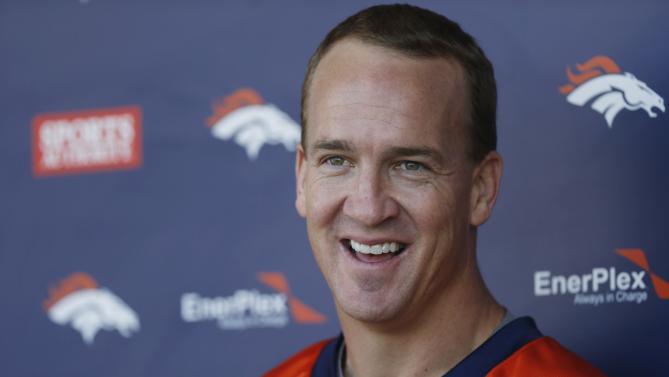
How do you feel about Tom Brady? And now, how do you feel about Peyton Manning?

Allow yourself to independently judge both of these legends’ and their recent “situations.”

You couldn’t do it, could you?

Peyton Manning

Manning’s stories are promptly dismissed as “hit” jobs by people who want to tear him down through accusations of HGH and a young college kid who behaved immaturely.

Yet Brady’s stories are treated as fact, despite the little evidence produced in the 12 months since Deflategate began to actually prove 1) anything actually happened and 2) most importantly as it concerns Brady himself, that he had anything to do with it if the balls were actually deflated by humans.

The NFL still slings it out in court to prove they have the right to punish a player under the CBA, missing the entire point that, you know, you have to actually have proved the player should be punished at all. To do this, they uncovered thousands of e-mails and phone records to try and link Brady to it.

All we found out is he wants to play longer than Manning, he’s got an ego and he weirdly cares a lot about swim pool covers.

On the other side of the coin, Manning has seen his image take a hit over allegations that date back 20 years that he was basically a pervert to a female trainer at the University of Tennessee. This is on top of the allegations that he received several shipments of HGH (or his wife did) that coincide with his neck injury rehabilitation a few years back.

The Tennessee story has been out there since 1996 and Manning has settled the dispute twice – once when it happened and apparently again when he brought the trainer’s name up in a book. Why this is resurfacing now has everything to do with his name being attached to a Title IX lawsuit against Tennessee and it being 2016, the age of rabid, social media heathenry.

Meanwhile, it has been revealed that NFL players were shorted $100 million in revenues. The league office dismissed it as an accounting error. Anybody make a $100 million mistake at their job wouldn’t have a job the next day. Yet this story is not currently gaining much traction. Why?

Because we’ve already given them the money, so we don’t care if the rich players get richer or the rich owners are even richer. It’s monopoly money to us, anyway.

No, no, we addicts, we care about sentiment, about legacy, about being able to emphatically agree on some fantasy ranking of the greatest ever.

And we care about this all because it says a lot about who we are – at least so we think subconsciously.  We attach ourselves to these athletes and these teams so we can go through the pain of losing and the joy of winning together. Brady backers love the underdog story, Manning’s fans stuck by him through all the “he can’t win the big one” years. To us, this loyalty proves something about us.

We can’t like the wrong guy, we can’t be wrong, we can’t have invested in the wrong guy or bought into who he is as a person.

NCAA Football: Alabama at Mississippi

There’s a lot on the line for us average Jill and Joe’s because we’ve convinced ourselves that our fandom matters to other fans. We made it clear who we support – and not only is our guy better, but they are a better person, too.

Except for one, small problem.

It means nothing. We don’t know any of these people. We don’t know what they are like behind closed doors. We don’t know how kind they are or how ruthless they are or how sleezy they might be.

They might be innocent, they might be guilty. The vast majority of us have no clue. And yet we sports junkies feed the beast. We listen to the sports talk shows rattle on and on about it, driving up ratings, making them talk about it more. We click the stories all over social media, prompting more stories to be written about it.

We’re sheep. Inmates in a sports asylum walking around with blinders on, believing in sports and sports figures as if it was a religion. We’re dopes, buying the gear, buying the tickets at astronomical prices, buying into the belief systems and serious manner in which it’s all treated.

We’ve been sucked into world within our world where we think this stuff actually matters, like debating if four minutes is enough of a suspension for Ben Simmons cutting class last week?

I don’t know, and I don’t care anymore. Did that teach Simmons anything? Probably not. Why is he allowed to do that? Why do you care? Didn’t you cut class in college? Does it impact you if he doesn’t go to class?

We want fairness and equality in sports, in college programs? There’s too much money at stake to ever let it happen. We demand from coaches and athletes and administrators that which we ourselves cannot even do in our daily lives. We take shortcuts. We skip out. We complain. We don’t give max effort every single day.

But we sure expect everyone else in sports to. After all, they’ve been given a gift.

So have you.

You just choose to waste it.

Sports and extracurricular activities in general serve in building people in a variety of ways from a young age. They teach teamwork, dedication, commitment, perseverance and hard work to name just a few.

And wanting to be a part of that, as a parent or a fan, or both is good too. But too much of anything can turn into something you never intended – like convincing yourself that someone you’ve never met is good or evil, the embodiment of everything you love about sports – or everything you loathe.

Just be wary of absolutes.

Absolutes lead down a path of yelling at officials at a soccer game for four-year-olds. They make you crazy enough to attack someone physically in the parking lot after a game. Or throw batteries at Santa Claus (we’re looking at you, Philadelphia).

They make you believe in someone else that, like you, is human and fallible. Better yet, these absolutes have led you to wear the jersey of a character, a portrayal, an image of who that person wants you to see and believe.

I know this isn’t easy to admit. I know you think I’m crazy, that sports don’t control your life and that you couldn’t possible “worship” another human being so blindly.

But just go back to the beginning. What do you know and believe about Tom Brady? And what do you know and believe about Peyton Manning. Ask yourself which one is right and wrong, good and evil, guilty or innocent.

And now remember that it’s a trick question: you don’t know them or their situations – only what their enemies or their mouthpieces have allowed you to.

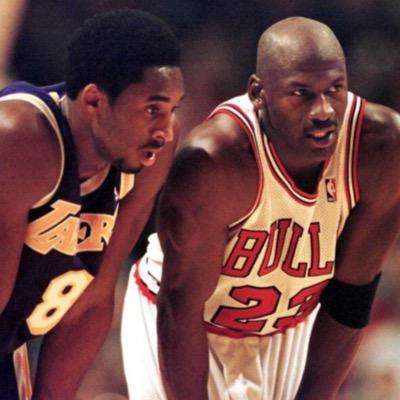
michael and kobe

In other words, you don’t know Peyton Manning or Tom Brady. Or Michael Jordan. Or Tiger Woods. Or Bob Knight. Or Serena Williams. Or Dean Smith. Or Kobe Bryant. Or Tim Duncan. Or LeBron James. Or Andre Aggasi. Or Danica Patrick.

No matter how much you think you do.

The first step is to admit there’s a problem.

Sports are a drug.

They soothe us, distract us, energize us, unite us, divide us, and entertain us.

And they most certainly blind us.

Standard
American culture, Communications, Society & Culture

Emoji’s & Emotions

Earlier this week, after finishing a family dinner, my wife and I randomly started listening to songs from our younger days while cleaning up.

Acting goofy at first, we probably looked like Ferris Bueller belting out some tunes in his shower at the start of a big day off. We picked a lot of fast paced songs, knowing it would draw some attention from the audience (OK, so it was our kids) if we kept up with the lyrics.

ferris-bueller-singing-in-the-shower

“You know a lot of words to a lot of songs, guys,” said our sweet-hearted 8-year-old daughter.

This comment sparked a conversation about how the words and lyrics to these old songs (weird to say, since most of them were late 90s and early 00s country songs) meant something different to both my wife and I.

As we sang in harmony (well, kinda), our daughter sat and stared for a little while. I could read her mind, and briefly, she seemed impressed that we had remembered and memorized the subtle voice inflections of each song.

Soon enough, her fascination ended and she went back to playing with her younger brothers, who were apparently caught in a game of home many pairs of underwear and ball shorts they could wear at once. They nicknamed themselves Capty Underwears and Capty Shorts, so clearly they weren’t listening to the songs to begin with. (And yes, this what 6-year-old and 3-year-old boys tend to do.) Our eldest son, turning 13 this Sunday, however, listened to the songs, but his eyes never came up from his iPad.

There was one song in particular that we listened to that made me realize how much our society has changed due to the technology advancements of just the past 10-15 years.

As my wife selected The Dixie Chicks “Travelin’ Soldier,” the overall themes found in the tragically sad love story of a young man sent off to Vietnam and the young girl he’d wrote letters to strike a different kind of chord with me.

It is painfully obvious that we’re drifting apart in our communications with each other. I have tackled this topic before, but I must admit, there is a hint of sadness within me that envelopes each advancement in technology and communications.

0418_couple-texting_sm

We don’t write love letters anymore.

We text emoji’s and short, grammatically incorrect phrases. And then we wonder why people don’t “get us” or wonder why we have a hard time communicating in serious relationships.

We don’t visit or call as much, we text and send Facebook messages and post on digital “walls.” And then we wonder why we don’t see our friends anymore.

Never has there been a more appropriate term than a Facebook “wall,” because in essence, I’ve come to realize that is truly what social media does: it builds walls.

We may be more “connected” than ever before in human history, but emotionally and spiritually, we are more disconnected than we can possibly imagine.

Last week, I read this story in the New York Times on the world of Middle School Instagram. Both fascinated and terrified, I couldn’t believe the emotional turmoil that takes place in the world of 7th grade girls and boys over who follows whom, their follower to followed ratios and who is tagged in each delicately planned post.

Look, I remember 7th grade. It’s no picnic. Hormones raging, self-doubt waging a war on perception versus reality. I cannot imagine having to do it in this social media driven world.

When we examine our exposure to and on these channels of communication, we come to find that we’ve often revealed too much for public consumption. I’ve heard many friends say this, and I agree: Had Facebook and Twitter been around in the 90s, I’m not sure I could get a job or be very well regarded today.

It’s not that I did anything illegal or terribly bad, it’s just that the whole world didn’t know about me and my buddies toilet papering a house in the fall of 1997, or the Spring Breaks in Florida, or…you know, I think I’ve proved my point.

It’s not that everything can be shared now so much as it is that not everything should be shared now.

Those private moments between you and some friends, you and a date, you and your wife or loved ones, those are yours. They build bonds and form deep friendship and companionship because you and they were the only ones to experience it, to know what it was like to be in that moment in time.

If you share every moment, trivial or significant, what is left to stand out? Why should the person who sat next to you in freshman algebra, but you haven’t spoken to since, well, freshman algebra, get to share that?

All I know is that I used to have deep, meaningful, philosophical conversations with several people who once meant a great deal to me – and still do. Mentors, family friends, buddies. For quite some time now, that has given way to text messages and birthday posts on a wall, joined by hundreds of other “friends” doing the same.

Time, distance, whatever the case may be, I miss those conversations. I miss those friends and mentors. My fear is that too much time has passed, too much left unspoken. Now, those relationships have been forever changed and altered. All because we stopped talking and started taking the time to take the time.

One of the strongest points of my relationship with my best friend, who happens to be my wife, is our commitment to talking. We started out talking in a college history class in the fall of 2003 and really haven’t shut up since.

I wrote her poems, she left notes on my truck windshield. I keep the first one she ever wrote in my wallet to this day.

note

For generations over, the world has communicated through talking face-to-face or with pen and paper. We had the time to thoughtfully prepare a letter, or a note.

Now, we can barely text 10 words with our thumbs without losing interest. We’re lazy in our friendships and relationships and the cracks are showing.

In the spaces in between TTYL and C YA SOON, lies what is unspoken, what is implied, what is missing. We’re connected, but we’re not connecting. I have fewer new memories with these family friends, buddies and mentors. While no doubt brought on by the busyness of life, we are fractured by what has not been said, what has not been mended or fixed, what lack of time has wrought.

As smiley face cannot replace a face with a smile. LOL cannot replace an a friend actually laughing out loud. These things are just meant to be placeholders until we can meet or talk again. Except for the part where we aren’t really getting together again.

Tonight, and for many more days and nights in the years ahead, my wife and I will try to combat the technological grip on societal interactions through our children. We’ll play music and listen to the words.

We will gather at dinner and talk about our days, our experiences, our frustrations and our successes.

We’ll try to get them to put the phones down and turn the TV off. We will encourage them to write notes and call their friends.

Emoji’s don’t equal emotions.

I’ve got a letter in my wallet that reminds me of that.

Standard
American culture, American People., Society & Culture

Less Than Super Sunday

For many, Super Bowl XLIX will always be about the game, the way in which it ended and the enduring legacies of the key participants on both sides.

For me, it will always be about the moment I understood the complexities of being a parent. With four children and a fifth on the way, perhaps that moment should have come sooner. Alas, maybe it is only now that I fully understand it.

In many ways, especially as someone who was rooting for the villainous New England Patriots, I wish the game would remain tucked away in the recesses of my memories as one that solidified Tom Brady as the NFL’s greatest quarterback (purely an opinion). I’d like to remember his nearly perfect fourth quarter, bringing the Patriots back from 10 points down and collecting a record-tying fourth Super Bowl ring.

I’d like to vaguely recall in 20 years the look of horror on Richard Sherman and Pete Carroll when that pass was intercepted – but only because it serves as a reminder of how sports can change on a dime, how cruel they can be and how nothing is guaranteed in life (pretty much fact).

And perhaps I will remember all of these things. But I also know that I will remember more about the commercials than anything else. The ads themselves might not be that memorable, but I am certain to not forget the reactions in our house to them.

Especially those of my 8-year-old daughter.

Perhaps it was my fault. I had hyped the game to our precocious second-oldest – and only girl – for hours. The boys and my wife were easy, they were ready for four hours of football’s grandest theatrics and for what would ensue – their father hollering at the TV and cheering wildly for a team that no one else in our area liked.

family patriots

And man, she was all in. Wearing a throwback Welker jersey from her brother’s closet, our daughter placed herself in a chair next to me and basically did not move – or wasn’t allowed to – for the duration of the game.

Dad’s superstitious nature kicked in just briefly after kickoff. Every Patriots first down, I ran the room and high-fived, in order, our oldest son (12), the youngest son (3), my wife and then returned to give the biggest, double high-five to our daughter before sitting the exact same way we had the play before. (Meanwhile, our 6-year-old son went back in for the between the iPad and the game and playing with toys. Sigh. I took what I could get.)

She squeezed my arm on big third downs, asked all kinds of questions about the rules and the game and cheered to please us at first, then later because she seemed to actually, briefly, kinda care.

Soon, this became as entertaining as the game. My daughter and I were enjoying a bonding moment within the bonding moment of our family.

As the game stayed tight and tension mounted, we were all glued to the TV.

Which included the commercials.

It began with the dead-child Nationwide commercial in the second quarter and ran right on through to the game’s end, specifically, Always #LikeAGirl, Victoria’s Secret and the 50 Shades of Grey trailer.

There is no one way to adequately describe the confusion on a child’s face in, what for a parent, is an awkward moment. There is also not a great way to address the confusion without convoluting it further and getting more questions.

“Why is the boy dead?”

“Why didn’t the parents stop the bath water?”

“I don’t run like that. That’s not funny.”

“Are they making fun of girls?”

“She’s not wearing very many clothes.”

“Those people are kissing a lot and kissing really weird.”

Thanks, guys. Really, just a bang-up job, advertisers. Why didn’t you just air a commercial debunking Santa Claus or an documentary on where babies come from?

And look, n the heels of a national discussion (again) on if athletes are role models and how they are not the parents, there’s Marshawn Lynch grabbing his crotch again. And if he wasn’t, people were talking about it.

Stating the obvious: My wife and I raise our children. No one else. Ultimately, how they turn out is a far greater reflection on us than it is society in general. Yet in being a parent, you’d like to shield them from certain topics and situations for as long as possible, because, as science has proven, their minds just are not ready for it yet.

And it is a simple fact that kids are influenced by their peers, other family members and yes, who they see in movies and on television. You know how I know this? Because I was a kid once. I wore the shoes, rolled the jeans. I acted like my favorite players on the court or diamond.

Back in the 1990s, we had a whole Gatorade campaign centered on “Being Like Mike” for goodness sakes. It was aimed at kids.

be_like_mike-22990039_std

Advertising has not changed who it targets, but the topics and the boundaries of those messages have changed.

I have heard it described like this: we urge caution with young athletes lifting weights, noting how the body structure of a 14-year-old is not meant to handle too much lifting because the frame cannot handle the weight. The same is true for the brain. An 8-year-old is can comprehend more than a 6-year-old, but not as much as say a 12-year-old.

These ads, geared towards adults, are viewed by kids who simply cannot contextually understand them. From what the ads mean, to what they infer. They may contain a message, but the absorption of that message is varies widely based upon the receiver.

And we simply do not care.

As eyes begin to roll of readers who fear I’m just complaining or bemoaning something else in society, I’d venture to say you don’t have children. You’d suggest we turn it off, that we have a choice in the matter, that the media does not raise and influence my child.

Some may say that we’ve always had this (though, as noted above, there is a significant difference in “Being Like Mike” and talking about the ghost of a kid whose parents were either a) neglectful or b) neglectful and without Nationwide’s accidental home prevention training.)

My response to this is humble and contrite: it is the right of my wife and I to determine if and when we talk about these issues or topics. They normally don’t see these ads, because our children are not normally up  past 8:45-9:00pm. But the Super Bowl is anything but normal.

I’d rather not be forced to address my daughter’s self-esteem during the Super Bowl because the ad #LikeAGirl – a positive message overall – was viewed incorrectly in the eyes of an 8-year-old simply because she was eight and thought they were making fun of her.

“I don’t run like that, Daddy.”

“I don’t throw like that, either.”

No amount of “I know you don’t” or “that’s not what they meant” could remove the furrowed brow of my little girl. She just didn’t understand the point. In her eyes, she didn’t even know there was a image issue to begin with. But hey, thanks Always for putting it out there.

Is it the advertiser’s responsibility to control the message? At the very least, perhaps a little?

The same as Marshawn Lynch grabbing his crotch with millions of young football players watching him, he controls the message. I can tell my kids that something is wrong or not right, but the follow-up is the same as it was 25 years ago when I was a kid: “But why does he get to do it?

Explaining six figure fines doesn’t really address that question, either.

I can defend Lynch over not speaking to the media. It does little harm and makes a mockery of what the current sports media has become. Any reporter who can tell you with a straight face they need Marshawn Lynch to write a story about the NFL, Super Bowl XLIX or the Seattle Seahawks is a reporter who is not very good at their job. Write something else, don’t give him the attention and move on.

But I cannot defend or pretend to agree with lewd gestures as an alternate sign of rebellion to the league. Kids don’t know or get that. All they see is the action, not the message.

To Marshawn Lynch, Charles Barkley before him – and all the athletes in between who feel they are not role models, I remain disappointed. No, you are not the role model for my kids. Yes, my wife and I should be and hopefully are. But it is naïve and irresponsible to pretend you are not at minimum an influencer of children everywhere who watch you play and want to be like you. It comes with the millions of dollars, the fans and the fame. They may not know you, but they know you can play and play well.

Show some decency, respect yourself and others with your actions. Athletes demand respect all the time, then do little to earn it with actions such as these. Don’t ask us to embrace you and cheer for you, then pretend to poop out the football.

Similarly, these companies and ad agencies hold the power to do a delicate balance of creative marketing and societal responsibility.

Run your child death ad at 10pm on a Tuesday night, Nationwide. Otherwise, you are anything but on my side. If my kid is awake and watching, that one is on me.

But they knew the reaction the ad would draw, they knew it would spike Twitter trends, Google searches. They knew the value of the ad would increase significantly with that kind of ad, in that moment and the kind of reaction it would garner.

There is no great call to arms coming here. Not this time. I don’t have a solution for something the majority of us do not see as a problem.

I just have disappointment.

My only hope is my daughter remembers the high fives and not the commercials.

Maybe someday, I will too.

Standard