iPhones, Javon Belcher, Junior Seau, Kansas City Chiefs, NFL, Roger Goodell, Technology

The Growing Divide


There’s something about life in the age of technology, something dark and sinister, that you can’t see in the glare of a computer screen or an iPhone.
There, off in the shadows of our lives, what’s not showing in all our posts, Tweets and feeds, is what we don’t do or say.
We’re alone together.
In our interactions, in our relationships and friendships. And the average, every day American isn’t the only one who deals with this.
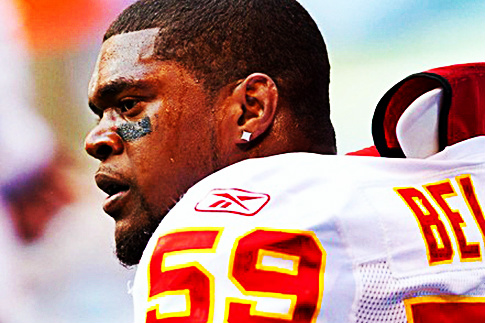
Yet another reminder of this came Saturday, when Kansas City Chiefs linebacker Jovan Belcher killed his girlfriend, then drove to practice in his Bentley, thanked head coach Romeo Crennel and GM Scott Paioli and then pointed a gun at his head and pulled the trigger, committing suicide right in front of them.
The latest reports have said Belcher and his girlfriend, Kasandra Perkins, were arguing before he shot her. He had been out partying all night and the police had woke him up and determined him fit to drive home. The Cheifs were aware of the arguments and had gotten the couple counseling.
It’s another football player who’s life has ended in sudden death this year. The most stunning of 2012 remains Junior Seau’s suicide earlier this year.
We can question the logic of a young man who’s driving a Bentley arguing over finances with his girlfriend and say he wasn’t prepared for the lavish lifestyle modern professional sports yields. We can blame Seau’s suicide on brain damage or the loss of oneself after a lifetime of playing football and say that Junior just didn’t know what to do with himself. We can blame both on gun control or lack thereof, but that’s too easy. 
There’s a big difference between the two. Belcher is a murderer who’s grizzly actions cannot be condemned. Seau had grown despondent. Both may have ended tragically, but only one is truly a tragedy. 
But taking away the guns doesn’t change the situation or possibly the outcomes. With Belcher, taking away the gun doesn’t stop him from being crazy. With Seau, he might have found another way to end his life.
Getting rid of the guns doesn’t get rid of the emptiness inside someone’s mind or heart.
The truth is that these things happen every day in America. Race doesn’t matter. Financial situations don’t matter. Profession doesn’t matter. A white father in a suit and tie can (and has) come home and killed his wife in their mansion after arguing about money. Wall Street professionals have drug addictions. That’s because loneliness and craziness, two different types of mental illness, pay no mind to what do or who you are.
The only comparison we can make between Belcher and Seau is that perhaps those around had turned a deaf ear.  No one on the Chiefs, no one in Belcher’s family or circle of friends can comprehend it. Likewise with Junior Seau, too. Maybe football related damage helped, but perhaps Seau was just depressed and car dealerships and golf weren’t enough to fulfill a man for the next 30 years.
You often hear those closest to the one responsible in a tragedy like this to say they had no idea. And this is what we refuse to discuss as a society, as a culture. Maybe we all have no idea because, well, we have literally no idea what’s going on with the people we think we really know best.
As Chiefs quarterback Brady Quinn said following Sunday’s game, we ask people how they are doing, and we care – but do we mean it?
I know I’m guilty in my own life of getting so wrapped up in my little world, a lot of my contact with friends and family consists of text messages, Facebook posts and fewer phone calls and in person communication. I know I also have occasionally thought that some friends and family care less about my family and I because they do the same thing.
“We live in a society of social networks, with Twitter pages and Facebook, and that’s fine, but we have contact with our work associates, our family, our friends, and it seems like half the time we are more preoccupied with our phone and others things going on instead of the actual relationships that we have right in front of us,” Quinn said.
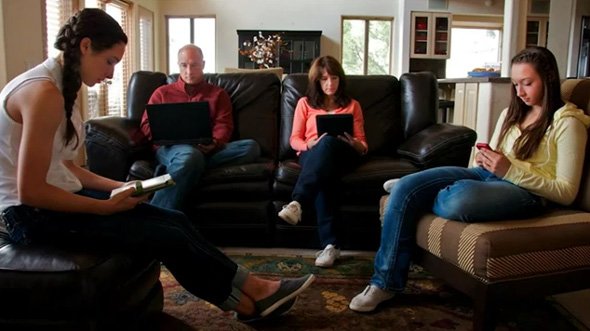
We can joke about it – but this is our national addiction. We don’t necessarily have to flush it or get rid of it, but does it do anything for our relationships with family, friends, spouses and children when we check our feeds and our e-mail? Why don’t we pick up the phone more? Why don’t we spend more time showing we care?
This Belcher situation has nothing and everything to do with this. We’re more concerned about the image and the appearance of we what we project than what we actually are.
Take the NFL for example. How can you read the grizzly details of Saturday morning and think that the Chiefs staff and players were fine to play a game on Sunday? This is where Roger Goodell could have postponed the game until Monday night. Give it time to breathe, let the air settle.
Instead, the NFL shrugged their proverbial shoulders and moved on. It’s only Tuesday and it’s already become nothing more than a news story that has legs because the “why” is still so unknown. The fact that his teammates didn’t know, that the Chiefs knew but just addressed it with couples counseling proves how far we’ve fall.
We have the illusion of companionship now.
My best relationships are with my wife and children, whom I see every day and engage in conversation with. We turn off the TV. We talk. We read. We laugh. We play. My wife and I built our relationships with hours upon hours of conversation – spending time every single day together, in person.
My worst relationships are with the people outside my nuclear family that I should know – or once knew – best. Childhood friends. Current buddies. People so close, they are family. I know they might be building a house, or their kids are in sports, or they took a vacation last week, or their birthday is next Tuesday.
But I only know that because I saw it on Facebook.
We’re short-changing ourselves and hurting others with how we interact with one another. Emoticons aren’t actual emotions.
My parents aren’t on Facebook. They barely use e-mail. This has forced me to communicate with them over the phone every few days or see them on the weekends. Same thing with my in-laws. My wife and I are close to both sets of parents because the lack of technology has put us right back in the stone age of talking to them, you know, like human beings.
My sister-in-law lives halfway across the country, but we’ve seen her and her significant other a lot over the past year. It’s one of our strongest friendships right now. And when we write something on their wall or send a text, the joke has actual meaning behind it. It’s not just a check-in that we kind of mean but have no real emotion behind. There is a difference. I can mean it when I write how much I care to an old friend, but is there truth behind it?
While this may have little to do with why a young middle linebacker killed his girlfriend, then himself, in the middle of the country, it has, as Quinn said, more to do with it than we can to admit to ourselves.
We’re growing further apart as people, as a society. We’d rather care from afar. We add and delete the relationships in our lives. But the rich, emotional undertones of real relationships cannot be replaced.
I get it, our cup runneth over. We only have so much time in a day. But too soon, a day becomes a week, a week a month, a month turns into a year. In moderation, texts, Tweets and Facebook are quite handy tools. Yet they can never replace the emotional and physical connection of shared time.
We need to be more present in our own lives so we can be present in others. Our full attention is needed. We text in meetings. We text when hanging out on dates. We check our newsfeed at the dinner table. We want to be in two places at once, but by doing so, we’re never fully in one place.
We don’t know what happened to Jovan Belcher. And we can only speculate on Junior Seau. We don’t know how troubled he was, how depressed or how mentally ill. We didn’t really know him at all, as fans or media types. We don’t know what he was feeling, and neither do many around him. 
It does little good to examine his brain after the fact. It does little good to try and talk someone out of shooting themselves with a gun to their head. It’s too late by that point.
But there is a difference between crazy and despondent. 
It’s the failure to see either that is a bigger problem.

Standard
DeMaurice Smith, Drew Brees, NFL, NFL Lockout, Peter King, Peyton Manning, Roger Goodell, Tom Brady

Days of Our Football Lives

As the NFL lockout continues and labor negotiations drag on, it has become more and more obvious what is really going on here.
It is a scripted daytime soap opera.
Call it “Days of Our Football Lives” or “As Negotiations Turn” or “The Rich and the Reckless” but at the end of the day, just call it something.
It is not hard to connect the dots. With the soap industry flailing around like a fish out of water and shows that have been on the air 30-plus years being cancelled, those writers have to go somewhere, right?
And it is no secret that NFL has, over the years, actively positioned themselves to dominate the sports headlines all year long.
From changes in the draft schedule (from one day to three and in prime time) to the release of its schedule, the NFL (wisely) has looked to steal headlines from other sports February through July.
And now that the NFL has reached what should ultimately be described as their peak popularity, they have us hooked like a housewife with a box of tissues.
We are absolutely addicted to professional football. There is no real rehab program, no center for us to detox in.
And there is no placebo.
If we were logical, instead of worrying about what we are going to do without football on Sundays from September through February, we would realize that we make it through just fine during the off-season. How do we spend roughly 34 Sundays the rest of the year? And how will we make it without fantasy football? Well, what do we do the rest of the year without fantasy football?
The difference is in our mind. 
Like any addict, we think that we cannot make it. We need it, we have to have it. We need to talk trash to friends of other teams, we need fantasy scores, we need to watch games and question coaching calls and wonder why the 49ers are still employing Alex Smith. We need to know how Al Davis’ corpse will look in a 1990s/Starter era windbreaker this year.
This is not to make light of addiction, either. We truly are addicted to football – it is just that football addiction does not hold the same long term ramifications that narcotics, alcohol or cigarettes do. Or, if you are David Duchovny, the horizontal waltz.
Perhaps it’s the physicality of the sport, the speed. We can’t get the jaw-rattling hits from the NBA, we can’t get the speed of the game from Major League Baseball.
Or perhaps it’s the length of the season that drags us in. We get football for 17 weeks and playoffs – and then the action goes away. With other sports, their seasons span multiple seasons of the year. And before we can even forget they were over, baseball and basketball are back. They are never gone long enough for us to actually miss them.
Certainly, absence makes the heart grow fonder.
But why would our favorite sport go to these lengths to make us aware of that? Why the posturing and the drama?
Is the NFL that insecure that it needs to feel our anxiety over its possible absence? It’s like someone telling you how deeply in love they are with you, yet at the same time threatening to leave.
Like any good TV show, they set the stage for this in advance. 
Who knows who has been in on this nefarious plot to keep this cliffhanger going. Peter King of Sports Illustrated began writing about a possible locket back in 2009. Despite the conditions at the time being sunny, he began to warn of dark clouds on the horizon, like some football Nostradamus.
And like any good story arc, it’s taken time to develop.
The NFL played their own version of ratings sweeps when it got the courts involved, with the lockout lifted, then reinstated – coincidentally (wink, wink) giving the players enough time to swoop in and pick up playbooks for about 48 hours.
We’ve had heroes, villains and those who blurred the lines. Is Goodell a puppet? Are certain owners the power brokers? Do Drew Brees, Peyton Manning and Tom Brady really hold that much weight and respect in the players union?
Could we get more melodrama? How about union leader DeMaurice Smith telling lawyers to “stand down” a few weeks ago? That script has quite a bit of manufactured drama dripping from the pages.
When it’s all said and done, the NFL will reach an accord with the players and there will be football. Sadly, many of us will sit around talking about how close we were to losing the sport for the season, even though I now believe that was never the case.
Call me a skeptic or a conspiracy theorist, but there has always appeared to be some level of unbelievability (yes, I just made that word up) to the whole thing.
At this point, I just want to see the closing credits to this soap opera and look forward to hearing some hokey, slow, contempo, elevator style song – as a football spins in the clouds.
Slowly.
Standard
2010 Labor Dispute, Jerry Jones, Jerry Richardson, Major League Baseball 1994 Strike, NFL, Pat Bowlen, Roger Goodell, Scott Fujita

Beautiful Losers

As you’ve probably heard, this Sunday could be the last NFL action you’ll see for awhile.
Over the past few months, you’ve heard a lot about 18-game schedules and player safety. But really, truly, it’s about the money. It’s always about the money.
Just like the ugly and embarrassing baseball labor dispute in 1994, it’s not the players that have a problem with their piece of the pie. It’s the owners.
And it’s the commissioner, Roger Goodell, spinning his weave in order to maximize his brand and get the most money out of our collective pockets.
Goodell and a group of owners (Jerry Jones, Robert Kraft, Pat Bowlen, Jerry Richardson to name a few) are see the opportunity to make the NFL even more profitable than it already is. They each want their own Scrooge McDuck “Money Bin” and they’ve come too far now to turn back on it.
This group wants a collective bargaining agreement (CBA) that “accounts” for the investments they’ve made in new stadiums and other capital expenditures.
They think they got a raw deal when the current CBA, which they opted out of in 2008, expires next month.
They think the players receive too much of the revenue share of their adjusted gross revenues.
They think this is about them.
What’s perplexing is how these clearly successful entrepreneurial figures feel like they are being scammed. Revenue sharing does not address the fact that some teams have or have had favorable stadium deals that call for little or no expenditures from the organization, while others, ironically Jones’ Dallas Cowboys and Bowlen’s Denver Broncos, had to take out massive loans for new or renovated stadiums.
In turn, this upsets owners like Richardson, who owns the Carolina Panthers, because he has to write an eight figure check that subsidizes another team, say the Cincinnati Bengals, who’s owner (Mike Brown) is making a fine penny or two because of low overhead.
To make matters worse, there are owners who intentionally keep revenues and overhead low to maintain their spot in the bottom half of revenue-generators in order to ensure they will receive a subsidy.
All of this leads to this question: and this involves the players how? Sounds like the owners and the league need to figure out some new rules on playing nice and essentially cheating the system.
In regards to the stadium issues, the response to that would be simple. Isn’t that the cost of doing business? Of being an NFL owner? Why does a city, state of its residents have to foot the majority of the bill for a new stadium? The fans use the stadium, but they pay for tickets in order to use the facilities. They’re already paying for the use of the stadium, correct?
Let’s look at it like this: why don’t the owners pay more for player’s health insurance so they are taken care of long after they retire? Don’t the players get their ailments from playing for the NFL and it’s teams?
If you want the people to pay for your work office that aren’t employed by you, how can you use the logic that you won’t pay for healthcare of your former employees who, had they not played football, might otherwise be healthy?
It’s a twisted little game to play when you start bringing money, logic and sport together at the same table.  
They don’t usually make good dinner conversation.
In order to make-up the difference of what this group of owners feel they are losing, they are seeking a proposed 60 percent cut of a smaller revenue pie. 
Under the current CBA, owners get a credit of more than $1 billion for operating and investment expenses off the top of the annual revenue pool – that’s currently around $9 billion – before the remainder of the money is divvied up. 
Now the owners want about $2.4 billion in credits, citing the changing economic times. These additional credits include – and this is straight from the proposal – “professional fees”, practice facility costs and travel.
Um, what company asks for employees to pay for overhead and maintenance?
The players have tried to call the owners’ bluff, repeatedly asking the owners to open their books to prove the financial crisis they face. And the owners have always refused.
In addition, the 18-game schedule is nothing more than a slight of hand. If Goodell gets his way, it’s more revenue for the NFL and stretches the season. The players don’t want it for two reasons: 1) Naturally, they won’t get paid anymore than they already do and 2) Injuries.
Look at the New Orleans Saints, who used something like 235 running backs this season. The Green Bay Packers, NFC Champions, had 15 players put on injured reserve this season. They are currently fighting over whether or not those 15 guys will be in the team picture.
And while clearly the players aren’t inescapable of the blame, the owners seem to be playing some mystifying game called “Vagueness.”
Back in training camp last summer, Goodell made the rounds to all the teams. When he got to Cleveland, current Browns linebacker Scott Fujita, who sits on the player’s union executive board, called him out: “What is it going to take for us to get the deal done?”
Goodell’s response: “I don’t think there’s any sense of urgency right now. I don’t think there’s going to be one for a long time.”
Goodell went on to say that these things have a way of working themselves out.
Except when they don’t.
That baseball strike of 1994 is always remembered bitterly and all history remembers is the “greedy” players. However, the ordeal began because  the owners were unhappy with the deal they had. Baseball player’s union head Donald Fehr severely misread the situation and ordered a preemptive strike by the players with seven weeks left in the season.
All that did was cancel the 1994 World Series (sorry, Expos).
Is that where we are headed? Perhaps there won’t be a Super Bowl in Indianapolis next year at this time. Perhaps there will be no fantasy football, no Sunday afternoon Red Zone, no Madden ’12.
And that’s the real story, as it always is, with labor disputes. While the owners and players, who are already far richer than the NFL’s average fans will be in 10 lifetimes, argue and fuss over credits and billions of dollars and who’s paying for state-of-the-art facilities, the fans will be without the sport they love more than both the owners and players ever could.
Face it: we care more than they do.
We always have.
We always will.
Bob Seger once sang about a “beautiful loser,” someone who want both sides of the coin, security and freedom. That’s what comes to mind when Goodell says if there’s not a new deal done, he’ll cut his own salary to $1. Fear not, he’s been banking $10 million a year since he became commissioner of the NFL in 2006, so I think he’ll survive the work stoppage.
Question is, will the game and its popularity survive?
We’ll all answer that question, collectively, soon enough.
Standard