Derek Jeter, Drew Storen, Ed Reed, Kevin Garnett, Kobe Bryant, MLB, NBA, NFL, Peyton Manning, Ray Lewis, Steve Nash, Tim Duncan, Tom Brady

The Grind


Here’s to The Grind.
Or more importantly, here’s to the ones who went through it and excelled in it.
Because you can survive The Grind, but it changes you forever. If you don’t know what The Grind is, quite simply, it’s the torturous side of sports. The pain, the hurt, the injuries, the travel, the hard work, the rehab.
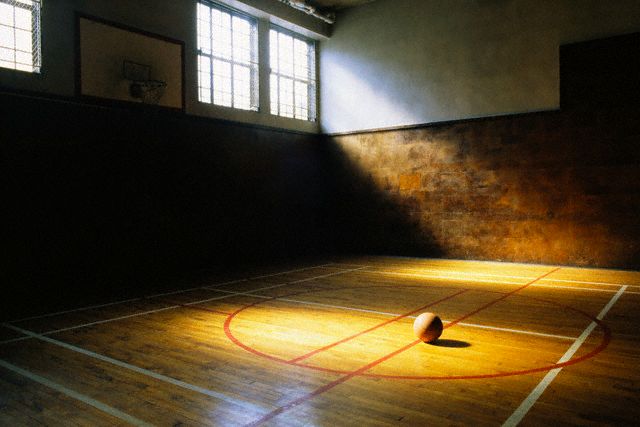
It’s the nights in an empty gym while your friends go out on dates. It’s the sunny afternoons of summer spent in batting cages, on dirt fields under a blazing sun, while others soak their feet in a pool. It’s the mildly grotesque smell of a weight room, which you strangely learn to embrace. The Grind is the scars, the rock hard calluses on your feet and toes, the lack of hair on your knees from floor burns.

And there’s a secret to it, that only the best of the best learn, which is simply that The Grind cannot be beaten, it’s barely survived and at your best, you simply manage and muddle your way through it.
The Grind is the journey, and it’s rarely understood by those who merely watch.
We are about to embark on a period over the next few years where some of the best in their profession – of all time – will step away from The Grind and reach The End. They survive it, embrace it and succeed in it.
The first comes Sunday, as Baltimore Ravens linebacker Ray Lewis will retire – win or lose – following the Super Bowl. Whatever you think of Lewis as a person, or how the media lovefest has gone a little overboard the past month, considering, you know, this, it doesn’t change the fact that Lewis is indeed a warrior and a throwback NFL player along the lines of a Butkus or a Singletary. Ultimate competitor, passionate, and perhaps most of all, maximum effort at all times.
And he lasted 17 seasons in the NFL, a place where brain damage and physical disability are rampant after retirement. In 2011, a study found that the average NFL career was 6.86 seasons, a major league baseball player, 5.6 years, and in the NBA, ballers can expect to last on average 4.8 years.
That’s not very long. And that’s because of The Grind.
As spectators and as fans, we see the glitz, the glamour, the fame and the money of professional sports. And never mistake that they are well-paid. But few, very few, make it to The End. The Grind often ends it for you.
It becomes less and less about the money, but more and more about the legacy and about a unique competitive drive few can understand.
Within the next few years, many other outstanding, Hall of Fame caliber NFL stars could be joining Lewis: Peyton Manning, Tom Brady, Randy Moss (again), Tony Gonzalez and Ed Reed. Each of these players changed the game, impacted it in some significant way and broke records. Each will be a Hall of Fame player. Heck, maybe Brett Favre will finally hang ‘em up, too.
In baseball, guys like Derek Jeter, Mariano Rivera, Alex Rodriguez, Ichiro Suzuki (basically, the New York Yankees roster) and David Ortiz will call it quits. And in the NBA, there’s this list: Kobe Bryant, Tim Duncan, Ray Allen, Paul Pierce, Kevin Garnett, Dirk Nowitzki, and Steve Nash. All are winding down MVP-heavy, record breaking, Hall of Fame careers.
We’ve watched, we’ve enjoyed or hated them as members of rival teams, but we don’t know a thing about them, really. And we don’t know about The Grind.
Some of these athletes have been playing professional sports that span over three presidents – the second term of Bill Clinton, all of George W. Bush’s years in the White House and now, with Barack Obama beginning his second term as commander-in-chief. Cell phones weren’t heavily used, Justin Timberlake was in a boy band and we still feared the Y2K bug.
Just think, where were you in 1996, when Ray Lewis and Kobe Bryant started their NFL and NBA careers, respectively?
Simply put, the world has changed, but many of these guys haven’t. Think of what they’ve endured? To start, I think of how my story is 1/100th of theirs.
I am a has-been, former high school hoopster, and tried to play college ball at the D-III level. In my early 20s, I played pick-up ball a couple nights a week for a few years, didn’t do anything for a few in the middle and then played Y-League ball on Sundays for eight weeks, once or twice a year, for three years. Didn’t play again for awhile and now, over the past four months (in much better shape finally), I’m playing once a week again.
Keep in mind that fact – that I’m 33, haven’t spent the last 15 years in a 6-to-8 month season, traveling, maintaining, playing two games in three nights, back-to-backs or doing a West Coast road trip.
But I played. I’ve had my version of The Grind.
Frankly, I hurt more than I’d ever admit verbally, mostly in the mornings. And that’s mainly because I don’t want to be a whiner, a complainer and partly because those around me can’t understand.
In the winter, due to way too many ankle sprains, my feet just plain ache. They pop and crack constantly. They’re typically always cold, unless the calendar is between May and August, due to poor blood flow and bad tendons and ligaments. My wife shudders when my feet brush her leg and says they feel like ice cubes.
My back hurts, my left shoulder slips out of socket occasionally if moved the wrong way, or slept on for too long, from three separations. After diving for a loose ball once and landing on my elbow, I basically split my elbow cap into four or five pieces of bone. I’ve played with what amounts to a black and blue golfball on the side of my foot – several times and on each ankle. I’ve played in an Aircast, a shoulder harness (that I wouldn’t wear except for one practice), and routinely stuck my legs from the calf down into 5-gallon buckets of ice water.

Twenty minutes in, 20 minutes out. After pulling them out, with my feet still a blue-ish purple color, I’d do ABCs with my feet, then, plunge them back in for another 20 minutes of torturous cold that cannot be described, only experienced.

Once, I got 12 stitches in my calf after diving for a ball and landing on the jagged metal edge of a bleacher – but I didn’t notice my sock was covered in blood for nearly two minutes. And I didn’t notice that muscle and fat from my calf were slightly exposed from the gash.
But I’d do it again in a heartbeat.
The Grind can give you an adrenaline high, a natural charge from competition that you can’t really replace, a euphoria that you’ll spend trying to replicate. The Grind can hurt. I’ve got friends with knees that have been repaired or scoped three, four, five times. Herniated and or bulging discs in their back. Some have addiction to pain killers, to alcohol, to Tylenol, Advil or nicotine.
I’ve done it, too. They are simply numbing agents to offset The Grind and its effects.
And our stories – especially my stories – are literally nothing but a drop in the bucket of those mentioned above. Think of the amount of needles endured just to play. Lewis is coming back from a torn tendon in his arm that he suffered in October. Imagine that rehab. Surgeries and pins placed into bones. Kobe flew to Germany to have a controversial surgery on his knee, where they put new blood platelets in, because The Grind had made his bones, well, grind.
And that’s just before they are done.
At some point, though, it ends. And that’s when the mental aspect, not just the physical, begins. An identity crisis, or sorts. Who are you without (insert sport name here)? Some, like me, only did it for 12-15 years. I thought I had a hard time. Guys like Kobe, Duncan, Jeter, it will have been for 25 or 30 or more. You don’t remember a time when it didn’t revolve around the game. Your life is defined by it, you are who you are because of it.
The younger you are, the less painful the transition I imagine. Those who get it and did it, no matter what the level, have their demons related to giving it up or losing it. And it’s harder to understand for those around them. The competitiveness is wired into you, somehow, perhaps before birth or at a young age and you can’t turn off will and desire.
It cannot be replaced. The beast cannot be fed with desk jobs or investments, or even announcing and analyzing games on TV. Some do well with post-sports life, like Larry Bird, others, like Michael Jordan, not so much.
Some don’t want The Grind, which is when they get The Filter. That’s why they quit their high school teams, to go out and do their thing. They date. They party. They grow their hair out and spend their summers in flip flops, going to concerts and pool parties. There are more who wave it off after they get to college. Not worth it, too much. Or they don’t play as hard. They quit diving for loose balls or line drives in the gap, quit chasing down receivers 15 yards downfield. The funnel gets tighter the higher you go in the sporting ranks.
Until we are left with the few you can survive all The Grind has to offer. Twenty or more years, from childhood on, of aches, pains, missed dates, failed relationships, lost friendships over wins and losses, the travel, sleeping in chairs, living in training rooms with ice wrapped around every limb, doctors, surgeries, and rehab.
The Legends, they’ve been hurt, too, far worse and for far longer than many of us can even comprehend. Broken feet, torn ACLs. Dislocated this, that and parts in between. Peyton’s neck, Brady’s knee, Kobe’s knee, Jeter’s ankle. Paul Pierce was nearly stabbed to death. These are just the big ones, the ones that we know about. We don’t know anything of all the nicks, bumps, scraps, twists and turns. Banging into bodies, diving on the ground, on the floor. Flying from city to city, sleeping in cycles of naps on planes and buses.
At The End, if you’re lucky, you got a few rings to show for it.
This weekend, I heard rising star and young Washington Nationals pitcher Drew Storen speak. He was encouraging many in the audience, who were young baseball players, to focus each and every day on getting better at one little thing, and how, over time, it adds up to make a big difference.
But he also spoke of The Grind. What he does never changes. There’s just more of it. The same way he played the game at 11, 15,  or 17 is the same way he plays today. He gets just as excited – still gets that rush – to strike someone out, to make them look foolish, like he did his neighborhood friends as a little kid.
“Just more people watch now,” Storen joked.
They watch, but they can’t know. It’s a lonely place, The Grind. Going through it, only few understand. And the further your go with it, the fewer people that know what it feels like. That’s probably why it’s so hard to let it go.
Lately, I have been writing pieces about the moral side of sports, of society and how we view these events, and what’s right and wrong. But you think of it from this lens, of these outstanding few, of The Grind, and you think how many shades of gray enter into someone’s logic and rationale.
I may not agree with the PEDs, with the personal life or off court issues, but I can see why they are there. Why taking something to give you an edge is a tempting devil on your shoulder.
There are not many left after a dozen, 15 or 17 years. So very few can survive that long. That’s what makes these guys special in a sporting sense. We rarely get them, and when we do, they often have baggage near The End. Scars unseen they hide from the world, because frankly, the world can’t understand. It’s too cut and dry by that point for them.
Other times, it’s simply a numbing agent, a way to survive, to press on. Many started out, like Storen, chasing it. And as life often does, so many are filtered out over time. These guys aren’t like us, which is why I’ll tip my hat to them all, no matter who they are, simply because The Grinders reached The End.
And I hope and pray for the beginning of the rest of their life. 
Standard
Baltimore Ravens, Bill Belichick, Chuck Klosterman, Code of Conduct, Los Angeles Lakers, Manti Te'o, Morals, New England Patriots, Ray Lewis, Tom Brady

These Lines in the Sand


These lines in the sand,
they keep hurting my hand,
because I redraw them all the time
And covering my tracks
shows me what lacks
’cause life is more than just a climb…
Perspective and introspection are a funny thing.
It’s easy to admit when you are right, and often times hard to accept that you’re wrong. Somewhere between those two places lies our own rationalization, a vague area where we’ve justified our thoughts, our reactions and our perspectives. It’s here, in this place, where we identify what we stand for.
What do I stand for? I’d like to think I know, but truthfully, I’m all over the place. Frankly, we all are.
Last night, following the Baltimore Ravens 28-13 victory over the New England Patriots in the AFC Championship, I commented on Twitter how much I was not looking forward to the next two weeks of The Ray Lewis Farewell Tour. It makes my skin crawl every time we hear another gushing commentary about what a warrior, what a competitor and what an inspiration Ray Lewis is.
And as I wrote a few weeks ago, my visceral reaction is in large part due to the fact I’m uncomfortable with the elephant in the room regarding Lewis’ legacy. I was blown away by a couple of good friends saying 1) they didn’t care as much as I did, and, 2) they’d rather hear about Lewis than Tom Brady and Bill Belichick.
As one of my friends said, we’re not the Moral Police, so whether the story lines revolve around Lewis or Brady, it was a toss up to him. I knew they were partly needling me, as a Patriots fan and someone who loves Brady, over the team’s defeat. Yet another part of me couldn’t comprehend the comparison: Brady is disliked because he wins, because his coach is unlikable and because the Patriots are always good. Ray Lewis’ story is a little more sordid and scandalous, revolving around the night of the Super Bowl in 2001, when two men were stabbed to death after getting into it with Lewis and some of his crew.
How are these things even comparable?
In short, to me, they are not. But I’m not the Moral Police either, so just because I find something gross, distasteful or just plain wrong doesn’t mean others have to. Not everyone thinks the same way I do – and I shouldn’t expect them to. Further, even you could find 49 other people out of 100 to agree with you exactly on something, you’d easily find another 50 who didn’t.
And that’s where we are, really, as sports fans and as a society: split. We justify and rationalize things all the time depending on our own perceptions and values, calling some things wrong and other things right when really, that’s just our own justification for holding some ground on an ever moving target.
Our codes of conduct, our moral lines, are drawn in the sand.
As another friend pointed out, I had no problem with Kobe Bryant’s rape accusations, but I’m getting high and mighty over murder charges? Well, clearly I did have a problem with it – but the point remains, I continued to, and have continued, to root for the Los Angeles Lakers despite Kobe Bryant’s 2004 rape charges.
In my head came the rationalization, where I moved the line in the sand. The Lakers have been my team since childhood. Do you stop rooting for your favorite team because its star franchise player doesn’t seem like a very good dude? Do you allow yourself to call him one of the greats and celebrate the championships he helped guide that team to? In my case, the answers were no and yes.
So I just basically took my hand and made a new line in the sand.
Likewise, the reason I’m a Patriots fan is Tom Brady. New England isn’t my childhood team. And Bill Belichick, despite being decorated with rings and trophies, isn’t the fairest coach around (I get that’s an understatement). Between Spygate and his constant unsportsmanlike behavior, he’s, well, a jerk. But I like Tom Brady, so I neither agree with his actions or defend them; I just ignore and pretend it’s not there.
Many revel in the Patriots losing and often refer to Belichick and “Belicheat” – which is clever, and most likely true. Yet other teams have been accused of pumping in sound to their stadiums. From high school to the pros, coaches will leave the grass longer or shorter to gain a slight advantage. Is there a difference between taping your opponent to gain an advantage and using all the tools in the stadium to slow them down, break their communication and so forth? Probably so, and the former is certainly a more aggressive form of cheating, but it still feels like we’re justifying one over the other, when in reality, they’re all probably some form of wrong.
Is it all or nothing? Does it have to be?
Additionally, I’ve got no problem rooting for Brady, someone who left his pregnant actress girlfriend for a Victoria’s Secret model, but for years I held local rumors of infidelity against Peyton Manning. Rumors which were never confirmed or exposed in the media, just friend of a friend stories and word on the street type stuff. Nevertheless, I drew my line in the sand: I liked Brady better, so naturally, I looked for the flaws in Manning and ignored character traits of Brady that didn’t jive with my own personal Moral Police.
And really, that’s what we all do. It makes it easier to root for the laundry, since, as I’ve said many times, we don’t know these athletes at all.
We look up to them, but we shouldn’t. We should always be our kids role models. And even when we are, athletes provide some sort of third party credibility to the narrative when you’re coaching your child through a tough defeat or a loss, to say, hey, look at Player X on our favorite team – he fought through that, so good things can happen. Meanwhile, Player X fought through it by taking PEDs, and hasn’t paid child support in six years.
Time to redraw the line in the sand, again.
As I am sure my friend would remark at this point, who cares? Stop with the morality play and just be entertained. What does it matter, anyway? But I can’t.
At the height of the Manti Te’o story last week, Chuck Klosterman wrote on Grantland, in a piece with Malcolm Gladwell, that in essence, our reaction to Te’o shouldn’t necessarily change all that much because some of the story was omitted or embellished or a hoax. He compared it to a best friend of telling you that 10 years ago, he had murdered someone and never been caught. He was sorry now and a changed person. Would you still be his friend?
Klosterman argued that you’d put aside your own moral code and disdain for this action because you knew your friend as someone completely different than the person he was describing and you would remain his friend – unless you were a self-righteous individual. A self-righteous person would say they could never be friends with a murderer because actions have to have consequences.
Basically, you’d move your line in the sand to accommodate your friend.
I guess you can call me a hypocrite for all of my rationalizing on which teams and athletes I root for, and I will be the first to do so, frankly. Because it is hypocritical to blast Ray Lewis, but not turn my moral guns on Kobe Bryant. And I guess according to Chuck Klosterman, I’m self-righteous, because I don’t think I could be friends with someone who committed a murder and got away with it.
We do this justification and line drawing all the time, in normal life, too. The clerk forgot to scan a 24-pack of water bottles, did we go back and tell them? No, because they charged me more for hamburger than the store down the street. Your co-worker comes in an hour late every day and it makes you mad that the boss never says anything, but you’ll take that extra 15 minutes at lunch for a few days a week for six straight months and justify it as a wash.
Let’s say I finally got the break I was looking for in writing, that all my dreams could come true, but all I had to do to get there was write a scathing lie that everyone would believe about an athlete or coach. I’d never be exposed and it would propel me to the top of the sports writing genre.
Would I do it?
I say no. I couldn’t allow myself. Just like I would not have taken a pill to get to the pros. My best friend thinks I’m saying that in retrospect, that I’m standing on a moral high ground by proclaiming that. And there’s really no way for me to confirm that I would have turned it down. And there’s only one way for me to confirm I wouldn’t write the column to break my career open (that’s a hint for someone out there to field me an offer).
But I have to believe that I wouldn’t, otherwise, what do I stand for?
I presuppose that many others are like me, but perhaps there are not, who want to know that you can reach your goals without lying and cheating, and that when you do, you won’t become an insufferable jerk.
It seems more logical to stay true to what I say I believe, based on my own personal Moral Police than to continue to stay loyal to a team or an athlete. When the information we have changes, so too does our opinion or allegiance, right? It’s been confirmed the world is round, so just because, let’s say, I was a World is Flat guy for 20 years doesn’t mean I keep my head in the sand, right?
I suppose what’s left is this: perhaps it is time for a break from the morality writing I’ve been doing for the past month or so, because I’m no more qualified than anyone else to tell you what’s right or wrong for all of us. It’s quite possible that I am self-righteous and a hypocrite. In fact, I think I’ve learned that I’m as human and guilty as the next person when it comes to who I root for and what I justify in my head.
But can I change it – and should I – now that I realize it? Should I put away the Lakers gear? Stop rooting so hard for Touchdown Tom? Maybe it’s time to start living out what I believe, instead of just writing it – maybe I should watch sports with a sort of distant attachment, because it’s getting more difficult the older I get.
As I heard someone say recently, life is not the way it’s supposed to be, it’s the way it is. The way you deal with it makes all the difference.
We can’t make these athletes and coaches do what we want, behave like we want or do what we expect. We can only barely do that with ourselves most days. We’re all just human, prone to fall short and incapable of perfection. Yet in between, we have to decide, what will we stand for.
Or at least I will. So until Kobe retires, I’m renouncing my Lakers fandom.
And next time, I’m going back in the store to pay for the water bottles.
Standard
Baltimore Ravens, NFL, Ray Lewis

A Selective Legacy


The man who told us in 2011 that we would be living in a post-apocalyptic society of violence without an NFL season has decided to not continue his NFL career. 
That’s right, after 17 seasons, Baltimore Ravens linebacker Ray Lewis is retiring.
And so now begins the piecing together of his “legacy”, if you are into such things. 
A legacy is basically defined as “what is left” by the person. However, with most professional athletes, especially with Ray Lewis right now, we’re selective on what he leaves behind for us.
Notably, Lewis won a Super Bowl with the Ravens, played his entire career for the franchise and has continually led one of the NFL’s staunchest defensive units. There are the 13 Pro Bowls, the seven first-team All-NFL honors and the two Defensive Player of the Year awards. There is also the compliments being paid by former coaches, who noted how prepared Lewis was, what a model teammate he was and how his passion for the game evoked the same in others.
Ray Lewis might possibly be the greatest middle linebacker to ever play in the NFL to this point, a high honor considering that includes the likes of Mike Singletary and Dick Butkus. He’s a shoe-in, first ballot Hall of Famer.
But let us not write the epitaph of Ray Lewis’ career without mentioning the murder and aggravated assault charges in Atlanta in January 2000. He pled guilty to a misdemeanor charge of obstruction of justice after that original indictment.
The details are still sketchy, thirteen years later. But there were two men stabbed to death and the white suit Lewis’ was wearing that night has never been found. His two friends, that he later testified against, were acquitted in June of 2000. 
No one else has ever been charged with a crime in connection to the murders. 
Then, in April 2004, Lewis paid a settlement with the then four-year-old daughter of one of the men who died, preempting a civil lawsuit. He likewise did the same with the other man’s family.
And as many asked then, why? If innocent, why pay damages preemptively? Why can’t he tell anyone where his clothes are from that night? Why can’t he tell us where he was at the time of the deaths?
For those that say this is drudging up the past, it very well may be – but when an NFL legend retires and everyone else wants to do nothing but pay homage to him, it’s at least worth mentioning. This happened. And we don’t really know what exactly it is that happened. He says he didn’t see anything and was involved in earlier confrontations as a peacemaker.
In the years since, Lewis has greatly rehabbed his image. 
He’s been deeply involved with the Baltimore and Miami communities. The Ray Lewis 52 Foundation, a non-profit entity, provides personal and economic assistance to disadvantaged youth. He’s been a big proponent of disabled sports in the U.S. and in developing countries abroad.
But no one who followed the NFL during the 2000 season and subsequent playoffs can forget how awkward it was when Trent Dilfer was given the “I’m going to Disney World” commercial following the Ravens Super Bowl win, despite Lewis being the game’s MVP. No one who remembers that off-season of 2000 can forget how weird it felt to see him touting religion on the cover of Sports Illustrated in 2006.
And thus we’re left with the quandary of how to handle athletes like this. This isn’t someone who was involved in drugs and became clean, like say Josh Hamilton, who’s dealt with the awkwardness and tension for longer than Lewis dealt with his accusation of murder.
As a society, aren’t we doing ourselves a disservice by not covering all of a person equally? Just because the last decade happened, doesn’t mean it didn’t occur. I get that we live in a very forgiving society, where second chances are not only afforded, but extended rather easily, depending on what occurred.
But I find our failure over the past 24 hours to cover the entirety of the man’s legacy as quite a shame.
This is not how history should be written, with one lens. 
It began before he retired, with the “Football Life” video, and media personalities gushing about what a fine person he was. We must be careful to imply that he isn’t a fine person, based on this incident 13 years ago, yet we must be tactful and forthright by mentioning the charges were filed and he plead guilty to obstruction of justice. Those are facts.
We don’t need to go to a re-trail. Debating his innocence, guilt or connection is irrelevant. He’s not being charged with a new crime or on trial for it now. But you would think that in the hours following his retirement announcement, it would be mentioned. It’s relevant to discuss when considering the entirety of his “legacy”.
And thus his legacy will not be defined by all of his actions, but rather who covers and writes about his actions and which ones they select. And that incompleteness actually says more about us and our media hero worship of professional athletes than it does about Ray Lewis.
I can only hope that others, including myself, will be so lucky as to have our legacy defined by others in a selective fashion that picks the good parts. I’d be a Hall of Famer in something, too.
Standard
Baltimore Ravens, Crime, ESPN, Michael Wilbon, NFL, NFL Lockout, Ray Lewis, Sal Palantonio

CSI: NFL

Well, the jig is up.
And I would have gotten away with it too, if it weren’t for those meddling football players.
Namely, Ray Lewis.
I had already planned out no less than four bank heists for this fall, you know, since there will be nothing to do on Sunday afternoons without the NFL, but then Baltimore Ravens linebacker Ray Lewis had to go and expose my plan – along with thousands of others plans for crime – when he exposed our evil ways in an interview with ESPN’s Sal Palantonio earlier this week.
“Do this research if we don’t have a season – watch how much evil…which we call crime…watch how much crime picks up if you take away our game,” Lewis said.
Ever the dramatist, when Lewis was asked by Palantonio why he thought that, he sadly, yet passionately replied: “There’s nothing else to do, Sal.”
How did he read my mind? Does Ray Lewis have me on surveillance? Is Ray Lewis a part-time psychic? Does he know about those Algebra II assignments I didn’t complete all by myself in high school? I am freaking out a little.
In all seriousness (or not), let’s take a look at his claim.
Is it possible that we’re so obsessed with the NFL that in its absence, average Americans will run amok? Riots. Looting. Smashing windows. I’m picturing another “Pirates of the Caribbean” sequel. Or perhaps a new spinoff for the CSI series.
Well, if it were true, then wouldn’t crime therefore increase each year when the NFL season ends and decrease each fall?
(Hint: it doesn’t.)
There is one demographic where in fact the NFL season does serve as a potential deterrent to crime: among NFL players themselves. According to John Mitchell of Grio.com, arrests among NFL players have spiked during the lockout.
And if crime is bound to increase somewhere due to football or lack thereof, it is actually the opposite of Lewis’ take.
Justin Wolfers, a contributor to Freakonomics, reported recently on a study showing that crime rates increase during college football game days. Assaults, vandalism and general disorderly conduct increased on game days in cities of home teams, but were basically non-existent in the cities of the visitors.
Huh.
So, when people go to football games and get drunk tailgating or by having many $8 beers from the overpriced concession stands (only in the NFL, since college football bans alcohol sales inside the stadium), you are telling me that would cause them to act out after leaving the stadium? Total mind-blower.
Now, let us get back to Lewis.
Lewis thinks the NFL lockout affects “way more than us” – the owners and the players, because “there’s too many people that live through us, people live through us.”
Moments later, when discussing the root cause of the lockout, Lewis replied that it is all because of ego.
Um, hey Ray, do you think there is a little bit of super-sized ego going on when you claim that all fans live through you and they will turn to crime in the absence of being able to see you tackle someone?
Lewis has always been a bit dramatic and preachy, and it’s obvious that many players around the league look up to him. All that has served to boost his ego and put him in a place where he feels comfortable expressing his opinions.
All of his opinions.
ESPN’s Michael Wilbon made a great point on yesterday’s Pardon The Interruption, when he said that in the current media age of Twitter and Facebook, we are taking every sound bite and dissecting it like a dead frog in freshman biology. Wilbon said it is not worth it and we should not feel the need to find every angle to every little thing an athlete says.
He is absolutely right, we should not, mainly because it causes other athletes to feel like their voice is powerful and effective and worst of all, should be heard.
This blog rips and dissects all the time, but with good reason. For decades, leading up to around 2000, we blindly worshiped our sports heroes, as well as politicians, without knowing anything about them.
But we are learning more and more about who they truly are, not only because the media is 24/7 and won’t stop until it gets the quote, but also because athletes are now readily offering up opinions on their own. Sometimes it is funny, sometimes it is sad. Sometimes it is just plain nonsensical.
We can either ignore what we learn or accept it. We can still idolize them, but they become more human. We realize they do and say stupid things, just like we do. Just because someone is not a good person or has clear moral flaws has very little to do with how good they are at their respective sport. Likewise, just because someone is good at their respective sport doesn’t make them an authority on issues such as politics or race.
Or crime.
It’s not like because Ray Lewis is a Super Bowl champion and future Hall of Famer he is suddenly a renowned expert on the mind of criminals, right?
Maybe if the lockout drags on and the NFL misses games, Ray can take his two talents, one for delivering violent hits with force and the other for sniffing out evil and work for the Baltimore police department. He would not even need a gun or taser, really.
Guess I should cancel the grand theft auto I had planned for late September in Maryland.
Standard