American culture, American People., Culture, faith, family, Life, Logic, motivation, philosphy, pop culture, psychology, Society & Culture, Sports, Uncategorized

We Hope for Baseball

Image result for baseball

The collective emotional roller coaster our homes, communities, states, nations and world have experience over the past week cannot be quantified with words.

But damn if it’s not like me to try. Leave it to a pandemic for me to sit down and type my first entry in so long I cannot recall.

The world around us moved so fast last Wednesday that it seemed unreal. The NBA was suspending its season?

Huh.

Thursday saw universities shuttered, college basketball conference tournaments cancelled, high schools move to eLearning.

Um, what?

Friday felt like the bottom fell out, the cancellation of the NCAA Tournament, a new kind of March Madness. Spring sports cancelled – including the College World Series in June – throwing eligibility questions and team rosters for the 2020-21 season into a quagmire that didn’t feel so giggity giggity.

And we thought the news was all filled with doom and gloom before?

I told my wife Friday afternoon that my brain hurt. I couldn’t comprehend much more that day, think of any more angles to cover or next steps after the next steps. I needed wine tequila and a hoodie.

2020 will be forever remembered as when “Social Distancing” became apart of the American lexicon, when everyone from the age of two to 92 could recite proper hand washing protocols.

It will be remembered when we learned everything in our economy is connected, that an essential freeze halted us in our tracks. We quarantined, we worked from home. We overreacted, we under-reacted.

We hoarded toilet paper.

Everything has effectively been put on hold. Youth sports, book clubs. Going out to dinner, a family cookout with grandparents. Spring break. Every Disney Park closed for weeks, every zoo and museum closed. No choir concerts, no parades, no church in person, no events really of any kind.

Everything. Has. Stopped.

But have we learned?

Nothing we didn’t already know.

That faith, hope and love are some good things He gave us, and while the greatest is love, the most important might be hope.

We need to hope we can get back to normal before July. Before June.

We’re holding out hope for high school baseball in our home state. My son, a senior, is a part of a team that won a state championship last season. His friends from his travel teams, scattered across the state, all want the chance to play before college. Most won’t get a chance to play in college, but it is not about that specifically.

It’s about Senior Night. It’s about Prom. It’s about hearing your name called for the final time. Crossing the stage with a diploma at graduation and graduation parties of definitely more than 10 people.

It’s about all we’ve taken for granted. The commute to work filled with podcasts that have fresh content about sports, movies, politics, whatever. Seeing our co-workers, sitting face-to-face in meetings, teaching in a classroom filled with people.

It’s been merely a week, and even the introverts like me don’t think we really understood how significant social distancing could be to the fabric of what it is to be American.

Maybe this is a chance to re-learn, to re-think the daily life and throw our routines out of whack. Are we adaptable? Are we unbeatable? Can we turn a negative, a 100 negatives, into a positive? Are we just catch phrases, or can we rise to the challenge and endure?

We’re always taking about how busy we are (I’m looking at, well, all of us).

Well, how about now? Time to read. Time to listen. Time to think. To take a walk. To get to know our spouses and kids again. To find a way to serve a purpose greater than ourselves.

Maybe this is our wake-up call.

What is truly important, and what is not.

Sure, we’ve clung tight to family. Personally, we haven’t turned into The Shining family around here…yet. And we appreciate our home, our jobs, our friends and our freedoms.

But hope, man.

Hope might be the most fascinatingly human emotion there has ever been. And we need it more than ever.

No matter your beliefs, your political allegiances, whether you call this a hoax or are digging your doomsday bunker as I type, this is history happening for better of worse in real time.

It is a stark reminder we are not in control, not even a little bit, not even at all. But like any good book or movie (that we’ve all probably re-watched or re-read three times by now), hope is a good thing.

It could be the hope we’ll stop losing our ever-loving minds. Hope that those who aren’t taking it serious will wake up to the fact that COVID-19 is a bit more threatening than we thought a week ago, or even a day ago.

Hope is why Hallmark is running Christmas movies in March. It’s why Disney+ put Frozen II up months before they were supposed to. It is why classic sports re-runs are a welcome distraction. Why Tom Brady going to Tampa Bay and leaving New England was something else to talk about for a few hours.

Because we do not know where this going. We do not know the impact on the economy, on our jobs, on our daily lives yet. And we won’t fully for some time.

But we hope.

We hope for the sick, we hope for the cure, for strong leadership, for our friends, for our industries, for our kids.

We hope for an appreciation of the life we lived two weeks ago and for a future that might be close to it.

So, yes, we hope for baseball in this house. And we hold out that hope, because without it, well, it just makes the brain hurt.

Stay safe. Stay informed. Stay good to each other.

Stay hopeful.

Standard
American culture, Culture, Media, psychology, Society

Faux Real

Last week, the geniuses at Slate put together an incredible piece about “The Year of Outrage” – tracking what America was so mad about in 2014.

For every day of the year.

Safe to say that based upon this study, it would seem as though our faux anger has created actual, real emotions. This is both sad and slightly scary, meaning that we are having an increasingly difficult time determining what is real, what is fake and how to react to both.

We can get a false sense of just about anything these days. We can generate fear and reaction into someone with a post, an e-mail, a text. We can misrepresent what matters and what does not.

We are less connected physically, but through technology, social media and various work “efficiencies” we are more connected psychologically.

And let’s be honest, our psychological make-up is not always the most stable of places.

41003-Fake-A-Smile

We are flat-out terrified of stuff that just does not matter, yet increasingly numb to that which does.

We do not see things the same way, leading the vast majority of us to react quite differently to the same situation.

For example, an e-mail sent by a co-worker at 10:14pm, over something that could not only be handled tomorrow, but next week, create for some a sense of dread or panic that they have done something wrong to receive said message at said hour of the day. The sender, by contrast, was just knocking out a few “to do” items and not really paying attention to the time of day or the subject matter.

This faux anxiety creates faux stress that feels as real as you can imagine. That stress leads to anger and lashing out at the smallest of things – like perceiving someone cut you off in traffic, leading to a real finger being flashed and real bad words being used.

Thus, often, our perception of reality becomes our reality.

Millions of Americans deal with differing levels of anxiety and to me, there can be no doubt this is contributing factor to our reactions. The best way to describe an anxiety attack is the feeling of being charged by a bear, when there is, in fact, no bear.

It cannot help us out psychologically when we get worked up over something that’s been put out on the line that we have no part in or cannot control. We’re manufacturing our own dramas. We’re desensitized, yet somehow overly worked up at the same time.

A sampling of the topics that made us grab our verbal pitchforks and raise fury like hell hath no in 2014? Just your usual mixed bag: bad jokes by people and companies, how people react and respond to each other in positions of power and authority and of course, race. Typically, it is how we reacted in hindsight that seems most perplexing.

If we’re so outraged all the time, how do we survive? If our not entirely true feelings are coming out in a very real way, how do we know when we’re actually experiencing anything real? How do we know if we’re really angry? How are we not just becoming the slightest bit numb and missing the things that matter?

Do we even know the difference anymore?

Rage is more of a controllable anger. Outrage seems to encompass some sort of moral or ethical fury. As Slate mentions in their piece, it feels showy and a little false. Probably because in America in 2014, the outrage is just that – a faux show.

The-Social-Media-MobWe kind of enjoy putting on the show. For each other, for ourselves.
More people are outraged at Sony for pulling “The Interview” than people who were actually planning to see “The Interview.” If you didn’t plan to see the movie, what do you care that a studio wasted millions on a film and marketing only to pull it? What possible moral or ethical outcry could there be to this? Yet, there it was, headlining the news, trending on social media.

The show must go on.

Of course, there are the topics we were outraged by – like social issues – in a possibly decent and entirely pure way, but of course, both sides of the discussion blew it because we got snide, hateful, over generalized and just looked and sounded insane most of the time.

Most of our stories pass through the life cycle partly on their merit (newsworthiness) and partly – largely – due to how we react to it. “It” only becomes a thing if we let it, allow it or want it to. But who can actually tell what we really care about and what we faux care about anymore.

The general theory goes that in anger, you tend to not listen very well. If we’re so outraged and blinded by vengeful anger at all these topics and sensitive subjects in the world, how on earth are we going to have a proper discourse and actually build a bridge to solving said problems?

Ever argue with your spouse or significant other? The rage and indignation rises to a level that virtually blocks both of you out and all you can hear and see is the anger. The words don’t matter as much as the tone.

No point on earth can be made and accepted through shouting down, demeaning, mocking or condescending the opposing side. Uh, they already oppose you…so…certainly your remarkably smarmy attitude will win friends and influence people over to your side, right?

And after the anger and outrage have subsided, you might have a chance to get somewhere with the person opposite you.

Yet outrage exists as a kind of mental bomb. You cannot see it, but once it goes off, the effects of the outrage last much longer than you think they do. And the next time someone says something, they are gently traipsing through the mental mine field of your outrage, trying to avoid the buzz words or things they believe set you off before.

Or they just don’t even bother, which is kind of worse, because it means we’ve stopped caring.

We’ve all been there. It’s the people in your life that are actually no longer in your life. The ones you stopped seeing and calling – or the family you deal with at major events, but say nothing of relevance to anymore because it just is not worth the hassle of taking another hit of their outrage.

This is my overall fear: That we will stop caring about the stuff that actually matters because we’re too outraged and obsessed with the stuff that doesn’t – or too busy avoiding the social media bullies to realize we’ve become one of them.

We see what the backlash does to people, every day folks like you and me, writers, media types, celebrities. It crushes them like a tidal wave. The vitriol and anger override anything else, swallowing them whole, exacerbating the moment, most of the time making the reaction to a reaction a bigger moment than the moment.

Fake emotional outbursts create real damage.  They create situations where there are none. These have been dubbed “nontroversies.”

nontroversy

By the look of it, we specialize in nontroversies, but what do we do when the indignation and public shaming passes, when the offending party has been branded, fired or both? Then what?

Simple.

On to the next one.

And we leave the trash and damage for someone else to pick-up. It’s not our problem.

This is the faux show.

This is America – where we pretend to care about that which matters little, where we put on our show, where we seek to portray the picture of perfection, of wealth, of happiness.

Except that we are broken inside, broke on the outside and empty all over.

The best gift this holiday season is one you can give both to yourself and help spread to others: be different. Don’t engage in the minutia, the gossip, the social media mobs. Stay positive, do not the negativity eat away your ability to discern the difference between what is real and what is imagined.

Know what is important. Spend some time thinking about that. Live in the present and embrace the unknown. Expect nothing. Calculate little. Just live and be.

Know that the only currency that truly matters in this world is faith, hope and love. Their value is immeasurable, which is why they are a treasure.

And those three – faith, hope and love – are the most real emotions you could ever experience.

Here’s to the hope that 2015 will be the Year of Anything But Anger.

Real or fake.

Standard
American culture, Culture, culture war, Politics, pop culture, psychology, race relations, Society & Culture

As The World Burns

It’s beginning to look a lot like Christmas.

That is not such a good thing.

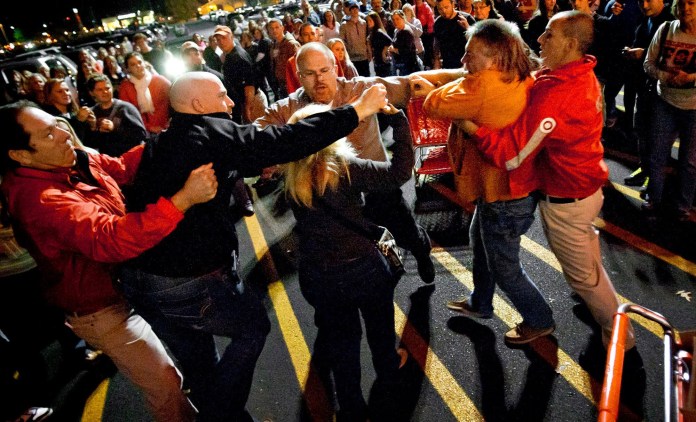
Here we sit, as the world burns around us, and lament the trivial, the inconsequential, the minutia. We fight over saving an extra 20 percent in the Target parking lot. black friday

I have come to the conclusion that we must secretly want it this way. Or we are lazy. Or we do not care. Or it is just easier to ignore it and focus on our first world problems, holiday plans, on the gifts we must buy. We do not really want to talk about it or do anything about it. We just want to complain about it for a hot minute and move on to the next thing.

We put a proverbial Band-Aid over it and hope it goes away?

Oh, you are probably wondering what “it” is. You want to define “it”? Fine, I suppose that is fair.  “It” is undefinable. “It” is everything, anything and nothing at the same time.

“It” is the topic of the day. “It” is immigration, race relations, religion, poverty, politics, international affairs and the economy. “It” is gun control, Hollywood celebrity culture, concussion protocols, domestic violence, locker room language and bullying.

“It” is how families communicate, nuclear and extended. “It” is marriage, divorce, parenting and children. “It” is our increasing reliance on technology. “It” is our jobs, our anxiety, and our fears, our obsessions with the material and immaterial of the world.

“It” is every little thing we deal with on a day-to-day basis.

Perhaps most of all, “it” is you.

Yes, you – the one who thinks I am writing to everyone else and doesn’t think that these (hopefully) thought provoking pieces of less than literary prowess over the past few years are directed at them.

It is directed at you.

It is also meant for me.

When my writing changed a few years ago, it was because the way I think changed and evolved. A funny thing happens as you age, you start paying attention to more than just box scores. You marry, have children and find yourself watching less SportsCenter. Why? Because in the grand scheme of things, it just doesn’t matter as much, while what we are doing to ourselves does as a society matters all that much more.

But a key realization occurred along the way: talking does little. Writing seems to do less. People do not want to hear about the ills of the world, much less so what they can do to improve it. We do quite a bit of talking in our public and private lives. Actually addressing “it” and finding real solutions is a much more difficult proposition.

And this is because we simply do not listen.

We hear, but we don’t listen. We can’t talk about anything that leads to a civilized, give-and-take discussion and solution, because mostly, we’re unwilling to budge on our positions, to meet others halfway. We react, we get angry, we get hostile. To most, an idea of a solution to any problem is agreeing that we are right. It is part ego, part vanity.

Devaluing the ideas, thoughts, and concerns of others while simultaneously self-promoting our own as fact and truth is as dangerous as it is foolish.

To most of us, we might recognize this, so we back-off. It is not worth the argument, the fight. We Band-Aid our lives for the sake of doing the dance. We won’t talk about “it” – whatever “it” happens to be, because all it will end in is hurt feelings, angry words and emotional outbursts.

So we bottle it all up inside, allowing it to take residence in our proverbial mental garbage bin of all the things we’ve ignored, swallowed and tried to forget over the years. These situations become like sticks of unlit dynamite.

And then, at some unknown point in the future, the most meaningless thing sets off the wick and we explode, looking like we need a straight-jacket and some prescription drugs.

We’re all a little crazy.

But that is because we allow ourselves to be. We think we’re saving face. We’re not. Clear and honest communication is a central part, but actually listening and being willing to bend, to meet in the middle on whatever “it” is would most likely serve us all well.

This much is true: if we agreed to disagree from the beginning and worked to a solution that neither feels entirely great about, but comfortable with, we might actually get somewhere in this world.

Our world view is significantly altered by the fact that I am me and you are you. We’re a country and world full of people with specifically engineered lives, with experiences vastly independent from one another.

We share the same period of time and space in this universe, but we experience that time and space in very different ways, which means we do not – and cannot – see the world the same way.

So why are we so surprised when people of opposing viewpoints and political parties, living in different cities, towns and regions, with entirely different life experiences disagree with us?

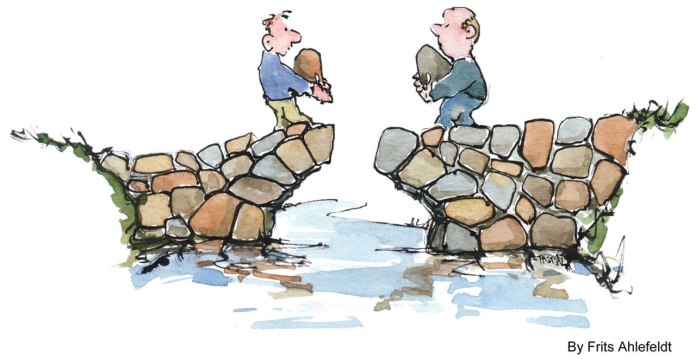
We will never agree on anything because not one of us looks at everything the same way. It is not about forcing someone else to see why they are wrong and you are right.On the contrary, it is an attempt to build a bridge toward the middle where you see where they are coming from.

bridge


That is problem solving. That is relationship management. That is how we were designed to interact. We are not all geniuses in all aspects of life and its infinite mysteries, nor are we complete morons, either. We’re a melting pot of races, religions, ethnicities, social, cultural and economic backgrounds.

We – READ: you and I – would be better off if this were not just a pipe dream, but something we actually exercised ourselves and taught to our children. You – yes, you – will be wrong sometimes. You will be right sometimes.

Sometimes, you might be either, neither or both.

The same goes for me, your parents, in-laws, children, their friends, teachers, your co-workers, the guy working construction and the lawyer on 5th Avenue, the President, Congress, Roger Goodell, Chris Rock and the waiter at your restaurant.

Be in the world, not above it. People are people, their problems are real because they experience them. Don’t shut them down. When we refuse to grow, we refuse to change – and change is largely inevitable. Growth is good. Sticking to your old habits, beliefs and traditions is not necessarily something to be proud of.

So this holiday season, start a new tradition.

Try.

Try to be honest. Try to be kind.

Try to avoid the Social Media tar pits that cannot be one. Try not to take the bait. Try to understand there are people who do not have food, shelter or friends.

Try to not be too swayed – or angry – with those seeking your vote, your money, your donations and your time. Try to give back a little more than you take.

Try to understand the other side, someone else’s perspective as best you can. Try not to shut down or shut out. Try open minded. Try accepting what you can.

I don’t think you should necessarily succumb to the world, give in to all opposing views and beliefs and acknowledge they are somehow right. But the world is not going to fully come your direction, either.

Try to build a bridge.

At least your half of “it,” anyway.

Standard
American culture, Me Generations, psychology, Society, Time

A Time for Action


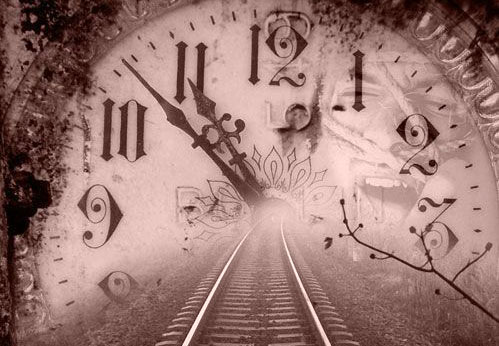
Ever listened to the clock, like one of those old grandfather clocks with the chimes that would wake you from a dead sleep in the middle of the night?
Tick, tock. Tick, tock.
You can actually hear time passing. What’s interesting that you pick up from observing this is that there is really no such thing as right now, even though Val Halen had a popular song about it. In fact, Sammy Hagar’s lyrics were outdated before the ink probably dried on the notepad he wrote the lyrics.
Even saying the phrase right now takes a second, which inevitably creates a paradox in which you are both speaking of something from the past in the current and calling it the present.
Good and confused? Well, you should be. The passage of time has and will remain one of the great mysteries of our world. 
Men and women have used it and abused it, wasted it and made the most of it for as long as we’ve inhabited the planet. While we’d probably think of the  way we once lived as nomadic hunter and gatherers as naively barbaric , it could be argued that we are still barbarians, just a different kind.
We’re still hunting and gathering, only now, it’s consumption of things.
If you really want to see how fast the world moves, just go here, to the worldometers, a site that measure statistics on a variety of things.
In some areas, it is difficult to even comprehend “right now”. Just watch the birth rate. Or scroll down to the social aspects of the world. Look at how many Tweets are sent every second. The only thing that keeps up with both those categories is the number of CO2emissions this year – measured in tons, of course – and money spent on obesity related diseases. Or cigarettes smoked or world spending on illegal drugs.
Want to know about how fast – and what exactly moves quickest – here in the good ole United States? Then head over here, to usarightnow.com. Watch how fast these categories move: cans of coca-cola consumed, debt, revenue, spending on plastic surgery, text messages sent, energy consumed. 
So we’ve never really figured out this whole “what to do with ourselves” quandary. How is our time best spent, and according to whom? I suppose it’s up to the individual. Some live for family, some for faith. Some for vacations, gadgets, objects. Others live for love – of person, of food, of money. Some live for their work and the task manager mentality of accomplishing something, even if that something isn’t all that well defined or, frankly, important.
Not everything holds the same value when measured by people or, perhaps even more intriguing, by time. It cannot, frankly, otherwise, we wouldn’t know what to appreciate. But that doesn’t mean what we value most is what we spend the most of our time on. Some argue because we can’t afford to.
I’d say based on things are going, we can’t afford not to.
According to most of the statistics, how we literally “spend” our time says all we need to know about us, as individuals and as a society. How we do our now will ultimately determine our later.
We want it all and we want it now.
We want quick fixes and short-term solutions to long-term problems. We want to feel good, so we buy whatever our drug of choice is: movies, music, food. And yet another minute, another hour, another day, month or year will pass and nothing actually changed. The feeling we get from all these things, is, like time itself, momentary and brief. And at the end of it, you have to wonder: what did I actually do?
We’re all about me. Then again, we always have been. There’s just more of us now.
Time just ran yet another story about another generation of young people who are all about themselves and how many people in older generations worry that they won’t be productive members of society.
Oh, but they will.
This story has been told and re-written many times, about Baby Boomers, Generation X, Y, Z and Millennials.  As Elspeth Reeve so eloquently pointed out in The Atlantic Wire last week, this same argument has been pushed as a talking point for over a hundred years, with nearly every generation. And every time, eventually, the vast majority settle down and do what they are supposed to: get jobs, acquire debt, pay taxes and die.
It seems no matter where you look, you find people who are not content or happy with something. And that’s not a knock, we’re all human and we all want and desire and need. But based on what we spend the majority of our time on, none of it is worthwhile to us. Actions speak louder than words, as they say, right?
Who are “they” anyway? Who actually does instead of merely speak? If action is the greatest indicator of doing there is, if so many are sick and tired of so many things, why do we spend so much time talking about it all? Perhaps because, at a young age, we’re told to share our emotions and our feelings as a coping mechanism. “You’ll feel better if you talk about it.”
And so we are a society of talkers.
This runs contradictory to all that we, in societal terms, believe ourselves to be. Our collective and individual self-image and worth is higher than what we actually are, or how we are viewed by others. Basically, we think we’re great, but we’re not all that great.
Yet inherent within the fabric of our very being is the need and the desire for something more. This could be due to the fact that we’re not fulfilled in how we spend the majority of our time. With over 80 percent of the American population reporting they do not enjoy what they do, this can certainly be a large contributing factor to our sense of uneasiness.
It’s the constant pull between the benefits of the here and now versus the hazy, distant outlook of the future. It’s hard to picture the future and see anything but an older reflection of today, or better yet, yesterday.
Do we have the wherewithal and the focus to get past the right now, which we’ve already established doesn’t exist? There’s always another horizon, another horizon – until there isn’t and we’ve ran out of time.
The promise of someday is nothing more than an illusion that makes us feel our mediocrity is acceptable. To actually make someday today, to make our tomorrow, our vision for the future a reality does, in fact, require action.  It requires care, focus and a formidable resolve to see it through.
Society has taught us – or impressed upon us through marketing and consumerism, that all things must occur fast. That speed equals good, that the quicker you get it, the happier you are. We should be mindful of wanting it all to happen now.
There’s good in the journey. There’s quality over a duration of time, a reminder that sometimes – often times – the best things happen over a period of time. Change typically occurs, for good or bad, slowly. Instead of just some picturesque idea or vision of what we dream and hope for, the journey and the determination to do it and actually see it through is the actual change.
Time is ever-fleeting. Not much is ever done or resolved right now, but rather in the moments long before and after it.
So what you do with your time only says and writes the history of you.
The world, as we know, will keep on moving – a grand machine where the numbers are ever changing. But even though they are measured the same – by the rate of time – they are not and do not have to be connected.
An individual’s life is theirs and theirs alone. So to what do we owe ourselves, as opposed to the world in general? Is what we do who were are, and if it is, are we happy with it?
Action speak louder than words.
So the next time you want to talk about how you feel, remember that’s fine. It’s good to get it out. In the end, however, the action you take determines what you truly mean (or don’t) what you say.
The hope and promise of the future will exist tomorrow as it did today and yesterday.
What are we doing right now that will make our dreams and goals of tomorrow a reality?
Tick, tock.
Standard
American culture, motivation, psychology, Society

Why I’m Happy to be a Human Body Pillow


This past Saturday, my eyes opened due to a horrible muscle spasm firing through my back as my body revolted due to the position it was in – which was basically a backwards question mark. 
This might be a good time to point out that my body wasn’t in this position voluntarily. 
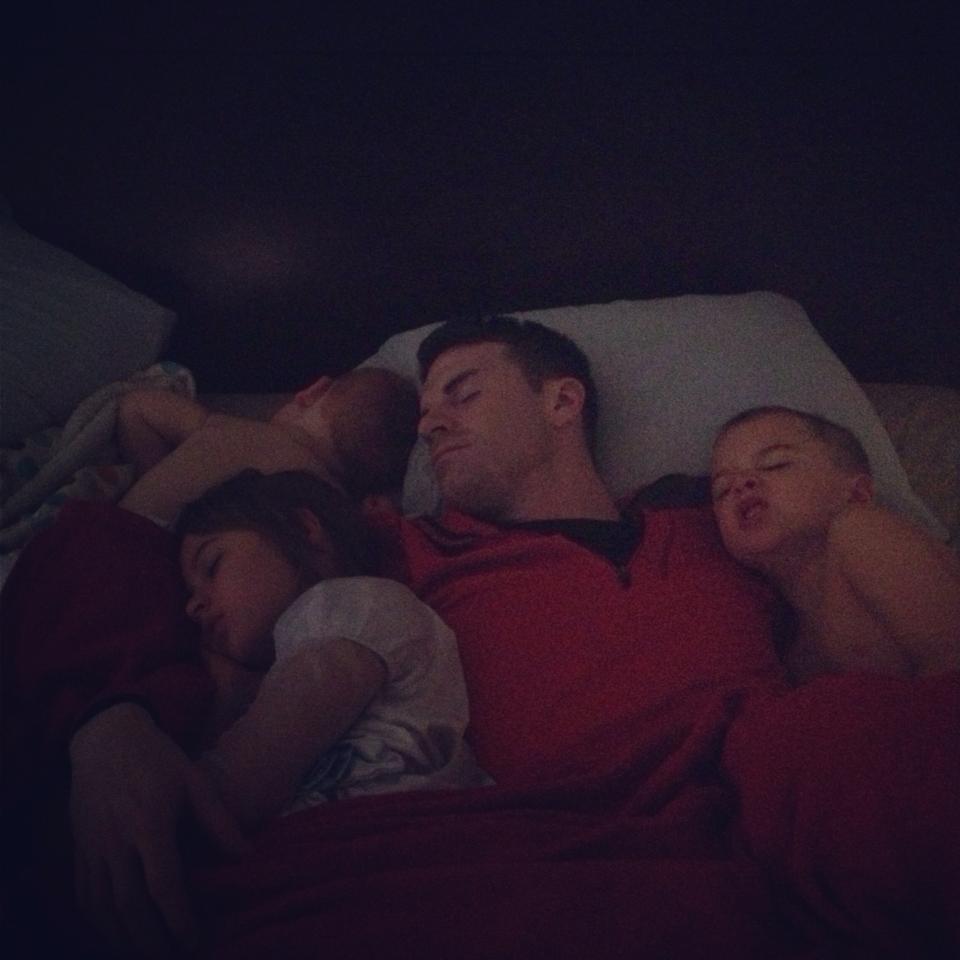
Our seven-year-old daughter had nestled into one side of my body, our four-year-old son the other – and somehow – at an angle across the top of my head, was our red-haired 18-month-old son (see visual evidence captured by my wife in the photo at right).
I had become a body pillow.
Not exactly what I pictured myself growing up to become as a young boy.
~~~~~~~~~~~~~~~~~~~~~~~~~~~~~~~~~~
It occurred to me recently that the world is filled with irony.
We’re not really evolving as a culture or a society, and mainly because we’ve been duped (we’re easily tricked, frankly). The longer we live, the more we forget the point of living.
You start out as a young child with hopes, dreams and aspirations of doing great things in the world. You play, explore, learn, imagine, dream, draw, paint, color, love. You find what you like, a game, a book, a friend – and you throw yourself into it. There is no set agenda, no one way of doing things, no orderly fashion to life – which allows aspirations of what you want to do seem less like hopes and wishes and more like “someday” possibilities.
Slowly, we become task masters. We get our schoolwork done on time; we go here, we go there, we act like everyone else. And we’re led to believe that acting like everyone else is exactly what we are supposed to do – because being like everybody else means you’re accepted as one of a civilized society.
So you become more focused on what you can realistically do, given a variety of factors like where you live, gender, race, religion, intellect, aptitude. You begin to place things in a box. Instead of asking why, as we did when we were young and curious, we start focusing on the how.
Once we stop asking why, the how doesn’t really even matter.
We’ve become a world of task checkers and project managers: once one thing is complete, check it off the list and it’s on to the next thing. I’ve been terribly guilty of this. It removes spontaneity. It removes the wonder. It removes the why.
How do I pay my bills? How do I make dinner, give the kids a bath, get my work done, mow the lawn, help with homework and still have time for my spouse? How do I have time for my friends? How can I be in three places at once? How am I so busy?
This task-oriented action is what drives us around and around, day after day, year after year. And we go around and around until someone tells us we can stop, or a bank account verifies it, a some point much later in life.
And suddenly, in our advancing age, it will occur to us, as we have nothing but time and no tasks, that we were asking how instead of why. We spent our lives asking the wrong questions.
Why did I do so much to pay so many bills? Why did I do what the world told me to do? Why don’t I know how to operate without a To Do list? Why don’t I give more time to my spouse and children? Why did all those arbitrary deadline matter so much? Why did the grass need to be mowed so much? Why do I need be in three places at once? Why did I allow myself to be so busy, so bothered, so stressed?
Forget the To Do lists. They serve no purpose than from keeping us from doing what we were meant to do. 
We’re led to believe that this task master lifestyle is accomplishment. Of what, exactly?  We think we’re getting things done, but we’re not. We think we’re working hard, because why? Is all work hard? Should it be? We even love to talk about how hard we work as a society. Good for us! We’re the best worker bees out there!
And we’re completely missing the point. For the record, I don’t know what the point is either, I wouldn’t pretend to.
But I’m always learning more about what it is not. Turns out, I’ve actually become much of what I always wanted to be, all because I’ve been given the chance to be a husband and a father of four.
I am a poet, a writer, a reader, a thinker. I am a historian, an artist, an actor. I am a pirate, a doctor, a cook, a mechanic. I am Santa Claus. I am a coach, a tour guide, a guardian, a granter of wishes.
In a way, I became more than I ever could hope for.
I am a human body pillow.
And the question isn’t how, but why.
Scratch that. The question is…why not?
Standard