American culture, NFL, Peyton Manning, Society & Culture, Tom Brady, Uncategorized

The Intervention of a Sports Addict

Sports are a drug.

They’ve probably always been a drug, and always will be a drug.

They soothe us, distract us, energize us, unite us, divide us, and entertain us.

They also blind us.

Americans are sports junkies.

And what do addicts do?

Deny that a problem or addiction exists in the first place. They ignore the obvious. They defend the indefensible. They keep right on using.

But they’ll ruin you. Mess up your mind.

You don’t believe me, do you?

So how about the fact that sports will make you deify someone you’ve never met? Doubt me?

Let me prove it to you.

How do you feel about Tom Brady? And now, how do you feel about Peyton Manning?

Allow yourself to independently judge both of these legends’ and their recent “situations.”

You couldn’t do it, could you?
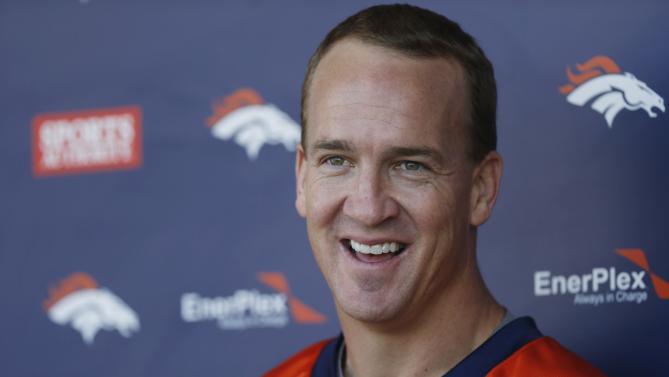
Peyton Manning

Manning’s stories are promptly dismissed as “hit” jobs by people who want to tear him down through accusations of HGH and a young college kid who behaved immaturely.

Yet Brady’s stories are treated as fact, despite the little evidence produced in the 12 months since Deflategate began to actually prove 1) anything actually happened and 2) most importantly as it concerns Brady himself, that he had anything to do with it if the balls were actually deflated by humans.

The NFL still slings it out in court to prove they have the right to punish a player under the CBA, missing the entire point that, you know, you have to actually have proved the player should be punished at all. To do this, they uncovered thousands of e-mails and phone records to try and link Brady to it.

All we found out is he wants to play longer than Manning, he’s got an ego and he weirdly cares a lot about swim pool covers.

On the other side of the coin, Manning has seen his image take a hit over allegations that date back 20 years that he was basically a pervert to a female trainer at the University of Tennessee. This is on top of the allegations that he received several shipments of HGH (or his wife did) that coincide with his neck injury rehabilitation a few years back.

The Tennessee story has been out there since 1996 and Manning has settled the dispute twice – once when it happened and apparently again when he brought the trainer’s name up in a book. Why this is resurfacing now has everything to do with his name being attached to a Title IX lawsuit against Tennessee and it being 2016, the age of rabid, social media heathenry.

Meanwhile, it has been revealed that NFL players were shorted $100 million in revenues. The league office dismissed it as an accounting error. Anybody make a $100 million mistake at their job wouldn’t have a job the next day. Yet this story is not currently gaining much traction. Why?

Because we’ve already given them the money, so we don’t care if the rich players get richer or the rich owners are even richer. It’s monopoly money to us, anyway.

No, no, we addicts, we care about sentiment, about legacy, about being able to emphatically agree on some fantasy ranking of the greatest ever.

And we care about this all because it says a lot about who we are – at least so we think subconsciously.  We attach ourselves to these athletes and these teams so we can go through the pain of losing and the joy of winning together. Brady backers love the underdog story, Manning’s fans stuck by him through all the “he can’t win the big one” years. To us, this loyalty proves something about us.

We can’t like the wrong guy, we can’t be wrong, we can’t have invested in the wrong guy or bought into who he is as a person.

NCAA Football: Alabama at Mississippi

There’s a lot on the line for us average Jill and Joe’s because we’ve convinced ourselves that our fandom matters to other fans. We made it clear who we support – and not only is our guy better, but they are a better person, too.

Except for one, small problem.

It means nothing. We don’t know any of these people. We don’t know what they are like behind closed doors. We don’t know how kind they are or how ruthless they are or how sleezy they might be.

They might be innocent, they might be guilty. The vast majority of us have no clue. And yet we sports junkies feed the beast. We listen to the sports talk shows rattle on and on about it, driving up ratings, making them talk about it more. We click the stories all over social media, prompting more stories to be written about it.

We’re sheep. Inmates in a sports asylum walking around with blinders on, believing in sports and sports figures as if it was a religion. We’re dopes, buying the gear, buying the tickets at astronomical prices, buying into the belief systems and serious manner in which it’s all treated.

We’ve been sucked into world within our world where we think this stuff actually matters, like debating if four minutes is enough of a suspension for Ben Simmons cutting class last week?

I don’t know, and I don’t care anymore. Did that teach Simmons anything? Probably not. Why is he allowed to do that? Why do you care? Didn’t you cut class in college? Does it impact you if he doesn’t go to class?

We want fairness and equality in sports, in college programs? There’s too much money at stake to ever let it happen. We demand from coaches and athletes and administrators that which we ourselves cannot even do in our daily lives. We take shortcuts. We skip out. We complain. We don’t give max effort every single day.

But we sure expect everyone else in sports to. After all, they’ve been given a gift.

So have you.

You just choose to waste it.

Sports and extracurricular activities in general serve in building people in a variety of ways from a young age. They teach teamwork, dedication, commitment, perseverance and hard work to name just a few.

And wanting to be a part of that, as a parent or a fan, or both is good too. But too much of anything can turn into something you never intended – like convincing yourself that someone you’ve never met is good or evil, the embodiment of everything you love about sports – or everything you loathe.

Just be wary of absolutes.

Absolutes lead down a path of yelling at officials at a soccer game for four-year-olds. They make you crazy enough to attack someone physically in the parking lot after a game. Or throw batteries at Santa Claus (we’re looking at you, Philadelphia).

They make you believe in someone else that, like you, is human and fallible. Better yet, these absolutes have led you to wear the jersey of a character, a portrayal, an image of who that person wants you to see and believe.

I know this isn’t easy to admit. I know you think I’m crazy, that sports don’t control your life and that you couldn’t possible “worship” another human being so blindly.

But just go back to the beginning. What do you know and believe about Tom Brady? And what do you know and believe about Peyton Manning. Ask yourself which one is right and wrong, good and evil, guilty or innocent.

And now remember that it’s a trick question: you don’t know them or their situations – only what their enemies or their mouthpieces have allowed you to.
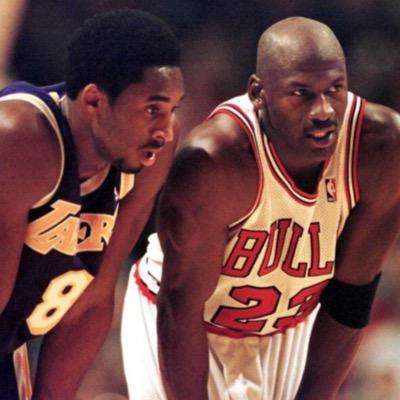
michael and kobe

In other words, you don’t know Peyton Manning or Tom Brady. Or Michael Jordan. Or Tiger Woods. Or Bob Knight. Or Serena Williams. Or Dean Smith. Or Kobe Bryant. Or Tim Duncan. Or LeBron James. Or Andre Aggasi. Or Danica Patrick.

No matter how much you think you do.

The first step is to admit there’s a problem.

Sports are a drug.

They soothe us, distract us, energize us, unite us, divide us, and entertain us.

And they most certainly blind us.

Standard
2014 AFC Championship Game, Peyton Manning, Tom Brady

The Great Debate

After four long months, we have come away with a familiar match-up in the AFC Championship.

Brady vs. Manning.

ImageThis Sunday, it will be nearly 10 years to the day since two of the greatest professional quarterbacks in any lifetime met in the playoffs. It feels like this could realistically be the last time they meet with the stakes so high.

They are intrinsically linked, despite their football narratives taking entirely opposite paths, they remain relatively the same.

Peyton Manning could never quite get over the hump in the playoffs, despite stellar numbers and regular season records that nearly every QB would trade for. Then, he broke through the New England and Super Bowl barrier in 2006.

All seemed settled, the monkey removed from his back. Yet as time has passed from that magical day in Miami, when the Colts beat the Bears in an ugly, wet game, Manning’s place among the elite of the elite remains a question for some, due largely – if not entirely – to his continuing poor performance in the playoffs.

Tom Brady had it pretty good the first half of his career. With a masterful coach, a tremendous defense and a clutch kicker, the Patriots won three Super Bowls in four years. But he never had the stats or regular season records to match the Mannings, Marinos and Elways. Then 2007 happened. Finally armed with two receivers not found at a Dollar General store, Brady shattered records and the Patriots had the first undefeated regular season since Nixon was in office.

But Brady had found life to be a bit tougher in recent years – with two Super Bowl losses at the hands of Tom Coughlin, Peyton’s little brother Eli and the New York Giants. As Gisele said so eloquently, Tom can’t catch the ball or play defense, too. He’s just a man. A man in Uggs.

As we often find, there’s more to it than just that. The Patriots have had the better organization, which means their team is often well-rounded, while Manning’s days with the Colts were often marked by a defense that never materialized into anything more than subpar.

Though not necessarily by choice, Manning has moved on to Denver in his NFL golden years and found a team chalked with talent on both sides of the ball, leading to a superior team in each of the past two regular seasons. As the numbers and MVPs pile it, it is safe to assume that he really should not need anything else to stake claim to the label of greatest quarterback ever.

But a second Super Bowl ring sure would put it to rest.

Brady has survived and thrived long enough that the Patriots have been forced to basically overhaul their team in chunks over the past two or three seasons. While that has not stopped New England from piling up more division titles and first round byes and AFC Championship or Super Bowl appearances, the fact remains Brady and Belichick have not won a Super Bowl since February 2005 – remember, when Terrell Owens actually mattered and Donovan McNabb was throwing up in the fourth quarter? If it seems so long ago – it is.

Even without the gaudy, long term stats, Brady will always have a logical claim to the label of greatest quarterback ever.

But a fourth Super Bowl ring sure would help drive the point home.

ImageHowever, it should be obvious: this debate will not end come Sunday. For those who actually pay attention, there is far too much else that happens on and off the field to allow this conversation to be settled. It might never be – and maybe it should not.

They have taken turns breaking each other’s records. Each has probably been at their very best not when breaking those marks, but in the seasons where they excelled when they probably should not have.

Like the years Manning and the Colts offense was actually their defense, used to keep other teams – and the porous Colts defense – off the field. Or this season, when Brady has guided the Patriots to another double-digit win total with huge injuries and lack of experience on both sides of the ball.

Plainly stated, both are in many minds, the best of all time. No other quarterbacks have done it in so many different ways and for so long.

Their stories have a different arc, but a similar tone. Manning was perhaps relied on more (at least up ‘til now) than Brady. As a friend stated, it must be nice to have a running game like the Patriots did on Saturday against the Colts, or to play against a young Andrew Luck, who threw four interceptions.

Perhaps, but just the same as I am sure Brady would trade his receiving core for Manning’s at any point in their careers except for possibly 2007. Just the same as Manning would probably take the Patriots defense over any the Colts had in every year but the 2006 playoffs.

You see, they are at the same time very similar, yet very different. They have defined their teams and the NFL for the past decade-plus.

And really, all this comes down to are a bunch of largely superfluous factors that really are more telling of us than they are them.

For example, where you live, what your favorite team is, what you appreciate in football, what you value in a quarterback. Do you enjoy winning consistently and your team having a chance, or do you value championship trophies more? Do you like a cerebral quarterback with a master command or a quarterback so precise between 15-35 yards he could hit Lincoln’s nose on a penny?

So what are we arguing about? The simple fact we like one guy or another. That’s it.

Manning and Brady do not think of this the same way we do. They like and respect each other. In fact, they are better friends than most people know, often talking and texting about life – and football; like sharing game plans on how to beat other teams. Of course they want to win, but I doubt if they sit around comparing resumes and arguing about who is better.

We’ve been wasting so much time pointing out all the things we don’t like, or what we think is the reason one is better than the other. It is just what we do. We need to know. We need people to agree with us. We want a clear-cut winner in this.

But no matter the outcome, we won’t know any more after this game than we did before it. Perhaps it is time to stop finding so much strength or fault in either man and appreciate them both at the same time.

Let us just enjoy the show before the final credits.

This great debate is nothing more than a distraction to the show.

In the words of T.O., grab your popcorn.

Standard
Aaron Rodgers, acceptance, New Year's Eve, Peyton Manning, Society, tolerance, Tom Brady

Accepted Assumptions

Watching the ball drop on New Year’s Eve has become a tradition for many Americans, though we cannot state with certainty why we still tune in. Perhaps out of tradition – and age – or both.

While watching the NBC crew kill time before everyone awkwardly – and poorly – counted down the last 10 seconds of the year (again), I found myself only casually listening to the conversation between Carson Daly and his co-hosts.


There was talk of Twitter gaffes and resolutions that are never kept. And in the next breath, I caught the mention of how they hoped 2014 would be a better year for us as a nation, how we could start accepting more, make better decisions and stop judging so much that we don’t enjoy life.

Not a great resolution if we just established we don’t keep them.

At that same moment, scrolling through Twitter, I came across a re-tweet that seemed like something off a grocery store checkout lane trash headline: Aaron Rodgers reportedly gay.

Sigh.

I read the story, and just as I suspected, it appeared to be written by someone who was 15 and thought “Burn Books” were a super idea. But it was filled with all sorts of supposed “facts” (read: rumors, gossip, heresy), so I sent a quick text to one of my best friends.

He had not heard this rumor either, but said it would not surprise him, yet nor would be care. After a little digging, we discovered that Rodgers had earlier that day felt it necessary to respond to said rumors on local Milwaukee radio that he “really, really likes women.”

Um, OK.

But there are so many layers here, that I wonder if this sort of resolution of acceptance has more to do with how we think and how we react than to how we feel?

What if Rodgers was gay? Would it matter? Obviously, it would not really, truly matter. But the reaction would from the standpoint that perceptions would be changed – from within his locker room, to the NFL, to the Wisconsin community. The sports world would be changed to have a league-MVP; Super Bowl MVP and Top 5 player announce to the world what his private life is.

And I can’t help but wonder, why? To what point and for what purpose? Whose business is it? And if it somehow changes your opinion of him, that is your issue.

There seems to be an ongoing search to out someone high up in professional sports, to the point we have athletes emphatically answering they do not have a closet to emerge from, which then makes them look bad – as if they have to put the Seinfeld “not that there’s anything wrong with that” reference tag at the end, just so the quote does not come across wrong.

Yet I wonder, what are we searching for? And why? What point are we trying to prove? What if gay athletes are not coming out simply because they just do not want to make their private life public? Is not enough of their life public and scrutinized as it is?

I cannot help but feel this process is a rushed exercise to make our society feel better, or to demand acceptance, or to prove that acceptance is not possible all in the name of winning some publicity battle over political correctness.

Because let us be brutally honest for a moment. We are the ultimate jury. We constantly judge people all of the time. We judge based on religion, race, line of employment, physical appearance, where we live, what we eat, what phones we use, our political ideologies, sports teams, shoes – and on and on.

We say we want to accept people for who they are, but we only do that if our perception of who they are actually matches, you know, who they are. So we judge on that, as well.

So, we are fine with Peyton Manning throwing 55 touchdowns and breaking all kinds of single season passing records, even though there’s a fair amount of evidence to suggest the Broncos ran up the score on their opponents. You know, the very same thing we shredded Tom Brady and the Patriots for in 2007, when he set the mark at 50 TDs.

The difference is simple in our minds: Brady was a bad guy, who played for a publicly despised coach, coming off Spygate and winners of three Super Bowls in the previous five years. Brady broke up with an actress he was having a child with and married a supermodel. He is a spokesman for Uggs. Manning is a spokesman for Cadillac and having football on your phone, married his college girlfriend and keeps his twins out of the media.

Our perception dictates our reaction and our acceptance of someone. Peyton Manning comes off as awe-shucks; a hard-working guy who is obsessed with football. Brady comes off as too cool for school, a little silver spoon-ish and seems to have other interests outside of the game, like posing for fashion magazines. This bothers us for a variety of totally personal, perception-based reasons.

Yet we choose to forget that Manning grew up the son of a college legend and NFL star, whose dad made the top salary in the league at one time and is actually much closer to the silver spoon moniker than Brady. We ignore the pedigree, No. 1 pick status of Manning and seem to constantly forget (despite media reminders) that Brady was seventh on the depth chart at Michigan when he arrived and split time with Drew Henson and was drafted in the 6th Round, with the body of a 14-year-old.

Yet we still don’t like it. We consistently form our collective narrative on famous people based off a very finite amount of information – and then make wild, grandiose assumptions.

We want all our stars obsessed with their respective sport, watching film 25 hours a day, saying all the right things and keeping out of trouble. And then, when they do, we say they have no personality. It’s why Manning’s turn on SNL a few years ago was so shocking – who knew Mr. Quarterback could be so funny? Who knew he had – gasp – a personality and comedic timing?

The American culture is heavily dictated by assumptions of what we already think we know, which in turn, kind of jumps into what we will inwardly and outwardly accept. People are shocked when they learn something that they don’t believe fits the profile of what they perceive.

For instance, would it not seem strange to the majority of us to learn that Johnny Manziel loves fine art? What about if we learn that Tony Romo was a huge Grateful Dead fan, and lived in a Bohemian style apartment and just keep money in the bank? What if we learned that LeBron James read Shakespeare and listened to Mozart before every game? Or Jay Cutler helped the elderly into their seats three hours before game time?

These things do not seem to jive with what we have already placed inside the box of what we expect based on a stereotype that fits a commonly held assumption.

Do these things matter? No. But you have to be careful with your brand now. More often than not, it would befit us to keep up the visual and verbal presentation of what is expected instead of what actually is. It is just easier for everyone involved. Some of us go on pretending, others go on assuming.

Almost like some sort of accepted game of charades. 

This is why we have still got quite a bit of work to do before we actually make the strides we’re aiming for in our society.

Actions speak louder than words, as they say. So it really does not matter if Aaron Rodgers is gay or not – only our reaction to whether or not we even assume it is plausible.

Either way, that collective reaction says more about us than it does about him or anyone else. Perhaps we could cut down on the assumptions we make about others.
That would be a resolution worth keeping.


Standard
Bill Polian, Denver Broncos, Indianapolis Colts, Jim Irsay, NFL, Peyton Manning

The Book on Manning

On Sunday night, Peyton Manning returns to Indianapolis to play professional football in a state-of-the-art football stadium he played a large role in getting built.
Perhaps you have heard of this little fact. If not, let me know once you’re out from underneath that rock and I’ll fill you in on government shutdowns, Miley Cyrus and this new thing called the iPhone.
In all seriousness, Peyton’s return to Indy as the quarterback of the Denver Broncos continues to grow in significance with each passing day. This is due largely to the fact that the Broncos are undefeated, that Peyton Manning is doing Peyton Manning like things, you know, generally embarrassing defenses with an offense so cutting and precise, it would make a slew of surgeons, architects and engineers jealous.
But Peyton has always done this, or at least it has felt like he has. Now there’s that undertone flowing into this Sunday’s game with the Colts, that imagine what he could do if he were still there and that the Colts might have given up on him.
So of course, the normally quiet and reserved owner of the Colts, Jim Irsay, spoke up about this after a litany of questions this week.
Actually, again, unless you living Patrick Starfish-style under a rock, you know that it was the exact opposite – Irsay talks constantly, about anything and everything under the sun, without prompting. His comments about wishing the Colts would have won more Super Bowls weren’t really controversial; it was the truth.
The media has latched on to the story this week, but that’s what the media does.
If you’ve seen the “Book of Manning” documentary, then you can get the background needed to write the book on Peyton Manning. He’s prepared, flawless, exceptional, born to play quarterback and thrives by knowing every possible situation and outcome – like a mathematical genius that sees every possible outcome before it happens.
But being built in such a way does not leave room for randomness, spontaneity, surprise. What happens when things go wrong and something does not go as planned. This is where, as we learned from that documentary, where Peyton’s father, Archie thrived.
And by watching old footage of Archie – even that crazy scrimmage game in the late 1980s at Ole Miss – you can see it: Archie just kind of made things up.
You know which one of Archie’s sons does that now? Eli – not Peyton. Just look at the New York Giants Super Bowl wins, the playoff runs, the regular season games where they look out of it. Eli scrambles, chucks and pulls rabbits out of his hat.
Peyton’s act is no magician; he’s a professional quarterback. As such, the book on Peyton has always been that he’s exceptional in the regular season, but come playoff time, he’s not very good. It happened at Tennessee and it definitely happened with the Colts.
Now, that’s not meant to place the blame of first-round exits and humiliating defeats in the playoffs at the hands of Peyton Manning. Football is more nuanced than that. But just look at the key interception of the Super Bowl loss to the Saints. Is Reggie Wayne to blame for that costly pick? Or, could it be that Peyton is such a tactician, he threw it to the pre-programmed spot on the field where Reggie was supposed to be? Who’s actually at fault, Wayne for not being there, for a variety of reasons – or Peyton for not adjusting his read and throwing it anyway?
This could obviously spiral off into a multi-layered conversation if we actually rehashed even just that one play.
The overall point: nothing Irsay said about Peyton was inaccurate, and frankly, not that controversial. How can you not have wished to have won more than one ring with perhaps the greatest quarterback of all-time taking you to the playoffs 11 years? The same has been said about the Atlanta Braves of the 1990s with their incredible pitching staff of Glavine, Smoltz and Maddux.
As I heard earlier this week, the real and hidden swipe might have been at Bill Polian, with Irsay essentially saying Polian could bring the horse to the water, but couldn’t make it drink. While slightly unfair – and kind of uncalled for, considering what Polian did, it also might be just inaccurate.
Polian had a tough task of building an entire franchise around Peyton, and accordingly, he put together a team that could play from ahead defensively, since that was the goal: Peyton gets you a lead, pin your ears back and go after the other team aggressively on the defensive front.
It did work. Polian cannot perform on the field, any more than any other sports executive. He assembled the team and accomplished a great deal during his tenure, the likes of which had not been seen either in the NFL or in Indianapolis from a consistency standpoint.
If it was indeed a swipe, it was unfair and needless.
But let the good fans in Indy not waste any time thinking about what could be currently. It was time to change direction, switch things up and try a new approach. And clearly, we didn’t know if Peyton would return to form like this. We still don’t know if it will last for more than a year or two.
The Broncos were simply a better fit last season. They looked a lot like Manning’s 2000s Colts. Still do, just more dangerous weapons and a better overall defense. We shall see if this translates to another 13-3 season and a bitter playoff failure, or, perhaps a Super Bowl.
For the Colts, Andrew Luck couldn’t be a better fit. It could not have worked out better.
Is it going to be awkward Sunday night? Of course. These things always are. Without Manning, the city may not even have a pro football team, let alone a new stadium. It certainly wouldn’t have the Super Bowl banner it has.
But every legend leaves with a little gas left in the tank. The Colts just didn’t want to be left holding the keys when it went empty. They saw a chance for another once-in-a-generation quarterback who fit their city and style perfectly and they took it.
Its sports. It is how these things work. Would the Colts be better off with Peyton right now? There’s no real way to know for sure. We’re not in an alternate world where he is with the Colts, we just have what we see.
And for all that he did accomplish, for basically saving football in Indiana, the fans will give him a standing ovation, Peyton will be humble, gracious and appreciative. The game will start and aside from the crowd not giving him the benefit of pin-drop quiet he’s used to in Lucas Oil Stadium, it will be fine.
While it will be easy to look back at the end of the season or in five years and point out what happened as evidence either way, just remember this: it seemed right and natural at the time. Because as crazy as Jim Irsay is, he was not necessarily incorrect (this time).
The book on this Manning may not be complete, but the preceding chapters to this one have told a story, and not every page was perfect.
We did want more.

Standard
Johnny Manziel, Michael Vick, New England Patriots, NFL, Nick Saban, Peyton Manning, Robert Griffin III, Seattle Seahawks, Tom Brady

The Notepad: No Huddle

When I was a younger man, and a much younger writer, I wrote a Sports Blog for a daily local around my hometown. Every so often, I would bust out what I deemed “The Notepad” – a wild, random mix of thoughts about sports that I had literally jotted down on a notepad. When I needed a column idea, I’d pull out that notepad and see if anything could be fleshed out into a full-blown opinion piece.
Usually, it couldn’t – but I found that I had enough nuggets of observation on those pages that I could piece them together in a way that provided a random-thought style approach to a piece. Like a list of jokes or one-liners a comedian deems unworthy of a full bit in his set, the notepad offered me the same freedom.
From time to time, I still jot things down – just usually on my iPhone. And since the beginning of the 2013 NFL season, I’ve had many thoughts. Since this Notepad is specific to football, we’ll call it the “No Huddle”.
       I must repent. For years – and I mean years – I hammered Peyton Manning for his poor body language at certain times, most notably if a lineman dared to commit an untimely penalty or a receiver had the nerve to drop a pass that clearly landed in the basket. It drove me Lamar Odom crazy. Essentially, I felt that Manning was showing up his teammates in a very public way for imperfections. And then my man crush, Tom Brady, started throwing fits like a five-year-old at bedtime during the course of the first two games the Patriots played against the Bills and Jets.

Did I immediately want to ignore it and give Brady the benefit of the doubt I didn’t give Peyton? Of course. But I just couldn’t ignore Brady’s body language. Now, I won’t make a mockery of it the way Keith Olbermann did on his show last Friday, but I will say I’ve re-examined this whole thing and recognize that it must be incredibly frustrating for quarterbacks to work with young receivers. You spend a lot of time working and developing report with a player or a group of players and then circumstances, mainly business related ones, change the dynamic. Each year, as Brady, Manning and even the greats like Brett Favre, get further along in their career, they sense the time running out on the opportunity to stay or be elite. And when you’re breathtaking throws are dropped repeatedly, well, you start to snap like one might expect a mid-30s Hall of Famer to snap. Sorry for all the years I spent hammering Peyton for being rude.

That said…I have to admit Brady looks poor, and the reaction still leaves a bad taste in my mouth, no matter who it is apparently. Show some decorum out there, fellas. Bite that lip, save it for later.
       If I hear another person complain about the noise in the Seahawks stadium – especially from a visiting team or their fan base – I’m going to vomit. Too loud for you? Stay home. You chose to attend the game. If you are a player, sorry your team’s fans can’t make it as loud in your home dome as Seattle’s 12th man does. Sorry the architect of your stadium didn’t intentionally work the design to showcase noise. This isn’t church or a library.
       Tampa Bay players don’t like the strict rules of head coach Greg Schiano, eh? I don’t like how poorly they have played or how they gave the Jets a win in Week 1.
       Is anyone else confused by the fines, suspensions and then redactions of those fines and suspensions? Remember that old NFL Films clip of Vince Lombardi asking, in effect, what the heck was going on out there? Well, let’s cue that up right about now. These fines or suspensions are theoretically levied after the league has reviewed the tape and made a judgment on what they deem a questionable hit, etc. So by and by, on Monday or Tuesday, the NFL sends out announcements on fines and suspensions. And then within 24 hours, they change them? Why? Didn’t they look at it and make a decision? Are they that easily swayed by the appeals of the players? How does that work? Is it the Shaggy defense: “It wasn’t me!”
       Can we stop with all the talk about how Johnny Manziel has a future in the NFL? He’s not out of college yet, and our sample size on these new age QBs isn’t large enough to know if this is a reliable system or a short-term success. I like what Manziel did against Alabama and Nick Saban’s vaunted defense. It says a lot about Manziel that he can hammer Saban’s defensive plans for more yards and touchdowns than he did in their first meeting. And I’ve professed how much I enjoy Chip Kelly’s speed offense. I also like Russell Wilson, RGIII and Colin Kaepernick. Their abilities are amazing, and frankly, unlike anything we’ve ever seen before.
But so far, we haven’t truly seen sustained success. Michael Vick, the forefather of this style of play, has only played one, full 16-game season in his 11 years in the NFL: 2006. He’s had several 15 game seasons, but all pre-date 2006. Since returning in 2009, Vick has started over 12 games just once – in 2011.
RGIII shredded his knee in the playoffs 9 months ago. Yes, there have been advancements in medicine and rehab – but long term, will be last until he’s 35? Kaepernick’s started just nine games (not including the playoffs). I just wrote about not poo-pooing the fun style of play we’re enjoying a few weeks ago and now I appear to be doing it. That’s not my intent. My intent is to say, essentially, let’s just watch and see where this goes over the next year, two years before we say in the modern NFL, Johnny Football has a spot reserved as a starting NFL QB.
Final thought: Take how great Manziel was against Bama with a small grain of salt. In the 2008 SEC Championship Game, Tim Tebow threw for 216 yards and three TDs, then ran for an additional 57 yards as Florida upset #1 Alabama. And Tebow can’t even get the lowly Jaguars to give him a shot. Manziel is a different player than Tebow, but two things jump out at me: Saban’s defense is great, but can give up stats sometimes and many scouts are questioning Manziel’s arm strength. The difference is that Kaepernick, RGIII and Vick have pretty good arms – and legs.
       Lots of injuries so far this season, but I don’t know if it’s any worse than in years past. Many pundits are pointing to the lack of padded practices during training camp and the season following the changes made during the lockout a few years ago as a reason, but aren’t there always injuries? I think we’re just dealing with a chasm between old-school players who are by-products of an era when hitting and full pads was all you did. And they think it’s cheapened the game a bit. But these some of these same players will or have complained about post-career health issues. Why can’t we admire how hard the game used to be while ensuring it’s safe to play in the future?
       Ray Rice doesn’t think much of fantasy football, or those who troll his Twitter account to say nasty things about his early season statistical struggles. I love fantasy football, but I’m not one of these trolls who thinks Ray Rice or anyone else should be thinking about fantasy stats, I hear you, Ray. Then again, don’t lower yourself to actually responding with a tweet to let them know you’re reading that garbage. Just feeding the beast, my man.

       The Broncos sure look good. The Steelers sure look bad. We’re been here before. 2-0 or 0-2, nothing has been settled, no fates determined. Denver fans are thinking about booking tickets to New York for a Snow Bowl appearance (seriously, check out the Farmer’s Almanac for a prediction on the weather next February around the stadium) and Steelers fans are ready to fire everyone. Slow down, put the season on a simmer and just let it matriculate. It’s the NFL, after all, you know – Not For Long?
Standard