American culture, family, Parenting

Bowl Season

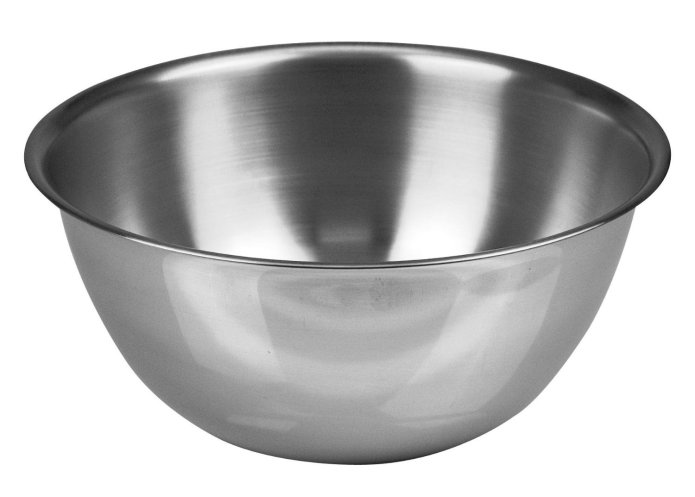
bowl

As I’ve mentioned in this space before, my wife and I have five children. People occasionally (read: all the time) give us the fake “wow, that’s incredible” (read: what are you, insane?) expression when told this.

Sometimes, for kicks, I want to look them dead in the eyes, and as emotionless as possible want to say, “Yes, we are insane.”

And then just turn and walk away, smiling in a way they can’t see, leaving them wondering if I’m kidding our not.

The truth is, we all make our own normal. And there are days when I’m not sure if we’re insane or not, too.

We’re not perfect, and we do not always resemble our Christmas card collage of happy, smiling faces in a warm autumn sunshine. Some days I feel like Michael Keaton’s Bruce Wayne talking to Jack Nicholson’s Joker when dealing with our children:

You wanna get nuts? [Smashes vase] C’mon! Let’s get nuts!”

But the Mrs. and I wanted this, even when a simple cold or flu bug can ravage our house like a plague out of the 1300s.

Take for instance just last week, when my wife had to work one evening and was not home, leaving dear old Dad (me) to put a quarantine order in effect that would have made JFKs during the Cuban Missile Crisis look like a polite suggestion.

You see, I disaffectionately (thesaurus says that’s not a word, I disagree) refer to this time of year as “Bowl Season” – and it isn’t because of the college football postseason games. No, it is bowl season because children must carry a bowl with them in case there is a rumbly in the tummy.

Here is a scene from our latest episode of Bowl Season:

Me: “No one is allowed in the family room! Prisoners — I mean, those sick — are to stay in their designated, already infected areas of habitation until the ban has been lifted.

6-year-old (we’ll call him Brooks, since that’s his name): Daddy, I don’t know what any of that means!

Me: Not you buddy, you’re fine.

dom

2-year-old attached to my hip (we’ll call her The Dominator, a not-so-gentle play on words for her given birth name of Dominique): [inaudible, yet stern sounds, mimicking me, pointing at her infected brethren].

(In this scene, she plays my ferocious No. 2 in command.)

9-year-old (Dryden) from the top of the stairs: Dad, I feel better, my stomach doesn’t hurt, can I come down?

Me: No! You must rest and keep this to yourself!

11-year-old from her room down the hall (Brielle): I feel better too, can I come out?

The Dominator: [inaudible, stern sounds and more pointing, this time towards Brielle.]

Me: Brielle, listen to your sister, she said to stay in there!

We transition to roughly 30 minutes later, as Dad, Brooks, Dominator and Cole – 15-year-old high school sophomore – are cleaning up dinner. Brielle has snuck into the living room, sunk down into the couch and covered herself with blankets as to not be detected.

Dryden (again for the top of the stairs): Dad, can I please come down, I feel fine!

Me, softening after a glass of wine: Ok, but please get a bowl in case your stomach hurts and you can’t make it to the bathroom.

(WARNING: foreshadowing alert)

Brooks: Daddy, do I need a bowl?

Me: No buddy, you’re not sick.

Not five minutes later…the sound of feet hitting the floor hard, running, a short period of silence…then…horrifying sounds from the hallway of you already know what hitting the floor.

Everyone freezes. The only sound is that of the running water from the kitchen faucet, where dishes were being washed. No one blinks, but eyes slowly shift to Dad. Brielle, quickly moves toward her bedroom, sensing the coming storm. Dad slowly steps toward the site of the damage, looks around the corner and his deepest fears are confirmed. Dryden has thrown-up all over the floor.

 Me (sounding like the Dad in A Christmas Story when the fuse blows): Don’t ANY-BODY move! Stay away! Dryden, why didn’t you get to the bathroom?

Dryden: I couldn’t make it!

Me: But you stopped running!

Dryden: I couldn’t run anymore, my stomach wouldn’t let me!

Me (ignoring the fuzzy body physics from a 9-year-old): Well, where is your bowl?

Dryden: I didn’t get it!

Me: WHY!?!?!?!

Dryden: Because I felt fine! I’m sorry!

Me: I don’t care that your sick – that came out wrong – I care that you are sick, but I can take care of you better if you keep it IN A BOWL AND OFF THE FLOOR! BACK TO YOUR ROOM AND GET A BOWL!

Dryden shuffles off, finally takes a bowl, and fires off a final shot from the top of the stairs:

I feel better now!

Me: Not a chance, to your cell – I mean, room!

Brooks: Daddy, I have a bowl.

Me: Brooks, dude, you don’t need a bowl.

Brooks: But I wanted to be ready in case I get it too!

Cole: He’s sucking up to you!

Me: Well, then he’s learned quicker than you did.

Cole: [laughing] That smells terrible.

Me: You either clean it up, or you take your sister so I can.

Dominator: [standing on top of the kitchen island, looks at Cole, laughs and smiles] I poop!

Cole: [seriously seeming to contemplate which is more difficult] I’ll take Dom.

–Cut to a Mr. Clean commercial, because I’m all about well-placed ads.

I spent the next 10 minutes cleaning up the toxic wasteland, with a self-made hazmat suit, gloves and a scarf I fashioned into a breathing mask. For a moment, I envisioned myself as a warrior, ready to do battle, looking something like this:

Hazmat_suite_ingame

I then spent the next 45 minutes mopping the entire hardwood floor and wiping things off like a hospital room.

When my wife came home, she asked how the evening went.

I simply, methodically recounted the events of the evening like a court transcriptionist. I might have been on a second glass of wine at that point. She laughed.

Because what else can you do but laugh? We so often forget what it was like to be kids. As adults, I’m trying to figure out how to not take it so seriously. I fail often.

But I try. And really, that’s the ultimate lesson to our kids. Just try. Just keep going. And laugh a little at yourself. There just is not enough of that – trying and laughing – left in the world right now.

And maybe, that is of one of the reasons we had so many kids.

And maybe, that makes us a little insane compared to everybody else.

And maybe we don’t want to be like everybody else.

Because where is the fun in that?

Standard
belief, Logic, Parenting, Philosophy, Religion, Santa Claus

Believably Unbelievable

Another calendar year has nearly come and gone. 

We’re facing “The Holidays” again, left wondering where 2013 went and feeling like spring or summer was just last week when it was months ago.
The reminders of the passage of time are all around us, constant notifications that the world continues to press on, whether we want it to or not. And we’re constantly battling the notion we may be missing the good stuff.
My most recent encounter with this came earlier this week, when my family renewed a family tradition of watching Christmas movies, like “The Santa Clause.”
And as my seven-year-old daughter climbed into my lap, the scene near the beginning that is the crux of this enjoyable farce hit home: the conversation about whether Santa Claus is real between Charlie and, and…Tim Taylor, er, Tim Allen – wait, I’ve got it – Scott Calvin.

Our children haven’t asked us about Santa being real yet, really, just like they haven’t asked about Jesus or heaven being real. 

That is not meant to combine the two onto some equal ground, mind you, but to merely point out the association of belief in something you cannot see. 
So many logical, rational and data-driven people will tell you it is dangerous to foster notions of a fat man in a suit taking presents to every child in the world that’s been good in one night, just the same as many non-Christians or atheists question the legitimacy of Jesus – from conception to birth to death. 
Now I’m not looking to turn this into a religious forum, it is not my job to judge beliefs one way or the other against my own. Everyone is entitled to an opinion. 

But belief is simply an opinion with conviction, and some choose to back up their beliefs, convictions and opinions with facts. Others with emotion. Belief is just an acceptance of something as truth or factual – with a heavy dose of perception of what we allow ourselves to emotionally accept as true or fact. 
We use facts, pictures, models, graphs and statistics to prove what we want others to believe, but in our world, belief is an emotion, a feeling.
You can show me all kinds of numbers on why Android is better than Apple, or vice versa. All it comes down to is what I like, what I think once I use both products. We can argue over politics, but that’s as much belief and emotion as anything else. We try to use facts and figures there as well. We even break down human relationships to statistics and figures, qualities, advantages and disadvantages.
But what about what we cannot explain? Why someone lives or dies through an ordeal? How certain events have inexpiable outcomes, how they defy logic and science and physics? What makes you happy and sad?
Research has found that the brain is sensitive to any form of belief that improves the chances of survival. Just like that, we have our answer for why we love, why we believe in God – or do not – and for the purposes of this prose, why we choose to allow our children to believe in Santa.
It’s an idea, more than an actual person. Does Santa exist? I don’t know

But neither do you.
Perhaps he did hundreds of years ago, like any legend, and simply delivered toys one year to the children of some small village. 
We often say that when people pass on, they are in a better place. We do this for a variety of reasons. Perhaps we believe it, perhaps we’re saying it to someone for comfort. Is that true? I don’t know. But it brings us some sense of peace all the same.
So is allowing your children to believe in such an idea detrimental? I don’t know

But neither do you.
It can foster vivid creativity, as the pure imagination of what happens in the early hours of December 25 runs wild. If at any time you believed in Santa as a child, just think of the mental images and scenarios your mind envisioned. 

Again, this is not endorsing Santa Claus the person, more explaining the idea that allowing belief is a good thing.
We truly don’t know what happens when we die. There is no absolute fact because no statistics, figures or images can support it for us. But the belief or lack of belief in religion, in mythical holiday figures, is more or less a coping mechanism in our brains for just how big and unknown the world is. It would be quite difficult to deal with the vastness or mystery of it all if we did not cope through belief.
For some, enjoyment and peace in life can be found in believing in a reason, a higher power. For others, not believing explains a chaotic theory of life. Either way, the person has chosen that path as a way to believe in the purpose of their own existence.
Life is an emotion, a sensation, really – that has no explanation. There may be all kinds of statistics, but those statistics are just numbers really, not people.
For the logical, Santa Claus is as much a farce as creation, as believing in miracles. For this group, for example, saw the end of the Auburn-Alabama game last week as merely the end of a sequence of statistics that led to a low probability that occurred given the right set of circumstances. In fact, the probability was .007%. 
For the emotive, it was a game won out of belief, out of some special moment that occurred because of want, need, desire. And belief.
It really comes down to choice: what you choose to believe – but believing in something, all the same.
As a man, built on gut reactions, emotions and feelings, I see the creativity, the vivid imagination of my children, who currently believe in Santa Claus, who can see heaven in their minds and think Disney World exists in the sky (because we take off on an airplane and land there) and I believe that these are the kinds of children who might grow up to do something really cool.
I don’t know if that means cool as in changing the world cool. 

But neither do you.

At the very least, if allowing the perception or the belief that such a figure exists fosters special neurons in their brains to fire that spark imagination and creativity, then I am personally fine with that. Even after they stop believing in that figure, those neurons and synapses will still continue firing, still dreaming, still creating. Because they believe such things could exist. 

This is how you create. And creating is good.

It’s the step that happens before all those statistics showing how effective or ineffective the creation was. And when you create something, it has to be believed before it’s seen.
Funny how that works.
Seeing isn’t believing.
Believing is seeing.
And perfectly fine for you and your kids if it happens to be a large old man in a red velvet suit who squeezes down chimneys, eats cookies, never finishes the milk and reverse burglarizes your overly decorated home on a secular holiday.
Just go with it.

Before another year passes and you miss out on all the good stuff. 


Standard
children, Parenting, Thanksgiving, The Fresh Prince, Will Smith

Parents Just Don’t Understand (Revised)

The Fresh Prince was so right.
Parents just don’t understand. New ones, old ones, middles ones and soon-to-be ones. We all don’t get it.
Will Smith once famously rapped about how parents didn’t get their kids. Ironically, now Smith is a parent. Well, I listened to him and hundreds of other spunky artists when I was a kid. And now I’m a parent, too.
Not sure what it would sound like, but the title could stay the same.
The other night, we watched the lovely interaction of my brother-in-law and his wife as they are merely days away from their first child being born. And the hilarious back-and-forth between husband and wife pre-baby is enough to make anyone buckle over with laugh pain, but I couldn’t help but think of how things are about to change for them.
My wife and I tried to dispense some of our ancient wisdom of parenting onto them. Feeling like we helped – cause, hey, we got this thing down, baby – shortly after everyone left, we put our four little, well-raised angels to bed.
And then reality slapped us with something called a check.
Sitting down for the first time all night, within two minutes our five –year old came in to announce the 2-year-old had pooped, only to find he had not, but now the lights were on, the screaming had started and the routine broken. 

The red-head ended up in our bed.
Following hours of tossing, turning and crying – and that was just my wife and I – the alarm clock went off and we began our day. Just a few hours later, as my wife went to the Y for a workout (for fitness and sanity), she turned to find little red was asleep, because of course he was.
Sigh.
She turned the van around and went home, because that’s just what you do.
These are the real things that happen as parents of children. Your phone is taken over with random snapshots of the ground or someone’s pant leg, your Netflix account only recommends animated PG movies and your car will become a van. A van, that is, with health hazard codes, unidentified stickiness and something that smells, but can never be located.
The carpet will stain, beds won’t always get made and laundry will become endless, a vast sea of socks, underwear and things you swear they could not have worn for more than 18.5 seconds before changing. Again.
You will come to find yourself shoving every ounce of adulthood into the hour or two between your kids bedtime and yours. R-rated movies, recorded TV, political, religious and intellectual conversations, calendar planning, reading and more are gorged on until you pass out from over-stimulation and exhaustion.
Going to and coming home from vacations is, quite simply, a form of torture that should only be used by dictators from the Middle Ages. It resembles Home Alone, honestly – counting heads, scrambling to pack at the last minute, someone spilling milk all over the food – except you didn’t actually get to sleep in and John Hughes didn’t pen this script.
Going shopping – to either the grocery store or to the mall is an elevated form of that torture. You’ll just want to give up. At any given time, eight hands are shoving things into our cart that don’t remotely belong there. And your five-year-old is bound to say something fantastic, like, “A BRA! Gross!”  
Sounds just awesome, right? Well, it is.
We don’t know anything about being parents, but we do know just a little bit more about being parents to our kids than before we started. The only real advice you can get is that it’s your life, your kid and you’ll figure it out all on your own, in your own way. What works for us might not for you – and it certainly isn’t the way your parents did it between 25-35 years ago.
From time to time, you’ll just wish it was a bit more quiet and calm, with fewer injuries to your children and to you. No, seriously:  Dads, wear a cup.
Occasionally you will hope you don’t have to read site words, review homework, wash dishes, give baths and laundry. You’ll just long for a little more time with your spouse. Or maybe even by yourself.
Then one day, in the very near future, you’ll get it. As my wife says all the time, they will have their own lives and we’ll have a clean, empty house with nothing but time.
She’s right.
I’m certain at that point we’ll feel out of our element, without the structure of any structure, thrust into a new situation and expected to survive, adjust and carry on.
You know, kind of like we were when we started having kids and lost all of that so-called freedom and beloved individuality.
So today I’m thankful that we laugh a lot, that we stare at them sleeping (in a totally non-creepy way), that we hug them, that we discipline them. I’m thankful for the loud, constant, smiling, annoying, chaotic change. I’m thankful for it, I love it and I’m glad it’s been given to us.
Forget pragmatic, sensible and a life based on logic or fact. There’s really no room for it here, in the ballyhooed “real world.”
And thank goodness for that.
Parents just don’t understand.
Standard