Dwight Howard never wanted the Los Angeles Lakers.
He knew he would never match up to the expectations, the history, the legacy. Yet true to his personality, Howard smiled on the outside in the preseason following his trade from the Orlando Magic to the Lakers. He said mostly all the right things, mostly because there’s no way he’d say the wrong things.
Howard told us he wanted to win a championship. As opposed to telling everyone he doesn’t? And that’s the thing with Howard: his actions have always spoken louder than words.

From arriving as such a fresh-faced teenager who spoke about his Christian faith and all that he hoped to accomplish until this moment, wearing the famed Lakers purple and gold nearly a decade later, Howard’s hopeful words have never changed.
He always says what you want to hear, you just can’t tell if he believes it or only says it because he longs to be liked.
Howard had it all in Orlando: a small-market team that embraced him as Shaq The Second, willing to let him run the roost and act like a kid, because, that’s what he was.
The Magic had a coach in Stan Van Gundy who exhausted all options in making Dwight’s strengths obvious, while hiding his weaknesses. Van Gundy protected Howard, both on and off the court. He defended him in the media. He surrounded him with shooters.
In Orlando, it was all about Dwight – and mainly only the good parts. Taking cues from Disney World just down the street, it truly was Dwight’s Magic Kingdom.
Just four short seasons ago, it looked like it couldn’t get much better: there was Howard, strong, agile and dominant in his own way, the centerpiece of a team that reached the NBA Finals.
In retrospect, Stan Van Gundy did more for Dwight Howard that even Dwight Howard.
Van Gundy put Howard at the rim, drawing defenders and creating a defensive scramble that forced help and freed up shooters like J.J. Redick, Courtney Lee, Hedo Turkoglu and Rashard Lewis to fire away or attack the rim themselves. Throw in Jameer Nelson and Mickael Pietrus, the Magic had athleticism, shooters and tons of ball movement.
It was perfect for Howard, who was allowed to control his environment, in the middle of the paint, and took the spotlight off his offensive weaknesses, like creating his own shot, developing a mid-range jump shot or a series of post-moves.
But nothing lasts forever. And everything ends badly or it wouldn’t end. Yet it’s still perplexing why exactly Howard grew so sour on Orlando. Or on Stan van Gundy.
Howard got SVG canned and himself traded out of town. He was indeed the second coming of Shaq in that regard, but nothing like him on the court. Which is why following Shaq’s path to L.A. is a big problem.
The Lakers are the complete opposite of the Magic, and it shouldn’t take much knowledge of professional sports or the NBA to know that. The Lakers are the Yankees of pro basketball, and therefore, everything is magnified. Every comment, every missed free throw, every loss and win. Howard’s worn out on the drama already – and we’re barely 50 games into his stay in L.A.
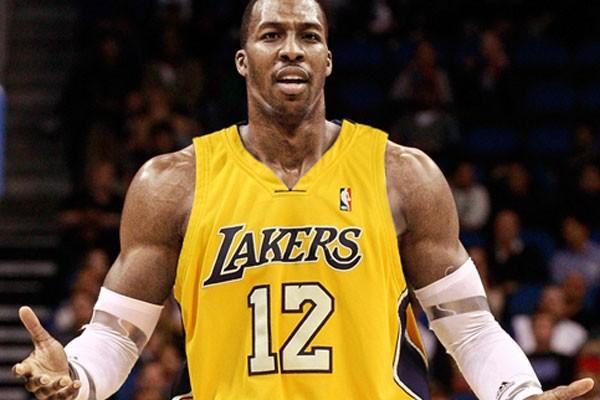
This could be Heaven or this could be Hell for Howard. If he committed himself to the Lakers, it would end part of the merry-go-round and media circus. But he only perpetuates it with his non-committal attitude. He thinks he’s being coy; he’s just being annoying to Laker fans and the media.
Likewise, it could be heavenly if Howard would develop the parts of his game that were masked by the Magic and Van Gundy. But he hasn’t shown signs of improvement and remains very limited offensively. You still have to have Howard close to the rim to be effective. You can’t just toss him the ball in the post and let him go to work. He’s not Shaq. He’s not Ewing, Mourning or Olajuwon, gifted big men who could score in a variety of ways.
Howard doesn’t need to shoot threes, even though he likes to joke about it. None of those guys did. But he’s got fewer offensive capabilities than Dikembe Mutombo. Howard’s also missing something else nearly all of the great and dominant centers have had: a mean streak. All of the best go into beast mode, where they physically take over games, snear and mean mug it down the floor, their presence known and felt. Howard just smiles, afraid that someone won’t like him.
So instead of being the awesome match everyone assumes it will be, it’s been Hell so far for the Lakers and for Howard. It’s exacerbating all of his flaws: his need to feel wanted and loved, his limited offensive ability, his cloak-and-dagger comments about the future.
Yet truthfully, the Lakers didn’t lose out on this trade, even if Howard doesn’t stay. The guy they traded, Andrew Bynum, has lost his knees and his mind (seriously, check out his hair). Bynum hasn’t played this season for the Philadelphia 76ers, and might not ever be what he once was – which was the No. 2 big man in the NBA.
And there’s the point: the Lakers needed to find someone to transition the face of the franchise to once Kobe Bryant retires. Howard could be that guy. And they didn’t really give up much to get him. If it doesn’t work out and he bolts town, then at the very least they have cap space to spend in 2014 on some other big name free agent.
Trust me, someone will want to play in L.A. and take over after Kobe is gone. The Lakers biggest mistake was in choosing Mike D’Antoni over Phil Jackson (which is still too weird to talk about). Jackson certainly would have made this work better and Howard would be more apt to stay. Then again, Jackson wouldn’t have stayed as long as Dwight, so you’d be right back here in a few years anyway.
Howard is an enigma, perhaps even to himself. He doesn’t know what he wants, and perhaps when he does, he’ll be too old to use it. He’s looking for what he already had and in the process of doing so, he’s created a beast, fed daily by the overactive L.A. media. But just like the Eagles sang, you just can’t kill the beast. This thing has spun out of control now.
Mitch Kupcheck says he’ll stand firm, that he won’t trade Howard today and that Howard will be another in a line of legendary Lakers.
At least someone believes that. At least someone wants that.
Problem is, it’s not the guy the Lakers need wanting and believing it.
Problem is, Howard can’t get out so easy now. There’s too much money on the table. Too much damage to Howard’s rep should he leave another team when times got tough. And that, for many reasons, matters to Howard. He may want things a certain way, but it goes hand in hand with being liked. You’re not well liked when you bail on the league’s marquee franchise, not when nearly everything for your future and the team’s is set on you. And he’ll have about $30 million extra reasons to make it work.
Howard just really hoped he would be able to recreate the magic he had with the Magic in some nondescript, less pressure-packed place like Dallas, Brooklyn or Atlanta, where he’d be revered as a much as he was for his first eight years in Orlando. But this is the Lakers. They focus on winning banners, not the happy pursuit of them.
In a way, he really did find the Hotel California.
Howard is caught looking for a passage back to the place he was before, and while he can check-out, he can’t really ever leave.


 worldbetweenlines.com