Chip Kelly, LeSean McCoy, Michael Vick, NFL, Oregon Ducks, Philadelphia Eagles, Washington Redskins

A Chip off the new Block

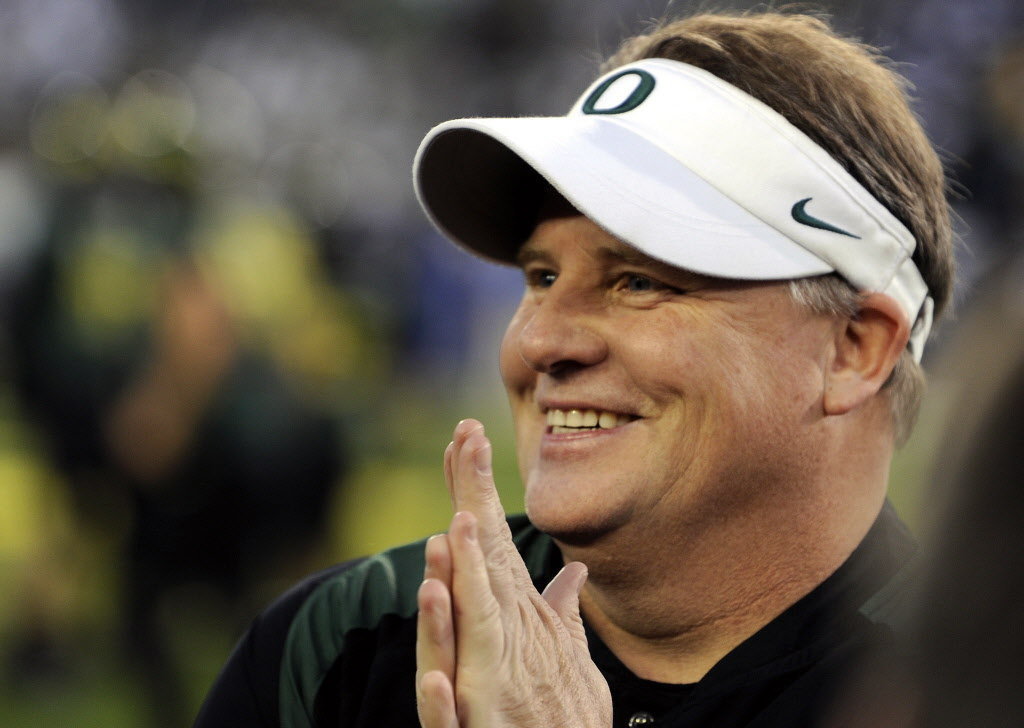
Chip Kelly thinks his Philadelphia Eagles – who rattled off 53 plays before halftime to the tune of 24 offensive points and 322 yards – were too slow on offense.
(Eyes roll across America).
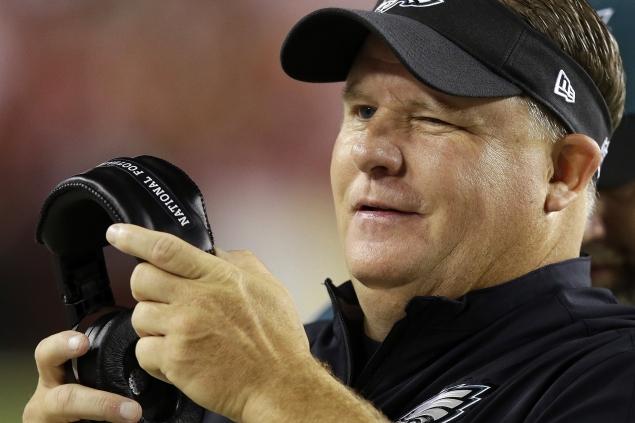
Really, Chip?
C’mon, buddy. Don’t be that guy.
“I felt like it was slow, to be honest with you,” Kelly said when asked about the first quarter. “We put the ball on the ground too much, we didn’t get the ball to the officials, we could have sped things up. … That’s something we need to continue to work on.
Fine, you go do that, Chip. Go work on it, run your guys into the ground and burn ‘em out.
But for today, just know it was fast. So fast Twitter’s obnoxious commentators couldn’t keep up. One play on average of every 22 seconds. Oregon in disguise as Philadelphia. Defenders sucking wind, Jon Gruden gushing your praises like he would pay anything to attend one of your coaching clinics.
If we talked about New England’s offensive speed, Philadelphia makes the Patriots offense look like a turtle crossing a highway.
But I’m actually not writing to heap more praise on top of Kelly for a great half of football. I’m writing because I want to know what’s wrong with us? Are we just that unhappy?
I’m referring to all those negative Nelly’s out there who take a beautiful moment like last night and begin bashing it.
To recap:
            It won’t work all season
            Michael Vick can’t survive this pace
            LeSean McCoy will need leg transplants
            Everyone will be hurt and ticked off by Week 7
These are all variations of things I heard in the first 24 hours of the Eagles rolling the Redskins last night. Whether or not they are valid is not the point. We’re so obsessed with “calling it” that we can’t enjoy anything. What I mean is we have a sick obsession with tearing others down. We write the history before it actually happens. We think we know exactly what’s going to happen before it happens.
The last thing we should do is listen to people who think they know everything. They don’t.
And this does not just apply to sports, but life in general. So I should listen to my broke friend on monetary advice? Tell me again why my new business venture won’t work, again, please.
How about some nutritional advice from someone who is in poor health, or relationship advice from someone who’s never really been in a relationship. Yes, single at 45, please tell me what the keys to a successful marriage are.
We think everyone wants to hear our opinion – on everything – but they don’t. The truth is, we’re watching people on TV who are paid to tell us what they think and we do either two things with it: agree or disagree.
There are varying shades of agreement, but really, that’s what it boils down to. The problem comes from others telling you why they think it’s right or wrong with a conviction of perfection behind it – an absolute believe of knowing they are right.
But you can’t know anything for sure. Nothing is guaranteed. A hundred things happening right now are changing the course of what will happen in the next five minutes. So we really don’t know anything – we just assume to know based on a number of internal factors.
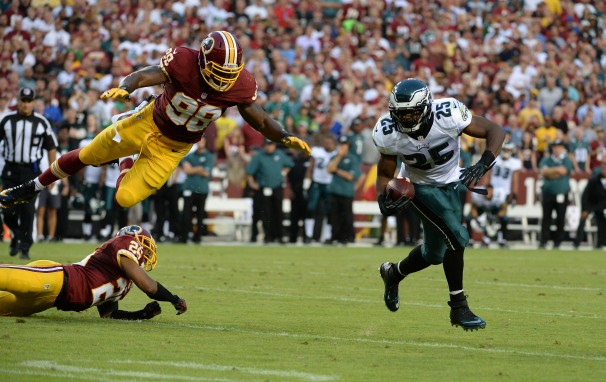
So here’s the thing: I assume that I like this Philadelphia offense and Chip Kelly. I enjoyed what he did at Oregon. Did he ever win a national title? No, but he made Oregon games so much more fun to watch than other college football games. Which is what happened last night in the first half. I enjoyed the first half of the Eagles-Redskins more than I enjoyed any other NFL game this week. I would like to see more. I want to see what happens.
And I don’t need someone on the radio telling me within 12 hours of the game why it won’t ever work long term. Lots of things don’t work long term, partially because they are not supposed to.
So before we totally kill Chip Kelly for what this offense might not do or what it could do to his team, can we just enjoy it for a little while?
Do we know how to do that anymore?
No, because bashing and drama draw eyes and ears. Positive thinking?  Go to church, right? We’d rather trash the new iPhone before it’s been actually seen or used. We’d rather write off a movie that some critic didn’t like than go see it ourselves. We’ll trust complete strangers bashing something on social media before we do our own analysis.
Ease up, ‘Merica. Slow down and smell the roses and stop seeing only the thorns. Life ain’t always beautiful, but it is a beautiful life.
And for 30 minutes, I watched beautiful, fast, fun football last night.
Thanks, Chip Kelly.
Standard
Andy Reid, Chicago Bears, Chip Kelly, Cleveland Browns, Dallas Cowboys, fired NFL coaches, Lovie Smith, NFL, Norv Turner, Oregon Ducks, Pat Shurmur, Philadelphia Eagles, Rex Ryan, Tony Romo

The Firing Squad


Round and round we go.
The yearly – and highly predictable – coaching carousel in the NFL made it’s big return.
Of the 20 NFL teams that began their off-season Monday, half of them made at least one firing of a head coach or front office personnel.
The names and faces change, but not really. They go from place to place. One man’s trash is another man’s treasure, so they say. If you were an NFL coach or general manager fired on Pink Slip Monday, fret not, you’ll most likely have a new job, in many cases the same as your old one, very soon.
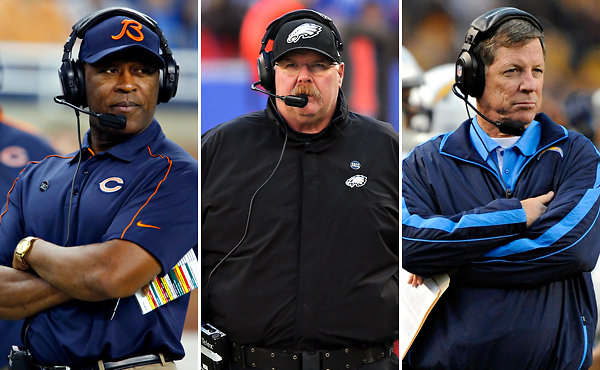
Five NFL coaches were fired Monday, including Lovie Smith of the Bears and Andy Reid of the Philadelphia Eagles, two long-tenured coaches with overall winning records. The list also included Norv Turner of the Chargers, Pat Shurmur of the Browns and Ken Whisenhunt of the Cardinals.
Why did these coaches get fired, but not, say Jason Garrett of the Dallas Cowboys? Or Rex Ryan of the Jets? I mean that inquisitively as to the bigger question, not actually why. I get why – most of these coaches failed to do something, like reach the playoffs, win a Super Bowl, change the culture of the locker room – something. So the “why” is there, but not the “why” of “to what point and purpose”?
A friend texted me after Tony Romo turned into Tony “Oh-No!” again Sunday night, asking if the Cowboys would finally do something about Romo and move on. My response was that though it may be better for all sides, why? Romo isn’t a Top 10 quarterback in the NFL, but he is in the top half of the league, right? So if you’re going to “improve” or “upgrade” the position, it better be for someone, well, better, right? Otherwise, what’s the point? And are we sure Romo is entirely the problem?
The point is the same with coaches. Is Lovie Smith one of the top five or 10 coaches in the NFL? No, probably not. Is he better than half? Probably. Was Lovie the problem? How do we even know? He’s the same coach who guided them to a 7-1 start this season. But what has never improved and been a recurring source of problems is the offensive line. It’s downright gross. I don’t like Jay Cutler, but I fear for his future health all the same with the brutality of the hits he takes each year.
Yet it’s easier to fire a coach than it is to suddenly get a brand new offensive line that works. It may be a severely flawed theory, but it’s one all the same: the coach will make these less than mediocre lineman better, either through film, motivation or some other intangible. Basically, he’ll cover the scouts mistakes on draft day.
That’s like arguing that you bought bad fish at the market, but expect the chef to fork over the greatest tilapia you’ve ever tasted. It’s backwards logic.
But, as we’ve covered, it’s just easier. It gives the illusion and appearance that changes are being made and things are going to be different.  
New coaches! New era! Same players!
The culprit in many of these cases tends to be poor quarterback play or a bad offensive line that can’t produce a good ground game or protect said quarterback. But how much of that has to do with the coach? Generally, it seems as though bad coaches can win with good players (see Jim Caldwell’s Super Bowl appearance with Indianapolis), but good coaches have a hard time winning with bad players. There’s only so much a coach, good or bad, can do. I can diagram a terrific play, but if the players don’t execute it, it’s not a terrific play anymore.
Only 12 of 32 teams make the NFL playoffs, that means roughly 60 percent of the league is done now. If the requirements for coaching in the NFL include making the playoffs every year or two, then good luck with any semblance of job security. Some years you just don’t have it. We’ve rapidly increased our intolerance for meeting fan and front office expectations.
Just because something seems like it should be working or winning doesn’t mean it does for a variety of factors. And what about if you’ve been terrible for a long period of time? For example, when I saw the Browns, they just looked different this year. They were competitive, they were going in the right direction. They ended up 5-11, but they feel like a team that could turns the corner next season. They, too, fired their coach.
So it’s been decreed: you must go to the playoffs to keep your job, no matter who you are. In some situations, you must go to the playoffs more than a certain number of times in a certain number of years, but we just can’t tell you exactly what that looks like. And we’d really like you to win the Super Bowl, even though only 7 franchises have won the Super Bowl in the last 11 seasons.
If we aren’t setting realistic expectations, then we’re expecting unrealistic results.
It’s not to say that some shouldn’t be fired. It’s necessary or just time in some cases. But 5-7 coaches every year? What have you done for me lately, Tom Coughlin? Welcome to the 2013 Hot Seat.
After being fired Monday, many of these coaches were rumored for other gigs on Tuesday – like Reid in Arizona or Kansas City. Lovie Smith might end up as a defensive coordinator for some team on the cusp.
And there’s our punch-line to this bad joke: these guys keep finding six and seven figure jobs in other places, within weeks of being let go for failure to accomplish nearly the same tasks in their old employment. If they were CEOs, they won’t sniff another job like that unless they built something else from the ground up, and never for a rival company.
From this perspective, it’s apparent professional sports still can’t decide if it’s a business or not. Less risk, less innovation. Coaches get hired and immediately get conservative. Take Shurmur with the Browns, again. Though I just partially defended his two years in Cleveland as not being long enough, there wasn’t anything revolutionary about his tenure.
Known for his offensive mind after grooming Sam Bradford’s solid rookie season in St. Louis, his players in Cleveland complained last month at how stale and predictable the offense was.
Predictably, Shurmur got the head gig and wanted to keep it and feared that veering too far from the norm as a head coach and trying radically new things would make for a more volatile fan base and negative media coverage. So he reverted to what everybody else did or does as a head coach. His results: much like everybody else.  
So who’s the hot coaching name this off-season? Chip Kelly of Oregon, who’s revolutionized the college game with his speedy offense. Why would Chip Kelly want to do go to the NFL and become like everybody else? Right now, the odds are long that Kelly will take a job. He turned down the Tampa Bay Buccaneers last year, who had a better team than many of this year’s suitors.
Thus without innovation in the NFL, since there’s so much coverage of doing anything “different”, it basically ensures we get the same old candidates popping up, ensuring that the merry-go-round will just continue.
The same thing will happen next year, another 5-7 coaches will be fired, finding similar jobs in different cities. Maybe it’s a reflection of the times – we’re too impatient to build anything anymore. We’re not patient enough to completely innovate something new and give it time to grow. Coaches don’t stay in the same place very long, to the point where 5-8 seasons is considered a lifetime, either by choice or by force.
Are we fans that demanding, that our power sways those in the decision making positions of our favorite teams feel compelled to make swift change for the sake of showing that they care about what we want? If so, why doesn’t this work with our elected officials in government? They are put there by us, unlike professional sports. Shouldn’t it be the other way around?
Regardless, another post-holiday blues begins to settle in as the NFL winds down, once again with the stark realization that the more things change, the more they stay the same.
Someone break the cycle – make real changes to who your workers are, invest in innovation, give it time to grow.
Maybe whoever does won’t be looking for a new coach in two or three years.
Standard