Andy Reid, Chicago Bears, Chip Kelly, Cleveland Browns, Dallas Cowboys, fired NFL coaches, Lovie Smith, NFL, Norv Turner, Oregon Ducks, Pat Shurmur, Philadelphia Eagles, Rex Ryan, Tony Romo

The Firing Squad


Round and round we go.
The yearly – and highly predictable – coaching carousel in the NFL made it’s big return.
Of the 20 NFL teams that began their off-season Monday, half of them made at least one firing of a head coach or front office personnel.
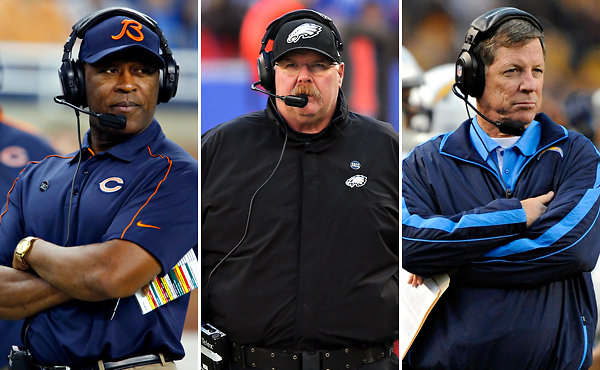
The names and faces change, but not really. They go from place to place. One man’s trash is another man’s treasure, so they say. If you were an NFL coach or general manager fired on Pink Slip Monday, fret not, you’ll most likely have a new job, in many cases the same as your old one, very soon.
Five NFL coaches were fired Monday, including Lovie Smith of the Bears and Andy Reid of the Philadelphia Eagles, two long-tenured coaches with overall winning records. The list also included Norv Turner of the Chargers, Pat Shurmur of the Browns and Ken Whisenhunt of the Cardinals.
Why did these coaches get fired, but not, say Jason Garrett of the Dallas Cowboys? Or Rex Ryan of the Jets? I mean that inquisitively as to the bigger question, not actually why. I get why – most of these coaches failed to do something, like reach the playoffs, win a Super Bowl, change the culture of the locker room – something. So the “why” is there, but not the “why” of “to what point and purpose”?
A friend texted me after Tony Romo turned into Tony “Oh-No!” again Sunday night, asking if the Cowboys would finally do something about Romo and move on. My response was that though it may be better for all sides, why? Romo isn’t a Top 10 quarterback in the NFL, but he is in the top half of the league, right? So if you’re going to “improve” or “upgrade” the position, it better be for someone, well, better, right? Otherwise, what’s the point? And are we sure Romo is entirely the problem?
The point is the same with coaches. Is Lovie Smith one of the top five or 10 coaches in the NFL? No, probably not. Is he better than half? Probably. Was Lovie the problem? How do we even know? He’s the same coach who guided them to a 7-1 start this season. But what has never improved and been a recurring source of problems is the offensive line. It’s downright gross. I don’t like Jay Cutler, but I fear for his future health all the same with the brutality of the hits he takes each year.
Yet it’s easier to fire a coach than it is to suddenly get a brand new offensive line that works. It may be a severely flawed theory, but it’s one all the same: the coach will make these less than mediocre lineman better, either through film, motivation or some other intangible. Basically, he’ll cover the scouts mistakes on draft day.
That’s like arguing that you bought bad fish at the market, but expect the chef to fork over the greatest tilapia you’ve ever tasted. It’s backwards logic.
But, as we’ve covered, it’s just easier. It gives the illusion and appearance that changes are being made and things are going to be different.  
New coaches! New era! Same players!
The culprit in many of these cases tends to be poor quarterback play or a bad offensive line that can’t produce a good ground game or protect said quarterback. But how much of that has to do with the coach? Generally, it seems as though bad coaches can win with good players (see Jim Caldwell’s Super Bowl appearance with Indianapolis), but good coaches have a hard time winning with bad players. There’s only so much a coach, good or bad, can do. I can diagram a terrific play, but if the players don’t execute it, it’s not a terrific play anymore.
Only 12 of 32 teams make the NFL playoffs, that means roughly 60 percent of the league is done now. If the requirements for coaching in the NFL include making the playoffs every year or two, then good luck with any semblance of job security. Some years you just don’t have it. We’ve rapidly increased our intolerance for meeting fan and front office expectations.
Just because something seems like it should be working or winning doesn’t mean it does for a variety of factors. And what about if you’ve been terrible for a long period of time? For example, when I saw the Browns, they just looked different this year. They were competitive, they were going in the right direction. They ended up 5-11, but they feel like a team that could turns the corner next season. They, too, fired their coach.
So it’s been decreed: you must go to the playoffs to keep your job, no matter who you are. In some situations, you must go to the playoffs more than a certain number of times in a certain number of years, but we just can’t tell you exactly what that looks like. And we’d really like you to win the Super Bowl, even though only 7 franchises have won the Super Bowl in the last 11 seasons.
If we aren’t setting realistic expectations, then we’re expecting unrealistic results.
It’s not to say that some shouldn’t be fired. It’s necessary or just time in some cases. But 5-7 coaches every year? What have you done for me lately, Tom Coughlin? Welcome to the 2013 Hot Seat.
After being fired Monday, many of these coaches were rumored for other gigs on Tuesday – like Reid in Arizona or Kansas City. Lovie Smith might end up as a defensive coordinator for some team on the cusp.
And there’s our punch-line to this bad joke: these guys keep finding six and seven figure jobs in other places, within weeks of being let go for failure to accomplish nearly the same tasks in their old employment. If they were CEOs, they won’t sniff another job like that unless they built something else from the ground up, and never for a rival company.
From this perspective, it’s apparent professional sports still can’t decide if it’s a business or not. Less risk, less innovation. Coaches get hired and immediately get conservative. Take Shurmur with the Browns, again. Though I just partially defended his two years in Cleveland as not being long enough, there wasn’t anything revolutionary about his tenure.
Known for his offensive mind after grooming Sam Bradford’s solid rookie season in St. Louis, his players in Cleveland complained last month at how stale and predictable the offense was.
Predictably, Shurmur got the head gig and wanted to keep it and feared that veering too far from the norm as a head coach and trying radically new things would make for a more volatile fan base and negative media coverage. So he reverted to what everybody else did or does as a head coach. His results: much like everybody else.  
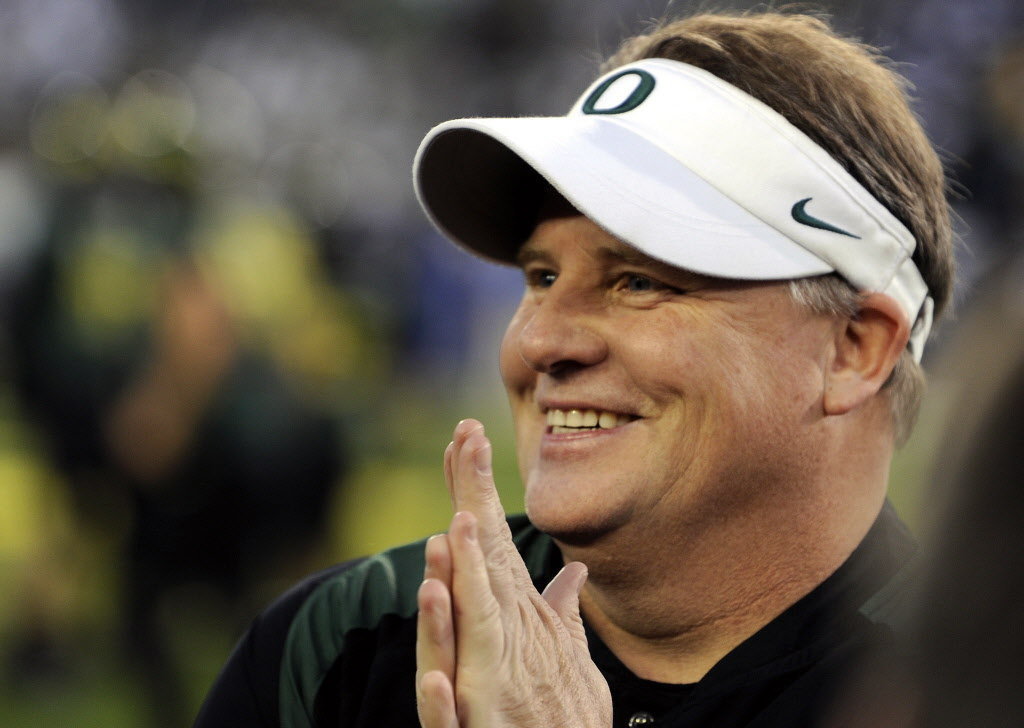
So who’s the hot coaching name this off-season? Chip Kelly of Oregon, who’s revolutionized the college game with his speedy offense. Why would Chip Kelly want to do go to the NFL and become like everybody else? Right now, the odds are long that Kelly will take a job. He turned down the Tampa Bay Buccaneers last year, who had a better team than many of this year’s suitors.
Thus without innovation in the NFL, since there’s so much coverage of doing anything “different”, it basically ensures we get the same old candidates popping up, ensuring that the merry-go-round will just continue.
The same thing will happen next year, another 5-7 coaches will be fired, finding similar jobs in different cities. Maybe it’s a reflection of the times – we’re too impatient to build anything anymore. We’re not patient enough to completely innovate something new and give it time to grow. Coaches don’t stay in the same place very long, to the point where 5-8 seasons is considered a lifetime, either by choice or by force.
Are we fans that demanding, that our power sways those in the decision making positions of our favorite teams feel compelled to make swift change for the sake of showing that they care about what we want? If so, why doesn’t this work with our elected officials in government? They are put there by us, unlike professional sports. Shouldn’t it be the other way around?
Regardless, another post-holiday blues begins to settle in as the NFL winds down, once again with the stark realization that the more things change, the more they stay the same.
Someone break the cycle – make real changes to who your workers are, invest in innovation, give it time to grow.
Maybe whoever does won’t be looking for a new coach in two or three years.
Standard
iPhones, Javon Belcher, Junior Seau, Kansas City Chiefs, NFL, Roger Goodell, Technology

The Growing Divide


There’s something about life in the age of technology, something dark and sinister, that you can’t see in the glare of a computer screen or an iPhone.
There, off in the shadows of our lives, what’s not showing in all our posts, Tweets and feeds, is what we don’t do or say.
We’re alone together.
In our interactions, in our relationships and friendships. And the average, every day American isn’t the only one who deals with this.
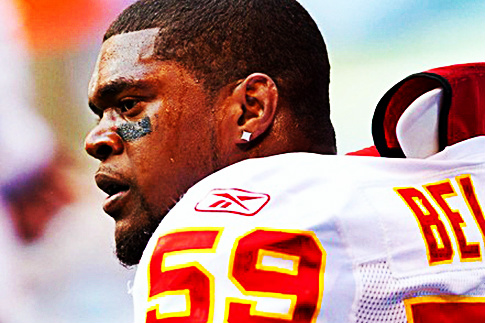
Yet another reminder of this came Saturday, when Kansas City Chiefs linebacker Jovan Belcher killed his girlfriend, then drove to practice in his Bentley, thanked head coach Romeo Crennel and GM Scott Paioli and then pointed a gun at his head and pulled the trigger, committing suicide right in front of them.
The latest reports have said Belcher and his girlfriend, Kasandra Perkins, were arguing before he shot her. He had been out partying all night and the police had woke him up and determined him fit to drive home. The Cheifs were aware of the arguments and had gotten the couple counseling.
It’s another football player who’s life has ended in sudden death this year. The most stunning of 2012 remains Junior Seau’s suicide earlier this year.
We can question the logic of a young man who’s driving a Bentley arguing over finances with his girlfriend and say he wasn’t prepared for the lavish lifestyle modern professional sports yields. We can blame Seau’s suicide on brain damage or the loss of oneself after a lifetime of playing football and say that Junior just didn’t know what to do with himself. We can blame both on gun control or lack thereof, but that’s too easy. 
There’s a big difference between the two. Belcher is a murderer who’s grizzly actions cannot be condemned. Seau had grown despondent. Both may have ended tragically, but only one is truly a tragedy. 
But taking away the guns doesn’t change the situation or possibly the outcomes. With Belcher, taking away the gun doesn’t stop him from being crazy. With Seau, he might have found another way to end his life.
Getting rid of the guns doesn’t get rid of the emptiness inside someone’s mind or heart.
The truth is that these things happen every day in America. Race doesn’t matter. Financial situations don’t matter. Profession doesn’t matter. A white father in a suit and tie can (and has) come home and killed his wife in their mansion after arguing about money. Wall Street professionals have drug addictions. That’s because loneliness and craziness, two different types of mental illness, pay no mind to what do or who you are.
The only comparison we can make between Belcher and Seau is that perhaps those around had turned a deaf ear.  No one on the Chiefs, no one in Belcher’s family or circle of friends can comprehend it. Likewise with Junior Seau, too. Maybe football related damage helped, but perhaps Seau was just depressed and car dealerships and golf weren’t enough to fulfill a man for the next 30 years.
You often hear those closest to the one responsible in a tragedy like this to say they had no idea. And this is what we refuse to discuss as a society, as a culture. Maybe we all have no idea because, well, we have literally no idea what’s going on with the people we think we really know best.
As Chiefs quarterback Brady Quinn said following Sunday’s game, we ask people how they are doing, and we care – but do we mean it?
I know I’m guilty in my own life of getting so wrapped up in my little world, a lot of my contact with friends and family consists of text messages, Facebook posts and fewer phone calls and in person communication. I know I also have occasionally thought that some friends and family care less about my family and I because they do the same thing.
“We live in a society of social networks, with Twitter pages and Facebook, and that’s fine, but we have contact with our work associates, our family, our friends, and it seems like half the time we are more preoccupied with our phone and others things going on instead of the actual relationships that we have right in front of us,” Quinn said.
We can joke about it – but this is our national addiction. We don’t necessarily have to flush it or get rid of it, but does it do anything for our relationships with family, friends, spouses and children when we check our feeds and our e-mail? Why don’t we pick up the phone more? Why don’t we spend more time showing we care?
This Belcher situation has nothing and everything to do with this. We’re more concerned about the image and the appearance of we what we project than what we actually are.
Take the NFL for example. How can you read the grizzly details of Saturday morning and think that the Chiefs staff and players were fine to play a game on Sunday? This is where Roger Goodell could have postponed the game until Monday night. Give it time to breathe, let the air settle.
Instead, the NFL shrugged their proverbial shoulders and moved on. It’s only Tuesday and it’s already become nothing more than a news story that has legs because the “why” is still so unknown. The fact that his teammates didn’t know, that the Chiefs knew but just addressed it with couples counseling proves how far we’ve fall.
We have the illusion of companionship now.
My best relationships are with my wife and children, whom I see every day and engage in conversation with. We turn off the TV. We talk. We read. We laugh. We play. My wife and I built our relationships with hours upon hours of conversation – spending time every single day together, in person.
My worst relationships are with the people outside my nuclear family that I should know – or once knew – best. Childhood friends. Current buddies. People so close, they are family. I know they might be building a house, or their kids are in sports, or they took a vacation last week, or their birthday is next Tuesday.
But I only know that because I saw it on Facebook.
We’re short-changing ourselves and hurting others with how we interact with one another. Emoticons aren’t actual emotions.
My parents aren’t on Facebook. They barely use e-mail. This has forced me to communicate with them over the phone every few days or see them on the weekends. Same thing with my in-laws. My wife and I are close to both sets of parents because the lack of technology has put us right back in the stone age of talking to them, you know, like human beings.
My sister-in-law lives halfway across the country, but we’ve seen her and her significant other a lot over the past year. It’s one of our strongest friendships right now. And when we write something on their wall or send a text, the joke has actual meaning behind it. It’s not just a check-in that we kind of mean but have no real emotion behind. There is a difference. I can mean it when I write how much I care to an old friend, but is there truth behind it?
While this may have little to do with why a young middle linebacker killed his girlfriend, then himself, in the middle of the country, it has, as Quinn said, more to do with it than we can to admit to ourselves.
We’re growing further apart as people, as a society. We’d rather care from afar. We add and delete the relationships in our lives. But the rich, emotional undertones of real relationships cannot be replaced.
I get it, our cup runneth over. We only have so much time in a day. But too soon, a day becomes a week, a week a month, a month turns into a year. In moderation, texts, Tweets and Facebook are quite handy tools. Yet they can never replace the emotional and physical connection of shared time.
We need to be more present in our own lives so we can be present in others. Our full attention is needed. We text in meetings. We text when hanging out on dates. We check our newsfeed at the dinner table. We want to be in two places at once, but by doing so, we’re never fully in one place.
We don’t know what happened to Jovan Belcher. And we can only speculate on Junior Seau. We don’t know how troubled he was, how depressed or how mentally ill. We didn’t really know him at all, as fans or media types. We don’t know what he was feeling, and neither do many around him. 
It does little good to examine his brain after the fact. It does little good to try and talk someone out of shooting themselves with a gun to their head. It’s too late by that point.
But there is a difference between crazy and despondent. 
It’s the failure to see either that is a bigger problem.

Standard
Bill Parcells, NFL, Peter King, Sports Illustrated

Pity Pandering

We are a sick group of individuals. We’ve got to the point we’re just openly pandering for pity.
Oh, but it’s worse than that – we have to be creative in how we seek each other’s pity. We line up more excuses than a high school freshman before homework is due in Algebra class. We’re like the opposite of stand-up comics, trying out new sappy material on unsuspecting people to get them to feel bad for us.
We are master manipulators and we are one-uppers. We constantly have a retort in the chamber, ready to take on anyone.
If someone talks about money, you’re poorer. If groceries cost you $125 a week, they easily cost me $200. If someone tells you they are tired, everyone else takes offense to this.
“You’re tired? Ha! I worked 62.435 hours this week and put up a new fence in the backyard!”
“Oh…wow…you must be exhausted.”
It’s nauseating and it has to stop. Why can’t we just have conversations that don’t automatically imply that you’re directly talking about anyone other than yourself? We’re all selfish anyway, so what’s the difference?
What happened to the good old days where we used to just feel bad for people based on our own emotions? Now you have to lay it on like you life is a replay of the Labor Day MDA Tele-thon.
And frankly, I’m mad because there are no levels of these pity parties anymore. Because of this, I’m becoming numb to handing out any sympathy what-so-ever.
Case in point to all of this: Sports Illustrated’s senior NFL writer, Peter King.
King, who you’ve probably seen on NBC over the past several years on “Football Night in America”, is a widely respected veteran who writes the “Monday Morning Quarterback” column for SI.com and also does features in SI during football season. He is also heavily entwined with the NFL and is one of the electors for the Pro Football Hall of Fame.
This week, King makes a passive-aggressive comment bemoaning the fact that people are upset with the committee over this year’s inductions (and those that were left out, namely, Bill Parcells and Cris Carter).
Now, you want to get mad and defend yourself in print every now and then, I’m fine with that.
But then Tuesday rolled around and King wrote a follow-up column that oozed self-pity seeking narcissism. Literally, an entire follow-up column devoted to poor Peter, by Peter, about how hard it is to select the Hall of Fame inductees each year, how much time he spends on it, how the weight carries a burden on him that increases each time he goes about voting.
First of all, get over yourself. It’s football. A game. I mean, I am as passionate about sports as they come, but crying all over your laptop over the flack you’re catching over the Hall of Fame is a little bewildering and
Really?
This is what our most esteemed football journalist is doing now? I know it’s 10 days after the Super Bowl and things are slow…but really? How egocentric can you be?
King rambles and babbles on and on throughout the column about how the process works (or doesn’t) and he basically supported everyone who’s ever played the game. It’s not his fault Bill Parcells isn’t in the Hall of Fame this year. It’s not his fault Cris Carter goes another year without a gold jacket.
He also justifies that he doesn’t take things personal against candidates and how he’s not holding some grudge that keeps players out.
That’s fine, truly. But shouldn’t that go without saying? Why do you have to write a column defending yourself? You know what you do when you are Peter King and you’ve built up such an honorable credibility over 30 years of covering the sport? You don’t acknowledge them. You ignore them. What does it matter what Joey from Long Island thinks about you for leaving Parcells out?
Stooping to the level of the rabble just besmirches you, not them. Some people just want to complain, over complain and watch the world burn. And it exposes you as somewhat of a blowhard, frankly, when you defend yourself to this level. To wax philosophic about how important the task of voting for the Pro Football Hall of Fame is unbecoming and pretentious.
But King misses the point in two different ways, actually.  
First, is the bottom line: Bill Parcells should be in the Hall of Fame by now, so should Cris Carter. You are one of the people, as a collective group, who did not put them in.
Again, it’s football. It’s the Hall of Fame. And Bill Parcells isn’t in it.
How would you expect people to react, Pete? He’s Bill Parcells, the Bob Knight or Tony LaRussa of the NFL.
Secondly, King is playing the same hand so many in this country do…something happened that others don’t like, so feel bad for me because I’m being attacked.
We’ve become enablers. We play to the minority more than the majority.
To illustrate this, think of the last time a group of people went out to eat and couldn’t come to an agreement on where to eat because one person out of 10 doesn’t like pizza. Another guy hates hamburgers. Someone doesn’t like fish. And soon enough we’re sitting around at some weird pizza and fish taco place pacifying them.
If Parcells didn’t deserve the Hall, then tell us why. Or, you know, don’t write two columns in a row that belabor the point of how you are not to blame and defend your own honor.
Whatever happens from here on out, I don’t care. After reading King for nearly 10 years, I’m out. He lost me. Not that he cares – he doesn’t even know who I am, so my reading or not reading his columns doesn’t bother him nearly as much as those that are screaming about the Hall of Fame today. But I won’t be coming back. 
It’s the first of many changes I’ll be taking to stop enabling people who take pity on themselves and demand, through a carefully and manically crafted plan of self-absorption, that we take pity on them too.
Just stop it.
We’re so afraid of offending anyone that we say nothing – even when we should be offended (like Nicki Minaj’s horrendous, sacrilegious and terribly offensive Grammy act Sunday). Soon enough, someone in the Celebrity Culture of Sports and Hollywood (yes, it’s got an official name and everything, at least to me) will be telling a sob story that gets us all back on their side.
We should show pity to ourselves, because we really are a sad and pathetic bunch. 
Standard
Indianapolis Colts, New England Patriots, New York Giants, NFL, Peyton Manning, Super Bowl XLVI, Tom Brady

Isn’t It Ironic?

I wonder if Peyton Manning enjoys the musical styling of Alanis Morissette? Because if I had to fancy a guess as to what is playing on his iPod during his rehab workouts, this week especially, it has to be Morissette’s “Ironic.
Because isn’t it ironic – a little too ironic – that the Indianapolis Colts host Super Bowl XLVI this Sunday, a game they never would have received without the shiny new Lucas Oil Stadium, a stadium that would never have been built without Manning transforming the Colts?
Yet when the game kicks off, it’s difficult to predict two things: 1) If Manning will ever play football again, and, 2) If he does get cleared to play football, will it be for the Colts?
It’s technically cosmic irony. It’s like rain on your wedding day, or a traffic jam when you’re already late.
And just to make sure Manning got this message, the football gods aligned the stars so that Peyton’s little brother, Eli, leads his team to the Super Bowl.
Against Peyton’s long-time arch-rivals, the New England Patriots.
Who are quarterbacked by the one man people debate could go down as better than Peyton: Tom Brady.
What are the odds of that?
Super Bowl XLVI also happens to be a rematch between the Patriots and the New York Giants, who four years ago, gave us a thrilling Super Bowl that saw the Giants come-from-behind in the final seconds to topple the then-unbeaten Patriots.
There’s hype and then there’s the Super Bowl. And then there’s a Super Bowl rematch of the Patriots and Giants. Of all the storylines this week, Peyton Manning and his neck are a mere footnote.
But Manning should be more than that to this city, especially now. This city should be kissing his Super Bowl ring. Instead of Tebow-ing, we should be, uh, Manning-ing.
He has transformed this city in ways only people from here can understand. None of this – and by this, I mean the event of the Super Bowl itself – would be possible without Peyton Manning. Cold weather cities do not get the Super Bowl without a new stadium. (For reasons why, see Detroit in 2006 and Dallas last year.) And teams like the Colts, pre-1998, don’t get new stadiums. You get new stadiums by winning – like a lot – because winning 10-plus games a year for a dozen years brings in a ton of fans.
Fans buy seats, food and merchandise. They create an atmosphere. They create a fan base that will sell out said new stadium, even in a year like 2011, when the team goes 2-14, fires it’s coaching staff and organizationally derails. They stay loyal when the owner acts out his life like a Saturday Night Live sketch on Twitter.
The success of the Manning-era Colts led to this moment. In turn, we’ve learned in the last six months that Manning is the Colts, literally, and frankly deserves all the credit for everything they did between 1998-2010.
Peyton Manning masked wild deficiencies of teammates and front office decision makers. He covered for mediocre coaching, less-than-mediocre defenses and a talent discrepancy that, looking back on it, was sometimes as wide as the Grand Canyon.
Think about this: since 2001, only four teams have represented the AFC in the Super Bowl: The Patriots (five times), the Pittsburgh Steelers (three times), the Colts (twice) and the Oakland Raiders (once, in 2002).
The Raiders, clearly, caught lightning in a bottle in 2002. They’ve been horrible ever since. But how on earth did the Colts hang in there with the Patriots and Steelers, perhaps the two most well-ran organizations in the NFL? How did they compete with those two franchises?
Simple: Peyton Manning.
Because it wasn’t the owner – Patriots owner Bob Kraft and the Rooney family that owns the Steelers, are vastly superior to Jim Irsay, his guitar and his tweets. It wasn’t the coaching – Bill Belicheck, Bill Cowher and Mike Tomlin are all vastly superior coaches that Jim Mora, Tony Dungy and Jim Caldwell. And it certainly wasn’t the general managers and decision makers. The Steelers and Patriots draft really well, sign the right players and do all the little things right. Meanwhile, Bill Polian was asleep at the wheel in the player personnel department for at least five years.
Peyton Manning is so good, so vastly superior that he basically was a one man show. In hindsight, it’s become a chicken and egg question with his teammates. Was Marvin Harrison good, or did Peyton make him good? Is Dallas Clark a great tight end, or did Peyton simply make him great? You get better by association on the Colts when No. 18 is under center.
So was it a good business decision to pay him $28 million in 2011 for not playing a single down of football? Of course not. It was, as I said before, quite stupid. But did the Colts, on behalf of the organization and this city, owe it to him? Hell yes. Consider it payment for services rendered.
Certainly Manning has long been well compensated for his talents as the highest paid quarterback in football for a number of years. But what he did in Indianapolis transcends just the game.
Indianapolis was Naptown. We hosted a few NCAA Final Fours and claim “The Greatest Spectacle in Racing,” the Indianapolis 500 – as if anyone still really cares about open-wheel racing outside of the month of May – and the Indiana Pacers had a good run in the late 1990s, but that’s been about it.
Since Peyton arrived, the NCAA moved its headquarters to Indianapolis and we’ve hosted more Final Fours than any other city. Other events have come to town, thanks to the hard working folks at the Indiana Sports Corporation. The economic boost and impact will be felt for years. A new stadium was built. To give you the mindset pre-Peyton, we were the middle sized town in the middle of the middle West. This city built a new minor league baseball park before it built a new football stadium.  
To see the city this week, alive with a kind of energy and enthusiasm that is hard to even adequately describe, is frankly amazing. And none of this would be possible without Peyton Manning. And all this, coming from the most staunch Brady-backer.
Now that doesn’t make what is likely to happen in a few weeks any less difficult. The Colts have an incredibly difficult decision to make on Manning and the future of this franchise. And this has to be a business decision. They have a chance to start over with another franchise quarterback. Manning, despite his rosy outlook, might never play another down – and even if he does, he might never be what he once was.
But that conversation can happen after Sunday. After the city basks in the glow of the hosting the Super Bowl.
Thus far, Indy is nailing it. To the point I’m wondering if the NFL won’t come back again in five or six years for another Super Bowl. And in another turn of irony, the weather has been fantastic – leaving me to joke to a friend that people from out of town are going to go home thinking Indianapolis would be a great place to retire: warm winters, friendly people, tons of stuff to do…
Which makes me wonder if we can credit Peyton for the weather as well?
He’s pretty much responsible for everything else happening this week.
Standard
Bill Polian, DeMarcus Cousins, Jon Gruden, Mike Krzyzewski, NBA, NFL, Paul Westphal, Raheem Morris, Tom Coughlin, Tony Sparano

Face the Firing Squad

I have to pose the question, in light of current events, why would anyone want to coach in professional sports? You have the shortest leash of perhaps any job in America with the most unrealistic expectations combined with the most volatile conditions.
Perhaps it is the pay. Or maybe it is the power. It certainly would be the pinnacle of the profession.
On Monday, a day after the conclusion of the NFL season, the Tampa Bay Buccaneers fired head coach Raheem Morris. The St. Louis Rams also parted ways with Steve Spagnuolo, the Chicago Bears fired general manager Jerry Angelo and ended the services of Mike Martz as offensive coordinator. The Indianapolis Colts let go of Bill Polian and his son, Chris. The Miami Dolphins also fired Tony Sparano. And that’s just what I could think of off the top of my head, there could have been more.
But then today the Sacramento Kings fired Paul Westphal, just seven games into the season – just 11 days after the season began on Christmas Day.
Even with the NBA’s reduced 66-game schedule, that’s the equivalent of an NFL team firing a coach after one game.
Were these firings justified? In the proper context, perhaps.
With a bigger picture outlook, what exactly do we require from coaches? Better yet, why do we keep rehiring the same ones who failed so miserably prior to their current position?
Because it is not a “what do we want” from them issue. That much is clear: championships. Owners and fans want coaches who bring gold back at the end of a season.
But realistically, 31 coaches will not win a championship each year in the NFL. Roughly the same number of losers exists each year in the NBA and Major League Baseball.
We somehow operate under the premise that every team should be good or make the playoffs in every sport. They can’t.

No, really, they can’t.

Some teams are just bad and will remain that way until a coach has enough time to put his practices and methodologies in place and the players respond accordingly.

But the instant a team doesn’t make a miraculous worst-to-first turnaround we get jealous, demand our favorite teams get the same and grab the pitchforks, banners and start shouting, “Fire him. Fire him now!”

We certainly love teams that click and quickly succeed after recent failures, but in reality, they fuel the cycle. In turn, it ends up shortening the lease for the coach who did it.

Morris’ Tampa Bay team clearly underachieved this season. A promising team with talent that won 10 games in 2010, they won just four games this season. In three years, Morris went 17-31 after replacing Jon Gruden, who was in turn let go by the Buccaneers in 2008, after he went 57-55 with the team over seven seasons.
Gruden’s tenure included three division championships and a Super Bowl win.
I suppose if Gruden wasn’t doing a good enough job for his boss, Morris certainly was not, either. But Morris wasn’t coaching Gruden’s players; the Bucs has a ton of young talent come in through the draft, playing in a division against the likes of Atlanta and New Orleans, two teams who have been perennial playoff teams in recent years.
The Colts firings seem most justified, as they poor draft selections over the past five years were radically and violently exposed to the fan base and to the rest of the league once Peyton Manning sat out the season following a series of neck surgeries. A team that finished 14-2 and lost a tight Super Bowl to New Orleans just two seasons ago – and went 10-6 and made the playoffs last year with nearly the exact same roster – managed to start out 0-13 in 2011 and finished 2-14 with the rights to the No. 1 pick in April’s draft.
As I wrote in the fall – someone has to lose their job over this in Indy, and someone did. Perhaps Jim Caldwell is safe because it has been evaluated that the coaching is acceptable, but the talent is poor.
Look, I’m all for change if something’s not working. I advocated for Polian’s firing, as well as Caldwell’s, earlier this season. I questioned Caldwell’s methods and his credentials and the man responsible for hiring him and picking the players in Indianapolis.
But I’m also in favor of a good stew, which takes time to cook and requires patience and the right ingredients.

And here’s where we have to start really analyzing everything.

Why didn’t the Dolphins just fire Sparano after the 0-7 start? Why do it after the team rallies around him and wins six of its final nine games? Isn’t it humiliating and emasculating to continue to coach a team knowing what’s floating out in the media?
Why fire Westphal a few days after the season begins? How did his job approval amongst his employers drop so drastically in 11 days that he was canned? Why not just fire him during the offseason, you know, the one with the lockout that saw the NBA not play a game for six (!) months? Did this have something to do with DeMarcus Cousins and the trade demand?
There’s goals, aspirations and then there are realistic (and in many cases, unrealistic) expectations.
I read a recent interview with Duke head men’s basketball coach Mike Krzyzewski. Coach K’s third season at Duke was abysmal. In 1982-83, Duke was 11-17 and 7th in the ACC. He said if he had began his career 20 years later, he would have been fired. But in a time where people were allowed to truly build a program and had ownership support, or in this case, school support, Coach K got Duke on the right track shortly thereafter. In the roughly 30 years since that 1982-93 season, Duke has won four national champions, made the NCAA Tournament 28 times in 29 years and advanced to the Sweet 16 or better 22 times.
Look at it this way: who are these NFL teams going to hire? Most likely a former NFL coach who had his own ups and downs in the past.
Ironically, Gruden is one of the hottest coaching prospects despite his intentions to stay on as a member of the ESPN “Monday Night Football” broadcast team. The same guy who was barely .500 in seven seasons with Tampa Bay.
Coaches are getting hired and they turn right around and start a game of Russian roulette with job security.
What were the Kings goals for Westphal when he took the job? I can’t imagine the Kings told Westphal, “We’ll have to let you go if you enter Year 3 with a 2-5 record 11 days into the season.” Never mind the incredibly raw talent Westphal has to work with in Tyreke Evans and DeMarcus Cousins (a head case).
What we need are more specific boundaries and performance plans for professional coaches. Maybe they should be unionizing in professional sports coaching like players do. Because this little game we play makes it awfully difficult to believe coaches have any real authority over their players.
They have little time to follow through on the ideas and plans that probably got them hired in the first place.
Yet we’re up and down on coaches all the time. Tom Coughlin went from the “This Seat Is So Hot My Pants Are On Fire” back in 2006 to winning the Super Bowl and receiving a lucrative contract extension in about 12 months.

How does that happen? Was Coughlin really that bad or really that good? Or was it somewhere in the middle?

There is something to be said for longevity. Not just in a coach sustaining it, but being given it.

In December 2008, I wrote a similar column about this topic, when six NBA head coaches had already been fired in the first month and a half of that season.

Reggie Theus was fired in Sacramento after the Kings’ 6-18 start. Bad? Absolutely. Indefensible? Not entirely.
In 2007 the Kings traded away their best player and most valuable commodity, guard Mike Bibby. At the time of Theus’ firing, Kevin Martin, Brad Miller and Francisco Garcia, the Kings’ best players, had missed significant time.

So the question I posed three years ago was this: who are the Kings going to bring in to coach this team and make them that much better for the duration of the season?

And, if you’re going to fire a coach, why not do it during the offseason? Unless, his name is Isiah Thomas, you’re basically wasting your time.

Nowadays, it would take a coach six or seven teams (or more) over 15 years (or more) to accomplish what they have.

It’s a merry-go-round of professional coaching. No new ideas, but the same astonished reactions when these coaches fail all over again. At what point do coaches just stop interviewing when these jobs open up, since they know they will be fired sooner rather than later?

For once, I’m glad I’m not involved in professional sports.

There’s more stability in the current job market.
Standard