American culture, NFL, Peyton Manning, Society & Culture, Tom Brady, Uncategorized

The Intervention of a Sports Addict

Sports are a drug.

They’ve probably always been a drug, and always will be a drug.

They soothe us, distract us, energize us, unite us, divide us, and entertain us.

They also blind us.

Americans are sports junkies.

And what do addicts do?

Deny that a problem or addiction exists in the first place. They ignore the obvious. They defend the indefensible. They keep right on using.

But they’ll ruin you. Mess up your mind.

You don’t believe me, do you?

So how about the fact that sports will make you deify someone you’ve never met? Doubt me?

Let me prove it to you.

How do you feel about Tom Brady? And now, how do you feel about Peyton Manning?

Allow yourself to independently judge both of these legends’ and their recent “situations.”

You couldn’t do it, could you?
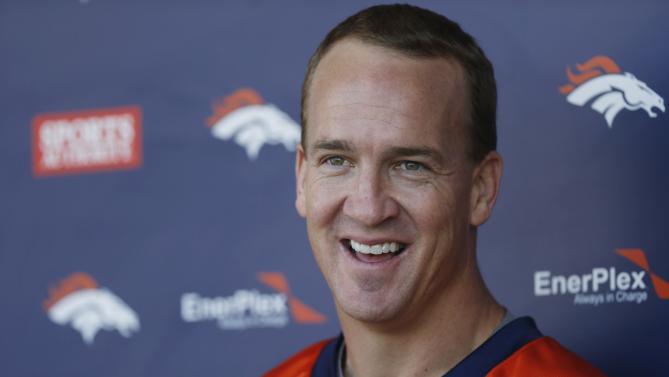
Peyton Manning

Manning’s stories are promptly dismissed as “hit” jobs by people who want to tear him down through accusations of HGH and a young college kid who behaved immaturely.

Yet Brady’s stories are treated as fact, despite the little evidence produced in the 12 months since Deflategate began to actually prove 1) anything actually happened and 2) most importantly as it concerns Brady himself, that he had anything to do with it if the balls were actually deflated by humans.

The NFL still slings it out in court to prove they have the right to punish a player under the CBA, missing the entire point that, you know, you have to actually have proved the player should be punished at all. To do this, they uncovered thousands of e-mails and phone records to try and link Brady to it.

All we found out is he wants to play longer than Manning, he’s got an ego and he weirdly cares a lot about swim pool covers.

On the other side of the coin, Manning has seen his image take a hit over allegations that date back 20 years that he was basically a pervert to a female trainer at the University of Tennessee. This is on top of the allegations that he received several shipments of HGH (or his wife did) that coincide with his neck injury rehabilitation a few years back.

The Tennessee story has been out there since 1996 and Manning has settled the dispute twice – once when it happened and apparently again when he brought the trainer’s name up in a book. Why this is resurfacing now has everything to do with his name being attached to a Title IX lawsuit against Tennessee and it being 2016, the age of rabid, social media heathenry.

Meanwhile, it has been revealed that NFL players were shorted $100 million in revenues. The league office dismissed it as an accounting error. Anybody make a $100 million mistake at their job wouldn’t have a job the next day. Yet this story is not currently gaining much traction. Why?

Because we’ve already given them the money, so we don’t care if the rich players get richer or the rich owners are even richer. It’s monopoly money to us, anyway.

No, no, we addicts, we care about sentiment, about legacy, about being able to emphatically agree on some fantasy ranking of the greatest ever.

And we care about this all because it says a lot about who we are – at least so we think subconsciously.  We attach ourselves to these athletes and these teams so we can go through the pain of losing and the joy of winning together. Brady backers love the underdog story, Manning’s fans stuck by him through all the “he can’t win the big one” years. To us, this loyalty proves something about us.

We can’t like the wrong guy, we can’t be wrong, we can’t have invested in the wrong guy or bought into who he is as a person.

NCAA Football: Alabama at Mississippi

There’s a lot on the line for us average Jill and Joe’s because we’ve convinced ourselves that our fandom matters to other fans. We made it clear who we support – and not only is our guy better, but they are a better person, too.

Except for one, small problem.

It means nothing. We don’t know any of these people. We don’t know what they are like behind closed doors. We don’t know how kind they are or how ruthless they are or how sleezy they might be.

They might be innocent, they might be guilty. The vast majority of us have no clue. And yet we sports junkies feed the beast. We listen to the sports talk shows rattle on and on about it, driving up ratings, making them talk about it more. We click the stories all over social media, prompting more stories to be written about it.

We’re sheep. Inmates in a sports asylum walking around with blinders on, believing in sports and sports figures as if it was a religion. We’re dopes, buying the gear, buying the tickets at astronomical prices, buying into the belief systems and serious manner in which it’s all treated.

We’ve been sucked into world within our world where we think this stuff actually matters, like debating if four minutes is enough of a suspension for Ben Simmons cutting class last week?

I don’t know, and I don’t care anymore. Did that teach Simmons anything? Probably not. Why is he allowed to do that? Why do you care? Didn’t you cut class in college? Does it impact you if he doesn’t go to class?

We want fairness and equality in sports, in college programs? There’s too much money at stake to ever let it happen. We demand from coaches and athletes and administrators that which we ourselves cannot even do in our daily lives. We take shortcuts. We skip out. We complain. We don’t give max effort every single day.

But we sure expect everyone else in sports to. After all, they’ve been given a gift.

So have you.

You just choose to waste it.

Sports and extracurricular activities in general serve in building people in a variety of ways from a young age. They teach teamwork, dedication, commitment, perseverance and hard work to name just a few.

And wanting to be a part of that, as a parent or a fan, or both is good too. But too much of anything can turn into something you never intended – like convincing yourself that someone you’ve never met is good or evil, the embodiment of everything you love about sports – or everything you loathe.

Just be wary of absolutes.

Absolutes lead down a path of yelling at officials at a soccer game for four-year-olds. They make you crazy enough to attack someone physically in the parking lot after a game. Or throw batteries at Santa Claus (we’re looking at you, Philadelphia).

They make you believe in someone else that, like you, is human and fallible. Better yet, these absolutes have led you to wear the jersey of a character, a portrayal, an image of who that person wants you to see and believe.

I know this isn’t easy to admit. I know you think I’m crazy, that sports don’t control your life and that you couldn’t possible “worship” another human being so blindly.

But just go back to the beginning. What do you know and believe about Tom Brady? And what do you know and believe about Peyton Manning. Ask yourself which one is right and wrong, good and evil, guilty or innocent.

And now remember that it’s a trick question: you don’t know them or their situations – only what their enemies or their mouthpieces have allowed you to.
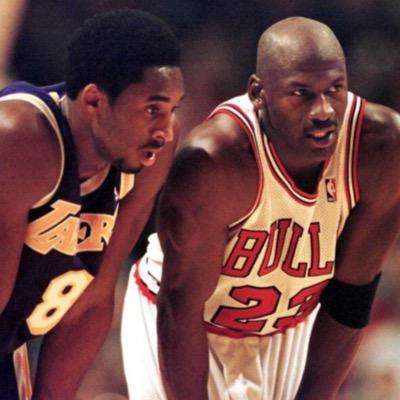
michael and kobe

In other words, you don’t know Peyton Manning or Tom Brady. Or Michael Jordan. Or Tiger Woods. Or Bob Knight. Or Serena Williams. Or Dean Smith. Or Kobe Bryant. Or Tim Duncan. Or LeBron James. Or Andre Aggasi. Or Danica Patrick.

No matter how much you think you do.

The first step is to admit there’s a problem.

Sports are a drug.

They soothe us, distract us, energize us, unite us, divide us, and entertain us.

And they most certainly blind us.

Standard
NFL

Pink Slip Promotions

Several years ago, I wrote a column about the massive layoff that occurs each year the day after the final game of the NFL regular season. Several years later, nothing has changed except this: it has gotten worse.

Across the NFL, across the landscape of professional sports in general, coaching is not just an uneasy profession, it is nearly brimming on insanity.

Before noon on Monday, four NFL coaches no longer had the positions they’d held 24 hours prior. Fewer people probably lost their seasonal jobs at your local Wal-Mart Friday.

Then again, it’s not just football that hires and fires the same way we change our undergarments – nor is this a new phenomenon.

In late 2008, six NBA coaches were fired before the season was 25 games old. Think about that: six teams decided that the wrong person was coaching their franchise that season when the season was barely 25 percent complete.

All this begs the question of why? Why are we terminating head coaches so fast? Is it the culture? Is it the rabid fan bases? Is it the expectations?

Coaches are paid, shall we say, rather well these days. The fact that Jim Harbaugh was offered a rumored $48 million dollars to coach a collegiate football team who have not been elite for nearly a decade (or longer) is the easiest example of this.

But it appears that it takes that kind of money to lure someone into the coaching pit of hell that is “big-time” football.

san-francisco-49ers-head-coach-jim-harbaugh

Harbaugh seems to have preferred to stay in the NFL, but he looked at the mess in Oakland (something like 400 coaches in the last 15 seasons) and Chicago (brimming with angry teens at skill positions) and then glanced at his alma mater’s boosters whipping out their checkbooks (and adding something like 14 zeroes) and had an actual decision to make.

But beware of the obligation that comes with that money. It’s win and win now. Like right now. Like the recruiting war, the season opener, the Ohio State, Michigan State and all the B1G games. Oh, and win the B1G title game. Restore the greatness, win the playoff and Hail to the Victors. Do this! Do it now!

Or find another job.

And find them, fired coaches do.

Why? Because the coaches that are being fired are pretty much all the same. They do the same stuff. Run the same plays. Talk the same speak. Wear the same clothes. Some are stronger in some areas, but the vast majority of coaches’ fall into needing some luck, some key buy-in from the players and/or the organization, some early success and fans who’ll at least give them two or three seasons.

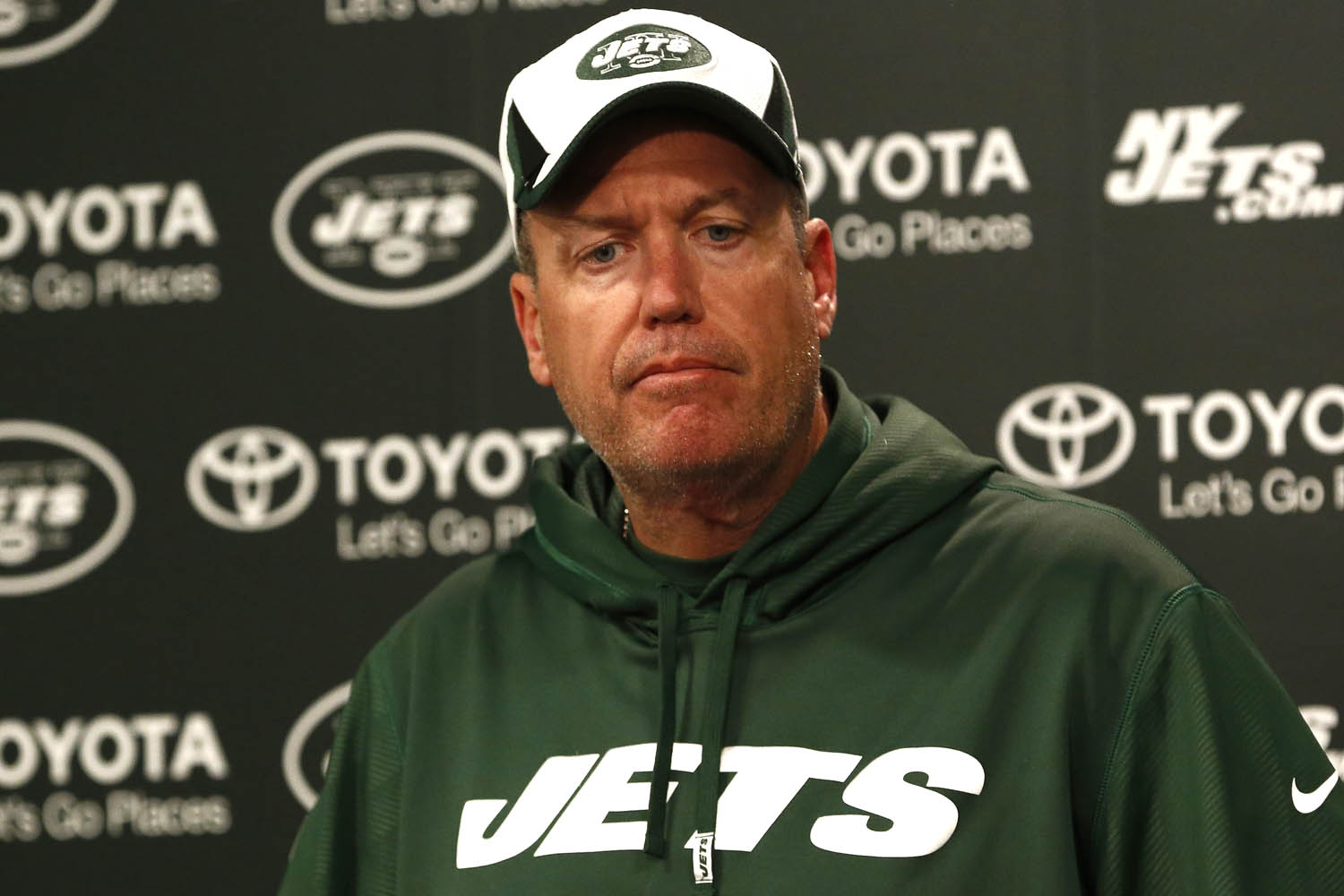
Marc Trestman didn’t get the multiple seasons. Rex Ryan didn’t get the players. Jim Harbaugh had the early success, but the organization did not seem to like him (and vice versa) no matter how much success they had.

Mike Smith, well, he joins the list of guys who deserved to be fired appropriately: multiple seasons, underachieving teams, poor decisions, lack of success. His time was up and that’s just the way it goes…for about one or two coaches a decade.

Production takes a little bit of time. Perhaps there is no sweet spot, yet logic would preclude that a season is not long enough – at any level – to determine future success. Unless that season is winless or a significant drop-off from before.

How many of us would have lost our jobs after 60 or 90 days under these conditions? What if your boss told you that you had exactly one year to win all the major awards you could win or hit a threshold the company had never seen or you would be fired?

Would you take the job? What if every job was like that? We’d be so busy undoing or understanding where we were that we’d never get anything done. Think of all the people who would have been fired for lack of production in history?

In 2006, Tom Coughlin was nearly fired by the New York Giants. Like “as close as you can be to fired without being fired” fired. He went on to win the Super Bowl the following season, got a contract extension, won another Super Bowl and now, eight years later, the rumors are the Giants will never fire him. Coughlin will have to step down to not be the coach of the Giants.

20131202jets00jz

Rex Ryan took over the listless Jets and made them contenders against the likes of the New England Patriots and Indianapolis Colts, without much of a quarterback (or knowledge of the offensive side of the ball in general). Ryan made it to AFC Championship Games and seemed perfect for the tabloid headlines in New York, but ultimately, he failed.

Or did he? The players never quit and they all seem to love playing for Ryan.

The role of coach has become blurred. Is it a coach who gets the most out of his players? If so, Ryan and Harbaugh are widely successful. Is it someone who acts like a PR mouthpiece for the team? Or a calm, rational person who deals well with the media and fans? If so, they failed.

We cannot seem to make our minds up. We mock Harbaugh for his intensity, we belittled Jon Gruden’s famous 3:17am wake-up call, but then that’s the guy we want when the other guys fail. The grass is always just a little greener, no?

Is this a call for the use of a little patience? Of course, but we’re to blame. As fans, when we see another team turn it around, we get envious and demand the same thing.

There are mitigating factors to these teams and seasons, but we don’t care – give us the goods! Make something happen, owners and general managers! Create the illusion we’re moving in the right direction!

There’s a reason the Pittsburgh Steelers have been an overall successful organization for the better part of the past two decades. They’ve had two head coaches in that time span: Bill Cowher and Mike Tomlin. Go back even further, add in Chuck Noll’s legendary career, and the Steelers have had three head coaches since 1968.

The Raiders, by contrast, have had 13 head coaches since Tom Flores left after the 1987 season. Only Jon Gruden coached the Raiders for more than three seasons. In a totally related note, the Raiders have been one of the NFL’s worst teams since Gruden left.

It is increasingly unlikely we’re going to see another Jerry Sloan or Bill Belichick. We’re lucky if we will see another coach like Coughlin. We used to be surrounded by continuity. Coaches used to be able to have the chance to pull their teams out of a funk or improve on a losing or unsuccessful season.

This actually helped keep the players in line, knowing that they couldn’t whine to the media and work to have the coach canned, they’d have to work with the coach to make the team better and right the ship.

We live on a merry-go-round of professional coaching. I forgot that Tony Sparano, who coached the Miami Dolphins, was in fact the coach of the Raiders this season – and I pay attention to the NFL. Actually, without looking, I’m not sure I could name more than 20 of the 32 NFL coaches – and would be mildly surprised at who is coaching the team’s I cannot remember.

Yet we’re astonished when these coaches fail all over again. We want new coaches and new ideas, then read articles criticizing teams like the Philadelphia Eagles and Chip Kelly.

There’s only so many of these guys to go around. It’s what I call the “Pink Slip Promotion.” Get fired? No worries, just wait, there’s another job offer coming.

For our part as fans, we somehow operate under the premise that every team should be good or make the playoffs in every sport. They can’t.

No, really, they can’t.

Some teams are just bad and will remain that way until a coach has enough time to put his practices and methodologies in place and the players respond accordingly. Or they won’t, in which case, time to start over.

Look, I’m all for change if something’s not working.

Mike Smith should have been fired by the Atlanta Falcons – his team’s consistently underperformed, his consistently made poor decisions and he’d had more than sufficient time (seven seasons) to win division titles, playoff games and potentially, a Super Bowl.

But in the end, all we’re left with is pink slip promotions. Smith, Ryan, Trestman and the others who will follow will all end up back on your TVs soon enough.

So enjoy the next round of new hires in the NFL.

The names might ring a bell.

So might the results.

Standard
American culture, NFL

The Social Media Mob

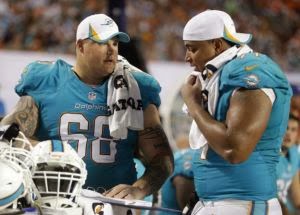
On Tuesday morning, I was driving to work listening to “Mike & Mike” on ESPN radio, as I do most morning commutes. For 15 minutes, Greeny and Golic allowed Jim Turner, the former offensive line coach for the Miami Dolphins, to share details and his point of view on what exactly happened last year between Richie Incognito and Jonathan Martin that led to a social outcry over locker room ethics and behavior.

For the first few minutes, all I could think was:

  1. Why are they rehashing all this? That was last year!
  2. Why are they giving this man so much air time to talk about something that happened last year and has been over for so long?

After all, there was much more to talk about – sports for one. But if the show was heading down that path (again) of discussing the larger issues that are taking over sports, then why not at least cover something from 2014?

And then it hit me.

We never really figured out what happened.

I didn’t even know this guy’s name. We moved through that story, that news cycle, so fast and with such condemnation that we made grandiose assumptions about what happened, but never really found out the truth, then came to a conclusion well in advance and moved on to the next thing.

social mediaIf it seems like the NFL is in a dark place right now, it is because it does seem that way. But seeming to be is not the same as it actually happening. To be fair, the NFL, NBA and the world in general are not any darker or different than it was 25 or 30 years ago.

We just find out about everything now – in near real time – and often react within the same beat.

We have a mob mentality on Social Media. We have shifted into an era of guilty until proven innocent. This is no longer about defending one person, their actions or even trying to determine what actually happened.

This is about the part that precedes that part.

While there is clearly a lack of leadership in the NFL – and perhaps more importantly, it’s player’s union – the NFL and other professional sports leagues should not be held to a standard that we do not hold ourselves or the justice system to.

In other words, while the NFL can and should do better, it is not their responsibility to go above and beyond the punishment, or lack thereof, handed down by the law.

We’ve been dipping our toes in some very troubling waters lately. Social media has pushed the public outcry to a place that is placing a great deal of pressure on different groups and people to act correctly – and with extreme speed. This creates two important problems that we seem to be ignoring with consequential long term damage.

Problem No. 1: In an attempt to get things right, speed matters. But not rapid speed. Rushing leads to mistakes, to not hitting all the angles just right. Think of pretty much every time you have rushed to get something done. Now how did that work out? Fail a test? Miss a deadline? Burn the casserole? Care for any do-overs? Ever think back on that situation a month, six months or a year later? While our decision making process should not take a long time, it also shouldn’t play out in 36 hours.

Problem No. 2: We cannot agree on what is “right” – and we probably never will. This is a simple fact of humanity. You will not find everyone in complete agreement on any issue, which is a good thing.

Look, we do not need to like the same things. The world would be a pretty boring place if we did. But we also do not have to agree on everything, or be right all the time. Better still, until we have all the information we need to process something, we don’t even need to be first or fast. We should want to do what is right, not just be right.

Debate, whether reasonable or not, at the very least helps with Problem No. 1 because it forces a slowdown. Making a decision alone, without consult, and it tends to cause collateral problems.

There is no doubt a wide array of opinions on the Adrian Peterson situation. From every corner, we hear from people with various and diverse backgrounds who have all been disciplined in a numerous ways. Some might have been whipped and hated it. Some might have hated it, but understood it and employ it with their kids. Others were never whipped and have run amok in life, while still even more were never spanked and have turned out to be fine, upstanding citizens.

But we want to be right, we want everyone to agree that we are right and we want to move on to the next thing we can find to stand up on a soapbox and shout about, be right about and move on from.

It does not – or should not matter – what our opinions are in regard to these situations, frankly. We can and should feel free to share them, so long as it does not sway the process due to them. And there is a difference between defending someone and defending the rights of anyone.

For example, Donald Sterling is clearly a sick, twisted and evil man. The NBA used his incredibly disgusting track record and a surging public outcry to take his business and sell it to someone else. And while the NBA – and the world in general – are better for it, while we all applaud the fact he’s out and gone, it doesn’t make us any less culpable for beating up the bully and taking what didn’t belong to us.

And now, it’s over. It feels like a long time ago.

It was July.

adrian-petersonWe’ll move on – and quickly – from Adrian Peterson, too. Just like we did with Ray Rice and Roger Goodell a whole week ago.

It is strange to think how collectively, through social media, we make up one of the most influential groups in the modern world. It’s an instant poll in many ways – like performing in front of a live audience, except with each line, you stop, gather the reaction and then move on to the next scene.

Truth be told, no one knows what to do right now –almost entirely because of what we will say. We have frozen the market on public relations, almost across the board.

Beer companies are threatening to pull sponsorship money because the NFL’s problems are not matching their “value” system (slightly ironic, right?). Hotels are gasping when their sponsorship banner hangs behind a team official as he makes an announcement because of the content and topic of said announcement.

Major sports companies and sponsors are suspending or pulling their deals with athletes and teams and leagues because they are afraid of us. They are afraid we’ll boycott, that we won’t buy their goods or services. Further, these actions are met with approval from celebrities and dignitaries outside the world of sports, simply because it feels like something that needs to be stated: “[Insert whatever situation, e.g. Child Abuse/Domestic Abuse] is wrong and I’m glad to see them doing something about it.”

Except nobody really did anything. “They” stopped selling jerseys or action figures or posters. They suspended someone with pay. They booted someone from the league. But nothing of real value has actually been done to prevent future child or domestic abuse.

This is not just limited to sports. Last week, Apple haphazardly forced all iTunes accounts to download the new album from U2 – which was met with swift and shameful scorn by social media. In about three days’ time, Apple released a program that would remove the album from user accounts. Good, right? Except how many even knew Apple possessed the power to put that on our devices to begin with? And if they can do it with Bono’s overly produced music, what could they do it with in the future?

We have yet to understand the breadth and depth of the power we now hold in our hands – both the technology and the medium.

Look at what we’ve done in just the past 10 days: Roger Goodell, the most powerful sports commissioner in history – has been shamed into hiding for the past week. Perhaps he should be fired – for a variety of reasons that include incredibly poor decision making – but a gone Goodell does not solve the problem. It only satisfies the social media mob.

The NFL did not just get a domestic abuse problem – as detailed here, it’s had one for years. Whether or not Goodell goes away or Ray Rice ever is allowed to return does little to address the issue. Further, we don’t seem to actually care about Janay Rice, just about using her as visual evidence for our cries of NFL violence and players out of control.

Donald Sterling did not just become a bigot overnight after a weird conversation with a woman not his wife; it had been documented for years as the lawsuits piled up. Being ousted as owner of the Clippers changes none of the living situations and irreparable damage Sterling did to others as their landlord.

The same as the NFL locker room has probably always been a strange place to you and me, the details of this foreign area escaped last fall in a situation that has been reported on largely by one side. But we don’t care about Richie Incognito or Jonathan Martin anymore.

We’ve long since moved on.

Last week, we had the whole NFL, the Baltimore Ravens and Ray Rice to be the judge, jury and pass verdict on. This week, we’ve got Adrian Peterson and the Minnesota Vikings. Next week, or the week after, it will be something else.

We’re using social media to collectively engage in our own little drama filled soap opera. And now, as our social media world turns, so does the actual world. We engage and trade barbs and opinions with people we know and we don’t know, saying things we’d never say out loud and/or in person, making the world at large believe we’re actually invested in the issue of the day – making our collective voices the loudest voting poll in human history.

You have to wonder if our cyber selves are creating a kind of future where social media swiftly – and with great feigned outrage – decides even more. What about the policies and the politics that govern us? Will we continue to not wait for all the information and provide a presumption of guilt until proven innocence as standard operating procedures?

Just remember that it is not so much about who you are, but what you will become.

I feel compelled to ask, what are we becoming?

And, are we really OK with it?

Standard
Life, NFL, Philosophy, pop culture, positive thinking, Rashard Mendenhall

Pulling a Mendenhall

Last week, I heard a story on the radio that rated the Midwest, specifically the major metropolitan close to the suburb I reside in, as one of the hardest working cities in America.

No doubt, many who heard this locally puffed their chests out a little bit with pride. Others perhaps slightly lamented this fact, as they thought about the hours put in to their specific jobs and all the things they’d rather be doing. Both these groups and anyone in the middle carried on with their day, which was likely spent trying to impress someone else.

The brutal truth is this: We cede power of our self-worth to someone else’s opinion. In fact, we care way too much about what people think of us. We spend too much time wracking our brains over a comment someone makes, spinning it out of control in our own mind to the point of obsession.

Sadly, we let this define us. From our self-worth to emotional balance, we are infinitely more worried about someone’s opinion reign supreme over what we say we value.

Actions must always speak louder than words, and sometimes you’d be amazed at where you will find a voice of reason. I’d never given much thought to Rashard Mendenhall, an NFL running back who just announced over the weekend he was retiring at age 26. I did not know what his likes or his interests were, nor that they would even be close to my own.

In fact, upon hearing of his retirement, the immediate reaction I heard on talk radio was that of ridicule, mostly because why would someone throw away a promising NFL career at 26? All that money! All that fame!

mendenhallThen, you read Mendenhall’s thoughtful comments, delivered without a press conference or fanfare, and you get it. Or at least you should. He speaks of the changes in our society and not finding a way to fit in:

Today, game-day cameras follow the most popular players on teams; guys who dance after touchdowns are extolled on Dancing With the Starters; games are analyzed and brought to fans without any use of coaches tape; practice non-participants are reported throughout the week for predicted fantasy value; and success and failure for skill players is measured solely in stats and fantasy points. This is a very different model of football than the one I grew up with. My older brother coaches football at the high-school and youth level. One day he called me and said, “These kids don’t want to work hard. All they wanna do is look cool, celebrate after plays, and get more followers on Instagram!” I told him that they might actually have it figured out.

And he is absolutely correct. Times have changed, rapidly so, over the past 10 to 15 years. The increasingly connected world we have created through technology makes it a more social place, but a less emotional one. We do just kinda want to look cool.

If we look hard-working, put together and speak well, watch all the right shows and drive the right cars, then we’ve got what exactly? A meaningless, consumer-driven existence that we have built solely on what others think is meaningful or cool.

And that group of “others” is a rabid bunch, documenting every up-and-down. One minute, you are beloved, the next, a bum. In this constant over analysis, we forget there are no experts, just opinions. And as we know, Americans have lots of opinions – and we are paid and unpaid to share them.

As Mendenhall says:

There is a bold coarseness you receive from non-supporters that seems to only exist on the Internet. However, even if you try to avoid these things completely — because I’ve tried — somehow they still reach you. If not first-hand, then through friends and loved ones who take to heart all that they read and hear. I’m not a terribly sensitive person, so this stuff never really bothered me. That was until I realized that it actually had an impact my career. Over my career, I would learn that everything people say behind these computer and smartphones actually shape the perception of you — the brand, the athlete and the person.

Perception shaping reality? Around these parts? No… you don’t say. There is a snowball effect to perception, one of the lessons we did not learn from early educational books. And when we start to feel its effects, it damages us in many, many ways.

From our parents, to our coaches, our teachers and friends, we begin to rapidly care about what other people think of us. In a vacuum, influence is not necessarily a bad thing. When it changes who we are, why we do or do not do certain things, then influence holds too much power over us.

It strips away individuality that produces well-balanced and centered people. There is certainly enough room for all of us, with our various likes and interest, just not enough acceptance. We’re all like the movie “Mean Girls” and life continues to operate like the cool kids table in the cafeteria. That is, if you let it.

Mendenhall is getting out of professional football, at least to my understanding of what he’s saying because he is a person of various interests who wants to live a full and complete life. He’s done the NFL and it was fun, but now, it’s time for something else.

Over my career, because of my interests in dance, art and literature, my very calm demeanor, and my apparent lack of interest in sporting events on my Twitter page, people in the sporting world have sometimes questioned whether or not I love the game of football. I do. I always have. I am an athlete and a competitor. The only people who question that are the people who do not see how hard I work and how diligently I prepare to be great — week after week, season after season. I take those things very seriously. I’ve always been a professional. But I am not an entertainer. I never have been. Playing that role was never easy for me. The box deemed for professional athletes is a very small box. My wings spread a lot further than the acceptable athletic stereotypes and conformity was never a strong point of mine. My focus has always been on becoming a better me, not a second-rate somebody else. Sometimes I would suffer because of it, but every time I learned a lesson from it. And I’ll carry those lessons with me for the rest of my life.

steve-jobsThese are lessons we have all previously learned and now ignored. How many times are you questioned? Daily? Weekly? If you do not do whatever everyone else is doing or how they would do it, then obviously you must not love it or care about it, right? There is an unprecedented level of competition that has entered our minds – a battle between others and ourselves. A game of one-upsmanship, where anything you can do I can do better. I care more about my job than you do because you did not respond to the “urgent” e-mail at 10:05pm last night.

But rarely is that so. Most of us care. Most of us try. But this fight to keep perspective, it is a challenging one. It would be nice – yet unrealistic – if we all just believed when someone said they were working on it, taking care of it or that they tried their best.

Let your actions be your words.

Worried about your height and if people think you are too short or too tall? Worrying about it won’t make you grow, or shrink. Your ancestors and the gene pool took care of that long before now.

Worried about what clothes you wear, what car you drive, how you talk or what others will say when you meekly admit to having never watched “The Wire” or “Breaking Bad”? Why? What does any of that mean or say about you anyway?

To be proud of who you are and what you like is to be an individual, which means you are different. You are not just one of the crowd. We are not cattle, to be prodded toward unity. In the modern age, ridicule and harsh words are used as scorching prods and we are well branded by each other.

Mendenhall’s final statement rings most true:

As for the question of what will I do now, with an entire life in front of me? I say to that, I will LIVE! I plan to live in a way that I never have before, and that is freely, able to fully be me, without the expectation of representing any league, club, shield or city. I do have a plan going forward, but I will admit that I do not know how things will totally shape out. That is the beauty of it! I look forward to chasing my desires and passions without restriction, and to sharing them with anyone who wants to come along with me!

I could not think of anything better: a decision to be and live freely, without worry of judgment without expectation of what everyone else thinks.

We all kind of have a plan, but cannot begin to predict how it will play out. Uncool and unpopular and un-put together as that may seem, we could all afford to be called some of the most passionate people on the planet, who follow dreams and see what the road of life has in store. What if we were called some of the most relaxed, or even-keel, down-to-earth people in America?

Now that would be a statistic based on opinion I could learn to care about.

Standard
American culture, bullying, humanity, Joe Philbin, Jonathan Martin, Miami Doplhins, NFL, Richie Incognito, Society

We Become What We Are

In this whole mess in Miami, where one player has verbally bullied another into apparently quitting professional football, we’ve once again missed the point. 
We can’t see the forest for the trees, how this situation actually applies to us. 
(Insert record scratch here.)
Us? What the heck is he talking about?
How do people become Richie Incognito? Or Jonathan Martin? These things don’t just happen. We all have roles to play, like actors. And we have been training for each moment of our lives. And we’ve all heard what we should do.
Treat others the way you wish to be treated. Turn the other check. Be kind, rewind. Smile when the world frowns. Be understanding of others and the fact you do not know what they may be going through.
It’s simple and yet incredibly difficult, right?
We don’t practice what we preach, because we’re human and humans make mistakes. 
Then again, to ere is divine. Ask for forgiveness later. Don’t let anyone step on your buzz or stand in your way.
All of this to say we’re one massive contradiction. 
I didn’t want to write about Richie Incognito and Jonathan Martin, nor the Miami Dolphins “Code Red” approach to football basic training. But I can’t help it. 
Does it matter if the Dolphins instructed Incognito to bring Martin along and toughen him up? Does it matter if they didn’t specify to not be a moron and leave racial slur-ridden messages for Martin? Does it matter if, according to teammates, Martin played the messages in the locker room and laughed? Does it matter that Joe Philbin’s airport press conference was a joke?
I suppose. 
If you care about the dirty details. And most of us do. We want the gossip, the goods, the low-down. We’ll read the riveting expose of Incognito’s bullying ways that date back 10-plus years and call him a horrible human being. It’s probably true. 
We’ll listen to the pundits blame Martin for not being tougher, for being weak. We’ll call this the NFL, the modern culture. We’ll draw comparisons to all kinds of professions and say this is just guys being guys. There might be some truth there, too.
We’ll blame Ryan Tannehill and members of the offensive line for not stopping it, for not being leaders, for not doing the right thing. 
We’ll do our typical American thing, be appalled by someone, anyone – or multiple someones. Then, we will do our other typical American thing. We’ll go right back to being gossip hounds. We will ignore our children by staring at our phones. We’ll bad mouth friends, family and neighbors to anyone within ear shot. We will say someone cheated their way to the top. We’ll work 18 hours a day and sacrifice all of our relationships. 
What the heck does this have to do with the situation in Miami? 
Everything and nothing at the same time.
We breed this activity, we accept this kind of culture – in either situation. Whether or not you think Incognito was just doing his job, is certifiably insane or the absolute scum of the earth, you’re probably right. And Martin could be both a victim and a weakling. It’s all a matter of perspective.
But whatever your take, whatever your belief in this whole sordid ordeal, we allow it. All of it. And we’ve been building towards these moments for quite some time. 
As I wrote last week, we are weak, though I certainly didn’t mean it in this context. And as I have also wrote before, we are some of the meanest, crudest, insincere and least connected people on earth. 
It is all true.
We need a serious detox program for the culture of this country. The fact that this is even a hot debate raging in the media – and a thousand different opinions on who is right and wrong – says more than enough about us. 
We don’t know who we are and what we value. At least as a collective unit, we don’t. 
All I know is what I value, what I have been taught and what I believe. And I believe you don’t motivate someone with hate ridden voicemails and texts and bullying. That’s not motivating, that’s humiliating. And it would probably behoove you, as a professional organization, to oversee the development of your employee – not a borderline “talent” with past issues. You also might have the guts to stand up for yourself and tell someone before bailing, quitting and using the situation to your advantage.
But this isn’t about being a man or breaking fraternal locker room code. It’s about being a human being, inhabiting a world of other human beings and how we all treat each other on the daily.
The truth is, none of us have this whole thing figured out. If we did, we wouldn’t continue killing each other on battlefields. We wouldn’t continue to trash each other through social media for the world to see. We’d calm the heck down and learn to appreciate each other a little bit more.
If we knew what we were doing, we’d value the day-to-day life we’re blessed with and enjoy each moment, speak kinder to one another and just generally lighten up.
But we don’t. So we won’t.
Carry on. 
Richie Incognito said he was just weathering the storm and this will pass. 
Sadly, he’s right. We’ll let this go like everything else and not see how it is a magnified example of how we handle life, in our own way. 
This too, shall pass.
That’s the entire problem. We let everything pass.

At least the stuff that actually matters.
Standard