Life, NCAA College Basketball, NCAA Tournament, Philosophy, positive thinking

Addition by Distraction

When Wichita State guard Fred VanVleet’s last second heave bounced helplessly off the rim in the final moments of a historic and emotionally draining loss to Kentucky, it was over.
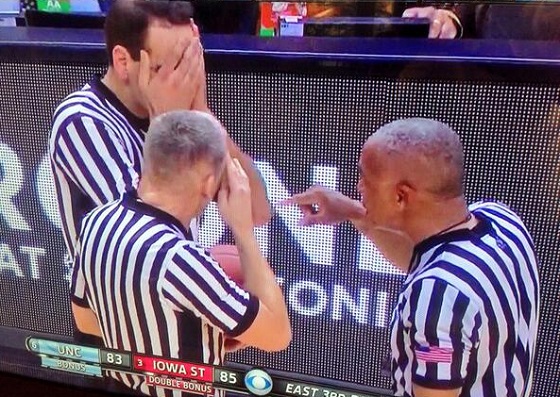
referees-iowa-state-north-carolinaWhen the refs of the Iowa State – North Carolina tilt got together shortly after the horn sounded, for what felt like another long NCAA Tournament commercial break, and decided that yes, in fact the math of delayed clocks starts and timeouts evened out, it was over.

Just like our upcoming Spring Break, my sister-in-laws pending nuptials, my son’s just-underway baseball season and that movie you have been dying to see.

These are all distractions, and they will eventually end. Many of them happy, of course, but what lies beyond?

We use these distractions, these things, these events in life as markers and moments to look forward to, to enjoy, knowing full well that nothing can last forever, but being just a tiny bit saddened when the reality sets in that the moment has indeed passed.

Time stops for no man, as they say.

Now, you can take this one of two ways. You can be saddened by this fact that everything ends and spend your days locked in nostalgia and reliving the past.

Or, you can choose to enjoy each moment for what it is. You can be here, now. You can choose to actively be present in your life. Immerse yourself in the good and the bad of it all and let the negativity and drama wash away.

As the great Dr. Seuss said, those who mind don’t matter and those who matter don’t mind. (I could be paraphrasing here.)

This is life and too much of it is spent on the trivial details that don’t really matter. The hard part is we rely on distractions to help us pass the time. We go from New Year’s to NFL Playoffs to College Basketball and March Madness to Baseball and Spring Break to summer cookouts, concerts, vacations, football of all levels to the Holidays. And then we repeat.

Mostly, we’re just trying to get through the day until the day becomes the end of the week. And we’re passing along through this life without truly getting the point.

Now, I do not pretend to know what the point is. And I’ve spent several hours writing about it in a variety of similar ways. I am still working on it. And that’s just it; you never really stop working on it. Life is kind of a long education.

So for the friends and readers who get tired of the motivational, introspective mumbo-jumbo I’ve been producing, that is perfectly understandable. I’ll give you the same advice I give myself, friends, family and colleagues all the time: choose something else.

Change your distractions so they are not subtracting from your life. Let your distractions be additions to your life.

Case in point: if friends on Facebook are annoying you with selfies and negativity, then hide them. Defriend them. Do whatever you gotta do. But at the end of the day, that is a you problem. It is their page and they can post 400 pictures of their kids, their vacations and as many happy quotes as they want. You don’t have to look at it.

Same goes for Twitter. If you don’t like my stream of Disney World construction photo retweets, surfing photos and random sports commentary that is perfectly OK. I’m a weird dude, and I am OK with it. But if you are not, then stop following me. We can still be friends.

But we tend to lock in on things and get stuck on repeat, focusing more on the other party (and what they do not even know they are doing to annoy you) than our own issues. In these cases, our distractions become our obsessions.

It is a fine line we toe between rooting for our favorite college basketball team to win a game – and getting into fisticuffs with a fan from a rival team…during dialysis treatments.

Distraction is being more than curious about what happened to the Malaysia flight that has still yet to be found. Crazy obsession is pretending to fly the plane like a five-year-old in his backyard on cable news.

We are constantly battling these two sides of ourselves. Distractions give life spice and variety, something to enjoy, something to look forward to, something to focus on. Hone in on them too much, though, and we become wild beasts obsessing over the material goods of the world.

Sadly, much the world has become about the material.

It occurred to me, somewhat rather recently, that the past few years have been nothing but a growth stage for me. I did not particularly think I had much left to do in the ways of growth, but I have felt as though my heart was physically expanding, my head hurting with new thoughts and new ideas, knowledge that I did not know I did not have.

And all this time – at least the past two years – I’ve been writing to myself in many ways. Trying to remind myself of what I value or at least what I should, what I need to keep valuing and what I need to let go, all for the sake of finding a positive path for myself and my family on this crazy road of life. It calms me and helps me remember that your destination is not a collection of trinkets, but instead of memories of time well spent collecting life.

Others, including some of those who are or were once quite dear to me, seem to disagree. And of course, to each his own. We can only control what we can control, which is just ourselves.

If you are bothered by the fact that someone you know has changed, then you miss the point. We all should change. Who wants to remain stagnant? Change implies motion, staying the same means there is nothing new to you, and I’m not a fan of reading the same book twice.
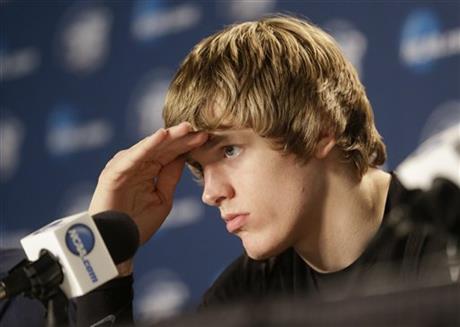
bakerGo onward, upward; get new experiences. Old friendships should serve to fuel new adventures, not rehashing old mistakes and slights. Either you can move on, forgive and forget or you cannot. But it does no good to remain in the status quo.

Not long after Wichita State had it’s perfect season ended at 35-0, redshirt sophomore Ron Baker, who had a fabulous game, blankly looked at the press and gave a great explanation of dealing with the loss to Kentucky.

“You’re going to go through some humps in your life, kind of like this one. It’s tough to see us go out like this,” Baker said. “At the end of the day, someone’s got to go home.”

It’s somewhat of a strangely put together quote, with a tinge of sadness, yet a grounded sense of optimism. And really, it’s true. You hate to see it end – whatever it is. Coming home from vacations are rough, the loss of a long friendship is rough, the end of a season that you’ve poured yourself into, is indeed tough.

But life is not over, it continues on. How you approach the next distraction, where you place it on the scale of overall importance can affect you for a large portion of time in this life. And I have somehow arrived at a point where I have mildly convinced myself that as long as it is, it is also quite short.

I like Kevin Bacon’s idea, frankly.

This is a party. Let’s dance.
 

Standard
Marcus Smart, NCAA College Basketball

The Smart Move

By now, you have seen it, right?

OK, well, so you didn’t “see” it per se, but you had a reaction to it nonetheless after hearing about it from friends and family, or seeing a .gif about it or one of the other thousands of ways that “news” is circulated in America in 2014.

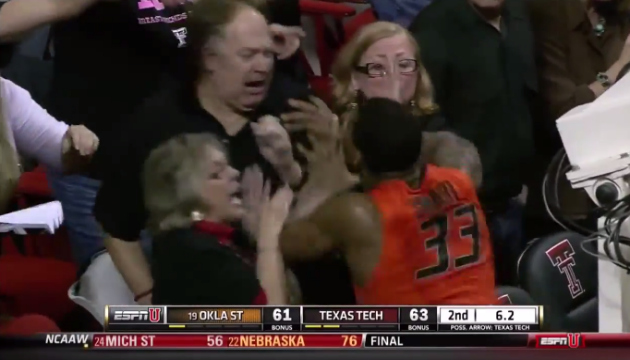
marcus-smart-shoveJust know that whatever your reaction to Oklahoma State guard Marcus Smart shoving a Texas Tech fan in the waning moments of Saturday’s game, it’s probably wrong.

But by all means, tag your thoughts with #shovegate. It will give them credibility, for sure.

Once again, what happened this weekend highlighted – for what appears to be the one trillionth time – everything that is wrong with America.

Yeah, I know, I know. This is my MO, to tell you just how messed up our society is and can be and why we need to change.

What is funny is that America may be the world’s leader in secondary education. After all, it has eight of the world’s Top 10 universities. But we do not learn very well.

It seems each week we over and under react to something, blowing it out of proportion or sweeping it under the rug. We overanalyze, under analyze and reach a conclusion, a verdict, a judgment. Then, it’s over and we’re on to the terrible conditions of Sochi restrooms or something else.

And we do this in about six hours.

Was Marcus Smart justified in shoving the Tech fan? Of course not.

Look, any athlete – former has been or never was – can tell you that should you choose to pursue a path in competitive sports, you will undoubtedly hear things from fans that will not sit very well with you mentally.

Between the ages of 15-18, I heard everything you might possibly hear from opposing fans. Racial slurs, comments about parents, comments about hairstyles, dress, mannerisms, sexual preferences I didn’t even know existed and really, everything in between.

Now might be a good time to mention I grew up in a relatively tame, relatively small and relatively white (read: predominately white) community.

It didn’t matter. I have had friends, frenemies and random people that shared the floor or field with me look around with the same expression: people are crazy.

The sooner you understand that, the sooner that you make peace with the fact that as an athlete, you are the target of one motive: to get in your head and take your mind off the task at hand. Is it hard? Of course.

Should mentally unstable people, say Ron Artest, be even more mindful of blocking out literally everything they hear, feel or see? Let’s hope so. Because I am certain that for anyone over the age of about 20, there was a flashback to 2004 and the Pacers-Pistons brawl.

Many opinions – including some from my own hand – argued then and now that there was an invisible line that cannot be crossed between performer and spectator.

And Marcus Smart must understand that no matter what they say to you, you just cannot respond. He’s 19, though, so he must be allowed to repent, learn and move on.

But what about those in the stands? That same line exists for all of us spectators. How sad are we? How pathetic is this Tech fan, Mr. Orr, for saying something, anything to a college student. You are a 50-year-old man. Act like it. Why are you calling a successful college athlete with all his hair and defined muscles who has undoubtedly far succeeded what you did on a basketball floor a piece of crap?

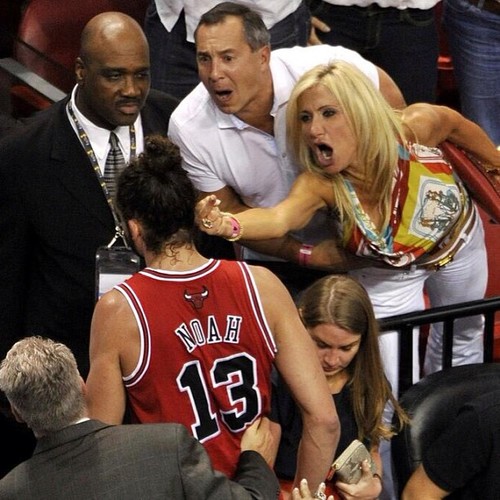
noahIf the former has been/never was athlete in me has reared its ugly head, then I apologize. It has always been a difficult proposition to listen to those who don’t, haven’t and never will throw down a cascade of spoken abuse that most would be enraged to hear if it were being spoken to them or someone they love. Fans are short for fanatical, but that does not have to mean flat out insane and crazy, shouting, cursing and throwing up middle fingers as they calmly pass by.

So was Mr. Orr wrong? Absolutely.

Yet there remains the rest of us. And what are we do to from the sidelines? Well, by all means, let’s get involved.

Notice that we are over 600 words into this piece before race was even mentioned? Well, aside from the physical act of the shove, that became the de facto topic of #shovegate.

We are quick to turn nearly everything into a commentary on race, when in reality, this has much more to do with how we interact with each other.

Again, this problem – this dangerous line between the fans in the stands getting to unleash a torrent of verbal abuse on athletes and the inevitable, split-second reaction from someone who’s just heard enough has become razor thin in recent years.

Every situation is different. In this one, a 19-year-old who turned away the NBA to come back to college and mature more found himself in the middle of a crummy month in the middle of a crummy season that has scouts wondering whether or not he can make it in the NBA.

Add to it all the media attention to what is perceived as Smart flopping on defense to get calls and a game against Texas Tech that was slipping away and you find yourself with the 19-year-old breaking down with a superbooster screaming at him after tumbling into the crowd.

Should he have shown restraint? Should the fan?

Of course.

But were would either of them learn their lesson?

Certainly not from the melodramatic, breaking news style SportsCenter updates and the millions of people on social media who turned those five seconds into a 4-hour racial debate.

But we don’t take the time to rationalize any of this. We just react. Suspend Smart, ban the fan, belly moan the spoiled athletes and joke that the fans have it coming.

Maybe next time, before we once again belittle someone else for not thinking clearly, questioning their character or jumping to 1,000 different conclusions, we could just make the smart move and just not.  The smart move is to just shut up.

That’s the smart move, though.

And we just don’t do shutting up very well.

Do we?

Standard
Andre Wiggins, David Stern, Duke, Jabari Parker, Julius Randle, Kentucky, NBA, NCAA College Basketball, tanking

Empty Tanks

Riggin’ for Wiggins. Sorry for Jabari. Scandal for Randle.
The catchy phrases are already piling up as NBA teams make themselves into ugly ducklings for the 2013-14 season in an effort to maximize their chances at landing one of the premium talents that have hit the college hardwood this season.
And alliteration aside, this happens all too frequently in the NBA. The Draft Lottery is a joke, a punch line to the league and the more you look at it, should be a mark on David Stern’s legacy.
From Andre Wiggins at Kansas, Jabari Parker at Duke, Julius Randle at Kentucky, Aaron Gordon at Arizona to a host of other heralded freshmen, the 2014 NBA Draft has GMs everywhere lining up to give away an entire season in hopes of landing one of these potential franchise players.
But should they even be allowed?
In an exchange years ago will ESPN’s Bill Simmons, noted thinker Malcolm Gladwell had this to say:

                I think, for example, that the idea of ranking draft picks in reverse order of finish — as much as it sounds “fair” — does untold damage to the game. You simply cannot have a system that rewards anyone, ever, for losing. Economists worry about this all the time, when they talk about “moral hazard.” Moral hazard is the idea that if you insure someone against risk, you will make risky behavior more likely. So if you always bail out the banks when they take absurd risks and do stupid things, they are going to keep on taking absurd risks and doing stupid things.”

And he’s right. Nowhere else on earth is poor performance, malfeasance, mismanagement rewarded. Well, except in Washington, D.C.
Think about it. Everything else that we do must be done to the best of our efforts – or at least some minimum level of trying – or we lose it.
From relationships to our jobs, we can’t tank and get ahead. And when we’ve tried it – as Gladwell said, with banks, it proves to be a hazard to society and one that doesn’t work.
Just picture it: going all George Costanza and sleeping under your desk all day and earning a promotion? That was funny because it was ridiculous to us.
What if we put no effort into our relationships? Just try not taking your girlfriend or wife out for dinner and a movie, even every now and then, and see how quickly your single. You even have to put effort into that – the pick-up. Try going to the bars in sweats, smelling like a dirty sock and looking like you just woke up from a bender. No woman would come within five feet of you.
Think of how outraged we’d be if this practice existed in schools?
Teacher: “Johnny is failing tests, farting in class, humming the Star Wars imperial theme when I lecture and demanding peanut butter and cheese sticks be instituted as the school lunch. We’re going to have to move him up a grade, name him Student of the Month and recommend he teach my class.”
Parent: “Well, we were worried, but hopeful this would happen. We’ll now make sure to reel him in and try a little harder on his schoolwork and behavioral issues.”
Cheat your taxes? How about some money back to make sure you have enough for next year?
It used to be that NBA teams would at least try to not be horrible, or at least be less obvious about it, until after the holidays. It was a passing rite of spring, really. Hit March, and go into full tanking mode. Now? Teams are trotting out a collection of barely passable NBA talent in hopes of getting a head start at being at the bottom by season’s end.
The lack of logic in this practice is astounding. After 30 years, aren’t we clear that this doesn’t work? A handful of well-run teams keep winning the championship. The bad teams stay bad because they are poorly run and because just getting one young superstar doesn’t fix the problem.
How many times do the Bobcats/Hornets, Hornets/Pelicans, Clippers, Raptors, Timberwolves, Grizzlies and Kings have to get a lottery pick before they are good? Those teams have had at least 6 or more lottery picks since the 1984-85 season.
In a recent case study, it was discovered that nearly 90 percent of teams that win 25 games or less are still not contenders five years later. This is the same as saying someone who sits on their couch, plays video games online and tweets about not having a wife or a job is still doing the same thing five years later.
Not exactly surprising.
While I would agree with Gladwell’s theory that we should not reward this kind of team, I think the most egregious thing is that it has become such a glaring problem that everyone openly acknowledges it but nothing is done about it by the league.
David Stern will fine San Antonio for not having their star players face the Heat last November, but he won’t do anything about this? Oh, wait, that’s because he’s helped create it, incentivize it and continue it. Stern will never admit how failed this logic is.
The question, I suppose, is why doesn’t the NFL have this problem? Why is the NFL, the envy of the NBA and Major League Baseball, facing this issue? Because management doesn’t last if they tank. There’s too much risk in throwing away a season.
What I’ve never understood is how you convince people to throw away an entire year of their careers? Imagine telling Michael Jordan, the player, you were going to openly stink for a season to get him some help? Now, Jordan the executive is managing one of the worst teams in professional sports – in any league – in an effort to build a roster of young players where one might pan out.
Not that anyone cares, but it must be difficult to be a fan of these teams. It’s against everything we know to root for losing. Yet, the NBA allows it and rewards it.
Yup. The NBA.

It’s fantastic.


Standard
Bob Knight, Indiana Hoosiers, Indiana University, Jeff Meyer, John Beilein, Michigan Wolverines, NCAA College Basketball, Rick Pitino, Tom Crean

All Apologies


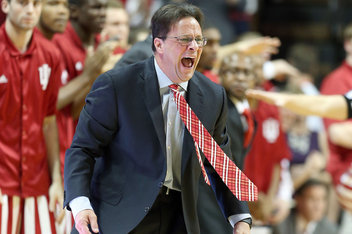
The head men’s basketball coach at Indiana University is, to put it mildly, unpredictable on the sidelines.
He stomps his feet. He shakes his fists. He berates officials. He screams. He teaches.
He’s not wearing a red sweater.
 
No, Tom Crean isn’t Bob Knight – but he’s closer than you think. In fact, that much was evident following Indiana’s intense-laden, 72-71 victory over Michigan in Ann Arbor on Sunday.
Moments after a hold-your-breath final 20 seconds, moments after Jordan Morgan’s tip bounced around and around – but not in, moments after IU captured their first outright B1G regular season championship since 1993, there was another moment: Crean confronting current Michigan assistant – and former Indiana assistant – Jeff Meyer.
And Crean couldn’t stop himself from saying something.
“You know what you did!” Crean shouted. “You helped wreck the program! You helped wreck our program!”
He ran away with a grin that can only be described as half Cheshire cat, half Grinch Who Stole Christmas.
It was rebellious, it wasn’t entirely classy, yet given the circumstances, it wasn’t entirely unforgivable.
As a member of Sampson’s Indiana staff, Meyer had made impermissible phone calls to recruits, calls that along with Sampson and fellow assistant Kevin Senderoff, would put the storied program on sanctions that would nearly break the Hoosiers. Crean was hired, as has been documented, not knowing the full content of the allegations and sanctions and went to work with what might resemble a JV roster in the B1G. There were two walk-ons who’d scored a combined 36 career points.
Crean’s first season, 2008-09, the Hoosiers were 6-25. Six and twenty-five. Worst in school history. The following season, 2009-10, IU went 10-21. In 2010-11, 12-20.
Forget last year’s 27-9 Sweet 16 team. Those three seasons in basketball purgatory don’t ever leave you. They stick and stay – a funk that’s not easily removed. And it’s the anger behind those 66 beatings in three seasons that built up and came up Sunday on the court at Crisler.
It didn’t just boil over – it was directed at a person who played a large part in helping facilitate those 66 losses in three seasons. Following the game, Michigan coach John Beilein commented on how Michigan would always conduct themselves with class and how Meyer helped build Michigan basketball “brick by brick” since arriving in 2008 – just months after leaving IU and being a part of a staff that destroyed it brick by brick.
Coaches can sometimes act like the kids they coach. Tom Crean is no different. This may surprise many outside of Hoosier Nation, but Tom Crean has become somewhat unpopular. He cut down the nets last week after a loss. He’s getting into people’s faces, smirking and possibly enjoying some of these wins a bit too much. He’s brash.
He’s also not changing a thing. And in the process, he’s prepping his team for the NCAA Tournament. Indiana won that game with three timeouts just sitting on the table. They played through the missed free throw, the Zeller lay-up and the frantic final seconds without calling for a huddle. Crean’s players know what to do – which is an unbelievably good quality come tournament time. You never know when you’ll be out of timeouts with 30 seconds to play and trailing by four.
Indiana won ugly Sunday, trailing most of the game. The Hoosiers looked poor in losing, at home, to Ohio State on Senior Night. As I said last week, these are college-age kids and you can’t predict how they will play. But Tom Crean is coaching really well. And Hoosier fans are hoping these last couple seasons are the rebirth of another era.
It’s not. It’s the start of a new one.
Crean is not Bob Knight. He’s not throwing chairs or attacking his players. You know who Tom Crean really is? He’s Rick Pitino circa 1992-96 at Kentucky.
After the nightmare Kentucky went through in the late 1980s, Pitino had to rebuild that storied program, same as Crean, from the ground up, without star recruits. The Wildcats went 14-14 in 1989-90. And when Kentucky started winning again, Pitino enjoyed it, relished in it and made sure you knew it.
He started dressing his players in crazy uniforms, they responded with crazy games – like the legendary 31-point second half comeback against LSU in 1994. The roster began to fill with NBA-quality players who wanted to play for a fiery, intense guy like that. After that Duke loss in the 1992 regionals, Kentucky went on to play in the Final Four in 1993, 1996, 1997 and 1998 (without Pitino, but with his players), winning national championships in 1996 and 1998.
Indiana could be primed for a run like that, and the Hoosiers could become insufferable to the rest of the nation. With another stellar recruiting class coming up, Indiana is back and isn’t going away again anytime soon.
And neither is Tom Crean.
Do we wish these coaches wouldn’t do embarrassing things? Certainly. Then again, coaches like Pitino and Crean are the only ones bold enough to take on challenges like Kentucky and Indiana have faced and deal with the humbling losses.
Crean defending the program, unleashing a mocking tirade on a former assistant who, in a way, put him and the school through hell for three seasons of beatings, is more defensible that so many other coaches actions – most notably the actions of the man who Crean will be measured against, Knight.
Knight and so many coaches get caught up in discussing and taking controversial stances on things outside of what they know, which is little besides college basketball.
This was different – and it’s not something Crean should apologize to Meyer for.
We’ve become a little overly PC on the apologies. We apologize – and demand apologies for – nearly everything. We’re offended by the action, but we can also become offended if the apology doesn’t suit our ridiculously high standards. Was it sincere? Did they mean it?
Why don’t we just stop and examine what exactly demands an apology? Why can’t we deal with letting conflict exist? So Crean doesn’t think much of Meyer and his recruiting practices. Who cares? It’s overshadowing so many other stories from this game, this weekend. Last Wednesday, people wanted Crean and IU to apologize for cutting down the nets in their own building.
Why do we care? And why do we care to the point that we need to hear “I’m sorry.”
All these apologies. Ugh. I like a stern handshake, a vigorous pat on the back, a deep, lingering look directly into someone’s soul through their eyes. It’s the Michael Corleone “Fredo, I knew it was you!” moment. And it’s OK. People are allowed to not like one another – it’s what makes something a rivalry, which is now sorely lacking in sports because, well, everyone likes everyone so dang much.
If Crean wants to apologize for representing Indiana University poorly in a public setting then fine. If Crean feels like he should set a better example for his players, then fine. Apologize all over yourself, Tom. But Crean shouldn’t apologize to Jeff Meyer. Jeff Meyer should be apologizing to Tom Crean, to Indiana University and it’s fans.
If Crean continues on this path, no doubt he’ll have other things to apologize for.
Like winning. A lot of winning. 
I guess, in a way, he could be a lot like Bob Knight. 
And it’s the one thing he won’t ever need to apologize for. 

NOTE: The blog has been updated to accurately reflect that Meyer was never found guilty of major violations, but was part of the coaching staff that did. Meyer was cleared by the NCAA having committed minor infractions relating to phone calls and the NCAA found at the time that they paled in comparison to Sampson and Senderoff.

Standard
1987, Assembly Hall, Bob Knight, Calbert Cheaney, Damon Bailey, Digger Phelps, Gene Keady, Indiana Hoosiers, NCAA College Basketball, Steve Alford, Tom Crean

This is (the new) Indiana


What I’ve learned in all my years watching college basketball is this: it is lacking all logic and rationale and cannot be explained.
So many inexplicable things happen, defeat snatched from the jaws of victory and vice-versa. Buzzer beaters, blown leads, comebacks, brain freezes. What makes sense, what looks good, depth, balance, defense, offense, can all change radically within a week, a road trip or even a game.
But we all know why. These are just kids.
They have classes on the History of Southern Cooking, bowling, Advanced Triple Trigonomics and the Economic Impact of the Sudan on Western Civilization. In one semester. They eat their weight in Cookie Crisp and don’t gain a pound. They stay up all night and sleep half the day. They may or may not shower regularly.
And they are going to be as perplexing to us, especially while playing a game, as they are to themselves all the time. In college basketball, perfection is rare, predictability even more so – that’s why it’s called March Madness, after all.
Indiana basketball cannot be rationally explained, either.
Why is it so important to fans that Indiana University basketball return to a place of actual relevance and championship contending status? Why is this night, Senior Night against Ohio State with the outright B1G title on the line special? Why is this important?
Does “it just is” suffice for those questions? No? OK, well, that’s a shame, because that’s kind of the best answer. We don’t even really know what a “Hoosier” is – and it’s a good time to mention it’s 2013.
But that’s the best answer because, really, it would simply take too long to explain Damon Bailey, 1976, Martha the Mop Lady, Calbert Cheaney, Brian Evans, Alan Henderson, Scott May, the Abernathy twins, Branch McCracken, candy-striped pants, The Shot, Alford, Darryl Thomas, The Rim Recker, Greg Graham and his brother from another mother Jeff, Evans arm sling, The Chair, The Sweater, The General, A Season on the Brink, 1987, 1981 and the missed opportunity in 1993, Haston, Guyton, Lyndon Jones and Jay Edwards, Uwe, Kent Benson, Steve Green, Mike Woodson, Keith Smart, Isiah, The McGlocklins, Laz, Chuck Marlowe, The Indiana Classic, The Hoosier Classic, “Socks, Shorts, 1-2-3”, Bracey Wright, Joby Wright, McGinnis, Buckner, Wittman and really, a hundred other moments, names and games.
What we have is a grassroots style of support for a game long entrenched in the fabric of the state. From high school to college to pros, we live and breathe this stuff. In 1998, the state’s high school athletic sanctioning body, the IHSAA, changed the format of the state tournament to multiple class basketball and it was nearly Armageddon. The backlash is still going on, somewhat. People still talk about it.
But you have to understand how deep the roots are. It’s tribal.
Counties of four, five and six schools, like the six or seven that surround Indianapolis, are deeply rooted in rivalries between schools of diverse enrollment and socio-economic class. It’s 1990 Duke-UNLV or 1992 Michigan-Duke, in a way. Then, there’s Marion County, home of Indianapolis and home to a hoops hotbed. The City and County championships are legendary.
Every game is March Madness in Indiana high school basketball. At least it was. I played in both the final single-class tournament and the first multi-class tournament. It felt like they were trying to find a way to make the small schools feel important, but we already did. A sectional championship might as well have been a state championship. It meant that much.
Now take that, let it age a few years. Let the lived and lost dreams of former players, coaches, cheerleaders and fans permeate.
In Bloomington, they have five national title banners swaying softly in an oddly shaped building that can get very, very loud. It’s loud because it’s filled to the brim with diehard fans of the game. A former high school star sits next to a former high school cheerleader next to their parents, who went to every game, drove every trip for AAU games in Fort Wayne and Evansville when they lived in Batesville, Rushville or Jasper.
Nature vs. nurture? How about both.
In Indiana, this basketball stuff goes deep and it’s like a cult. Nearly everyone did have a basketball goal and dreamed of taking the last second shot. Magnetic – and usual – personalities like Bob Knight, Gene Keady and Digger Phelps ran the state for nearly 30 years. They brought in the local boys, the hometown heroes we had watched through puberty and made them men – championship men. Some went on to the NBA, others just back to their hometown. But all basically legends.
Knight himself was a force of nature, and when he slipped and finally lost it, it was like a giant falling. The crash left collateral damage, bruising the school, the state, the game, our tribes. And as often happens when eras end, there is a hangover, a decay, a funk. Then, to make matters worse, Kelvin Sampson started using a cell phone. Those hometown heroes started leaving the state.
When you don’t have a deep connection to your high schools and your counties, when specialization in sports during this era means fewer kids participating as they get older, when your state divided by enrollment, when your legendary college coaches retire (or get removed) and some hotshot comes in from out of state, you lose your bearings a little bit.
The thread of the fabric unravels.
But just like with most things in life and in history, with proper attention and care, things can be repaired or made new again. These things just take time. It took the right guy – someone like Tom Crean – to fully submerge himself in the process of not just picking up the pieces, but building a new foundation from scratch.
It was good that Steve Alford knew all these years what many couldn’t see: IU didn’t really need him. Oh, they wanted him. What a story, right? The prodigal son returns. To do what exactly? Just winning would never have been enough. He would always be compared to Knight. He’d be living moment to moment, with no joy, dying with each loss, with each recruit he didn’t get. He’s better off building something new in New Mexico than trying to relive the past in Bloomington.
No, Indiana needed Tom Crean, someone without history here, but someone with passion for the history of the state and obsession for basketball, not the other way around.
Truthfully, honestly, full restoration may never occur – it’s just a different time, both in the state and the sport. We might never see the dominance of Indiana basketball again for an extended period of time, just like we might never see the level of obsession again.
Think of it as the new Hoosier Hysteria. It’s realistic, slightly tempered, built better for the modern age, with a nod to history. We like Tom Crean, but he hasn’t consumed us, blinded us as Bobby did. And yes, that’s a good thing. It shouldn’t matter if Knight wants to come back – for the first time since he left, the program is bigger than he is.
It’s the name on the jersey, not the coach on the bench.
Does Indiana, now after regaining credibility, being ranked No. 1 most of the regular season and capturing the school’s first B1G title in years need to win it outright tonight? Does it need to win the NCAA Tournament this year to fully return to glory?
Does it matter?
Sometimes to appreciate where you are, you just have to realize where you’ve been.
Standard