amateur athletics, Conference realignment, Jay Bilas, Johnny Manziel, NCAA, PEDs, TV

50 Shades of Green

Pop quiz, hotshot: which is worse: the PED plague taking over sports, or the seedy underbelly of amateur athletics? Which blows up sports first? What do we do?
(Bonus points for anyone who correctly guessed the Speed reference.)
In one corner, we’ve got doubt casting a long and eerie shadow over pretty much every sports feat we’ve witnessed over the past…past…what? That even makes this performance enhancing drugs business even more difficult to process. How long have we been living under a rock at the magnitude of this epidemic?
In the other corner, we’ve got athletes selling conference championship rings, signing memorabilia for cash and taking duffle bags of dough from agents. Again, the question of when this became more than an anomaly is vague as well, but I remember seeing Johnny Be Good, any despite immediately knowing it was a terrible movie, had a sinking feeling that recruitment of a high school athlete could indeed be that shady and lacking any moral regard.
For either issue, the how and when don’t really matter all that much. It’s more telling to focus on the why. Why do athletes take PEDs? Why do people prey on young athletes with a carrot of cash? Why are athletes dumb enough to take either when they know the rules?
And the answer lies in the green the runs the entire operation. It’s bigger than any system, bigger than any person. And if we learned anything from Oliver Stone and Michael Douglas is that money never sleeps. 
It’s a person’s desire to live a life different than a normal person. The same reason some people play the lottery – the want of more. But rarely can people tell you why, or at the very least keep answering why’s until they get to the root of it all.
As time has passed, because we don’t address either in a fully comprehensive manner, it has manifested and multiplied into this current state, slowly eating away at the fabric of sports, and in many ways, our culture.
People want to win. It’s why we keep score. But we’ve always acknowledged in life and in sports when it’s done the right way. When that started to change was when someone discovered you could win without doing things the right way – with shortcuts. We establish rules because they allow us to go fast. Think of brakes on a car in the same manner – they allow you to go fast, safely, with the idea that using them when needed prevents danger from becoming a reality.
This logic is the backbone of nearly everything we do. It’s there because 98 percent of us don’t need the rules to tell us what is acceptable and what isn’t, but rather to protect our hard work and honesty from the 2 percent that do not follow the rules.
And over time, in sports and in life, we’ve needed to add more rules because more and more people have lost that navigational compass – a conscious – that guides them along the way. But when you don’t address it, the problem gets worse. When you turn a blind eye instead of maintaining relevancy, you secure a future filled with less certainty and more chaos.
This is where athletes who get engaged in the use of PEDs find themselves. Caught in some fog of needles and pills. Is it right that the guy trying to take your spot might be taking PEDs and if you don’t, you’ll be cut or traded? No. Is it right for you to take them to gain a performance edge which allows you to get a raise and break records? To most, the answer is no.
But it is fair that your sport, for some reason, is targeted heavily while others remain blissfully passed over in the public eye? Again, no.
We cannot be naïve enough to believe that this has been largely limited to Major League Baseball, and if we are, there’s some oceanfront property in Utah I’d love to show you sometime. Then again, perhaps we’re not being naïve. Maybe we’ve just chosen this path, to stick our heads in the sand, for fear of what would happen to us trying to process that nothing is real anymore.
If we allow ourselves to start asking all the questions we should, it would require something that cannot be done: an alternate reality.
We already laugh when we’re told the 1992 and 1993 Fab Five teams didn’t make the NCAA Final Four. They did, and you can take down the banners and forbid them from school grounds, but it happened.
The same as if we’re to try wipe off McGwire, Sosa and Bonds juiced fingerprints off the home run records. We’re going to pretend Maris’ 61 still stands? Or what if we allow ourselves to wonder if a number of teams would have won a championship had a key player not been under the PED influence? Can it be wiped away? Did the Red Sox not win the 2004 World Series? The Yankees the 2009 title? Or would they? How can we know?
We begin entering some weird, strange reality where Doc Brown can’t even stop the space time continuum from being destroyed.
This state of chaos and confusion is also where the NCAA now finds itself. It’s been reduced to the media uncovering broken rules around eligibility and recruitment. It’s openly mocked in social media by a well respected former athlete turned lawyer turned intelligent analyst of college basketball, but really, so many things.
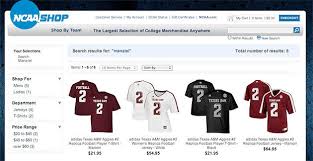
Yesterday, Jay Bilas pointed out the hypocrisy that has been occurring in the NCAA for quite some time. He tweeted screenshots of the official NCAA online store, that allows you to search the name of a player and actually displays matching results. So, if you type in Manziel, a Texas A&M #2 jersey comes up.
Ruh-roh.
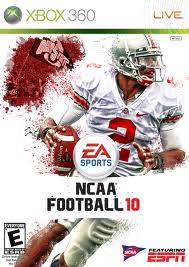
To really drive the point home, the NCAA has repeatedly stated it does not make a profit off a player’s name or likeness. Which doesn’t pass the straight-face test at all considering when I play an NCAA football video game and there’s a right-handed QB #7 under center for USC who has the same skill attributes, as say, oh, Matt Barkley.
So yes, this is a problem. Big problem.
An even bigger problem for the NCAA, which is in the midst of a lawsuit with former UCLA basketball star Ed O’Bannon that threatens to blow up their monopoly on making money off the athletes – even long after their amateurism ends. (Again, think video games, highlight videos, retro jersey sales).
Like anyone caught in the act, the NCAA turned off their search functionality by mid-day.
Too late.
On the other hand, you have the reigning Heisman Trophy winner dumb enough to be recorded doing a signing session and telling the broker to pretend it never happened.
Can all of these people actually be this dumb? Can the NCAA not have someone ensuring they are remaining compliant with their own claims? Can athletes who know the rules – especially in 2013, especially a Heisman Trophy winner already under fire – not be silly enough to break them.
Should college athletes be paid is a debate that has been going on for some time and will continue, but what cannot be debated is that currently, the rules don’t allow you to accept payment for your autograph, no matter what NCAAShop.com is doing.
At some point in time, it all made sense – student-athletes were just that. And for their time, effort and commitment in the extracurricular, they were awarded scholarships which paid for their school. But there was a tipping point, as there always is, where TV and merchandising made it painfully obvious that student-athletes weren’t really students first at these massive conference institutions.
Why?
Because TV pays lots and lots of money and the better you are the more you are on TV and the more merchandise and hype you sell. It’s fifty shades of green: from advertisers to broadcast media to colleges and universities to presidents and athletic directors and coaches.
This isn’t just an old building in need of refurbishment. This is like a apocalyptic movie where an entire major city is destroyed and only fragments remain.
If you think I’m being crazy and spouting hyperbole, you can read on and you will think again.
Imagine a world where college athletes could be treated more like free agents, or paid by schools or their conferences. Imagine a world without the NCAA tournaments or playoffs, where championships are driven completely by corporations and TV conglomerates who bid the highest amount to show the games.
Don’t believe that would ever happen? Why not?
What holds the NCAA together is member institutions. What happens when those institutions start breaking off. If conferences and universities can start creating their own networks – which they have, obviously – then they have already begun the process of removing the middle man.
We are only a few steps away from an agreement not between CBS and the NCAA, but between the Big Ten, Big XII and ACC and CBS. And as the conferences continue to re-align and grow into super conferences of schools who are good in multiple sports, there’s even more money to be had.
And where there’s more money to be had, there will be even more people with their hands grabbing for it.
So whether it’s the PED circus crushing baseball (and soon enough, the other major sports) or the shamatuerism of college athletics, the real question then isn’t going to be why, when or how. It will be: what’s next?
What lies beyond the end of the NCAA and the fall of non-professional sports seems less optimistic than what lies beyond PEDs. If history has taught us anything, what happens after the downfall ultimately determines the course of the future.

And where there are shades of green, there will be shades of gray. 

What do we do?

What can we do?


Standard
BCS, Bill Simmons, College Football, ESPN, Grantland.com, Jim Boeheim, NCAA, Syracuse, Texas Longhorns

The Dash for Cash Era

“A university is a college with a stadium seating over 40,000.” – Leonard Levinson
Not long ago, I wrote this little piece about the state of our priorities and how often sports blur the line between common sense and nonsense.
Turns out, I didn’t dig nearly deep enough.
The unequivocal fact is that it’s all about the money – in everything, everywhere, at all times.
Look at the recent events in college sports – from the scandals at Ohio State, Miami, Oregon and North Carolina to the conference carousel playing out amongst the major football schools.
It’s all about the money. It probably always has been. Just look at out own history, starting with the American Revolution – a bunch of people upset about being taxed, in essence.
Pink Floyd once told us it was about money and so did Gordon Gekko. We’re not listening very well. The only people who tell you money doesn’t buy happiness and that money is the root of all evil are poor people.
You think I’m being glib? You think money doesn’t swallow us up whole and we’re too blind to see it?
The film “Jerry Maguire” was a mega-money maker in 1996, for Cameron Crowe, for Tom Cruise, the studio and for Bruce Springsteen and his little secret garden song.
And when you really look at it, the plot wasn’t a love story or a budding relationship between a forgotten receiver and his agent – it was about money. 
Maguire lost it and got all touchy feely with his manifesto – and then lost his job. Immediately, he regretted this decision and wanted all his clients and Bob Sugar’s. Rod Tidwell was out for more money, the fictional Arizona Cardinals were out to save money. In some ways, Dorothy Boyd was even out for money, in order to protect her son and give him a better life.
That’s sports now and it’s not fictionalized. It’s defined by money.
It’s why Notre Dame is still an independent in football, because they have a ridiculous contract with NBC for all home games worth more than the Rockefeller’s probably gave in philanthropic endeavors.
It’s why Nebraska jumped to the Big Ten, why Colorado went to the Pac-10. And since college football makes the most money, it’s why college basketball has taken a backseat.
Don’t believe me? Then why are Syracuse and Pittsburgh joining the ACC? Hearing Jim Boeheim lament the end of the Big East Tournament and Madison Square Garden is just plain sad.
“We’re going to end up with mega-conferences and 10 years from now, either I’m going to be dead wrong – and I’ll be the first to admit it – or everybody is going to be like, why did we do this again?” Boeheim pondered during a speaking engagement in Alabama, according to the Birmingham News.
“Why is Alabama playing Texas A&M this week…why is Syracuse going to Miami?” he said.
As for Boeheim’s thoughts on why conference expansion is running rampant, he had a simple answer:
“If conference commissioners were the founding fathers of this country, we would have Guatemala, Uruguay and Argentina in the United States,” he said. “This audience knows why we are doing this. There’s two reasons: Money and football.”
Boeheim overstated it – it’s simply about the money. It just so happens that college football produces that money. And just to point this out, I’m wondering if Boeheim was speaking at an engagement that he was paid for.
I get the conferences pining over Texas, I really do. A recruiting hotbed, a traditional power and good at many other sports. The Longhorns are the belle of the conference shuffle ball.
But who on earth would want Texas A&M in any sport other than football? No one even cares about the Aggies until two months ago, suddenly, they put on a little make-up and broke up with their conference and now everyone’s lusting over them like they have Texas’ mega TV deal.
Colorado became a step-child in the Big XII, so they move to the Pac-10, bringing happy-go-lucky mid-major Utah (who’ve complained about the BCS for years) with them. How about an SEC with Texas A&M? How about a Pac-16 with Texas, Oklahoma, Oklahoma State and Texas Tech? Sure, why not.
We can’t get a college football playoff because of money.
Just understand this now: we will not get rid of the bowl system – too many schools make too such coin from bowl games. You will get the Weedeater.com Dip-o-Salsa Bowl and you will like it. Because that’s worth $5 million to the school.
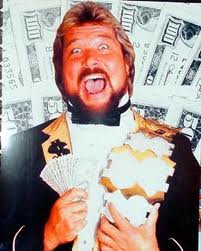
Can we just hire former WWF star Ted DiBiase to run around and throw money at everyone and laugh? Can the Million Dollar Belt be the true championship trophy? Can we stop pretending we care about student-athletes and their educations? 

We can’t bemoan their actions and deride them for taking cash from agents, selling merchandise or getting free tattoos when university presidents are doing this – making a dash for the cash.

Or apparently we can.
Do the schools use their money “earned” from bowl games on other things? Probably. Why do you think the presidents and professors even care about college football? Maybe it’s means to an end for them. They use a payout from a BCS bowl (since every team from an auto-qualifier conference gets a share) and use it to build a new library or academic hall or purchase beakers for science labs.
Then why haven’t we thrown out this question: maybe getting paid from an agent when in college is means to an end for the student-athlete. They have families in need, wants and desires, too.
Just like Texas probably doesn’t need another dorm or a new set of beakers for the science lab, a 19-year-old doesn’t need new rims on his Lincoln Navigator. But in both situations, each party is thinking: “Wouldn’t that be sweet to have, though?”
This is why money rules all: because of what it allows you to do. You have more choices and options. When all you can afford is Boone’s Farm, you don’t know how good the Henri Jayer Cros Parantoux is. Yet the result is still the same with both wines.
Professional sports, which are undeniably businesses and all about money, even make it more obvious it’s about the money.
The NFL’s owners wanted more money in the recent labor negotiations, got it, then got more of it with their recent TV deal with ESPN (conveniently finalized after the lockout).
The NBA owners just want their money back in the current labor negotiations after overspending on mediocre players for the last decade. When Samuel Dalembert is making $58 million over six years, I don’t blame him for signing that contract. I blame you and your moronic general manager.
What is a guy like Dalembert supposed to say, “No, no…that’s too much. I can’t accept. I’ve been less than mediocre and don’t deserve such a large sum of money”? If he didn’t have a pen when they offered that, I’m sure he cut his finger to sign it in his own blood.
And where does the “Dash for Cash” leave us, the fans?
Truth is, I don’t know. We really only have ourselves to blame. We play into it, just as much as anyone. We buy the tickets, the jerseys, the cups, hats and video games.
But we’re the only ones not getting paid in this.
We go to our “normal” jobs, try to earn raises so that we can afford tickets to the Super Bowl or an All-Star Game just to basically say we were there. We buy flatscreens the width of our living room walls so we can see better since we can’t afford the games in person. Yet the more money we feed the system, the more it messes with our traditions.
Rivalries die, uniforms change, winning means everything. And then we pretend to care when we found out you were cheating when you won. And we buy the hype. We’re drones, taking what they give us.
We’re feeding the beast and it’s swallowing us whole.  
Maybe right now, you’re shaking your head in agreement. Maybe you think I’m full of it – and there is still pride in sports, that honor and integrity exist above the checks.
But if I offered you a $100 to come back and read this blog next week, most of you would do it.
If I offered you $1,000 to comment, you’d do it.
And if I offered you $10,000 to write 10 e-mails, tweets or Facebook messages to Bill Simmons begging him to give me a job at Grantland.com, you’d do it. Whether you thought I was a decent writer or not.
All because I showed you the money. 

Now who is being glib?

Standard
College Football, Miami Hurricanes, NCAA, Nevin Shapiro, Ohio State

A House of Cards

Yet again, another sordid scandal plagues college football. Another powerhouse accused of non-compliance. Another messy saga for a sport that, as much as we seem to love it, is as warped and seedy as 1920s politics.
But instead of one Boss Tweed, we’ve got thousands.
On the heels of Ohio State’s players trading memorabilia for tattoos, and former coach Jim Tressel knowing about it all along, comes the predictable scandal at the University of Miami.
Predictable because if there’s trouble, The U can find it like it’s players can the NFL.
Basically, a booster with a money tree showered athletes with all kinds of gifts and lots of people knew about it.
By law, I think I’m required to restate the accusations in the Yahoo! Sports report just so you can be stunned at the sheer stupidity of it all. So here we go…
Former Miami booster, Nevin Shapiro, who surprisingly is serving a 20-year prison sentence for masterminding a $930 million Ponzi scheme, says he gave impermissible benefits to 72 of the university’s football players – as well as other athletes – between 2002 and 2010.
These impermissible benefits include: money (and lots of it), cars, yacht trips, jewelry, televisions, sex parties and meals. Shapiro says he paid for an abortion for one player and an engagement ring for another.
The list of players include a who’s who of Miami’s all-stars over the past decade: Vince Wilfork, Devin Hester, Willis McGahee, Antrel Rolle, Jon Beason, Jonathon Vilma, Tyrone Moss, current quarterback Jacory Harris and the late Sean Taylor.
Allegedly, at least six coaches and as many as 10 employees of the athletic department were aware of Shapiro and his salacious activities.
“Hell yeah, I recruited a lot of kids for Miami,” Shapiro said. “With access to the clubs, access to the strip joints. My house. My boat. We’re talking about high school football players. Not anybody can just get into the clubs or strip joints. Who is going to pay for it and make it happen? That was me.”
Don’t think you can believe a convicted Ponzi schemer? Fine. Perhaps you’ll believe the 100-plus hours of research and verification done by Yahoo! Sports on the report over 11 months.
“I did it because I could,” Shapiro said. “And because nobody stepped in to stop me.”
Granted, Shapiro comes off in the report like a pathetic wannabe, a jock sniffer who actually thought he was friends with these athletes, not because of the money and services he provided them, but because they liked him. So he’s mad that they’ve distanced themselves from him and it’s payback time.
But without question, there’s a bigger problem that yet another scumbag getting his hands on a major university and it’s football program.
There is a problem with the ethics and morals of the athletes, to some degree. And there’s certainly a problem with the morals and ethics of those in the athletic departments and coaching staffs.
I’m tired of people claiming you can’t blame an 18-year-old for taking money, cars and clothes. You can.
We need to come up with some sort of definitive answer on where we stand with 18-year-olds. They can vote. They can fight for our country and hold a gun. But they can’t know right from wrong and not take payments from boosters? How many times do we have to go over this?
Would I take the money? Even at 18, I honestly don’t think so. But I don’t really know. I’m not 18 anymore. I would have been terrified of getting caught. I would have been shamed beyond belief if my parents found out.
But that’s not fair. I’m not them. None of us are. We don’t know the circumstances or the pressures. So it doesn’t matter what we would do. What matters is what all these so called student-athletes are doing. It isn’t 1965. We can’t continue to sweep this under the rug. Because no matter who is to blame, it’s not OK.
There are rules and they are there for a reason. College athletics are not professional. You are not paid to play. You receive a free college education. There is a trade off.
We have rules to keep us all in check. We’re only as good as the honor we have in upholding them and the justice system that punishes for breaking them. For example, if I run a red light or speed, it’s a risk. Ten years ago, you could run a red light and without the police there at the time, you wouldn’t be caught or punished. Now, nearly every stoplight has a camera. They will find you. And you will pay.
Except the very people who set the rules, enforce them and support them don’t seem to see the hypocrisy of what they do.
A corrupt BCS system has followed a corrupt bowl system. Athletes are given bags of “swag” with tons of valuable goodies for going to bowl games, but can’t have a job in order to have gas money. Schools are jumping conferences all in the name of exposure and money, but don’t let Tim Tebow see a dime of millions earned from selling his No. 15 Florida Gators jersey or having his likeness appear on the cover of a video game.
The University of Texas can threaten to bolt the Big XII only to stay because they are given their own TV channel, but student-athletes don’t have negotiating rights, of any kind. 

So let’s be real – we lost the whole student-athlete part a long time ago.

Even though 90 percent of athletes won’t play professional sports, it’s the 10 percent who do that get all the attention. Even though the BCS only affects 10 percent of college football teams, it gets all our attention.
The NCAA can have all the corporate partners it wants, get money for exploiting college athletics, but it won’t allow for a per diem larger than a McDonald’s happy meal. Schools can have corporate partners, conferences get TV deals and coaches can earn a million dollars per year, yet they all say it’s about growing young men and women and working with student-athletes.
No, no it’s not. It’s about wins. It’s about championships. It’s about your school’s brand. It’s about money.
The NCAA is the very definition of hypocrisy. From university presidents to coaches, boosters to athletes, the entire college football system is about as shady as an oak tree. And it’s everywhere.
Miami is just the latest school in a long line of NCAA investigations involving college football and some of its most successful programs. In just the past 18 months, USC, Ohio State, Auburn, Oregon, Michigan, North Carolina, Georgia Tech and LSU have either been investigated or sanctioned for infractions. There are too many to list over just the past decade.
So if you think this is going away, keep telling yourself that. Keep that oblivious attitude. Stick your head in the sand, join the crowd. Join the NCAA in it’s ridiculous attempt and revisionism. Crack jokes about them making schools vacate wins and championships.
Or, for once, everyone could grow a spine and do what’s needed.
We need to blow up the NCAA and it’s rule book.
Figuratively, of course.
The NCAA is a house of cards, built by revisionists who stick their heads in the sand, investigate when someone blows a whistle and hand out death penalties. A death penalty for Miami won’t teach the next school a lesson – because it’s already happening somewhere else.
We have rules to check us all in check. We’re only as good as the honor we have in upholding them and the justice system. If I run a red light or speed, it’s a risk. Ten years ago, you could run a red light and without the police there at the time, you wouldn’t be caught or punished. Now, nearly every stoplight has a camera. They will find you. And you will pay the ticket. Do it too many times, you lose your license.
So blow it up. All of it. Rewrite the rules for modern times.
I don’t want them to pay student-athletes and I don’t think that will fix the larger issue. But maybe it’s worth a shot to really look into it.
Get the agents out of college athletics. I don’t care how, but do it. Make it a federal offense to give money to a student-athlete. Make it a jailable offense to take money from a booster or an agent or anyone as a student-athlete. We have to start making them feel it, too. Just because you are now in the NFL doesn’t mean you shouldn’t be punished. Perhaps schools who get hit three times have to give up all college athletics for five years.
It’s time to wash the system clean, a baptism of sorts. Hit restart and build the NCAA around what’s real, what works and still manages to build integrity, honor and reward the talented, hard-working student-athletes the right way.
Maybe these are terrible ideas. But they are at least ideas. What does it take to make sweeping changes, because my head isn’t buried in the sand.  
Is yours?
Better yet, is the NCAAs?

If so, let the cards fall where they may.

Standard
NCAA, Ohio State, Terrelle Pryor

Gray’s Anatomy

There was a time I was sympathetic and understanding to different situations that occurred in sports that really had no bearing on my life whatsoever. In my late teens and 20s, I’d see a college athlete get nailed for taking money under the table and think, “I can see why that guy just wants to get some pizza and beer money.”
It was a violation of the rules, but I kind of thought those rules were stupid.
Rules made by university presidents who pocket six figure salaries mostly built around college athletics. How out of touch were they? Bow-ties and banquet halls.
There’s a great line in the 1993 movie, “The Program”, where James Caan (as the head coach of fictional university ESU) explains to the board, “When was the last time you saw 70,000 people come to watch a damn chemistry experiment?” And it was true. Still is.
Perhaps, in a larger sense, our priorities are out-of-whack, but nonetheless, they are established by now.
About six months ago, a diehard Alabama fan called into a sports talk show and made the statement that he had poisoned the legendary Toomer Trees at Auburn. He ended his crazy rant with “Roll Damn Tide!” He claims it wasn’t him, it was a man sitting next to him that did it and he just repeated it on the radio in anger because of all the Auburn fans gloating over winning the national championship. Alabama coach Nick Saban and others donated money to try and save the trees and offer support.
They are trees for crying out loud. We kill millions for paper every year. But they are revered in Auburn like Boston fans worship the Green Monster in Fenway.
One hundred million watch the Super Bowl, but the number of people who voted in the last election does not even come close to that number.
These are our priorities. We are who we are. We like sports a hell of a lot more than we do economics, chemistry and healthcare mandates. The evening news doesn’t interrupt sporting events, it gets pushed back to 11:55.
For further proof, look at the 1994 NBA Finals. The famous O.J. Simpson chase was split-screened with the New York Knicks-Houston Rockets game. Even the news, when worthy enough to interrupt our sports fetish, is about sports in a way. The only reason people cared about a man who’s wife had been murdered going on the lamb was because the man was famed running back O.J. Simpson, an NFL Hall of Famer and former Heisman Trophy winner.
I grew up in the 1990s, so as a 13-year-old, I saw “The Program” in the theaters – with my parents. There was a scene that was cut from the movie – where a bunch of teammates, drunk, lay in the middle of the road as cars go flying by, inches from their bodies. My parents were horried.
I found it crazy – but also, as a budding athlete, saw the subtle point the scene was making. Athletes will do anything to reduce fear.
There were various scenes where the star quarterback, Joe Kane (an alcoholic with zero family support) did crazy things like stand in front of an oncoming train before moving at the last second and race his motorcycle around some sort of quarry at ridiculous speeds. Kane even tells his girlfriend the same thing: he does it to maintain his edge. His teammates look to him as the leader, he was a Heisman candidate for a national title contender, so these stunts help him blow off steam and look fearless.
There’s just a whole different mindset to being an athlete, a former athlete and a passionate fan that others cannot understand.
That said, I’m older now. I’ve got a wife, three children with a fourth on the way and a mortgage. My tolerance level for certain things in sports has dropped.
So when I heard the news last night that Ohio State quarterback Terrelle Pryor was leaving school amid the scandal that cost his coach his job, after new accusations that Pryor made thousands of dollars for signed memorabilia, I just changed the channel. You become numb to it at some point, like you would anything else that seems to happen all the time – you stop reacting.
That is, unless you are the NCAA. Rules are rules, no doubt. My wife and I preach integrity to our oldest, who plays three sports. I want him to know and follow the rules. But now those that comply and follow NCAA guidelines are an anomaly, not the norm.
I go back and forth on it all the time. I do not like the idea of paying college athletes, who are already getting paid in the form of a free education. On the other hand, those athletes make more money for the school in one game than the rest of the student body will give back in the form of alumni donations for 10 years after they graduate.
The NCAA markets and sells jerseys with specific numbers on them, like Pryor’s No. 2 Ohio State jersey, but he will see nothing of that revenue. The only reason the jersey sells is because it’s his number.
The NCAA basically violates its own moral code in this regard constantly. Do not take any free food or clothes – but the bowl games you play in can give you $300 sunglasses, an X-Box 360 and a Gucci dufflebag.
The NCAA tries to pretend events do not happen – nearly a decade later. Remember Michigan’s Fab Five and their consecutive Final Four appearances in 1992-93? Well, you can’t remember that; the NCAA says that they didn’t exist after finding that a booster gave cash to players.
How about USC’s national title that was just revoked by the BCS (a hypocrisy itself)? No, you did not watch USC smoke Oklahoma 55-19. It didn’t happen – there was no winner that year. At least, that’s what the BCS determined after the fallout from the Reggie Bush scandal. Since Bush was ruled ineligible by the NCAA, those games don’t count. Bush is being viewed along the same lines as a performance enhancing drug. He cheated.
We’re dealing with varying shades of gray here. Is what Bush did against the rules? Yes, it was. Did it affect his play that his parents got a house? I would guess not, but who’s to say. Did it make him attend USC in the first place? I cannot answer that – I guess it could have.
But you start dabbling in these shades of gray and what’s right and fair and wrong and illegal become so intertwined and blurred, it feels like vertigo. What if Major League Baseball said that since players on winning teams used steroids, there were no World Series champions from roughly 1997-2005?
What? What the hell does that mean? I was there! I saw it happen! If the pitchers were juicing and the hitters were juicing, can we just call it a wash? Are the fans with 2004 Red Sox championship t-shirts or USC fans with championship hats suddenly going to disappear like the newspaper headlines in “Back to the Future”?
As a society, we can’t rewrite history. We can’t undo slavery in America, it’s there. You cannot undo what’s already been done.
This does not excuse Pryor or his greed and stupidity. One of Pryor’s friends told ESPN that Pryor was paid $500-$1,000 each time he signed a mini-football helmet, as well as other gear, for a total of somewhere between $20,000-$40,000. The source also said Pryor received thousands of dollars in free food at local restaurants around Columbus, Ohio, free drinks at bars, free tattoos and free loaner cars from local dealerships.
I’m guessing Pryor did not do all that to be a fearless leader of his team or to blow off steam. And that’s a little more than just money for pizza and beer.
It does not excuse hundreds of similar actions by athletes and coaches over the years in the shady dealings of pay for play. But we can’t just keep pretending it is going to change, that the rules are rules forever and cannot be modified.
And we have to stop pretending like what happens on the field is erased from our minds just because it’s stricken from a record book.
We have priorities, and like it or not, sports are a big part of them. How these situations are handled actually says more about us than we care to admit.
After all, when was the last time 70,000 people showed up to watch someone grade a chemistry experiment?
Standard