American culture, American People., Culture, faith, family, Life, Logic, motivation, philosphy, pop culture, psychology, Society & Culture, Sports, Uncategorized

We Hope for Baseball

Image result for baseball

The collective emotional roller coaster our homes, communities, states, nations and world have experience over the past week cannot be quantified with words.

But damn if it’s not like me to try. Leave it to a pandemic for me to sit down and type my first entry in so long I cannot recall.

The world around us moved so fast last Wednesday that it seemed unreal. The NBA was suspending its season?

Huh.

Thursday saw universities shuttered, college basketball conference tournaments cancelled, high schools move to eLearning.

Um, what?

Friday felt like the bottom fell out, the cancellation of the NCAA Tournament, a new kind of March Madness. Spring sports cancelled – including the College World Series in June – throwing eligibility questions and team rosters for the 2020-21 season into a quagmire that didn’t feel so giggity giggity.

And we thought the news was all filled with doom and gloom before?

I told my wife Friday afternoon that my brain hurt. I couldn’t comprehend much more that day, think of any more angles to cover or next steps after the next steps. I needed wine tequila and a hoodie.

2020 will be forever remembered as when “Social Distancing” became apart of the American lexicon, when everyone from the age of two to 92 could recite proper hand washing protocols.

It will be remembered when we learned everything in our economy is connected, that an essential freeze halted us in our tracks. We quarantined, we worked from home. We overreacted, we under-reacted.

We hoarded toilet paper.

Everything has effectively been put on hold. Youth sports, book clubs. Going out to dinner, a family cookout with grandparents. Spring break. Every Disney Park closed for weeks, every zoo and museum closed. No choir concerts, no parades, no church in person, no events really of any kind.

Everything. Has. Stopped.

But have we learned?

Nothing we didn’t already know.

That faith, hope and love are some good things He gave us, and while the greatest is love, the most important might be hope.

We need to hope we can get back to normal before July. Before June.

We’re holding out hope for high school baseball in our home state. My son, a senior, is a part of a team that won a state championship last season. His friends from his travel teams, scattered across the state, all want the chance to play before college. Most won’t get a chance to play in college, but it is not about that specifically.

It’s about Senior Night. It’s about Prom. It’s about hearing your name called for the final time. Crossing the stage with a diploma at graduation and graduation parties of definitely more than 10 people.

It’s about all we’ve taken for granted. The commute to work filled with podcasts that have fresh content about sports, movies, politics, whatever. Seeing our co-workers, sitting face-to-face in meetings, teaching in a classroom filled with people.

It’s been merely a week, and even the introverts like me don’t think we really understood how significant social distancing could be to the fabric of what it is to be American.

Maybe this is a chance to re-learn, to re-think the daily life and throw our routines out of whack. Are we adaptable? Are we unbeatable? Can we turn a negative, a 100 negatives, into a positive? Are we just catch phrases, or can we rise to the challenge and endure?

We’re always taking about how busy we are (I’m looking at, well, all of us).

Well, how about now? Time to read. Time to listen. Time to think. To take a walk. To get to know our spouses and kids again. To find a way to serve a purpose greater than ourselves.

Maybe this is our wake-up call.

What is truly important, and what is not.

Sure, we’ve clung tight to family. Personally, we haven’t turned into The Shining family around here…yet. And we appreciate our home, our jobs, our friends and our freedoms.

But hope, man.

Hope might be the most fascinatingly human emotion there has ever been. And we need it more than ever.

No matter your beliefs, your political allegiances, whether you call this a hoax or are digging your doomsday bunker as I type, this is history happening for better of worse in real time.

It is a stark reminder we are not in control, not even a little bit, not even at all. But like any good book or movie (that we’ve all probably re-watched or re-read three times by now), hope is a good thing.

It could be the hope we’ll stop losing our ever-loving minds. Hope that those who aren’t taking it serious will wake up to the fact that COVID-19 is a bit more threatening than we thought a week ago, or even a day ago.

Hope is why Hallmark is running Christmas movies in March. It’s why Disney+ put Frozen II up months before they were supposed to. It is why classic sports re-runs are a welcome distraction. Why Tom Brady going to Tampa Bay and leaving New England was something else to talk about for a few hours.

Because we do not know where this going. We do not know the impact on the economy, on our jobs, on our daily lives yet. And we won’t fully for some time.

But we hope.

We hope for the sick, we hope for the cure, for strong leadership, for our friends, for our industries, for our kids.

We hope for an appreciation of the life we lived two weeks ago and for a future that might be close to it.

So, yes, we hope for baseball in this house. And we hold out that hope, because without it, well, it just makes the brain hurt.

Stay safe. Stay informed. Stay good to each other.

Stay hopeful.
Standard
American culture, motivation, psychology, Society

Why I’m Happy to be a Human Body Pillow


This past Saturday, my eyes opened due to a horrible muscle spasm firing through my back as my body revolted due to the position it was in – which was basically a backwards question mark. 
This might be a good time to point out that my body wasn’t in this position voluntarily. 
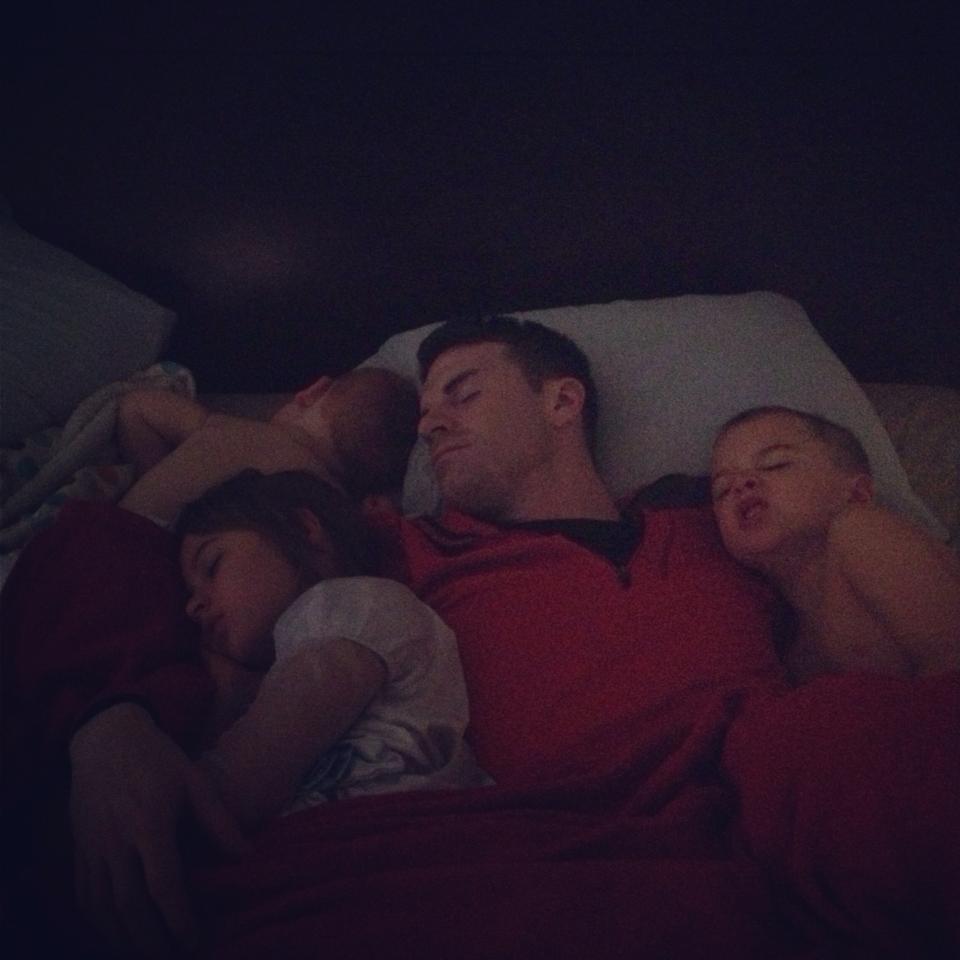
Our seven-year-old daughter had nestled into one side of my body, our four-year-old son the other – and somehow – at an angle across the top of my head, was our red-haired 18-month-old son (see visual evidence captured by my wife in the photo at right).
I had become a body pillow.
Not exactly what I pictured myself growing up to become as a young boy.
~~~~~~~~~~~~~~~~~~~~~~~~~~~~~~~~~~
It occurred to me recently that the world is filled with irony.
We’re not really evolving as a culture or a society, and mainly because we’ve been duped (we’re easily tricked, frankly). The longer we live, the more we forget the point of living.
You start out as a young child with hopes, dreams and aspirations of doing great things in the world. You play, explore, learn, imagine, dream, draw, paint, color, love. You find what you like, a game, a book, a friend – and you throw yourself into it. There is no set agenda, no one way of doing things, no orderly fashion to life – which allows aspirations of what you want to do seem less like hopes and wishes and more like “someday” possibilities.
Slowly, we become task masters. We get our schoolwork done on time; we go here, we go there, we act like everyone else. And we’re led to believe that acting like everyone else is exactly what we are supposed to do – because being like everybody else means you’re accepted as one of a civilized society.
So you become more focused on what you can realistically do, given a variety of factors like where you live, gender, race, religion, intellect, aptitude. You begin to place things in a box. Instead of asking why, as we did when we were young and curious, we start focusing on the how.
Once we stop asking why, the how doesn’t really even matter.
We’ve become a world of task checkers and project managers: once one thing is complete, check it off the list and it’s on to the next thing. I’ve been terribly guilty of this. It removes spontaneity. It removes the wonder. It removes the why.
How do I pay my bills? How do I make dinner, give the kids a bath, get my work done, mow the lawn, help with homework and still have time for my spouse? How do I have time for my friends? How can I be in three places at once? How am I so busy?
This task-oriented action is what drives us around and around, day after day, year after year. And we go around and around until someone tells us we can stop, or a bank account verifies it, a some point much later in life.
And suddenly, in our advancing age, it will occur to us, as we have nothing but time and no tasks, that we were asking how instead of why. We spent our lives asking the wrong questions.
Why did I do so much to pay so many bills? Why did I do what the world told me to do? Why don’t I know how to operate without a To Do list? Why don’t I give more time to my spouse and children? Why did all those arbitrary deadline matter so much? Why did the grass need to be mowed so much? Why do I need be in three places at once? Why did I allow myself to be so busy, so bothered, so stressed?
Forget the To Do lists. They serve no purpose than from keeping us from doing what we were meant to do. 
We’re led to believe that this task master lifestyle is accomplishment. Of what, exactly?  We think we’re getting things done, but we’re not. We think we’re working hard, because why? Is all work hard? Should it be? We even love to talk about how hard we work as a society. Good for us! We’re the best worker bees out there!
And we’re completely missing the point. For the record, I don’t know what the point is either, I wouldn’t pretend to.
But I’m always learning more about what it is not. Turns out, I’ve actually become much of what I always wanted to be, all because I’ve been given the chance to be a husband and a father of four.
I am a poet, a writer, a reader, a thinker. I am a historian, an artist, an actor. I am a pirate, a doctor, a cook, a mechanic. I am Santa Claus. I am a coach, a tour guide, a guardian, a granter of wishes.
In a way, I became more than I ever could hope for.
I am a human body pillow.
And the question isn’t how, but why.
Scratch that. The question is…why not?
Standard
Dr. Seuss, Eric Holder, John Brennan, motivation, Rand Paul, Society, Theodor Geisel, United States Senate

Unless


On Wednesday, John Brennan was all set to be confirmed as the new director of the Central Intelligence Agency (CIA) by the United States Senate.
Unless.
Unless someone did something.
And just before lunch, someone did, as Kentucky Senator Rand Paul took the floor and announced he was beginning a filibuster to bring light to recent comments by Attorney General Eric Holder regarding the dangers of drone strikes on U.S. citizens.
“I will speak until I can no longer speak”, he said. “I will speak as long as it takes…”
When Paul finally yielded the floor – over 12 hours later – realistically, he had not changed much. Delaying the inevitable, really. Brennan will still most likely be confirmed, possibly this weekend, and the discussion on drone strikes will fall back out of the public eye.
Unless.
Unless Paul did something just a little bit more than provide a speed bump to the legislative agenda of the Senate on a random Wednesday. Maybe he sparked an interest group to pick up the mantle and seek further dialogue with the White House on the matter. Maybe some journalist will write an expose on drones. Maybe he educated another 10 percent of the population on what the threat of a drone strike even was.
The point isn’t necessary what happens in the future, but that something happened in the now. Paul got attention – and then he used it for something. It doesn’t necessarily matter what the something was, or if you agree with it or like it. It doesn’t particularly matter if you like Paul or his politics or the filibuster tactic in general.
The world has changed so rapidly that time indeed feels like it moves faster to us, even though it doesn’t. We often remark how life moves at a faster pace than it once did. When I was a child, it seemed like the years were two or three times as long as they are now. Is it because my sample size was so small? Or is it because I actually remember so much? Naturally, we remember days and events when they are distinct and unique. It’s what, you know, makes them, well…memorable.
Early life is filled with firsts. First time you learned to read, first time a friend spent the night. A first game. The first time you saw your favorite movie or heard that song. Your first kiss. Your first heartbreak. The first time you saw your spouse. The first time a loved one died, the first time you held your child.
What I’ve realized is this world needs more firsts.
It’s the repetition that dulls the effect. We’re all just so busy now, with jobs, kids, appointments and soccer games, homework and functions. Pretty soon, we’ll look up and it will be Christmas season again and we’ll think to ourselves “where did this year go?”
Before we know it, a decade will have passed. And we often discuss doing something more, something different. Have you ever noticed it’s always in the future?
Oh, I’ll have time for the kids when my job slows down” or “We’ll pay down our debt once we get promotions at work.”
Notice how these statements contradict each other? You can’t earn more money and see your family and friends more in modern America. There just aren’t enough hours in the day, right?
Except there are. There are just as many hours in the day for us as there was for Socrates, Lincoln, Da Vinci, Einstein, Disney, Jobs, Jordan. It’s all in how we spend it. We get so lost thinking about what we could do that we have forgotten completely about what we are doing. We’re not in the present, we’re in the past and the future while in the present. Our bodies are here, our minds are in 1999 and 2021.
Which means, simply, we’re wasting our nows by thinking about what we didn’t do before and what will do tomorrow. Tomorrow will be yesterday soon enough. Be passionate, purposeful and provocative with your time. If everyday looks the same, it’s because it is, which kind of completely the opposite of the point. Life is constant motion and growth. If we’re not eliciting that feeling within ourselves that we had during our younger days, then we don’t have enough motion and growth.
There is no grand finale. Death is the opposite of birth; life itself really has no opposite. The point of it is not for me to say. I can’t tell you what to do. It’s not my place and I’m not qualified in the least bit. I don’t even want to look underneath my own hood sometimes and examine what goes on in this brain.
But I do know that if nothing changes, then nothing changes.
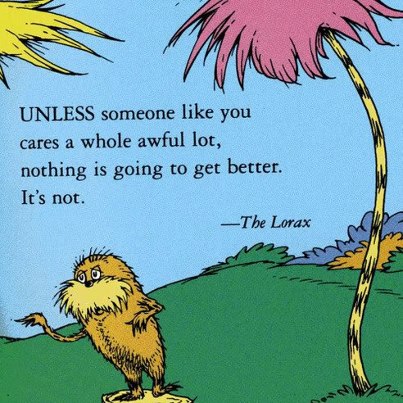
At least Rand Paul stood up and talked about something. Yesterday wasn’t just another day in the U.S. Senate. Paul got attention and he used it to passionately push for change. He did something with the moment and I immediately connected it with the famous line from Dr. Seuss’ “The Lorax”: “Unless someone like you cares a whole, awful lot, nothing is going to get better. It’s not.”
Dr. Seuss was the pen name of Theodor Geisel, and both were perfectionists. Geisel reportedly threw out 95 percent of the material he wrote until he had settled on a theme. He preferred to be paid when his material had been handed in – a rarity in writing, as most are paid in advance. His first book was rejected 27 times.
But Geisel wanted to make the world a better place and found that he could do it by infecting common ideals that we could all agree on in fun, easy to read ways. He ended up helping millions of young children learn to read with his strange vocabulary, colorful and unique drawings and deeply thought provoking messages, usually around humanity and how we treat one another.
In other words, a morality play – kind of like this.
Nevertheless, Seuss’ books were morality plays that you and I remember. A voice, a message that stands out. Unique.
But we cannot tell what the overall message is anymore because it’s all jumbled together. If no voice stands out, it’s just noise. That’s why our days and years are getting mangled and tangled. We’re not empowering ourselves, we’re just running out the clock. We haven’t made our voice heard. We haven’t delivered that message that resonates. Each day looks and feels the same because, well, it kind of is.
Unless.
Unless we change it. Unless we prioritize and maximize and stop talking about when. I want my days busting with so much activity, either mental or physical, that when I’m 95, I’m ready to go because I’ll having nothing left in the tank. I’ll be done. Live forever? How about live for now?
So individually we can’t solve it all, but we the journey has to start somewhere. Can’t solve world hunger by yourself, but you could donate to a food pantry. Can’t fix a broken relationship or friendship in one day, but it could start with an apology. Can’t fix stop the nomination of a new CIA Director, but can bring light to an issue of importance to the American people.
Speak until we can no longer speak.
Unless.
Unless we’re all OK with this life we’ve created for ourselves. Unless we’re OK with our income, our jobs, our family time, our government, our tax rate, our foreign policy, our society, our faith, our health. Unless we’re just OK with everything.
If nothing changes, then nothing changes.
Unless.
Unless we care a whole, awful lot.
Standard
Allan Watts, American culture, Bill Self, da Vinci, Michael Jordan, motivation, NCAA College Basketball, Seth Davis, Shaka Smart, Thomas Edison, VCU

"Wake Up the Space"


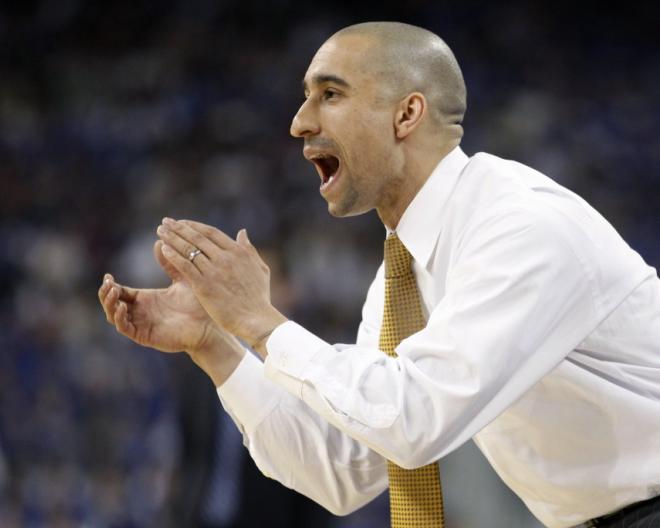
Around Thanksgiving, VCU men’s basketball coach Shaka Smart could feel it.
Energy.
Smart was following his team onto the practice court in the Bahamas prior to the start of the early season Battle 4 Atlantis Tournament. VCU, always the underdog, was preparing to play in tournament filled with ranked and well-regarded teams like Memphis, Duke and Missouri. As in the past, VCU faced a tall order in taking on college basketball giants and super conference staples.
This was the kind of challenge the coach and his players lived for, and they had proven their mettle many times over, as NCAA Tournament darlings in 2011 and 2012, when the Rams advanced much further than expected by analysts. In 2011, as an 11-seed, they became the first team to play in the early “play-in” games to win five games and advance to the Final Four after toppling giants Kansas, Georgetown and Purdue.
So nothing about this stage was new to Smart or VCU. That’s why as the Rams made their way onto the floor in the Caribbean last fall, shouting, chanting and bouncing around, it brought a wry smile to Smart’s face.
“Let’s wake up the space!” he shouted.
As Sports Illustrated basketball guru Seth Davis has said, it’s one of my favorite sayings because of what it implies: make your presence known in the area and space around you with energy, enthusiasm and positivity. Do something unique and different.
Smart has done that, not just in his journey as coach at VCU, but also by bucking every notable trend in sports and turning down the steady flow of cash from the major conference schools who’ve courted him the past several years to stay at the school, which until joining the Atlantic-10 conference this season, played in the Colonial Athletic Association.
In other words, Smart decided to wake up the space of college basketball by staying at VCU. So many coaches have left the smaller programs for the bigger ones and look flat-out miserable in doing so. Don’t get me wrong, there’s great honor and tradition at places like UCLA, Kansas, North Carolina, Duke and Indiana.
But if you think Bill Self, who left Illinois for Kansas about 10 years ago, is happy this morning following last night’s massive debacle against TCU, I can assure you he’s not. He called his team the “worst” Kansas has ever put on a basketball floor. Now, he’s certainly attempting to motivate his team before the stretch run and it is unlikely he actually means it. Nor, I would assume, does Self necessarily regret taking the Kansas job – he’s been highly successful and won the 2008 National Championship.
Yet the point remains: what is happiness? What do we desire? What is our passion? What do we trade off each day in order to do what we think we must instead of what we should?
This does not just apply to men’s college basketball or sports. (And yes, that’s your official warning I’m about to get into the recess of your brain and make you think.)
The entirety of human existence and interaction, our American culture and government, our families – everything. Why do we sell out and sell ourselves short? Why do we conform?
Why is it so odd to us that someone like Smart didn’t take the money, the fame, the pressure and the challenge? Why do we see the Illinois job as a bigger challenge or more prestigious than building VCU into a basketball power from a small conference? Because every assumes or acknowledges it to be so? Who is everyone? Former coaches, analysts and players who couldn’t make it as far as Self?
We spend a lot of time critiquing those who do it better, instead of learning to carve our own niche.
Someone shared with me the other day a video by Allan Watts, a British-born philosopher, writer and speaker, who basically broke down Eastern philosophies for Western society in understandable ways. He theorized and spoke often about this very thing.
We’re in a bad way, as a culture and society. Current and recent events simply serve as reinforcement to this truth. And our best chance of change, hope and shifting our current individual and collective paths are those four words by Shaka Smart.
In all of human accomplishment, we have ignored what we were told could not be done or should not be done and pressed on. Why? The word impossible should not exist because we cannot completely ever prove such a thing. Oh, we have data and research and historical precedent, but the future is not known; we write our individual and collective stories with each passing day.
So the world was flat, eh? We couldn’t possibly escape the clutches of Great Britain’s massive empire? It looked like Hitler could not be defeated before World War II. How could we possibly travel to the moon? You want to build a place in space to dock a vessel, refuel and have someone stay for months at a time? Sure, we’ll call it the International Space Station.
People used to die from the common cold, now we don’t miss a day of work. We’ll always have to go outside to a shed to use the restroom. The only way to cross water is on a boat? Tell that to the Brooklyn Bridge, the Golden Gate Bridge and the Panama Canal. What about the radio, the television, the microscope, the cellular phone, the personal computer, the internet, glasses, airplanes, cars, GPS, electricity, the light bulb, the Sistine Chapel, penicillin, vaccines, supplements and 3-D?
And so VCU was told it was impossible to advance – from the CAA, from a “play-in” game, from the 11-seed – to the Final Four. But VCU said they could. There was data to prove this theory and any evidence to the contrary looked foolish. But Smart and his team woke up the space, changed the data, wrote a new chapter in history.
Tell me again why we can’t cure cancer? Why someone won’t break some sports record? Why we can’t travel through time? Why we cannot eliminate world hunger or tackle every issue facing our society and government today?
We cannot because we don’t wake up the space. We don’t break free of our set way of thinking that someone else can do it, but I cannot. The only difference between you and that other person is they didn’t stop believing, didn’t stop chasing their passion and didn’t listen to others who had also stopped dreaming.
This is what my wife and I constantly try to remind our children. Some days I’m certain we fail and use the world can’t or shouldn’t. But we try.
Our oldest son, who’s 11, wants to play college and professional baseball. I do not know whether this will happen or not. Many others have this dream and few make it. Are the odds long, the chances small? Of course they are. Will it take extraordinary dedication, effort, persistence and sacrifice? Most certainly.
But it’s not impossible and we will never tell him so, even if everyone else around thinks it’s a pointless endeavor and unrealistic. You know what? We make our reality, that’s what it’s realistic. We will do our best to make sure our four children grow up believing that nothing is impossible and they can do anything.
Can you imagine a world different than the way it is now?
What if Edison had believed all those who said it was a waste of time to fiddle around with creating light, who told him he was playing God and it was morally wrong to do such a thing? Think of a world where Shakespeare was told to stop writing, da Vinci painting, Mother Theresa giving, Michael Jordan from shooting a basketball.
Throughout time, humans have reached a point where they stopped seeing what was and imagined what could be. Take indoor plumbing: Basically, someone got tired of going outside in the cold, the rain, the wind, to, well…you know.
We should follow our passions, our inspirations. But the vast majority don’t because we’re stuck in believing that we must have money, and having money to survive and pay for the things we need means doing things we don’t like. But do we need all that we have or want, or do they serve as placeholders and soothing agents to what we gave up in the first place?
As Watts said, “you will spend your life completely wasting your time. You’ll be doing things you don’t like doing in order to go on living – that is to go on doing things you don’t like doing – which is stupid. Better to have short life, that is full of what you like doing, than a long life spent in a miserable way.”
And as he further elaborates, really, we just perpetuate the cycle, educating our children to live the same kind of way we do – ripping away the ability to dream. We’re making drones, worker bees. And none of us want that. But do we have the want to want it bad enough to be different?
So let’s begin to change it, ourselves, in whatever ways we can.
What do we want to do most? What passions do we have? Where does your energy reside? How do you let the world know you’re here?
Can you feel it?
Let’s wake up the space.
Standard