
American culture, American People., Culture, Media, Philosophy, Technology, United States

Epilogue

see

“It’s not what you look at that matters, it’s what you see.” – Henry David Thoreau

Several weeks ago, my oldest child turned and asked me a question I’ve been secretly asking myself for months.

“Why haven’t you written anything lately, Dad?”

I stared blankly back at him, my mind firing off excuses – and truths – as to why I had not done any writing since January. I wanted to give a good answer, something philosophical perhaps.

“Just haven’t, buddy,” I said instead.

Wouldn’t Hemingway would be proud of that eloquent answer?

The truth is I kind of already knew why I had not put anything in this space since I bombastically quit Facebook in my last prose.

In fact, I had drafted about five or six pieces in the months since, but deemed them all too heavy, too poor in quality or just gave up out of lack of motivation to finish a post.

I had something on the horrible events in Las Vegas and our loss of humanity in these senseless moments, I had a piece on grief, a piece on Fake News, and one about all the trivial pursuits we chase in life.

And I shared them with no one.

If I’m honest with myself, the lack of writing over the past year is largely due to feeling like all I’d be doing is repeating the same narrative I’ve spent the last five years writing about: society, social media and the loss of identity (both self and national).

Was this writer’s block, or just boredom?

And then it struck me: This blog was really more like a book – or at minimum a long thesis – on a specific topic with chapters done in real time over the previous four or five years as posts. It’s garbled and not in actual hard copy form, and would require massive amounts of editing, a publisher and probably a hundred other things, but look! I wrote a book!

And any book, as such, deserves an epilogue. A director’s cut outtake of the proceedings. So, let’s let this entry serve as an epilogue to this site over the past four or five years.

Here’s why this thread has to stop for me: I am sick of myself when it comes to writing about social media and its impact on our culture. After all this time, I think I’ve made my feelings known.

But here’s why this topic captured me for such a long period of time: I believe what I write, or at least maybe just I want to. Above all, I want it to be genuine. As I’ve claimed many times, we are not the perfect robotic creations our social media feeds make us appear to be.

You see all the smiling photos, the congratulations, the “I’m so proud” comments, and miss the moments of breakdown in between where life is not nearly as pretty. Because life is not always pretty, and it cannot be hashtagged. And we are beautiful, inherently flawed, imperfect human beings.

And those imperfect human beings do horrible things to each other. Looking back, this began on my old blog, with the overly thought title of The Necker Cube. The site had been a platform for me to keep writing about sports after my sports writing career ended (columns, blogs, magazine).

But I grew tired of the sports narrative and the Sandy Hook tragedy caught my attention in such a moving and painful way that I felt compelled to comment on it.

(Note: if you click on some of the older links to these posts, be aware they were pulled from said former site and have not been edited for spacing – i.e. the lines run on strangely).

The entry prior to a post on the events at Sandy Hook, called The Growing Divide, was first entry in this so-called book. And the archives show a writer flipping back and forth for a time between social commentary and traditional sports commentary. Sometimes I even mixed the two.

And then the Boston Marathon bombing happened and I began thinking about Switzerland. I dealt with the backlash of the Ice Bucket Challenge, and Miley Cyrus leading a mini-Molly revolution of “we do what we want” angst.

There was the time I wrote about (one of probably 20 times I did) how we’d become obsessed through social media of giving our opinion on someone’s else’s opinion (what a wormhole). I spent some time holding us accountable. And gave that narrative some additional thoughts. Basically, a lot of it can be solved with kindness.

But I also tried to unwrap the media’s growing fascination with itself and the media’s ever-expanding use of rumors and unnamed sources. All this in an effort to be first – or to incite ratings and division. And we spend a lot of time being divided. There are also the times when the media blurs the lines of reporting, journalism and the monetary backers propping up these outlets.

Part of my problem has been that I just did not want to see us get swallowed by the groupthink and mob mentality. We’ve spent a lot of time on selfies and allowing ourselves to be marginalized. And that bubbling melting pot has been on the verge of boiling over. In fact, one of my last pieces in this series was after the election (and was the second-most read post I’ve ever made at 1,100 views).

Sadly, it has gotten worse – somehow.

Yet, some of my favorite pieces were about my own family and life in raising a large family during this small era. At times, it was like a dark comedy, cause you have to just laugh at the absurdity of it all. At others, it was a serious test of the blurred lines between media responsibility and parenting, with a key example of a Super Bowl Sunday that went in a direction I did not expect. And there was a life-changing family moment that has ripples personally to this day, that many can relate to: the loss of a loved one. (That one, by far the most popular thing I’ve ever written, has garnered over 1,200 reads to date.)

The biggest takeaway? Be present in your life. Put the phone down, maybe not all the time, because that might be unrealistic in late 2017. But being more aware of your surroundings and engage. A couple weeks ago, we had friends over and I’m not sure the four of us looked at our phones the entire night other than to play music. It was glorious.

Over 2.8 billion people are on social media, 1.9 billion on Facebook alone. And roughly 75 percent of all Facebook users spend at least 20 minutes per day on the platform.

It is a trap to make your life appear only as these shared snapshots of happiness. That has an impact on you – and those in your social media sphere.

First, it creates an illusion of you that cannot be sustained. You come to believe in all the “good” so much so that when something even remotely troubling happens, it becomes earth-shattering. All the while, what you were posting and sharing about yourself was a grand illusion, one that you bought into as much as everyone else. We seem to only care if people look, not if they actually see.

Secondly, to those in your sphere, it creates an illusion that they subconsciously cannot compete with either. I am not terribly certain when exactly this occurred in social media, but it’s certainly there, and there is really no denying it.

An opposing view might hold that it is equally unrealistic to expect people to post “bad” things, for fear of being viewed a malcontent or someone just out for sympathy. And there’s probably truth to that, too.

But when it is all said and done, do any of these things matter? If I’ve learned anything recently, it’s that I will be far more prone to wishing I had five more minutes with my children, my wife, my family and friends that I will wishing I’d let my two cents on Fake News be known.

All that said…you cannot starve yourself of the things that make you you, to go too long without doing what you enjoy. The reason I haven’t been writing is because, well, I haven’t been writing. But I now realize that’s just because I need a new topic. The longer it goes without writing, the farther that piece of me gets away from who I am today.

I must find a new voice in my writing. Because the social media shaming shtick – while still valid – has been played out in this space. And my hope is this post serves as my last reference, my epilogue, to that being an ill of the world.

In a way, I think we all need to change our voice and find new passions and interests existing alongside our old ones.  You can still be you, but life is meant to be explored and pushed, not compartmentalized.

We called our ancestors settlers, but really that isn’t accurate at all. We are the settlers. Settling in and doing the same old things, without pushing ourselves to be a part of a solution – either just for ourselves (and what ails us spiritually, mentality or physically) – or for the greater world we’re a part of.

I reject that notion that we must settle within ourselves and wait for something to happen. This year, I am thankful for a lot of what I’m always thankful for. But maybe I just take it less for granted that I did before.

After a year of searching, I realize I’ll always be searching in small ways, big ways and all the ways in between.

As the quote at the top states, from Thoreau: “It’s not what you look at that matters, it’s what you see.”

So maybe I will find a new voice soon and keep writing. Or maybe I won’t.

One thing is for certain: It is definitely more about the journey – and what we see – than it is what we are looking at.

Time to reawake my soul, open my eyes to see.

Onward – and upward – we go.

Standard
American culture, Culture, Media, psychology, Society

Faux Real

Last week, the geniuses at Slate put together an incredible piece about “The Year of Outrage” – tracking what America was so mad about in 2014.

For every day of the year.

Safe to say that based upon this study, it would seem as though our faux anger has created actual, real emotions. This is both sad and slightly scary, meaning that we are having an increasingly difficult time determining what is real, what is fake and how to react to both.

We can get a false sense of just about anything these days. We can generate fear and reaction into someone with a post, an e-mail, a text. We can misrepresent what matters and what does not.

We are less connected physically, but through technology, social media and various work “efficiencies” we are more connected psychologically.

And let’s be honest, our psychological make-up is not always the most stable of places.

41003-Fake-A-Smile

We are flat-out terrified of stuff that just does not matter, yet increasingly numb to that which does.

We do not see things the same way, leading the vast majority of us to react quite differently to the same situation.

For example, an e-mail sent by a co-worker at 10:14pm, over something that could not only be handled tomorrow, but next week, create for some a sense of dread or panic that they have done something wrong to receive said message at said hour of the day. The sender, by contrast, was just knocking out a few “to do” items and not really paying attention to the time of day or the subject matter.

This faux anxiety creates faux stress that feels as real as you can imagine. That stress leads to anger and lashing out at the smallest of things – like perceiving someone cut you off in traffic, leading to a real finger being flashed and real bad words being used.

Thus, often, our perception of reality becomes our reality.

Millions of Americans deal with differing levels of anxiety and to me, there can be no doubt this is contributing factor to our reactions. The best way to describe an anxiety attack is the feeling of being charged by a bear, when there is, in fact, no bear.

It cannot help us out psychologically when we get worked up over something that’s been put out on the line that we have no part in or cannot control. We’re manufacturing our own dramas. We’re desensitized, yet somehow overly worked up at the same time.

A sampling of the topics that made us grab our verbal pitchforks and raise fury like hell hath no in 2014? Just your usual mixed bag: bad jokes by people and companies, how people react and respond to each other in positions of power and authority and of course, race. Typically, it is how we reacted in hindsight that seems most perplexing.

If we’re so outraged all the time, how do we survive? If our not entirely true feelings are coming out in a very real way, how do we know when we’re actually experiencing anything real? How do we know if we’re really angry? How are we not just becoming the slightest bit numb and missing the things that matter?

Do we even know the difference anymore?

Rage is more of a controllable anger. Outrage seems to encompass some sort of moral or ethical fury. As Slate mentions in their piece, it feels showy and a little false. Probably because in America in 2014, the outrage is just that – a faux show.

The-Social-Media-MobWe kind of enjoy putting on the show. For each other, for ourselves.

More people are outraged at Sony for pulling “The Interview” than people who were actually planning to see “The Interview.” If you didn’t plan to see the movie, what do you care that a studio wasted millions on a film and marketing only to pull it? What possible moral or ethical outcry could there be to this? Yet, there it was, headlining the news, trending on social media.

The show must go on.

Of course, there are the topics we were outraged by – like social issues – in a possibly decent and entirely pure way, but of course, both sides of the discussion blew it because we got snide, hateful, over generalized and just looked and sounded insane most of the time.

Most of our stories pass through the life cycle partly on their merit (newsworthiness) and partly – largely – due to how we react to it. “It” only becomes a thing if we let it, allow it or want it to. But who can actually tell what we really care about and what we faux care about anymore.

The general theory goes that in anger, you tend to not listen very well. If we’re so outraged and blinded by vengeful anger at all these topics and sensitive subjects in the world, how on earth are we going to have a proper discourse and actually build a bridge to solving said problems?

Ever argue with your spouse or significant other? The rage and indignation rises to a level that virtually blocks both of you out and all you can hear and see is the anger. The words don’t matter as much as the tone.

No point on earth can be made and accepted through shouting down, demeaning, mocking or condescending the opposing side. Uh, they already oppose you…so…certainly your remarkably smarmy attitude will win friends and influence people over to your side, right?

And after the anger and outrage have subsided, you might have a chance to get somewhere with the person opposite you.

Yet outrage exists as a kind of mental bomb. You cannot see it, but once it goes off, the effects of the outrage last much longer than you think they do. And the next time someone says something, they are gently traipsing through the mental mine field of your outrage, trying to avoid the buzz words or things they believe set you off before.

Or they just don’t even bother, which is kind of worse, because it means we’ve stopped caring.

We’ve all been there. It’s the people in your life that are actually no longer in your life. The ones you stopped seeing and calling – or the family you deal with at major events, but say nothing of relevance to anymore because it just is not worth the hassle of taking another hit of their outrage.

This is my overall fear: That we will stop caring about the stuff that actually matters because we’re too outraged and obsessed with the stuff that doesn’t – or too busy avoiding the social media bullies to realize we’ve become one of them.

We see what the backlash does to people, every day folks like you and me, writers, media types, celebrities. It crushes them like a tidal wave. The vitriol and anger override anything else, swallowing them whole, exacerbating the moment, most of the time making the reaction to a reaction a bigger moment than the moment.

Fake emotional outbursts create real damage.  They create situations where there are none. These have been dubbed “nontroversies.”

nontroversy

By the look of it, we specialize in nontroversies, but what do we do when the indignation and public shaming passes, when the offending party has been branded, fired or both? Then what?

Simple.

On to the next one.

And we leave the trash and damage for someone else to pick-up. It’s not our problem.

This is the faux show.

This is America – where we pretend to care about that which matters little, where we put on our show, where we seek to portray the picture of perfection, of wealth, of happiness.

Except that we are broken inside, broke on the outside and empty all over.

The best gift this holiday season is one you can give both to yourself and help spread to others: be different. Don’t engage in the minutia, the gossip, the social media mobs. Stay positive, do not the negativity eat away your ability to discern the difference between what is real and what is imagined.

Know what is important. Spend some time thinking about that. Live in the present and embrace the unknown. Expect nothing. Calculate little. Just live and be.

Know that the only currency that truly matters in this world is faith, hope and love. Their value is immeasurable, which is why they are a treasure.

And those three – faith, hope and love – are the most real emotions you could ever experience.

Here’s to the hope that 2015 will be the Year of Anything But Anger.

Real or fake.

Standard
Bill Simmons, ESPN, Media, Uncategorized

Bye, Bye Byline

You know that old saying about opinions and a certain body part that ends with the punch line “everybody has ‘em?” Well, if the mega media conglomerates continue to silence the voices in writing, pretty soon, only one of those will still be true.

Media has gotten so big, so interconnected, columnists are a dying breed. Perhaps this is just the natural progression of things. First, it was technology impacting media and the death of the traditional newspaper. Next, the 24-hour news cycle and social media have reduced it to a sound bite.

And now, here we are toeing in dangerous, muddied waters were media, journalism, columnists and brands are all hanging out together around the water cooler.

For those who follow sports, writing and media, perhaps you are well aware of the recent events surrounding ESPN’s suspension of popular sports columnist Bill Simmons. If you are not, well, you can catch up by reading this or simply doing a Google search.

The short of it is that Simmons, who founded Grantland.com, and has been one of ESPN’s most popular writers for the past dozen years, was suspended in late September following a podcast where he called NFL Commissioner Roger Goodell a liar in regard to details and facts that led to the Ray Rice suspension.

Simmons taunted ESPN to reprimand him and got three weeks of what he was looking for.

No matter what you think of Simmons, as a writer or as a media figure, what is clearly evident is that this is his “Custer” moment. He’s taking a stand against something he feels is extremely out of sync in the world of media. It got worse on Thursday, when ESPN Radio’s popular morning show, Mike & Mike, played a snippet of a sound bite where Simmons critiqued LeBron James – to which one of the hosts of the show blasted Simmons for, and took a personal shot at Simmons over perceived headline grabbing.

Naturally, Simmons responded by going nuclear on Mike & Mike via Twitter.

Simmons Tweets

This is not the first catfight between “talent” at ESPN – nor will it be the last. But the last six weeks have brought into clear focus what is not only a growing issue in all forms of media, but especially in sports.

ESPN has serious issues to confront behind the scenes right now, and they have very little to do with Bill Simmons. The crossfire happening across platforms and brands happens all the time – and is wildly disconcerting. If you continually mock and belittle your co-workers, you both lose. The audience doesn’t know who to trust and become uncomfortable with the situation and will turn elsewhere for less hysterics.

The Worldwide Leader in Sports cannot cover sports as they should, in large part due to the behemoth brand that is “ESPN” – and perhaps most concerning – due to its massive TV rights contracts with the NBA, NFL and Major League Baseball.

For a long time, these moments have been coming: How do you completely cover a news story or an event if the entity you are covering in said story is also your meal ticket – sorry, “corporate partner”? ESPN pays for the rights to cover these games and find it difficult to dive too deep into sensitive issues and topics for fear they will lose that right down the road.

This is not just an ESPN problem – but as the biggest sports industry media conglomerate, it is the most easily detectable. Whether or not Simmons has the right to say Roger Goodell is a liar should never be in question, but it is because the ESPN brand is in bed with the NFL and the NFL just cannot be questioned like that from its partners.

And this is the same reason why no one can take the NFL Network seriously – it is merely a mouthpiece for the league to package the product and show highlights and retain some money by keeping viewers on their league channel.

The second component of this issue is how poorly we label journalism, reporting and writing in the current age.

Writing is a creative art form, and most other writers I know treat it as such. Opinion based columns are just that – based on someone’s opinion. While there are obligations to writing factual evidence in support of your opinion – an argument, really – it is not to be taken as journalistic reporting of events. And most people know the difference.

The ESPN Ombudsman wrote about this earlier this week, and frankly, I’m not convinced this person understands it either.

(Note: The Ombudsman is an appointed official who investigates complaints against maladministration, in this case, media and journalism.)

Agreeing that Simmons had not met “journalistic obligations” in providing sufficient proof that Goodell was a liar, the ESPN Ombudsman counters those like me who put Simmons in a different category by claiming that “Simmons sometimes acts like a journalist, or at the least seems to want to be taken seriously.”

Is that itself not a potshot from an unbiased appointed official? And further, am I right in taking this to mean that you cannot be an opinion columnist, a jokester or a podcast host and be taken seriously? What about that kind of writing and media means you are a farce in the eyes of the journalism world? Reporting the facts and only the facts would leave many others at ESPN – in print, radio and television – suspended to the point they might not have enough talent to do a show some days.

How do you prove someone a liar, anyway? It is the ultimate he said/she said. People struggle with this in a court of law, let alone a court of public opinion. Many would argue we still do not know all the facts on the Ray Rice situation and subsequent suspension scandal – partly because the NFL has contradicted itself, as well as having other entities in the situation dispute their side of the story.

Would the Ombudsman – or anyone else – have had a problem with the NFL calling the security officials in charge of the tape who claimed they sent it to the NFL liars? They essentially did. But the now-closed Casino didn’t have a television contract with ESPN or the NFL, so who cares about their integrity and side of the story, right? Has anyone come out and vigorously defended Goodell or shown proof that he’s not lying? If so, I must have missed it.

House rules do apply, except that the mansion of ESPN is not the journalistic beacon of integrity to begin with, so their house rules are painted with a heavy coat of bias as well. Should I not take them seriously because they market themselves so heavily?

Better still: how many “Rules of Journalism” were broken during the NBA Free Agency period? Do these sacred rules include quoting unnamed sources which turn out to be completely wrong? No one knew anything, but everyone knew something when it came to where LeBron James was going to choose to play basketball. ESPN printed many of these “rumors” on their website, discussed them at length on the airwaves. No one was suspended or reprimanded or blasted cross-brand for that. No one issued an apology weeks later when it was clear that half of what we heard the first 10 days of July was a mixture of gossip, rumor and lies.

The expectation that Simmons should show journalistic integrity is a farce for that reason and an even more important one: Simmons is not a reporter or a journalist. Just read anything he has written since 2000 – a conglomeration of jokes, analogies, pop culture references and random opinions. It is not journalism, nor was it ever intended to be. He’s no different than Rush Limbaugh or anyone else in that sub-category of media. He’s also not Walter Cronkite.

As the Ombudsman himself writes, “Simmons is a columnist paid for opinions, not a reporter paid to dig up facts.” Well, Simmons opinion was that Roger Goodell is a liar and that LeBron James is not looking like himself early this NBA season. While I personally wouldn’t put up quite the fight Simmons is – there is a bit of grandstanding taking place on his part – how can anyone determine his opinion is right or wrong, since by definition, it’s an opinion?

Some – like the Ombudsman – refer to this as accusatory or slander. That’s stretching those definitions for effect just a bit. There’s at the very least minor pause that can be given to the notion that Goodell was lying about seeing the tape based on what we’ve heard and read up to this point.

It is tough to condone the manner and irreverence of Simmons in these situations, but that was never the point.

We’re confusing what reporting, journalism and writing are. There are subgenres and shades of gray within the media world – and we’re forced to deal with most of them. But you cannot stop people or forbid them from sharing what they are being paid to do.

If this makes your brain hurt, welcome to the club, but more importantly, welcome to the future.

We’ve entered a mysterious world where something is essentially owned by a group that owns four other things that are not all that connected, but treading lightly is required all the same. Sticking with ESPN here: Disney owns Marvel, ABC, ESPN and Grantland – and must identify it as being so.

We chuckle when we think of Big Brother, but this is happening, in chunks and pieces, in different areas of our society. This is just one component, and anyone – like the ESPN Ombudsman – who suggests we simply all need to evolve is one of those already lost to the media machine.

Evolving would be recognizing the various and diverse kinds of writing and journalism that make up the media now, not ordering all good soldiers to fall into line with what the company  – or its partners want.

If that is truly the way we are headed, I fear for our creative writing genre in media.

Soon, even the byline will fade to the mind-numbing “Wire Report,” as if some lifeless droid concocted the cold, hard facts and presented them as such, sans opinion.

And that will truly be a sad day.

If you disagree, call me a liar.

I, for one, will not demand your evidence to the contrary.


[Writer/Editor/Blogger/Site Manager Note: For clarification purposes, this was an opinion piece and in no way, despite fancy links and evidence, should be considered journalism.]

Standard
LeBron James, Media, NBA Free Agency, Society & Culture

Searching for Sources

Roughly four years ago, I wrote this piece about unconfirmed stories, rumors and the growing use of “sources” as a complete cop-out.

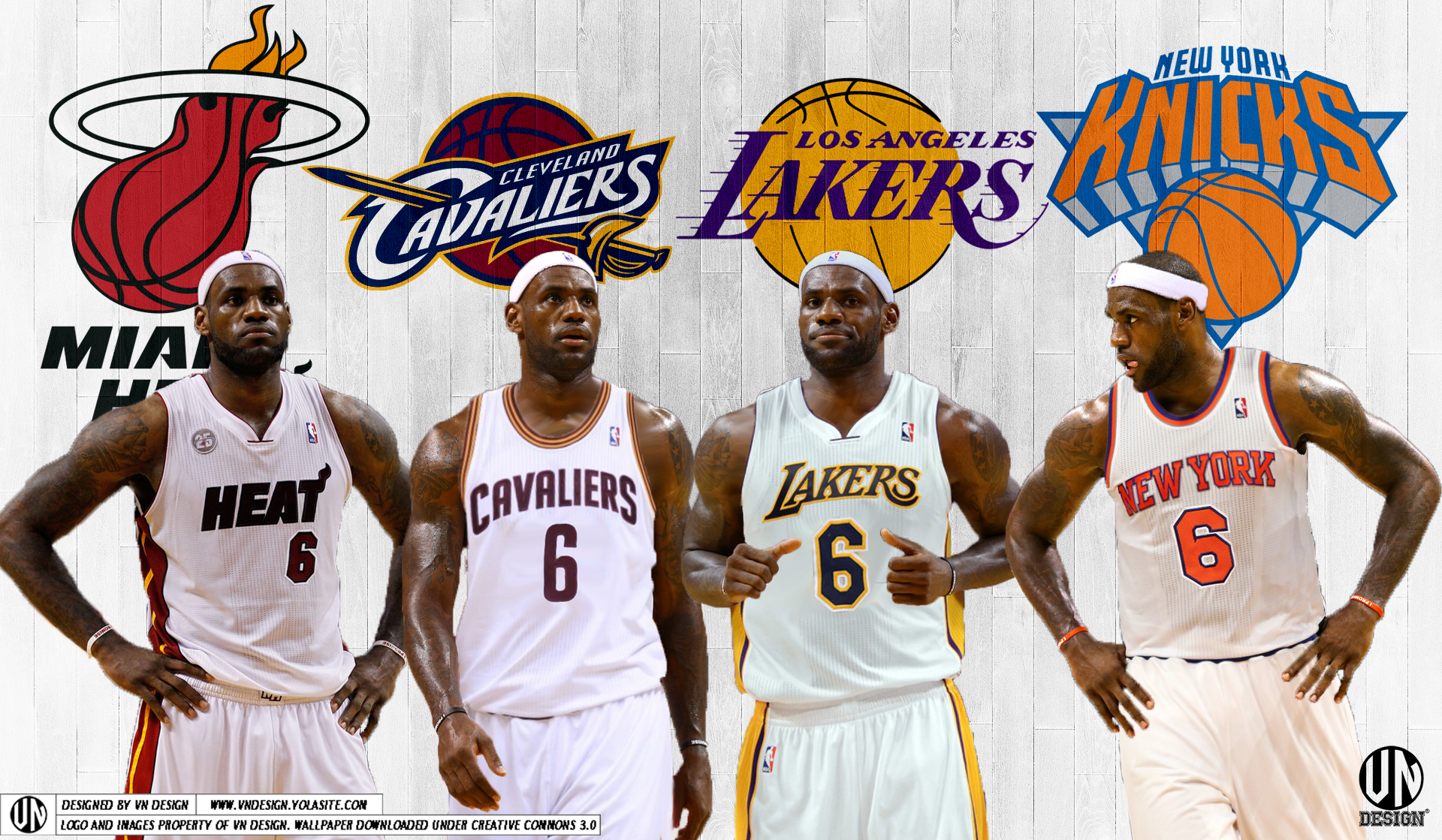
Oddly enough, four years ago we had the absolute circus known as “The Decision” when we all collectively freaked out because a young man we (fans and media) gave a ton of fame and attention to at a young age chose a new basketball team.

LeBron-James-DecisionFunny how much and how little changes over time.

We didn’t like the bombastic manner in which LeBron James joined Chris Bosh and Dwayne Wade in Miami – though in hindsight, the televised event raised over $6 million for charity.

No, we had a problem with the “Welcome Party” the following day – you know, “Not one, not two…

And who wouldn’t, really? The brash, bold, self-aggrandizing manner in which they presented their new union was more than a touch overboard.

Still, did we take the time, in the moment, to analyze what was happening? No, not really. And we rarely do, because we are human. We need and want instant reaction, gratification and resolve. We were all busy burning jerseys, bashing, mocking, and defending.

I was among the masses, proclaiming that the “King” was a bit out of his element, that he hadn’t won anything, that, at 25-years old, he had severely overplayed his hand.

But over time, I accepted this narrative: his handlers had blown the whole TV thing, Jim Gray made it all seem a bit cheesy and most importantly, I thought that James was still in many ways a child-like person, just trying to break out and do something bold.

He never went to college, therefore wasn’t recruited, so it seems logical that he liked the recruiting process of free agency in 2010 – something that after many years in Cleveland, he’d earned the right to do. The Cavs never got him the help he needed. Jordan would not have won titles with that scurvy crew of misfits.

Feeling under-appreciated, feeling boxed-in, James went to Florida, to beaches and Pat Riley’s legendary figure, to Mickey Arison, a hipster dude who owns cruise ships and a basketball team. He went with buddies he made on the Olympic team, guys he knew didn’t suck at the sport of basketball, as it seemed his fellow teammates on the Cavs kind of did.

What was the truth in 2010? Probably a little bit of both.

And now? Well, I’m not sure any of what’s going on with James reasoning matters as much as how much stock we’re putting into reading tea leaves.

We think way too much of our athletes and role models in the public sphere, and yet at the same time, we dehumanize them. They have emotions, they have biases. They have their reasons. We just don’t care about that.

All this is to say, I can see how and why James would want to return to Cleveland now, four years later. A bit more accomplished to say the least, a bit more mature, perhaps even better equipped to handle the ridiculous amount of pressure applied by the greater Cleveland fan base.

I can also see how and why James would stay in Miami, even if for only a year or two.

Does James play into the power trip? Of course. And if you’re waiting for him to not, you are simply in the wrong era of athlete.

What about all of us? What about the fans in Cleveland who burned his jersey, now pleading for his return? What of the owner who comically, sans-ily wrote the most vicious and disgraceful e-mail in the history of people who got picked last? What about the Heat fans who walked out and booed in the Finals? What about our collective reaction to the cramps?

For better or worse, this man cannot win. And we like it that way, for whatever reason. So no matter what this decision yields, we’re ready to lose our minds.

And that is the entire crux of the problem. It feels as though nothing has happened, yet everything is happening.

James himself has done and said little to perpetuate the absolute ridiculous and scary uproar through the media over a possible return to Cleveland.

LeBron James The decision 2014This brings us back to sources.

You’d think we’d have learned something from 2010, from attaching legitimacy to rumors, to giving full credence and exposure to “sources.”

But we haven’t learned a damn thing. If anything, we’re doing it all worse than before. From New York to Miami to Cleveland to Los Angeles, we’re all preparing for way too much joy and way too much anger.

Have you ever seen so many formerly reputable people get so much wrong? And someone reputable will be proven wrong, for sure. There are so many journalists and media types on both sides of the fence that there is no gray area. Reputations will be damaged.

And why? Because they are rushing to get anything out in an effort to provide the smallest morsel of information, to satisfy us. We crave it. We say we don’t, we act annoyed and we pretend like we don’t want it, but we do.

This is our drug. It’s speculation, gossip and the need to know what we don’t really need to. And the addicts need fed. Which is why we’re hearing anything and everything.

Cupcake shop owners claiming it’s a done deal. Moms who say LeBron’s wife’s pregnancy is enough to push him back to Cleveland. Someone who talked to someone in James’ group in Vegas who told a friend that Pat Riley exposed the pregnancy to the media before James had a chance to tell all his family and friends, so now they are mad and hurt.

Web programmers who have found hidden code on his website that shows the color scheme could change to Cavs base colors. People tracking Dan Gilbert’s plane, people watching and staking LeBron’s homes in Miami and Cleveland.

Look at us? Are we not entertained? We asked for it. And we can’t deny it any longer. SportsCenter, talk radio and Twitter are breaking records for viewers, listeners and refreshes per minute. James’ website crashed today. All because we’re seeking another hit, another piece of dubious intel.

And the media, addicted to our clicks because it brings pay raises and job promotions (see Broussard, Chris, 2010), are more than happy to find something, anything to be our dealer.

Is this a harsh or unfair analogy? Maybe, maybe not.

We want the media to check its sources? We should be checking ours.

Our sources, after all, are what permits this whole charade to begin with. A culture obsessed with the dirt and greed produces just that. We’re angry either way with James, then and now, because we’re jealous.

We’re outraged by his greed and the greed of athletes everywhere, but we’d do the same thing. We blast them for taking max deals and the money and playing for owners with less-than high morals, then blast them even more for collaborating with each other to take less and play with their friends and win championships.

We won’t be happy, no matter what. Social media is certainly intensifying the issue. It didn’t exist for Jordan’s playing days, or we would have destroyed him, too.

We’re easily bored, ready to tear down our idols just as fast as we build them up.

And why? Because it makes us feel better about us. Our lives are relatively empty, so it would seem by the way we follow celebrities and blow things completely out of proportion.

We have few true sources of joy and purpose as a society at large, so we do this. We ignore the news and stories that really matter, really make a difference, and throw all our emotions and interest to following adults who play kids games for large amounts of money switch companies to do the same job. We cut people down, and cut people off before we flip them off.

We jump jobs for money, then ask how they have the nerve. We cheat on our spouses, lie to our friends and cut corners, then put them on blast for doing the same. We scream at youth sporting events, officials and blame coaches, then call the pros cowards for doing the same in an interview where they’re goaded into the same. We’re hypocrites and we’ve created this.

‘Merica, right?

So here we are, four years later, having learned really nothing. We still wait with baited breath to find out where LeBron James will spend the next year, two or four, putting a basketball through a metal circle. Until we find what our collective culture is looking for, we’ll just keep on doing in this, in truly mind-numbing ways.

We’re in full-blown instant gratification mode now, seeking resolution merely for the sake of being able to move on with our judgments, our condemnation, our praise and dissection.

Feed the beast, LeBron. We’re hungry.

It’s just what we do now.

Before we blame anyone for this mess, perhaps we are the ones who should check our sources. Because I’m nearly 63.2 percent sure that according to reports, our intentions are dubious at best.

And we are all witnesses.

Standard