On its Web site, the Livestrong Foundation states that its mission is to “inspire and empower” cancer survivors and their families. The foundation has provided numerous people and families with the tools and resources to help overcome the emotional and physical damage of cancer.
This country now needs a foundation to help us overcome the emotional damage of Lance Armstrong.
The foundation of the, well, his foundation, is built on the secrets and lies of the now disgraced hero and cyclist.
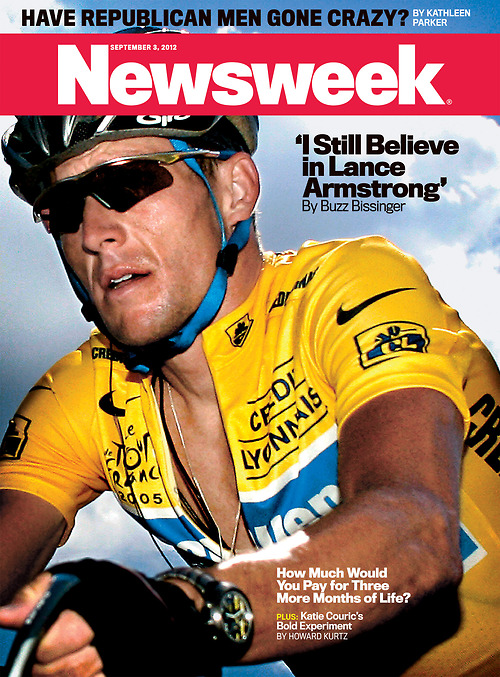
And the fallout from Armstrong’s doping admission to Oprah Winfrey this week leaves many of us feeling sick to our stomachs. We feel duped, cheated and lied to. The entire country spent the better part of a decade rooting for this man and fell victim to his charm – and his yellow bracelets.
No one cared about cycling before Lance Armstrong unless you were into cycling. No one cared all that much after he left, either. But you give football and baseball loving folks the story of a man who survived cancer, who sweats his way through France against all those cheating European bikers and overcomes all of it to capture every Tour de France from 1999-2005 and you’ve got an All-American Legend.
We can deal with flaws. Most of our heroes have them, even the fictional tales of Superman, Spider-Man and Batman showcase men who have their own secrets, weaknesses and fears to overcome. In some cases, they have strength, ability and powers not obtained through natural means.
But Batman never blood-doped. Spider-Man doesn’t stick a needle in his butt.
Some, as I mentioned last week, just don’t care. One of my best friends has told me that my morality writing is some of my worst. This is due in part to his lack of regard for sports performance enhancing drugs. There are so many in the same state of mind: either it just doesn’t move the needle (no pun intended) and they don’t care what athletes do to entertain us and succeed, or it’s just a tired, drawn out storyline.
Essentially, why do we care anymore? If they all do it – and so many of our sports heroes appear to fall from grace nowadays in this very manner – then why do we bother with it anymore? We should just accept it as a new normal and move on.
But some of us can’t. I can’t. It does matter. And it’s bigger than just being a morality play or holier than thou attitude from the self-righteous.
The simple fact is, we all make mistakes. Ninety-five percent of Americans are just normal, average, every day people. And it’s inspiring to those of us in that 95 percent to hear and see others doing extraordinary things. It pushes us through our cold January mornings, slogging through traffic to an office. It inspires us to coach our children and instill a never-give-up attitude, a sense of hard work paying off and knowing that if you do, good things can happen.
When we find out our inspirational stories were missing some seedy chapters, it’s cheapened. We are cheated because they cheated. And it’s a feeling that doesn’t go away, no matter what is accomplished.
As many people have pointed out, what does it matter how Armstrong came to fame, but how he used that fame – to push for more cancer research and support the families afflicted by this terrible disease. There is truth to that, no doubt. But when the face and inspiration of the cause is found to have doped his own blood, and much of his success is now credited to gaining an edge on the competition not through determination, preparation and hard work, but through downright cheating – and then denying it for 10 years – it’s not so inspiring anymore.
In the summer of 1998, the home run chase between Mark McGwire and Sammy Sosa captured many fans, fathers and sons throughout the nation. My dad and I were no different. And at 18, I was in a strange transition time in my life. My father and I, always on good terms and already having a good relationship, bonded even more. We weren’t even fans of the Cardinals and Cubs, but watching these guys chase history, embrace each other and thrive under the spotlight was something we shared. We were watching history, together. And it brought us closer together, as sports so often has.
And then it became clear that something fishy had happened. All Dad and I could think about was McGwire talking about touching Roger Maris’ bat and touching with his heart.
“And a steroid needle,” I joked.
Suddenly, while Dad and I still had a deep bond and do to this day, our memories of it are tainted. It feels like it happened under false pretenses. And perhaps that’s where we get that sick feeling from.
That 95 percent of us want good things to happen. We want love, we want money, we want happiness. But many of us won’t allow ourselves to cross these moral lines and reach these things under false pretenses. If that makes me a righteous hypocrite that lives in a fantasy world of ethics that no longer exist, even to my closest friends, then fine. I don’t care.
Because for me, and for so many out there, I’d rather fail horribly by natural means and by my own weaknesses and failures than succeed through unnatural ways. I don’t want to win by doing what others aren’t, maybe because it means we know we went toe-to-toe with the other guy and were just better on that day.
This is precisely why it is so difficult for us to have heroes anymore. We don’t know who’s best is beefed up. What’s real and what’s a mirage?
Like Armstrong, we find out too many were not at all heroic in their means, but only their deeds. In Armstrong’s case, his end result as a record-shattering cycling champion, who’s own story of cancer survivor wove a heroic tale that all Americans could root for, was largely in part only accomplished because he manipulated his own blood in order to perform better.

No matter where we all collective reside in the discussion on PEDs, let’s all agree on one thing: that we’re not going to praise Armstrong for finally coming clean and admitting something he vehemently denied for years and years, legally and in the court of public opinion. Would a husband or wife call their cheating spouse of a decade direct, honest and candid when they finally admit to it only after everyone proved what a liar they were? I doubt it. Thou doth protest too much, eh?
I don’t care that he choked up when apologizing to members of the Livestrong charity. He didn’t Livestrong. He lived rather poorly in how he conducted himself – not just with the doping. And he’s only crying because he got caught, not because he’s sorry. That’s not regret or remorse. That’s self-pity for wishing he had not been exposed. Huge difference.
Heartfelt and sincere? Please. Colonel Jessup showed more accountability and remorse in A Few Good Men than Armstrong can fake at this point.
We’re partly to blame. We’re so thirsty for heroes that we’ll gobble down any story and trust anyone. And now we’re cynical as the years pass with our heroes. We’ve got to start standing for something more, or we’ll keep falling for anything.
After all, the U.S. Postal Service sponsored most of the those tour teams that Armstrong rode to victory seven times. I wonder where a government entity got their sponsorship money? Taxpayers perhaps?
See, no matter which way you look at it, in the end, really we all pay a price for “inspiration and empowerment.” Live strong, indeed.

 worldbetweenlines.com