
As a society, it feels like we are always operating under the assumption that modernity is good, that being a part of a modern era means that we are advancing. Perhaps it is experience gained as we age, or perhaps it is because of all the technological and communication advancements made make us just feel so efficient, so intelligent, so very advanced as people.

Or perhaps it is just arrogance.
We find value in purpose if we convince ourselves that we are “better” people than those who came before us, those insufferable rubes we call our ancestors.
Just look at us now, with our Facebook, Twitter and Instagram feeds, our Vine videos. We think we’re pretty special, taking pictures of our food with camera filters. We think people care to know what we think of the latest scandal in 140 characters or less.
But we’ve missed the point of the social media medium. It is not the technology that is too blame, instead it is how we use it. Communication and connection were made easier by these software applications – how we implement them is another manner entirely.
What does this have to do with sports, you might be wondering?
Really, it has everything to do with sports, especially right now, as the sports world as we know it sits bathing in performance enhancing drugs (PEDs). Almost daily, another user is identified, another lab busted, another player suspended or under suspicion of use.
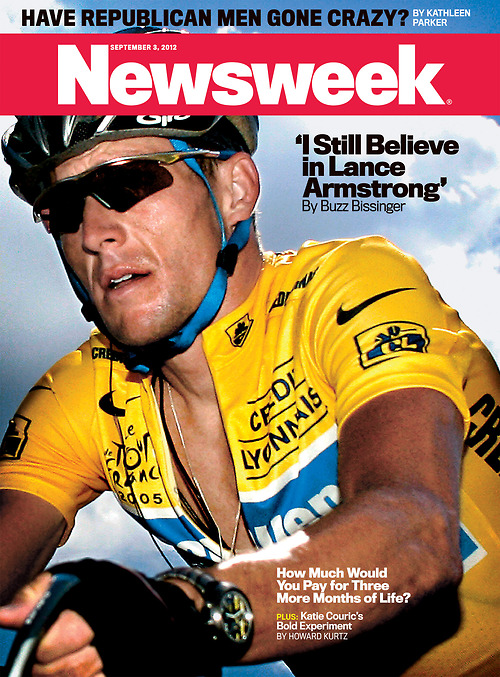
Are all of these men and women, accused or proven guilty one and the same? Most assuredly not. Alex Rodriguez, Lance Armstrong and Ryan Braun are in a different world from the junior tennis player who took the wrong over the counter medication and tested positive.
We should all fear the kind of athlete, like Braun or Armstrong, who not only seeks to gain these advantages, but maliciously works to destroy those who stand in their path.
This is simply modern arrogance transferred into sports. We are scrambling to justify players using PEDs with a litany of fun excuses: hey, it’s just part of the culture of sports now; it’s really not that bad; does it matter if everyone is doing it; if they want to risk their health for my entertainment, who cares?
Rationalizing the use of PEDs in this manner is almost adolescent in nature, which is to say, does not make us very advanced.
Those excuses sound like lectures parents dole out on their kids during teenage years: if everyone was jumping off a bridge, would you? What does it matter if my friends Johnny and Tommy are doing it as long as I am not? Hey, it’s just what the kids do now.
So many of us have grown weary of this issue, the collective groan could be heard on the moon every time another story breaks.
Speaking of the moon, how would we feel if we heard Neil Armstrong had taken something that enhanced his ability to get to, and walk on, the moon? Cheapened a little? Like maybe we believed in something that wasn’t entirely real? Here is a landmark in the accomplishments of man, a moment that people of every race, faith and stature can point to and say, “humans can do anything.”
With the asterisk: as long as we take something to enhance our performance.
Look, I get it. It’s a tired and seedy story. It’s a slippery slope. It’s an argument we’ve all had in offices, living rooms, sports bars across the nation. What defines the line? Wouldn’t any drink that isn’t water that replenishes nutrients faster be categorized as a performance enhancer? Are all supplements bad?
There is most definitely no easy answer. No real, concrete line. How do we justify taking prescription drugs or medicines that improve your health when sick, physically or mentally, but stand on a bully pulpit when it comes to PEDs?
After all, those drugs allow you to perform your job better and possibly get a raise. They hide your mental or physical flaws from the outside world, giving off a false image.
The only response I can offer is this: there is a big difference between taking those kinds of drugs, which allow you to get back on a level that everyone else is on, and PEDs. If you are depressed, for example, not everyone around you is. A drug that helps level out the chemicals in your brain to a normal range simply put you back on par and allow you to live a life close to what many others enjoy.
They do not falsify your accomplishments and put you above the rest of your peers who are not doing the same things.
But I suppose, just ask yourself, do you feel something isn’t right about drinking Gatorade? About taking daily vitamins? Probably not.
Look, I take supplements. Just not the ones that improve hand-eye coordination, increase my muscle mass considerably and allow me to recover faster than people who aren’t taking them. Whether or not you’re just trying to get back out there and you owe it to the team, using HGH does still imply you are gaining an edge. You can call it speeding up your recovery, if it helps you convince yourself you weren’t looking to cheat – but it is still an edge over every other injured player who isn’t using it.
And there’s the rub, really. This is why we call something cheating: doing something that someone else in a similar position is not. It’s not so much about the morality of right and wrong, we blur those lines all the time.
Really, this is another mixture of PEDs and our society. We distinguish all the time what we will tolerate and what we won’t.
Barry Bonds was a noted jerk, as now is Braun and Rodriguez. However, guys like Derek Jeter use “good” steroids like cortisone to recover and we cheer their gutsiness. David Ortiz was caught with a positive test, and we just smiled. He’s Big Papi, so he’s cool. And I’m sure it was just for a little while to recover from something.
And this says a lot about our society, too. What kind of person you are, or portray yourself to be, will largely determine how willingly we accept or forgive you for a future issue. Do what we expect, based on what we know, and we will react accordingly.
This war, this battle in sports on drugs and PEDs, is driven by the media, and by people like me, too. Sons of old school fathers, fathers to young athletes. The last thing I want my three sons and daughter doing is taking something that enhances their performance to gain an edge on somebody else.
Remember the Ice Cube movie, “Friday”? (Oh yes, I’m going there.) Ice Cube is getting ready to fight the dude who played Zeus in “No Holds Barred” and wants to grab his gun. His father begs him to do it without the aid of a weapon, outside his fists.
I’ll give you another example, from an episode of the last season of “Boy Meets World” (yes, I’m going there, too). Cory and Topanga are just married and living in a dump. The pipes are spouting brown water, the place should be condemned and there’s a screaming baby in the apartment next to them.
They beg his parents for a loan to buy their dream house. Cory’s dad firmly says no, with little explanation of why they won’t. Later, Cory fixes the pipes himself (without deer antler spray), takes a clear glass of water from the faucet and demands his father drink it.
Finally, Cory gets it. It’s not that they couldn’t help – or did not want to. But if they would have, it would have robbed them of something that can’t be completely explained, that sense of accomplishing it on your own, of figuring it out, or doing it.
My argument against using PEDs and my reasons for continuing to wish for a cleaner sports world cannot be explained much better than that, with a hokey reference to a TGIF show and a the only semi-serious part of a comedy starring Ice Cube and Zeus.
Call me self-righteous and tell me I am naïve. Tell me I need to get with the times and just accept where the world is now, that all the athletes do it and have been for 20 years. Call them gentleman’s rules, unwritten guidelines, or just fair play.
Without that, what are we doing this for anyway? Money? Fame? Glory?
If that truly is the case, then we are far from advancing our society and culture.
Modernity is a myth for us, or at least it will continue to be, until we actually fix the faucet ourselves.

 worldbetweenlines.com