Here’s to The Grind.
Or more importantly, here’s to the ones who went through it and excelled in it.
Because you can survive The Grind, but it changes you forever. If you don’t know what The Grind is, quite simply, it’s the torturous side of sports. The pain, the hurt, the injuries, the travel, the hard work, the rehab.
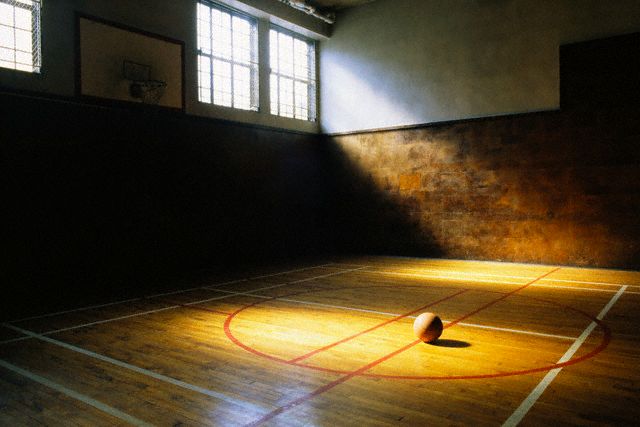
It’s the nights in an empty gym while your friends go out on dates. It’s the sunny afternoons of summer spent in batting cages, on dirt fields under a blazing sun, while others soak their feet in a pool. It’s the mildly grotesque smell of a weight room, which you strangely learn to embrace. The Grind is the scars, the rock hard calluses on your feet and toes, the lack of hair on your knees from floor burns.
And there’s a secret to it, that only the best of the best learn, which is simply that The Grind cannot be beaten, it’s barely survived and at your best, you simply manage and muddle your way through it.
The Grind is the journey, and it’s rarely understood by those who merely watch.
We are about to embark on a period over the next few years where some of the best in their profession – of all time – will step away from The Grind and reach The End. They survive it, embrace it and succeed in it.
The first comes Sunday, as Baltimore Ravens linebacker Ray Lewis will retire – win or lose – following the Super Bowl. Whatever you think of Lewis as a person, or how the media lovefest has gone a little overboard the past month, considering, you know, this, it doesn’t change the fact that Lewis is indeed a warrior and a throwback NFL player along the lines of a Butkus or a Singletary. Ultimate competitor, passionate, and perhaps most of all, maximum effort at all times.
And he lasted 17 seasons in the NFL, a place where brain damage and physical disability are rampant after retirement. In 2011, a study found that the average NFL career was 6.86 seasons, a major league baseball player, 5.6 years, and in the NBA, ballers can expect to last on average 4.8 years.
That’s not very long. And that’s because of The Grind.
As spectators and as fans, we see the glitz, the glamour, the fame and the money of professional sports. And never mistake that they are well-paid. But few, very few, make it to The End. The Grind often ends it for you.
It becomes less and less about the money, but more and more about the legacy and about a unique competitive drive few can understand.
Within the next few years, many other outstanding, Hall of Fame caliber NFL stars could be joining Lewis: Peyton Manning, Tom Brady, Randy Moss (again), Tony Gonzalez and Ed Reed. Each of these players changed the game, impacted it in some significant way and broke records. Each will be a Hall of Fame player. Heck, maybe Brett Favre will finally hang ‘em up, too.
In baseball, guys like Derek Jeter, Mariano Rivera, Alex Rodriguez, Ichiro Suzuki (basically, the New York Yankees roster) and David Ortiz will call it quits. And in the NBA, there’s this list: Kobe Bryant, Tim Duncan, Ray Allen, Paul Pierce, Kevin Garnett, Dirk Nowitzki, and Steve Nash. All are winding down MVP-heavy, record breaking, Hall of Fame careers.
We’ve watched, we’ve enjoyed or hated them as members of rival teams, but we don’t know a thing about them, really. And we don’t know about The Grind.
Some of these athletes have been playing professional sports that span over three presidents – the second term of Bill Clinton, all of George W. Bush’s years in the White House and now, with Barack Obama beginning his second term as commander-in-chief. Cell phones weren’t heavily used, Justin Timberlake was in a boy band and we still feared the Y2K bug.
Just think, where were you in 1996, when Ray Lewis and Kobe Bryant started their NFL and NBA careers, respectively?
Simply put, the world has changed, but many of these guys haven’t. Think of what they’ve endured? To start, I think of how my story is 1/100th of theirs.
I am a has-been, former high school hoopster, and tried to play college ball at the D-III level. In my early 20s, I played pick-up ball a couple nights a week for a few years, didn’t do anything for a few in the middle and then played Y-League ball on Sundays for eight weeks, once or twice a year, for three years. Didn’t play again for awhile and now, over the past four months (in much better shape finally), I’m playing once a week again.
Keep in mind that fact – that I’m 33, haven’t spent the last 15 years in a 6-to-8 month season, traveling, maintaining, playing two games in three nights, back-to-backs or doing a West Coast road trip.
But I played. I’ve had my version of The Grind.
Frankly, I hurt more than I’d ever admit verbally, mostly in the mornings. And that’s mainly because I don’t want to be a whiner, a complainer and partly because those around me can’t understand.
In the winter, due to way too many ankle sprains, my feet just plain ache. They pop and crack constantly. They’re typically always cold, unless the calendar is between May and August, due to poor blood flow and bad tendons and ligaments. My wife shudders when my feet brush her leg and says they feel like ice cubes.
My back hurts, my left shoulder slips out of socket occasionally if moved the wrong way, or slept on for too long, from three separations. After diving for a loose ball once and landing on my elbow, I basically split my elbow cap into four or five pieces of bone. I’ve played with what amounts to a black and blue golfball on the side of my foot – several times and on each ankle. I’ve played in an Aircast, a shoulder harness (that I wouldn’t wear except for one practice), and routinely stuck my legs from the calf down into 5-gallon buckets of ice water.
Twenty minutes in, 20 minutes out. After pulling them out, with my feet still a blue-ish purple color, I’d do ABCs with my feet, then, plunge them back in for another 20 minutes of torturous cold that cannot be described, only experienced.
Once, I got 12 stitches in my calf after diving for a ball and landing on the jagged metal edge of a bleacher – but I didn’t notice my sock was covered in blood for nearly two minutes. And I didn’t notice that muscle and fat from my calf were slightly exposed from the gash.
But I’d do it again in a heartbeat.
The Grind can give you an adrenaline high, a natural charge from competition that you can’t really replace, a euphoria that you’ll spend trying to replicate. The Grind can hurt. I’ve got friends with knees that have been repaired or scoped three, four, five times. Herniated and or bulging discs in their back. Some have addiction to pain killers, to alcohol, to Tylenol, Advil or nicotine.
I’ve done it, too. They are simply numbing agents to offset The Grind and its effects.
And our stories – especially my stories – are literally nothing but a drop in the bucket of those mentioned above. Think of the amount of needles endured just to play. Lewis is coming back from a torn tendon in his arm that he suffered in October. Imagine that rehab. Surgeries and pins placed into bones. Kobe flew to Germany to have a controversial surgery on his knee, where they put new blood platelets in, because The Grind had made his bones, well, grind.
And that’s just before they are done.
At some point, though, it ends. And that’s when the mental aspect, not just the physical, begins. An identity crisis, or sorts. Who are you without (insert sport name here)? Some, like me, only did it for 12-15 years. I thought I had a hard time. Guys like Kobe, Duncan, Jeter, it will have been for 25 or 30 or more. You don’t remember a time when it didn’t revolve around the game. Your life is defined by it, you are who you are because of it.
The younger you are, the less painful the transition I imagine. Those who get it and did it, no matter what the level, have their demons related to giving it up or losing it. And it’s harder to understand for those around them. The competitiveness is wired into you, somehow, perhaps before birth or at a young age and you can’t turn off will and desire.
It cannot be replaced. The beast cannot be fed with desk jobs or investments, or even announcing and analyzing games on TV. Some do well with post-sports life, like Larry Bird, others, like Michael Jordan, not so much.
Some don’t want The Grind, which is when they get The Filter. That’s why they quit their high school teams, to go out and do their thing. They date. They party. They grow their hair out and spend their summers in flip flops, going to concerts and pool parties. There are more who wave it off after they get to college. Not worth it, too much. Or they don’t play as hard. They quit diving for loose balls or line drives in the gap, quit chasing down receivers 15 yards downfield. The funnel gets tighter the higher you go in the sporting ranks.
Until we are left with the few you can survive all The Grind has to offer. Twenty or more years, from childhood on, of aches, pains, missed dates, failed relationships, lost friendships over wins and losses, the travel, sleeping in chairs, living in training rooms with ice wrapped around every limb, doctors, surgeries, and rehab.
The Legends, they’ve been hurt, too, far worse and for far longer than many of us can even comprehend. Broken feet, torn ACLs. Dislocated this, that and parts in between. Peyton’s neck, Brady’s knee, Kobe’s knee, Jeter’s ankle. Paul Pierce was nearly stabbed to death. These are just the big ones, the ones that we know about. We don’t know anything of all the nicks, bumps, scraps, twists and turns. Banging into bodies, diving on the ground, on the floor. Flying from city to city, sleeping in cycles of naps on planes and buses.
At The End, if you’re lucky, you got a few rings to show for it.
This weekend, I heard rising star and young Washington Nationals pitcher Drew Storen speak. He was encouraging many in the audience, who were young baseball players, to focus each and every day on getting better at one little thing, and how, over time, it adds up to make a big difference.
But he also spoke of The Grind. What he does never changes. There’s just more of it. The same way he played the game at 11, 15, or 17 is the same way he plays today. He gets just as excited – still gets that rush – to strike someone out, to make them look foolish, like he did his neighborhood friends as a little kid.
“Just more people watch now,” Storen joked.
They watch, but they can’t know. It’s a lonely place, The Grind. Going through it, only few understand. And the further your go with it, the fewer people that know what it feels like. That’s probably why it’s so hard to let it go.
Lately, I have been writing pieces about the moral side of sports, of society and how we view these events, and what’s right and wrong. But you think of it from this lens, of these outstanding few, of The Grind, and you think how many shades of gray enter into someone’s logic and rationale.
I may not agree with the PEDs, with the personal life or off court issues, but I can see why they are there. Why taking something to give you an edge is a tempting devil on your shoulder.
There are not many left after a dozen, 15 or 17 years. So very few can survive that long. That’s what makes these guys special in a sporting sense. We rarely get them, and when we do, they often have baggage near The End. Scars unseen they hide from the world, because frankly, the world can’t understand. It’s too cut and dry by that point for them.
Other times, it’s simply a numbing agent, a way to survive, to press on. Many started out, like Storen, chasing it. And as life often does, so many are filtered out over time. These guys aren’t like us, which is why I’ll tip my hat to them all, no matter who they are, simply because The Grinders reached The End.
And I hope and pray for the beginning of the rest of their life.



 worldbetweenlines.com