Turning over the books of The Tonight Show cannot be an easy thing.
Just ask Jay Leno, he’s doing it for the second time tomorrow night.
At least, so we think. (I kid, Jay!…But seriously, this is it, right?)
If we can be serious about comedy for a moment, giving up the chair, the curtain and the monologue of the most widely-known television brand in history must be difficult.
It should be even more challenging for a guy like Leno, who if he cared about such things, might realize what an awful waste of his time and ours the past 22 years have been.
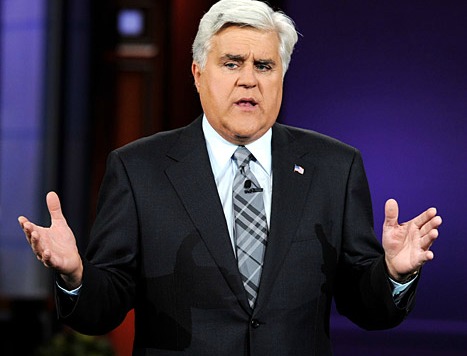 I cannot help but wonder if that will be what runs through Leno’s mind when Jimmy Fallon takes the keys to the show from him tomorrow night. Maybe that thought has been crisscrossing Leno’s brain for some time, dating back to when he butchered Conan O’Brien’s takeover of the show several years ago.
Regardless, it’s happening again: Leno, the current king of late night ratings, is leaving The Tonight Show and is being replaced by Fallon, who is quite possibly the most compelling choice for the role since Johnny Carson.
And quite possibly, you could care less.
We have Jay Leno to thank and blame for that.
Oh sure, that does not fall just at Jay’s feet. There is a whole list of factors – like the fact that since Carson left in May of 1992, only roughly 9 million more options exist for your viewing pleasure between 11:30-12:30 each night. And even if there isn’t anything good to watch that particular night, your DVR has most likely been piling up and you have better things to catch up on than watching Jay make roughly 4,600 Bill Clinton jokes over the past 20-plus years.
So we can write off some of the fall of The Tonight Show – and late night in general – to the expanding options, shifting demographics and generational shifts of the past decade.
The only problem with that is Leno would have you think that is the full story, or that he is being pushed aside (again) for a younger, hipper model.
It’s just that Jay was never that hip to begin with – not even for our parents. So this logic that some seminal passing of the torch has a hint of melancholy to it is slightly overblown and distracts from the greater narrative thread.
I get the point of the well-done piece on Grantland, which angles in on Jay and the Baby Boomer generation being pushed aside, just as their parents’ generation was before them, and how careful my generation must be to readily take the reins in all things that matter: sports, politics and of course, late night TV. After all, our heads will be the next to roll for positions of power, prestige and authority by our own kids in 20-25 years.
But that’s doing a massive disservice to the analysis of just how badly Jay Leno did in this job.
For those who pay attention to such things, there was a slow build-up of comedians and performers who wanted to be “The One” to succeed Carson. Leno beat out Letterman, for reasons that mostly had to do with network preference, not because he was necessarily hand-picked by Carson.
And Leno proceeded to stick to the format – monologue, guests, house band, music act, good night – for 22 years.
He tried little new, which essentially means two things:
- His contemporaries in age watched because it was familiar, comfortable and the least bit surprising or shocking. It was part of the routine, something they remembered to do, but largely forgot what happened.
- This means anyone outside of the Boomer demographic did not really watch. Which works well enough and keeps you at the top of Neilsen charts – until all those youngsters start staying up late enough to take a look and find out you are not very funny.
Though Leno constantly points to his place at the top of the ratings, it is indeed misleading, the same way a 60 Minutes report of Leno ranking as one of the five most popular people on television is misleading. Baby Boomers watch more network television, one would suppose, than say 18-34 year olds, who, one can assume, will find the content they want from any number of sources or stations. As for recognition, well, Carson had to be perhaps one of the most recognizable people, period.
It cannot be easy to follow that, just reinforcing you never want to be the guy to follow the legend, but the guy who replaces the guy who followed the legend.
But Leno did not really help himself out with his act, which became outdated because he would not – and perhaps could not – change with the times. You could argue Leno missed his real window, based on his humor, and would have fared much better in a different time period, say the 1950s or 1960s. Leno’s routine is like your uncle’s or your grandpa’s – the jokes are low-hanging fruit found in everyday life. This is neither overly creative or created. It’s just kind of there.
And that’s just it. We don’t want to consume comedy because it is there. We want to laugh. We laugh with our friends, not at them. We have a whole generation or two hell-bent on making memories, capturing them and talking about it later. This is why Instagram exists, #tbt and a host of other social “things”.
But really, it comes down to this: You have to give us a reason to watch.
While Carson certainly had the blessing of only facing opposition from major networks, as opposed to hundreds of cable channels, 24-hour news and technology that have us on social networks and playing games about angry and flippy birds in our beds, well, he also gave us memories by creating them.
Fallon can do that, which is something Leno must not grasp. Or maybe he does not stay up to watch Late Night.
If he did, he should be able to see what the rest of us do. Jimmy Fallon was made to host The Tonight Show. His bits are simply spectacular. He incorporates technology, You Tube and Twitter into the show on a consistent and regular basis. Fallon’s house band is The Roots, not the guy who played trumpet for The Stones on one album in 1975.
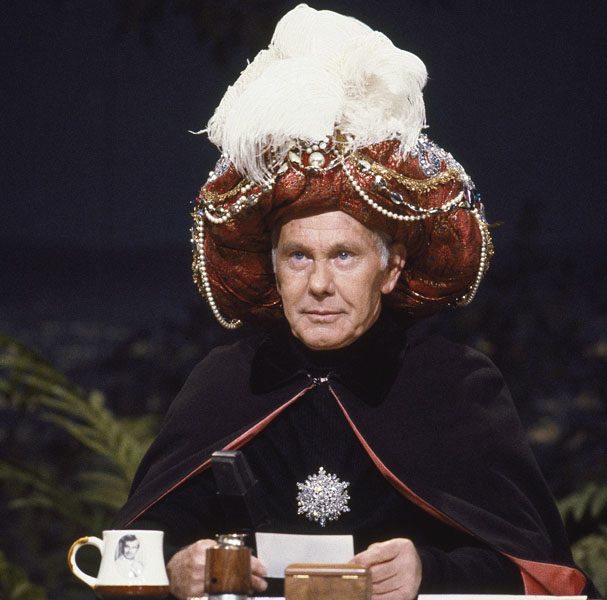 Fallon’s creative partnership with Justin Timberlake is equally parts amazing, fun and very, very creative. I mean, have you watched the History of Rap? They have formed some kind of on-air chemistry that allows you to believe they are best friends – whether that assumption is correct or not really does not matter. In a way, it reminds us of the ease and casual nature of Carson with Ed McMahon. The laughs from co-workers and house band members are not forced with Jimmy. With Jay, well, let’s just say you were never quite sure if there was a bonus check for boisterous laughing.
It is a truly magical thing to feel a connection with a TV talk show host, even more so if they come off as genuine and natural. You have to connect with people in their most private of moments – in their beds at 11:30pm, after who knows what went on during their day. We are tired and stressed and you need to now entertain us.
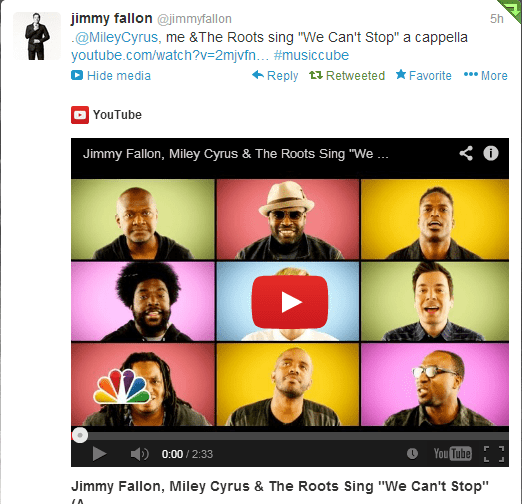
Fallon has you talking about his bits in the office the next day, re-Tweeting links to his You Tube clips, like when he did a rendition of “Blurred Lines” with Robin Thicke using school-room instruments. Or when he had Miley Cyrus on during the peak of her crazy last fall to sing a likeable a cappella rendition of her unlikeable song, “We Can’t Stop.” Both have had over 16 million views. A piece.
One of Leno’s biggest YouTube hits? Well, he got 2 million views for the replay of Michael Jordan asking if he was stupid in response to Leno asking Jordan if he could still dunk. So there’s that.
In a way, that itself is metaphorical for Jay Leno. He was kind of the butt of the joke – the one we were laughing at and not with. Popularity can be judged in a variety of ways – namely recognition – but we have had a lot of popular things in America that just were not very good.
You do not become celebrated simply because you are there. Leno’s biggest problem was and is that he is constantly seeking approval. He spends so much time making sure you know he’s funny and entertaining you that he does not actually do it. Fallon just seems to want to have fun. He enjoys his job, the creative process and if something bombs, he’ll probably laugh at it before you do. And he’ll try something different again with the same pure intention.
Do you see the difference yet?
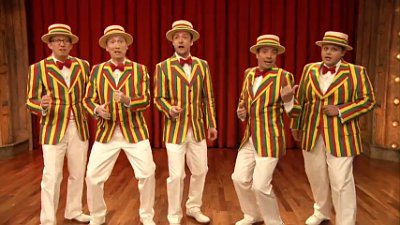 Leno lives to hear your laugh as a sign of approval for him. Fallon just wants to laugh with you because it feels good for everyone. It is why his constant breaking on SNL skits isn’t annoying; Jimmy actually cannot keep his stuff together because it is funny to him, not just to you. He hasn’t rehearsed the punch line, because he’s not quite sure if there is one. He wants to be a part of the moment with you.
Leno would prefer to keep his distance and point at highlighted sections of the newspaper. It’s what he planned to do and therefore, it will work. Hence, how he actually has made over 4,600 Clinton jokes since 1992. No really, someone counted and everything.
Sticking to the pre-determined act leaves little room for improv – a.k.a. life. You can tell Fallon does not plan on how Blake Shelton will react when he tries to get him to sing a Rupert Holmes song on the couch in the middle of an interview. He’s making it up as he goes along.
This is why Fallon works so well with us: we’re making it up too. We do things that just don’t work sometimes and all we can do is laugh at the fact we thought it would.
When Leno passive-aggressively cries wolf about age discrimination – and he has been, and he rest assured, he will again – just know that while true, that is not the entire story. He is just not very good at this particular job.
That is why, despite leading the ratings, Leno’s lease on The Tonight Show is up.
Every generation has the moment when they just won’t let go of the baton. It is more than understandable.
It is just that Jay Leno took that baton from the king 22 years ago, stood still and hoped you’d just keep laughing.
Some of us did.
But most of us are still waiting to start, waiting for a new act.
Waiting for a reason to come back tomorrow night.
 worldbetweenlines.com