American culture, American People., Culture, faith, family, Life, Logic, motivation, philosphy, pop culture, psychology, Society & Culture, Sports, Uncategorized

We Hope for Baseball

Image result for baseball

The collective emotional roller coaster our homes, communities, states, nations and world have experience over the past week cannot be quantified with words.

But damn if it’s not like me to try. Leave it to a pandemic for me to sit down and type my first entry in so long I cannot recall.

The world around us moved so fast last Wednesday that it seemed unreal. The NBA was suspending its season?

Huh.

Thursday saw universities shuttered, college basketball conference tournaments cancelled, high schools move to eLearning.

Um, what?

Friday felt like the bottom fell out, the cancellation of the NCAA Tournament, a new kind of March Madness. Spring sports cancelled – including the College World Series in June – throwing eligibility questions and team rosters for the 2020-21 season into a quagmire that didn’t feel so giggity giggity.

And we thought the news was all filled with doom and gloom before?

I told my wife Friday afternoon that my brain hurt. I couldn’t comprehend much more that day, think of any more angles to cover or next steps after the next steps. I needed wine tequila and a hoodie.

2020 will be forever remembered as when “Social Distancing” became apart of the American lexicon, when everyone from the age of two to 92 could recite proper hand washing protocols.

It will be remembered when we learned everything in our economy is connected, that an essential freeze halted us in our tracks. We quarantined, we worked from home. We overreacted, we under-reacted.

We hoarded toilet paper.

Everything has effectively been put on hold. Youth sports, book clubs. Going out to dinner, a family cookout with grandparents. Spring break. Every Disney Park closed for weeks, every zoo and museum closed. No choir concerts, no parades, no church in person, no events really of any kind.

Everything. Has. Stopped.

But have we learned?

Nothing we didn’t already know.

That faith, hope and love are some good things He gave us, and while the greatest is love, the most important might be hope.

We need to hope we can get back to normal before July. Before June.

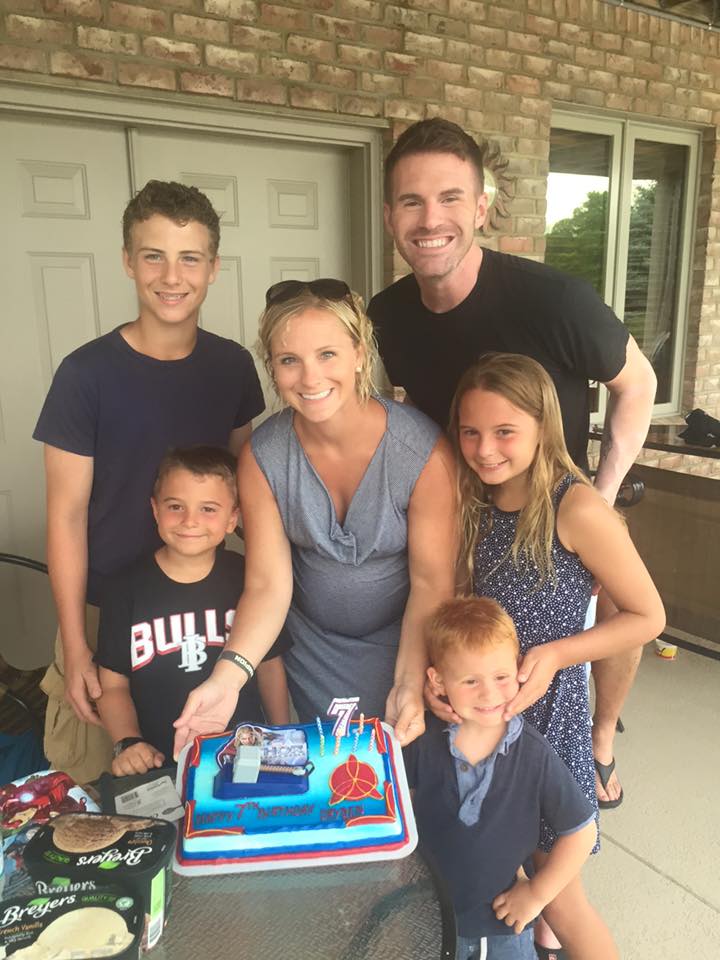
We’re holding out hope for high school baseball in our home state. My son, a senior, is a part of a team that won a state championship last season. His friends from his travel teams, scattered across the state, all want the chance to play before college. Most won’t get a chance to play in college, but it is not about that specifically.

It’s about Senior Night. It’s about Prom. It’s about hearing your name called for the final time. Crossing the stage with a diploma at graduation and graduation parties of definitely more than 10 people.

It’s about all we’ve taken for granted. The commute to work filled with podcasts that have fresh content about sports, movies, politics, whatever. Seeing our co-workers, sitting face-to-face in meetings, teaching in a classroom filled with people.

It’s been merely a week, and even the introverts like me don’t think we really understood how significant social distancing could be to the fabric of what it is to be American.

Maybe this is a chance to re-learn, to re-think the daily life and throw our routines out of whack. Are we adaptable? Are we unbeatable? Can we turn a negative, a 100 negatives, into a positive? Are we just catch phrases, or can we rise to the challenge and endure?

We’re always taking about how busy we are (I’m looking at, well, all of us).

Well, how about now? Time to read. Time to listen. Time to think. To take a walk. To get to know our spouses and kids again. To find a way to serve a purpose greater than ourselves.

Maybe this is our wake-up call.

What is truly important, and what is not.

Sure, we’ve clung tight to family. Personally, we haven’t turned into The Shining family around here…yet. And we appreciate our home, our jobs, our friends and our freedoms.

But hope, man.

Hope might be the most fascinatingly human emotion there has ever been. And we need it more than ever.

No matter your beliefs, your political allegiances, whether you call this a hoax or are digging your doomsday bunker as I type, this is history happening for better of worse in real time.

It is a stark reminder we are not in control, not even a little bit, not even at all. But like any good book or movie (that we’ve all probably re-watched or re-read three times by now), hope is a good thing.

It could be the hope we’ll stop losing our ever-loving minds. Hope that those who aren’t taking it serious will wake up to the fact that COVID-19 is a bit more threatening than we thought a week ago, or even a day ago.

Hope is why Hallmark is running Christmas movies in March. It’s why Disney+ put Frozen II up months before they were supposed to. It is why classic sports re-runs are a welcome distraction. Why Tom Brady going to Tampa Bay and leaving New England was something else to talk about for a few hours.

Because we do not know where this going. We do not know the impact on the economy, on our jobs, on our daily lives yet. And we won’t fully for some time.

But we hope.

We hope for the sick, we hope for the cure, for strong leadership, for our friends, for our industries, for our kids.

We hope for an appreciation of the life we lived two weeks ago and for a future that might be close to it.

So, yes, we hope for baseball in this house. And we hold out that hope, because without it, well, it just makes the brain hurt.

Stay safe. Stay informed. Stay good to each other.

Stay hopeful.
Standard
American culture, American People., Culture, Media, Philosophy, Technology, United States

Epilogue

see

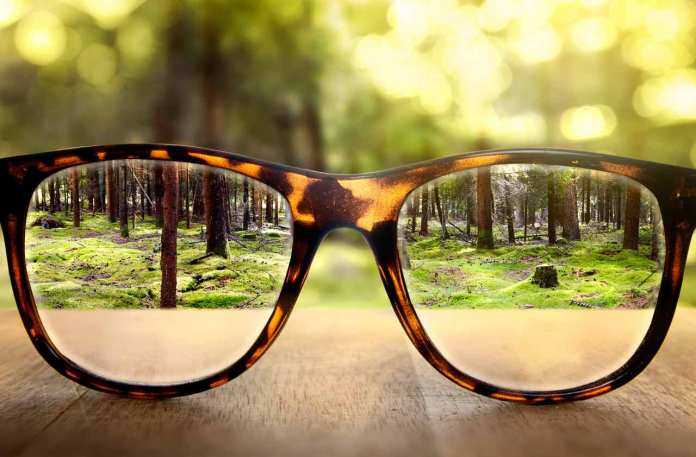
“It’s not what you look at that matters, it’s what you see.” – Henry David Thoreau

Several weeks ago, my oldest child turned and asked me a question I’ve been secretly asking myself for months.

“Why haven’t you written anything lately, Dad?”

I stared blankly back at him, my mind firing off excuses – and truths – as to why I had not done any writing since January. I wanted to give a good answer, something philosophical perhaps.

“Just haven’t, buddy,” I said instead.

Wouldn’t Hemingway would be proud of that eloquent answer?

The truth is I kind of already knew why I had not put anything in this space since I bombastically quit Facebook in my last prose.

In fact, I had drafted about five or six pieces in the months since, but deemed them all too heavy, too poor in quality or just gave up out of lack of motivation to finish a post.

I had something on the horrible events in Las Vegas and our loss of humanity in these senseless moments, I had a piece on grief, a piece on Fake News, and one about all the trivial pursuits we chase in life.

And I shared them with no one.

If I’m honest with myself, the lack of writing over the past year is largely due to feeling like all I’d be doing is repeating the same narrative I’ve spent the last five years writing about: society, social media and the loss of identity (both self and national).

Was this writer’s block, or just boredom?

And then it struck me: This blog was really more like a book – or at minimum a long thesis – on a specific topic with chapters done in real time over the previous four or five years as posts. It’s garbled and not in actual hard copy form, and would require massive amounts of editing, a publisher and probably a hundred other things, but look! I wrote a book!

And any book, as such, deserves an epilogue. A director’s cut outtake of the proceedings. So, let’s let this entry serve as an epilogue to this site over the past four or five years.

Here’s why this thread has to stop for me: I am sick of myself when it comes to writing about social media and its impact on our culture. After all this time, I think I’ve made my feelings known.

But here’s why this topic captured me for such a long period of time: I believe what I write, or at least maybe just I want to. Above all, I want it to be genuine. As I’ve claimed many times, we are not the perfect robotic creations our social media feeds make us appear to be.

You see all the smiling photos, the congratulations, the “I’m so proud” comments, and miss the moments of breakdown in between where life is not nearly as pretty. Because life is not always pretty, and it cannot be hashtagged. And we are beautiful, inherently flawed, imperfect human beings.

And those imperfect human beings do horrible things to each other. Looking back, this began on my old blog, with the overly thought title of The Necker Cube. The site had been a platform for me to keep writing about sports after my sports writing career ended (columns, blogs, magazine).

But I grew tired of the sports narrative and the Sandy Hook tragedy caught my attention in such a moving and painful way that I felt compelled to comment on it.

(Note: if you click on some of the older links to these posts, be aware they were pulled from said former site and have not been edited for spacing – i.e. the lines run on strangely).

The entry prior to a post on the events at Sandy Hook, called The Growing Divide, was first entry in this so-called book. And the archives show a writer flipping back and forth for a time between social commentary and traditional sports commentary. Sometimes I even mixed the two.

And then the Boston Marathon bombing happened and I began thinking about Switzerland. I dealt with the backlash of the Ice Bucket Challenge, and Miley Cyrus leading a mini-Molly revolution of “we do what we want” angst.

There was the time I wrote about (one of probably 20 times I did) how we’d become obsessed through social media of giving our opinion on someone’s else’s opinion (what a wormhole). I spent some time holding us accountable. And gave that narrative some additional thoughts. Basically, a lot of it can be solved with kindness.

But I also tried to unwrap the media’s growing fascination with itself and the media’s ever-expanding use of rumors and unnamed sources. All this in an effort to be first – or to incite ratings and division. And we spend a lot of time being divided. There are also the times when the media blurs the lines of reporting, journalism and the monetary backers propping up these outlets.

Part of my problem has been that I just did not want to see us get swallowed by the groupthink and mob mentality. We’ve spent a lot of time on selfies and allowing ourselves to be marginalized. And that bubbling melting pot has been on the verge of boiling over. In fact, one of my last pieces in this series was after the election (and was the second-most read post I’ve ever made at 1,100 views).

Sadly, it has gotten worse – somehow.

Yet, some of my favorite pieces were about my own family and life in raising a large family during this small era. At times, it was like a dark comedy, cause you have to just laugh at the absurdity of it all. At others, it was a serious test of the blurred lines between media responsibility and parenting, with a key example of a Super Bowl Sunday that went in a direction I did not expect. And there was a life-changing family moment that has ripples personally to this day, that many can relate to: the loss of a loved one. (That one, by far the most popular thing I’ve ever written, has garnered over 1,200 reads to date.)

The biggest takeaway? Be present in your life. Put the phone down, maybe not all the time, because that might be unrealistic in late 2017. But being more aware of your surroundings and engage. A couple weeks ago, we had friends over and I’m not sure the four of us looked at our phones the entire night other than to play music. It was glorious.

Over 2.8 billion people are on social media, 1.9 billion on Facebook alone. And roughly 75 percent of all Facebook users spend at least 20 minutes per day on the platform.

It is a trap to make your life appear only as these shared snapshots of happiness. That has an impact on you – and those in your social media sphere.

First, it creates an illusion of you that cannot be sustained. You come to believe in all the “good” so much so that when something even remotely troubling happens, it becomes earth-shattering. All the while, what you were posting and sharing about yourself was a grand illusion, one that you bought into as much as everyone else. We seem to only care if people look, not if they actually see.

Secondly, to those in your sphere, it creates an illusion that they subconsciously cannot compete with either. I am not terribly certain when exactly this occurred in social media, but it’s certainly there, and there is really no denying it.

An opposing view might hold that it is equally unrealistic to expect people to post “bad” things, for fear of being viewed a malcontent or someone just out for sympathy. And there’s probably truth to that, too.

But when it is all said and done, do any of these things matter? If I’ve learned anything recently, it’s that I will be far more prone to wishing I had five more minutes with my children, my wife, my family and friends that I will wishing I’d let my two cents on Fake News be known.

All that said…you cannot starve yourself of the things that make you you, to go too long without doing what you enjoy. The reason I haven’t been writing is because, well, I haven’t been writing. But I now realize that’s just because I need a new topic. The longer it goes without writing, the farther that piece of me gets away from who I am today.

I must find a new voice in my writing. Because the social media shaming shtick – while still valid – has been played out in this space. And my hope is this post serves as my last reference, my epilogue, to that being an ill of the world.

In a way, I think we all need to change our voice and find new passions and interests existing alongside our old ones.  You can still be you, but life is meant to be explored and pushed, not compartmentalized.

We called our ancestors settlers, but really that isn’t accurate at all. We are the settlers. Settling in and doing the same old things, without pushing ourselves to be a part of a solution – either just for ourselves (and what ails us spiritually, mentality or physically) – or for the greater world we’re a part of.

I reject that notion that we must settle within ourselves and wait for something to happen. This year, I am thankful for a lot of what I’m always thankful for. But maybe I just take it less for granted that I did before.

After a year of searching, I realize I’ll always be searching in small ways, big ways and all the ways in between.

As the quote at the top states, from Thoreau: “It’s not what you look at that matters, it’s what you see.”

So maybe I will find a new voice soon and keep writing. Or maybe I won’t.

One thing is for certain: It is definitely more about the journey – and what we see – than it is what we are looking at.

Time to reawake my soul, open my eyes to see.

Onward – and upward – we go.

Standard
American culture, Culture, philosphy

Divided We Fall

There’s nothing I enjoy more than going into the elementary school about a week or so into the school year and seeing the work of our 7-and 9-year old kids and hearing from their teachers what the class is like.

They are eager to learn, they are happy to be there. They share. They are kind. They want to do what’s right and they don’t care what the other kids look like or where they come from.

In the classroom, they’re all equal. They just want to learn about the world.

But as adults, we realize how scary that world is – and how desperately it needs to change. At least this is true for America.

As the most recent horrific event unfolded this week – the assassination on live television of two Virginia-based TV staff – it occurred to me that many Americans are living in entirely different worlds.

Geographically, ideologically, racially, economy, we are divided. Perhaps even more so than ever, because there are just so many of us and we’re filing into categories, marketing profiles of who we are.

For instance, I live in a small city that just graduated from a town, with some racial diversity, but mostly well-to-do. My roads are a mix of heavily traveled commuters to the bigger downtown and back country roads that still wind around cornfields and cemeteries. People are generally friendly, our police do well to protect us, are kind and it’s a big deal if there is a bank robbery.

Then, I see that in Missouri, just outside of St. Louis, there’s a place where my experience is not relatable. It’s like opposite day, every day. There are inner cities and rural towns and places in between all over the United States where customs, rituals, emotions and norms are completely and wholly different from each other. Not one is necessarily better than another, just radically not the same.

And we ask that everyone come together to make decisions that apply to the country as a whole. It should not surprise us – yet somehow does – that we cannot agree on a whole heck of a lot. From gun control to abortion to gambling to gay marriage, we’re trying to yell the loudest in order to sound the strongest and most convinced that our way is the best way.

Except that our way is our way and we’re there’s really only about 25 percent of our society that agrees completely on a certain issue. Think about it: we’re subdivided constantly into these groups, these regions, these states, these cities and towns, so no wonder our primary concern is us and where we live and how we perceive the right way to do something is.

Yet what is good for Baltimore might not work in Chicago. What is good for Racine, Wisconsin might not work in Little Rock, Arkansas. What needs to happen to roadways on the North side of Indianapolis may not apply to the South side of Indianapolis.

We’re so busy coming up with solutions that we’re neglected the root of the questions.

Meanwhile, the big machine believes it has us pegged. Search for something on Google, it shows up for three weeks in your Facebook ad space. It thinks it knows you.

We barely know ourselves. And we don’t apply all our norms and customs accordingly when it doesn’t serve our needs.

Some of us have jobs in a corporate type setting where it would be impermissible and grounds for firing should we use personal e-mail accounts to conduct business. Yet Hilary Clinton can do it and those who support her make outlandish cases why it was OK, why it was justified and why those who question it are out of line and risking national security. Why? Because they want her to win the presidential election in 2016.

There’s no accountability of our officials, so why then would we ever think there is accountability for us in similar serious situations?

Republicans have spouted for years about having a viable, reliable and diverse candidate for president. So naturally, Donald Trump leads the preliminary polling. And naturally, his favorability increases with every outlandish, racially tinged and gender biased thing he says.

trump

Seriously? You’re going to woo swing voters by nominating someone who calls a female anchor on known right-leaning TV station a “bimbo”- and he’s likely running against a woman? Good luck with that. Trump didn’t like questions in the first debate – questions that he dodged and did not answer – about all kinds of real issues.

“How do we expect you to handle X or Y, when in the past you’ve done the complete opposite?” generally sums it up. Trump’s response? Name calling and mockery.

Hardly professional, hardly becoming and hardly convincing, Trump’s “throw stones in glass houses” approach has landed unceremoniously well on a generation of people who use social media in much the same regard.

Don’t agree with someone? Comment and bash them! Are they calling you out? Well, no sir, you shall call them out!

If you haven’t noticed this before, just scroll past the auto-playing videos of live TV murders and cats falling off couches. You’ll find it eventually.

Is this what we have become? Have we lost our collective minds? Is it possible that we take too much seriously and not enough seriously at the same time? We overreact about that which could use some level-headedness and underreact over those things which seem, at least to me, appalling.

Despite all our differences, I would think there is a baseline of acceptability out there for how we act, how we treat each other. But seeing that someone – actually many someones – believed it wise to post a replay of this week’s events in Virginia in the hours after, perhaps now it has become clear that we’ve our baseline has been not just misplaced, but is nowhere to be found.

It’s been wiped away by the need for followers and likes and having something “go viral.”

That’s all it is though.

A fleeting moment for you, a lifetime of hurt for the loved ones who lay down each night knowing that hundreds of millions have seen the grotesque manner in which their friends, family or colleagues died.

Despite my numerous pieces on our fallen angel of American society superiority, I remain hopeful for a better and brighter future. I cling to my personal reality, my world, my roads and my family. I try not to let my mind go down a dark path where I fear every moment for their safety in a world gone truly mad.

I keep hoping that we wake up, snap out of it and start trying to work through the underlying issues first, before we try to take on policies and procedures. I do this not in the hopes that 300 million others in this country agree with me personally, just that we agree that we’re going to disagree, that we can’t get what we want all the time and begin a road of compromise.

Look, I just don’t see 300 million Americans getting together for a large-group therapy session. So, in the absence of such an event, it could be a collective identification of who we are, what we stand for and what we believe.

The groundwork was laid with the Declaration of Independence, the Constitution and the Bill of Rights. But since those early days, Americans have constantly looked for ways to subdivide ourselves in order to find the majority on an issue that will allow them the right to impose their beliefs on the minority.

So perhaps instead of questionnaires and surveys – short of a census – that ask for gender, race, age, ethnicity, religion, city, state, marital status and income ranges, why don’t we just start responding that we’re Americans?

It just might be simple enough to start there and just be a little bit nicer, think of others first from time to time and share, and not care where we came from.

You know, kind of like first graders.

Standard
American culture, Culture

The Drive For Five

Hey, complete stranger person who’s completely and utterly baffled why my wife and I are having a fifth child, I’d like to answer your question of whether or not we’re “crazy” in long form explanation instead of a simple “yes” or “no.”

Do you mind? Cool. Let’s get started.

I see you silently judging me with your eyes from the moment I said “fifth” – and I could care less. But just know that your shock and mild disgust is not as well hidden as you might think.

Yes, we have several children, we certainly are aware of the volume of children we have produced. And no, people do not seem to care as much anymore. It may be less exciting for everyone else than the first or the second, but not to us. We never had children for attention anyway.

Yes, we are younger than you might expect. Sorry we’re not older, I guess? We tend to think that our youth is a good thing, allowing us to play with our kids and chase them with energy and vitality. But if you somehow think our age equates not knowing what we’re doing with so many kids, that’s a totally fine opinion to have. Because certainly no one over the age of 40 ever messed up.

moore family

No, we’re not destitute, nor are we rich. Our children are happily fed, washed and clothed. And we do get help in that department from time to time from loving and wonderful grandparents on both sides, but only because they offer, want to or just do it without asking. We are perfectly capable of doing it on our own.

Yes, we are aware what causes it, but thanks for that awkward joke. Really played well to the crowd, sir. We planned these kids, believe it or not.

But somehow, I don’t think that look in your eyes is about us and our large family. It’s about us not following the “rules” or societal norms of the world in 2015. Because it is not what everyone else does and it’s not “normal.”

We are easily influenced in this country, but somehow rarely swayed.

We’d rather tell people how wrong they are instead of leading by example. We do this out of some sort of need for affirmation, that we are in fact, right – and someone agrees enough to tell us so. This then serves as validation to everyone else who still thinks we are wrong, so that we can turn back to them and say, “See, this person knows I’m right, too!”

Third party credibility at its finest worst.

Ask yourself this: if your convictions are strong enough, why do you need the approval of others through how many thumbs-up you get on a status update?

We like to complain. We like social media. And we’ve married them together quite nicely. We like to tell each other what the problem is, who’s to blame for it, what should be done about it, how it affects us and why we are right.

From politics to road improvement projects to what clothes to buy or music to listen to, we’re all trying to change the world through our opinion and what we value – presuming all along that others out there a) care what our opinions are, and b) hold the same values as we do.

We all have a sphere of influence; we just greatly misconstrue what to do with it. Social media allows you to build and sell your brand. Every post you make, every favorite, like, share and retweet.

Now, this may or may not be who you actually are – but that does not really matter. To the outside world, you are what your advertising says you are. You are marketing you, and in some ways those connected to you, with your brand.

And that brand is the message you allow yourself to project. You cannot change the world. Too big, too difficult, too abstract.

But you can change your world – and by doing so, through your sphere of influence, the world around you perhaps slowly changes over time.

So many people tell us of the ills of society.  They will complain. They will condemn others who do not think and act as they do. They will tell you that you are, in fact, wrong.

Now how many times when someone told you that you were wrong did it change your mind?

I’ll go ahead and guess zero, because you didn’t. The message is half as important as the messenger.  Throughout history, powerful orators – great messengers – have influenced mass amounts of people to do really great things.

They have also persuaded entire populations to do really dumb things, terrible or horrific things.

The difference between disagreeing and intolerance is a thin line, and we are not often aware that we have crossed it until it is too late. The same holds true then in how we conduct ourselves with others in person.

Life cannot be done as it is on social media.

So, yes, this makes our fifth child. And we’ve experienced the gamut of reactions before. Believe it or not, some had the open-mouth shock, the “you must be one of those” furrowed brow, the head shake and smile, the plastic smiled “that’s so nice” when we had our fourth child nearly four years ago.

We keep having children because we feel called to do so and that we can raise another person to be good, to be kind, to try to make the world a little brighter, a little happier and a little better.

To get there, you just go with it.

Look, do I enjoy freezing my tail off at some sports event at 8am on a Saturday morning after getting up at 6:30am? No more so than anyone else would. Is it fun to have a factory assembly line five days a week to make lunches for school the next day? Not particularly my brand of fun.

Sleepless nights with a newborn are not moments that I would describe as fun by any means. Nor is holding having nightmares of Home Alone play in my head as we walk through an airport, utterly petrified one of ‘em will end up lost in New York.

But this is not about me – it never was. Life is not meant to be about me, or my wife. Life is about giving yourselves to others and attempting to make the world a little better, a little brighter, a little happier. Let’s face it, it can be fairly depressing at times.

avengers assemble

And we have a lot of fun. How can you not with your own brood of mini-me’s?

It is our way of changing the world into a better place.

We all fear evil in the world, but it is indifference that scares me personally the most. And what my wife and I long to do is make difference makers, people who care about others and want to do right, solely because it is right. To us, this is increasingly rare in the world we live in. I want the good guys to win.

In some small way, I have convinced myself that our influence on our brood, and thereby a larger world, will be and last much longer than social media – and much, much longer than me.

You see, my life isn’t over because I have so many children. My life and purpose begin with my children. In fact, our children have helped me narrow my focus and become more efficient with my goals and objectives. My ambitions are closely tied to their lives, what they can become and who I will become because of them.

None of this makes me a better person or parent than anyone else in the world. My views are not somehow more valuable or correct.

It just makes me, me.

And you aren’t going to change me by telling me how weird it is to have five children.

But by all means, go ahead and try.

Standard
American culture, Culture, Media, psychology, Society

Faux Real

Last week, the geniuses at Slate put together an incredible piece about “The Year of Outrage” – tracking what America was so mad about in 2014.

For every day of the year.

Safe to say that based upon this study, it would seem as though our faux anger has created actual, real emotions. This is both sad and slightly scary, meaning that we are having an increasingly difficult time determining what is real, what is fake and how to react to both.

We can get a false sense of just about anything these days. We can generate fear and reaction into someone with a post, an e-mail, a text. We can misrepresent what matters and what does not.

We are less connected physically, but through technology, social media and various work “efficiencies” we are more connected psychologically.

And let’s be honest, our psychological make-up is not always the most stable of places.

41003-Fake-A-Smile

We are flat-out terrified of stuff that just does not matter, yet increasingly numb to that which does.

We do not see things the same way, leading the vast majority of us to react quite differently to the same situation.

For example, an e-mail sent by a co-worker at 10:14pm, over something that could not only be handled tomorrow, but next week, create for some a sense of dread or panic that they have done something wrong to receive said message at said hour of the day. The sender, by contrast, was just knocking out a few “to do” items and not really paying attention to the time of day or the subject matter.

This faux anxiety creates faux stress that feels as real as you can imagine. That stress leads to anger and lashing out at the smallest of things – like perceiving someone cut you off in traffic, leading to a real finger being flashed and real bad words being used.

Thus, often, our perception of reality becomes our reality.

Millions of Americans deal with differing levels of anxiety and to me, there can be no doubt this is contributing factor to our reactions. The best way to describe an anxiety attack is the feeling of being charged by a bear, when there is, in fact, no bear.

It cannot help us out psychologically when we get worked up over something that’s been put out on the line that we have no part in or cannot control. We’re manufacturing our own dramas. We’re desensitized, yet somehow overly worked up at the same time.

A sampling of the topics that made us grab our verbal pitchforks and raise fury like hell hath no in 2014? Just your usual mixed bag: bad jokes by people and companies, how people react and respond to each other in positions of power and authority and of course, race. Typically, it is how we reacted in hindsight that seems most perplexing.

If we’re so outraged all the time, how do we survive? If our not entirely true feelings are coming out in a very real way, how do we know when we’re actually experiencing anything real? How do we know if we’re really angry? How are we not just becoming the slightest bit numb and missing the things that matter?

Do we even know the difference anymore?

Rage is more of a controllable anger. Outrage seems to encompass some sort of moral or ethical fury. As Slate mentions in their piece, it feels showy and a little false. Probably because in America in 2014, the outrage is just that – a faux show.

The-Social-Media-MobWe kind of enjoy putting on the show. For each other, for ourselves.

More people are outraged at Sony for pulling “The Interview” than people who were actually planning to see “The Interview.” If you didn’t plan to see the movie, what do you care that a studio wasted millions on a film and marketing only to pull it? What possible moral or ethical outcry could there be to this? Yet, there it was, headlining the news, trending on social media.

The show must go on.

Of course, there are the topics we were outraged by – like social issues – in a possibly decent and entirely pure way, but of course, both sides of the discussion blew it because we got snide, hateful, over generalized and just looked and sounded insane most of the time.

Most of our stories pass through the life cycle partly on their merit (newsworthiness) and partly – largely – due to how we react to it. “It” only becomes a thing if we let it, allow it or want it to. But who can actually tell what we really care about and what we faux care about anymore.

The general theory goes that in anger, you tend to not listen very well. If we’re so outraged and blinded by vengeful anger at all these topics and sensitive subjects in the world, how on earth are we going to have a proper discourse and actually build a bridge to solving said problems?

Ever argue with your spouse or significant other? The rage and indignation rises to a level that virtually blocks both of you out and all you can hear and see is the anger. The words don’t matter as much as the tone.

No point on earth can be made and accepted through shouting down, demeaning, mocking or condescending the opposing side. Uh, they already oppose you…so…certainly your remarkably smarmy attitude will win friends and influence people over to your side, right?

And after the anger and outrage have subsided, you might have a chance to get somewhere with the person opposite you.

Yet outrage exists as a kind of mental bomb. You cannot see it, but once it goes off, the effects of the outrage last much longer than you think they do. And the next time someone says something, they are gently traipsing through the mental mine field of your outrage, trying to avoid the buzz words or things they believe set you off before.

Or they just don’t even bother, which is kind of worse, because it means we’ve stopped caring.

We’ve all been there. It’s the people in your life that are actually no longer in your life. The ones you stopped seeing and calling – or the family you deal with at major events, but say nothing of relevance to anymore because it just is not worth the hassle of taking another hit of their outrage.

This is my overall fear: That we will stop caring about the stuff that actually matters because we’re too outraged and obsessed with the stuff that doesn’t – or too busy avoiding the social media bullies to realize we’ve become one of them.

We see what the backlash does to people, every day folks like you and me, writers, media types, celebrities. It crushes them like a tidal wave. The vitriol and anger override anything else, swallowing them whole, exacerbating the moment, most of the time making the reaction to a reaction a bigger moment than the moment.

Fake emotional outbursts create real damage.  They create situations where there are none. These have been dubbed “nontroversies.”

nontroversy

By the look of it, we specialize in nontroversies, but what do we do when the indignation and public shaming passes, when the offending party has been branded, fired or both? Then what?

Simple.

On to the next one.

And we leave the trash and damage for someone else to pick-up. It’s not our problem.

This is the faux show.

This is America – where we pretend to care about that which matters little, where we put on our show, where we seek to portray the picture of perfection, of wealth, of happiness.

Except that we are broken inside, broke on the outside and empty all over.

The best gift this holiday season is one you can give both to yourself and help spread to others: be different. Don’t engage in the minutia, the gossip, the social media mobs. Stay positive, do not the negativity eat away your ability to discern the difference between what is real and what is imagined.

Know what is important. Spend some time thinking about that. Live in the present and embrace the unknown. Expect nothing. Calculate little. Just live and be.

Know that the only currency that truly matters in this world is faith, hope and love. Their value is immeasurable, which is why they are a treasure.

And those three – faith, hope and love – are the most real emotions you could ever experience.

Here’s to the hope that 2015 will be the Year of Anything But Anger.

Real or fake.

Standard