Here’s where we start: 60-year-old men who can’t walk, can’t turn the lights on inside their home and can’t stand the pain to the point that some commit suicide.
If that doesn’t grab your attention, I’m not sure what will. Maybe phrases. Brain damage. Multiple reconstructive surgeries. Cognitive breakdowns. Early onset dementia.
These are the real, live dangers of playing football for a sustained period of time in one’s life. Is it worth it?
How can a schlub like me proclaim to have that answer? I can’t, frankly. But the fundamental fact is that across America, mothers and fathers are struggling with how to take the new information on player safety and mesh it with what is best for our sons.
I have three boys. The oldest plays travel football for a good school system. The coaches are fantastic. The medical staff in our community is top notch. And the same could be said for the NFL. The Washington Redskins have Dr. James Andrews – yes, that Dr. James Andrews, he of renown surgical fame.

And Robert Griffin III is still hurt this morning and we’re still pondering if he should have been playing at all.
Part of this is our fault. As fans and media, we eviscerated Jay Cutler two years ago for not playing in the NFC Championship game against the arch-rival Green Bay Packers with a knee injury. We encourage gritty, tough, manly behavior in sports.
But I have to ask, is it manly to eat through a straw, have recurring headaches and forget your own name by the time your 55? Is it manly to walk with a gimp, hunched over and have knees and hips replaced in your 40s?
It’s an interesting dichotomy, to pair the decision of the Washington Redskins to play Griffin over the past month with the city’s baseball team, the Washington Nationals, polar opposite decision to rest the arm of their prized franchise player, Steven Strasburg. The Nationals faced backlash, including from me, for resting him during the final month of last season, just as the team was in the playoff race. And as the Nationals advanced into the playoffs, they refused to budge: Strasburg would not be pitching until 2013.
Strasburg fought this decision, but ultimately accepted it. Griffin, according to both he and his coach, was asked multiple times about staying in the game Sunday against Seattle. He played.
He got hurt.
As Griffin said in his postgame comments, and as other former players point out all the time, you take the risk of injury any time you step on the field. It is not a variable. It’s there. With baseball and basketball – heck, with walking down the street – the risk of injury is all around us. It’s just significantly less possible to get hurt walking down the street than it is playing baseball. Likewise, the gap is roughly the same between baseball and football.
It doesn’t make Griffin more of a leader or a man to play through pain. Or maybe it does to those other players, because they are doing it, too. Football is a different sport, with its own set of protocols and guiding principles. I enjoy what leadership and experience my son gets from football. But can he find it or learn it in other, less dangerous ways?
If this is where we are as a culture and society of sports fans – that a man is measured solely by pain tolerance and his ability to run around on one leg and fight through injury to lead his team – then we’ve advanced no further than the time of gladiators in ancient Rome.
We should be better than this by now. We’re an advanced race of people, with thousands of years of information at our fingertips. We speak of logic, yet confusingly do not show any on certain things.
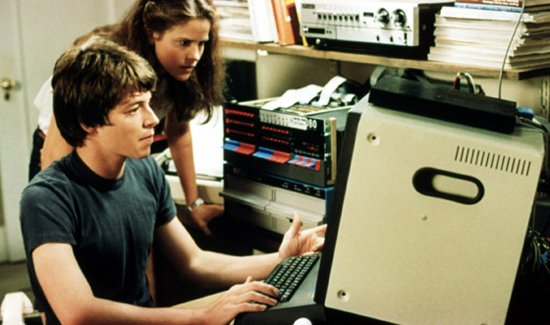
Remember the 80s flick, WarGames? Matthew Broderick was caught hacking into a sophisticated computer system that interacted with you (basically, what we have now). At the time, this advanced system learned from itself. Eventually, it learned that Global Thermonuclear War could not be won, under any scenario, and eventually just asked to play chess (after scaring the pants of nearly everyone with security clearance).
I’m not suggesting we all just play chess. To be certain, there’s something endearing about the leadership qualities of Russell Crowe or Russell Wilson, when they keep going. You want to instill perseverance. As a father, I know I do. We love it in America when people keep pushing and going despite the odds, despite the injuries, despite the repercussions.
But you have to look at the culture we – all of us, fans, players, coaches, media – are creating. Is there truly a way to win this game when more and more former players end up not winning at the game of life? Substance abuse, violence, suicides; these are not things I want for my boys. I don’t want them to end up like Jim McMahon, who’s forgotten more about his professional football career than anyone who went by the name “Punky QB” ever should.
Griffin’s injury hasn’t sparked new conversation around head trauma or concussions, because it was his knee.
And this goes beyond giving his team the best chance to win over the backup. Was it best for him? Maybe not. Is it his choice or the teams? Perhaps both, in some way. Yet a friend of mine, who’s had five knee surgeries, three of which were of the reconstructive nature, commented how Griffin’s knee buckling didn’t, uh, look good. He would know – my friend’s injured knee came from football.
How will Griffin’s knee hold up over time? That’s not just the concern of the Washington Redskins or fans of RGIII or the NFL. That’s Griffin’s concern, too. And maybe he’s fine with it. He’s a grown man and has signed a contract to go between those lines each week. If he chooses to play on an injured knee that could lead to major obstacles in the ways he lives life after football is his decision in almost all ways.
And you know what’s ours? What we allow our sons to do, the generation of young boys between the ages of 6-13 who really can’t do anything if we don’t allow them to play.
It’s striking that so many former players have said they weren’t sure if they would allow their boys to play football. Kurt Warner caused a stir when he said he’d prefer his sons not play and nearly retired a year before he actually did when his teammate, Anquan Boldin, suffered a nasty concussion in a mid-air collision going after a ball Warner threw. Tom Brady’s father said he waited until he was 14 until he allowed one of the league’s greatest quarterbacks to play the game. All-pro linebacker Bart Scott said he plays football so his son “won’t have to” and Hall of Famer Terry Bradshaw, who won four Super Bowls with the Pittsburgh Steelers, said if he had a son he wouldn’t allow him to play.
It’s the totality of what we see – it won’t go away. Our gut instinct and reaction tell us that something is off. From former players struggling to cope (like Junior Seau or Dave Duerson) to current ones who struggle, too, we’re getting an all too clear picture of the vast differences between modern football and the game that was once played.
They are not gladiators, and this is not ancient Rome. Commendable, endearing and manly as it may be, it’s brutal and barbaric for us to ignore or subconsciously enjoy their suffering.
Are they well paid? Most certainly. But that money will be gone to prescription drugs and doctor appointments between the ages of 40 to 75. If they make it that long.
It’s one thing to watch it all unfold. It’s another to willingly and openly subject my own children to it. We’re supposed to learn from things. And I frankly can’t decide what I will do with my youngest two boys or how long our 10-year-old will play.
Because football is becoming more and more like a modern sports version of Global Thermonuclear War.
The only way to truly win is not to play.
 worldbetweenlines.com