American culture, Chip Kelly, fired NFL coaches, gossip, Hollywood, Philadelphia Eagles, Star Wars, Star Wars: The Force Awakens, Uncategorized

Perceived Perfection

Two thousand sixteen.

We have arrived in this, the future, and it by all accounts resembles the recent past. In some cases, it might even resemble a distant past, too.

As a society, we seem to be tempered in our expectations of what we can accomplish because we see firsthand what we have been unable to accomplish to this point, all the while unaware of the fact we very much hand a part to play in what was unaccomplished all along.

So much displeasure going on all around us. So much lamenting. So much longing for the future, too busy to enjoy the present. A present which will become the past that we will begin to long for.

Ironic.

After all, what kind of malcontents would be if we didn’t endlessly hype how excited we were to be taken back to a galaxy far, far away in film, doll out a collective $1.7 billion in three weeks to see Star Wars: The Force Awakens, only to turn right around and bash it as “unimaginative” and whine about the former film prodigy J.J. Abrams’ lack of originality?

forceawakens4-xlarge

We beg – no, demand – updated classics, then complain when it’s too retro? We want retro Jordan’s and then complain that they are either too identical or not similar enough. Didn’t we skewer Indiana Jones and The Kingdom of the Crystal Skull for being not enough like the other Indy movies?

I can’t keep up. No one, pardon the pun, forced you to see that movie.

The same as no one forced George Lucas to sell the Lucasfilm and Star Wars galaxy for $4 billion to Disney. Those “white slavers” as he calls them.

Didn’t Lucas create Jar-Jar Binks?

Uh, I’ll just leave that out there, Mr. Lucas.

But Lucas is simply much the same as the rest of us in the modern age: immediately regretful of what we no longer have, though we didn’t treat it all that well when we had it and unable to move on to something else until we’ve sufficiently trashed it.

Sadly, the rest of us don’t have the $4 billion to ease the burden of negativity. Careful, George; remember what that path of anger and resentment can lead to?

But there’s another, deeper, more sinister than Sith reason we turned so quickly on Star Wars: The Force Awakens: snark.

The snark is all around us. Our snide remarks are becoming our only remarks as we remove ourselves more and more from the actual world to engaging with the vast majority of people electronically.

Would you really type half of what you do if you were to see the person in a hallway?

And how often has pressure from others led you to comment or fire off at the fingertips that which you wouldn’t have said previously?

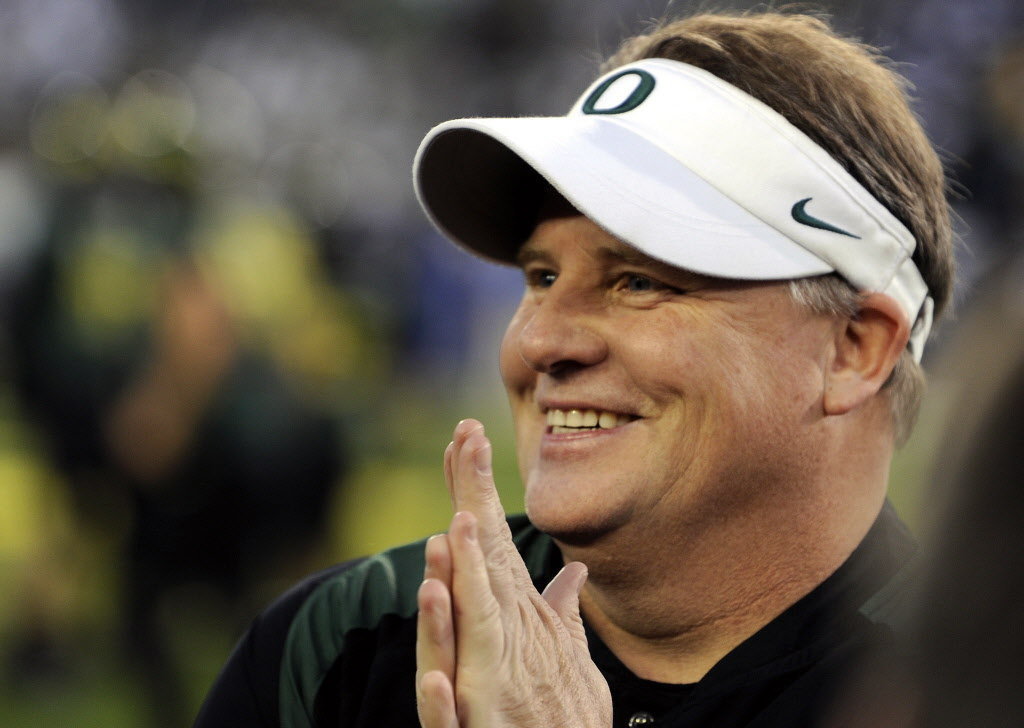
Philadelphia Eagles owner Jeffrey Lurie called Chip Kelly a culture-builder, an excellent coach, someone he liked and respected and someone who didn’t need to prove anything to anyone just four months ago, in September 2015.

chip

Last week, Lurie couldn’t fire Kelly fast enough, leaked false info to the press about it, and generally smeared him for 48 straight hours.

Why?

The nameless, faceless social media mobs in full snark attack mode, pushed Lurie – who gave Andy Reid 14 years on the job until hiring Kelly – to do the exact opposite of what he said.

We’re all engaged in social media in some way, yet we’re terrified of it at the same time.

We hate to scroll through the feeds and see nearly 75 percent of what we are subjected to see, but addicted to the habit or the “information” we think we’re getting.

We don’t want to put it down, but we can’t put it up.

For every viral post about a child who had their wish fulfilled or someone doing a good deed for someone, there are 4,553 posts of selfies, quizzes and generally everyone complaining about something.

Better still: a good deed has to go “viral” to get the proper attention for it. Remember, if it is not on social media, it didn’t happen right?

Then again, there’s plenty of jibberish that passes through social media that does not pass the sniff test. Take the endless election cycle, for instance.

I’m not sure what I think about any of the 2016 presidential candidates because of the sensory overload I’ve experienced during the start of the campaign season.

And because I have no idea what they actually want to do through some combination of overexposure and underexposure, I feel completely unprepared to vote in six months, even though my state will vote too late for the primary to actually matter.

There’s both sincerity and sarcasm in that last paragraph. Sadly.

The truth is, I somewhat pity these folks. True, they make these boneheaded mistakes themselves, only to nosedive in polls that I thought everyone agreed three years ago didn’t really matter, but still.

If we thought the era of social media and treading and mea culpas had reached it’s pinnacle, think again. We’re roasting these candidates on the open fire of social media.

You step into the world of snark, you best come ready. Not many survive. And unfortunately, these candidates can’t play it cool like the rest of us: chilling on the sidelines, sharing only what we want to share, what we assume the online world wants to see from us: perceived perfection.

It is what we strive for now, perception. It can be any different types. We can become anything we want online, through our Insta-feeds, Twitter bios and Facebook posts.

We can be funny, we can be mysterious. We can be brooding, we can be political. We can be fit, we can be alcoholics. We can be vain, caring, jet-setters and turbulent.

I am sure it is not that cut and dry. I am certainly guilty of it, too. You can click through status updates and pictures of my five children, my wife and myself and you’d get a bunch of pearly whites and smiles at the intersection of Constant Fun and Perfect Family.

We are only perfect for us, folks. And some days, my neurosis leads me to wonder if I’m even perfect for them that day. We get angry. We cry. We lose our temper when the milk is spilled for the thirtieth time in 12 days.

You might like us for an afternoon or weekend, but we would get on your nerves, I swear. And likewise, I bet you would get on ours, too.

We’re all looking around at each other like we have got it together, but in reality, we are running our day-to-day lives more like the Cleveland Browns than the New England Patriots.

But apparently, life just looks better with a filter.

93831-instagram2-presets-for-lightroom-samples-tree-original-1358439909

Of course it does. Any sunset with palm trees and beaches looks enviable.

If it is your daily life that could use some contrast, sharpness, color and filter adjusted, consider being more social and less media.

Personally, my goal  in 2016 is to be a bit more transparent, to be more positive in my day-to-day life, less anxious and neurotic, and do my best to enjoy the present moment, unfiltered.

Plus, I have got to pay more attention to this presidential election thing.

I still don’t know what they stand for.

The polls say that’s not good, considering my gender, party affiliation, race, breakfast intake, height, income and inclination to watch Friends re-runs with my wife on Netflix.


Standard
Chip Kelly, LeSean McCoy, Michael Vick, NFL, Oregon Ducks, Philadelphia Eagles, Washington Redskins

A Chip off the new Block

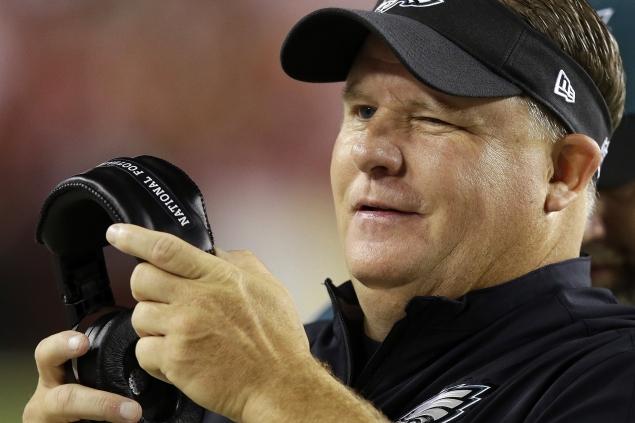
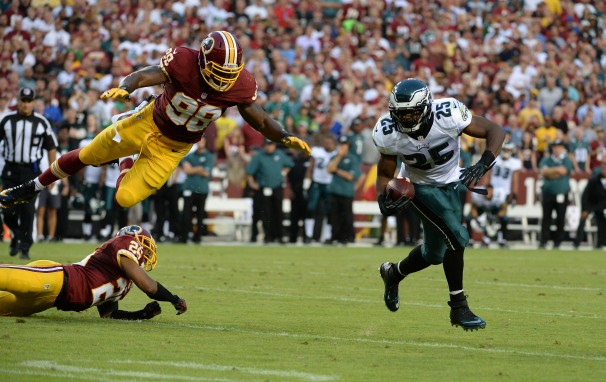
Chip Kelly thinks his Philadelphia Eagles – who rattled off 53 plays before halftime to the tune of 24 offensive points and 322 yards – were too slow on offense.
(Eyes roll across America).
Really, Chip?
C’mon, buddy. Don’t be that guy.
“I felt like it was slow, to be honest with you,” Kelly said when asked about the first quarter. “We put the ball on the ground too much, we didn’t get the ball to the officials, we could have sped things up. … That’s something we need to continue to work on.
Fine, you go do that, Chip. Go work on it, run your guys into the ground and burn ‘em out.
But for today, just know it was fast. So fast Twitter’s obnoxious commentators couldn’t keep up. One play on average of every 22 seconds. Oregon in disguise as Philadelphia. Defenders sucking wind, Jon Gruden gushing your praises like he would pay anything to attend one of your coaching clinics.
If we talked about New England’s offensive speed, Philadelphia makes the Patriots offense look like a turtle crossing a highway.
But I’m actually not writing to heap more praise on top of Kelly for a great half of football. I’m writing because I want to know what’s wrong with us? Are we just that unhappy?
I’m referring to all those negative Nelly’s out there who take a beautiful moment like last night and begin bashing it.
To recap:
            It won’t work all season
            Michael Vick can’t survive this pace
            LeSean McCoy will need leg transplants
            Everyone will be hurt and ticked off by Week 7
These are all variations of things I heard in the first 24 hours of the Eagles rolling the Redskins last night. Whether or not they are valid is not the point. We’re so obsessed with “calling it” that we can’t enjoy anything. What I mean is we have a sick obsession with tearing others down. We write the history before it actually happens. We think we know exactly what’s going to happen before it happens.
The last thing we should do is listen to people who think they know everything. They don’t.
And this does not just apply to sports, but life in general. So I should listen to my broke friend on monetary advice? Tell me again why my new business venture won’t work, again, please.
How about some nutritional advice from someone who is in poor health, or relationship advice from someone who’s never really been in a relationship. Yes, single at 45, please tell me what the keys to a successful marriage are.
We think everyone wants to hear our opinion – on everything – but they don’t. The truth is, we’re watching people on TV who are paid to tell us what they think and we do either two things with it: agree or disagree.
There are varying shades of agreement, but really, that’s what it boils down to. The problem comes from others telling you why they think it’s right or wrong with a conviction of perfection behind it – an absolute believe of knowing they are right.
But you can’t know anything for sure. Nothing is guaranteed. A hundred things happening right now are changing the course of what will happen in the next five minutes. So we really don’t know anything – we just assume to know based on a number of internal factors.
So here’s the thing: I assume that I like this Philadelphia offense and Chip Kelly. I enjoyed what he did at Oregon. Did he ever win a national title? No, but he made Oregon games so much more fun to watch than other college football games. Which is what happened last night in the first half. I enjoyed the first half of the Eagles-Redskins more than I enjoyed any other NFL game this week. I would like to see more. I want to see what happens.
And I don’t need someone on the radio telling me within 12 hours of the game why it won’t ever work long term. Lots of things don’t work long term, partially because they are not supposed to.
So before we totally kill Chip Kelly for what this offense might not do or what it could do to his team, can we just enjoy it for a little while?
Do we know how to do that anymore?
No, because bashing and drama draw eyes and ears. Positive thinking?  Go to church, right? We’d rather trash the new iPhone before it’s been actually seen or used. We’d rather write off a movie that some critic didn’t like than go see it ourselves. We’ll trust complete strangers bashing something on social media before we do our own analysis.
Ease up, ‘Merica. Slow down and smell the roses and stop seeing only the thorns. Life ain’t always beautiful, but it is a beautiful life.
And for 30 minutes, I watched beautiful, fast, fun football last night.
Thanks, Chip Kelly.
Standard
Andy Reid, Chicago Bears, Chip Kelly, Cleveland Browns, Dallas Cowboys, fired NFL coaches, Lovie Smith, NFL, Norv Turner, Oregon Ducks, Pat Shurmur, Philadelphia Eagles, Rex Ryan, Tony Romo

The Firing Squad


Round and round we go.
The yearly – and highly predictable – coaching carousel in the NFL made it’s big return.
Of the 20 NFL teams that began their off-season Monday, half of them made at least one firing of a head coach or front office personnel.
The names and faces change, but not really. They go from place to place. One man’s trash is another man’s treasure, so they say. If you were an NFL coach or general manager fired on Pink Slip Monday, fret not, you’ll most likely have a new job, in many cases the same as your old one, very soon.
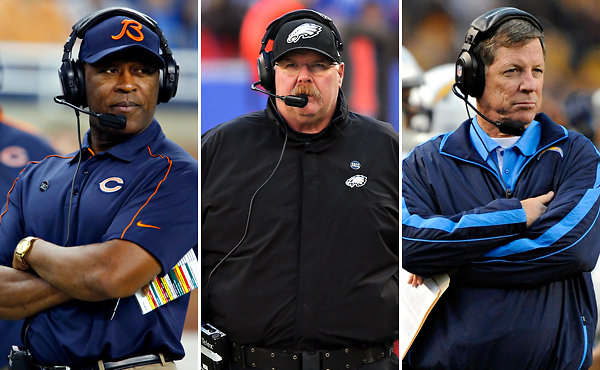
Five NFL coaches were fired Monday, including Lovie Smith of the Bears and Andy Reid of the Philadelphia Eagles, two long-tenured coaches with overall winning records. The list also included Norv Turner of the Chargers, Pat Shurmur of the Browns and Ken Whisenhunt of the Cardinals.
Why did these coaches get fired, but not, say Jason Garrett of the Dallas Cowboys? Or Rex Ryan of the Jets? I mean that inquisitively as to the bigger question, not actually why. I get why – most of these coaches failed to do something, like reach the playoffs, win a Super Bowl, change the culture of the locker room – something. So the “why” is there, but not the “why” of “to what point and purpose”?
A friend texted me after Tony Romo turned into Tony “Oh-No!” again Sunday night, asking if the Cowboys would finally do something about Romo and move on. My response was that though it may be better for all sides, why? Romo isn’t a Top 10 quarterback in the NFL, but he is in the top half of the league, right? So if you’re going to “improve” or “upgrade” the position, it better be for someone, well, better, right? Otherwise, what’s the point? And are we sure Romo is entirely the problem?
The point is the same with coaches. Is Lovie Smith one of the top five or 10 coaches in the NFL? No, probably not. Is he better than half? Probably. Was Lovie the problem? How do we even know? He’s the same coach who guided them to a 7-1 start this season. But what has never improved and been a recurring source of problems is the offensive line. It’s downright gross. I don’t like Jay Cutler, but I fear for his future health all the same with the brutality of the hits he takes each year.
Yet it’s easier to fire a coach than it is to suddenly get a brand new offensive line that works. It may be a severely flawed theory, but it’s one all the same: the coach will make these less than mediocre lineman better, either through film, motivation or some other intangible. Basically, he’ll cover the scouts mistakes on draft day.
That’s like arguing that you bought bad fish at the market, but expect the chef to fork over the greatest tilapia you’ve ever tasted. It’s backwards logic.
But, as we’ve covered, it’s just easier. It gives the illusion and appearance that changes are being made and things are going to be different.  
New coaches! New era! Same players!
The culprit in many of these cases tends to be poor quarterback play or a bad offensive line that can’t produce a good ground game or protect said quarterback. But how much of that has to do with the coach? Generally, it seems as though bad coaches can win with good players (see Jim Caldwell’s Super Bowl appearance with Indianapolis), but good coaches have a hard time winning with bad players. There’s only so much a coach, good or bad, can do. I can diagram a terrific play, but if the players don’t execute it, it’s not a terrific play anymore.
Only 12 of 32 teams make the NFL playoffs, that means roughly 60 percent of the league is done now. If the requirements for coaching in the NFL include making the playoffs every year or two, then good luck with any semblance of job security. Some years you just don’t have it. We’ve rapidly increased our intolerance for meeting fan and front office expectations.
Just because something seems like it should be working or winning doesn’t mean it does for a variety of factors. And what about if you’ve been terrible for a long period of time? For example, when I saw the Browns, they just looked different this year. They were competitive, they were going in the right direction. They ended up 5-11, but they feel like a team that could turns the corner next season. They, too, fired their coach.
So it’s been decreed: you must go to the playoffs to keep your job, no matter who you are. In some situations, you must go to the playoffs more than a certain number of times in a certain number of years, but we just can’t tell you exactly what that looks like. And we’d really like you to win the Super Bowl, even though only 7 franchises have won the Super Bowl in the last 11 seasons.
If we aren’t setting realistic expectations, then we’re expecting unrealistic results.
It’s not to say that some shouldn’t be fired. It’s necessary or just time in some cases. But 5-7 coaches every year? What have you done for me lately, Tom Coughlin? Welcome to the 2013 Hot Seat.
After being fired Monday, many of these coaches were rumored for other gigs on Tuesday – like Reid in Arizona or Kansas City. Lovie Smith might end up as a defensive coordinator for some team on the cusp.
And there’s our punch-line to this bad joke: these guys keep finding six and seven figure jobs in other places, within weeks of being let go for failure to accomplish nearly the same tasks in their old employment. If they were CEOs, they won’t sniff another job like that unless they built something else from the ground up, and never for a rival company.
From this perspective, it’s apparent professional sports still can’t decide if it’s a business or not. Less risk, less innovation. Coaches get hired and immediately get conservative. Take Shurmur with the Browns, again. Though I just partially defended his two years in Cleveland as not being long enough, there wasn’t anything revolutionary about his tenure.
Known for his offensive mind after grooming Sam Bradford’s solid rookie season in St. Louis, his players in Cleveland complained last month at how stale and predictable the offense was.
Predictably, Shurmur got the head gig and wanted to keep it and feared that veering too far from the norm as a head coach and trying radically new things would make for a more volatile fan base and negative media coverage. So he reverted to what everybody else did or does as a head coach. His results: much like everybody else.  
So who’s the hot coaching name this off-season? Chip Kelly of Oregon, who’s revolutionized the college game with his speedy offense. Why would Chip Kelly want to do go to the NFL and become like everybody else? Right now, the odds are long that Kelly will take a job. He turned down the Tampa Bay Buccaneers last year, who had a better team than many of this year’s suitors.
Thus without innovation in the NFL, since there’s so much coverage of doing anything “different”, it basically ensures we get the same old candidates popping up, ensuring that the merry-go-round will just continue.
The same thing will happen next year, another 5-7 coaches will be fired, finding similar jobs in different cities. Maybe it’s a reflection of the times – we’re too impatient to build anything anymore. We’re not patient enough to completely innovate something new and give it time to grow. Coaches don’t stay in the same place very long, to the point where 5-8 seasons is considered a lifetime, either by choice or by force.
Are we fans that demanding, that our power sways those in the decision making positions of our favorite teams feel compelled to make swift change for the sake of showing that they care about what we want? If so, why doesn’t this work with our elected officials in government? They are put there by us, unlike professional sports. Shouldn’t it be the other way around?
Regardless, another post-holiday blues begins to settle in as the NFL winds down, once again with the stark realization that the more things change, the more they stay the same.
Someone break the cycle – make real changes to who your workers are, invest in innovation, give it time to grow.
Maybe whoever does won’t be looking for a new coach in two or three years.
Standard
Alabama football, BCS Championship, Brian Kelly, Chip Kelly, LSU, Miami Dolphins, Nick Saban, Notre Dame, Oregon

Prepare to be Prepared


In roughly one month, Nick Saban could win his fourth NCAA college football championship. This is a big deal for a lot of reasons, all mainly to do with sports. He’s well prepared for this moment.
And thus is the Tao of Nick Saban, because nearly everything revolves around football and preparing for football games.
There will be many stories and columns written over the next 30 days, on Alabama’s current dynasty, which is playing for its third national title in four years. There will be stories about the rebirth of Notre Dame, puns about waking up the echoes (I’ve used a few myself), about how Brian Kelly stands become the next in a long line of famous Notre Dame coaches who have won a national title in their third year at the school.
But nothing is more fascinating than the blank, devoid nature of Nicholas Lou Saban.
He’s won 158 games and three national championships (one at LSU in 2003, two at Alabama, in 2009 and again last season). He wins bowl games, conference championships and it could be argued, he started the SEC’s run of dominance with that 2003 LSU team. 
 
Saban is notoriously famous for ducking questions. Any and all questions. Questions about his team, his opponents, his coaching style, recruiting practices and most notably, his emotions.
He rarely smiles, even when hoisting crystal footballs. He doesn’t seem to be enjoying life or football very much.
That’s somewhat troubling for a man who’s at the top of his profession.
Perhaps because he fundamentally believes he can control and manipulate the actions of 19-22 year-old college students, he is obsessed with micromanagement. After the 32-28 victory over Georgia in the SEC Championship that secured the Tide’s bid to the BCS title game, Saban was meticulously breaking down the failure of his players to run the defense called that was designed to stop Georgia from getting out of bounds and ending the game.
Everything Saban does is by design and when it does not go to plan, it’s upsetting to him. He wants to prepare to control. But control is an illusion, especially on a football field with 22 individuals who are reading and calculating in real time. Things don’t always go according to the plan.
And not going according to the plan is exactly how Notre Dame, as an underdog, can beat Alabama. The can prepare to be unprepared. Because it’s the only thing that can beat a calculated robot like Nick Saban.
Surprise him. Create spontaneity.
Miles, aka, the Mad Hatter, drives Saban nuts with his random ideas, fake punts, fake field goals and general zaniness. Only two teams have beaten Alabama over the past two seasons – LSU and Texas A&M. LSU did it by being flat-out crazy, with Miles calling the shots. Texas A&M did it with a quarterback, Johnny Manziel, who largely improvised once plays broke down.
You have to understand how essential preparation is to Saban. And how it’s drilled into his players, how his teams review minute details of every play call, snap count. This is a credit to their obsessive-compulsive head coach. Saban prepares to be prepared.
So when A&M ran their plays, Alabama reacted appropriately, right up to the point of finality. It looked like everyone was covered. It looked like the quarterback was sacked, or had no release valve or fifth option. Then Manziel went off the page and created something.
Same with LSU. It could be 4th-and-30 and Les Miles will run a fake punt option pitch. The least likely play is what Les likes. Especially against Saban, because Miles knows he probably didn’t spend a ton of prep time with his players on the least likely option, therefore it has the best chance to succeed.
And Georgia tried it in the SEC title game. With just seconds remaining and no timeouts, instead of spiking the ball to stop the clock and set something up, Georgia ran a play. They came up short and ran out of time. They didn’t even run the play (a fade to the back of the end zone) the way they wanted to. If they had, they would have won.
“Our players need to learn and execute things,” Saban said. “Like I told them, the most important thing in this game was to execute the plan.”
Had they called the timeout, they might have won, too. But the odds were long. Another 30 seconds for Saban and his assistants to run through the catalog of information in their brains about what Georgia’s top four plays are in that situation. Scanning all information, Alabama would have narrowed it down, ran that right play and most likely, the game would have ended with a sack or an interception or something.
This is why it probably eats at Saban that he failed with the Miami Dolphins. There wasn’t enough stability and too much spontaneity.
In his two years in South Florida, Saban’s teams were 9-7 in 2005 and 6-10 in 2006. It’s important to note how he ran the team as opposed to how they performed. He ran it like he did and would a college program. Except these are grown men. They are professionals.
Saban also elected to pass on signing Drew Brees, because of uncertainty over the torn labrum in his shoulder. He traded for Daunte Culpepper instead. Ironically, Culpepper was the one who never recovered from injury (his knee), leading the Dolphins to start 2006 at 1-6.
It was his only losing season. He couldn’t plan for Culpepper’s failure. He spent weeks assuring fans and Dolphins owner Wayne Huizenga that he was staying. On Jan. 3, 2007, he was gone. For 8 years and $32 million to Alabama.
Saban likes the safety net of college football. He knows what he is and he knows what he’s dealing with. Not many coaches will out prepare him, if any. And he’s got the talent (and their attention, due to their age and the stature of the program).
The only time you really hear him complain is about the BCS (when it’s not going Alabama’s way) because it’s unpredictable. Oh, and that he doesn’t like Chip Kelly’s offense and the speed of games now, because it’s not good for players to go at that speed.
No, Nick. It’s not traditional. It’s hard to completely prepare for. That’s why he doesn’t like it. It makes Saban uncomfortable to be out of his element, to have something out of his realm of control.
There’s nothing wrong with this mind you. It makes for a highly successful college football coach. He produces quality talent, wins, good NFL players. It’s a solid-product in sublime packaging. It works. But it doesn’t emote. It doesn’t inspire. It’s not entirely creative and ground breaking.
And while there’s nothing wrong with it, it’s highly un-entertaining. Saban is bland, boring and frankly, kind of creepy with his obsessive attention to preparation. There’s not a lot of depth there, it would appear. Saban thinks about preparing for football games and little else. He may have charities, he may have a great heart for children and his faith, but he’s not here to change the way we think about football, to invent something new.
Saban’s purpose is to execute the plan that was prepared.
Now, the king of preparation has 40 days to prepare for a bland offensive Notre Dame team and a defense that probably, despite their high ranking, has some holes a great football mind like Saban can find.
For Notre Dame, to win this battle is to not play that game. Notre Dame must do something different, something unpreparable (yes, that’s a new word, for those scoring grammar at home). Something…Miles-esque. Manziel-like.
So for all that you’re about to read, see and hear about Alabama, Notre Dame, traditions, defenses, Brian Kelly and the Irish, national championships and whatever other buzzwords are hard pressed into our subconscious before the BCS National Championship, remember this: Nick Saban will have his team prepared for what is most likely to occur.
Nick Saban won’t go back to the NFL. He can’t be happy. And the pressure of winning at Alabama means there’s no joy to it anymore, not with the expectations so big each week. So his life and his coaching career are intrinsically linked to this feeling of an elevated notion of unhappiness due to expected success. The success isn’t a surprise because it’s so thoroughly prepared for.
But with sports, and life, it’s the unexpected, the roller coaster moments that make us actually feel alive.
If you spend all of your time preparing and things go exactly as planned, it’s a life lived.
But is it living life? 

Either way, it can’t be much fun, which is something you can’t prepare for.


Standard