American culture, ESPN, money, President Barack Obama, Society

The Fog of Money


Time is money.” – Benjamin Franklin
Ever heard of the fog of war? It’s a often-used military term for the uncertainty in situational awareness experienced by those participating in military operations. The phrase “fog of war” essentially tries to capture the cloud in judgment that can occur during a conflict, military campaign.
There is uncertainty in your rationale, your estimations of your enemy’s capabilities and intent – as well as your own. As one might gather, this is a bad thing, as your judgment, logic and rationale should be clear during such trying times and circumstances. Military’s all over the world have discussed, practiced and prepared for the fog of war for centuries – but it doesn’t stop it from occurring.
The same could be true of American society right now regarding the economy, government and our culture. We’re in a haze socially, too.
This is referred to as “The Fog of Money”.
Because whenever money is involved, we lose all sense of rationale thought, logic goes out the window and our judgment is certainly clouded. What’s worse is own enemies know this and use it to their advantage.
The difficult part, though, is determining who are enemies are. They are not just groups without country in foreign lands, rather, the majority exist within our own borders, inhabiting the same space and occupying the same soil as we do. They could be our own government – both as an institution and as individuals in the institution. They could be the very people who employ us. Our enemies could be family and friends.
If you find this far-fetched and think that this is just another spiel about money being the root of all evil, well, you’d be both right and wrong.
It’s widely known that money certainly drives nearly everything and brings its own aspirations and motivations into any and all situations. It clouds judgment just by entering the room.
This is why they are making more Star Wars movies. Its why your favorite 1970s band continues to tour. It is why you get up and go to your job each day. The fog of money can be found all around us – the desire to get it, to keep it, to use it, to give it away.
There never seems to be enough of it, even though it really exists within the context of our own minds. Technically, it’s just paper that we’ve universally agreed holds some sort of value. As my high school history teacher said, if we all agreed today to burn all money and start using rocks as currency, it wouldn’t create a new system – just a new currency.
The Fog of Money creates an illusion of power, which is something else that’s in and of itself, a fog. Power exists because it is universally acknowledged that someone has it over you.
This week, Politico ran a storyabout how interest groups and the people seeking an audience with President Obama are using advertising time (and money) on ESPN, because they know he watches sports (hope they are keenly aware of this relatively new technology called DVR, which allows you to skip through commercials).
Trade associations and companies are using the media to try and garner Obama’s attention. One strategist indicted that the ads cannot be obvious to the president – he can’t know he’s the intended audience.
Money to deceive the powerful of influence? Who really has the power in this situation? Is it the one running the ad, the president – or the medium itself? Who can tell in this fog?
And it is not just political – Microsoft and the American Petroleum Institute (the largest oil and gas industry trade group) have used the same tactic to try and gain favorable audiences with those who watch ESPN and other networks.
It could be said that all this money would be better spent trying to improve services, trying to better the world through advancing technology and communications. But a message like that cuts through the fog and drips with a sappy message of the advancement of civilization in general. Kind of the opposite point of capitalism, come to think of it.
Thus our contradiction: a country with cultural principles of equality, of kindness, of opportunity, compassion and freedom, but with fundamental economic principles of supply and demand. We’re constantly at war with our two selves: the part of us that wants to do good in and for the world, and the part of us that knows money makes that very world go round.
Case in point: a New York realtor is offering employees a 15 percent raise to those who get a tattoo of the company logo. It appeals to those who are struggling in tough economic times and it’s a walking billboard (and weird story) for all who see and ask about it. It relies on desperation of the powerless, the need to gain any extra piece of cheese or slice of the pie or whatever classic acronym you can apply here.
Is it so different that millionaire and billionaire professional sports owners contemplating adding logos of key advertisers to team uniforms? The money generated from TV deals, season ticket holders, corporate suites, general attendance and merchandising isn’t enough, eh?
To make matters worse, we the people are just as a part of the Fog of Money as those we seem to perceive as running the show – myself included. Every time we “like” some movie or business or show our support for or against some issue, we’re showing that these advertising efforts work.
I’d never suggest removing ourselves from the equation – we’re too entrenched into the modernity of American society now. But we could learn from the likes of those who’ve prepared, as best they can, for the Fog of War.
We can take the time to understand others true motivations and intent. We can learn to draw from our past experiences, do better reconnaissance work and recognize faulty communication. We can slow the tempo of our decision making to a tactical level where there is less risk and better intelligence.
Basically, we can take the time to be aware that the Fog of Money exists.
After all, time is money, and while money buys time, it cannot stop it.
In the end, we’ll be judged on how we spent our time, not the money.
Standard
American culture, motivation, psychology, Society

Why I’m Happy to be a Human Body Pillow


This past Saturday, my eyes opened due to a horrible muscle spasm firing through my back as my body revolted due to the position it was in – which was basically a backwards question mark. 
This might be a good time to point out that my body wasn’t in this position voluntarily. 
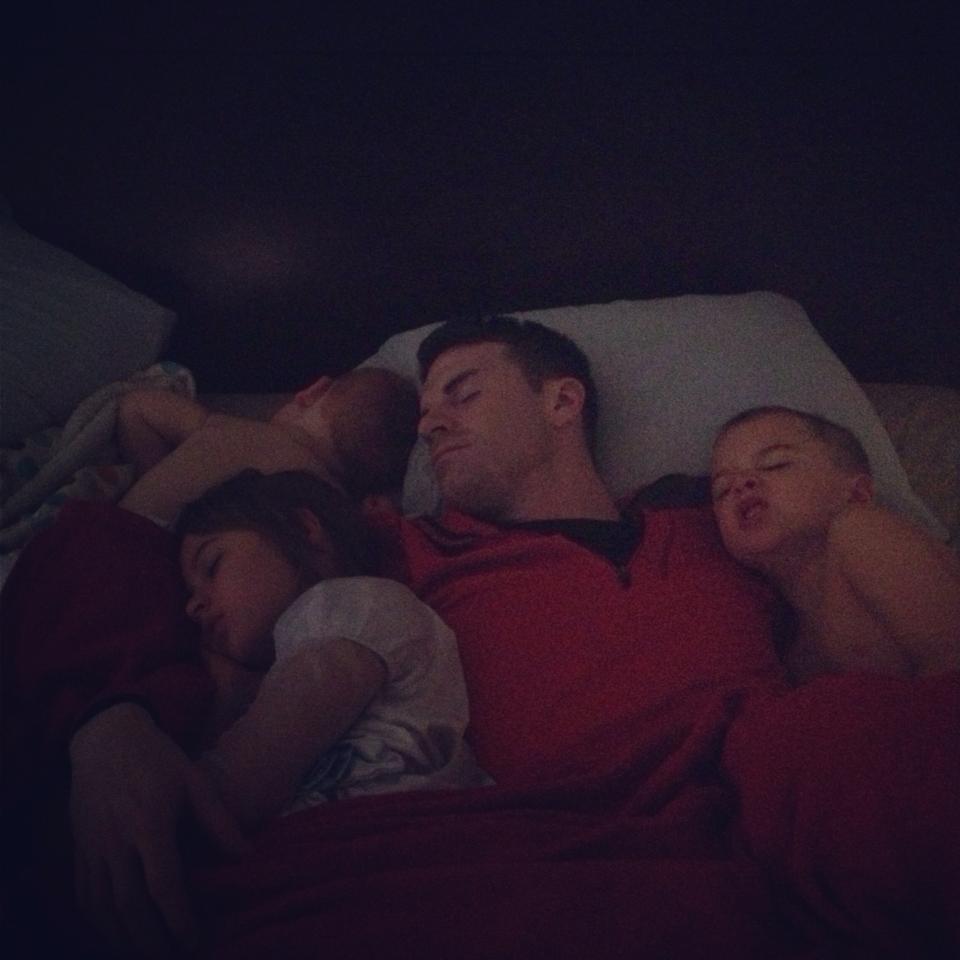
Our seven-year-old daughter had nestled into one side of my body, our four-year-old son the other – and somehow – at an angle across the top of my head, was our red-haired 18-month-old son (see visual evidence captured by my wife in the photo at right).
I had become a body pillow.
Not exactly what I pictured myself growing up to become as a young boy.
~~~~~~~~~~~~~~~~~~~~~~~~~~~~~~~~~~
It occurred to me recently that the world is filled with irony.
We’re not really evolving as a culture or a society, and mainly because we’ve been duped (we’re easily tricked, frankly). The longer we live, the more we forget the point of living.
You start out as a young child with hopes, dreams and aspirations of doing great things in the world. You play, explore, learn, imagine, dream, draw, paint, color, love. You find what you like, a game, a book, a friend – and you throw yourself into it. There is no set agenda, no one way of doing things, no orderly fashion to life – which allows aspirations of what you want to do seem less like hopes and wishes and more like “someday” possibilities.
Slowly, we become task masters. We get our schoolwork done on time; we go here, we go there, we act like everyone else. And we’re led to believe that acting like everyone else is exactly what we are supposed to do – because being like everybody else means you’re accepted as one of a civilized society.
So you become more focused on what you can realistically do, given a variety of factors like where you live, gender, race, religion, intellect, aptitude. You begin to place things in a box. Instead of asking why, as we did when we were young and curious, we start focusing on the how.
Once we stop asking why, the how doesn’t really even matter.
We’ve become a world of task checkers and project managers: once one thing is complete, check it off the list and it’s on to the next thing. I’ve been terribly guilty of this. It removes spontaneity. It removes the wonder. It removes the why.
How do I pay my bills? How do I make dinner, give the kids a bath, get my work done, mow the lawn, help with homework and still have time for my spouse? How do I have time for my friends? How can I be in three places at once? How am I so busy?
This task-oriented action is what drives us around and around, day after day, year after year. And we go around and around until someone tells us we can stop, or a bank account verifies it, a some point much later in life.
And suddenly, in our advancing age, it will occur to us, as we have nothing but time and no tasks, that we were asking how instead of why. We spent our lives asking the wrong questions.
Why did I do so much to pay so many bills? Why did I do what the world told me to do? Why don’t I know how to operate without a To Do list? Why don’t I give more time to my spouse and children? Why did all those arbitrary deadline matter so much? Why did the grass need to be mowed so much? Why do I need be in three places at once? Why did I allow myself to be so busy, so bothered, so stressed?
Forget the To Do lists. They serve no purpose than from keeping us from doing what we were meant to do. 
We’re led to believe that this task master lifestyle is accomplishment. Of what, exactly?  We think we’re getting things done, but we’re not. We think we’re working hard, because why? Is all work hard? Should it be? We even love to talk about how hard we work as a society. Good for us! We’re the best worker bees out there!
And we’re completely missing the point. For the record, I don’t know what the point is either, I wouldn’t pretend to.
But I’m always learning more about what it is not. Turns out, I’ve actually become much of what I always wanted to be, all because I’ve been given the chance to be a husband and a father of four.
I am a poet, a writer, a reader, a thinker. I am a historian, an artist, an actor. I am a pirate, a doctor, a cook, a mechanic. I am Santa Claus. I am a coach, a tour guide, a guardian, a granter of wishes.
In a way, I became more than I ever could hope for.
I am a human body pillow.
And the question isn’t how, but why.
Scratch that. The question is…why not?
Standard
American culture, poetry

Acting Like Children


You see her sitting there,
Eyes sparkle,
The sun dancing on her hair
A smile so wide
A face pure and true
She dreams of being a princess
She already is to you
A dancer, a singer,
A daughter, a sister
In 10 years, you’re bound to lose it
When you find who’s kissed her
What the world is like
Through the eyes of a child
A dad forgets
As the world has mild
But rebirth may come
Watching them grow
An understanding that
We really don’t know
All tomorrow is
And what it will become
Is up to the dreamer
Who steps out into the sun
I just wrote this poem for my daughter. She turns from the tender age of six to the even more tender age of seven this Saturday. And as my mind drifts back this week, thinking of all that has changed in the time since her birth, most of all I think I’m struck by how much I’ve changed.
Often in life, we’re caught gathering moss along our journey through time and space. We become complacent, forgetting what we dreamt of and wanted not so long ago and forging down a road very much traveled. 

The highway of life resembles a daily commute: a lot of people stuck in traffic, frustrated and flustered by where they are going, not so much how long it takes to get there.

The metaphor is not lost on me.

As I watched my three boys and my wife sing to our little girl last night in honor of said birthday, I realized that I’m still very much a novice at all this. I have much to do and even more to learn, yet I tend to gather moss in the day to day grind and forget the wonder of life.

It is my job to make sure that my children embrace that excitement, that wonder.The best thing I can do for my little girl is spend as much time as I can with her, simply loving her and supporting her and her dreams. The same with my boys.
As I have wrote before, we’ve stopped dreaming as a society, which means we’ve stopped growing, too. We’re also stripping it away from our children, perhaps subconsciously angry with the world for taking it from us. But we allow it. We follow the crowd. We join in. We participate by refusing to, well, participate.
And all this makes me realize, if being different than the crowd is weird, I’d rather be weird, I suppose, than to be just like everyone else. It’s not up to teachers or to the world at large to raise my children. No role models need apply. Self-image, worth and what they want to be comes from both nature and nurture.

Yes, I think about these things.Yes, I enjoy spending all my time with my family. It is completely fine to admit that, even though it doesn’t sound all that manly. 

No, I don’t want to go to the clubs and hit the bars. I never did. But they don’t exactly make bumper stickers for dudes that say, “I’d rather be playing Pirates with my kids!”

There just comes a time when you realize the only real debt that matters is the debt of time. You pay it off every day, and only you can determine how it shall be reconciled. 

I have these grand notions of what life will be like for us in the coming years, as my wife and I are determined that our family evolves with each others, remains close, confides in one other, protects one another and above all, does good in the world.

And yes, I meant do good, not do well (even though the latter is grammatically correct).
Children learn what they see. They see what we see, as that is what we typically share. If they see fear, they will become afraid. If they see anger, they become petulant. If they see you being narrow-minded, they will lack vision.
Therefore, are we proud of what we present to them? We’re concerned with the violence, apathy and general distrust found in the world when perhaps our biggest concern is the foundation we lay within our families.

Because we seem to be the ones acting like children – fighting, pushing, pouting. Shouting “mine!” and not playing nicely with others. But children only do this part of the time. As parents, teachers, grandparents and adults, we steer them down a better path. 

Well, who steers us?

Currently, we are behaving all the time as children do in their worst of times. Maybe we should take our own advice a little more. Maybe we should share a little more, be a little more kind to one another, read some every day, play with our toys, go to bed at a decent hour, turn off the TV a little more, eat well, pray. Dream.
Because our current path is not the road we want to be on. We’ve seen this before; we learned about it as children ourselves, in fact. It’s called history. And it repeats itself because we allow it, because we don’t correct our mistakes. Because we stand by as spectators in life.
So as my daughter begins a new chapter of her life, what will she learn in the pages that follow that further her story in the additional chapters to come? From my wife and I, and from the world?
I certainly realize I cannot control it all, that experience will teach her, knock her down, give her confidence and add references to her book of life. And the hope is that she keeps moving forward, keeps progressing and becomes all the better for it.
I am certain many of us hope the same thing of ourselves, our children – but what of our nation? Hope can only take you so far. 

What are we doing now that will enable us to become the best version of ourselves in the future? Because the best version of us will yield the best version of them. 

Yet again, this is a learning moment for us, as a nation, as a culture, as the ones guiding the next generation. Do we want them to follow our lead? Really, do we? Then we should probably start acting like it.

We should probably start acting like children.
Frankly, they’re doing it better than we are.
Standard
American culture, Boston Marathon Bombings, Fear, news, Society, Switzerland, Terrorism

The Fear of Terror (Or Why I Think of Switzerland)

In the immediate aftermath of the bombings that marred the Boston Marathon Monday, I did what many Americans did not.

I did not watch TV and get live reports. I did not check my Twitter feed incessantly. And while I prayed for the victims and for peace, I did not post videos, tributes and messages about supporting marathon runners.

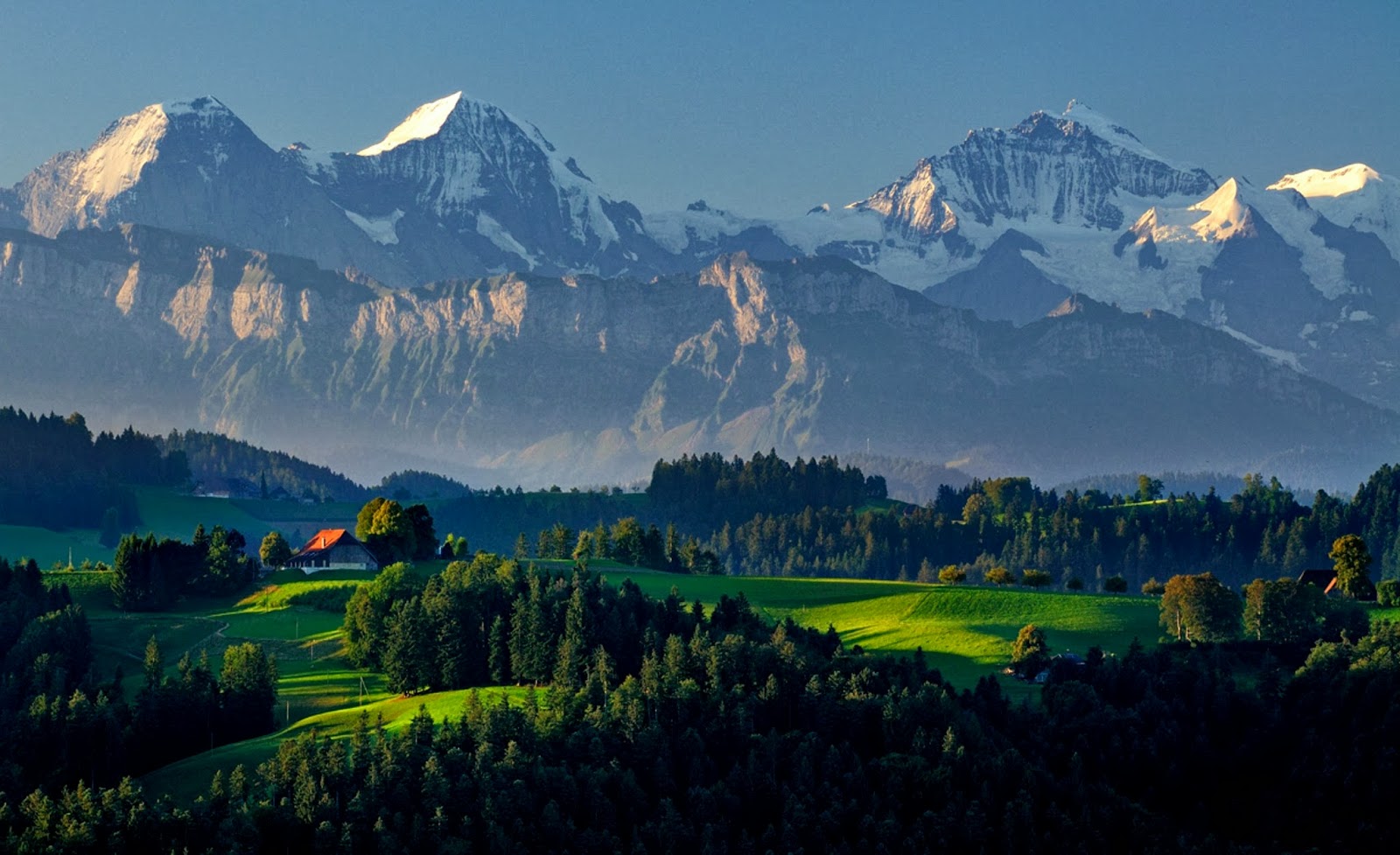
Switzerland 78I Googled Switzerland.

It was literally the first thing that came to my mind. It was as if my brain went to a default mode and wanted to be anywhere else, so what not something beautiful, neutral and serene. Thus, my fingers found the letters on the keyboard and suddenly I clicked “search” on Switzerland.

And for a brief period of time, I drifted off thinking about a country that seems to check out highly on all the appropriate categories: low crime, high income, happiness, housing and neutrality in most world affairs.

I thought about how it seems nice there, from what little I know about it. Complete with lush land, fresh springs, quaint towns and a history of being basically indifferent. Nobody messes with Switzerland because nobody thinks about them unless you’re reading the fine print upon viewing a movie that states you cannot make a copy of it.

I pictured my children running through wide open fields, with the sun basking down on their beautiful, smiling faces. I pictured my wife coming out of our historically accurate lakeside cottage telling us dinner was ready. I pictured me just returning from a day of work at some really cool company nestled into a majestic mountain ridge.

Basically, I saw us transported, just as we were, except without the fear.

That fear can be consuming; it is a fear that now lurks in the background of nearly everything we do. From going to sporting events or catching a flight, to walking past a tall building in the city or dropping off our kids at school, there is an unnatural hesitation about daily life in America.

Was it always this way? How would we know? We’re only us, unable to understand what it was like for our ancestors or past generations during their period of life in this country. I agree and enjoy this analysis by David Jones, where he essentially says America has been in worse spots historically and that we live in better times, we’re just more viscerally aware of threats of violence due to all our advancing technology.

While this most likely true and historically accurate, it somewhat negates what daily life is like with that information now. Now that we are more aware, what are we doing about it?

Today, the entire city of Boston was shut down by the manhunt for the perpetrators. Um…ever been to Boston? It’s, uh, a big city. Yeah. And residents were told to stay indoors. Transit was stopped. Without visuals, you picture some strange scene from a Michael Bay film where crumpled newspapers slowly blow through an empty downtown area.

We are paralyzed in these moments. We are paralyzed by the fear of the unknown. This is modern America, with a constant threat of foreign and domestic terror. And no, this is not over-dramatic.

Now, I hate to be a nudge, but are we supposed to just ignore all this? Is it purely a matter of getting tougher mentally and adjusting to life in our modern, American world? I ask mainly because we don’t seem to be doing very well.

Within an hour of Monday’s breaking news, each political party was finding ways to make this about sequesters and gun control and terrorism. Give it another three days; I’m sure 32- ounce soft drinks in New York City can be connected somehow.

We’ve reduced these events to either agenda talking points or punch lines. Or even worse, to justify the removal of liberties granted to us that make us uniquely American. Or, we’re just going to use it as an excuse to fight terror abroad.

Violence simply bringing more violence, in turn simply causing a greater sense of fear. And when people are scared, they will do anything to feel safe. Like give up their right to bear arms, or allow an ever-increasing society of security to become even more searched, scanned and patted down. We’re listening to people who couldn’t protect us before tell us how they plan to protect us now.

Maybe that is too much to ask, too great a burden to place. What is safety and security but a state of mind?

Our state of mind is constantly chaotic, full of information overload, complete with the graphic pictures, eyewitness accounts, news tickers, false reporting and numerous sources.

Here we are, glued and transfixed by the events – yet this information that is so readily available to us seems, well, developing. In a rush to be first, the networks are getting it wrong. Names, connections, the details – you know – the actual news.

At one point, one network featured commentators arguing over whether or not the suspects could be described as American, based on the grainy photos. We’re a melting pot, so how would you even begin to describe what an American looks like? See the problem?

A case can be made that these are indeed more trying times than at any point in human history. Is this a sign? Because these events are so horrifying, so unpredictable and nearly unspeakable, it could be seen as the beginnings of something much more. And that is simply because we live in a world of terrorism.

49749-comicstriponfearTerror doesn’t show decorum. There are no rules of war.

It’s difficult to place and compartmentalize these events, harder still to use logic and rationale. It is our inability to directly relate ourselves to random attacks that has us troubled as a society in general. In any situation, it’s safe to say that if that wasn’t us, it certainly could have been.

We’ve ran races or stood and watched family and friends. We send our children to school. We fly planes and work in large buildings. The events of the last decade-plus are worse than they were a hundred years ago simply because of the context in which they are occurring: everyday life. It’s not a war zone or on some predetermined battlefield where both sides are armed, with trained combat units, camouflage, guns and generals with battle plans.

The attacked are not forewarned. That’s why it’s called terror, because it truly is terrifying and unexpected. There is no time to prepare. The simple fact that while evil has always existed in this world, along with the good, both will find ways to achieve their goals, and this recent (in the context of history) development of terrorizing random people accomplishes more physical and psychological damage than we can probably even comprehend.

Which is what leads a person to go numb now, to draw a blank, in moments like Monday’s marathon bombing.

It is what leads a person as patriotic as me, someone who believes in and loves America and its history, to momentarily question my citizenship for the sake of my family, and the sake of my sanity.

And that’s when it hits you: when did the citizens of the world’s symbol of freedom reach a point where they would contemplate such a thing? Is it the political and social division? Is it the growing skepticism of government? Is it the loss of liberties and freedoms? Is it the taxes? Is it the continued loss of social normalcy and decorum?

This list could go on. Frankly, I’m just tired of thinking about it all, what it means and experiencing so many emotions around what this new world of fear looks and feels like. I just want to get to neutral, be peaceful and serene and eliminate the fear, for my family and for me.

Which is how you get to the point you are staring at a computer screen and typing in letters that spell out what feels like something safe.

Switzerland.

Standard
American culture, EPCOT, humanity, innovation, Progress City, The Florida Project, Walt Disney, Walt Disney World

The “World” That Almost Was


Today, many see Walt Disney World in Orlando, Florida as a vacation hotspot for the young and young at heart. And while this is most certainly true, it was going to be so much more.
Walt Disney had a vision when he purchased the roughly 47 square miles in Central Florida that would become Disney World. And it was an idea he simply had to try, simply because that’s what the man did. 
My family and I frequently travel to the “Vacation Kingdom” and every time a trip nears, I get caught up in researching what could have been, because there was something much more to the original plans than most realize: ideas that would completely revolutionize our world.
It all began when Walt Disney grew disenchanted with what was taking place around Disneyland in Anaheim, California in the years following its 1955 opening. Really, you could go back further: Walt was inspired to do something different than what was because when he took his daughters to amusement parks, he found them to be unclean, unfriendly and solely built for short-term entertainment of children. Adults were basically relegated to the sidelines and the experience lacked a uniqueness to it.
And so he created Disneyland.
Yet soon after, the area around the park – which he couldn’t control – was seized by corporations looking to get their piece of the monetary pie. Hotels, fast –food chains, all searching to pull profits away from Disney. Completely fair in a fair market economy.
But that didn’t mean Walt had to like it. Believe it or not, Disney (the man) didn’t care all that much for profit. He’s the same man, who, during World War II, had his studios do nothing but American propaganda films at his expense, not the governments. He was nearly broke following the war. It’s a situation that happened time and time again during his life. He’d sink everything into an idea or a vision he truly believed in.
So Disney wanted more area mainly to control the environment around his ideas, and with Disney World, those ideas were so much bigger than fairytale castles and character-themed rides. Ever heard of the Experimental Prototype Community of Tomorrow? No doubt you would recognize Epcot (the current park in Florida), originally named EPCOT Center when it opened in the early 1980s.
It resembles nothing of what Walt had planned right up to his death in December of 1966. The purpose of Disney World was to create this experimental prototype city, this EPCOT.
Walt noticed what had happened around Disneyland in California was something happening everywhere, on a grander scale: hectic, disorganized and dirty cities riddled with crime, obsessed with materialism and not with improving humanity. He became obsessed himself, with community based planning, cutting edge ideas on cityscape and design.
So he used dummy corporations to buy up all the land he could in Central Florida to keep the media unaware. In phases, he would build what in hindsight was his means to an end. Maybe the world would think his World was crazy if it was simply about improving society, so he would first build a larger version of Disneyland (aka, The Magic Kingdom), some hotels and golf courses in order to make the money to do what he really wanted to do: essentially, the small ambition of changing the world.
The purpose of this Florida Project was to entice American corporations to come up with new ideas for urban living. Instead of having to battle them for profits, why not use the profits to better humanity. Walt described much of it in a film made shortly before his death.
“EPCOT will take its cues from the new ideas and technologies emerging from the forefront of American industry,” Disney said. “It will be a community of tomorrow that will never be completed. It will always be showcasing and testing and demonstrating new materials and new systems.”
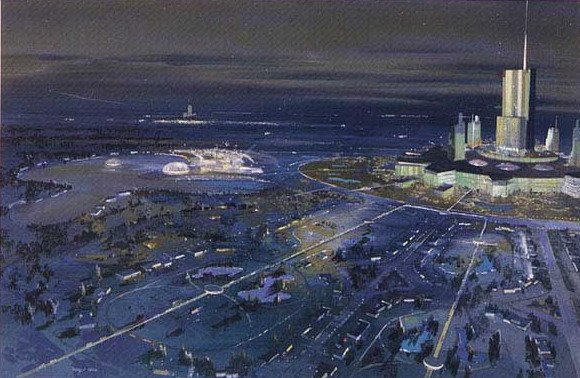
At the heart of it all was Progress City – a wholly new community with ideas that even 60 years later look futuristic and, frankly, downright amazing. Featuring a radial design (not a grid), an urban center with a green belt and an industrial park, it focused on people, not industry. Transportation would not include cars, instead there would be Monorails, PeopleMovers, and of course, walking. The industrial park would house the major corporations who would use the facilities and the city’s inhabitants to develop new technology for use of EPCOT and eventually, the world.
EPCOT was going to be so much more than what it became, and you can certainly find out more than is included in this space to satisfy your curiosity regarding its original plans. But what happened?
Well, essentially, Walt Disney died and the world went crazy.
After Walt passed away, the already skeptical board of directors slightly altered the plans for EPCOT, though the essence remained intact. The area that is now Downtown Disney was set aside to become the city of Lake Buena Vista, an essential arm of housing development for EPCOT and part of the outer core of Progress City. As late as 1972, six years after Disney died, his company was still moving forward with the majority of his original plans.
And then came the Oil Embargo of 1973.
The gas crisis meant a financial crisis, which permanently damaged those plans. Having opened to huge crowds in October of 1971, Walt Disney World was in its infancy when the Oil Embargo began. Suddenly, people couldn’t travel to Orlando to see Mickey Mouse. And if fewer people could travel, that meant less money spent at the park. Less money coming in means less money going out, less construction and completion of plans. Additionally, it meant fewer corporations willing to get involved with a project like EPCOT that would not be producing a financial windfall, even during strong economic times.
Lake Buena Vista was to be the starting point of EPCOT, but it would be nothing more than creative artwork. Coinciding with the embargo, with Walt and his financial wizard brother Roy both dead, the board began using outside influences, studies and research to look at feasibility, profit and loss and other mitigating factors.
Which is how, in October 1982, EPCOT Center opened with a giant geodesic sphere as its landmark – it had completely changed. Futuristic and a sight to behold, but mainly eye candy to those who connected tomorrow with future. Behind it laid greatly watered-down versions of some of the innovation and technology Disney had hoped for. Beyond that, a tribute to countries around the world. EPCOT Center became, in time, a cool and unique theme park, filled with great food, education and attractions.
But it wasn’t Progress City or an experimental prototype community of tomorrow.
You may find it strange to think of the man who invented Mickey Mouse and a theme park to, near the end of his life, be one of the last great idealists and innovators of the modern era, but it’s true that when Walt Disney died, part of our future did as well. The Walt Disney Company is still a leader in American corporate culture, and that itself is a tribute.
Innovation and ideas are worthwhile endeavors. We get so little of that now, which is even worse because maybe we had so little of it for so long.
As I have stated in this space before, we’re unknowingly focused on keeping the status quo in this country, and we should be embarrassed of ourselves. Building future generations to become employees and not entrepreneurs is a grave disservice. How do we know what we can do when we continue to do the same things we always have?
We’re taking away the ability and want of children to dream. We say it out of habit, that they can be anything they want or do whatever they want, but we don’t truly mean it because we then train them to be just like the rest of us – little mice nibbling at the cheese of corporate America, chasing small pay increases for material items that get us through the day.
And the Disney World that could have been inspires me to continue to try and forge a new path with my wife for our children, that they may carve a different path, a road less traveled, filled with possibility and unique vision.
Being different means taking on the biggest risks imaginable. It includes a little less logic and a little more emotion and passion. It requires unwavering belief, no matter how many family, friends or colleagues tell you it is crazy, who use their apathy and negativity to tell you what cannot be done.
It is easy to become influenced by these things. It is easy to listen to the research that tells you what won’t work – how do you know something cannot be done, if it’s never been done? How are we going to cultivate our next bunch of Edisons, Picassos, Disneys and Jobs by telling our children what we tell ourselves everyday: what cannot be done instead of what can?
The hope was that Progress City might break that cycle. Despite the odds, it came close to fruition. But it’s not enough to just plan, get halfway and then give up. That’s not any more American than the seedy underbelly of the area around Disneyland in the late 1950s. The best of intentions mean little without clarity and conviction.
We’re not just mice on a wheel chasing the cheese; we can get out of that cycle by forging new paths. However, someone has to follow through on these promises, these ideas, these plans. We can’t have people blinded by the power of money or the power of power. We can’t have elected officials who are afraid to lose office and just keep the status quo. We can’t just keep running for re-election, the same as we average Americans can’t just keep doing enough to pay our bills and slowly grow our debt.
Our mice wheels are the daily commute to the jobs we never dreamed of in our youth. We stuck in a rut, we Americans. A collective rut of dreary drabness devoid of dreams.
We must stop thinking of what cannot be. We must take the road less traveled in order to discover new things and cultivate innovation. We got here, to this point in history by sailing beyond the map, challenging held notions of time, space and location, traveling into the unknown, asking what could happen if I combine these elements, try this paint or draw this building this way?
It’s how, for thousands of years, we made a world that never was before a world that could be.
And ultimately, that’s progress. Pushing ourselves and our boundaries are dreams realized, but never fulfilled, always evolving, but never complete. Sound familiar?
You see, we were always an experimental prototype community of tomorrow. We can be again. 

(Source material found at great sites like Progress City, USA and The Original EPCOT Project. These sites show great data, video, graphics and in-depth look at Walt Disney and his original plans. This post was intended to provide personal opinion on what occurred and how it came to be, as well as speculate on overall American innovation deterioration, using EPCOT’s original plans as a guide for future hope of continuing progress in this area.)

Standard