American culture, bullying, humanity, Joe Philbin, Jonathan Martin, Miami Doplhins, NFL, Richie Incognito, Society

We Become What We Are

In this whole mess in Miami, where one player has verbally bullied another into apparently quitting professional football, we’ve once again missed the point. 
We can’t see the forest for the trees, how this situation actually applies to us. 
(Insert record scratch here.)
Us? What the heck is he talking about?
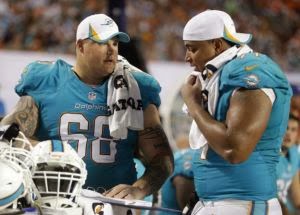
How do people become Richie Incognito? Or Jonathan Martin? These things don’t just happen. We all have roles to play, like actors. And we have been training for each moment of our lives. And we’ve all heard what we should do.
Treat others the way you wish to be treated. Turn the other check. Be kind, rewind. Smile when the world frowns. Be understanding of others and the fact you do not know what they may be going through.
It’s simple and yet incredibly difficult, right?
We don’t practice what we preach, because we’re human and humans make mistakes. 
Then again, to ere is divine. Ask for forgiveness later. Don’t let anyone step on your buzz or stand in your way.
All of this to say we’re one massive contradiction. 
I didn’t want to write about Richie Incognito and Jonathan Martin, nor the Miami Dolphins “Code Red” approach to football basic training. But I can’t help it. 
Does it matter if the Dolphins instructed Incognito to bring Martin along and toughen him up? Does it matter if they didn’t specify to not be a moron and leave racial slur-ridden messages for Martin? Does it matter if, according to teammates, Martin played the messages in the locker room and laughed? Does it matter that Joe Philbin’s airport press conference was a joke?
I suppose. 
If you care about the dirty details. And most of us do. We want the gossip, the goods, the low-down. We’ll read the riveting expose of Incognito’s bullying ways that date back 10-plus years and call him a horrible human being. It’s probably true. 
We’ll listen to the pundits blame Martin for not being tougher, for being weak. We’ll call this the NFL, the modern culture. We’ll draw comparisons to all kinds of professions and say this is just guys being guys. There might be some truth there, too.
We’ll blame Ryan Tannehill and members of the offensive line for not stopping it, for not being leaders, for not doing the right thing. 
We’ll do our typical American thing, be appalled by someone, anyone – or multiple someones. Then, we will do our other typical American thing. We’ll go right back to being gossip hounds. We will ignore our children by staring at our phones. We’ll bad mouth friends, family and neighbors to anyone within ear shot. We will say someone cheated their way to the top. We’ll work 18 hours a day and sacrifice all of our relationships. 
What the heck does this have to do with the situation in Miami? 
Everything and nothing at the same time.
We breed this activity, we accept this kind of culture – in either situation. Whether or not you think Incognito was just doing his job, is certifiably insane or the absolute scum of the earth, you’re probably right. And Martin could be both a victim and a weakling. It’s all a matter of perspective.
But whatever your take, whatever your belief in this whole sordid ordeal, we allow it. All of it. And we’ve been building towards these moments for quite some time. 
As I wrote last week, we are weak, though I certainly didn’t mean it in this context. And as I have also wrote before, we are some of the meanest, crudest, insincere and least connected people on earth. 
It is all true.
We need a serious detox program for the culture of this country. The fact that this is even a hot debate raging in the media – and a thousand different opinions on who is right and wrong – says more than enough about us. 
We don’t know who we are and what we value. At least as a collective unit, we don’t. 
All I know is what I value, what I have been taught and what I believe. And I believe you don’t motivate someone with hate ridden voicemails and texts and bullying. That’s not motivating, that’s humiliating. And it would probably behoove you, as a professional organization, to oversee the development of your employee – not a borderline “talent” with past issues. You also might have the guts to stand up for yourself and tell someone before bailing, quitting and using the situation to your advantage.
But this isn’t about being a man or breaking fraternal locker room code. It’s about being a human being, inhabiting a world of other human beings and how we all treat each other on the daily.
The truth is, none of us have this whole thing figured out. If we did, we wouldn’t continue killing each other on battlefields. We wouldn’t continue to trash each other through social media for the world to see. We’d calm the heck down and learn to appreciate each other a little bit more.
If we knew what we were doing, we’d value the day-to-day life we’re blessed with and enjoy each moment, speak kinder to one another and just generally lighten up.
But we don’t. So we won’t.
Carry on. 
Richie Incognito said he was just weathering the storm and this will pass. 
Sadly, he’s right. We’ll let this go like everything else and not see how it is a magnified example of how we handle life, in our own way. 
This too, shall pass.
That’s the entire problem. We let everything pass.

At least the stuff that actually matters.
Standard
American culture, Jimmy Fallon, Miley Cyrus, music, Society, We Can't Stop

We Can’t Stop – But We Should

Last night, I was faced with a most troubling decision.

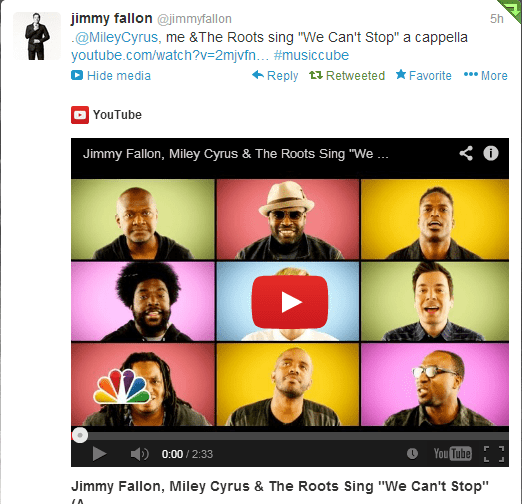
As I thumbed through my Twitter feed, I came across a tweet from one of my favorite entertainers, Jimmy Fallon.

But it was a video featuring Miley Cyrus. For reasons that should be obvious, I cringed.

Oh, the dilemma.

07aab-jimmytweet

See, on the one hand, everything that Jimmy Fallon does is amazing. But on the other, pretty much everything that Miley does make me want to lock my daughter in our house until she’s 30.

Convinced Fallon is the next Johnny Carson, I finally clicked on the link to his A capella version of “We Can’t Stop” with Miley Cyrus and The Roots, despite an aforementioned aversion to Cyrus and her recent antics.

I loved it.

I think (and desperately hope) this probably speaks more to Fallon being great at everything than this does the song or artist itself. Yet it was so well done, I couldn’t stop listening to it. I hit replay probably 10 times. There was harmony, tenderness and sadness – you forget that in between the music video weirdness, tongue sticking out weirdness and a variety of other weirdities, Miley Cyrus can indeed sing.

I was moved by the little video – and that was without really listening to the words.

And then I did listen to the words.

The more I listened to the song – then Googled the original version of the song and listened to it, too – I noticed that the lyrics were not just completely out of my realm, but wondered what segment of society they were relatable to? A much segmented part of our youth population I am guessing.

Hey, I get it; the song is catchy, has a good beat and sounds fun. It could be every major pop hit we’ve had for the past few years. Lyrics do matter, regardless of what anyone tells you. What a song says is as important and influential as its sound.

Yet I am not that old. I’ve listened to tons of pop, rock and alternate music and grew up in a pretty good era for it.

That said, what the recent stream of young artists say in these tunes has a whole lot more to do with us than it does them, since we buy it, play it on repeat and call it “my jam.”

I think we get the message: Miley Cyrus has matured from that little Hanna Montana girl she used to be. But it is a farce, from the outsider perspective, to say Miley knows who she is right now. She’s 20. She has no clue who she is. Most everyone I’ve ever known would agree. “Twenty?” they answer. “Oh, I was a disaster.”

And everyone between the ages of roughly 28 and 100 is nodding in agreement. You just can’t know, but the problem is you think you do. At that age, you are stuck between adolescence and adult, emerging rebellion and responsibility.

Is Miley Cyrus tormented and struggling? Maybe. Certainly to her, she is. To the vast majority of 20, 21, 22-year-olds, what they see as a struggle varies greatly from what Miley Cyrus sees as a struggle.

They can’t afford to dance with “Molly” and wave their arms in clubs like they don’t have a care. They can on weekends, I suppose, between jobs and/or classes, then reality hits on Monday morning when they wake up in a dorm with a presentation due that afternoon, or they are late for their job.

For Miley, she’s missing a key component to this dichotomy: the earlier you begin entertaining the rest of us, the less you are like us. Likewise, we can’t relate to you, even if we grew up with you. You live in your own box long enough, when you speak, the words that come out won’t make sense to us. Just ask Britney Spears.

The conventional vanity of our pop-culture driven world cannot be afforded – monetarily or morally – by really anyone outside the very circle that creates it in the first place.

Us “normal folk” watch it all and are either horrified or entertained – and sometimes both. But we watch. We watch because it’s there, and because 25 percent of it looks fun, and because we’re pretty sure the singers, actors and athletes we watch are going to implode in a variety of sadly predictable ways: drugs, bankruptcy or because they are actually just bad people.

Yet it remains a cycle we have been unable to stop for at least the past 40-50 years: we gorge ourselves on what they do, their accomplishments and products, which makes them rich and bored, in turn causing them to gorge on things like drugs, mansions or any number of material items that the rest of us aren’t addicted to, in part because we can’t afford them and our version of reality kept the need for self-control.

In this song, “We Can’t Stop”, Miley sings of not stopping and doing what she wants. This is both an idea that we can totally relate to, yet at the same time have no concept of the specific meaning she has in her mind when the lyrics pass her lips. Because we haven’t experienced what it is Miley won’t stop.

And this is exactly the point where our worlds differ: she means what she sings, while we’re listening to it and enjoying it in a generalized, passive sort of way. It’s not necessarily the lyrics don’t have meaning, but they don’t really mean anything to her audience.

Where she can’t stop (though I do wonder if even Miley knows what exactly she won’t stop or if it’s just the idea of being a rebellious figure that’s so appealing to her), the rest of us must. We must stop because we have wages to earn, classes to attend and families to start.

Simultaneously, I’d like to believe there is a majority of us between the ages of 16 to 35 (assuming that’s her new demographic) that would prefer to not disrespect everyone that cares about us.

In some ways, it’s true; you can say and do whatever you want. It’s called free will and it’s a beautiful gift. But it’s what you do with that gift, or the others given to you that define who you are. And when you live in a world that most exclusively defines people by who you are, then it matters.

You can’t say you won’t stop and will do whatever you want, and then bemoan the media attention paid to your every breakdown, break-up and drug bust. Or, as Miley said earlier this week, that you don’t have a plan and just want to be popular. Talk about vanity.

It’s the same as saying you don’t like drama – but then you fill your life, your newsfeed and timeline with it and then actively seek ways to confirm that, again, you don’t like drama. In reality, you are a drama addict. We get it: important things are happening to you and it’s a bummer sometimes. But it’s only important to you because it’s happening to you.

To be fair, we’re all a little self-centered; naturally, this is because we are us. I inherently care way more about what’s going on in my life than you do because it’s, well, my life. But our society is shifting that line of demarcation – the line that holds the balance in order. We’re losing our civility on these matters.

Now, we’re mostly just self-involved. The only reason everyone else usually cares to listen is because they care about you. Fail to return the favor and ask about them or listen to them, and they will most definitely start checking out on your life and all its drama.

As Mr. Miyagi once said, we must learn balance.

Self-control is not lame, it does not say anything about you other than that you have it and respect yourself and others enough to show it. But too many are taking Miley’s approach, where expressing one’s desires or partying habits is a way of showing individual freedom. This is a free country, so by all means, enjoy.

Just know that not being able to stop yourself is a sure sign of gluttony and greed. Doing whatever you want, no matter the consequences or repercussions, for yourself or others is the epitome of being not just self-involved, but a full-fledged megalomaniac. Needing credit, needing constant attention, demanding your voice be heard for no reason other than hearing yourself talk.

It’s ours, we constantly say. This country is now ours, this generation, this time. But we really mean that it’s mine. And we want everyone else to know it.

However, I’m reminded of a great passage I read recently, that speaks of how every precious thing in the world is hidden. From pearls, gold and metal to corn and nuts – all hidden somewhere. The same can be said of kindness, knowledge, self-awareness, perseverance and love. They are not easy to find in the world, or within others. But if you work hard enough to find them or cultivate them yourself, you will be rewarded.

What does all that have to do with Miley Cyrus, popular culture, and Jimmy Fallon?

I honestly don’t know, but repeatedly watching that video they made caused me to pull this narrative together and come to this conclusion: I am disappointed in the laziness of a culture that demands they can’t stop doing all the things that speak of greed and gluttony, while refusing to do anything redeeming, good or kind.

If we’re going to grab the mic and demand to be heard, we better have a message worth hearing.

Maybe Miley is right about something grander than what she sings, because she is actually spot on: we can’t stop. As a nation, we like to “par-dy”, do whatever we want. Our Molly is what it’s been for many years and decades: unquenchable, unrelenting, power – at home and abroad.

And chasing that power had led us to this point, where a former cute and cuddly child-star is now a wannabe grown-up at 20, being provocative solely for the sake of attention and being famous – not even because she’s actually provocative.

We can’t even be sincere anymore about being insincere.

But hey, at least I know my decision to click on the video was worth it.

Jimmy Fallon never disappoints.

Standard
American culture, American People., Breaking Bad finale, Government shutdown, positive thinking, Society

Badly Broken

My fellow Americans, at this point, all I can do is urge you to sweat.
That’s right, sweat.
It’s the greatest fertilizer in the history of the world, a surefire way to make anything grow – and something that is severely lacking right now in our country that would, more than likely, fix a lot of our issues.
And there are many issues, most all of which, start with us.
We’ve got it all wrong. We want to blame Washington for our problems. We want to blame politicians, presidents and the pundits who fan the flames in the media.
We should be blaming ourselves – or better yet, stop blaming – and start sweating again. We need to get to work on us, because we are morally, socially and physically broken.
And broken badly.
Don’t like Obamacare? Well, don’t blame Obama. Don’t like the Republicans who shut down the government? Well, don’t blame the Republicans. Because we shut down long before they did.
Think of why this debate exists in the first place? Because we have an inverted pyramid of a population, sucking the economy dry with the need for more doctors and drugs, which raises the costs of care. And we have begged for the politicians to fix it. So this is the solution they came up with. And now we’re angry?
You’d think 90 percent of our population is upset as much as we’ve heard about it this week. But not even – or barely even  50 percent of eligible voters voted in the last election. Seems like we like to complain, whine and moan, but not actually, you know, get our hands dirty and do anything to change it.
We cannot sit back and just wait for others to fix problems we the people created.
Frankly speaking, we’re obese, we’re lazy and we are just waiting for others to do it for us. We ask for more from our government, it in turn gets bigger, thus taxes us more. Then, we get upset at those taxes, and the solutions offered, by the people we didn’t care enough to vote for – or against.
Yet I fear we are incapable or up to the task of changing it ourselves. Our efforts are lacking, our resolve is weak, our morals eroding.
More people cared about the finale of a show about a teacher-turned-amateur druggist than do the government shutdown or impending debt ceiling debate. Breaking Bad, no matter how well acted, directed and reviewed, represents a vast portion of what’s happening to us.
We used to watch finales involving friends (Friends, Seinfeld), people who frequented a bar (Cheers), or a middle-class family learning life together (pick one of many).
Now, our most popular shows are violent, obscene and worst of all, try to paint a face of empathy on the characters who are the worst. Mobsters (The Sopranos), murderers (Dexter), drug-makers (Breaking Bad) or drug-peddlers (The Wire). We’ve turned these characters into sympathetic figures and call it real TV progress because of all the nuance and character conflict.
The story of a teacher who had cancer, didn’t have insurance and turned to making meth is not just a television fantasy, it is a fantasy that consumed 10 million people last weekend into sitting on pins and needles to see how it would end. I’ve seen more media attention and stories about what it all meant, what was Walt’s legacy and the lasting effect of the show than I have just about anything else – including what’s going on in Congress.
And we wonder what’s wrong with us?
Our priorities are skewed, as we sit in our own bathwater and call others dirty and corrupt.
Have we learned nothing from history? We’re following every other great civilization in world history…right to the depths of demise. And none – not even Rome – were taken down from marching armies, but from within, by its own moral, social and economic declines.
Too bold? Too apocalyptic? I beg to differ.
To heal, to fix what ails us, we must first fix ourselves.
We too gladly hand off our liberties. We spend more than we make, then we want to blame someone else for our failure to plan. We don’t hold doors open. We don’t say thank you when someone does it for us.
We dress like slackers. We hold an aura of disdain and contempt in the general way in which we carry ourselves. We expect, but we don’t respect. We’re so engrossed with what is going on in our own little bubble, that we can see past our little walls.
The sooner we learn it’s not about us, the better off we become, the more we live our lives with a greater good in mind. We worry about our younger generations, but that focus should be on us. If we are better people, better parents, better spouses, we produce better children.
We prance around staring at our phones, but wonder why we’re losing contact and that feeling of closeness with family and friends. Because there is no connection. We impose our will on others, yet wonder why no one else is more understanding, forgiving or sincere.
And we’re easy targets for the current medium of the media. Information fed to us 24/7, over Twitter, scrolling footers on TV and with outrage and a false sense of urgency on everything has numbed us to anything. And when we are paying attention, misinformation is used as a scare tactic to paint a picture in a color by numbers sort of way.
We are what’s wrong with America. We don’t vote, but we complain about who we didn’t vote for. We are shocked by the violence in the world today – from mass shootings at schools and public places, to acts of terrorism. Yet in the next breath, we’re lauding the latest incomprehensibly violent movie or video game. We’d rather read 50 Shades of Gray, The Da Vinci Code and other fiction, then pretend it is real and that it somehow represents our struggles in life.
The variable in anything and everything is us. Always.
We lack any sense of discipline to change our course and our situation. We give in too easily. We medicate with drink, food, money and bright shiny objects, mostly because the very heart of our being is crying out from the inside and telling us how wrong it all is.
Something is working on us, something despicable, something dark, something sinister.
And every hour we stay late at work, every skipped family event, every day we say our little lies, gossip about friends, family and those we barely know or don’t even know, the deeper we let it work into our culture.
We are apathetic and it is becoming pathetic.
Lack of concern, lack of care, lack of passion and compassion. We have stopped caring enough to fight for or against anything that truly matters in the end. Instead, we get more worked up over the latest software updates than we do the pursuit of liberty and the laws surrounding it.
We have become lazy with our lives, our jobs, our friendships, our marriages, our parental duties. We don’t protect what we have, making it easier for it to be taken.
Think we’re fine? Fine. Keep waiting for something else to happen or someone else to fix it.
It’s called a decline for a reason. It’s slow and not obvious.
The opposite – literally in spelling – of “live” is “evil.” The less we live, truly and energetically live, the further we fall into the faceless, nameless evil that exists. If we’re not willing to protect ourselves, who will? We are the problem. We are badly broken, not just breaking bad.
But we can be the solution.
How do you avoid a complete moral bankruptcy and shutdown in our society? Go back to the roots. De-weed them, clean them off, make them whole, feed and water them with the right nourishment so that they will grow strong once more.
That nourishment is good, old-fashioned, sweat.
We must get to work on ourselves, sweating through the pain and growth of fixing us. From our bodies to our minds. Build things. Engage in our relationships. Cultivate our friendships. Plant positive thoughts and ideas in our children so that they may spread to the world. Pray more, text less. Stop letting others define us, instead refining ourselves into who you want to be.
Pick up the proverbial shovel and start digging, in the very same fashion we built this empire and became envy of the world.
If everything around us is falling apart, if we don’t like the current ways of the world, then our only real choice is to break away and invest in what we can control: ourselves.
And it starts with a little sweat.
We are the people. We are the beacon of freedom, of hope, of opportunity.
Time to start acting like it.


Standard
American culture, NFL, Philadelphia Eagles, race relations, Riley Cooper, Society

A World of Words

Stick and stones may break my bones, but words will never harm me.”
If only this were true.
Those words, from an old nursery rhyme which first appeared in The Christian Recorderaround March of 1862, are perhaps even more relevant today than they were during the Civil War.
We think we’re past the past? That all that pain and anguish from our brutal past as a society is over?
Please.
In the larger scheme of history, we’re not even close to putting this behind us. And yes, while I am referring to the egregiously foul act that a drunken Philadelphia Eagles wide receiver performed at a Kenny Chesney concert, that’s not all we’re dealing with.
The word used by Riley Cooper is without question offensive and incendiary, and his leave of absence from the team today is the right move for everyone involved. But time will pass and in a few years, we’ll remember him as a buffoon or a racist. I hope his sensitivity classes actually bring about change within Cooper, but he is not without peers.
This has garnered media attention because Cooper plays in the NFL. Because the word he used is offensive. Because he is not of a race that is permitted to use the word because of the manner in which his ancestors meant it. Because of the way he meant it.
Yet in schools and playgrounds all over the nation, the word Cooper used is repeated, either with hateful spite or comedic intentions. And it’s not the only word. How about the popularity of using the r-word in a joking or spiteful manner about someone who is lacking intelligence? How about words meant to slander someone of another religious creed?
As humans, we inherently think we’re more advanced than those who came before us – but we have yet to move on from the divides that emotionally charge us.
Words without action, without intent, are indeed just a bunch of letters strung together. They can do no harm. But for thousands of years, we’ve lived in a world full of verbal and written communication. The power of words is never more evident that in our current environment. Laws are carefully worded so that the correct usage and intent are understood. Speeches are crafted artfully to convey meaning and invoke action. Words will continue to play an unparalleled role in the lives of people all over the world as they connect us – and disconnect us – from each other.
We ought to say what we mean and mean what we say. That way, we’d know what’s truly in someone’s heart. That way, we’d know if we should accept their apology should they make a mistake. Most of us recognize that we ourselves are not without blame. We’ve said the wrong thing and not meant it. Sometimes, we say the wrong thing knowing as we speak we don’t mean it, but it comes out in anger anyway.
This is why we forgive, even if we can’t forget. There are probably a thousand hurtful things I’ve said to people in my thirty-plus years (none as offensive as Cooper, though). I don’t remember them – but I can remember the 25 or 30 things that were said to me that I found most hurtful. Those words have left an impact on me forever. They will drive me or motivate me or cripple me.
As a forgiving as a society as we are, a lot of that forgiveness hinges on how sincere you are before, during and after an incident and how you ultimately purport yourself on a daily basis. Essentially, we answer the question for you: are you genuine?
Because really, that’s what it comes down to – being authentic.
And to be honest, we’ve lost authenticity in this world. We’re too easily influenced by our surroundings, popular culture, professional athletes and entertainers. We want to be as real as reality TV. Except we fail to remember how not real it is.
We’re losing ground, folks. There’s been a gradual loss in personal decorum over the generations and we’re now in this purgatory as a society. We’re not taking ourselves seriously with how we dress, act and speak – to each other and to ourselves. It has eroded our values. Yet we have lost – and continue to lose what makes us – and made us – us. As individuals, as families, as communities and as a nation. We are looked at funny if we say “Yes, Ma’am” or “No, sir.”
People don’t talk like that anymore, including adults. And if we don’t as adults, then why would teenagers or children?
Now, as the world rapidly evolves with technology, we’re at a crossroads. All the tools used to communicate have caught up to what we’re able to say, but we’ve got nothing good to say. We post Instagram photos of drunken celebrities, clever e-cards or retweet a link to some athlete complaining about how the rules for picking Pro Bowlers have changed.
Can you imagine what Machiavelli, da Vinci, Plato, Lincoln or a host other others would have done with a blog, a web site, Twitter account or Facebook profile?
So Riley Cooper has his problems. Yeah, well, we’re clearly not perfect either. This does not excuse his actions. On the contrary, I remain outraged by the word he used and the manner and context in which he used it. But before we sweep this whole thing under the rug, per usual, in a week or two, let’s use this as a teachable moment as a society.
We cannot change others, only ourselves. And if our efforts to evolve are meant with sincerity – if we mean what we say about wanting to move on and becoming a better country, about being better to each other, then it must begin with us as individuals.

Let’s leave the harm to sticks and stones and use our words to help and hope.
Standard
American culture, Me Generations, psychology, Society, Time

A Time for Action


Ever listened to the clock, like one of those old grandfather clocks with the chimes that would wake you from a dead sleep in the middle of the night?
Tick, tock. Tick, tock.
You can actually hear time passing. What’s interesting that you pick up from observing this is that there is really no such thing as right now, even though Val Halen had a popular song about it. In fact, Sammy Hagar’s lyrics were outdated before the ink probably dried on the notepad he wrote the lyrics.
Even saying the phrase right now takes a second, which inevitably creates a paradox in which you are both speaking of something from the past in the current and calling it the present.
Good and confused? Well, you should be. The passage of time has and will remain one of the great mysteries of our world. 
Men and women have used it and abused it, wasted it and made the most of it for as long as we’ve inhabited the planet. While we’d probably think of the  way we once lived as nomadic hunter and gatherers as naively barbaric , it could be argued that we are still barbarians, just a different kind.
We’re still hunting and gathering, only now, it’s consumption of things.
If you really want to see how fast the world moves, just go here, to the worldometers, a site that measure statistics on a variety of things.
In some areas, it is difficult to even comprehend “right now”. Just watch the birth rate. Or scroll down to the social aspects of the world. Look at how many Tweets are sent every second. The only thing that keeps up with both those categories is the number of CO2emissions this year – measured in tons, of course – and money spent on obesity related diseases. Or cigarettes smoked or world spending on illegal drugs.
Want to know about how fast – and what exactly moves quickest – here in the good ole United States? Then head over here, to usarightnow.com. Watch how fast these categories move: cans of coca-cola consumed, debt, revenue, spending on plastic surgery, text messages sent, energy consumed. 
So we’ve never really figured out this whole “what to do with ourselves” quandary. How is our time best spent, and according to whom? I suppose it’s up to the individual. Some live for family, some for faith. Some for vacations, gadgets, objects. Others live for love – of person, of food, of money. Some live for their work and the task manager mentality of accomplishing something, even if that something isn’t all that well defined or, frankly, important.
Not everything holds the same value when measured by people or, perhaps even more intriguing, by time. It cannot, frankly, otherwise, we wouldn’t know what to appreciate. But that doesn’t mean what we value most is what we spend the most of our time on. Some argue because we can’t afford to.
I’d say based on things are going, we can’t afford not to.
According to most of the statistics, how we literally “spend” our time says all we need to know about us, as individuals and as a society. How we do our now will ultimately determine our later.
We want it all and we want it now.
We want quick fixes and short-term solutions to long-term problems. We want to feel good, so we buy whatever our drug of choice is: movies, music, food. And yet another minute, another hour, another day, month or year will pass and nothing actually changed. The feeling we get from all these things, is, like time itself, momentary and brief. And at the end of it, you have to wonder: what did I actually do?
We’re all about me. Then again, we always have been. There’s just more of us now.
Time just ran yet another story about another generation of young people who are all about themselves and how many people in older generations worry that they won’t be productive members of society.
Oh, but they will.
This story has been told and re-written many times, about Baby Boomers, Generation X, Y, Z and Millennials.  As Elspeth Reeve so eloquently pointed out in The Atlantic Wire last week, this same argument has been pushed as a talking point for over a hundred years, with nearly every generation. And every time, eventually, the vast majority settle down and do what they are supposed to: get jobs, acquire debt, pay taxes and die.
It seems no matter where you look, you find people who are not content or happy with something. And that’s not a knock, we’re all human and we all want and desire and need. But based on what we spend the majority of our time on, none of it is worthwhile to us. Actions speak louder than words, as they say, right?
Who are “they” anyway? Who actually does instead of merely speak? If action is the greatest indicator of doing there is, if so many are sick and tired of so many things, why do we spend so much time talking about it all? Perhaps because, at a young age, we’re told to share our emotions and our feelings as a coping mechanism. “You’ll feel better if you talk about it.”
And so we are a society of talkers.
This runs contradictory to all that we, in societal terms, believe ourselves to be. Our collective and individual self-image and worth is higher than what we actually are, or how we are viewed by others. Basically, we think we’re great, but we’re not all that great.
Yet inherent within the fabric of our very being is the need and the desire for something more. This could be due to the fact that we’re not fulfilled in how we spend the majority of our time. With over 80 percent of the American population reporting they do not enjoy what they do, this can certainly be a large contributing factor to our sense of uneasiness.
It’s the constant pull between the benefits of the here and now versus the hazy, distant outlook of the future. It’s hard to picture the future and see anything but an older reflection of today, or better yet, yesterday.
Do we have the wherewithal and the focus to get past the right now, which we’ve already established doesn’t exist? There’s always another horizon, another horizon – until there isn’t and we’ve ran out of time.
The promise of someday is nothing more than an illusion that makes us feel our mediocrity is acceptable. To actually make someday today, to make our tomorrow, our vision for the future a reality does, in fact, require action.  It requires care, focus and a formidable resolve to see it through.
Society has taught us – or impressed upon us through marketing and consumerism, that all things must occur fast. That speed equals good, that the quicker you get it, the happier you are. We should be mindful of wanting it all to happen now.
There’s good in the journey. There’s quality over a duration of time, a reminder that sometimes – often times – the best things happen over a period of time. Change typically occurs, for good or bad, slowly. Instead of just some picturesque idea or vision of what we dream and hope for, the journey and the determination to do it and actually see it through is the actual change.
Time is ever-fleeting. Not much is ever done or resolved right now, but rather in the moments long before and after it.
So what you do with your time only says and writes the history of you.
The world, as we know, will keep on moving – a grand machine where the numbers are ever changing. But even though they are measured the same – by the rate of time – they are not and do not have to be connected.
An individual’s life is theirs and theirs alone. So to what do we owe ourselves, as opposed to the world in general? Is what we do who were are, and if it is, are we happy with it?
Action speak louder than words.
So the next time you want to talk about how you feel, remember that’s fine. It’s good to get it out. In the end, however, the action you take determines what you truly mean (or don’t) what you say.
The hope and promise of the future will exist tomorrow as it did today and yesterday.
What are we doing right now that will make our dreams and goals of tomorrow a reality?
Tick, tock.
Standard