American culture, Culture

The Drive For Five

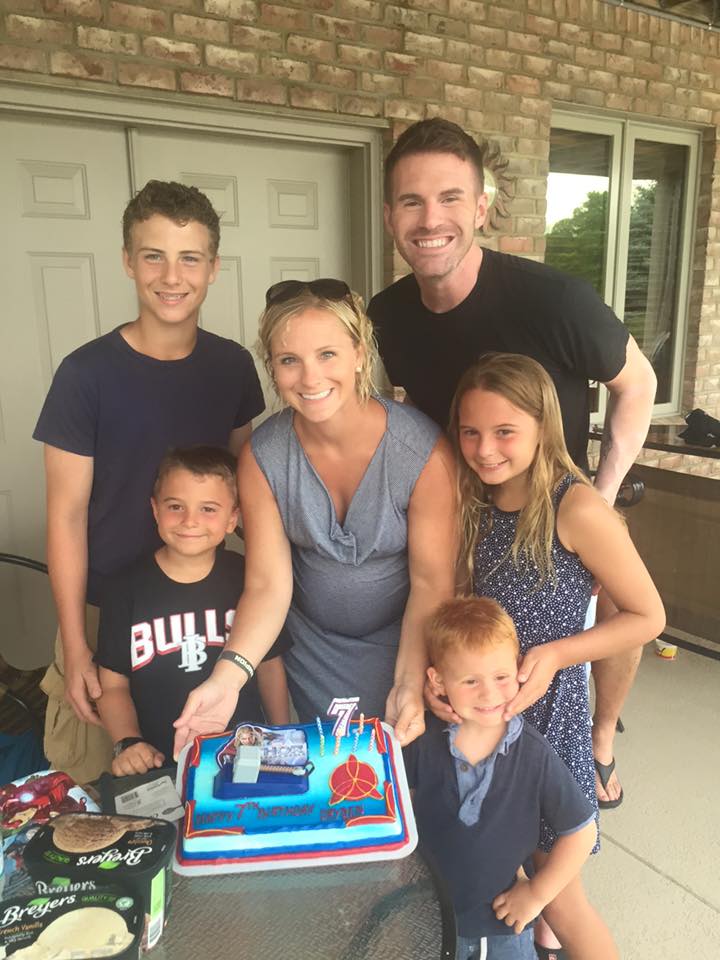
Hey, complete stranger person who’s completely and utterly baffled why my wife and I are having a fifth child, I’d like to answer your question of whether or not we’re “crazy” in long form explanation instead of a simple “yes” or “no.”

Do you mind? Cool. Let’s get started.

I see you silently judging me with your eyes from the moment I said “fifth” – and I could care less. But just know that your shock and mild disgust is not as well hidden as you might think.

Yes, we have several children, we certainly are aware of the volume of children we have produced. And no, people do not seem to care as much anymore. It may be less exciting for everyone else than the first or the second, but not to us. We never had children for attention anyway.

Yes, we are younger than you might expect. Sorry we’re not older, I guess? We tend to think that our youth is a good thing, allowing us to play with our kids and chase them with energy and vitality. But if you somehow think our age equates not knowing what we’re doing with so many kids, that’s a totally fine opinion to have. Because certainly no one over the age of 40 ever messed up.
moore family

No, we’re not destitute, nor are we rich. Our children are happily fed, washed and clothed. And we do get help in that department from time to time from loving and wonderful grandparents on both sides, but only because they offer, want to or just do it without asking. We are perfectly capable of doing it on our own.

Yes, we are aware what causes it, but thanks for that awkward joke. Really played well to the crowd, sir. We planned these kids, believe it or not.

But somehow, I don’t think that look in your eyes is about us and our large family. It’s about us not following the “rules” or societal norms of the world in 2015. Because it is not what everyone else does and it’s not “normal.”

We are easily influenced in this country, but somehow rarely swayed.

We’d rather tell people how wrong they are instead of leading by example. We do this out of some sort of need for affirmation, that we are in fact, right – and someone agrees enough to tell us so. This then serves as validation to everyone else who still thinks we are wrong, so that we can turn back to them and say, “See, this person knows I’m right, too!”

Third party credibility at its finest worst.

Ask yourself this: if your convictions are strong enough, why do you need the approval of others through how many thumbs-up you get on a status update?

We like to complain. We like social media. And we’ve married them together quite nicely. We like to tell each other what the problem is, who’s to blame for it, what should be done about it, how it affects us and why we are right.

From politics to road improvement projects to what clothes to buy or music to listen to, we’re all trying to change the world through our opinion and what we value – presuming all along that others out there a) care what our opinions are, and b) hold the same values as we do.

We all have a sphere of influence; we just greatly misconstrue what to do with it. Social media allows you to build and sell your brand. Every post you make, every favorite, like, share and retweet.

Now, this may or may not be who you actually are – but that does not really matter. To the outside world, you are what your advertising says you are. You are marketing you, and in some ways those connected to you, with your brand.

And that brand is the message you allow yourself to project. You cannot change the world. Too big, too difficult, too abstract.

But you can change your world – and by doing so, through your sphere of influence, the world around you perhaps slowly changes over time.

So many people tell us of the ills of society.  They will complain. They will condemn others who do not think and act as they do. They will tell you that you are, in fact, wrong.

Now how many times when someone told you that you were wrong did it change your mind?

I’ll go ahead and guess zero, because you didn’t. The message is half as important as the messenger.  Throughout history, powerful orators – great messengers – have influenced mass amounts of people to do really great things.

They have also persuaded entire populations to do really dumb things, terrible or horrific things.

The difference between disagreeing and intolerance is a thin line, and we are not often aware that we have crossed it until it is too late. The same holds true then in how we conduct ourselves with others in person.

Life cannot be done as it is on social media.

So, yes, this makes our fifth child. And we’ve experienced the gamut of reactions before. Believe it or not, some had the open-mouth shock, the “you must be one of those” furrowed brow, the head shake and smile, the plastic smiled “that’s so nice” when we had our fourth child nearly four years ago.

We keep having children because we feel called to do so and that we can raise another person to be good, to be kind, to try to make the world a little brighter, a little happier and a little better.

To get there, you just go with it.

Look, do I enjoy freezing my tail off at some sports event at 8am on a Saturday morning after getting up at 6:30am? No more so than anyone else would. Is it fun to have a factory assembly line five days a week to make lunches for school the next day? Not particularly my brand of fun.

Sleepless nights with a newborn are not moments that I would describe as fun by any means. Nor is holding having nightmares of Home Alone play in my head as we walk through an airport, utterly petrified one of ‘em will end up lost in New York.

But this is not about me – it never was. Life is not meant to be about me, or my wife. Life is about giving yourselves to others and attempting to make the world a little better, a little brighter, a little happier. Let’s face it, it can be fairly depressing at times.
avengers assemble

And we have a lot of fun. How can you not with your own brood of mini-me’s?

It is our way of changing the world into a better place.

We all fear evil in the world, but it is indifference that scares me personally the most. And what my wife and I long to do is make difference makers, people who care about others and want to do right, solely because it is right. To us, this is increasingly rare in the world we live in. I want the good guys to win.

In some small way, I have convinced myself that our influence on our brood, and thereby a larger world, will be and last much longer than social media – and much, much longer than me.

You see, my life isn’t over because I have so many children. My life and purpose begin with my children. In fact, our children have helped me narrow my focus and become more efficient with my goals and objectives. My ambitions are closely tied to their lives, what they can become and who I will become because of them.

None of this makes me a better person or parent than anyone else in the world. My views are not somehow more valuable or correct.

It just makes me, me.

And you aren’t going to change me by telling me how weird it is to have five children.

But by all means, go ahead and try.
Standard
American culture

Please, Be Kind

Staring into the abyss of another horrific news story, where someone senselessly killed nine others, I’ve nearly ran out of words.

A few years ago, the direction of my writing changed significantly, from sports-related material to pieces that tried to peel back the layers of everyday life and made sense of the world around us.

Most posts are not nearly as funny and entertaining as they once were. I’ve been told that my writing is “too real” and “too heavy” – comments that are understandable. I’d like to believe I’ve grown a bit since I began writing as a career-slash-hobby over 10 years ago. My wife has changed me, my children have changed me. Life changed me.

It was around the time that a Kansas City Chiefs player, Javon Belcher, committed a murder-suicide a few years ago that I suddenly found it less important to debate the greatness of athletes.

The blinders came off and I starting seeing things differently. The outcomes of sporting events and the world within the world of sports that debates stats, stadium funding and “who’s better” seem to matter little now in the grand scheme of life.

Yet I understand the need for others – and myself – to use them as an escape. We need it, we truly do. Sports are a drug for some of us, an emotional high we use to distract us from the problems of our life and the world around us.

When a game is going on, we are thrust into a temporary reality where all that matters is scoring more than the other guys, having stamina, determination, grit and belief. The scoreboard is clear with the outcome. And there is always – always – another chance.

Life doesn’t really work like that. Bills must be paid, jobs must be worked. If you lose a partner, a friend, a family member to death, there is no next season. So sports serve a finite purpose in this world, as do movies, music and television.

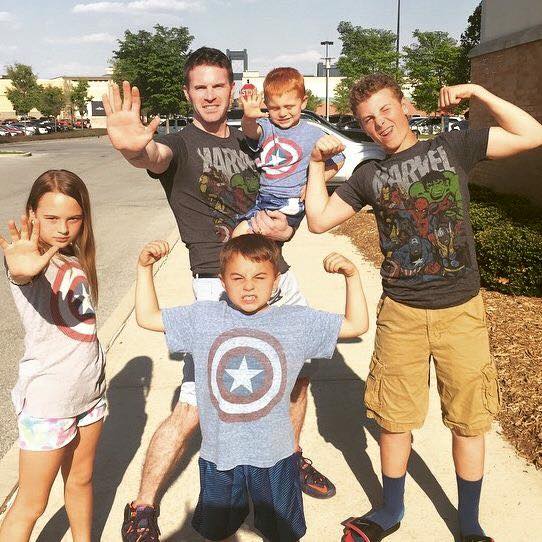
Those who know me well know that I am a Disney World fanatic and a Marvel films junkie. These are my distractions. We all have them, and for the most part, that’s perfectly fine.

Except I wonder how far our fantasies will take us? How far have they already gone in creating a society of people who turn further and further away from the problems at hand – in their lives and the larger world in general?

If we are constantly distracting ourselves, then really, in time, life becomes the distraction, the thing we can’t be bothered with because it’s taking our attention away from what we’ve filled our time with.

To everything, there is a season. And sometimes, it’s not social hour. Sometimes, it’s not fun. Sometimes, work has to be done.

We seem to having difficulty with that last one.

The world has always been full of lunacy, of evil intent. But have we ever seemed so indifferent?

As Jon Stewart suggested on “The Daily Show” last night, we’ve gone to war on terrorism. We’ve invaded countries all over the globe to defend freedom and Americans. We’ve lost soldiers in this battle. And yet, what we do and can do to each other in our own country is worse.

Think of all the wars the world has seen. Think of what we are meant to stand for, what the principles of this country are founded upon. And we can’t even be nice to fellow Americans.

We say that these incidents are isolated, that the people conducting these atrocities are “crazy” or that they are racist, or fanatical or whatever. We want to blame guns. We want to blame drugs. We want to blame the culture or the upbringing or whatever.

But we’re all Americans. We’re all human. And we’re doing these things to ourselves.

The media will find a way to turn this into ratings and “debate” several things in the wake of the Charleston, South Carolina church shooting. They will debate old issues, unresolved issues, issues that shouldn’t be issues.

But none of it will change.

The coming presidential election, as most are, will be defined by something that has very little to do with the actual direction of the country. Truth is, we don’t “debate” anything anymore. There are fewer and fewer civilized conversations because neither side, neither party, is willing to admit that the other has a good point – or that they could be (GASP!) wrong.

We’re a bunch of miniature dictators that think we know what’s best for the other 300 million people in our country – and really – for billions around the world.

But honestly, we have very few answers. Look around. We’re a mess in our families, our relationships, our jobs and yet we wonder why others in our nation can do the kind of heinous things that are happening from coast to coast?

We are lazy, intolerant and rude. Worst of all, we’re uniformed by the same medium that promotes the very things that scare us back to reality for a few days.

The older I have the good fortune of becoming, I realize that it is true: everything I really need to know I learned at a very young age.

shco_bekind1

Be nice. Be kind. Share. Don’t hit people. Don’t say mean things. Apologize when you do something wrong. Clean up your own mess. Wash your hands. Put things back where you found them. Respect others. Watch out for traffic. Think and learn and play and draw.

Why is this so hard? Why do we complicate these things? I’m running out of words because no matter how complex the issue or the situation, no amount of nuance can mask the simple fact that these are the answers.

They have always been the answers.

We treat ourselves, our problems, our dramas with such reverence, as if they matter more than being kind. I want to believe that people can change people. I want to believe that we’re willing to look past our differences to co-exist.

But we just keep repeating ourselves in the same horrible, unconscionable fashion every few days, weeks or months – which is making it much, much harder for me to keep repeating myself in my writing.

The only words I’ve got left right now are these:

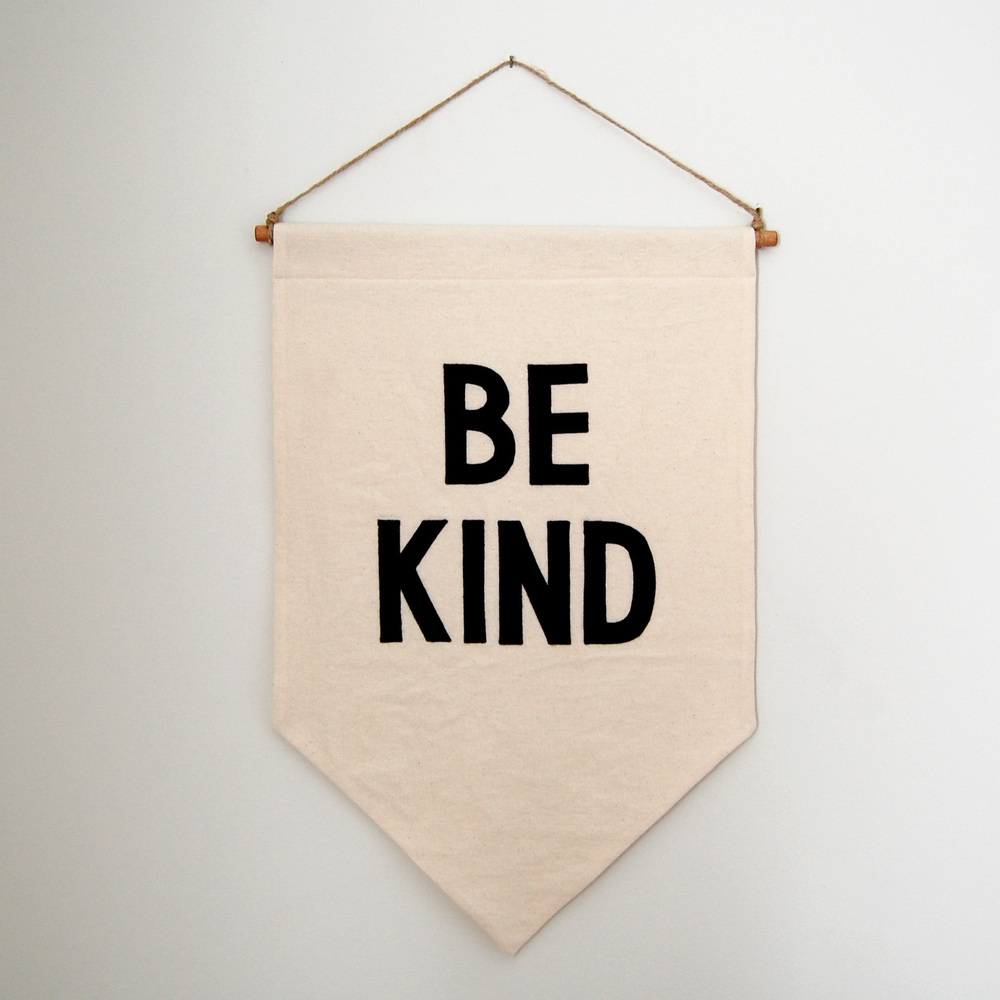
Be kind.

Standard
American culture, Life, Philosophy, Uncategorized

Drunk America

There is a hilarious recurring character on Saturday Night Live called “Drunk Uncle” that shows up from time to time on Weekend Update. Bobby Moynihan delightfully portrays the classic embodiment of every family member we distance ourselves from at holiday gatherings, who might be slightly drunk, slightly racially biased or worse, both.

At least, that was the starting point for the concept of the character. In more recent years and appearances, really Drunk Uncle has become the curmudgeon everyman, sarcastically and unapologetically pointing out how different the world has become through technology. His sweater and jacket combo are the same as his plight: the world kind of sucks right now.

Drunk Uncle – Graduation

As funny as these skits are, it is even funnier that most people laugh at the jokes, then turn around and find themselves doing many of the same things Drunk Uncle is condemning. Whether it is the off-handed slurs or the over-use of technology to promote oneself, we should be laughing at ourselves.

The problem is, we are so narcissistic, we don’t get that we are the punchline.

America is running afoul and we, as citizens, are too concerned with our own image and personal public relations campaign to notice. A misstep and we simply say we’re being individuals. We write off most things by throwing out catchy phrases, as pointed out in this New York Times piece.

“You do you”? “It is what it is”? “Keeping in real”? What the heck does any of that even mean, anyway? Of course you are doing you, who else would you be doing? Wouldn’t you doing someone else just be an imposter? It certainly is not what it is not. And why is there a strong need to keep things real? When did things become fake that we had to tell people we are keeping our feet on the ground?

We are always doing us. Sometimes it’s angry you, depressed you, happy you, volatile you, sarcastic you, hurt you, compassionate you, betrayed you, joyful you, religious you, feisty you, helpful you or spiteful you, but it’s always you.

Oh, but we like to pretend. We enjoy putting on the show of who we want the world to think we are. From trolling comment sections, Facebook posts and Twitter feeds, we’re all about that face.

Being insensitive, being narcissistic, being flat-out self-centered is not a license to write off your actions with “h8trs gonna h8!” This has wormed its way into society like a catchy pop song – oh, wait, it was a catchy pop song.

No, we’re not gonna hate.

We’re not allowed to even remotely look like we’re the eighth cousin, twice removed from hate. Then again, should you slightly, distantly look like you’re heading toward a path of hate, Haterade will rain down in buckets like you just won the national championship of hate.

Just please don’t look at the skeletons in our closet, right? Nothing to see here, move along! You do you, right?

(I did learn, it’s OK, however, to talk about hate in the past tense, as long as it involves Christian Laettner.)

Americans always seem ready and willing to stand and fight injustice – right after we’ve been shown just how bad it is by someone else, all the while ignoring our own issues and faults.

Anyone who tries to take away equality, or slightly resembles to treat different groups without equality is going to see a whole lot of what Indiana saw this past week (and what it will continue to see if something isn’t changed).

indiana law

It makes very little difference any more what is real or true about the bill that was passed, all that matters now is the fallout. The state is in the midst of a PR nightmare, one that has already been lost. The window has closed, the verdict sealed.

The world of social media has tried Indiana, it’s legislators, it’s governor, it’s people and passed down its verdict – there is no stopping the court of public opinion. Forget arguing that you can inform the uninformed, or “convince” anyone anything different than what they’ve already heard and believed.

The media dominates, writes the story, and controls the narrative. It is completely naïve to think otherwise. And the power of the medium allows for quick dissemination of a whole truckload of judgement, condemnation and reaction – and reaction to the reaction of a reaction.

Supporters say the bill is to defend religious freedom, opponents claim the law discriminates. We’ll never truly know.

It’s possibly safest to assume that both sides are correct. It’s always somewhere in the middle – a place we refuse to go or even visit. Compromise is one of the hardest places to find and it’s not labeled on any map. Siri can’t help you. Compromise does not allow it’s picture to be taken. It has too much humility to pose for a selfie, too much dignity to be reduced to a hashtag.

And this is why it eludes us.

We all have a sphere of influence; we just greatly misconstrue what to do with it. Social media allows you to build and sell your brand. Every post you make, every favorite, like, share and retweet.

Now, this may or may not be who you actually are – but that does not really matter. It is what you show the world you are. You are marketing you, and you build your brand.

If you want to change the world, hate won’t beat out hate. Shaming others won’t do it either. You cannot change the world, you can really only change your world – and by doing so, through your sphere of influence, the world around slowly changes over time.

So many people tell us of the ills of society (just check your news feed).  They will complain (check your news feed). They will condemn others who do not think and act as they do (maybe you should check your news feed). They will tell you that you are, in fact, wrong (you might find examples in your news feed). Now how many times when someone told you that you were wrong did it actually change your mind? (Bet it’s not in your news feed.)

I’ll venture a guess: Zero.

The message is half as important as the messenger.

Throughout history, powerful orators – great messengers who would no doubt come up with far better handles and hashtags – have influenced mass amounts of people to do really great things.

They have also persuaded entire populations to do really dumb things, terrible or horrific things.

The difference between disagreeing and intolerance is a thin line, and we are unaware that we have crossed it until it is too late. The same holds true then in how we conduct ourselves with others in person.

Life cannot be done as it is on social media. It is not a hashtag. Some of this stuff is real and important and needs to be treated as such.

Intolerance? Hatred? Unwilling to compromise?

Americans drunk on ego?

That’s not you?

Hopefully, that’s not anybody.

Standard
American culture, Communications, Society & Culture

Emoji’s & Emotions

Earlier this week, after finishing a family dinner, my wife and I randomly started listening to songs from our younger days while cleaning up.

Acting goofy at first, we probably looked like Ferris Bueller belting out some tunes in his shower at the start of a big day off. We picked a lot of fast paced songs, knowing it would draw some attention from the audience (OK, so it was our kids) if we kept up with the lyrics.

ferris-bueller-singing-in-the-shower

“You know a lot of words to a lot of songs, guys,” said our sweet-hearted 8-year-old daughter.

This comment sparked a conversation about how the words and lyrics to these old songs (weird to say, since most of them were late 90s and early 00s country songs) meant something different to both my wife and I.

As we sang in harmony (well, kinda), our daughter sat and stared for a little while. I could read her mind, and briefly, she seemed impressed that we had remembered and memorized the subtle voice inflections of each song.

Soon enough, her fascination ended and she went back to playing with her younger brothers, who were apparently caught in a game of home many pairs of underwear and ball shorts they could wear at once. They nicknamed themselves Capty Underwears and Capty Shorts, so clearly they weren’t listening to the songs to begin with. (And yes, this what 6-year-old and 3-year-old boys tend to do.) Our eldest son, turning 13 this Sunday, however, listened to the songs, but his eyes never came up from his iPad.

There was one song in particular that we listened to that made me realize how much our society has changed due to the technology advancements of just the past 10-15 years.

As my wife selected The Dixie Chicks “Travelin’ Soldier,” the overall themes found in the tragically sad love story of a young man sent off to Vietnam and the young girl he’d wrote letters to strike a different kind of chord with me.

It is painfully obvious that we’re drifting apart in our communications with each other. I have tackled this topic before, but I must admit, there is a hint of sadness within me that envelopes each advancement in technology and communications.

0418_couple-texting_sm

We don’t write love letters anymore.

We text emoji’s and short, grammatically incorrect phrases. And then we wonder why people don’t “get us” or wonder why we have a hard time communicating in serious relationships.

We don’t visit or call as much, we text and send Facebook messages and post on digital “walls.” And then we wonder why we don’t see our friends anymore.

Never has there been a more appropriate term than a Facebook “wall,” because in essence, I’ve come to realize that is truly what social media does: it builds walls.

We may be more “connected” than ever before in human history, but emotionally and spiritually, we are more disconnected than we can possibly imagine.

Last week, I read this story in the New York Times on the world of Middle School Instagram. Both fascinated and terrified, I couldn’t believe the emotional turmoil that takes place in the world of 7th grade girls and boys over who follows whom, their follower to followed ratios and who is tagged in each delicately planned post.

Look, I remember 7th grade. It’s no picnic. Hormones raging, self-doubt waging a war on perception versus reality. I cannot imagine having to do it in this social media driven world.

When we examine our exposure to and on these channels of communication, we come to find that we’ve often revealed too much for public consumption. I’ve heard many friends say this, and I agree: Had Facebook and Twitter been around in the 90s, I’m not sure I could get a job or be very well regarded today.

It’s not that I did anything illegal or terribly bad, it’s just that the whole world didn’t know about me and my buddies toilet papering a house in the fall of 1997, or the Spring Breaks in Florida, or…you know, I think I’ve proved my point.

It’s not that everything can be shared now so much as it is that not everything should be shared now.

Those private moments between you and some friends, you and a date, you and your wife or loved ones, those are yours. They build bonds and form deep friendship and companionship because you and they were the only ones to experience it, to know what it was like to be in that moment in time.

If you share every moment, trivial or significant, what is left to stand out? Why should the person who sat next to you in freshman algebra, but you haven’t spoken to since, well, freshman algebra, get to share that?

All I know is that I used to have deep, meaningful, philosophical conversations with several people who once meant a great deal to me – and still do. Mentors, family friends, buddies. For quite some time now, that has given way to text messages and birthday posts on a wall, joined by hundreds of other “friends” doing the same.

Time, distance, whatever the case may be, I miss those conversations. I miss those friends and mentors. My fear is that too much time has passed, too much left unspoken. Now, those relationships have been forever changed and altered. All because we stopped talking and started taking the time to take the time.

One of the strongest points of my relationship with my best friend, who happens to be my wife, is our commitment to talking. We started out talking in a college history class in the fall of 2003 and really haven’t shut up since.

I wrote her poems, she left notes on my truck windshield. I keep the first one she ever wrote in my wallet to this day.

note

For generations over, the world has communicated through talking face-to-face or with pen and paper. We had the time to thoughtfully prepare a letter, or a note.

Now, we can barely text 10 words with our thumbs without losing interest. We’re lazy in our friendships and relationships and the cracks are showing.

In the spaces in between TTYL and C YA SOON, lies what is unspoken, what is implied, what is missing. We’re connected, but we’re not connecting. I have fewer new memories with these family friends, buddies and mentors. While no doubt brought on by the busyness of life, we are fractured by what has not been said, what has not been mended or fixed, what lack of time has wrought.

As smiley face cannot replace a face with a smile. LOL cannot replace an a friend actually laughing out loud. These things are just meant to be placeholders until we can meet or talk again. Except for the part where we aren’t really getting together again.

Tonight, and for many more days and nights in the years ahead, my wife and I will try to combat the technological grip on societal interactions through our children. We’ll play music and listen to the words.

We will gather at dinner and talk about our days, our experiences, our frustrations and our successes.

We’ll try to get them to put the phones down and turn the TV off. We will encourage them to write notes and call their friends.

Emoji’s don’t equal emotions.

I’ve got a letter in my wallet that reminds me of that.

Standard
American culture, American People., Society & Culture

Less Than Super Sunday

For many, Super Bowl XLIX will always be about the game, the way in which it ended and the enduring legacies of the key participants on both sides.

For me, it will always be about the moment I understood the complexities of being a parent. With four children and a fifth on the way, perhaps that moment should have come sooner. Alas, maybe it is only now that I fully understand it.

In many ways, especially as someone who was rooting for the villainous New England Patriots, I wish the game would remain tucked away in the recesses of my memories as one that solidified Tom Brady as the NFL’s greatest quarterback (purely an opinion). I’d like to remember his nearly perfect fourth quarter, bringing the Patriots back from 10 points down and collecting a record-tying fourth Super Bowl ring.

I’d like to vaguely recall in 20 years the look of horror on Richard Sherman and Pete Carroll when that pass was intercepted – but only because it serves as a reminder of how sports can change on a dime, how cruel they can be and how nothing is guaranteed in life (pretty much fact).

And perhaps I will remember all of these things. But I also know that I will remember more about the commercials than anything else. The ads themselves might not be that memorable, but I am certain to not forget the reactions in our house to them.

Especially those of my 8-year-old daughter.

Perhaps it was my fault. I had hyped the game to our precocious second-oldest – and only girl – for hours. The boys and my wife were easy, they were ready for four hours of football’s grandest theatrics and for what would ensue – their father hollering at the TV and cheering wildly for a team that no one else in our area liked.

family patriots

And man, she was all in. Wearing a throwback Welker jersey from her brother’s closet, our daughter placed herself in a chair next to me and basically did not move – or wasn’t allowed to – for the duration of the game.

Dad’s superstitious nature kicked in just briefly after kickoff. Every Patriots first down, I ran the room and high-fived, in order, our oldest son (12), the youngest son (3), my wife and then returned to give the biggest, double high-five to our daughter before sitting the exact same way we had the play before. (Meanwhile, our 6-year-old son went back in for the between the iPad and the game and playing with toys. Sigh. I took what I could get.)

She squeezed my arm on big third downs, asked all kinds of questions about the rules and the game and cheered to please us at first, then later because she seemed to actually, briefly, kinda care.

Soon, this became as entertaining as the game. My daughter and I were enjoying a bonding moment within the bonding moment of our family.

As the game stayed tight and tension mounted, we were all glued to the TV.

Which included the commercials.

It began with the dead-child Nationwide commercial in the second quarter and ran right on through to the game’s end, specifically, Always #LikeAGirl, Victoria’s Secret and the 50 Shades of Grey trailer.

There is no one way to adequately describe the confusion on a child’s face in, what for a parent, is an awkward moment. There is also not a great way to address the confusion without convoluting it further and getting more questions.

“Why is the boy dead?”

“Why didn’t the parents stop the bath water?”

“I don’t run like that. That’s not funny.”

“Are they making fun of girls?”

“She’s not wearing very many clothes.”

“Those people are kissing a lot and kissing really weird.”

Thanks, guys. Really, just a bang-up job, advertisers. Why didn’t you just air a commercial debunking Santa Claus or an documentary on where babies come from?

And look, n the heels of a national discussion (again) on if athletes are role models and how they are not the parents, there’s Marshawn Lynch grabbing his crotch again. And if he wasn’t, people were talking about it.

Stating the obvious: My wife and I raise our children. No one else. Ultimately, how they turn out is a far greater reflection on us than it is society in general. Yet in being a parent, you’d like to shield them from certain topics and situations for as long as possible, because, as science has proven, their minds just are not ready for it yet.

And it is a simple fact that kids are influenced by their peers, other family members and yes, who they see in movies and on television. You know how I know this? Because I was a kid once. I wore the shoes, rolled the jeans. I acted like my favorite players on the court or diamond.

Back in the 1990s, we had a whole Gatorade campaign centered on “Being Like Mike” for goodness sakes. It was aimed at kids.

be_like_mike-22990039_std

Advertising has not changed who it targets, but the topics and the boundaries of those messages have changed.

I have heard it described like this: we urge caution with young athletes lifting weights, noting how the body structure of a 14-year-old is not meant to handle too much lifting because the frame cannot handle the weight. The same is true for the brain. An 8-year-old is can comprehend more than a 6-year-old, but not as much as say a 12-year-old.

These ads, geared towards adults, are viewed by kids who simply cannot contextually understand them. From what the ads mean, to what they infer. They may contain a message, but the absorption of that message is varies widely based upon the receiver.

And we simply do not care.

As eyes begin to roll of readers who fear I’m just complaining or bemoaning something else in society, I’d venture to say you don’t have children. You’d suggest we turn it off, that we have a choice in the matter, that the media does not raise and influence my child.

Some may say that we’ve always had this (though, as noted above, there is a significant difference in “Being Like Mike” and talking about the ghost of a kid whose parents were either a) neglectful or b) neglectful and without Nationwide’s accidental home prevention training.)

My response to this is humble and contrite: it is the right of my wife and I to determine if and when we talk about these issues or topics. They normally don’t see these ads, because our children are not normally up  past 8:45-9:00pm. But the Super Bowl is anything but normal.

I’d rather not be forced to address my daughter’s self-esteem during the Super Bowl because the ad #LikeAGirl – a positive message overall – was viewed incorrectly in the eyes of an 8-year-old simply because she was eight and thought they were making fun of her.

“I don’t run like that, Daddy.”

“I don’t throw like that, either.”

No amount of “I know you don’t” or “that’s not what they meant” could remove the furrowed brow of my little girl. She just didn’t understand the point. In her eyes, she didn’t even know there was a image issue to begin with. But hey, thanks Always for putting it out there.

Is it the advertiser’s responsibility to control the message? At the very least, perhaps a little?

The same as Marshawn Lynch grabbing his crotch with millions of young football players watching him, he controls the message. I can tell my kids that something is wrong or not right, but the follow-up is the same as it was 25 years ago when I was a kid: “But why does he get to do it?

Explaining six figure fines doesn’t really address that question, either.

I can defend Lynch over not speaking to the media. It does little harm and makes a mockery of what the current sports media has become. Any reporter who can tell you with a straight face they need Marshawn Lynch to write a story about the NFL, Super Bowl XLIX or the Seattle Seahawks is a reporter who is not very good at their job. Write something else, don’t give him the attention and move on.

But I cannot defend or pretend to agree with lewd gestures as an alternate sign of rebellion to the league. Kids don’t know or get that. All they see is the action, not the message.

To Marshawn Lynch, Charles Barkley before him – and all the athletes in between who feel they are not role models, I remain disappointed. No, you are not the role model for my kids. Yes, my wife and I should be and hopefully are. But it is naïve and irresponsible to pretend you are not at minimum an influencer of children everywhere who watch you play and want to be like you. It comes with the millions of dollars, the fans and the fame. They may not know you, but they know you can play and play well.

Show some decency, respect yourself and others with your actions. Athletes demand respect all the time, then do little to earn it with actions such as these. Don’t ask us to embrace you and cheer for you, then pretend to poop out the football.

Similarly, these companies and ad agencies hold the power to do a delicate balance of creative marketing and societal responsibility.

Run your child death ad at 10pm on a Tuesday night, Nationwide. Otherwise, you are anything but on my side. If my kid is awake and watching, that one is on me.

But they knew the reaction the ad would draw, they knew it would spike Twitter trends, Google searches. They knew the value of the ad would increase significantly with that kind of ad, in that moment and the kind of reaction it would garner.

There is no great call to arms coming here. Not this time. I don’t have a solution for something the majority of us do not see as a problem.

I just have disappointment.

My only hope is my daughter remembers the high fives and not the commercials.

Maybe someday, I will too.

Standard