American culture, American People., American Politics, Uncategorized

Kites in Hurricanes

3002776434_14ae6614e1_o-660x400

From the jump, let us set the record straight about this presidential election and this primary: you don’t matter.

I know you want to think you do, and it is by far more pleasing to the senses to believe you do.

But you do not matter. And you do not matter because you do not allow yourself to.

To steal from the quotable Mr. White in the most recent Bond film, Spectre: “You’re a kite, dancing in a hurricane.”

Precisely because we do not realize this is why we play right into the hands of the powerful elite which capitalize on everything we don’t do.

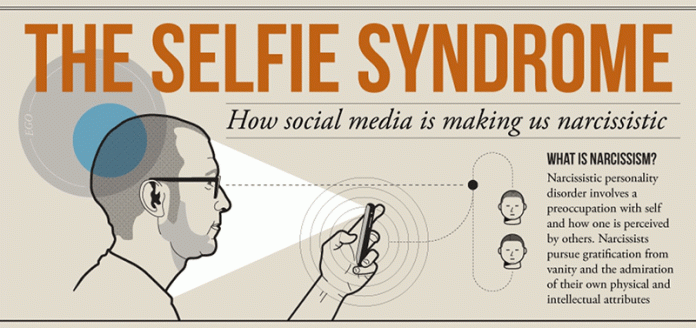
We would rather take selfies and complain about something inconsequential than change ourselves, our families and our communities. We ask a lot of whys, bluster on about what’s wrong and then go back to the Bey-hive to taunt celebrities because we’ve analyzed some song lyrics like a conspiracy theorist.

In one week, for the first time in eons, my home state of Indiana believes it will finally play a role in helping shape a presidential election.

On the surface, it does. It appears that Indiana’s voters, with their early May primary, may have a say in who the presidential candidates will be for the Democrats and Republicans in the fall.

But dig a little deeper. Indiana’s voters have the same sway in this as those in Iowa, North Carolina and Mississippi did – which is to say, very little.

You do realize, you’re not really voting for a candidate. You are voting for a recommendation of a candidate to a delegate that you have never heard of that has been assigned to your district. Those delegates will go to the conventions and do basically whatever the heck they want. In a protested – er, contested – convention, delegates are bound to represent their district on the first ballot only.

Except now we’re told that in many states, that is not even the case, that technically speaking, somebody you don’t know can do whatever they please with that all important vote on the very first ballot. So whether you voted for Trump, Cruz or Mickey Mouse, that may not even matter for the first ballot.

And we’ve not even talked about Super Delegates. Let’s just say Captain America, they are not. You know what, never mind.

The fact is, it’s not about the candidate you detest or support so much as it is an exposed process whereby someone can get the majority of the votes after a long, arduous primary process and be denied the nomination by unknown foot soldiers of an establishment.

Are these the rules? You betcha. I suppose you got me there. But this is also not about the “will of the people.” Rules from state parties, delegations and delegates are as much a power play as a massive monetary donation from a corporation. There is little difference in what power they can wield behind the scenes.
moneyrace-1024x576

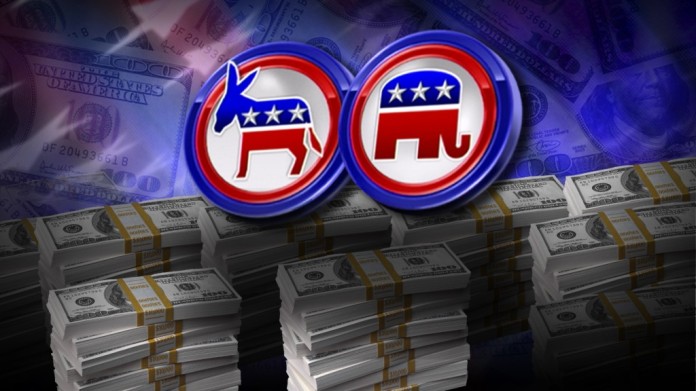
For decades, we’ve worried about the role of money in politics and how it influences decisions. Well, we should also worry a great deal about who controls the game and writes the rule book on that, too. It’s hard to tell who the puppet masters are anymore.

To me, this is truly much less about the name or personality – or even one’s personal feelings on a particular candidate. It is about the will of the people and the false message somehow portrayed that we are a democracy. We are not. We are a federal republic. We vote for representatives. And if you’re wondering why less and less people vote, it is because of this very notion: they feel their vote doesn’t matter.

In 2016, how we feel matters much, much more than things like truth or reality. That’s not an endorsement, either. Just a simple statement of fact.

We want our vote to matter – it’s why we push for voting, why we show the popular vote and tally it all up. But the confusion comes when terms like “districts” and “lines” and “delegates” and “bound” and “unbound” pop into our every day vernacular.

The average American citizen – of which there are far greater number than the political class – sees a name on a ballot and marks next to it believing their vote has been cast for that person. If that candidate has more votes than another person, the average citizen is inclined, by simple deductive reasoning, to believe that is the winner.

Except the winner is not always the winner. There are games to be played and delegates to be swooned. And even if you pull in roughly 20 percent of the vote, and your opponent is vilified more than you, you can be the winner.

I minored in political science and have been somewhat active and engaged in politics in a variety of ways for years. And I understand it all – but I definitely don’t get it. The country that champions pamphlets like “Common Sense” doesn’t seem to have any. The typically smarmy media types freely admit they don’t get it, either.

We speak of our founding fathers in glorified tones, and for the most part, it is true. Intellectual, forward-thinking and dynamic leaders they were, they also didn’t have the foresight to deal with race or gender or terrorist attacks or cyber-threats and digital privacy. A product of their time, they despised a King across an ocean telling them they owed more taxes for the products they consumed or created. They wanted the power of those governmental decisions to rest in their hands and on their soil.

Thus, the political system our country was founded on was self-serving. It was a power play, a power grab and they executed it beautifully. And they carefully crafted a foundational document to serve as a blueprint to young nation meant on doing things in a much better way, where the voice and the will of the people would have input – but not the ultimate final decision.
usa-voting-paper-ballot-booths-640x353

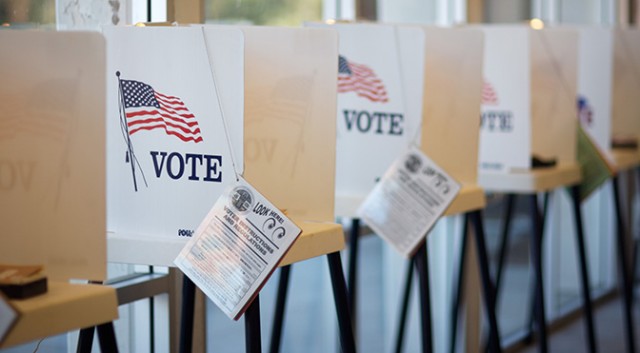
Do most of us understand this? We have the power to elect someone to represent us – at least once we get to November – and even then, you may not like your choices. But until that point, you have far less say. Money, corporations and power players bring us to the ballot box each and every election.

That is, seemingly, until this year. This is our revolt, on both parties. We’ve largely rejected traditional notions this cycle. Perhaps not you, but the larger We has.

Donald Trump is a lot of things. And while it may be difficult to digest, while many are disgusted by the very idea of him getting even this far, the simple fact is at the ballot box, in state after state, he’s winning the votes of those casting a ballot.

That is not an endorsement or a sentence of support for him as a person or even as a candidate. It’s a statement of fact. And while the collective spin room of the Republican National Committee, the national media, the remaining candidates and the candidates that have been eliminated clamor about blocking him due to the “will of the people,” it can be reasonably deduced that the people are rejecting something.

Did it ever occur that this could be less about Donald Trump and more about the other candidates or the party or the system?

“If liberty means anything at all, it means the right to tell people what they don’t want to hear.” – George Orwell

Here is where we stand, where we have always stood. Our voice can be heard through votes. For all the blustering and protests and social media posts about it, you can make your voice resonate through voting. If you do not like Donald Trump or Ted Cruz or Bernie Sanders or Hillary Clinton or John Kasich, you vote for someone else.

But what I think we’re all really hearing is there is true majority that doesn’t like any candidate. If that is the case, it requires much more effort and involvement from a collection of people who have yet to show they are willing to do what is necessary. It is grassroots, it is time consuming. It is organizing an effort to promote someone else who may not even be known or who may not even be running. Maybe you should run for office locally. To make changes, it requires changing your behavior first. It requires action. It requires talking to people, gathering a coalition of support and signatures.

That is, if it matters. But the vast majority of us is silent. The vast majority of the nation do not vote, do not get involved. Thus, to the victors, to the workers, organizers and monetary backers go the spoils.

We play into their hands when the extent of our involvement is complaining on social media, in a post stuck between a selfie, a Game of Thrones recap and an analysis of just who is Becky with the good hair.

We disappoint ourselves on a daily basis far more than the political candidates we don’t want to vote for. In fact, we create the vacuum of leadership for their existence in the first place.

In the immortal words of Ice-T, don’t hate the player, hate the game.
 

Standard
American culture, American People., American Politics, Uncategorized

Bern Notice

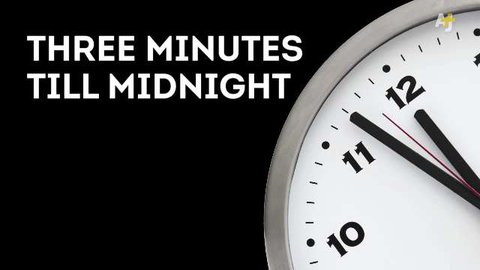
doomsday-clock

How many times can you hear it?

This is the most “important” election of our lifetime.

Are things bad? Sure seems like it. Sure feels like it.

But in the vast history of this, our planet earth, we’ve probably experienced millions of potential tipping points. The clock always seems to read somewhere between five and seven minutes to midnight.

Doomsday is just around the corner.

Propelled by a media that abuses the medium for the purposes of ratings that return a financial windfall, we’re sucked into a web of negativity. And like the sheep we are, we digest this poison and ask for more.

Essentially, we are backfeeding our future, creating a self-fulfilling prophecy of negativity across all forms of relationships. From our unique self “we” to the collective “we” as Americans.

Long before the rise of Donald Trump, we went negative. We went nationalist and extremist and chided others for not thinking like we do. It’s all right there in our social media feeds. We have been doing this dance inside America for a long time. Every time we slam somebody else we’re creating divisiveness. And over some of the most inconsequential topics imaginable – like sports or professions.

So when you act shocked how someone like Donald Trump could be the leading Republican candidate for President of the United States, you shouldn’t be.

Oh, you can be stunned by how it got this far, not vote for him, and not agree with anything he says. Because the truth is, rhetoric is more than just words when it comes from a candidate trying to be elected to one of the highest positions of power in the world.

But understand all the same we created these candidates, and the vacuum that allowed them to waltz into our lives. It’s like a bad joke: “A billionaire, two liars, and a socialist walk into a bar…” – and I don’t think we want to stick around for the punchline.

Ironically, we seem to want someone who plays nice in the sandbox, except we don’t play nice in the sandbox ourselves.

Schermata-2013-12-09-alle-10.12

Our celebrity culture, our reality-era need for confrontation paved the way for Trump. Our own inferiority complexes made this possible. We mock Trump for his paranoia over the size of his hands, yet we take five selfies until we get the right angle so our chin doesn’t look fat.

We want to tell people to shut up sometimes. And increasingly with social media, we do. We want to call someone who annoys us, and doesn’t see things our way, something condescending, like, ‘Little Marco’ for instance.

We attack people who we think show too many pictures of their kids. We attack people who we think show too many pictures of their dogs or cats. We attack people who root for another sports team or player or coach we don’t like. We mock, we belittle, we deride with smarm and sarcasm, with passive-aggressive undertones. And then when the other party gets offended, we tell them to relax, that was “all in fun” or just “a joke.”

So, you see, there’s a little bit of The Donald in all of us, like it or not.

It doesn’t mean he’s a quality candidate for President of the United States. It means there is a very obvious reason he’s even a candidate for President of the United States.

This same analysis can be applied to Bernie Sanders. A truly shocking number of people – the vast majority of them young – “feel the Bern.”

And truthfully, this phenomenon should be far more concerning than the “Make America Great Again” reality show of Donald Trump.

The short-term and long-term proposition that millions of young Americans are flocking to the polls to vote for a white socialist in his mid-70s, who has unapologetically defended socialism all over the world, should be beyond frightening for Americans.

Never mind the truth that we’ve neglected to apparently teach millennials what socialism truly is, and what it can do. It reads like a utopia, but looks and smells like a dirty trash can filled with poo.

auf_freedom

Currently, 20 percent of the world’s population continues to live under communist regimes, in China, Vietnam, Cuba, Laos and North Korea. Not surprisingly, they also remain the largest violators of human rights in history. The opposition suppressed, detained, imprisoned, murdered.

You want to really be scared? Nearly 73% of Americans couldn’t tell you the cause of the Cold War just five years ago. That’s a question asked on the test for official U.S. Citizenship. Guaranteed, that number has gone up.

And if you are one of those, put down the Candy Crush and pick-up any text from your junior year high school history class.

How could we ever arrive at a point that we’re falling for the false sirens of socialism? Perhaps it begins with participation ribbons and trophies. We coddle ourselves. We are all special and unique in our own way, sure, but that doesn’t mean little Johnny didn’t work 10 times harder than little Timmy in order to rise to the top of the ranks. And this doesn’t just apply to sports. The valedictorian earned their As, the kid who didn’t study earned their C-.

That’s America. Or at least it was.

Now, we are an America that apparently thinks it is cool to hang out with Cuba, despite their political affiliation, despite their horrid human rights history and despite the violence and unspeakable poverty taking place in the streets outside the stadium where a baseball game was played yesterday, with our president wearing some shades and singing “Take Me Out to the Ballgame” in the stands.

The island in the sun, where everyone is completely equal, and treated equal, and lives a life of equality is a mirage. That mirage is socialism. There is no incentive. What’s yours is mine.

And forget being what you want to be. Want to be a doctor? Tough. Janitor. Want to be a janitor? Sorry, pig farmer. Want to be a pig farmer? Sorry, accountant.

You’ll be told what your role is by someone else. Identity and self-worth are stripped away. You are not an individual; you are just another person to keep the government functioning. A government that provides you with what little you have, which is the exact same as everyone else, no matter how hard you work or what you do, so you might want to watch what you say and where you say it, too. Don’t try and do it through art or music or literature, either.

Our American ancestors fought over 240 years ago for freedom from oppression and tyranny. Countries and citizens of nations the world over have begged and fought for freedom through generations, and once they got it, exposed the horrors of how fascism, socialism and communism ruined their lives, their families and their country.

But no one watches “60 Minutes” anymore, we’re too busy keeping up with Kardashians.

And now we have a majority of a generation who want to bring to that kind of political system to the ultimate beacon of freedom, the United States, just so they don’t have to pay for college or healthcare.

Never mind that it will be a college experience devoid of individual analysis and thought, where subjects and courses will be selected and pre-screened by the government…actually, wait, in socialism, is there even a need for college?

Must be why it’s free.

We are spoiled and entitled brats. Most of you reading won’t finish the 1,700 words in this blog – I know, you’ve got to get back to Facebook’s version of America’s funniest home videos.

But that is the vacuum we created that allowed us to feel the Bern.

Socialism, for in practice often known as communism, strips the mind, the body and the soul of individuality, of incentive, of self-worth.

animal_farm

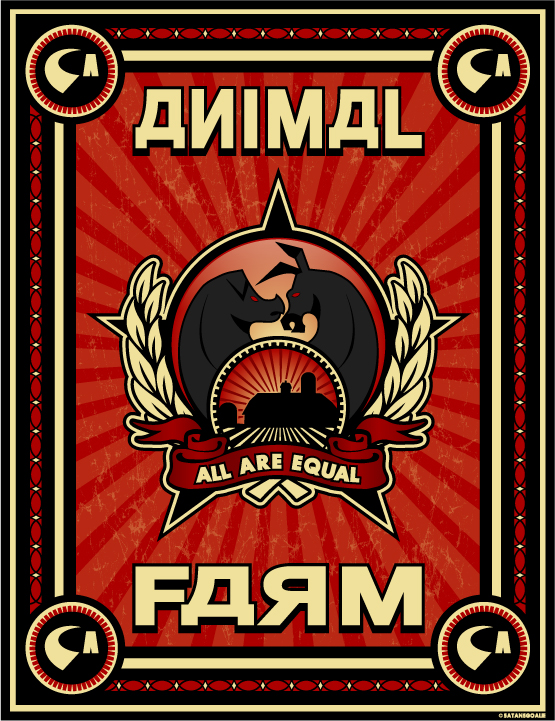
But we don’t read Orwell anymore. Animal Farm probably invokes thoughts of a children’s book and 1984 is just a year in the past.

When the Cold War ended, there was an enormous drop-off in mass killings around the globe. When the Center for Global Policy at George Mason University researched this through a task force, it found the reason was because millions were freed from communism and police states at that time.

Despite what you read and hear through the media, mass killings around the globe have remained low for over 20 years. In fact, the 2010s are the some of the lowest in history.

But our younger, millennial brethren were born after all this Cold War mumbo jumbo. The Day After Tomorrow is more plausible to younger Americans than WarGames. Anyone younger than 28 doesn’t remember the fall of the Berlin Wall. To them, it is just text and pictures in a book.

Sanders will most likely not win this election. But millenials will take over as the largest sub-demographic of America in the not so distant future. And not one of them ever had a siren test for a nuclear war in grade school. This primary season should serve as warning to the disconnect we’ve created in our society.

We cannot protect and coddle anymore. There are no more participation trophies to give.

To be sure, America has its share of problems and issues. There will never be a utopia here on earth because of the humans that inhabit it. We are not perfect, nor will we ever be. We should always strive to do the best we can to care for one another, to root out injustice wherever possible and reduce the violent nature that stirs within the souls of the lost and help bring hope to the hopeless.

But do not mistake that kindness, that good intent, with willing subjugation.

Americans work hard. We compete. We push ourselves and go for our dreams. Sometimes we win, sometimes we lose. We’re gamblers, boundary-pushers and risk-takers.

But this isn’t Manor Farm.

If we’re going to become the anti-thesis of what we are and what we have been, if we’re going to backfeed into some twisted version of the future that is as dystopian as the media portrays, then I guess given the choice, there is no choice.

Better to let the clock tick to 11:58pm than have a society so lazy and unmotivated it just rolls over and falls back asleep when the alarm goes off.

Hitting snooze doesn’t save us.

Get up, America. It is time to get to work.

This is your Bern Notice.

Standard
American culture, NFL, Peyton Manning, Society & Culture, Tom Brady, Uncategorized

The Intervention of a Sports Addict

Sports are a drug.

They’ve probably always been a drug, and always will be a drug.

They soothe us, distract us, energize us, unite us, divide us, and entertain us.

They also blind us.

Americans are sports junkies.

And what do addicts do?

Deny that a problem or addiction exists in the first place. They ignore the obvious. They defend the indefensible. They keep right on using.

But they’ll ruin you. Mess up your mind.

You don’t believe me, do you?

So how about the fact that sports will make you deify someone you’ve never met? Doubt me?

Let me prove it to you.

How do you feel about Tom Brady? And now, how do you feel about Peyton Manning?

Allow yourself to independently judge both of these legends’ and their recent “situations.”

You couldn’t do it, could you?

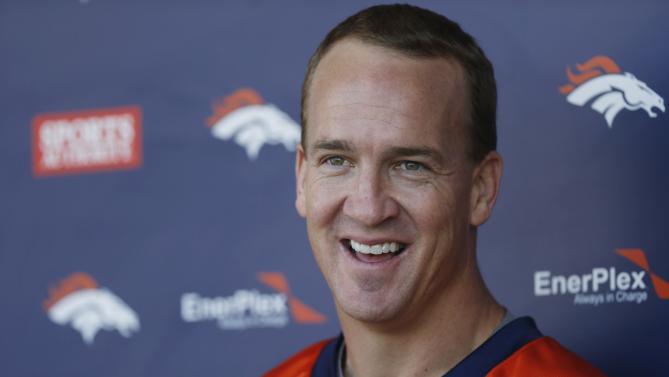
Peyton Manning

Manning’s stories are promptly dismissed as “hit” jobs by people who want to tear him down through accusations of HGH and a young college kid who behaved immaturely.

Yet Brady’s stories are treated as fact, despite the little evidence produced in the 12 months since Deflategate began to actually prove 1) anything actually happened and 2) most importantly as it concerns Brady himself, that he had anything to do with it if the balls were actually deflated by humans.

The NFL still slings it out in court to prove they have the right to punish a player under the CBA, missing the entire point that, you know, you have to actually have proved the player should be punished at all. To do this, they uncovered thousands of e-mails and phone records to try and link Brady to it.

All we found out is he wants to play longer than Manning, he’s got an ego and he weirdly cares a lot about swim pool covers.

On the other side of the coin, Manning has seen his image take a hit over allegations that date back 20 years that he was basically a pervert to a female trainer at the University of Tennessee. This is on top of the allegations that he received several shipments of HGH (or his wife did) that coincide with his neck injury rehabilitation a few years back.

The Tennessee story has been out there since 1996 and Manning has settled the dispute twice – once when it happened and apparently again when he brought the trainer’s name up in a book. Why this is resurfacing now has everything to do with his name being attached to a Title IX lawsuit against Tennessee and it being 2016, the age of rabid, social media heathenry.

Meanwhile, it has been revealed that NFL players were shorted $100 million in revenues. The league office dismissed it as an accounting error. Anybody make a $100 million mistake at their job wouldn’t have a job the next day. Yet this story is not currently gaining much traction. Why?

Because we’ve already given them the money, so we don’t care if the rich players get richer or the rich owners are even richer. It’s monopoly money to us, anyway.

No, no, we addicts, we care about sentiment, about legacy, about being able to emphatically agree on some fantasy ranking of the greatest ever.

And we care about this all because it says a lot about who we are – at least so we think subconsciously.  We attach ourselves to these athletes and these teams so we can go through the pain of losing and the joy of winning together. Brady backers love the underdog story, Manning’s fans stuck by him through all the “he can’t win the big one” years. To us, this loyalty proves something about us.

We can’t like the wrong guy, we can’t be wrong, we can’t have invested in the wrong guy or bought into who he is as a person.

NCAA Football: Alabama at Mississippi

There’s a lot on the line for us average Jill and Joe’s because we’ve convinced ourselves that our fandom matters to other fans. We made it clear who we support – and not only is our guy better, but they are a better person, too.

Except for one, small problem.

It means nothing. We don’t know any of these people. We don’t know what they are like behind closed doors. We don’t know how kind they are or how ruthless they are or how sleezy they might be.

They might be innocent, they might be guilty. The vast majority of us have no clue. And yet we sports junkies feed the beast. We listen to the sports talk shows rattle on and on about it, driving up ratings, making them talk about it more. We click the stories all over social media, prompting more stories to be written about it.

We’re sheep. Inmates in a sports asylum walking around with blinders on, believing in sports and sports figures as if it was a religion. We’re dopes, buying the gear, buying the tickets at astronomical prices, buying into the belief systems and serious manner in which it’s all treated.

We’ve been sucked into world within our world where we think this stuff actually matters, like debating if four minutes is enough of a suspension for Ben Simmons cutting class last week?

I don’t know, and I don’t care anymore. Did that teach Simmons anything? Probably not. Why is he allowed to do that? Why do you care? Didn’t you cut class in college? Does it impact you if he doesn’t go to class?

We want fairness and equality in sports, in college programs? There’s too much money at stake to ever let it happen. We demand from coaches and athletes and administrators that which we ourselves cannot even do in our daily lives. We take shortcuts. We skip out. We complain. We don’t give max effort every single day.

But we sure expect everyone else in sports to. After all, they’ve been given a gift.

So have you.

You just choose to waste it.

Sports and extracurricular activities in general serve in building people in a variety of ways from a young age. They teach teamwork, dedication, commitment, perseverance and hard work to name just a few.

And wanting to be a part of that, as a parent or a fan, or both is good too. But too much of anything can turn into something you never intended – like convincing yourself that someone you’ve never met is good or evil, the embodiment of everything you love about sports – or everything you loathe.

Just be wary of absolutes.

Absolutes lead down a path of yelling at officials at a soccer game for four-year-olds. They make you crazy enough to attack someone physically in the parking lot after a game. Or throw batteries at Santa Claus (we’re looking at you, Philadelphia).

They make you believe in someone else that, like you, is human and fallible. Better yet, these absolutes have led you to wear the jersey of a character, a portrayal, an image of who that person wants you to see and believe.

I know this isn’t easy to admit. I know you think I’m crazy, that sports don’t control your life and that you couldn’t possible “worship” another human being so blindly.

But just go back to the beginning. What do you know and believe about Tom Brady? And what do you know and believe about Peyton Manning. Ask yourself which one is right and wrong, good and evil, guilty or innocent.

And now remember that it’s a trick question: you don’t know them or their situations – only what their enemies or their mouthpieces have allowed you to.

michael and kobe

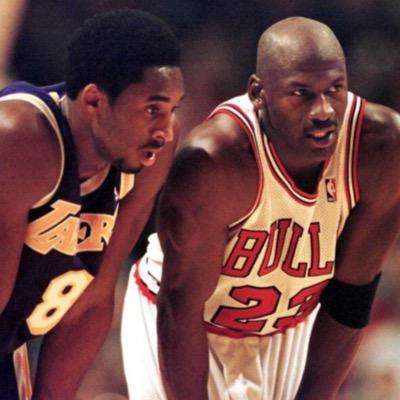
In other words, you don’t know Peyton Manning or Tom Brady. Or Michael Jordan. Or Tiger Woods. Or Bob Knight. Or Serena Williams. Or Dean Smith. Or Kobe Bryant. Or Tim Duncan. Or LeBron James. Or Andre Aggasi. Or Danica Patrick.

No matter how much you think you do.

The first step is to admit there’s a problem.

Sports are a drug.

They soothe us, distract us, energize us, unite us, divide us, and entertain us.

And they most certainly blind us.

Standard
American culture, Chip Kelly, fired NFL coaches, gossip, Hollywood, Philadelphia Eagles, Star Wars, Star Wars: The Force Awakens, Uncategorized

Perceived Perfection

Two thousand sixteen.

We have arrived in this, the future, and it by all accounts resembles the recent past. In some cases, it might even resemble a distant past, too.

As a society, we seem to be tempered in our expectations of what we can accomplish because we see firsthand what we have been unable to accomplish to this point, all the while unaware of the fact we very much hand a part to play in what was unaccomplished all along.

So much displeasure going on all around us. So much lamenting. So much longing for the future, too busy to enjoy the present. A present which will become the past that we will begin to long for.

Ironic.

After all, what kind of malcontents would be if we didn’t endlessly hype how excited we were to be taken back to a galaxy far, far away in film, doll out a collective $1.7 billion in three weeks to see Star Wars: The Force Awakens, only to turn right around and bash it as “unimaginative” and whine about the former film prodigy J.J. Abrams’ lack of originality?

forceawakens4-xlarge

We beg – no, demand – updated classics, then complain when it’s too retro? We want retro Jordan’s and then complain that they are either too identical or not similar enough. Didn’t we skewer Indiana Jones and The Kingdom of the Crystal Skull for being not enough like the other Indy movies?

I can’t keep up. No one, pardon the pun, forced you to see that movie.

The same as no one forced George Lucas to sell the Lucasfilm and Star Wars galaxy for $4 billion to Disney. Those “white slavers” as he calls them.

Didn’t Lucas create Jar-Jar Binks?

Uh, I’ll just leave that out there, Mr. Lucas.

But Lucas is simply much the same as the rest of us in the modern age: immediately regretful of what we no longer have, though we didn’t treat it all that well when we had it and unable to move on to something else until we’ve sufficiently trashed it.

Sadly, the rest of us don’t have the $4 billion to ease the burden of negativity. Careful, George; remember what that path of anger and resentment can lead to?

But there’s another, deeper, more sinister than Sith reason we turned so quickly on Star Wars: The Force Awakens: snark.

The snark is all around us. Our snide remarks are becoming our only remarks as we remove ourselves more and more from the actual world to engaging with the vast majority of people electronically.

Would you really type half of what you do if you were to see the person in a hallway?

And how often has pressure from others led you to comment or fire off at the fingertips that which you wouldn’t have said previously?

Philadelphia Eagles owner Jeffrey Lurie called Chip Kelly a culture-builder, an excellent coach, someone he liked and respected and someone who didn’t need to prove anything to anyone just four months ago, in September 2015.

chip

Last week, Lurie couldn’t fire Kelly fast enough, leaked false info to the press about it, and generally smeared him for 48 straight hours.

Why?

The nameless, faceless social media mobs in full snark attack mode, pushed Lurie – who gave Andy Reid 14 years on the job until hiring Kelly – to do the exact opposite of what he said.

We’re all engaged in social media in some way, yet we’re terrified of it at the same time.

We hate to scroll through the feeds and see nearly 75 percent of what we are subjected to see, but addicted to the habit or the “information” we think we’re getting.

We don’t want to put it down, but we can’t put it up.

For every viral post about a child who had their wish fulfilled or someone doing a good deed for someone, there are 4,553 posts of selfies, quizzes and generally everyone complaining about something.

Better still: a good deed has to go “viral” to get the proper attention for it. Remember, if it is not on social media, it didn’t happen right?

Then again, there’s plenty of jibberish that passes through social media that does not pass the sniff test. Take the endless election cycle, for instance.

I’m not sure what I think about any of the 2016 presidential candidates because of the sensory overload I’ve experienced during the start of the campaign season.

And because I have no idea what they actually want to do through some combination of overexposure and underexposure, I feel completely unprepared to vote in six months, even though my state will vote too late for the primary to actually matter.

There’s both sincerity and sarcasm in that last paragraph. Sadly.

The truth is, I somewhat pity these folks. True, they make these boneheaded mistakes themselves, only to nosedive in polls that I thought everyone agreed three years ago didn’t really matter, but still.

If we thought the era of social media and treading and mea culpas had reached it’s pinnacle, think again. We’re roasting these candidates on the open fire of social media.

You step into the world of snark, you best come ready. Not many survive. And unfortunately, these candidates can’t play it cool like the rest of us: chilling on the sidelines, sharing only what we want to share, what we assume the online world wants to see from us: perceived perfection.

It is what we strive for now, perception. It can be any different types. We can become anything we want online, through our Insta-feeds, Twitter bios and Facebook posts.

We can be funny, we can be mysterious. We can be brooding, we can be political. We can be fit, we can be alcoholics. We can be vain, caring, jet-setters and turbulent.

I am sure it is not that cut and dry. I am certainly guilty of it, too. You can click through status updates and pictures of my five children, my wife and myself and you’d get a bunch of pearly whites and smiles at the intersection of Constant Fun and Perfect Family.

We are only perfect for us, folks. And some days, my neurosis leads me to wonder if I’m even perfect for them that day. We get angry. We cry. We lose our temper when the milk is spilled for the thirtieth time in 12 days.

You might like us for an afternoon or weekend, but we would get on your nerves, I swear. And likewise, I bet you would get on ours, too.

We’re all looking around at each other like we have got it together, but in reality, we are running our day-to-day lives more like the Cleveland Browns than the New England Patriots.

But apparently, life just looks better with a filter.

93831-instagram2-presets-for-lightroom-samples-tree-original-1358439909

Of course it does. Any sunset with palm trees and beaches looks enviable.

If it is your daily life that could use some contrast, sharpness, color and filter adjusted, consider being more social and less media.

Personally, my goal  in 2016 is to be a bit more transparent, to be more positive in my day-to-day life, less anxious and neurotic, and do my best to enjoy the present moment, unfiltered.

Plus, I have got to pay more attention to this presidential election thing.

I still don’t know what they stand for.

The polls say that’s not good, considering my gender, party affiliation, race, breakfast intake, height, income and inclination to watch Friends re-runs with my wife on Netflix.


Standard
American culture, Culture, philosphy

Divided We Fall

There’s nothing I enjoy more than going into the elementary school about a week or so into the school year and seeing the work of our 7-and 9-year old kids and hearing from their teachers what the class is like.

They are eager to learn, they are happy to be there. They share. They are kind. They want to do what’s right and they don’t care what the other kids look like or where they come from.

In the classroom, they’re all equal. They just want to learn about the world.

But as adults, we realize how scary that world is – and how desperately it needs to change. At least this is true for America.

As the most recent horrific event unfolded this week – the assassination on live television of two Virginia-based TV staff – it occurred to me that many Americans are living in entirely different worlds.

Geographically, ideologically, racially, economy, we are divided. Perhaps even more so than ever, because there are just so many of us and we’re filing into categories, marketing profiles of who we are.

For instance, I live in a small city that just graduated from a town, with some racial diversity, but mostly well-to-do. My roads are a mix of heavily traveled commuters to the bigger downtown and back country roads that still wind around cornfields and cemeteries. People are generally friendly, our police do well to protect us, are kind and it’s a big deal if there is a bank robbery.

Then, I see that in Missouri, just outside of St. Louis, there’s a place where my experience is not relatable. It’s like opposite day, every day. There are inner cities and rural towns and places in between all over the United States where customs, rituals, emotions and norms are completely and wholly different from each other. Not one is necessarily better than another, just radically not the same.

And we ask that everyone come together to make decisions that apply to the country as a whole. It should not surprise us – yet somehow does – that we cannot agree on a whole heck of a lot. From gun control to abortion to gambling to gay marriage, we’re trying to yell the loudest in order to sound the strongest and most convinced that our way is the best way.

Except that our way is our way and we’re there’s really only about 25 percent of our society that agrees completely on a certain issue. Think about it: we’re subdivided constantly into these groups, these regions, these states, these cities and towns, so no wonder our primary concern is us and where we live and how we perceive the right way to do something is.

Yet what is good for Baltimore might not work in Chicago. What is good for Racine, Wisconsin might not work in Little Rock, Arkansas. What needs to happen to roadways on the North side of Indianapolis may not apply to the South side of Indianapolis.

We’re so busy coming up with solutions that we’re neglected the root of the questions.

Meanwhile, the big machine believes it has us pegged. Search for something on Google, it shows up for three weeks in your Facebook ad space. It thinks it knows you.

We barely know ourselves. And we don’t apply all our norms and customs accordingly when it doesn’t serve our needs.

Some of us have jobs in a corporate type setting where it would be impermissible and grounds for firing should we use personal e-mail accounts to conduct business. Yet Hilary Clinton can do it and those who support her make outlandish cases why it was OK, why it was justified and why those who question it are out of line and risking national security. Why? Because they want her to win the presidential election in 2016.

There’s no accountability of our officials, so why then would we ever think there is accountability for us in similar serious situations?

Republicans have spouted for years about having a viable, reliable and diverse candidate for president. So naturally, Donald Trump leads the preliminary polling. And naturally, his favorability increases with every outlandish, racially tinged and gender biased thing he says.

trump

Seriously? You’re going to woo swing voters by nominating someone who calls a female anchor on known right-leaning TV station a “bimbo”- and he’s likely running against a woman? Good luck with that. Trump didn’t like questions in the first debate – questions that he dodged and did not answer – about all kinds of real issues.

“How do we expect you to handle X or Y, when in the past you’ve done the complete opposite?” generally sums it up. Trump’s response? Name calling and mockery.

Hardly professional, hardly becoming and hardly convincing, Trump’s “throw stones in glass houses” approach has landed unceremoniously well on a generation of people who use social media in much the same regard.

Don’t agree with someone? Comment and bash them! Are they calling you out? Well, no sir, you shall call them out!

If you haven’t noticed this before, just scroll past the auto-playing videos of live TV murders and cats falling off couches. You’ll find it eventually.

Is this what we have become? Have we lost our collective minds? Is it possible that we take too much seriously and not enough seriously at the same time? We overreact about that which could use some level-headedness and underreact over those things which seem, at least to me, appalling.

Despite all our differences, I would think there is a baseline of acceptability out there for how we act, how we treat each other. But seeing that someone – actually many someones – believed it wise to post a replay of this week’s events in Virginia in the hours after, perhaps now it has become clear that we’ve our baseline has been not just misplaced, but is nowhere to be found.

It’s been wiped away by the need for followers and likes and having something “go viral.”

That’s all it is though.

A fleeting moment for you, a lifetime of hurt for the loved ones who lay down each night knowing that hundreds of millions have seen the grotesque manner in which their friends, family or colleagues died.

Despite my numerous pieces on our fallen angel of American society superiority, I remain hopeful for a better and brighter future. I cling to my personal reality, my world, my roads and my family. I try not to let my mind go down a dark path where I fear every moment for their safety in a world gone truly mad.

I keep hoping that we wake up, snap out of it and start trying to work through the underlying issues first, before we try to take on policies and procedures. I do this not in the hopes that 300 million others in this country agree with me personally, just that we agree that we’re going to disagree, that we can’t get what we want all the time and begin a road of compromise.

Look, I just don’t see 300 million Americans getting together for a large-group therapy session. So, in the absence of such an event, it could be a collective identification of who we are, what we stand for and what we believe.

The groundwork was laid with the Declaration of Independence, the Constitution and the Bill of Rights. But since those early days, Americans have constantly looked for ways to subdivide ourselves in order to find the majority on an issue that will allow them the right to impose their beliefs on the minority.

So perhaps instead of questionnaires and surveys – short of a census – that ask for gender, race, age, ethnicity, religion, city, state, marital status and income ranges, why don’t we just start responding that we’re Americans?

It just might be simple enough to start there and just be a little bit nicer, think of others first from time to time and share, and not care where we came from.

You know, kind of like first graders.

Standard