Uncategorized

Cups Runneth Over

red cups

So we’re really doing this with the red Starbucks cups, huh?

I mean, this is where we plant our flag and draw our line in the sand? What will we think of to be offended by next? And when, if ever, will we see the hypocrisy in what we say versus what we do.

In the current age, words speak louder than action.

My social media feed is filled with cup lovers and cup haters. One post complaining about the media bias, the next post is a shared link to a story from the media.

I see Republicans, Libertarians and Democrats. I see Colts fans, Patriots fans, Bears fans, Packers fans, Pacers fans, Eagles fans, Cowboy fans. I see shared stories of someone having their last wish granted before dying of cancer, and someone telling us that bacon causes cancer and to never eat it again. I see Life Lessons from Garth Brooks and a post on how Bro Country is dead thanks to Chris Stapleton.

Well, does it matter to you that I ate some bacon last weekend? That I am not a Colts fan? That I find Florida Georgia Line’s music catchy?

What exactly is our obsession with a futile attempt at making others believe and think as we do?

I have no feelings about a red holiday cup, from an overpriced coffee shop, based out of Seattle, whose sole purpose is to make money off coffee concoctions. But it appears many others do have feelings. Very strong ones.

We’ve been warned of groupthink, of suppression, of fear-mongering, of the mob mentality many times over and long before now.

orwell

Ever read 1984? We still have not learned these lessons, and during a presidential election cycle, you’re bound to hear more references to Orwell’s warning on Big Brother.

Basically, the principles of 1984 are simple:

  1. Pervasive surveillance.
  2. Censorship and re-writing history.
  3. Consistent fear-mongering of an unseen, vague enemy.

Do we live in an era where the world depicted in 1984 is our reality? That is for you to decide. I see the similarities all around me, though.

Nearly all the major blockbuster action movies (Marvel’s Captain America: The Winter Soldier, Avengers: Age of Ultron, James Bond’s latest outing in Spectre, most of the Die Hard and Mission: Impossible films and roughly 4,211 other movies over the last decade focus on government or universal surveillance.

And this doesn’t have to be in art – stories across the news deal with spies, spying, security breaches and hacking.

Often, Nos. 1 and 3 are combined: we need to watch everyone do everything because there is an enemy lurking in the shadows that we must stop. It’s “for our own good.” Just like getting those forsaken red cups off the market is for our own good, right? Because whatever you believe is right, must be so.

How many times must censorship occur before we truly recognize it? This founding principle of the United States has been violated many times over – by some of the greatest and worst leaders in our history. Why? Because of the claim that it protects us from the enemy (No. 3). So we change the press release, we limit the information (like the Kennedy assassination, perhaps) or re-write it entirely (No. 2).

History is written by the winners, yes – but it’s also written by the ones holding the pen.

Freedom is not a slogan. Freedom means the ability to find out the facts. If we censor those, we lose our freedom. Yet we must allow ourselves to believe in it entirely. This means the freedom of someone else to love red cups. This means the freedom of someone to not celebrate Christmas as you do. Your rights and mine are protected because theirs are and vice-versa.

Do certain sections of our society feel marginalized by the politically correct culture? Certainly. But for all the wrong reasons.

It is not about how loud your faith and beliefs can be that makes you right and another person or group wrong. The loudest have the most to lose in most cases, feel the most threatened and probably are scared of being marginalized the most. No mattering creates the coiled snake reaction. You feel cornered, so you lash out.

But none of this makes you right.

If you truly believe in what you are doing, then the belief itself should be enough.

We fight the wrong battles.

It matters not who your war is with, as long as there is someone direct your opposition to, then people can be easily manipulated and will willingly go along with things they would otherwise morally oppose.

Do we even know what we agree with? We disagree and oppose so much that who can keep track? We miss the chances in our daily lives to show people the kindness of our particular brands of faith, of our parenting, of our race or gender.

With all that in mind: is there a war on Christmas? Are we really that afraid that Christmas will be marginalized? Do we really fear the unseen enemy meant to destroy the holidays with non-secularly designed coffee cups? Or are we being manipulated into buying more stuff to prove how faith based we are?

Up to you to decide.

Just keep in mind that someone – a pastor – actually suggested going to Starbucks and buying a beverage in the red cup and make them write “Merry Christmas” on it. He asked everyone to join him.

That’ll do it!

Convince others that’s the best way to show your displeasure by spending money in a place you disagree with and a cup you are upset with. Line their pockets with money.

That will most assuredly teach that particular barista – who just needs a job to put themselves through school and who’s never met anyone on the Starbucks marketing team – a lesson in the true meaning of Christmas.

Meanwhile, the guy behind you is “Mike” and all he wants is to get his drink and get out of there.

Starbucks – and any other retailer – is not responsible for spreading the gospel of one religion. Their goals and objectives are to make money for their shareholders in the most cost effective manner possible.

The simple fact is that Christmas has been honored and recognized as a religious holiday for thousands of years by those who believe in it.

It survived the time before mass commercialization.

It survived before the Santa Claus Coca-Cola campaign, before Norman Rockwell painted it, before the shopping mall was invented, before Bing Crosby sang “White Christmas” – and yes, before Starbucks made Peppermint Mocha Lattes.

I think it will manage to endure beyond the #RedCups saga of 2015.

We The People, on the other hand, could still use some work.

Standard
Uncategorized

Well Fed

When I first walked through the front door of the house that, unknowingly at the time, would help shape and define my adulthood, I smelled food.

Once I actually got into the kitchen, I saw copious amounts of it. I was flattered, really, that the parents of the girl I had just started dating would go to such trouble for little old me.

The massive kitchen table had bowls filled with all kinds of deliciousness: fruits, steamed vegetables, rolls, seasoned potatoes, chips, dips, salad, and like five kinds of dressing. There, in the middle, sat what must have been half a cow.

I could hang here – oh, I could definitely hang here.

family 5

Coming from a small family of three – just my parents and I – I’d never seen that much food for a Tuesday night dinner at home unless it was a holiday.

The family sat down – all seven of them – and proceeded to say grace and eat maybe half of the food on the table. For a little bit, I thought that perhaps someone had not joined us, a friend of a sibling, another family member I did not know about yet, or they were simply trying to empty the fridge of some items that were nearing expiration.

About a week later, I was back (sweet! I scored a return invite!), and the same thing happened again.

With what I can assume was roughly half a chicken farm plopped into the middle of the table, surrounded again by sides, sides of sides, distant cousins of sides, multiple grains of bread options and sauces for whatever your palette desired, I dove in.

Once again, there were plenty of leftovers.

Once again, the family said grace.

It didn’t take me long to realize that I enjoyed being well fed.

Soon, I understood that it had little to do with the food.

I quickly fell in love with the woman who became my wife, but I also fell in love with everything that made her, well, her: her faith and her family.

Soon, I began attending Sunday Mass with her and her family, just so I could stay a little longer. Confused on when to stand and when to kneel, but feeling like it was where I was meant to be, my soul began to feel well fed, too.

Her parents and siblings were loud and full of jokes and constantly moving. In general, my life became well fed with activity, with a sense of belonging to them.

When our marriage combined our families, I’d like to think we were well fed here, as well. My parents parties, quirks and traditions merged with my wife’s and vice versa. My parents and my in-laws merged together well.

As my wife and I started to expand our family, we noticed these little things that made us feel so, well, fed. Little gestures, little moments, tokens and symbols.

family 3

Many of these things came from my mother-in-law, perhaps one of the most quietly kind, thoughtful and caring women I’ve ever met. And when I say quiet, she never wanted anyone to know, her gestures and love were personal and to be shared with the people she was sharing with, not for external praise or gratitude.

Protective of her first-born daughter, she had to make sure I would stay, that I would be good, that I would be strong for her child. And once I proved that, well, the tokens and gestures of appreciation for how happy I made her daughter came in waves.

Once, a few months after we were married, I casually mentioned in the course of conversation how functional and cool I thought NorthFace fleece jackets were at one of our Sunday afternoon meals at their house.  I quietly mentioned to my wife I’d like to get one in the future, as I had not had one before, but it would be good for the fall and early winter.

My mother-in-law had overheard this, and a few days later, quietly handed me a bag with a new NorthFace jacket in it.

“Hey Bri, I saw this while I was out the other day and grabbed it, hope it fits and is what you were thinking of,” she said.

I was stunned. It wasn’t Christmas or my birthday, and I didn’t even think she had heard me. I thanked her repeatedly, but she just smiled and waved it off.

“It’s no big deal,” she said, moving into the kitchen to – you guessed it – prepare a smorgasbord.

These moments were frequent over the years: favorite meals, pumpkin pies, random clothing bags – and obviously, not just for me. For everyone. Meals remained large. Guests, friends of friends, all were welcome to the table, no matter the hour.

They did this for everyone, from friends of friends to people they had never even met. And it was always time to grab a beer or a glass of wine.

At restaurants, they picked up the check every time, without hesitation. If you are fast – which I think happened about five times in 12 years – you could get the bill and pay for it before they did. Of course, then they were on to you and they’d ensure before we even ordered that the bill would be going to them at every meal for the next year.

Well fed, indeed.

The giving never stopped, through three weddings, several graduations, and numerous births of grandchildren. They helped watch our children so my wife could work, re-arranging schedules to help accommodate ours. We’d walk in to watch a football game at their house to find a massive box of diapers sitting by the back door.

“Can never have too many of those!” they’d laugh.

The giving never stopped, not even after my mother-in-law was diagnosed with cancer in late 2013. She kept her illness quiet for the majority of the battle, forging through treatment, chemo, and surgeries. Through it all, they kept giving. Giving to their children, to extended family, to strangers.

They just kept feeding us.

family 6

The weekly meals never really stopped. The gifts, tokens, gestures never stopped. Mass on Sunday never stopped.

Our hearts were broken however, when the cancer took my mother-in-law to Heaven last month.

But in our grief, there is a realization that the cancer did not win. We won’t let it. Though the past 30 days have been incredibly difficult at times, now, I feel like I understand what this has all been about, what it is all for.

We were well fed.

In my writing, I rarely speak of faith and scripture.

But these days, it feels like it jumps out of everything I see and do. My mother-in-law’s life can be best described simply by Matthew 28:19. You see, she went and made disciples, people who would give, who would love, who would make those around them well fed.

family 1

This begins with her children. My brothers-in-law, good men who give back in their own uniquely talented way, through church, through friends, to their family. My wife’s sister, to dogs in need of rescue, to friends in need of a hug, of love and support, to her husband, to her gym. My wife, to her children, to her friends, her church, through coaching and teaching history, health and nutrition.

And they, in turn, have made disciples with their spouses. This is life, this is what we were meant to do: leave the world better than we found it. Someway, somehow. We often doubt we’re making an impact, we can grow frustrated at the mundane, the imperfect world around us. But on further review, we’re impacting others’ lives every day in the ways that matter the most: consistent love.

We live on in how we lived in the first place.

Today, somewhere in place I can only dream and imagine of, my mother-in-law is now the one well fed, perhaps hearing what can only be described as long deserved:

“Well done, my good and faithful servant. You have been faithful in handling this small amount, so now I will give you many more responsibilities. Let us celebrate together.”

Now, it is our turn.

We celebrate her life by doing our best to carry on that legacy and doing our small part to make the world well fed in mind, body and spirit, each in our own way.

There’s a reason we always had food leftover.

Others need to be well fed, too.

Because there is always room for more at a table of plenty.

Standard
American culture, Culture, philosphy

Divided We Fall

There’s nothing I enjoy more than going into the elementary school about a week or so into the school year and seeing the work of our 7-and 9-year old kids and hearing from their teachers what the class is like.

They are eager to learn, they are happy to be there. They share. They are kind. They want to do what’s right and they don’t care what the other kids look like or where they come from.

In the classroom, they’re all equal. They just want to learn about the world.

But as adults, we realize how scary that world is – and how desperately it needs to change. At least this is true for America.

As the most recent horrific event unfolded this week – the assassination on live television of two Virginia-based TV staff – it occurred to me that many Americans are living in entirely different worlds.

Geographically, ideologically, racially, economy, we are divided. Perhaps even more so than ever, because there are just so many of us and we’re filing into categories, marketing profiles of who we are.

For instance, I live in a small city that just graduated from a town, with some racial diversity, but mostly well-to-do. My roads are a mix of heavily traveled commuters to the bigger downtown and back country roads that still wind around cornfields and cemeteries. People are generally friendly, our police do well to protect us, are kind and it’s a big deal if there is a bank robbery.

Then, I see that in Missouri, just outside of St. Louis, there’s a place where my experience is not relatable. It’s like opposite day, every day. There are inner cities and rural towns and places in between all over the United States where customs, rituals, emotions and norms are completely and wholly different from each other. Not one is necessarily better than another, just radically not the same.

And we ask that everyone come together to make decisions that apply to the country as a whole. It should not surprise us – yet somehow does – that we cannot agree on a whole heck of a lot. From gun control to abortion to gambling to gay marriage, we’re trying to yell the loudest in order to sound the strongest and most convinced that our way is the best way.

Except that our way is our way and we’re there’s really only about 25 percent of our society that agrees completely on a certain issue. Think about it: we’re subdivided constantly into these groups, these regions, these states, these cities and towns, so no wonder our primary concern is us and where we live and how we perceive the right way to do something is.

Yet what is good for Baltimore might not work in Chicago. What is good for Racine, Wisconsin might not work in Little Rock, Arkansas. What needs to happen to roadways on the North side of Indianapolis may not apply to the South side of Indianapolis.

We’re so busy coming up with solutions that we’re neglected the root of the questions.

Meanwhile, the big machine believes it has us pegged. Search for something on Google, it shows up for three weeks in your Facebook ad space. It thinks it knows you.

We barely know ourselves. And we don’t apply all our norms and customs accordingly when it doesn’t serve our needs.

Some of us have jobs in a corporate type setting where it would be impermissible and grounds for firing should we use personal e-mail accounts to conduct business. Yet Hilary Clinton can do it and those who support her make outlandish cases why it was OK, why it was justified and why those who question it are out of line and risking national security. Why? Because they want her to win the presidential election in 2016.

There’s no accountability of our officials, so why then would we ever think there is accountability for us in similar serious situations?

Republicans have spouted for years about having a viable, reliable and diverse candidate for president. So naturally, Donald Trump leads the preliminary polling. And naturally, his favorability increases with every outlandish, racially tinged and gender biased thing he says.

trump

Seriously? You’re going to woo swing voters by nominating someone who calls a female anchor on known right-leaning TV station a “bimbo”- and he’s likely running against a woman? Good luck with that. Trump didn’t like questions in the first debate – questions that he dodged and did not answer – about all kinds of real issues.

“How do we expect you to handle X or Y, when in the past you’ve done the complete opposite?” generally sums it up. Trump’s response? Name calling and mockery.

Hardly professional, hardly becoming and hardly convincing, Trump’s “throw stones in glass houses” approach has landed unceremoniously well on a generation of people who use social media in much the same regard.

Don’t agree with someone? Comment and bash them! Are they calling you out? Well, no sir, you shall call them out!

If you haven’t noticed this before, just scroll past the auto-playing videos of live TV murders and cats falling off couches. You’ll find it eventually.

Is this what we have become? Have we lost our collective minds? Is it possible that we take too much seriously and not enough seriously at the same time? We overreact about that which could use some level-headedness and underreact over those things which seem, at least to me, appalling.

Despite all our differences, I would think there is a baseline of acceptability out there for how we act, how we treat each other. But seeing that someone – actually many someones – believed it wise to post a replay of this week’s events in Virginia in the hours after, perhaps now it has become clear that we’ve our baseline has been not just misplaced, but is nowhere to be found.

It’s been wiped away by the need for followers and likes and having something “go viral.”

That’s all it is though.

A fleeting moment for you, a lifetime of hurt for the loved ones who lay down each night knowing that hundreds of millions have seen the grotesque manner in which their friends, family or colleagues died.

Despite my numerous pieces on our fallen angel of American society superiority, I remain hopeful for a better and brighter future. I cling to my personal reality, my world, my roads and my family. I try not to let my mind go down a dark path where I fear every moment for their safety in a world gone truly mad.

I keep hoping that we wake up, snap out of it and start trying to work through the underlying issues first, before we try to take on policies and procedures. I do this not in the hopes that 300 million others in this country agree with me personally, just that we agree that we’re going to disagree, that we can’t get what we want all the time and begin a road of compromise.

Look, I just don’t see 300 million Americans getting together for a large-group therapy session. So, in the absence of such an event, it could be a collective identification of who we are, what we stand for and what we believe.

The groundwork was laid with the Declaration of Independence, the Constitution and the Bill of Rights. But since those early days, Americans have constantly looked for ways to subdivide ourselves in order to find the majority on an issue that will allow them the right to impose their beliefs on the minority.

So perhaps instead of questionnaires and surveys – short of a census – that ask for gender, race, age, ethnicity, religion, city, state, marital status and income ranges, why don’t we just start responding that we’re Americans?

It just might be simple enough to start there and just be a little bit nicer, think of others first from time to time and share, and not care where we came from.

You know, kind of like first graders.

Standard
American culture, Culture

The Drive For Five

Hey, complete stranger person who’s completely and utterly baffled why my wife and I are having a fifth child, I’d like to answer your question of whether or not we’re “crazy” in long form explanation instead of a simple “yes” or “no.”

Do you mind? Cool. Let’s get started.

I see you silently judging me with your eyes from the moment I said “fifth” – and I could care less. But just know that your shock and mild disgust is not as well hidden as you might think.

Yes, we have several children, we certainly are aware of the volume of children we have produced. And no, people do not seem to care as much anymore. It may be less exciting for everyone else than the first or the second, but not to us. We never had children for attention anyway.

Yes, we are younger than you might expect. Sorry we’re not older, I guess? We tend to think that our youth is a good thing, allowing us to play with our kids and chase them with energy and vitality. But if you somehow think our age equates not knowing what we’re doing with so many kids, that’s a totally fine opinion to have. Because certainly no one over the age of 40 ever messed up.

moore family

No, we’re not destitute, nor are we rich. Our children are happily fed, washed and clothed. And we do get help in that department from time to time from loving and wonderful grandparents on both sides, but only because they offer, want to or just do it without asking. We are perfectly capable of doing it on our own.

Yes, we are aware what causes it, but thanks for that awkward joke. Really played well to the crowd, sir. We planned these kids, believe it or not.

But somehow, I don’t think that look in your eyes is about us and our large family. It’s about us not following the “rules” or societal norms of the world in 2015. Because it is not what everyone else does and it’s not “normal.”

We are easily influenced in this country, but somehow rarely swayed.

We’d rather tell people how wrong they are instead of leading by example. We do this out of some sort of need for affirmation, that we are in fact, right – and someone agrees enough to tell us so. This then serves as validation to everyone else who still thinks we are wrong, so that we can turn back to them and say, “See, this person knows I’m right, too!”

Third party credibility at its finest worst.

Ask yourself this: if your convictions are strong enough, why do you need the approval of others through how many thumbs-up you get on a status update?

We like to complain. We like social media. And we’ve married them together quite nicely. We like to tell each other what the problem is, who’s to blame for it, what should be done about it, how it affects us and why we are right.

From politics to road improvement projects to what clothes to buy or music to listen to, we’re all trying to change the world through our opinion and what we value – presuming all along that others out there a) care what our opinions are, and b) hold the same values as we do.

We all have a sphere of influence; we just greatly misconstrue what to do with it. Social media allows you to build and sell your brand. Every post you make, every favorite, like, share and retweet.

Now, this may or may not be who you actually are – but that does not really matter. To the outside world, you are what your advertising says you are. You are marketing you, and in some ways those connected to you, with your brand.

And that brand is the message you allow yourself to project. You cannot change the world. Too big, too difficult, too abstract.

But you can change your world – and by doing so, through your sphere of influence, the world around you perhaps slowly changes over time.

So many people tell us of the ills of society.  They will complain. They will condemn others who do not think and act as they do. They will tell you that you are, in fact, wrong.

Now how many times when someone told you that you were wrong did it change your mind?

I’ll go ahead and guess zero, because you didn’t. The message is half as important as the messenger.  Throughout history, powerful orators – great messengers – have influenced mass amounts of people to do really great things.

They have also persuaded entire populations to do really dumb things, terrible or horrific things.

The difference between disagreeing and intolerance is a thin line, and we are not often aware that we have crossed it until it is too late. The same holds true then in how we conduct ourselves with others in person.

Life cannot be done as it is on social media.

So, yes, this makes our fifth child. And we’ve experienced the gamut of reactions before. Believe it or not, some had the open-mouth shock, the “you must be one of those” furrowed brow, the head shake and smile, the plastic smiled “that’s so nice” when we had our fourth child nearly four years ago.

We keep having children because we feel called to do so and that we can raise another person to be good, to be kind, to try to make the world a little brighter, a little happier and a little better.

To get there, you just go with it.

Look, do I enjoy freezing my tail off at some sports event at 8am on a Saturday morning after getting up at 6:30am? No more so than anyone else would. Is it fun to have a factory assembly line five days a week to make lunches for school the next day? Not particularly my brand of fun.

Sleepless nights with a newborn are not moments that I would describe as fun by any means. Nor is holding having nightmares of Home Alone play in my head as we walk through an airport, utterly petrified one of ‘em will end up lost in New York.

But this is not about me – it never was. Life is not meant to be about me, or my wife. Life is about giving yourselves to others and attempting to make the world a little better, a little brighter, a little happier. Let’s face it, it can be fairly depressing at times.

avengers assemble

And we have a lot of fun. How can you not with your own brood of mini-me’s?

It is our way of changing the world into a better place.

We all fear evil in the world, but it is indifference that scares me personally the most. And what my wife and I long to do is make difference makers, people who care about others and want to do right, solely because it is right. To us, this is increasingly rare in the world we live in. I want the good guys to win.

In some small way, I have convinced myself that our influence on our brood, and thereby a larger world, will be and last much longer than social media – and much, much longer than me.

You see, my life isn’t over because I have so many children. My life and purpose begin with my children. In fact, our children have helped me narrow my focus and become more efficient with my goals and objectives. My ambitions are closely tied to their lives, what they can become and who I will become because of them.

None of this makes me a better person or parent than anyone else in the world. My views are not somehow more valuable or correct.

It just makes me, me.

And you aren’t going to change me by telling me how weird it is to have five children.

But by all means, go ahead and try.

Standard
American culture

Please, Be Kind

Staring into the abyss of another horrific news story, where someone senselessly killed nine others, I’ve nearly ran out of words.

A few years ago, the direction of my writing changed significantly, from sports-related material to pieces that tried to peel back the layers of everyday life and made sense of the world around us.

Most posts are not nearly as funny and entertaining as they once were. I’ve been told that my writing is “too real” and “too heavy” – comments that are understandable. I’d like to believe I’ve grown a bit since I began writing as a career-slash-hobby over 10 years ago. My wife has changed me, my children have changed me. Life changed me.

It was around the time that a Kansas City Chiefs player, Javon Belcher, committed a murder-suicide a few years ago that I suddenly found it less important to debate the greatness of athletes.

The blinders came off and I starting seeing things differently. The outcomes of sporting events and the world within the world of sports that debates stats, stadium funding and “who’s better” seem to matter little now in the grand scheme of life.

Yet I understand the need for others – and myself – to use them as an escape. We need it, we truly do. Sports are a drug for some of us, an emotional high we use to distract us from the problems of our life and the world around us.

When a game is going on, we are thrust into a temporary reality where all that matters is scoring more than the other guys, having stamina, determination, grit and belief. The scoreboard is clear with the outcome. And there is always – always – another chance.

Life doesn’t really work like that. Bills must be paid, jobs must be worked. If you lose a partner, a friend, a family member to death, there is no next season. So sports serve a finite purpose in this world, as do movies, music and television.

Those who know me well know that I am a Disney World fanatic and a Marvel films junkie. These are my distractions. We all have them, and for the most part, that’s perfectly fine.

Except I wonder how far our fantasies will take us? How far have they already gone in creating a society of people who turn further and further away from the problems at hand – in their lives and the larger world in general?

If we are constantly distracting ourselves, then really, in time, life becomes the distraction, the thing we can’t be bothered with because it’s taking our attention away from what we’ve filled our time with.

To everything, there is a season. And sometimes, it’s not social hour. Sometimes, it’s not fun. Sometimes, work has to be done.

We seem to having difficulty with that last one.

The world has always been full of lunacy, of evil intent. But have we ever seemed so indifferent?

As Jon Stewart suggested on “The Daily Show” last night, we’ve gone to war on terrorism. We’ve invaded countries all over the globe to defend freedom and Americans. We’ve lost soldiers in this battle. And yet, what we do and can do to each other in our own country is worse.

Think of all the wars the world has seen. Think of what we are meant to stand for, what the principles of this country are founded upon. And we can’t even be nice to fellow Americans.

We say that these incidents are isolated, that the people conducting these atrocities are “crazy” or that they are racist, or fanatical or whatever. We want to blame guns. We want to blame drugs. We want to blame the culture or the upbringing or whatever.

But we’re all Americans. We’re all human. And we’re doing these things to ourselves.

The media will find a way to turn this into ratings and “debate” several things in the wake of the Charleston, South Carolina church shooting. They will debate old issues, unresolved issues, issues that shouldn’t be issues.

But none of it will change.

The coming presidential election, as most are, will be defined by something that has very little to do with the actual direction of the country. Truth is, we don’t “debate” anything anymore. There are fewer and fewer civilized conversations because neither side, neither party, is willing to admit that the other has a good point – or that they could be (GASP!) wrong.

We’re a bunch of miniature dictators that think we know what’s best for the other 300 million people in our country – and really – for billions around the world.

But honestly, we have very few answers. Look around. We’re a mess in our families, our relationships, our jobs and yet we wonder why others in our nation can do the kind of heinous things that are happening from coast to coast?

We are lazy, intolerant and rude. Worst of all, we’re uniformed by the same medium that promotes the very things that scare us back to reality for a few days.

The older I have the good fortune of becoming, I realize that it is true: everything I really need to know I learned at a very young age.

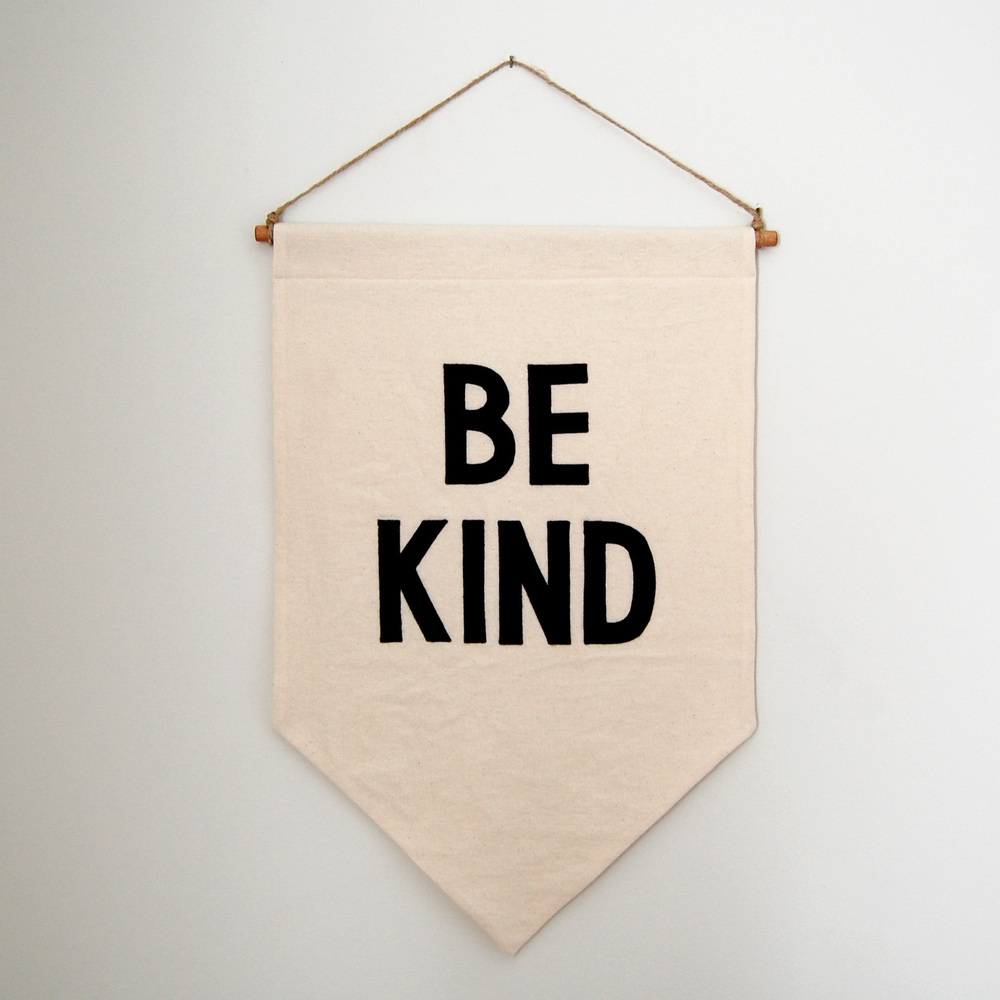
shco_bekind1

Be nice. Be kind. Share. Don’t hit people. Don’t say mean things. Apologize when you do something wrong. Clean up your own mess. Wash your hands. Put things back where you found them. Respect others. Watch out for traffic. Think and learn and play and draw.

Why is this so hard? Why do we complicate these things? I’m running out of words because no matter how complex the issue or the situation, no amount of nuance can mask the simple fact that these are the answers.

They have always been the answers.

We treat ourselves, our problems, our dramas with such reverence, as if they matter more than being kind. I want to believe that people can change people. I want to believe that we’re willing to look past our differences to co-exist.

But we just keep repeating ourselves in the same horrible, unconscionable fashion every few days, weeks or months – which is making it much, much harder for me to keep repeating myself in my writing.

The only words I’ve got left right now are these:

Be kind.

Standard