Allan Watts, American culture, Bill Self, da Vinci, Michael Jordan, motivation, NCAA College Basketball, Seth Davis, Shaka Smart, Thomas Edison, VCU

"Wake Up the Space"


Around Thanksgiving, VCU men’s basketball coach Shaka Smart could feel it.
Energy.
Smart was following his team onto the practice court in the Bahamas prior to the start of the early season Battle 4 Atlantis Tournament. VCU, always the underdog, was preparing to play in tournament filled with ranked and well-regarded teams like Memphis, Duke and Missouri. As in the past, VCU faced a tall order in taking on college basketball giants and super conference staples.
This was the kind of challenge the coach and his players lived for, and they had proven their mettle many times over, as NCAA Tournament darlings in 2011 and 2012, when the Rams advanced much further than expected by analysts. In 2011, as an 11-seed, they became the first team to play in the early “play-in” games to win five games and advance to the Final Four after toppling giants Kansas, Georgetown and Purdue.
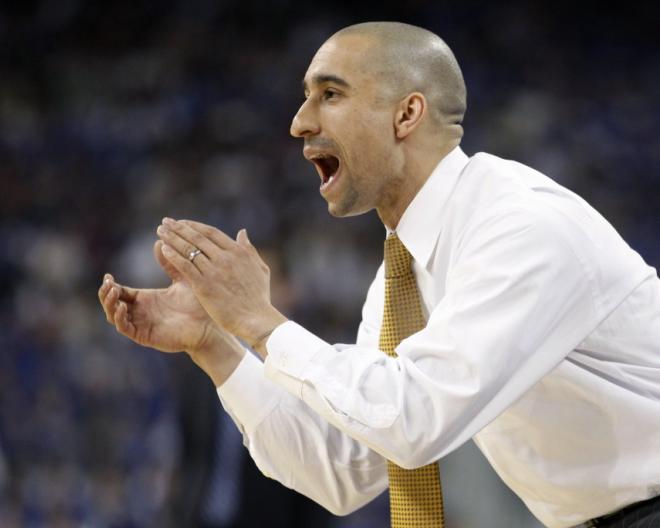
So nothing about this stage was new to Smart or VCU. That’s why as the Rams made their way onto the floor in the Caribbean last fall, shouting, chanting and bouncing around, it brought a wry smile to Smart’s face.
“Let’s wake up the space!” he shouted.
As Sports Illustrated basketball guru Seth Davis has said, it’s one of my favorite sayings because of what it implies: make your presence known in the area and space around you with energy, enthusiasm and positivity. Do something unique and different.
Smart has done that, not just in his journey as coach at VCU, but also by bucking every notable trend in sports and turning down the steady flow of cash from the major conference schools who’ve courted him the past several years to stay at the school, which until joining the Atlantic-10 conference this season, played in the Colonial Athletic Association.
In other words, Smart decided to wake up the space of college basketball by staying at VCU. So many coaches have left the smaller programs for the bigger ones and look flat-out miserable in doing so. Don’t get me wrong, there’s great honor and tradition at places like UCLA, Kansas, North Carolina, Duke and Indiana.
But if you think Bill Self, who left Illinois for Kansas about 10 years ago, is happy this morning following last night’s massive debacle against TCU, I can assure you he’s not. He called his team the “worst” Kansas has ever put on a basketball floor. Now, he’s certainly attempting to motivate his team before the stretch run and it is unlikely he actually means it. Nor, I would assume, does Self necessarily regret taking the Kansas job – he’s been highly successful and won the 2008 National Championship.
Yet the point remains: what is happiness? What do we desire? What is our passion? What do we trade off each day in order to do what we think we must instead of what we should?
This does not just apply to men’s college basketball or sports. (And yes, that’s your official warning I’m about to get into the recess of your brain and make you think.)
The entirety of human existence and interaction, our American culture and government, our families – everything. Why do we sell out and sell ourselves short? Why do we conform?
Why is it so odd to us that someone like Smart didn’t take the money, the fame, the pressure and the challenge? Why do we see the Illinois job as a bigger challenge or more prestigious than building VCU into a basketball power from a small conference? Because every assumes or acknowledges it to be so? Who is everyone? Former coaches, analysts and players who couldn’t make it as far as Self?
We spend a lot of time critiquing those who do it better, instead of learning to carve our own niche.
Someone shared with me the other day a video by Allan Watts, a British-born philosopher, writer and speaker, who basically broke down Eastern philosophies for Western society in understandable ways. He theorized and spoke often about this very thing.
We’re in a bad way, as a culture and society. Current and recent events simply serve as reinforcement to this truth. And our best chance of change, hope and shifting our current individual and collective paths are those four words by Shaka Smart.
In all of human accomplishment, we have ignored what we were told could not be done or should not be done and pressed on. Why? The word impossible should not exist because we cannot completely ever prove such a thing. Oh, we have data and research and historical precedent, but the future is not known; we write our individual and collective stories with each passing day.
So the world was flat, eh? We couldn’t possibly escape the clutches of Great Britain’s massive empire? It looked like Hitler could not be defeated before World War II. How could we possibly travel to the moon? You want to build a place in space to dock a vessel, refuel and have someone stay for months at a time? Sure, we’ll call it the International Space Station.
People used to die from the common cold, now we don’t miss a day of work. We’ll always have to go outside to a shed to use the restroom. The only way to cross water is on a boat? Tell that to the Brooklyn Bridge, the Golden Gate Bridge and the Panama Canal. What about the radio, the television, the microscope, the cellular phone, the personal computer, the internet, glasses, airplanes, cars, GPS, electricity, the light bulb, the Sistine Chapel, penicillin, vaccines, supplements and 3-D?
And so VCU was told it was impossible to advance – from the CAA, from a “play-in” game, from the 11-seed – to the Final Four. But VCU said they could. There was data to prove this theory and any evidence to the contrary looked foolish. But Smart and his team woke up the space, changed the data, wrote a new chapter in history.
Tell me again why we can’t cure cancer? Why someone won’t break some sports record? Why we can’t travel through time? Why we cannot eliminate world hunger or tackle every issue facing our society and government today?
We cannot because we don’t wake up the space. We don’t break free of our set way of thinking that someone else can do it, but I cannot. The only difference between you and that other person is they didn’t stop believing, didn’t stop chasing their passion and didn’t listen to others who had also stopped dreaming.
This is what my wife and I constantly try to remind our children. Some days I’m certain we fail and use the world can’t or shouldn’t. But we try.
Our oldest son, who’s 11, wants to play college and professional baseball. I do not know whether this will happen or not. Many others have this dream and few make it. Are the odds long, the chances small? Of course they are. Will it take extraordinary dedication, effort, persistence and sacrifice? Most certainly.
But it’s not impossible and we will never tell him so, even if everyone else around thinks it’s a pointless endeavor and unrealistic. You know what? We make our reality, that’s what it’s realistic. We will do our best to make sure our four children grow up believing that nothing is impossible and they can do anything.
Can you imagine a world different than the way it is now?
What if Edison had believed all those who said it was a waste of time to fiddle around with creating light, who told him he was playing God and it was morally wrong to do such a thing? Think of a world where Shakespeare was told to stop writing, da Vinci painting, Mother Theresa giving, Michael Jordan from shooting a basketball.
Throughout time, humans have reached a point where they stopped seeing what was and imagined what could be. Take indoor plumbing: Basically, someone got tired of going outside in the cold, the rain, the wind, to, well…you know.
We should follow our passions, our inspirations. But the vast majority don’t because we’re stuck in believing that we must have money, and having money to survive and pay for the things we need means doing things we don’t like. But do we need all that we have or want, or do they serve as placeholders and soothing agents to what we gave up in the first place?
As Watts said, “you will spend your life completely wasting your time. You’ll be doing things you don’t like doing in order to go on living – that is to go on doing things you don’t like doing – which is stupid. Better to have short life, that is full of what you like doing, than a long life spent in a miserable way.”
And as he further elaborates, really, we just perpetuate the cycle, educating our children to live the same kind of way we do – ripping away the ability to dream. We’re making drones, worker bees. And none of us want that. But do we have the want to want it bad enough to be different?
So let’s begin to change it, ourselves, in whatever ways we can.
What do we want to do most? What passions do we have? Where does your energy reside? How do you let the world know you’re here?
Can you feel it?
Let’s wake up the space.
Standard
American culture, Benjamin Franklin, Cheers, Kevin Costner, Seinfeld, US Post Office

Return to Sender


Neither sleet, nor snow, nor rain or wind.
Or apparently Saturdays.
In a historic announcement that marks the beginning of the end, the U.S. Postal Service announced Wednesday that it will stop delivering letters and other mail on Saturdays. It is yet another signal of a changing time in American history, where technology and cost efficiency are intersecting and making standards of the past, well, the past.
The Postal Service made the decision in order to save about $2 billion annually, following the net loss of $15.6 billion last year, and after defaulting on $11 billion of debt last summer. It’s losing $36 million a day right now, and tracking to lose $21 billion a year by 2016.
USPS spokesman George Maffett said the agency must re-evaluate its fiscal plan moving forward in order to survive.
You think?
Somehow, I don’t think cutting Saturdays is going to cut enough. There will be more cuts, restructure and organization of this federally owned and operated entity. And this has been going on for years, as e-mail and other technology has surged in popularity.
Moreover, what’s not being said is obvious: This is the beginning of the end of an era.
In the modern age, it’s more out of habit that we use mailbox and buy stamps than anything else. It’s more efficient and less costly to pay our bills online, where we can choose when to pay and how. Birthday cards and Christmas cards can all be sent electronically now, with greater flash, pop and for much less money.
Yet I can’t help finding myself just a bit wistful in the decline of the Post Office, which can trace its roots to 1775 and the Second Continental Congress, when Benjamin Franklin served as the first Postmaster General. And there’s something quite American in the very obligation the USPS has to serve all Americans, regardless of geography, at a set price and quality of service.
That means mail is delivered to mailboxes in the shapes of roosters, cows, guns, microwaves, simulated orifices of the human and animal body, movie characters and machines. No, really. Just Google “weird mailboxes” and look at the images. It’s fascinating.
And did you know that the United States Postal Service employs over a half-million workers and operates the largest vehicle fleet in the world? This wasn’t always the case – before roads existed, the Post Office used steamboats to travel waterways between towns, then walked to deliver the mail. USPS has grown as the country has grown, using horses, boats, planes, trains and automobiles to deliver the mail.
The cost of a stamp has certainly gone up, but with good reason: for every penny increase in the price of gasoline, the USPS spends $8 million more to fuel their fleet.
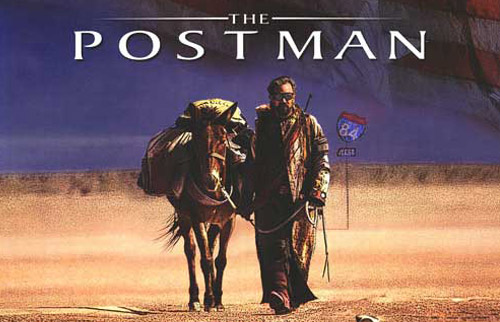
Yet for over 200 years, the Post Office has been a fabric of Americana. Cliff Clavin of Cheers and Newman of Seinfeldwere Postmen. Elvis had a hit song about returned mail, the Marvelettes begged the Postman to stop and check his bag again, and Stevie Wonder signed, sealed and delivered himself with a song. Kevin Costner played a post-apocalyptic, mail-carrying hero in “The Postman” (which probably lost more money than the USPS did last year).
As a boy, I remember running to the end of our gravel driveway, where it met our Rural Route Road, and excitedly checking the mail to see if anything had come. A letter from someone, a special package, a Sports Illustrated.
But this is life in the 21st century, not the 1800s. We don’t get our water from a well anymore. The milkman doesn’t drop off at our door. And now we e-mail, FedEx delivers our special packages and I can read Sports Illustrated on an iPad for less money.
In the end, nostalgia can’t keep something relevant. The fact remains the USPS is bleeding money, somewhat needlessly with the advanced technology of the current world, and with all our country faces, most notably a massive deficit, the federal government simply cannot justify losing $21 billion by 2016 over letters, junk advertising and bills that can be paid online, even if the majority of funds don’t come directly from taxpayer dollars.
It just doesn’t make sense for them to take 50 cents to deliver something 3,000 miles. Noble, but not logical. 

So soon, very soon, after wasting time and money debating its future, how to fix it, cutting costs, employees and days, the Postal Office will seek to exist.

Where’s Kevin Costner now?
Until that time comes, we can hang on to our habit, keep the mailboxes out front and feel our tie with history, with Ben Franklin, and give a brief nod to the Post Office’s place in American and world history.
But just not on Saturdays. 
Standard
American culture, culture war, Dodge Ram, Jeff Daniels, NFL, Paul Harvey, Society, Super Bowl commercials, Super Bowl XLVII

Americans Made a Country


An interesting thing happened during an interesting fourth quarter of an already interesting Super Bowl on Sunday night: I felt the urge to get some dirt on my hands.
Thanks to Dodge, the voice of Paul Harvey and some of the most clever and emotional advertising we’ve seen in years, we got a clear winner of the Super Bowl ad wars and a really, really good commercial that wasn’t just selling a product, but doing so much more.
It was causing us to think. 
After a weird power outage in the Mercedes Benz Superdome during the early moments of the third quarter of Super Bowl XLVII, the Baltimore Ravens saw their momentum evaporate as the San Francisco 49ers nearly eliminated a 22-point deficit, before pulling out a victory in a thrilling finish. And it was then, as the game came down to crunch time, on a night with all these interesting stories and subplots, that something much more interesting, impactful and profound occurred.

God made a farmer, Dodge made a commercial and America made its growing division all the more evident.

[You can view the video by clicking here].
The culture war in America became even more evident in the moments following Dodge’s two-minute, still picture and old voice-over ad. Just examine the reactions to the spot itself. Half the country probably had tears in their eyes while the other half were rolling their eyes. Some thought it righteous (in a good way), others thought it ridiculous.
It goes beyond how brilliant the marketing strategy itself was, though make no mistake, someone at Dodge is getting a massive promotion over this. It’s the ultimate “duh” moment: who buys trucks? Farmers! What do they value? Um…let’s see…hard work, pride in how straight they plant their fields, church, passing down a farm through generations.
Who doesn’t care about any of that? Urbanized populations, big cities, corporations, people who care about gas mileage or the environment, atheists and perhaps, mostly, non-whites? Does Dodge care if they don’t care or if they don’t buy a truck? My guess is most of the people that fall into these categories weren’t driving trucks prior to viewing the ad, anyway. And if all they got out of it was Googling “Paul Harvey” to find out who he was, then really, we all came away winners.
Yet I can’t stop thinking about the reaction to the ad, the division of America and our ever-expanding cultural war.

Most commercials, especially during the Super Bowl, try a clever new way to sell you a product. And certainly, Dodge wants to sell Rams. But this, this was different. It spoke more directly to the values of middle class Americans. Think of the images they used: a church, a flag, a family praying before a meal, tractors, plows, dirty hands, open fields.

Not one single shot of the truck until the end. Not one mention of Dodge verbally, and only visually when the truck appeared. Just a tag line: “For the farmer in all of us.”
Those who chided, bristled and mocked the ad and its contents are missing the point. This wasn’t just about farmers and it wasn’t just about trucks.
There is a farmer in all of us, and probably through the generations, through our ancestors, we were all, indeed, farmers. Farming itself is an ideal and a visualization of something different: feeding people, clothing people, an honest day’s work. The open fields represent the possibility of what’s to come, of freedom, of opportunity, of doing something on your own.
Make no mistake, this message resonates with many in this country.
One part of our nation yearns for this kind of commercial, of this kind of code of ethics.
Another part of our culture posts snide remarks on social media and jokes about not knowing Paul Harvey.
One side is thankful that God was brought into our living rooms during the Super Bowl, another is offended.
And it’s this striking difference between these two groups that says the most about where we are as a society. We’ve gotten less serious. It’s why we don’t wear dresses, suits, ties and hats as we once did. We’ve desensitized ourselves to violence and sexuality. It is why we can watch the GoDaddy make out commercial without losing our lunches now.
So why is this ad about farmers and trucks, invoking so much praise and backlash at the same time? Because it serves as a rallying cry for one side of our American culture, an offensive example for the other.
The negative reaction was immediately what you would expect: too many white people, too much God. Give us more CGI-entertainment, they demanded, and don’t begrudge everyone a Carl’s Jr. commercial with some model’s chest covered in hamburger grease. Nobody seems offended when Mercedes Benz shows off its new luxury model being driven by a white 40-year-old, with meticulously coiffed hair, in Brooks Brothers clothes. The same as no one seems to mind how young and affluent blacks are targeted by Puff Daddy in Hennessy ads.
In turn, the positive reaction was also in line with generalized expectations: farmers loved it, rural populations and those from rural areas thought it was brilliant. Ignore that many migrant workers weren’t accurately represented. That’s not the point, either, really.
We’re just looking for ways to be offended so we can complain about it. And we are becoming further and further entrenched in our viewpoints. We’re so self-involved we’ve ceased to evolve.
No, we were never perfect as a nation – a far cry from it. We’ve got quite the history. But while we strive to be evolving socially, we’re losing out morally and ethically. We’ve just plain stopped striving to be anything more than novice social commentators, being snarky about power outages and Super Bowl ads. We do all this through unemotional ways of communicating and we wonder why we’re facing such a massive disconnect with each other.
We’ve come to a point where we are so singularly sure ourselves, we skip over the part of becoming informed. Newspapers and magazines and books are dying not because of technology, but because we’ve simply stopped reading. And what we do read is of vampires, werewolves and adolescent magicians.
We already think we know everything and therefore we learn nothing.
The same half of our country who thought that the “God Made a Farmer” ad was racist, stupid or just plain didn’t concern them will remain oblivious to the fact that, according to recent studies, the world’s food production must increase between 75 and 90 percent by the year 2050. Not sure if Wall Street or pharmaceutical giants can find a way to make up that gap. But we could always ask Siri on our iPhones to do a search on the Web.
Can you determine who liked the ad based on what they do or where they live, what they value and what they stand for – flaws and all? Certainly.
At least it clear who they are, what they do and what they value in the ad.
If I had been watching American news, however, from a foreign nation the past few months, I’m not sure what I would be able to determine about America based on recent events.
So they honor freedom, but they incarcerate the largest number of people per capita in the world? They claim to support freedom from tyranny, but they shoot each other in public schools, theaters and walking down the street? They demand and beg for innovation, yet teach their children to be employees, not entrepreneurs? They want people to venture out and start small businesses, but then the government will tax you exponentially for becoming successful and tell you that you didn’t build it? They say to give them the poor, the weak, the huddled masses that cannot defend themselves, but they allow abortion and pretend the homeless don’t exist?
Chances are, you got lost in some buzzwords there: abortion, incarceration, taxes, gun control. But odds are you missed what might be the biggest point of all: that we teach ourselves and our children to be good employees, not entrepreneurs.
Collectively, we’ve ceased to have vision or to dream – the very things our country was founded upon. No matter what generation, race, creed, religious affiliation, we dreamed and innovated and worked for things in this country. No one ever said I want to be project manager or a software security analyst when they were little. And that’s where we’ve started to lose everything else we did, or have, or should hold true.
We can shift in our seats, squirm uncomfortably and cringe when we hear God used in a TV ad about trucks, scoff at farmers and what they do, or what race makes up the majority of this working group. But as Jeff Daniels said in an epic speech on the show Newsroom a few months ago: “The first step to recognizing a problem is realizing there is one. America is not the greatest country in the world anymore.”
But it can be. We can get it back. Even if farming and Dodge trucks aren’t your thing, that’s fine.
To change our future and to make what matters most to us matter again, we’ll need to make ambition, education, truth, honesty, compassion, fairness, faith, belief, hope, logic and common sense in much larger quantities.
We can make all of these things prevalent and valued again. But we have to drive our plows straight. We have to check for weeds in our fields. We have to get up early and stay up late. We have to care for our children and others as much as we do ourselves. We have to go to the school meetings, put the flag out front and build a future where the fields are wide open with possibility. Our collective tools don’t have to be plows and tractors and trucks.
So God made a farmer. And Dodge made a commercial.
Now, our culture needs to make up its mind: what do we want to be? Let’s at least get our hands a little bit dirty, work together and find out how well Americans can make a country. 

Sounds better than another domain name commercial, doesn’t it?


Standard
Allen Iverson, Boston Celtics, Danny Ainge, ESPN, Kevin McHale, Larry Bird, NBA, Philadelphia 76ers, Robert Parish, Stephen A. Smith

The Chief & The Answer: Old & Entitled


Some old and familiar faces made headlines this week, and what they want is respect.
Problem is, they already had it and lost it. Now, they expect the “Powers That Be” to give it to them again.  
No, it’s not Randy Moss proclaiming he’s the greatest receiver in NFL History. No, it’s not Alex Smith demanding he be named starting quarterback of the 49ers before Super Bowl XLVII.
It’s a couple of former NBA stars.
And if you are as tired of the same old story lines from Super Week and Media Day in New Orleans as I am, this might catch your attention.
Allen Iverson
Former All-Star Allen Iverson wants back in the NBA, at the advancing age of 37. And so does 59-year-old former Celtics great Robert Parish.
They just want to be back in totally different ways.
Iverson wants back on the court, a chance to – as he calls it – complete his NBA legacy. Weird part is, he just turned down a chance to play for the Legends in the NBA D-League.
“I think the D-League is a great opportunity, it is not the route for me,” Iverson tweeted Tuesday.
Oh, that’s right, it’s only the route for aspiring ballers who need some work, those not ready for prime time players who need more practice. And we all know how Allen Iverson feels about practice.
Far be it for NBA executives to want to get a quick look at an under-six-foot guard who hasn’t played in three years and who relied heavily on foot speed, you know still has foot speed and quickness at 40.
Iverson last played in the NBA in 2009-10, briefly, with the Memphis Grizzlies and Philadelphia 76ers, the team he had the most impact on after they drafted him out of Georgetown. What Iverson forgets is what so many remember: he wasn’t very good. But Iverson wants the NBA to look past all that, and grant him a spot on a roster so he can finish what he started.
And some, like ESPN personality (and sometimes reporter/journalist) Stephen A. Smith, who covered Iverson in Philadelphia, agree with The Answer’s assessment. When asked if Iverson should have taken the Legends offer and worked himself back up through the ranks, Smith had some interesting words.
“He should,” said Smith, “but he shouldn’t have to.”
Confused yet?
“To do what he’s done in this league and for this league…to then sit there because of practice or his attitude or whatever the case may be, and to look at it and say that you don’t need it anymore – I’m one of those guys who’s sensitive to…taking care of [those guys].”
So…if we’re understanding this correctly, the NBA owes guys like Iverson – and as Smith went on to allude to Kareem Abdul-Jabbar and Robert Parish – some sort of servitude clause? Is that how employment works?
Smith contends that Iverson is being avoided because of his attitude, his work ethic in practice and varying other factors. Well, frankly, that’s probably true. There’s a tipping point with athletes. We’ll put up with them as fans and defend them for a great number of things that seem out of bounds with our own standards and ethics because they do extraordinary things. When those things stop happening, the spotlight tends to shine brightly upon those character flaws.
Robert Parish is looking for a job, too.
The same is true of Parish. In an interview with the Boston Globe, Parish said he was “restless” and needed “money”, therefore, wanted to get into coaching. He said he’d been trying, but had been avoided. Former teammate Larry Bird wouldn’t return his calls, Parish says.
Except that Bird countered that Parish never called him.
Then you find out that even Parish is willing to admit that his sometimes surly and aloof demeanor is still there and that he doesn’t have many friends in and around the game. He’s jealous of former teammates like Danny Ainge, Kevin McHale and Bird, who have worked in the NBA since they retired as players.
“Across the board, most NBA teams do not call back,” Parish told the Globe. “You need a court order just to get a phone call back from these organizations. I’m not a part of their fraternity.”
Welcome to the real world, Robert. Times are tough out here, too. As McHale eluded too, he attempted to get Parish on with the Minnesota Timberwolves, but they were cutting back on positions, and then, you know, McHale was horrible in Minnesota and got fired. Not really a great reference for Robert in the Twin Cities.
This is just like if you’re telling a buddy to get you an interview at a place that isn’t really hiring and then he gets laid off and you’re angry he didn’t hook you up with some work. It’s not realistic. Parish hasn’t worked much since retiring after 21 seasons in the NBA in 1997. He coached briefly, has had done some personal appearances and had a few minor brushes with the law.
He says he gave too much money away. He says he wasn’t particularly close to his teammates, but scolded Ainge and described him as selfish.
How can I help get “The Chief” a job, again, this guy is aces!
Then again, it must be hard to be a former star. You grow accustomed to the pay, the lifestyle, the pace of it all. Parish is whining about an $80,000 salary in communications for the Celtics? Know how many people would like that job? I know my hand just went up. Parish turned down that job in 2004, because he needed something in the six figure range. He also  said he didn’t like the weather in Boston and didn’t want to live there full time.
Let me just ask, Robert: what are you interviewing for again? If you don’t like the weather or the city enough to live there, you know, where the job is located, then what do you want them to do? Send you a royalty check?
There are many fine former athletes out there who are turned away simply because people don’t want to work with them, with their attitudes and their baggage. This happens all the time in the professional world. Employers are allowed to turn you away simply because you don’t fit the culture. Tough luck.
Iverson and Parish were once both great, but are owed nothing now. It must be earned again. They must prove themselves again. And they must change the attitude of entitlement. Who wants to work with that?
Quite frankly, Stephen A. Smith, I’m shocked that you’d defend Iverson, Parish and Abdul-Jabbar in this instance. Surly demeanors and people who don’t work well with others don’t typically get taken care of just because of what they did once upon a time. Wait…Smith wouldn’t understand that.
If Iverson and Parish want back in the NBA, I’ve got The Answer right here:
Be just a little bit more grateful and a little less condescending. 
 Shut up and work for it.
 
Standard
Derek Jeter, Drew Storen, Ed Reed, Kevin Garnett, Kobe Bryant, MLB, NBA, NFL, Peyton Manning, Ray Lewis, Steve Nash, Tim Duncan, Tom Brady

The Grind


Here’s to The Grind.
Or more importantly, here’s to the ones who went through it and excelled in it.
Because you can survive The Grind, but it changes you forever. If you don’t know what The Grind is, quite simply, it’s the torturous side of sports. The pain, the hurt, the injuries, the travel, the hard work, the rehab.

It’s the nights in an empty gym while your friends go out on dates. It’s the sunny afternoons of summer spent in batting cages, on dirt fields under a blazing sun, while others soak their feet in a pool. It’s the mildly grotesque smell of a weight room, which you strangely learn to embrace. The Grind is the scars, the rock hard calluses on your feet and toes, the lack of hair on your knees from floor burns.

And there’s a secret to it, that only the best of the best learn, which is simply that The Grind cannot be beaten, it’s barely survived and at your best, you simply manage and muddle your way through it.
The Grind is the journey, and it’s rarely understood by those who merely watch.
We are about to embark on a period over the next few years where some of the best in their profession – of all time – will step away from The Grind and reach The End. They survive it, embrace it and succeed in it.
The first comes Sunday, as Baltimore Ravens linebacker Ray Lewis will retire – win or lose – following the Super Bowl. Whatever you think of Lewis as a person, or how the media lovefest has gone a little overboard the past month, considering, you know, this, it doesn’t change the fact that Lewis is indeed a warrior and a throwback NFL player along the lines of a Butkus or a Singletary. Ultimate competitor, passionate, and perhaps most of all, maximum effort at all times.
And he lasted 17 seasons in the NFL, a place where brain damage and physical disability are rampant after retirement. In 2011, a study found that the average NFL career was 6.86 seasons, a major league baseball player, 5.6 years, and in the NBA, ballers can expect to last on average 4.8 years.
That’s not very long. And that’s because of The Grind.
As spectators and as fans, we see the glitz, the glamour, the fame and the money of professional sports. And never mistake that they are well-paid. But few, very few, make it to The End. The Grind often ends it for you.
It becomes less and less about the money, but more and more about the legacy and about a unique competitive drive few can understand.
Within the next few years, many other outstanding, Hall of Fame caliber NFL stars could be joining Lewis: Peyton Manning, Tom Brady, Randy Moss (again), Tony Gonzalez and Ed Reed. Each of these players changed the game, impacted it in some significant way and broke records. Each will be a Hall of Fame player. Heck, maybe Brett Favre will finally hang ‘em up, too.
In baseball, guys like Derek Jeter, Mariano Rivera, Alex Rodriguez, Ichiro Suzuki (basically, the New York Yankees roster) and David Ortiz will call it quits. And in the NBA, there’s this list: Kobe Bryant, Tim Duncan, Ray Allen, Paul Pierce, Kevin Garnett, Dirk Nowitzki, and Steve Nash. All are winding down MVP-heavy, record breaking, Hall of Fame careers.
We’ve watched, we’ve enjoyed or hated them as members of rival teams, but we don’t know a thing about them, really. And we don’t know about The Grind.
Some of these athletes have been playing professional sports that span over three presidents – the second term of Bill Clinton, all of George W. Bush’s years in the White House and now, with Barack Obama beginning his second term as commander-in-chief. Cell phones weren’t heavily used, Justin Timberlake was in a boy band and we still feared the Y2K bug.
Just think, where were you in 1996, when Ray Lewis and Kobe Bryant started their NFL and NBA careers, respectively?
Simply put, the world has changed, but many of these guys haven’t. Think of what they’ve endured? To start, I think of how my story is 1/100th of theirs.
I am a has-been, former high school hoopster, and tried to play college ball at the D-III level. In my early 20s, I played pick-up ball a couple nights a week for a few years, didn’t do anything for a few in the middle and then played Y-League ball on Sundays for eight weeks, once or twice a year, for three years. Didn’t play again for awhile and now, over the past four months (in much better shape finally), I’m playing once a week again.
Keep in mind that fact – that I’m 33, haven’t spent the last 15 years in a 6-to-8 month season, traveling, maintaining, playing two games in three nights, back-to-backs or doing a West Coast road trip.
But I played. I’ve had my version of The Grind.
Frankly, I hurt more than I’d ever admit verbally, mostly in the mornings. And that’s mainly because I don’t want to be a whiner, a complainer and partly because those around me can’t understand.
In the winter, due to way too many ankle sprains, my feet just plain ache. They pop and crack constantly. They’re typically always cold, unless the calendar is between May and August, due to poor blood flow and bad tendons and ligaments. My wife shudders when my feet brush her leg and says they feel like ice cubes.
My back hurts, my left shoulder slips out of socket occasionally if moved the wrong way, or slept on for too long, from three separations. After diving for a loose ball once and landing on my elbow, I basically split my elbow cap into four or five pieces of bone. I’ve played with what amounts to a black and blue golfball on the side of my foot – several times and on each ankle. I’ve played in an Aircast, a shoulder harness (that I wouldn’t wear except for one practice), and routinely stuck my legs from the calf down into 5-gallon buckets of ice water.

Twenty minutes in, 20 minutes out. After pulling them out, with my feet still a blue-ish purple color, I’d do ABCs with my feet, then, plunge them back in for another 20 minutes of torturous cold that cannot be described, only experienced.

Once, I got 12 stitches in my calf after diving for a ball and landing on the jagged metal edge of a bleacher – but I didn’t notice my sock was covered in blood for nearly two minutes. And I didn’t notice that muscle and fat from my calf were slightly exposed from the gash.
But I’d do it again in a heartbeat.
The Grind can give you an adrenaline high, a natural charge from competition that you can’t really replace, a euphoria that you’ll spend trying to replicate. The Grind can hurt. I’ve got friends with knees that have been repaired or scoped three, four, five times. Herniated and or bulging discs in their back. Some have addiction to pain killers, to alcohol, to Tylenol, Advil or nicotine.
I’ve done it, too. They are simply numbing agents to offset The Grind and its effects.
And our stories – especially my stories – are literally nothing but a drop in the bucket of those mentioned above. Think of the amount of needles endured just to play. Lewis is coming back from a torn tendon in his arm that he suffered in October. Imagine that rehab. Surgeries and pins placed into bones. Kobe flew to Germany to have a controversial surgery on his knee, where they put new blood platelets in, because The Grind had made his bones, well, grind.
And that’s just before they are done.
At some point, though, it ends. And that’s when the mental aspect, not just the physical, begins. An identity crisis, or sorts. Who are you without (insert sport name here)? Some, like me, only did it for 12-15 years. I thought I had a hard time. Guys like Kobe, Duncan, Jeter, it will have been for 25 or 30 or more. You don’t remember a time when it didn’t revolve around the game. Your life is defined by it, you are who you are because of it.
The younger you are, the less painful the transition I imagine. Those who get it and did it, no matter what the level, have their demons related to giving it up or losing it. And it’s harder to understand for those around them. The competitiveness is wired into you, somehow, perhaps before birth or at a young age and you can’t turn off will and desire.
It cannot be replaced. The beast cannot be fed with desk jobs or investments, or even announcing and analyzing games on TV. Some do well with post-sports life, like Larry Bird, others, like Michael Jordan, not so much.
Some don’t want The Grind, which is when they get The Filter. That’s why they quit their high school teams, to go out and do their thing. They date. They party. They grow their hair out and spend their summers in flip flops, going to concerts and pool parties. There are more who wave it off after they get to college. Not worth it, too much. Or they don’t play as hard. They quit diving for loose balls or line drives in the gap, quit chasing down receivers 15 yards downfield. The funnel gets tighter the higher you go in the sporting ranks.
Until we are left with the few you can survive all The Grind has to offer. Twenty or more years, from childhood on, of aches, pains, missed dates, failed relationships, lost friendships over wins and losses, the travel, sleeping in chairs, living in training rooms with ice wrapped around every limb, doctors, surgeries, and rehab.
The Legends, they’ve been hurt, too, far worse and for far longer than many of us can even comprehend. Broken feet, torn ACLs. Dislocated this, that and parts in between. Peyton’s neck, Brady’s knee, Kobe’s knee, Jeter’s ankle. Paul Pierce was nearly stabbed to death. These are just the big ones, the ones that we know about. We don’t know anything of all the nicks, bumps, scraps, twists and turns. Banging into bodies, diving on the ground, on the floor. Flying from city to city, sleeping in cycles of naps on planes and buses.
At The End, if you’re lucky, you got a few rings to show for it.
This weekend, I heard rising star and young Washington Nationals pitcher Drew Storen speak. He was encouraging many in the audience, who were young baseball players, to focus each and every day on getting better at one little thing, and how, over time, it adds up to make a big difference.
But he also spoke of The Grind. What he does never changes. There’s just more of it. The same way he played the game at 11, 15,  or 17 is the same way he plays today. He gets just as excited – still gets that rush – to strike someone out, to make them look foolish, like he did his neighborhood friends as a little kid.
“Just more people watch now,” Storen joked.
They watch, but they can’t know. It’s a lonely place, The Grind. Going through it, only few understand. And the further your go with it, the fewer people that know what it feels like. That’s probably why it’s so hard to let it go.
Lately, I have been writing pieces about the moral side of sports, of society and how we view these events, and what’s right and wrong. But you think of it from this lens, of these outstanding few, of The Grind, and you think how many shades of gray enter into someone’s logic and rationale.
I may not agree with the PEDs, with the personal life or off court issues, but I can see why they are there. Why taking something to give you an edge is a tempting devil on your shoulder.
There are not many left after a dozen, 15 or 17 years. So very few can survive that long. That’s what makes these guys special in a sporting sense. We rarely get them, and when we do, they often have baggage near The End. Scars unseen they hide from the world, because frankly, the world can’t understand. It’s too cut and dry by that point for them.
Other times, it’s simply a numbing agent, a way to survive, to press on. Many started out, like Storen, chasing it. And as life often does, so many are filtered out over time. These guys aren’t like us, which is why I’ll tip my hat to them all, no matter who they are, simply because The Grinders reached The End.
And I hope and pray for the beginning of the rest of their life. 
Standard