American culture, poetry

Acting Like Children


You see her sitting there,
Eyes sparkle,
The sun dancing on her hair
A smile so wide
A face pure and true
She dreams of being a princess
She already is to you
A dancer, a singer,
A daughter, a sister
In 10 years, you’re bound to lose it
When you find who’s kissed her
What the world is like
Through the eyes of a child
A dad forgets
As the world has mild
But rebirth may come
Watching them grow
An understanding that
We really don’t know
All tomorrow is
And what it will become
Is up to the dreamer
Who steps out into the sun
I just wrote this poem for my daughter. She turns from the tender age of six to the even more tender age of seven this Saturday. And as my mind drifts back this week, thinking of all that has changed in the time since her birth, most of all I think I’m struck by how much I’ve changed.
Often in life, we’re caught gathering moss along our journey through time and space. We become complacent, forgetting what we dreamt of and wanted not so long ago and forging down a road very much traveled. 

The highway of life resembles a daily commute: a lot of people stuck in traffic, frustrated and flustered by where they are going, not so much how long it takes to get there.

The metaphor is not lost on me.

As I watched my three boys and my wife sing to our little girl last night in honor of said birthday, I realized that I’m still very much a novice at all this. I have much to do and even more to learn, yet I tend to gather moss in the day to day grind and forget the wonder of life.

It is my job to make sure that my children embrace that excitement, that wonder.The best thing I can do for my little girl is spend as much time as I can with her, simply loving her and supporting her and her dreams. The same with my boys.
As I have wrote before, we’ve stopped dreaming as a society, which means we’ve stopped growing, too. We’re also stripping it away from our children, perhaps subconsciously angry with the world for taking it from us. But we allow it. We follow the crowd. We join in. We participate by refusing to, well, participate.
And all this makes me realize, if being different than the crowd is weird, I’d rather be weird, I suppose, than to be just like everyone else. It’s not up to teachers or to the world at large to raise my children. No role models need apply. Self-image, worth and what they want to be comes from both nature and nurture.

Yes, I think about these things.Yes, I enjoy spending all my time with my family. It is completely fine to admit that, even though it doesn’t sound all that manly. 

No, I don’t want to go to the clubs and hit the bars. I never did. But they don’t exactly make bumper stickers for dudes that say, “I’d rather be playing Pirates with my kids!”

There just comes a time when you realize the only real debt that matters is the debt of time. You pay it off every day, and only you can determine how it shall be reconciled. 

I have these grand notions of what life will be like for us in the coming years, as my wife and I are determined that our family evolves with each others, remains close, confides in one other, protects one another and above all, does good in the world.

And yes, I meant do good, not do well (even though the latter is grammatically correct).
Children learn what they see. They see what we see, as that is what we typically share. If they see fear, they will become afraid. If they see anger, they become petulant. If they see you being narrow-minded, they will lack vision.
Therefore, are we proud of what we present to them? We’re concerned with the violence, apathy and general distrust found in the world when perhaps our biggest concern is the foundation we lay within our families.

Because we seem to be the ones acting like children – fighting, pushing, pouting. Shouting “mine!” and not playing nicely with others. But children only do this part of the time. As parents, teachers, grandparents and adults, we steer them down a better path. 

Well, who steers us?

Currently, we are behaving all the time as children do in their worst of times. Maybe we should take our own advice a little more. Maybe we should share a little more, be a little more kind to one another, read some every day, play with our toys, go to bed at a decent hour, turn off the TV a little more, eat well, pray. Dream.
Because our current path is not the road we want to be on. We’ve seen this before; we learned about it as children ourselves, in fact. It’s called history. And it repeats itself because we allow it, because we don’t correct our mistakes. Because we stand by as spectators in life.
So as my daughter begins a new chapter of her life, what will she learn in the pages that follow that further her story in the additional chapters to come? From my wife and I, and from the world?
I certainly realize I cannot control it all, that experience will teach her, knock her down, give her confidence and add references to her book of life. And the hope is that she keeps moving forward, keeps progressing and becomes all the better for it.
I am certain many of us hope the same thing of ourselves, our children – but what of our nation? Hope can only take you so far. 

What are we doing now that will enable us to become the best version of ourselves in the future? Because the best version of us will yield the best version of them. 

Yet again, this is a learning moment for us, as a nation, as a culture, as the ones guiding the next generation. Do we want them to follow our lead? Really, do we? Then we should probably start acting like it.

We should probably start acting like children.
Frankly, they’re doing it better than we are.
Standard
American culture, Boston Marathon Bombings, Fear, news, Society, Switzerland, Terrorism

The Fear of Terror (Or Why I Think of Switzerland)

In the immediate aftermath of the bombings that marred the Boston Marathon Monday, I did what many Americans did not.

I did not watch TV and get live reports. I did not check my Twitter feed incessantly. And while I prayed for the victims and for peace, I did not post videos, tributes and messages about supporting marathon runners.

Switzerland 78I Googled Switzerland.

It was literally the first thing that came to my mind. It was as if my brain went to a default mode and wanted to be anywhere else, so what not something beautiful, neutral and serene. Thus, my fingers found the letters on the keyboard and suddenly I clicked “search” on Switzerland.

And for a brief period of time, I drifted off thinking about a country that seems to check out highly on all the appropriate categories: low crime, high income, happiness, housing and neutrality in most world affairs.

I thought about how it seems nice there, from what little I know about it. Complete with lush land, fresh springs, quaint towns and a history of being basically indifferent. Nobody messes with Switzerland because nobody thinks about them unless you’re reading the fine print upon viewing a movie that states you cannot make a copy of it.

I pictured my children running through wide open fields, with the sun basking down on their beautiful, smiling faces. I pictured my wife coming out of our historically accurate lakeside cottage telling us dinner was ready. I pictured me just returning from a day of work at some really cool company nestled into a majestic mountain ridge.

Basically, I saw us transported, just as we were, except without the fear.

That fear can be consuming; it is a fear that now lurks in the background of nearly everything we do. From going to sporting events or catching a flight, to walking past a tall building in the city or dropping off our kids at school, there is an unnatural hesitation about daily life in America.

Was it always this way? How would we know? We’re only us, unable to understand what it was like for our ancestors or past generations during their period of life in this country. I agree and enjoy this analysis by David Jones, where he essentially says America has been in worse spots historically and that we live in better times, we’re just more viscerally aware of threats of violence due to all our advancing technology.

While this most likely true and historically accurate, it somewhat negates what daily life is like with that information now. Now that we are more aware, what are we doing about it?

Today, the entire city of Boston was shut down by the manhunt for the perpetrators. Um…ever been to Boston? It’s, uh, a big city. Yeah. And residents were told to stay indoors. Transit was stopped. Without visuals, you picture some strange scene from a Michael Bay film where crumpled newspapers slowly blow through an empty downtown area.

We are paralyzed in these moments. We are paralyzed by the fear of the unknown. This is modern America, with a constant threat of foreign and domestic terror. And no, this is not over-dramatic.

Now, I hate to be a nudge, but are we supposed to just ignore all this? Is it purely a matter of getting tougher mentally and adjusting to life in our modern, American world? I ask mainly because we don’t seem to be doing very well.

Within an hour of Monday’s breaking news, each political party was finding ways to make this about sequesters and gun control and terrorism. Give it another three days; I’m sure 32- ounce soft drinks in New York City can be connected somehow.

We’ve reduced these events to either agenda talking points or punch lines. Or even worse, to justify the removal of liberties granted to us that make us uniquely American. Or, we’re just going to use it as an excuse to fight terror abroad.

Violence simply bringing more violence, in turn simply causing a greater sense of fear. And when people are scared, they will do anything to feel safe. Like give up their right to bear arms, or allow an ever-increasing society of security to become even more searched, scanned and patted down. We’re listening to people who couldn’t protect us before tell us how they plan to protect us now.

Maybe that is too much to ask, too great a burden to place. What is safety and security but a state of mind?

Our state of mind is constantly chaotic, full of information overload, complete with the graphic pictures, eyewitness accounts, news tickers, false reporting and numerous sources.

Here we are, glued and transfixed by the events – yet this information that is so readily available to us seems, well, developing. In a rush to be first, the networks are getting it wrong. Names, connections, the details – you know – the actual news.

At one point, one network featured commentators arguing over whether or not the suspects could be described as American, based on the grainy photos. We’re a melting pot, so how would you even begin to describe what an American looks like? See the problem?

A case can be made that these are indeed more trying times than at any point in human history. Is this a sign? Because these events are so horrifying, so unpredictable and nearly unspeakable, it could be seen as the beginnings of something much more. And that is simply because we live in a world of terrorism.

49749-comicstriponfearTerror doesn’t show decorum. There are no rules of war.

It’s difficult to place and compartmentalize these events, harder still to use logic and rationale. It is our inability to directly relate ourselves to random attacks that has us troubled as a society in general. In any situation, it’s safe to say that if that wasn’t us, it certainly could have been.

We’ve ran races or stood and watched family and friends. We send our children to school. We fly planes and work in large buildings. The events of the last decade-plus are worse than they were a hundred years ago simply because of the context in which they are occurring: everyday life. It’s not a war zone or on some predetermined battlefield where both sides are armed, with trained combat units, camouflage, guns and generals with battle plans.

The attacked are not forewarned. That’s why it’s called terror, because it truly is terrifying and unexpected. There is no time to prepare. The simple fact that while evil has always existed in this world, along with the good, both will find ways to achieve their goals, and this recent (in the context of history) development of terrorizing random people accomplishes more physical and psychological damage than we can probably even comprehend.

Which is what leads a person to go numb now, to draw a blank, in moments like Monday’s marathon bombing.

It is what leads a person as patriotic as me, someone who believes in and loves America and its history, to momentarily question my citizenship for the sake of my family, and the sake of my sanity.

And that’s when it hits you: when did the citizens of the world’s symbol of freedom reach a point where they would contemplate such a thing? Is it the political and social division? Is it the growing skepticism of government? Is it the loss of liberties and freedoms? Is it the taxes? Is it the continued loss of social normalcy and decorum?

This list could go on. Frankly, I’m just tired of thinking about it all, what it means and experiencing so many emotions around what this new world of fear looks and feels like. I just want to get to neutral, be peaceful and serene and eliminate the fear, for my family and for me.

Which is how you get to the point you are staring at a computer screen and typing in letters that spell out what feels like something safe.

Switzerland.

Standard
Augusta National, Jack Nicklaus, Jim Nantz, The Masters, Tiger Woods

What do Tigers dream of?


This has to be the best week of Jim Nantz’ year, right? First, he waxes poetic at the NCAA Final Four, then he heads to Augusta to host The Masters.
He has a great job, to be sure, but as a friend and I were discussing this week, at this point, Nantz has become a caricature of himself. Jim Nantz now just does Jim Nantz. He’s a brand now, like many who’ve been in the business for 30-plus years, and really, you know what you’re getting at this point.
Which led me to wonder, as golf’s most revered event tees off tomorrow: is Tiger Woods just doing Tiger Woods now?
For the first time since his wild Thanksgiving weekend a few years ago, he’s the favorite – once again the world’s No. 1 golfer. And for the first time in a long time, people are asking, “who do you take, Tiger or the field”?
Yes, Woods is back, for sure, rounding into form and winning tournaments again. He remains four shy of Jack Nicklaus’ all-time total for majors won and said this week he feels he can win four or five more, but doesn’t want to stop there.
“I feel comfortable with every aspect of my game,” Woods said. “I feel that I’ve improved and I’m far more consistent.”
After hearing this, and much of his conversation with Mike Tirico, I couldn’t help but wonder: Tiger feels things? Even when talking about golf?
Woods has always been this enigma, even before his marital infidelity derailed his career. The tournaments he played in – few and far between for a period of about 12-16 months – showed us a Woods who looked like he was either in agony or constipated. Or both.
The whole saga made him seem both more human and inhuman at the same time. His press conferences, solemn as you would expect, seemed to lack real context or meaning behind his words, his apologies.
Kind of like how he acted the previous decade, just without all the sex scandal stuff. Woods always seemed measured, collected and calculated. This very thing is what made him the most dominant golfer I’ll ever see. It’s what brought on that incredible streak from 1999-2001 where he literally obliterated the golf world.
But this calculating, measured, robotic personality also kept him somewhat distant from us.
We never really know who these athletes are or what they do when they aren’t wowing us with their incredible skills and talents, and we’ve kind of become alright with that. It’s best for us to just let their results sit in a separate place from any judgment we place on how they live their life privately. After all, would we want people to judge us?
Americans love the dirty details and deeds of public personas. Always have, always will – and that’s not an endorsement. In fact, that’s part of a larger cultural problem we face.
However, public people like Tiger Woods and Louisville coach Rick Pitino, who just secured his second national championship a few years after a similar situation to Woods’, also must understand they have some accountability in the media frenzy that ensues.
You can’t soak up the spotlight, comport yourself a particular way and engage in your own branding that further establishes the narrative of “who you are” and then when you’re exposed to have personal flaws, act self-righteous or indigent to the reaction or the coverage. Well, actually, you can, I suppose do anything you want, you just look like Steve Martin in The Jerk.
Because the idea presented the whole time was you were someone to be held up as an example of the right way to do things, of hard work, of a person who did right and acted a certain way outside of the realm of sports, then you fed the beast, pal.
To be fair, the word role model is overused and says more about the people who need them than it does the person being flaunted as one. If you need a role model in a sports or public figure, you’re probably looking in the wrong place and have bigger problems – or you are under the age of 16.
Yet it remains clear that its simply not enough to engage in promoting oneself as a brand, an image or a persona – and then get defensive when the coverage turns negative because of something you did in your personal life.
The problem becomes when you come to realize that these people really arejust like us – except they are extremely talented in one specific area that we’ve all universally agreed is somehow interesting to us. In essence, they don’t always know what they are doing, who they are, what they believe. The face dilemmas, they go through family problems, financial troubles.
Our own expectations for sports and public figures has rested in a bit of a Fantasyland, a constant dream state of ideal people doing wonderfully cool and exciting things. We expect more from them than we do ourselves because they aren’t human to us in the sense we can’t even begin to relate to them. Which begs the question, who do they relate to? What’s normal for them? What keeps them grounded? What are their lives and goals beyond random sports accomplishments?
Tiger himself has always remained a curious case. He’s on a different plane than even most celebrities, most sports figures. What drives him? He’s like some programmed golf-droid, yet he’s one of the few golfers who showed emotion, both good and bad, on the course. He speaks of swing changes, of making putts, of the nuances of Augusta National and so on.
What drives him? What makes Tiger want to win five more majors? Is it just the number and passing Jack? The idea that he would then be considered the greatest ever? That’s good enough for me – but I’m simply curious, is it good enough for him?
Tiger says winning fixes everything (at least his new Nike ad does). This has upset some, but it’s true. We like winners, and winners with flaws are still more likeable and forgivable than losers with flaws. The winning is enough for us now. The pursuit of majors, of the drama of a Sunday major is all we really want because once we found out what we always wanted to know about Tiger, as is often the case with our public heroes, we didn’t like everything we saw.
We can continue to dream a dream of a perfect world where our sports icons don’t cheat – in their marriages or on the field of play – where they don’t curse, or party late into the night or make bad decisions with their money, their bodies, their minds. It may be unrealistic, but many dreams are a representation of what we want to be, not what is.
Still, it comes back to this all not really ever being about us. On the eve of The Masters, even if it sounds a little too Nantz-ian, you have to wonder:
What do Tigers dream of?
Standard
ESPN, Life of Reilly, Rick Reilly, Sports Illustrated, sportswriting

An Open Letter to Rick Reilly

Dear Rick,


There are a million reasons (and I don’t mean your paycheck) that you should not read this. To name a few, you don’t know me, the tone is direct, yet sincere – though to be honest, I take a few potshots. Yet most importantly, it ends with a direct call for you to do more.


Still, I had to write you. You see, writing is what I do, too, though I think we both do it for different reasons.


Before I go much further, I should offer my congratulations on your contract extension with ESPN. It’s a heck of a deal for you, being able to cover the topics you want in a medium you want, when you want. You’ve ascended to that moment when they pay you to do you. And that, in itself, deserves a tip of the cap. 


As you tweeted on Monday, the Worldwide Leader loves storytelling. It’s a natural fit, as you love storytelling as well. Human interest pieces have always been a prominent feature of your famous “Life of Reilly” columns. 


Well, I have a human interest story for you, Rick. It’s about the thousands of hungry, passionate young writers who grow increasingly frustrated as we watch you and many of your colleagues sit by and collect massive paychecks (for sportswriters, anyway) as we plug away trying to just get noticed.


But it’s not from a place of jealously, I can assure you. It comes from passion, and from a place where this is an art form, not a job. 


I’ve been writing for almost eight years now, sometimes for pay, sometimes for an e-mail from someone telling me they liked or hated what I wrote – and why. Sometimes, I write to an audience of just a few (my wife, my best friend or my mother – and to mixed results), other times to thousands of Central Indiana locals. 


I didn’t major in journalism, Rick. Didn’t write for the school paper. Two months after our wedding, I walked in and told my wife I wanted to write. About sports. And then I cringed. 


Amazingly, because, well, she is amazing, she said, “OK, what do we need to do to make that happen?” 


Well, that was both simple and incredibly difficult. All you have to do is write, find a voice, make a point, be compelling, tell a story, hit your word count, find an audience, repeat all that a thousand times, find a mediocre following and voila, you’re the national runner-up in a blogging contest on FoxSports.com. 


Which, when paired with a gift card from Starbucks, gets you a free cup of coffee. And I don’t even drink coffee.


I’ll be honest: man, I was bad. Like really bad. But I worked at it and over time, I turned out to be – well, not quite so terrible. A bi-weekly online column for a local newspaper, an editor job for a start-up magazine. Dynamics changed, so did the jobs, and currently, I write for basically whoever will read it. 


Yes, it’s a blog. Certainly, the stereotype of blogging somewhat fits. There’s just so many. And they are just so…poor. But it’s about the best way I know of to showcase what you’re doing, thinking and writing. It’s the ultimate clip, a group of writing samples that show the depth and breadth of what you can do. 


Yet despite the past seven paragraphs, this isn’t about me. And it’s really not about the thousands out there like me, who have stories that resemble mine, who dream of a break, a shot with the big boys to have our voices heard through print. 


This is about you, Rick, because there are a whole lot of us who just don’t get you anymore. 


I grew up reading you and “The Life of Reilly” on the back page. You and I both know how difficult it is to bring tears to the eyes of a high schooler, but you managed to do it quite a few times in the mid-to-late 90s. Those poignant pieces were touching, real and relatable. 


So I always assumed you got it, got what it was really all about.


Sports journalism and opinion-based writing is so much more than it appears now in the national media. Before PTI, Tony Kornheiser did that amazing piece on Nolan Ryan for Inside Sports in 1980 and absolutely mastered the longform piece. John Feinstein did “A Season on the Brink” and Peter King had the “Monday Morning Quarterback” column. 


Before all the ratings-grab radio, before Around the Horn and the goofiness of Steven A. and Skip, there were just writers., who did amazing things like that. Writers with powerful opinions who shaped the way we thought, the way we felt and how we reacted to sports and the people in them. 


Part of the joy of sports is the reaction afterward – having people to put perspective or spin on what we just saw. It never seemed about money. But it sure seems like it now. 


To be blunt, you write fluff, Rick. Every other line is a pun or a cliche these days. At times, it seems like you’re just pulling out the old hits and singing the chorus a little differently. What happened to the compelling guy who won the NSSA Sportswriter of the Year Award – 11 times? 


You may not like guys like Simmons and Whitlock, but at least they’re constantly trying new things. At least they’re out giving other writers a chance. At least they’ll retweet a link to a good piece every now and then. Look at your Twitter feed, Rick. It’s all about you.


You’ve arrived at a place many dream of and strive for, yet you do so little with it. And it’s disappointing. 


While your rival Simmons launches Grantland and gives a host of young writers a showcase spot to shine a light on quality writing, you turn in a column once every two weeks. Kind of like when the checks are mailed.


I’m not trying to be hurtful, honestly, but you once took Barry Bonds to task for the way he treated his teammates. What about the way you’re treating sportswriting?


It’s disappointing because this art form, this art form of sports journalism and opinion-based writing is dying. Painfully. 


Take a look around, Rick. Remember what it was like when you were in Denver or Los Angeles back in the 1980s – before Sports Illustrated and the coveted back page? 


The world has changed, to be sure. Newspapers are folding left and right, column space is dwindling as what remaining ad spaces increase. It’s why the papers – and magazines – are losing more and more ground everyday. 


We can blame technology all we want, but really, anything of quality can survive. But the quality of sportswriting is more watered down than a Lance Armstrong urine sample.


Around the Horn and the like exist because writers agree to do it – it’s how they’ll become bigger than just the city they cover. It’s not that they necessarily want to. They kind of have to. It’s survival. Once the papers and magazines inevitably go down, these writers will find other jobs. People will know them from TV and radio spots and they’ll be working SportsCenter with you soon enough. 


So they spend less time working on the art of sports writing. Less time fleshing out a column or an opinion. Less time arguing their point in print. More time in makeup. More time working on a catchphrase. More time working that Twitter feed. More time just typing and less time writing. 


Everything has become 140 characters or less. How would Tony K.‘s Ryan piece be received today? Deemed too long? Dare we even explain that was the point?


Rick, as you embark on your next chapter at ESPN, I urge you to do more.  You are a smart guy. Start your own thing, like “Writers of Reilly” or something. A place to highlight pieces that catch your eye. Or something else that will give back to the medium. 


It would mean a lot. Not just to me, or the countless unknown bylines out there who are not just looking for a break, but who are hungry to make a difference, to have our voice heard. Hungry to make it an art form again. 


As you like to say, you write about people in sports. You speak of legacies from time to time. I simply ask, Mr. Reilly, to reflect on what yours will be. Help save sportswriting. Make a difference. Maybe one day, one of us will then write about the real life of Reilly. 


Now wouldn’t that be a good story worth telling?


Sincerely,


Bri Moore


Standard
Ben Howland, Indiana Hoosiers, John Calipari, John Wooden, Kentucky Wildcats, Minnesota Golden Gophers, North Carolina, Roy Williams, Tubby Smith, UCLA Bruins

Great Expectations


The NCAA Tournament has a way of shattering dreams and expectations. It’s Cinderella for some, heartache for others. And it’s often best to just let it all sink in for a while before doing anything rash.
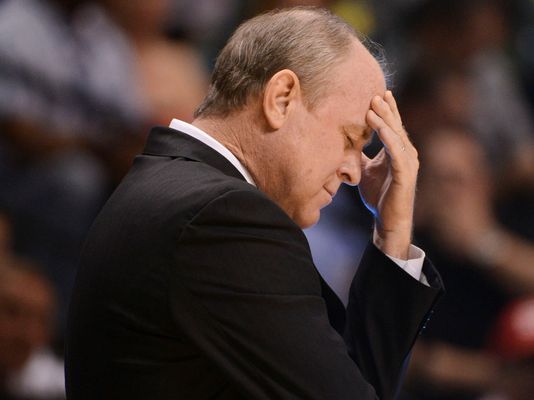
Unless, that is, you are UCLA. In which case, you are simply delusional about your program, your conference and the state of college basketball in general. Because less than 48 hours after falling to the Minnesota Golden Gophers Friday in the NCAA Tournament, UCLA fired head coach Ben Howland.
Now, maybe there was a massive settlement and they deemed it a mutual parting in the media, but let’s be honest, the dude got canned. 

And perhaps this would be understandable if you just looked at it from afar: once storied and prominent program falls in the first round of the NCAA Tournament and had failed to make it to the tourney consistently over the past three seasons.

But you have to peel back the onion. As most college basketball fans would remember, Ben Howland won the Pac-12 regular season with a relatively young team. They lost in the conference tournament championship without their best player (Jordan Adams, not Shabazz Muhammad) to an Oregon team that’s now in the Sweet 16. 

Oh, and let us not forget the three straight trips to the NCAA Final Four from 2006-08. 

Yes, three straight.
Had recruits not left for the pros or transferred, perhaps UCLA would have captured its first national championship since 1995. But Russell Westbrook and Kevin Love left early. His list of pros in the NBA is pretty impressive: Westbrook, Love, Jordan Farmar, Arron Afflalo, Luc Richard Mbah a Moute, Jrue Holiday, Darren Collison, Ryan Hollins.
UCLA says it wants to get excitement back in the program, play a fun style, hard nose defense and pack the gym. OK, those are great goals, but it’s not 1975 anymore. Indiana had to learn this. You have to move on from the past. John Wooden isn’t walking through that door. And unless they bag Shaka Smart or Brad Stevens – and it isn’t for certain they would – who are you going to get that was better than Howland?
Former UCLA great Bill Walton kind of started this whole mess. He riled up the fan base by chastising Howland during the games he broadcast and said if he ran the program “things would be different.” He never really said how. Obviously, Walton didn’t do Howland any favors – and nor does he have to – but riling up a fan base that’s already lackluster these days doesn’t exactly produce positive results.
Westwood is filled with fans who don’t attend games but want banners on the wall. Big difference between UCLA and Indiana and Kentucky in that regard. Recruiting Los Angeles is difficult for UCLA, because they are also recruited by Arizona, USC, Cal, and really, the Pac-12 as a whole, as well as 50 others schools who swoop in and try to get L.A. players out of L.A.
This isn’t really a defense for Ben Howland, though it should be pointed out that President Barack Obama’s brother-in-law remains employed by Oregon State despite being one of the worst teams in the Pac-12, which isn’t the strongest conference these days anyway. 

Seriously, Oregon State has finished higher than 9th place just once in the five seasons Robinson has coached the team and finished dead last this season. But want to make a bet he’s still employed through 2016?

Howland wasn’t perfect, but he also wasn’t abysmal. No, the point here is that too many schools with tradition think it’s a birthright to win NCAA championships these days. And it isn’t. There’s too much turmoil, too many players leaving early, too many chances for upsets. Just look at the tournament bracket after the first weekend of games. Florida Gulf Coast is in the Sweet 16 and they weren’t even eligible to compete in the tournament until last year.
But is Georgetown firing John Thompson III? No. How about New Mexico firing Alford after it got beat by Harvard? Um, no. Is Kentucky firing John Calipari after they didn’t even make the NCAA Tournament and lost in the first round of the NIT? “Well, Cal, we know you won the title last year and lost your entire starting five to the NBA, but what have you done for me lately?
Roy Williams and North Carolina were a No. 8 seed – in large part because several key players are gone from last year’s squad. If you think Indiana will remain as dominant in a post-Oladipo, post-Zeller world, you clearly haven’t been paying attention to college basketball the past five years. It will take the Hoosiers a year or two to climb back up that mountain as well.
No one is bullet-proof from the way the college game is built now. Maybe Duke, but not many others. You just don’t know how long some players will be around, and when you put together a team, you need time to blend all of it together to make it good. Imagine the NBA if LeBron could leave after a year or two. Imagine high school teams if their best two players chose to go to college early (if that were possible).
How do you build and compete with that kind of uncertainty. Better yet, how can you be expected to?
Apparently, you are – even at the oddest places. Minnesota – the same team that as an 11-seed upset UCLA on Friday and lost to Florida yesterday, fired head coach Tubby Smith. Smith is one of only a handful of active coaches who’ve won an NCAA championship (at Kentucky in 1998). When Minnesota got Tubby, it was seen as a coup. Now, the Gophers are apparently wistful for the days of Clem Haskins and NCAA sanctions.
And again, the question becomes: who is Minnesota going to get that’s better than what they had? And now they are competing for Smart, Stevens and other young coaches, with UCLA also hiring? Good luck with all that.
Schools are playing right into this current climate’s hands. They aren’t letting things matriculate, build and grow. They all expect to win now. Except not everyone can. Teams are winning games in the NCAA Tournament and then firing coaches the next day. What’s next? Lose in the Final Four and start your job search the next week?
That’s the problem with expectations: they are rooted in dreams, a best-case scenario of everything unfolding as you picture it in your mind. They aren’t often rooted in the reality of the times. They don’t plan for the unplanned.
So I would caution UCLA and its fans, Minnesota, and many others schools as they set out with dreams of banners and trophies that it would behoove you to balance your dreams with the reality of the current climate in college basketball. Find expectations that lie somewhere in the middle. Otherwise, you’ll be far worse off in three years than you were two days ago. 

Was it all so bad?

You can’t always get what you want; but you might find just what you need.
A good dose of reality. 
Standard