In Utero, music, Nevermind, Nirvana, pop culture

Come As You Once Were

When I heard a few days ago that Nirvana’s In Utero was turning 20 years old last Saturday, I had a rush of emotions:
“Wow…am I that old?”
“It can’t be that long…I remember when and where I was when I bought the album!”
“That also means it’s been nearly 20 years since Kurt Cobain died.”
Almost immediately, I went and listened to some of my favorite Nirvana tracks, not just from In Utero, but from Nevermindand Unplugged in New York. It had been far too long, and those songs are like an old friend.
Then it happened – I was transported back to my mid-1990s self: awkward, yet outgoing, athletic, yet awkward (again), somewhat intelligent, but mortified of being labeled that way. In other words, I was transported back to the first-world problems of American teenage angst. The whole period of being a teen can be defined as ill-conceived and awkward.
And as Nirvana got popular, I was hitting that most-awkward phase, between the ages of 12-14, where you don’t know what the heck is going on every day. Your life is constantly in a state of physical, emotional and mental flux (partially because you make it that way, partially due to hormones). One day, I was a jock, the next day I was a geek. I worked on a farm and grew up with country music, but I liked kneeboarding, Airwalks and a killer guitar solo. WHO WAS I?!?
I felt, as I am sure most youths do, an identity crisis, during my teenage years. What are the characteristics that make up who you are, what you were and what you will be? Music set the tone (no pun intended) for so much of what took place during that time of life: how you dressed, spoke, acted. What friends liked, what those who weren’t friends liked.
In this reflection of youth and Nirvana and music, it occurred to me that I was listening to it differently than I did before. And then it became clear: what a reflection that is of real life.
We hear what we want to hear – in conversations, relationships, friendships, in music. I heard what I wanted to hear the first time I listened to “Heart-Shaped Box”, the same as other people did when they watched Johnny Carson or Richard Pryor. A connection is made because you become a receiver open to the message in the first place.
Basically, you’ll find what you’re looking for in all aspects of life. It’s just that you don’t know that as a teenager. Hence, the aforementioned angst.
And as adults, that lack of angst, as we wade through life’s turbulent waters and figure it out, creates the need for nostalgia. Which is how or why Nirvana is re-releasing a special edition of In Utero with remastered tracks. The problem is, the album and the band, are themselves a reflection of life in general: it was never meant to be mastered in the first place, because it cannot be.
Humans are built for conflict, for drama, to operate in a state of threat from time to time, due to how our brains were hard-wired during hunter-gatherer days. And in the absence of genuine conflict now, or real tension or threat, sometimes, we’ll just create it for ourselves. Hence, perhaps the chorus of “Heart-Shaped Box”: “Hey! Wait! I got a new complaint…forever in debt to your priceless advice.”
We’re a constantly critiquing society. We are the ultimate critics, intent enough to not leave well enough alone or mind our own business. And nothing is ever good enough. Which is where my thoughts usually go when I hear In Utero. It wasn’t good enough for everyone. But it wasn’t intended to be. How, in any manner, could Nirvana follow-up Nevermind? It was a nearly impossible task.
The record company and all the big-wigs wanted another Nevermind in 1992-93. Kurt Cobain, all things considered, was a wildly intelligent and introspective individual. He knew he couldn’t please everyone. In fact, he knew that by and large, he wouldn’t please anyone with a follow-up. So he did what he thought he would want to hear if he were a fan: he went more raw and unpolished.
Recorded in a few weeks, in Minnesota, in February, with little embellishments, In Utero is in a weird way the best follow-up album I can think of. The drums were recorded in a kitchen, and rumor has it Cobain recorded the vocals in six hours. It is raw, and it is quite good. And the music still sounds amazing, 20 years removed.
Naturally, the corporate machine rejected it at first. Which is exactly why the band – and namely, Cobain – loved it.
Cobain knew you can’t keep doing the same exact thing. First of all, it’s boring, secondly, it wears out eventually. What’s popular doesn’t stay popular forever.
Listening to the band again, intently for the first time in a long time, I wonder if Nirvana would make it today, with that increased cynicism? I fear they would have been torn apart by critics by 1998 or 2000, after a few more albums anyway, and Cobain probably would have ended up doing the same thing he ended up doing.
Cobain never wanted that life, that fame, that “voice of a generation” status. I honestly don’t think he was THE voice of a generation. There really is no one, true voice. You can argue that it’s a hodge-podge, random allocation of voices that define us every so often.
The boomers reacted the same way with John Lennon as Generation X did with Cobain. The preceding generations in both instances could have cared less – it meant little, I am sure, to my grandparents in 1980, that John Lennon had been shot, the same way mine could have cared less about Cobain’s death in 1994.
For the baby-boomer generation, the Beatles were alternative the same way Nirvana, Pearl Jam, the Smashing Pumpkins were alternative to a generation in the 1990s. Alternative essentially means what it’s always meant. It’s rejecting whatever the current status is in favor of something else.
And before you become an adult and start to stop caring so much about what other people think or what other people do, or how you look and how much money you have and turn away from that machine and just live your life, you are actively looking for something else. Something that tells you don’t have to like what all those people in movies and magazines and music videos tell you to look and act like, largely because you don’t look or act anything like them.
Any number of people or events can serve that role. Throughout history, we’ve had probably thousands of them. From public figures to national events, these voices come from music, art, sports, politics, religion, science, farming (seriously, check out Paul Harvey). They all become voices because we listen, we are receivers. We intrinsically memorize and memorialize.
But these voices stuck out because we were out looking for them in the first place. And it’s deemed popular because so many people found it appealing. Remember, pop culture is defined as mass consumption of something. Being too high brow or underground just means not enough people to make a majority relate to it.
To this day, I don’t know if it was good or bad in Nirvana’s case. Do you want enough people relating to you if your mindset is that of apathy, regret and angst? What does it say about us when the underground or alternative becomes popular culture? Probably nothing and everything at the same time. Some people actually relate, while others sort of fake it because their friends say they should.
The answer exists where it usually always does – somewhere in the middle – which is usually equated to being stuck or trapped. Cobain felt this – that he couldn’t become popular and maintain the respect of the artists and genre he admired, yet he couldn’t stay there, either. Again, this is a relatable occurrence for us, for our lives. We can’t stay teenagers forever, we’d go crazy. We can’t sit in limbo in our jobs, our relationships and our friendships.
We’re constantly seeking change – and it doesn’t totally matter whether it’s positive or negative; any change will do so long as it’s not in the middle. Yet that will remain where Nirvana resides, in the middle of the height of 1990s and the grunge/alternative scene, because that’s where Cobain chose to end it.
Think about it though: as humans, we are in a state of constant change. Every single second of our lives, in fact, we are changing. There is no constant, truly, in our lives. This rises to hyperactive levels as teenagers (at least in our own minds). But then we gain more freedom, more control. We mature, for the most part, calm down, settle down and move on with the process of just being alive and enjoying that wonderful, sweet fact.
Music provides the total opposite effect of change to us: it stays constant, forever captured in the state it was recorded and released in. Within that consistency, we find comfort.
When our head is telling us we’re so busy and we have all this drama and conflict, we seek out something that comforts us. So we go back and find what we know, something that won’t change as the world does around us: music.
And Nirvana represents that period of time in large part because they remain unchanged, forever there, in the middle. A place where we don’t want to live, but don’t mind visiting from time to time. I may not be anything like that kid I was, I may dress differently and have a much clearer understanding of exactly who I am, but I can still feel welcome to drop-in.

In a way, you can truly come as are. 


Standard
Johnny Manziel, Michael Vick, New England Patriots, NFL, Nick Saban, Peyton Manning, Robert Griffin III, Seattle Seahawks, Tom Brady

The Notepad: No Huddle

When I was a younger man, and a much younger writer, I wrote a Sports Blog for a daily local around my hometown. Every so often, I would bust out what I deemed “The Notepad” – a wild, random mix of thoughts about sports that I had literally jotted down on a notepad. When I needed a column idea, I’d pull out that notepad and see if anything could be fleshed out into a full-blown opinion piece.
Usually, it couldn’t – but I found that I had enough nuggets of observation on those pages that I could piece them together in a way that provided a random-thought style approach to a piece. Like a list of jokes or one-liners a comedian deems unworthy of a full bit in his set, the notepad offered me the same freedom.
From time to time, I still jot things down – just usually on my iPhone. And since the beginning of the 2013 NFL season, I’ve had many thoughts. Since this Notepad is specific to football, we’ll call it the “No Huddle”.
       I must repent. For years – and I mean years – I hammered Peyton Manning for his poor body language at certain times, most notably if a lineman dared to commit an untimely penalty or a receiver had the nerve to drop a pass that clearly landed in the basket. It drove me Lamar Odom crazy. Essentially, I felt that Manning was showing up his teammates in a very public way for imperfections. And then my man crush, Tom Brady, started throwing fits like a five-year-old at bedtime during the course of the first two games the Patriots played against the Bills and Jets.

Did I immediately want to ignore it and give Brady the benefit of the doubt I didn’t give Peyton? Of course. But I just couldn’t ignore Brady’s body language. Now, I won’t make a mockery of it the way Keith Olbermann did on his show last Friday, but I will say I’ve re-examined this whole thing and recognize that it must be incredibly frustrating for quarterbacks to work with young receivers. You spend a lot of time working and developing report with a player or a group of players and then circumstances, mainly business related ones, change the dynamic. Each year, as Brady, Manning and even the greats like Brett Favre, get further along in their career, they sense the time running out on the opportunity to stay or be elite. And when you’re breathtaking throws are dropped repeatedly, well, you start to snap like one might expect a mid-30s Hall of Famer to snap. Sorry for all the years I spent hammering Peyton for being rude.

That said…I have to admit Brady looks poor, and the reaction still leaves a bad taste in my mouth, no matter who it is apparently. Show some decorum out there, fellas. Bite that lip, save it for later.
       If I hear another person complain about the noise in the Seahawks stadium – especially from a visiting team or their fan base – I’m going to vomit. Too loud for you? Stay home. You chose to attend the game. If you are a player, sorry your team’s fans can’t make it as loud in your home dome as Seattle’s 12th man does. Sorry the architect of your stadium didn’t intentionally work the design to showcase noise. This isn’t church or a library.
       Tampa Bay players don’t like the strict rules of head coach Greg Schiano, eh? I don’t like how poorly they have played or how they gave the Jets a win in Week 1.
       Is anyone else confused by the fines, suspensions and then redactions of those fines and suspensions? Remember that old NFL Films clip of Vince Lombardi asking, in effect, what the heck was going on out there? Well, let’s cue that up right about now. These fines or suspensions are theoretically levied after the league has reviewed the tape and made a judgment on what they deem a questionable hit, etc. So by and by, on Monday or Tuesday, the NFL sends out announcements on fines and suspensions. And then within 24 hours, they change them? Why? Didn’t they look at it and make a decision? Are they that easily swayed by the appeals of the players? How does that work? Is it the Shaggy defense: “It wasn’t me!”
       Can we stop with all the talk about how Johnny Manziel has a future in the NFL? He’s not out of college yet, and our sample size on these new age QBs isn’t large enough to know if this is a reliable system or a short-term success. I like what Manziel did against Alabama and Nick Saban’s vaunted defense. It says a lot about Manziel that he can hammer Saban’s defensive plans for more yards and touchdowns than he did in their first meeting. And I’ve professed how much I enjoy Chip Kelly’s speed offense. I also like Russell Wilson, RGIII and Colin Kaepernick. Their abilities are amazing, and frankly, unlike anything we’ve ever seen before.
But so far, we haven’t truly seen sustained success. Michael Vick, the forefather of this style of play, has only played one, full 16-game season in his 11 years in the NFL: 2006. He’s had several 15 game seasons, but all pre-date 2006. Since returning in 2009, Vick has started over 12 games just once – in 2011.
RGIII shredded his knee in the playoffs 9 months ago. Yes, there have been advancements in medicine and rehab – but long term, will be last until he’s 35? Kaepernick’s started just nine games (not including the playoffs). I just wrote about not poo-pooing the fun style of play we’re enjoying a few weeks ago and now I appear to be doing it. That’s not my intent. My intent is to say, essentially, let’s just watch and see where this goes over the next year, two years before we say in the modern NFL, Johnny Football has a spot reserved as a starting NFL QB.
Final thought: Take how great Manziel was against Bama with a small grain of salt. In the 2008 SEC Championship Game, Tim Tebow threw for 216 yards and three TDs, then ran for an additional 57 yards as Florida upset #1 Alabama. And Tebow can’t even get the lowly Jaguars to give him a shot. Manziel is a different player than Tebow, but two things jump out at me: Saban’s defense is great, but can give up stats sometimes and many scouts are questioning Manziel’s arm strength. The difference is that Kaepernick, RGIII and Vick have pretty good arms – and legs.
       Lots of injuries so far this season, but I don’t know if it’s any worse than in years past. Many pundits are pointing to the lack of padded practices during training camp and the season following the changes made during the lockout a few years ago as a reason, but aren’t there always injuries? I think we’re just dealing with a chasm between old-school players who are by-products of an era when hitting and full pads was all you did. And they think it’s cheapened the game a bit. But these some of these same players will or have complained about post-career health issues. Why can’t we admire how hard the game used to be while ensuring it’s safe to play in the future?
       Ray Rice doesn’t think much of fantasy football, or those who troll his Twitter account to say nasty things about his early season statistical struggles. I love fantasy football, but I’m not one of these trolls who thinks Ray Rice or anyone else should be thinking about fantasy stats, I hear you, Ray. Then again, don’t lower yourself to actually responding with a tweet to let them know you’re reading that garbage. Just feeding the beast, my man.

       The Broncos sure look good. The Steelers sure look bad. We’re been here before. 2-0 or 0-2, nothing has been settled, no fates determined. Denver fans are thinking about booking tickets to New York for a Snow Bowl appearance (seriously, check out the Farmer’s Almanac for a prediction on the weather next February around the stadium) and Steelers fans are ready to fire everyone. Slow down, put the season on a simmer and just let it matriculate. It’s the NFL, after all, you know – Not For Long?
Standard
2001, 9/11, heroes, September 11, United States

What we should never forget about 9/11

Never forget.
Those two words have a very specific meaning and bring up many emotions for Americans over the past 12 years.
We won’t, by the way. But our children might – the same as many of us don’t connect with December 7 the way many of our ancestors did. And in many ways, that is understandable. How would I expect anyone under the age of 20 to feel as connected to the words “Never Forget” or “September 11, 2001” or 9/11” as I do?
Those of us who experienced it, we will certainly never forget the horror and heroism of that day. We won’t forget where we were, what we saw or what we felt.
For each of us, it is both different and the same. Different reactions and emotions, different locations and circumstances depending on a litany of factors, but in many ways, we felt the same as Americans.
For whatever we are, whatever we do or say to each other, we are all still Americans. We all share this space, these American liberties, ideals and freedoms. 

We may disagree on what we should do or what we have done in the realms of politics, finance, religion, and a host of other issues, but we remain united in our steadfast belief that we can, as a collective unit, overcome anything.
And that includes fear.
Yet 9/11 rocked us – or at least it did me. Though our anger and resolve grew, for that day and in the immediate aftermath, there was fear. How could there not be? But fear is temporary as long as our resolve and determination are permanent. Out of fear comes a clearer picture of what it is we should do, what we can do and what we will do moving forward.
Some did not feel fear that day – our heroic first responders who did not have time to fear or think, simply react. And we are eternally grateful. For a moment, we were unified. We were proud, we were the best we could be in the worst of times, which merely serves as reminder that it is when things get toughest, darkest and hardest that we find what we are capable of.
Americans are capable of great things.
Always have been and always will be.
There are reasons why we struggle, why we are not at a constant peak as a society, but now is not the time for that analysis. Instead, we should reflect on 9/11 and how we responded, how we survived, how we thrived and how grateful we are for what we did and do take for granted.
Time has certainly moved quickly for us as a country over the past dozen years. Personally, I went from being in college in the fall of 2001 to married for eight years with four children and two dogs in 2013.
Lately, as I look out at the late summer/early autumn sunsets as my children play, and I see those amber hues setting down the in West, I feel lucky that they don’t know the world we felt on 9/11. It is bright, it is beautiful and filled with color. 

Our children are safe – as much as they can be, and perhaps as safe as children have ever been. Over the past 100 years, we’ve had several global wars and the Cold War that left a threat of nuclear destruction hanging over our daily lives.

But we are as safe as you probably can be given that nothing is ever truly in our control. Only how we handle ourselves and how we react is within our power. What we have been given, though, is the greatest gift there can be.
What we have here is what we always had: freedom. 

We have just become more and more cynical and more and more self-involved about how much more freedom is owed to us specifically as individuals. The greater good still matters, and in the later morning hours of September 11, 2001 in New York, Washington, D.C. and in the skies above Pennsylvania, it mattered most.
Doing what’s right even when it’s not easy, or popular – or safe – these are the “little” things that make us different. We may stray, we may impose, but as long as we hold on to these American values, then we always have a chance to shine like the beacon of freedom we are and have been.
Life is fleeting, as we often reminded. The days come and go and what we do with our dash in between birth and death matter – but how we choose to act during that time matters even more.
Twelve years after 9/11, we often remember that human compassion, kindness and tenderness did more for us and more for the world than any law or military act could.
We cared – and still do, as events like Newtown and the Boston Marathon occur, about people we’ve never met. Truly, genuinely, care.
Don’t lose that. 

That can be passed on to the next generation, even if our exact memories cannot.

Never forget.
Standard
Chip Kelly, LeSean McCoy, Michael Vick, NFL, Oregon Ducks, Philadelphia Eagles, Washington Redskins

A Chip off the new Block

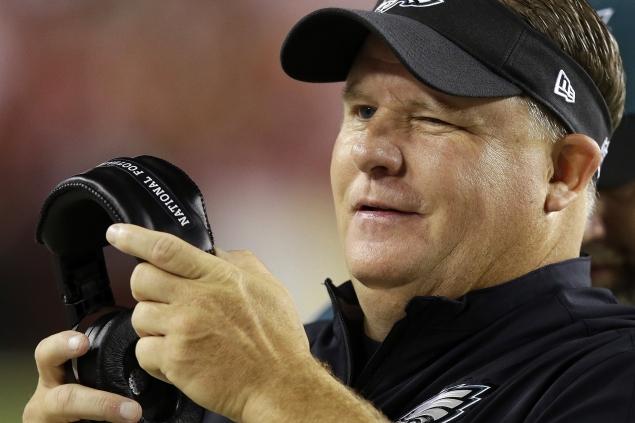
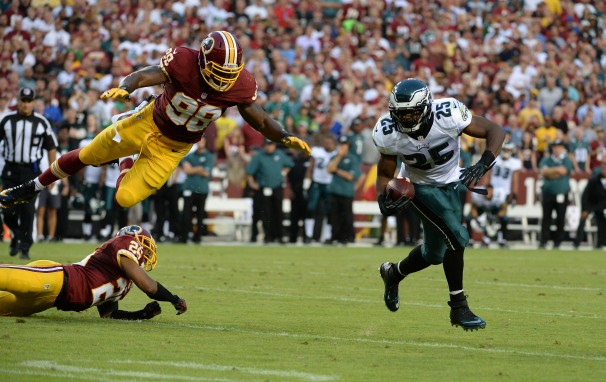
Chip Kelly thinks his Philadelphia Eagles – who rattled off 53 plays before halftime to the tune of 24 offensive points and 322 yards – were too slow on offense.
(Eyes roll across America).
Really, Chip?
C’mon, buddy. Don’t be that guy.
“I felt like it was slow, to be honest with you,” Kelly said when asked about the first quarter. “We put the ball on the ground too much, we didn’t get the ball to the officials, we could have sped things up. … That’s something we need to continue to work on.
Fine, you go do that, Chip. Go work on it, run your guys into the ground and burn ‘em out.
But for today, just know it was fast. So fast Twitter’s obnoxious commentators couldn’t keep up. One play on average of every 22 seconds. Oregon in disguise as Philadelphia. Defenders sucking wind, Jon Gruden gushing your praises like he would pay anything to attend one of your coaching clinics.
If we talked about New England’s offensive speed, Philadelphia makes the Patriots offense look like a turtle crossing a highway.
But I’m actually not writing to heap more praise on top of Kelly for a great half of football. I’m writing because I want to know what’s wrong with us? Are we just that unhappy?
I’m referring to all those negative Nelly’s out there who take a beautiful moment like last night and begin bashing it.
To recap:
            It won’t work all season
            Michael Vick can’t survive this pace
            LeSean McCoy will need leg transplants
            Everyone will be hurt and ticked off by Week 7
These are all variations of things I heard in the first 24 hours of the Eagles rolling the Redskins last night. Whether or not they are valid is not the point. We’re so obsessed with “calling it” that we can’t enjoy anything. What I mean is we have a sick obsession with tearing others down. We write the history before it actually happens. We think we know exactly what’s going to happen before it happens.
The last thing we should do is listen to people who think they know everything. They don’t.
And this does not just apply to sports, but life in general. So I should listen to my broke friend on monetary advice? Tell me again why my new business venture won’t work, again, please.
How about some nutritional advice from someone who is in poor health, or relationship advice from someone who’s never really been in a relationship. Yes, single at 45, please tell me what the keys to a successful marriage are.
We think everyone wants to hear our opinion – on everything – but they don’t. The truth is, we’re watching people on TV who are paid to tell us what they think and we do either two things with it: agree or disagree.
There are varying shades of agreement, but really, that’s what it boils down to. The problem comes from others telling you why they think it’s right or wrong with a conviction of perfection behind it – an absolute believe of knowing they are right.
But you can’t know anything for sure. Nothing is guaranteed. A hundred things happening right now are changing the course of what will happen in the next five minutes. So we really don’t know anything – we just assume to know based on a number of internal factors.
So here’s the thing: I assume that I like this Philadelphia offense and Chip Kelly. I enjoyed what he did at Oregon. Did he ever win a national title? No, but he made Oregon games so much more fun to watch than other college football games. Which is what happened last night in the first half. I enjoyed the first half of the Eagles-Redskins more than I enjoyed any other NFL game this week. I would like to see more. I want to see what happens.
And I don’t need someone on the radio telling me within 12 hours of the game why it won’t ever work long term. Lots of things don’t work long term, partially because they are not supposed to.
So before we totally kill Chip Kelly for what this offense might not do or what it could do to his team, can we just enjoy it for a little while?
Do we know how to do that anymore?
No, because bashing and drama draw eyes and ears. Positive thinking?  Go to church, right? We’d rather trash the new iPhone before it’s been actually seen or used. We’d rather write off a movie that some critic didn’t like than go see it ourselves. We’ll trust complete strangers bashing something on social media before we do our own analysis.
Ease up, ‘Merica. Slow down and smell the roses and stop seeing only the thorns. Life ain’t always beautiful, but it is a beautiful life.
And for 30 minutes, I watched beautiful, fast, fun football last night.
Thanks, Chip Kelly.
Standard
amateur athletics, Conference realignment, Jay Bilas, Johnny Manziel, NCAA, PEDs, TV

50 Shades of Green

Pop quiz, hotshot: which is worse: the PED plague taking over sports, or the seedy underbelly of amateur athletics? Which blows up sports first? What do we do?
(Bonus points for anyone who correctly guessed the Speed reference.)
In one corner, we’ve got doubt casting a long and eerie shadow over pretty much every sports feat we’ve witnessed over the past…past…what? That even makes this performance enhancing drugs business even more difficult to process. How long have we been living under a rock at the magnitude of this epidemic?
In the other corner, we’ve got athletes selling conference championship rings, signing memorabilia for cash and taking duffle bags of dough from agents. Again, the question of when this became more than an anomaly is vague as well, but I remember seeing Johnny Be Good, any despite immediately knowing it was a terrible movie, had a sinking feeling that recruitment of a high school athlete could indeed be that shady and lacking any moral regard.
For either issue, the how and when don’t really matter all that much. It’s more telling to focus on the why. Why do athletes take PEDs? Why do people prey on young athletes with a carrot of cash? Why are athletes dumb enough to take either when they know the rules?
And the answer lies in the green the runs the entire operation. It’s bigger than any system, bigger than any person. And if we learned anything from Oliver Stone and Michael Douglas is that money never sleeps. 
It’s a person’s desire to live a life different than a normal person. The same reason some people play the lottery – the want of more. But rarely can people tell you why, or at the very least keep answering why’s until they get to the root of it all.
As time has passed, because we don’t address either in a fully comprehensive manner, it has manifested and multiplied into this current state, slowly eating away at the fabric of sports, and in many ways, our culture.
People want to win. It’s why we keep score. But we’ve always acknowledged in life and in sports when it’s done the right way. When that started to change was when someone discovered you could win without doing things the right way – with shortcuts. We establish rules because they allow us to go fast. Think of brakes on a car in the same manner – they allow you to go fast, safely, with the idea that using them when needed prevents danger from becoming a reality.
This logic is the backbone of nearly everything we do. It’s there because 98 percent of us don’t need the rules to tell us what is acceptable and what isn’t, but rather to protect our hard work and honesty from the 2 percent that do not follow the rules.
And over time, in sports and in life, we’ve needed to add more rules because more and more people have lost that navigational compass – a conscious – that guides them along the way. But when you don’t address it, the problem gets worse. When you turn a blind eye instead of maintaining relevancy, you secure a future filled with less certainty and more chaos.
This is where athletes who get engaged in the use of PEDs find themselves. Caught in some fog of needles and pills. Is it right that the guy trying to take your spot might be taking PEDs and if you don’t, you’ll be cut or traded? No. Is it right for you to take them to gain a performance edge which allows you to get a raise and break records? To most, the answer is no.
But it is fair that your sport, for some reason, is targeted heavily while others remain blissfully passed over in the public eye? Again, no.
We cannot be naïve enough to believe that this has been largely limited to Major League Baseball, and if we are, there’s some oceanfront property in Utah I’d love to show you sometime. Then again, perhaps we’re not being naïve. Maybe we’ve just chosen this path, to stick our heads in the sand, for fear of what would happen to us trying to process that nothing is real anymore.
If we allow ourselves to start asking all the questions we should, it would require something that cannot be done: an alternate reality.
We already laugh when we’re told the 1992 and 1993 Fab Five teams didn’t make the NCAA Final Four. They did, and you can take down the banners and forbid them from school grounds, but it happened.
The same as if we’re to try wipe off McGwire, Sosa and Bonds juiced fingerprints off the home run records. We’re going to pretend Maris’ 61 still stands? Or what if we allow ourselves to wonder if a number of teams would have won a championship had a key player not been under the PED influence? Can it be wiped away? Did the Red Sox not win the 2004 World Series? The Yankees the 2009 title? Or would they? How can we know?
We begin entering some weird, strange reality where Doc Brown can’t even stop the space time continuum from being destroyed.
This state of chaos and confusion is also where the NCAA now finds itself. It’s been reduced to the media uncovering broken rules around eligibility and recruitment. It’s openly mocked in social media by a well respected former athlete turned lawyer turned intelligent analyst of college basketball, but really, so many things.
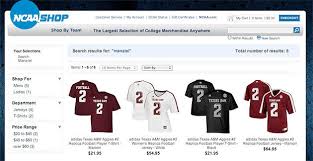
Yesterday, Jay Bilas pointed out the hypocrisy that has been occurring in the NCAA for quite some time. He tweeted screenshots of the official NCAA online store, that allows you to search the name of a player and actually displays matching results. So, if you type in Manziel, a Texas A&M #2 jersey comes up.
Ruh-roh.
To really drive the point home, the NCAA has repeatedly stated it does not make a profit off a player’s name or likeness. Which doesn’t pass the straight-face test at all considering when I play an NCAA football video game and there’s a right-handed QB #7 under center for USC who has the same skill attributes, as say, oh, Matt Barkley.
So yes, this is a problem. Big problem.
An even bigger problem for the NCAA, which is in the midst of a lawsuit with former UCLA basketball star Ed O’Bannon that threatens to blow up their monopoly on making money off the athletes – even long after their amateurism ends. (Again, think video games, highlight videos, retro jersey sales).
Like anyone caught in the act, the NCAA turned off their search functionality by mid-day.
Too late.
On the other hand, you have the reigning Heisman Trophy winner dumb enough to be recorded doing a signing session and telling the broker to pretend it never happened.
Can all of these people actually be this dumb? Can the NCAA not have someone ensuring they are remaining compliant with their own claims? Can athletes who know the rules – especially in 2013, especially a Heisman Trophy winner already under fire – not be silly enough to break them.
Should college athletes be paid is a debate that has been going on for some time and will continue, but what cannot be debated is that currently, the rules don’t allow you to accept payment for your autograph, no matter what NCAAShop.com is doing.
At some point in time, it all made sense – student-athletes were just that. And for their time, effort and commitment in the extracurricular, they were awarded scholarships which paid for their school. But there was a tipping point, as there always is, where TV and merchandising made it painfully obvious that student-athletes weren’t really students first at these massive conference institutions.
Why?
Because TV pays lots and lots of money and the better you are the more you are on TV and the more merchandise and hype you sell. It’s fifty shades of green: from advertisers to broadcast media to colleges and universities to presidents and athletic directors and coaches.
This isn’t just an old building in need of refurbishment. This is like a apocalyptic movie where an entire major city is destroyed and only fragments remain.
If you think I’m being crazy and spouting hyperbole, you can read on and you will think again.
Imagine a world where college athletes could be treated more like free agents, or paid by schools or their conferences. Imagine a world without the NCAA tournaments or playoffs, where championships are driven completely by corporations and TV conglomerates who bid the highest amount to show the games.
Don’t believe that would ever happen? Why not?
What holds the NCAA together is member institutions. What happens when those institutions start breaking off. If conferences and universities can start creating their own networks – which they have, obviously – then they have already begun the process of removing the middle man.
We are only a few steps away from an agreement not between CBS and the NCAA, but between the Big Ten, Big XII and ACC and CBS. And as the conferences continue to re-align and grow into super conferences of schools who are good in multiple sports, there’s even more money to be had.
And where there’s more money to be had, there will be even more people with their hands grabbing for it.
So whether it’s the PED circus crushing baseball (and soon enough, the other major sports) or the shamatuerism of college athletics, the real question then isn’t going to be why, when or how. It will be: what’s next?
What lies beyond the end of the NCAA and the fall of non-professional sports seems less optimistic than what lies beyond PEDs. If history has taught us anything, what happens after the downfall ultimately determines the course of the future.

And where there are shades of green, there will be shades of gray. 

What do we do?

What can we do?


Standard