children, Parenting, Thanksgiving, The Fresh Prince, Will Smith

Parents Just Don’t Understand (Revised)

The Fresh Prince was so right.
Parents just don’t understand. New ones, old ones, middles ones and soon-to-be ones. We all don’t get it.
Will Smith once famously rapped about how parents didn’t get their kids. Ironically, now Smith is a parent. Well, I listened to him and hundreds of other spunky artists when I was a kid. And now I’m a parent, too.
Not sure what it would sound like, but the title could stay the same.
The other night, we watched the lovely interaction of my brother-in-law and his wife as they are merely days away from their first child being born. And the hilarious back-and-forth between husband and wife pre-baby is enough to make anyone buckle over with laugh pain, but I couldn’t help but think of how things are about to change for them.
My wife and I tried to dispense some of our ancient wisdom of parenting onto them. Feeling like we helped – cause, hey, we got this thing down, baby – shortly after everyone left, we put our four little, well-raised angels to bed.
And then reality slapped us with something called a check.
Sitting down for the first time all night, within two minutes our five –year old came in to announce the 2-year-old had pooped, only to find he had not, but now the lights were on, the screaming had started and the routine broken. 

The red-head ended up in our bed.
Following hours of tossing, turning and crying – and that was just my wife and I – the alarm clock went off and we began our day. Just a few hours later, as my wife went to the Y for a workout (for fitness and sanity), she turned to find little red was asleep, because of course he was.
Sigh.
She turned the van around and went home, because that’s just what you do.
These are the real things that happen as parents of children. Your phone is taken over with random snapshots of the ground or someone’s pant leg, your Netflix account only recommends animated PG movies and your car will become a van. A van, that is, with health hazard codes, unidentified stickiness and something that smells, but can never be located.
The carpet will stain, beds won’t always get made and laundry will become endless, a vast sea of socks, underwear and things you swear they could not have worn for more than 18.5 seconds before changing. Again.
You will come to find yourself shoving every ounce of adulthood into the hour or two between your kids bedtime and yours. R-rated movies, recorded TV, political, religious and intellectual conversations, calendar planning, reading and more are gorged on until you pass out from over-stimulation and exhaustion.
Going to and coming home from vacations is, quite simply, a form of torture that should only be used by dictators from the Middle Ages. It resembles Home Alone, honestly – counting heads, scrambling to pack at the last minute, someone spilling milk all over the food – except you didn’t actually get to sleep in and John Hughes didn’t pen this script.
Going shopping – to either the grocery store or to the mall is an elevated form of that torture. You’ll just want to give up. At any given time, eight hands are shoving things into our cart that don’t remotely belong there. And your five-year-old is bound to say something fantastic, like, “A BRA! Gross!”  
Sounds just awesome, right? Well, it is.
We don’t know anything about being parents, but we do know just a little bit more about being parents to our kids than before we started. The only real advice you can get is that it’s your life, your kid and you’ll figure it out all on your own, in your own way. What works for us might not for you – and it certainly isn’t the way your parents did it between 25-35 years ago.
From time to time, you’ll just wish it was a bit more quiet and calm, with fewer injuries to your children and to you. No, seriously:  Dads, wear a cup.
Occasionally you will hope you don’t have to read site words, review homework, wash dishes, give baths and laundry. You’ll just long for a little more time with your spouse. Or maybe even by yourself.
Then one day, in the very near future, you’ll get it. As my wife says all the time, they will have their own lives and we’ll have a clean, empty house with nothing but time.
She’s right.
I’m certain at that point we’ll feel out of our element, without the structure of any structure, thrust into a new situation and expected to survive, adjust and carry on.
You know, kind of like we were when we started having kids and lost all of that so-called freedom and beloved individuality.
So today I’m thankful that we laugh a lot, that we stare at them sleeping (in a totally non-creepy way), that we hug them, that we discipline them. I’m thankful for the loud, constant, smiling, annoying, chaotic change. I’m thankful for it, I love it and I’m glad it’s been given to us.
Forget pragmatic, sensible and a life based on logic or fact. There’s really no room for it here, in the ballyhooed “real world.”
And thank goodness for that.
Parents just don’t understand.
Standard
Andre Wiggins, David Stern, Duke, Jabari Parker, Julius Randle, Kentucky, NBA, NCAA College Basketball, tanking

Empty Tanks

Riggin’ for Wiggins. Sorry for Jabari. Scandal for Randle.
The catchy phrases are already piling up as NBA teams make themselves into ugly ducklings for the 2013-14 season in an effort to maximize their chances at landing one of the premium talents that have hit the college hardwood this season.
And alliteration aside, this happens all too frequently in the NBA. The Draft Lottery is a joke, a punch line to the league and the more you look at it, should be a mark on David Stern’s legacy.
From Andre Wiggins at Kansas, Jabari Parker at Duke, Julius Randle at Kentucky, Aaron Gordon at Arizona to a host of other heralded freshmen, the 2014 NBA Draft has GMs everywhere lining up to give away an entire season in hopes of landing one of these potential franchise players.
But should they even be allowed?
In an exchange years ago will ESPN’s Bill Simmons, noted thinker Malcolm Gladwell had this to say:

                I think, for example, that the idea of ranking draft picks in reverse order of finish — as much as it sounds “fair” — does untold damage to the game. You simply cannot have a system that rewards anyone, ever, for losing. Economists worry about this all the time, when they talk about “moral hazard.” Moral hazard is the idea that if you insure someone against risk, you will make risky behavior more likely. So if you always bail out the banks when they take absurd risks and do stupid things, they are going to keep on taking absurd risks and doing stupid things.”

And he’s right. Nowhere else on earth is poor performance, malfeasance, mismanagement rewarded. Well, except in Washington, D.C.
Think about it. Everything else that we do must be done to the best of our efforts – or at least some minimum level of trying – or we lose it.
From relationships to our jobs, we can’t tank and get ahead. And when we’ve tried it – as Gladwell said, with banks, it proves to be a hazard to society and one that doesn’t work.
Just picture it: going all George Costanza and sleeping under your desk all day and earning a promotion? That was funny because it was ridiculous to us.
What if we put no effort into our relationships? Just try not taking your girlfriend or wife out for dinner and a movie, even every now and then, and see how quickly your single. You even have to put effort into that – the pick-up. Try going to the bars in sweats, smelling like a dirty sock and looking like you just woke up from a bender. No woman would come within five feet of you.
Think of how outraged we’d be if this practice existed in schools?
Teacher: “Johnny is failing tests, farting in class, humming the Star Wars imperial theme when I lecture and demanding peanut butter and cheese sticks be instituted as the school lunch. We’re going to have to move him up a grade, name him Student of the Month and recommend he teach my class.”
Parent: “Well, we were worried, but hopeful this would happen. We’ll now make sure to reel him in and try a little harder on his schoolwork and behavioral issues.”
Cheat your taxes? How about some money back to make sure you have enough for next year?
It used to be that NBA teams would at least try to not be horrible, or at least be less obvious about it, until after the holidays. It was a passing rite of spring, really. Hit March, and go into full tanking mode. Now? Teams are trotting out a collection of barely passable NBA talent in hopes of getting a head start at being at the bottom by season’s end.
The lack of logic in this practice is astounding. After 30 years, aren’t we clear that this doesn’t work? A handful of well-run teams keep winning the championship. The bad teams stay bad because they are poorly run and because just getting one young superstar doesn’t fix the problem.
How many times do the Bobcats/Hornets, Hornets/Pelicans, Clippers, Raptors, Timberwolves, Grizzlies and Kings have to get a lottery pick before they are good? Those teams have had at least 6 or more lottery picks since the 1984-85 season.
In a recent case study, it was discovered that nearly 90 percent of teams that win 25 games or less are still not contenders five years later. This is the same as saying someone who sits on their couch, plays video games online and tweets about not having a wife or a job is still doing the same thing five years later.
Not exactly surprising.
While I would agree with Gladwell’s theory that we should not reward this kind of team, I think the most egregious thing is that it has become such a glaring problem that everyone openly acknowledges it but nothing is done about it by the league.
David Stern will fine San Antonio for not having their star players face the Heat last November, but he won’t do anything about this? Oh, wait, that’s because he’s helped create it, incentivize it and continue it. Stern will never admit how failed this logic is.
The question, I suppose, is why doesn’t the NFL have this problem? Why is the NFL, the envy of the NBA and Major League Baseball, facing this issue? Because management doesn’t last if they tank. There’s too much risk in throwing away a season.
What I’ve never understood is how you convince people to throw away an entire year of their careers? Imagine telling Michael Jordan, the player, you were going to openly stink for a season to get him some help? Now, Jordan the executive is managing one of the worst teams in professional sports – in any league – in an effort to build a roster of young players where one might pan out.
Not that anyone cares, but it must be difficult to be a fan of these teams. It’s against everything we know to root for losing. Yet, the NBA allows it and rewards it.
Yup. The NBA.

It’s fantastic.


Standard
Life, opportunity, Philosophy, positive thinking, resolve

The Life in Little Spaces

Last week, a dear friend of mine texted me with a heartfelt request: please write something light-hearted and fun.
When was the last time you wrote something fun? I like your writing, always have and you know that, but it is so serious. I worry people will think you are depressed.”
I thought on that for a bit. I can see his point. I shuffled through this blog and found that even when I thought I was being light, I was still being heavy in tone and message.
And for the past week, I’ve been searching for something, anything, that I can write about that would be fun, fluffy and less “on-edge.”
But I cannot do it; at least not at this moment.
I am not depressed. I’m actually quite happy. I suppose if you want funny, try The Onion – uh, at least the online version anyway. I enjoy comedy and humor. I can’t wait for Anchorman 2, and the clips of the British gentleman arguing about Michael Caine impressions crack me up.
But perhaps I’ve changed.
My writing comes from a place of inspiration and motivation, which is where I think I should probably be spending the majority of my time – inspired and motivated. And I am inspired and motivated by very little: just to change the world and make it a less selfish, self-serving place, with less complaining and more enjoyment, where people interact positively and attempt to do good.
I wish I could blame this on my kids and say that being a father changed me. It did, in so many wonderfully challenging ways, but my wife and I had children long before my mindset changed. For better or worse, this is my voice now. I am compelled, not out of a belief or right and wrong, but because it feels like a calling, a destiny.
And as the great voice of our times, Ke$ha, once said, we are who are.
Someone of perhaps equal importance from the past, some dude named Gandhi, once said your values become your destiny.
I cannot speak for anyone’s values but my own. Values come from what we believe, which is really just opinion. And we all opine. Life is opinion and simply a matter of perspective.
And it can change if you allow it, from a number of different sources – which is the beauty of life. It could be a movie, a song, an event. Death has a way of putting life in perspective. Loss often affects us more than any gain. Loss accomplishes what we should have known and appreciated all along – that we had it but did not realize it.
What holds us back? Simply stated, us.
There is really no difference between you and those you would deem as accomplished outside of perseverance, motivation and belief. The problem is, those are increasingly hard to come by. They cannot be bought – though we certainly try in a variety of ways – through books, speakers, events, inspirational videos and the like.

Yet all that is temporary and fleeting. Longer term, only we can build the path we seek. It doesn’t come to us, wrapped like a Christmas present.

Success in a box? For me? Why, you shouldn’t have.

Life is our gift, yet we are constantly looking for a gift receipt. We’re looking for discounts and sales, return policies and guarantees in life, in relationships.
One day, someday, wishing, hoping – none invoke any amount of self-resolve needed to define life your terms.
Negativity breeds, infects and spreads. Ignore it, get away from it. Laugh at it. Do something to remove yourself from it and the negativity of the world.
I’ve come to understand it is the stuff we don’t think matters that we actually think matters. Just look at your social media feeds. Your own timeline and those of your friends will tell you everything you need to know about what your focus is on.
Life occurs in the space between the spaces. Too esoteric? What I mean is you will find your values, your truths and beliefs in the moments between moments.
Who are you when no one is looking? Do you take pride in keeping yourself well-presented, not for others, but for you? Do you hold the elevator? Let the car waiting in during a traffic jam? Do the dishes at someone else’s house? Look people in the eye? Are you honest, yet reserved with how brutal and hurtful that honesty can be? Do you show tact and general decorum? Take your shoes off when entering someone’s home? Call instead of text?
You see, those moments, and thousands more like them occur on a daily basis and we miss our real opportunities to make an impact in the world or to show who we really are. We’re stuck thinking it’s these big, life-defining events that display who we are. On the contrary, we define our own lives in the seemingly insignificant moments in between those moments.
If the world feels like it’s attacking you, putting you down and betraying you, then you ought to be proud. Don’t be like the world – we already say it’s messed up enough, so why would you want to fall in line with it?
Therefore, I’ll keep writing about what motivates me, without compensation, because no one needs to pay me to be who I am.
As for the humor, well, I suppose I can work on that, too. Come to think of it, my voice impressions are pretty good.
Perhaps I’ve just became more interested in making an impression than doing one.


Standard
American culture, bullying, humanity, Joe Philbin, Jonathan Martin, Miami Doplhins, NFL, Richie Incognito, Society

We Become What We Are

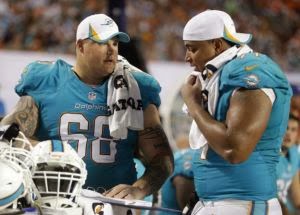
In this whole mess in Miami, where one player has verbally bullied another into apparently quitting professional football, we’ve once again missed the point. 
We can’t see the forest for the trees, how this situation actually applies to us. 
(Insert record scratch here.)
Us? What the heck is he talking about?
How do people become Richie Incognito? Or Jonathan Martin? These things don’t just happen. We all have roles to play, like actors. And we have been training for each moment of our lives. And we’ve all heard what we should do.
Treat others the way you wish to be treated. Turn the other check. Be kind, rewind. Smile when the world frowns. Be understanding of others and the fact you do not know what they may be going through.
It’s simple and yet incredibly difficult, right?
We don’t practice what we preach, because we’re human and humans make mistakes. 
Then again, to ere is divine. Ask for forgiveness later. Don’t let anyone step on your buzz or stand in your way.
All of this to say we’re one massive contradiction. 
I didn’t want to write about Richie Incognito and Jonathan Martin, nor the Miami Dolphins “Code Red” approach to football basic training. But I can’t help it. 
Does it matter if the Dolphins instructed Incognito to bring Martin along and toughen him up? Does it matter if they didn’t specify to not be a moron and leave racial slur-ridden messages for Martin? Does it matter if, according to teammates, Martin played the messages in the locker room and laughed? Does it matter that Joe Philbin’s airport press conference was a joke?
I suppose. 
If you care about the dirty details. And most of us do. We want the gossip, the goods, the low-down. We’ll read the riveting expose of Incognito’s bullying ways that date back 10-plus years and call him a horrible human being. It’s probably true. 
We’ll listen to the pundits blame Martin for not being tougher, for being weak. We’ll call this the NFL, the modern culture. We’ll draw comparisons to all kinds of professions and say this is just guys being guys. There might be some truth there, too.
We’ll blame Ryan Tannehill and members of the offensive line for not stopping it, for not being leaders, for not doing the right thing. 
We’ll do our typical American thing, be appalled by someone, anyone – or multiple someones. Then, we will do our other typical American thing. We’ll go right back to being gossip hounds. We will ignore our children by staring at our phones. We’ll bad mouth friends, family and neighbors to anyone within ear shot. We will say someone cheated their way to the top. We’ll work 18 hours a day and sacrifice all of our relationships. 
What the heck does this have to do with the situation in Miami? 
Everything and nothing at the same time.
We breed this activity, we accept this kind of culture – in either situation. Whether or not you think Incognito was just doing his job, is certifiably insane or the absolute scum of the earth, you’re probably right. And Martin could be both a victim and a weakling. It’s all a matter of perspective.
But whatever your take, whatever your belief in this whole sordid ordeal, we allow it. All of it. And we’ve been building towards these moments for quite some time. 
As I wrote last week, we are weak, though I certainly didn’t mean it in this context. And as I have also wrote before, we are some of the meanest, crudest, insincere and least connected people on earth. 
It is all true.
We need a serious detox program for the culture of this country. The fact that this is even a hot debate raging in the media – and a thousand different opinions on who is right and wrong – says more than enough about us. 
We don’t know who we are and what we value. At least as a collective unit, we don’t. 
All I know is what I value, what I have been taught and what I believe. And I believe you don’t motivate someone with hate ridden voicemails and texts and bullying. That’s not motivating, that’s humiliating. And it would probably behoove you, as a professional organization, to oversee the development of your employee – not a borderline “talent” with past issues. You also might have the guts to stand up for yourself and tell someone before bailing, quitting and using the situation to your advantage.
But this isn’t about being a man or breaking fraternal locker room code. It’s about being a human being, inhabiting a world of other human beings and how we all treat each other on the daily.
The truth is, none of us have this whole thing figured out. If we did, we wouldn’t continue killing each other on battlefields. We wouldn’t continue to trash each other through social media for the world to see. We’d calm the heck down and learn to appreciate each other a little bit more.
If we knew what we were doing, we’d value the day-to-day life we’re blessed with and enjoy each moment, speak kinder to one another and just generally lighten up.
But we don’t. So we won’t.
Carry on. 
Richie Incognito said he was just weathering the storm and this will pass. 
Sadly, he’s right. We’ll let this go like everything else and not see how it is a magnified example of how we handle life, in our own way. 
This too, shall pass.
That’s the entire problem. We let everything pass.

At least the stuff that actually matters.
Standard
children, Life, Philosophy

Life’s Tough, Forget the Helmet

It is difficult to identify when it all began. Was it a slow progression, or just a band-aid like effect? Were we intentional about it, or was it just a subconscious social switch?
Whatever the case may be, we have become weak as individuals, which make us weak as a society.
I think I’ve noticed signs for some time, but the biggest was when several, if not all, of our surrounding communities postponed Halloween trick-or-treating this year due to an expected heavy rain storm.
While this is not intended to be a political statement or commentary on the towns and cities that made the decision, it is what it is. I’m certain the town and city councils or members of governing bodies who make such decisions did their due diligence and determined it was best for the children to stay out of the elements.
So this conjecture I have about weakness is not based just off one incident, yet instead serves as a microcosm of a bigger argument.
My wife and I looked at each other just downright confused. We waxed nostalgic about how “back in my day” we’d have put on a coat and got ourselves some candy. I’ve worn a mask in 80-degree heat and gone trick-or-treating with a winter coat due to flurries.
There are other indications, too. The helmets, knee pads, thigh pads, elbow guards and mouthpieces children are now recommended to wear riding a bicycle is a good one. Yeah, uh, I learned to ride my bike in the country. We had a gravel road and no concrete. Needless to say, I bled.
And my father, as kind as he is and was, looked at me and simply said, “How bad do you want to learn to ride that bike?” His point: it’s going to take some effort and some education.
My first basketball court was on dirt. The ball went through the basket and hit the ground – and pretty much stayed there. You had to pound the rock to dribble more than twice. And with enough use, the dirt court became a clay court.
How bad do you want it?
We drink water from bottles, which is still somewhat absurd and probably will be to me forever. We use gallons of sanitizer to protect us from spreading germs, but we seem to be sicker, longer, with a common cold than we used to be.
As a father of four, I certainly wanted people to wash their hands before holding my child as a baby. And I’m not so tough that a good Disney themed band-aid isn’t useful when it’s actually unnecessary. Like, there’s not even a scratch there unnecessary.
But aren’t we taking it all a bit too far? It seems strange considering we’re regressing in so many other areas – like general decency and kindness – but we’ve coddled ourselves and our children to the brink of crippling ourselves, and worst of all – them.
My wife and I play with our kids a lot, but we also tend to kind of let them go. Short of intruding on someone’s personal space or property, I’d prefer to let them learn and imagine. And, if it happens, get a little bump now and then.
Because that’s life.
It’s not all giggles and sunshine and 15 popsicles in an hour. They are going to get hurt in some sort of fashion and I don’t want them reacting thinking that the world has ended if they do.
We’ve made strides that will help them learn from our mistakes. Concussion testing, disease prevention, merging biology and technology, education and new information about the way children learn and what they learn are all moving us forward to a new age and one filled with opportunities.
But on the opposite side, we’re quickly ripping those opportunities away with over-protection. I want them protected and safe at school, at airports, in the home. I don’t want them terrified of engaging in life and trying new things.
It’s a delicate balance that we constantly struggle with. Do we hold them and tell them it will be alright? Or do we look at them and tell them to get up and get moving again? Studies have indicated that we should probably be doing more of the latter.
College-age students are increasingly showing signs of social anxiety – most likely (and this is an assumption) tied to coddling and to the increased use of texting and social media as the main channel for which relationships are formed or maintained.
This protection comes from wanting the best for our children, no doubt. To have it better than we did. But the graph doesn’t just go up for quality of life because time passes and we enter new decades or that the present is what we once thought of the future. We’re operating under the assumption that everything is continuously improving.
That’s just not the case. There may be more and more of everything available to us, but it cannot replace or duplicate simple values, rules and ethics that are basically self-taught.
No matter how much pain or discomfort there is, parents cannot go to a middle school dance and make everyone be nice. They can’t be there on the playground during recess. They cannot be on the field of play. And they can’t be there when a job becomes stressful or you’re working to find balance between family and a job.
It’s called growing up for a reason: it implies that you are moving upward, which is a universal sign of increasing something. In the general context, it’s education. It’s maturity. It’s becoming aware of what is socially acceptable, of the unwritten rules of our culture. It’s find out what the individual values are and how they relate to the community values around them.
And it doesn’t stop. It continues well past the age of 18 or 25. We are always learning and re-evaluating and re-applying until the very end of life. There is no manual, no how-to. Only opinion.
Which is why I’ve formed this one: we are unaware of the fact that we are becoming weaker. We don’t want the right things bad enough to risk failing or damage. We only see the possible pain – not the growth that comes after that moment or what we will learn about ourselves in either succeeding or failing.
Yoda was right. Do or do not. There is no try. The problem is, we are reaching a point where we don’t even try. We just expect someone to give it to us or to help us – we’re teaching ourselves and our children to work the systems to benefit them at every angle.
And yes, in some ways, this ties back to moving a holiday because the weather was a little wet, windy and cool.
Worried about catching a cold? Put on a coat. Frantic about a test? Study for it. Nervous about what someone might say? Ask.
There’s an old saying about prevent defense in football – it prevents you from winning. As a country, our culture has shifted into a prevent defense mode. If all the elements aren’t lined up and perfect, we pull back.
We are preventing ourselves from winning the game of life. We are preventing our children from accomplishing all the things we dream of and for them, setting up so many guardrails and safety nets that there’s little risk.
But the greater the risk, the greater the reward. Better still, the better the character and resolve.
Sometimes, the only road to ride on is gravel and you don’t have a helmet.

How bad do you want it? 
Standard