Connecticut, Gun Control, Guns, Josh Brent, Newtown, NRA, Sandy Hook Elementary, Violence

If Not Now, When?


Over the past few days, since the massacre at Sandy Hook Elementary in Newport, Connecticut left 20 young, innocent children dead, I’ve been at a loss.
I’ve lost sleep, tears and motivation. A loss of words, comfort and understanding.
But unlike those poor families, I didn’t lose a child. My thoughts and fears are nothing compared to theirs.
I got to go home and hold my young ones tighter than normal for longer than normal, for reasons they didn’t understand. I got to see my six-year-old daughter wear her Christmas dress all weekend. I heard my three oldest children laughing on Sunday while they built a pillow fort while their little red-headed brother napped. I saw their tiny little innocent faces covered in icing at a cookie party we hosted late Sunday afternoon. I got to tuck them in, sing to them and hear them say, “I love you, Daddy – good night!”
There is a deep sense of remorse tied to something akin to survivors guilt over the fact that somewhere in Connecticut, 20 families, and other families of the adults who died heroically trying to save them, are needlessly burying their loved ones a week before Christmas.
Just a couple weeks ago, I wrote about gun control and said that perhaps while we need more of it, the root problem lies within.
It’s still true, but it’s changed. I was wrong. We need to change all of it.
From a lifetime family of hunters, ancestry through Cherokee Indians and all the pride that comes from feeding your family, even if that means I can no longer hunt, then fine.
Comfort cannot be found for the mothers and fathers, brothers and sisters of those dead. I know this because I’m uncomfortable. I slip in and out of focus, my mind drifting to those poor children and the horror their families have been facing.
My wife and I quietly mentioned how we didn’t want our children to go to school today. We did it, because we have to believe it can’t happen here.
But it can happen anywhere. Now without connection, reason or motive.
We watched our children play from afar this weekend and got emotional just thinking about it. That could have been them. School is supposed to be a safe environment. Movie theaters, religious buildings. But over the past year, an attack on one becomes a psychological attack on all.

We’re all affected and effected by this. Certainly not even close to the extent of the families and townspeople of Newtown. But the dark clouds of fear have settled over our nation yet again.
There is nothing to be learned by this horrific tragedy, but much to be done. As I heard on Sunday, the simple and uncomfortable truth is that it all starts with us. We can remove guns and knives and anything else, but not the seeds of evil. I still believe that. We can discuss how mental illness must be addressed better, how parenting and isolation and video games all play a role.
But if we’re really going to not tolerate this anymore, then it’s going to take a concentrated effort from all Americans to simply be better today that you were yesterday, better tomorrow than you were today.
Gun control? Fine. Just don’t stop there, please. Because this is not about just getting the guns. We have to get out the darkness in our own hearts, the sinister things we fail to see and remove them.
Nothing can ever be the same again. It doesn’t mean that high schoolers and college students being murdered is less significant, it simply means we’re reaching our ultimate breaking point when six year olds in kindergarten are the victims of these acts.
No one should ever have to be murdered in this fashion, or at all, but if this doesn’t motivate us all under the common ground and cause of real change, what will? If not now, when?
We must change. No more road rage, middle fingers and sense of entitlement. No longer believing that we’re more valuable or important than anyone else. No more texting and playing on phones when we’re surrounded by friends and family.
We must be present in our lives, in our families and children’s lives. We must engage more socially than disengage and retreat. We build community and a sense of good and right and wrong that way.
What we don’t do is glorify these things. We must stop. And that goes for what we saw on CBS Sunday afternoon, for example. To take in the NFL this weekend was to try and escape. But there it was, another reminder of our lackadaisical attitude toward violence, justice, right and wrong. There, on the sideline of the Dallas Cowboys stood Josh Brent, who just last weekend drove drunk, crashed his vehicle and killed his teammate in the process.
It’s appalling the Cowboys did that as an organization. It’s even worse the NFL allowed it. It’s grotesque that CBS showed it.
This change I speak of, cannot be accomplished with simply more laws. It must begin within.
For our family, this process began long before last Friday. We decided some time ago to control more what we can. From the people that we surround ourselves with, to what we consume on TV, radio and in discussion. More Beatles songs, George Harrison singing “My Sweet Lord” and “What is Life” and saying prayers for people outside our family. More giving away to others less fortunate, less consumption of “stuff”. More discussion of what we’re thankful for all year, not just for a day in November.
Garbage in, garbage out, right? It’s time we just say no more garbage, period.
In times like these, we weep for those involved in such an unthinkable tragedy before turning our attention to where to lay blame. This process has begun in earnest with the massacre in Newtown, too.
All the buzzwords are there. Guns. Gun control. Lobbyists. The NRA. The NRAs money and it’s affect in the political realm. Parenting. Mental illness. Isolation. Broken home. Lack of prayer in school. Video games. Violence. Security.
It’s not one particular thing – it’s the collective whole, guns included. Hollywood, video games, families. All of it.
A difficult truth is that good and evil are allowed to exist in our world. It’s our choice how and when we engage. We can point fingers at laws or the lack of them, violence and it’s prevalence in our society, the media, and so many other things. But in the end, what will we have really changed? If we haven’t changed ourselves and our families, then we’re still failing.
You see, all we do is blame. As I’ve said before, we are a selfish society. It’s time to own up to our part. We need to own what little we can control in a world so obviously out of control: us.
We are still the collective problem. That was the case two weeks ago when I wrote about guns and gun control and remains the case today.
But we’ve got to do more.
So I look in the mirror and ask what this man can do to improve a little each and every day to the benefit of those around me.
An internal focus would do us some good. How can we be better people, spouses, parents, children, working staff and members of society today than we were yesterday? Because the moral depravity we encounter daily without intervention is essentially just watching our society decay. We must parent better. We must be kinder. We must learn to shut off the things that are contributing to our moral depravity that so deeply affect and effect our psyches. And this doesn’t have to even be in affiliation with religion.
The worst thing we can do is get morally outraged for a week or two and then go back to the way things were, which is generally what we do. We can repost comments on social networks and say we agree on this, disagree on that and say that things have to change, but it means nothing if we aren’t the change initiators.
How can we be better today than yesterday, better tomorrow than today?
It’s the only way real change can occur and ensure that our tomorrow is not worse than our yesterday. Because everyone lost something  in our collective yesterday. We can’t watch in horror as six-year-olds are slaughtered and not make actual change. I can’t continue to look at my four children and fear for what they might have to face.
We must change. All of it.
Let’s get back our tomorrow. Let’s start with today, because it begins with us.
If not now, when?
Standard
12.21.12, 2012, Dec 21, faith, The Meaning of Life

It’s The End of the World As We Know It (And I Don’t Feel Fine)


We’re nearly there.
Dec. 21, 2012.
The supposed date the Mayans predicted would be the end of the world. The date that many (non-mainstream) scholars say that something biblical might happen. A day which might be the dawn of a new era.
So we’ve had movies made about this date. People have joked about this date – my favorite was the joke that Hostess was in on the end of the world, which is why we briefly lost Twinkies and Ho-Hos. Some people are secretly fearful of this date, they just don’t want to admit it.
Despite the fact that no credible scientists, astronomers, historians or scholars support the theory of the world coming to an end next Friday (no, really, anyone with any credibility calls it hogwash), let’s play the game: let’s say it happens.
Are you ready?
Are you ready to meet your maker? Did you do everything you want? Have you lived life to its absolute fullest? I doubt it. I certainly have not. Because we rarely reach 100 percent. We talk of giving 110 percent, but really, we never approach it. There is always more that can be done or given.
As humans, we operate under the assumption that there is always time. It may be finite in the sense we know that we are going to die, but we don’t know when that will be and we always perceive it to be in the distant future. If we’re 10, it’s something like 1,000 years away.
At 20, we think we’re barely a quarter of the way through life. At 30, we know it’s lingering, but it’s only around 11:00am in the day of our life. At 60, we know it’s dinner time, but there’s still so much to do before bed.
And I would surmise that even at the end, for most, there’s a feeling right up until they die that there is still a little bit of time left, another day, another hour, another minute to do something.
Five days after the supposed end of the world, I’ll turn 33. That’s my basketball jersey number from high school. And in high school, I thought about how both young and old that number sounded as an age. It was so far away – fifteen years! What would I do in fifteen years?
The question should have been, what will I do with fifteen years? Because the choice was entirely up to me.
It doesn’t necessarily matter how it was spent, just the fact it was spent. It’s gone and I can never get it back. Some years I don’t want back, they were perfect. Other years, I’d do over. Then I break it down further.
How about the months? The days? The hours? How about you? Care for any do-overs?
Well, too bad, you can’t have them. But that doesn’t mean you can’t change how you spend  the future.
We’re an extremely strange bunch. We spend minutes waiting, hours wasting, days gone, months pass and become years.
I’ve read the famous poem, The Dash. And I’ve read “Oh, The Places You’ll Go” by Dr. Seuss. And I’ve certainly read many passages of the Bible. All evoke feeling, emotion and reaction. I’ve heard great motivational speakers and felt, well, motivated. And I have been depressed by watching friends, family and even myself waste precious time. That can be motivating too.
But watching others or listening to the success or problems of others doesn’t actually change me or you. We are the only ones who can do that ourselves.
All of it adds up to life. It’s unpredictable. We can never know what’s in store. Our faith can have us believe without question that there is a heaven without knowing what it is like. We don’t need to see a million dollars to know it’s real. We have faith that something either exists or it doesn’t. Likewise, the absence of faith can have believe that there is nothing after we’re gone.
One is comforting, the other, wildly depressing. But neither is known as pure fact and truth.
That, in essence is life. We either believe or we don’t. We either believe we can do better and become more, or we don’t. We either believe in heaven or we don’t. We mangle life with shades and gray and nuance, but really, it’s black and white.
Happiness is derived from a feeling of joy, not by an action. Nothing technically makes you happy – you feel that way. Watching a ballgame and going on a date with my wife elicit a feeling of happiness. In turn, nothing makes you sad – you feel that way. A sick child elicits a reaction of compassion and pain, which qualifies as sadness because it’s an emotion.
It’s all perspective and outlook. It’s how the death of a loved one is seen by some as a release to a greater place, should they be of a resounding faith and belief. To others, it’s the loss and how it impacts their life and the sadness by not being able to see, touch or be with them.
This difference in perspective is how Bo Jackson shrugged off his devastating hip injury and went on with life and found something else to do. The most remarkable and gifted athlete of perhaps all time, who could literally do almost anything, found something else to do in his early 30s. Because there was more to do.
The opposite perspective is how some people reach a point where ending their life is the only possible outcome: there’s nothing else to do.
So ask yourself how you feel about Dec. 21, 2012, if it were true. Or ask yourself what if your world ends in six months, six years or 66 years. The less time there is, the more we try to do. Why not the opposite? Why not with more time, don’t we resolve ourselves to do more?
Because there’s time, right? Except that we don’t know that as truth or fact. We’re assuming. And assumptions cannot be validated.
Whether or not you believe that on Friday, December 21, 2012 the world will end or not, ask yourself the question if you are ready.
I would venture to say 99.8 percent of us are not. And that’s because we aren’t wired that way.
For me, in a spiritual sense, I am ready, though not prepared – if that makes any sense. I am content with whatever my fate may be. But I’m not ready to go. I want to do more with my wife and children. I want more time with them – time that I already miss or waste, and time that I will miss in the future. I want to see more places. I want to do different things. I’m not even close to prepared for all that I want to do.
The thing is, I may never be. If my last breath occurs at 121 years old, I doubt I’d be ready. Because we make choices, forced or not, of how we will spend our time. There’s no multitasking life. We choose what we do with our time, our seconds, our minutes, our hours, our days, months and years.
There is a trade-off. For everything we do, there is something we did not. For whomever we marry or choose to be with, there are thousands of options we’re taking off the table. Those that are certain that they were destined to be with that person don’t even think about these other options. I believe, without question, my wife and I were meant for each other, therefore, there is nothing missed in all the other possibilities, because they weren’t possible to begin with.
It’s the classic “grass is greener” concept. For everything we choose to do, there are thousands of other possibilities.
Or are there? What if we’re meant to do exactly what we’re doing at any given moment? Kind of frees you up to enjoy and just simply be, doesn’t it?
Yet no matter what, life will end at some point, with us thinking we have another day, another hour, another minute to do something else.  
Are you ready? Better yet, will you ever be? Can you ever be ready for what you can’t really prepare for?
Forget Dec. 21, 2012, how about Dec. 23, 2021? Or June 18, 2034? What will we do with whatever we have left? Can we get it all done in time?
Probably not.
But we can damn sure try.
Standard
Alabama football, BCS Championship, Brian Kelly, Chip Kelly, LSU, Miami Dolphins, Nick Saban, Notre Dame, Oregon

Prepare to be Prepared


In roughly one month, Nick Saban could win his fourth NCAA college football championship. This is a big deal for a lot of reasons, all mainly to do with sports. He’s well prepared for this moment.
And thus is the Tao of Nick Saban, because nearly everything revolves around football and preparing for football games.
There will be many stories and columns written over the next 30 days, on Alabama’s current dynasty, which is playing for its third national title in four years. There will be stories about the rebirth of Notre Dame, puns about waking up the echoes (I’ve used a few myself), about how Brian Kelly stands become the next in a long line of famous Notre Dame coaches who have won a national title in their third year at the school.
But nothing is more fascinating than the blank, devoid nature of Nicholas Lou Saban.
He’s won 158 games and three national championships (one at LSU in 2003, two at Alabama, in 2009 and again last season). He wins bowl games, conference championships and it could be argued, he started the SEC’s run of dominance with that 2003 LSU team. 
 
Saban is notoriously famous for ducking questions. Any and all questions. Questions about his team, his opponents, his coaching style, recruiting practices and most notably, his emotions.
He rarely smiles, even when hoisting crystal footballs. He doesn’t seem to be enjoying life or football very much.
That’s somewhat troubling for a man who’s at the top of his profession.
Perhaps because he fundamentally believes he can control and manipulate the actions of 19-22 year-old college students, he is obsessed with micromanagement. After the 32-28 victory over Georgia in the SEC Championship that secured the Tide’s bid to the BCS title game, Saban was meticulously breaking down the failure of his players to run the defense called that was designed to stop Georgia from getting out of bounds and ending the game.
Everything Saban does is by design and when it does not go to plan, it’s upsetting to him. He wants to prepare to control. But control is an illusion, especially on a football field with 22 individuals who are reading and calculating in real time. Things don’t always go according to the plan.
And not going according to the plan is exactly how Notre Dame, as an underdog, can beat Alabama. The can prepare to be unprepared. Because it’s the only thing that can beat a calculated robot like Nick Saban.
Surprise him. Create spontaneity.
Miles, aka, the Mad Hatter, drives Saban nuts with his random ideas, fake punts, fake field goals and general zaniness. Only two teams have beaten Alabama over the past two seasons – LSU and Texas A&M. LSU did it by being flat-out crazy, with Miles calling the shots. Texas A&M did it with a quarterback, Johnny Manziel, who largely improvised once plays broke down.
You have to understand how essential preparation is to Saban. And how it’s drilled into his players, how his teams review minute details of every play call, snap count. This is a credit to their obsessive-compulsive head coach. Saban prepares to be prepared.
So when A&M ran their plays, Alabama reacted appropriately, right up to the point of finality. It looked like everyone was covered. It looked like the quarterback was sacked, or had no release valve or fifth option. Then Manziel went off the page and created something.
Same with LSU. It could be 4th-and-30 and Les Miles will run a fake punt option pitch. The least likely play is what Les likes. Especially against Saban, because Miles knows he probably didn’t spend a ton of prep time with his players on the least likely option, therefore it has the best chance to succeed.
And Georgia tried it in the SEC title game. With just seconds remaining and no timeouts, instead of spiking the ball to stop the clock and set something up, Georgia ran a play. They came up short and ran out of time. They didn’t even run the play (a fade to the back of the end zone) the way they wanted to. If they had, they would have won.
“Our players need to learn and execute things,” Saban said. “Like I told them, the most important thing in this game was to execute the plan.”
Had they called the timeout, they might have won, too. But the odds were long. Another 30 seconds for Saban and his assistants to run through the catalog of information in their brains about what Georgia’s top four plays are in that situation. Scanning all information, Alabama would have narrowed it down, ran that right play and most likely, the game would have ended with a sack or an interception or something.
This is why it probably eats at Saban that he failed with the Miami Dolphins. There wasn’t enough stability and too much spontaneity.
In his two years in South Florida, Saban’s teams were 9-7 in 2005 and 6-10 in 2006. It’s important to note how he ran the team as opposed to how they performed. He ran it like he did and would a college program. Except these are grown men. They are professionals.
Saban also elected to pass on signing Drew Brees, because of uncertainty over the torn labrum in his shoulder. He traded for Daunte Culpepper instead. Ironically, Culpepper was the one who never recovered from injury (his knee), leading the Dolphins to start 2006 at 1-6.
It was his only losing season. He couldn’t plan for Culpepper’s failure. He spent weeks assuring fans and Dolphins owner Wayne Huizenga that he was staying. On Jan. 3, 2007, he was gone. For 8 years and $32 million to Alabama.
Saban likes the safety net of college football. He knows what he is and he knows what he’s dealing with. Not many coaches will out prepare him, if any. And he’s got the talent (and their attention, due to their age and the stature of the program).
The only time you really hear him complain is about the BCS (when it’s not going Alabama’s way) because it’s unpredictable. Oh, and that he doesn’t like Chip Kelly’s offense and the speed of games now, because it’s not good for players to go at that speed.
No, Nick. It’s not traditional. It’s hard to completely prepare for. That’s why he doesn’t like it. It makes Saban uncomfortable to be out of his element, to have something out of his realm of control.
There’s nothing wrong with this mind you. It makes for a highly successful college football coach. He produces quality talent, wins, good NFL players. It’s a solid-product in sublime packaging. It works. But it doesn’t emote. It doesn’t inspire. It’s not entirely creative and ground breaking.
And while there’s nothing wrong with it, it’s highly un-entertaining. Saban is bland, boring and frankly, kind of creepy with his obsessive attention to preparation. There’s not a lot of depth there, it would appear. Saban thinks about preparing for football games and little else. He may have charities, he may have a great heart for children and his faith, but he’s not here to change the way we think about football, to invent something new.
Saban’s purpose is to execute the plan that was prepared.
Now, the king of preparation has 40 days to prepare for a bland offensive Notre Dame team and a defense that probably, despite their high ranking, has some holes a great football mind like Saban can find.
For Notre Dame, to win this battle is to not play that game. Notre Dame must do something different, something unpreparable (yes, that’s a new word, for those scoring grammar at home). Something…Miles-esque. Manziel-like.
So for all that you’re about to read, see and hear about Alabama, Notre Dame, traditions, defenses, Brian Kelly and the Irish, national championships and whatever other buzzwords are hard pressed into our subconscious before the BCS National Championship, remember this: Nick Saban will have his team prepared for what is most likely to occur.
Nick Saban won’t go back to the NFL. He can’t be happy. And the pressure of winning at Alabama means there’s no joy to it anymore, not with the expectations so big each week. So his life and his coaching career are intrinsically linked to this feeling of an elevated notion of unhappiness due to expected success. The success isn’t a surprise because it’s so thoroughly prepared for.
But with sports, and life, it’s the unexpected, the roller coaster moments that make us actually feel alive.
If you spend all of your time preparing and things go exactly as planned, it’s a life lived.
But is it living life? 

Either way, it can’t be much fun, which is something you can’t prepare for.


Standard
Bob Costas, Gun Control, Jason Whitlock, Jovan Belcher

Under the Gun


Following the horrific shootings in Aurora, Colorado this past summer, when a man who believed he was the Joker busted into a movie theater during The Dark Knight Rises and killed 12 people while injuring 59 others, there was an open call for more gun control.
Then last weekend, after Kansas City Chiefs linebacker Jovan Belcher killed his girlfriend, then himself, NBC sports anchor Bob Costas spoke out on needing more gun control, following respected sportswriter Jason Whitlock’s column regarding the need for more restrictions and getting the guns off the street.
I respect these points of view and their merit. And I don’t entirely disagree with any of the statements. 

But they don’t go deep enough. 

We don’t go deep enough. We’re not a very reflective bunch.
The truth is, as we’ve heard before, is that guns don’t kill people – people kill people.
Guns may be a tool, the same as a knife, or bare hands. People are often horrified because of the damage guns inflict. They are loud. It is messy. It’s sudden and powerful. But the end result of shooting a gun is the same as using a bow and arrow, a knife, or one’s own hands.
So we do ourselves a great disservice when we break down these tragedies to simply espousing the need for more gun control, more regulation and restrictions. The Second Amendment isn’t the problem. It may be something that needs addressed, but it is not the problem.
People are the problem.
To be fair, what we very may well need is more analysis on people before they are allowed to purchase and possess handguns, automatic weapons and shotguns. But again, even that is short sighted. The simple fact is that people can and will fake their way through these tests. We may call a murderer crazy, but they aren’t necessarily all stupid. Masking and hiding tendencies is generally how we get to the point of the interview with a neighbor where so-and-so “was the last person they would suspect” of doing something like this.
Did you know that Americans are 40 percent more likely to be killed by guns as citizens of other countries like England and Canada? 40 percent! The easy response is that’s because of all the readily available handguns. Get rid of the guns altogether and you fix the problem. 
No. No. No. You can do that all you want and all you are doing is duct taping the problem. You can take away the weapon or the tool, but you cannot remove the intent and the penchant for violence.
This is America’s biggest fault – we’re too rapid with our responses. It’s a fast-food society, too quick to determine actual and effective cause and solution. Massive deficit? Tax the rich! People shooting each other? Take away the guns! 
We don’t research, we don’t think and process information or theorize. We’re too busy to critically think through our issues. Band-aid solutions are abound. We want the best outcome with the fastest response. In the absence of genuine, well-thought solutions, any old idea will do.
How often at work are you in meetings? I know a lot of people that spend most of their day meeting with co-workers about action items and to do lists and then go on to the next meeting. In a variety of different industries. And there is less time to do the actual work, to think, to devise creative solutions. 
We’ve removed thinking and pontificating from our daily lives. And we apply this logic – or lack thereof – to other problems in our culture all the time.
And that is exactly what we’re doing when we speak so vaguely about guns and gun control. We turn to the violent nature of guns instead of examining the violent nature of people. 
It’s easy to blame the weapon – it cannot defend itself or rationalize an argument. You cannot arrest a gun, or put it on trial or declare it insane. You cannot interview it, you cannot assess its logic. It’s a static tool – it’s used. It doesn’t think, have feeling, emotion, practice a religion or process outcomes. But it can be blamed because it’s there.
Simply put, I urge us to look deeper if we want to know why we’re a more murderous culture and society than the rest of this planet.
Not everyone is prepared, or sane, or cares – about the outcome when they use guns. They are carrying a weapon to defend themselves, so they think and say, and often turn to the device when most angry, challenged or upset.
This isn’t a new thing for Americans. And while this could be a racial or class issue, it’s really an American issue to a far greater extent than other places in the world.
Remember the duel between Alexander Hamilton and Aaron Burr? We fought a revolution with muskets when we didn’t like the King’s taxes. We didn’t use guns to throw tea into the Boston Harbor – an act of violence. But that was OK, because it was justified, right?
We turned to violence in 1776. Less than a hundred years later, we got violent with each other over a Northern industrial economy and a Southern farming economy. Brother versus brother. We turned guns on each other because we were offended and threatened. 
We still do so today.
We are a violent society and, frankly, always have been. We can justify which actions require the use of weapons, automatic rifles and handguns. We can openly question why someone needs a machine gun, a glock or an AK-47 if they aren’t serving in the military and stationed somewhere. That’s all fine. But we will always fail to get to the root of the problem.
The problem is us. We are the ones who pull the trigger. We are the ones who turn to guns and violence in fits of rage and anger.
We’re also not strict enough with the laws currently in place. It’s illegal for convicted felons to carry handguns, yet many still find a way to get them. Why? Guns weren’t used on 9/11, violence and terror and fear were.
As I wrote earlier this week, to discuss these topics after the fact is too late. When someone’s already pulled the trigger or has a gun to their head is the wrong time to debate whether or not the gun control laws are strong enough. 
The presence of a gun increases chances of violence that already exists in the first place, but doesn’t remove the chance altogether. But that still misses the larger point: the existence of violence is more detrimental than the existence of the gun.
Many argue that guns exacerbate the situation; they remove time for thought, regret, reaction. There can be no denying that. The rate of deaths, drive-bys, domestic violence ending in fatality would probably lower if we removed guns completely – but you’re not digging up the weed by the root. You’re not fixing it by masking it. Domestic violence exists with or without handguns. Lack of a gun may prevent death, but the violence is still there.
You see, this has to be a societal change. Is America ready for that? Are we ready for that discussion?
Because we can’t have massive gun control reform and then have 10 million people sit down and enjoy an MMA fight, The Sopranos, The Wire or buy the latest edition of Hitman. We cannot celebrate the values depicted in The Patriot, then argue that guns shouldn’t be in our midst. It’s counter-intuitive.
On Sunday, Costas said, “If Jovan Belcher didn’t posses a gun, he and Kasandra Perkins would both be alive today.”
We simply do not know that to be true. We can assume that, since the statistics show it would (obviously) greatly enhance their chances of being alive. But that’s just not deep enough analysis. It doesn’t remove the intent to do harm to one another.
Certainly, the guns made it quicker, deadlier, more violent and definitive. So let’s just band-aid it, wrap a bow around it and proclaim that guns and gun control are the crux of the issue.
No – guns are part of the issue. Guns may be big part of the problem because of their impersonal nature, availability and quick finality.
But they are not the problem.
We are.
Standard
iPhones, Javon Belcher, Junior Seau, Kansas City Chiefs, NFL, Roger Goodell, Technology

The Growing Divide


There’s something about life in the age of technology, something dark and sinister, that you can’t see in the glare of a computer screen or an iPhone.
There, off in the shadows of our lives, what’s not showing in all our posts, Tweets and feeds, is what we don’t do or say.
We’re alone together.
In our interactions, in our relationships and friendships. And the average, every day American isn’t the only one who deals with this.
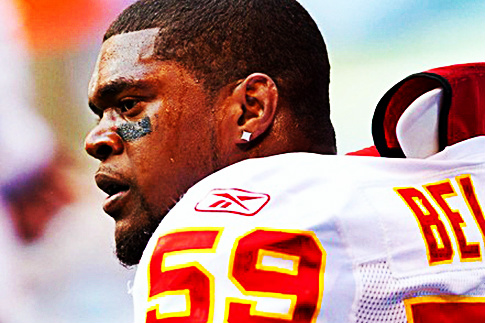
Yet another reminder of this came Saturday, when Kansas City Chiefs linebacker Jovan Belcher killed his girlfriend, then drove to practice in his Bentley, thanked head coach Romeo Crennel and GM Scott Paioli and then pointed a gun at his head and pulled the trigger, committing suicide right in front of them.
The latest reports have said Belcher and his girlfriend, Kasandra Perkins, were arguing before he shot her. He had been out partying all night and the police had woke him up and determined him fit to drive home. The Cheifs were aware of the arguments and had gotten the couple counseling.
It’s another football player who’s life has ended in sudden death this year. The most stunning of 2012 remains Junior Seau’s suicide earlier this year.
We can question the logic of a young man who’s driving a Bentley arguing over finances with his girlfriend and say he wasn’t prepared for the lavish lifestyle modern professional sports yields. We can blame Seau’s suicide on brain damage or the loss of oneself after a lifetime of playing football and say that Junior just didn’t know what to do with himself. We can blame both on gun control or lack thereof, but that’s too easy. 
There’s a big difference between the two. Belcher is a murderer who’s grizzly actions cannot be condemned. Seau had grown despondent. Both may have ended tragically, but only one is truly a tragedy. 
But taking away the guns doesn’t change the situation or possibly the outcomes. With Belcher, taking away the gun doesn’t stop him from being crazy. With Seau, he might have found another way to end his life.
Getting rid of the guns doesn’t get rid of the emptiness inside someone’s mind or heart.
The truth is that these things happen every day in America. Race doesn’t matter. Financial situations don’t matter. Profession doesn’t matter. A white father in a suit and tie can (and has) come home and killed his wife in their mansion after arguing about money. Wall Street professionals have drug addictions. That’s because loneliness and craziness, two different types of mental illness, pay no mind to what do or who you are.
The only comparison we can make between Belcher and Seau is that perhaps those around had turned a deaf ear.  No one on the Chiefs, no one in Belcher’s family or circle of friends can comprehend it. Likewise with Junior Seau, too. Maybe football related damage helped, but perhaps Seau was just depressed and car dealerships and golf weren’t enough to fulfill a man for the next 30 years.
You often hear those closest to the one responsible in a tragedy like this to say they had no idea. And this is what we refuse to discuss as a society, as a culture. Maybe we all have no idea because, well, we have literally no idea what’s going on with the people we think we really know best.
As Chiefs quarterback Brady Quinn said following Sunday’s game, we ask people how they are doing, and we care – but do we mean it?
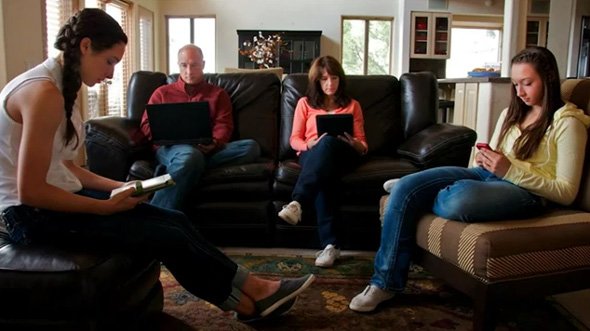
I know I’m guilty in my own life of getting so wrapped up in my little world, a lot of my contact with friends and family consists of text messages, Facebook posts and fewer phone calls and in person communication. I know I also have occasionally thought that some friends and family care less about my family and I because they do the same thing.
“We live in a society of social networks, with Twitter pages and Facebook, and that’s fine, but we have contact with our work associates, our family, our friends, and it seems like half the time we are more preoccupied with our phone and others things going on instead of the actual relationships that we have right in front of us,” Quinn said.
We can joke about it – but this is our national addiction. We don’t necessarily have to flush it or get rid of it, but does it do anything for our relationships with family, friends, spouses and children when we check our feeds and our e-mail? Why don’t we pick up the phone more? Why don’t we spend more time showing we care?
This Belcher situation has nothing and everything to do with this. We’re more concerned about the image and the appearance of we what we project than what we actually are.
Take the NFL for example. How can you read the grizzly details of Saturday morning and think that the Chiefs staff and players were fine to play a game on Sunday? This is where Roger Goodell could have postponed the game until Monday night. Give it time to breathe, let the air settle.
Instead, the NFL shrugged their proverbial shoulders and moved on. It’s only Tuesday and it’s already become nothing more than a news story that has legs because the “why” is still so unknown. The fact that his teammates didn’t know, that the Chiefs knew but just addressed it with couples counseling proves how far we’ve fall.
We have the illusion of companionship now.
My best relationships are with my wife and children, whom I see every day and engage in conversation with. We turn off the TV. We talk. We read. We laugh. We play. My wife and I built our relationships with hours upon hours of conversation – spending time every single day together, in person.
My worst relationships are with the people outside my nuclear family that I should know – or once knew – best. Childhood friends. Current buddies. People so close, they are family. I know they might be building a house, or their kids are in sports, or they took a vacation last week, or their birthday is next Tuesday.
But I only know that because I saw it on Facebook.
We’re short-changing ourselves and hurting others with how we interact with one another. Emoticons aren’t actual emotions.
My parents aren’t on Facebook. They barely use e-mail. This has forced me to communicate with them over the phone every few days or see them on the weekends. Same thing with my in-laws. My wife and I are close to both sets of parents because the lack of technology has put us right back in the stone age of talking to them, you know, like human beings.
My sister-in-law lives halfway across the country, but we’ve seen her and her significant other a lot over the past year. It’s one of our strongest friendships right now. And when we write something on their wall or send a text, the joke has actual meaning behind it. It’s not just a check-in that we kind of mean but have no real emotion behind. There is a difference. I can mean it when I write how much I care to an old friend, but is there truth behind it?
While this may have little to do with why a young middle linebacker killed his girlfriend, then himself, in the middle of the country, it has, as Quinn said, more to do with it than we can to admit to ourselves.
We’re growing further apart as people, as a society. We’d rather care from afar. We add and delete the relationships in our lives. But the rich, emotional undertones of real relationships cannot be replaced.
I get it, our cup runneth over. We only have so much time in a day. But too soon, a day becomes a week, a week a month, a month turns into a year. In moderation, texts, Tweets and Facebook are quite handy tools. Yet they can never replace the emotional and physical connection of shared time.
We need to be more present in our own lives so we can be present in others. Our full attention is needed. We text in meetings. We text when hanging out on dates. We check our newsfeed at the dinner table. We want to be in two places at once, but by doing so, we’re never fully in one place.
We don’t know what happened to Jovan Belcher. And we can only speculate on Junior Seau. We don’t know how troubled he was, how depressed or how mentally ill. We didn’t really know him at all, as fans or media types. We don’t know what he was feeling, and neither do many around him. 
It does little good to examine his brain after the fact. It does little good to try and talk someone out of shooting themselves with a gun to their head. It’s too late by that point.
But there is a difference between crazy and despondent. 
It’s the failure to see either that is a bigger problem.

Standard