I have to pose the question, in light of current events, why would anyone want to coach in professional sports? You have the shortest leash of perhaps any job in America with the most unrealistic expectations combined with the most volatile conditions.
Perhaps it is the pay. Or maybe it is the power. It certainly would be the pinnacle of the profession.
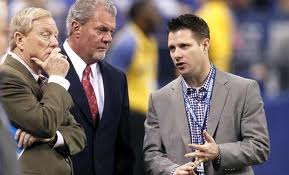
On Monday, a day after the conclusion of the NFL season, the Tampa Bay Buccaneers fired head coach Raheem Morris. The St. Louis Rams also parted ways with Steve Spagnuolo, the Chicago Bears fired general manager Jerry Angelo and ended the services of Mike Martz as offensive coordinator. The Indianapolis Colts let go of Bill Polian and his son, Chris. The Miami Dolphins also fired Tony Sparano. And that’s just what I could think of off the top of my head, there could have been more.
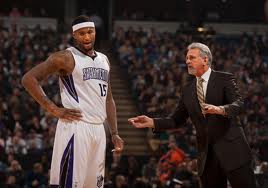
But then today the Sacramento Kings fired Paul Westphal, just seven games into the season – just 11 days after the season began on Christmas Day.
Even with the NBA’s reduced 66-game schedule, that’s the equivalent of an NFL team firing a coach after one game.
Were these firings justified? In the proper context, perhaps.
With a bigger picture outlook, what exactly do we require from coaches? Better yet, why do we keep rehiring the same ones who failed so miserably prior to their current position?
Because it is not a “what do we want” from them issue. That much is clear: championships. Owners and fans want coaches who bring gold back at the end of a season.
But realistically, 31 coaches will not win a championship each year in the NFL. Roughly the same number of losers exists each year in the NBA and Major League Baseball.
We somehow operate under the premise that every team should be good or make the playoffs in every sport. They can’t.
No, really, they can’t.
Some teams are just bad and will remain that way until a coach has enough time to put his practices and methodologies in place and the players respond accordingly.
But the instant a team doesn’t make a miraculous worst-to-first turnaround we get jealous, demand our favorite teams get the same and grab the pitchforks, banners and start shouting, “Fire him. Fire him now!”
We certainly love teams that click and quickly succeed after recent failures, but in reality, they fuel the cycle. In turn, it ends up shortening the lease for the coach who did it.
Morris’ Tampa Bay team clearly underachieved this season. A promising team with talent that won 10 games in 2010, they won just four games this season. In three years, Morris went 17-31 after replacing Jon Gruden, who was in turn let go by the Buccaneers in 2008, after he went 57-55 with the team over seven seasons.
Gruden’s tenure included three division championships and a Super Bowl win.
I suppose if Gruden wasn’t doing a good enough job for his boss, Morris certainly was not, either. But Morris wasn’t coaching Gruden’s players; the Bucs has a ton of young talent come in through the draft, playing in a division against the likes of Atlanta and New Orleans, two teams who have been perennial playoff teams in recent years.
The Colts firings seem most justified, as they poor draft selections over the past five years were radically and violently exposed to the fan base and to the rest of the league once Peyton Manning sat out the season following a series of neck surgeries. A team that finished 14-2 and lost a tight Super Bowl to New Orleans just two seasons ago – and went 10-6 and made the playoffs last year with nearly the exact same roster – managed to start out 0-13 in 2011 and finished 2-14 with the rights to the No. 1 pick in April’s draft.
As I wrote in the fall – someone has to lose their job over this in Indy, and someone did. Perhaps Jim Caldwell is safe because it has been evaluated that the coaching is acceptable, but the talent is poor.
Look, I’m all for change if something’s not working. I advocated for Polian’s firing, as well as Caldwell’s, earlier this season. I questioned Caldwell’s methods and his credentials and the man responsible for hiring him and picking the players in Indianapolis.
But I’m also in favor of a good stew, which takes time to cook and requires patience and the right ingredients.
And here’s where we have to start really analyzing everything.
Why didn’t the Dolphins just fire Sparano after the 0-7 start? Why do it after the team rallies around him and wins six of its final nine games? Isn’t it humiliating and emasculating to continue to coach a team knowing what’s floating out in the media?
Why fire Westphal a few days after the season begins? How did his job approval amongst his employers drop so drastically in 11 days that he was canned? Why not just fire him during the offseason, you know, the one with the lockout that saw the NBA not play a game for six (!) months? Did this have something to do with DeMarcus Cousins and the trade demand?
There’s goals, aspirations and then there are realistic (and in many cases, unrealistic) expectations.
I read a recent interview with Duke head men’s basketball coach Mike Krzyzewski. Coach K’s third season at Duke was abysmal. In 1982-83, Duke was 11-17 and 7th in the ACC. He said if he had began his career 20 years later, he would have been fired. But in a time where people were allowed to truly build a program and had ownership support, or in this case, school support, Coach K got Duke on the right track shortly thereafter. In the roughly 30 years since that 1982-93 season, Duke has won four national champions, made the NCAA Tournament 28 times in 29 years and advanced to the Sweet 16 or better 22 times.
Look at it this way: who are these NFL teams going to hire? Most likely a former NFL coach who had his own ups and downs in the past.
Ironically, Gruden is one of the hottest coaching prospects despite his intentions to stay on as a member of the ESPN “Monday Night Football” broadcast team. The same guy who was barely .500 in seven seasons with Tampa Bay.
Coaches are getting hired and they turn right around and start a game of Russian roulette with job security.
What were the Kings goals for Westphal when he took the job? I can’t imagine the Kings told Westphal, “We’ll have to let you go if you enter Year 3 with a 2-5 record 11 days into the season.” Never mind the incredibly raw talent Westphal has to work with in Tyreke Evans and DeMarcus Cousins (a head case).
What we need are more specific boundaries and performance plans for professional coaches. Maybe they should be unionizing in professional sports coaching like players do. Because this little game we play makes it awfully difficult to believe coaches have any real authority over their players.
They have little time to follow through on the ideas and plans that probably got them hired in the first place.
Yet we’re up and down on coaches all the time. Tom Coughlin went from the “This Seat Is So Hot My Pants Are On Fire” back in 2006 to winning the Super Bowl and receiving a lucrative contract extension in about 12 months.
How does that happen? Was Coughlin really that bad or really that good? Or was it somewhere in the middle?
There is something to be said for longevity. Not just in a coach sustaining it, but being given it.
In December 2008, I wrote a similar column about this topic, when six NBA head coaches had already been fired in the first month and a half of that season.
Reggie Theus was fired in Sacramento after the Kings’ 6-18 start. Bad? Absolutely. Indefensible? Not entirely.
In 2007 the Kings traded away their best player and most valuable commodity, guard Mike Bibby. At the time of Theus’ firing, Kevin Martin, Brad Miller and Francisco Garcia, the Kings’ best players, had missed significant time.
So the question I posed three years ago was this: who are the Kings going to bring in to coach this team and make them that much better for the duration of the season?
And, if you’re going to fire a coach, why not do it during the offseason? Unless, his name is Isiah Thomas, you’re basically wasting your time.
Nowadays, it would take a coach six or seven teams (or more) over 15 years (or more) to accomplish what they have.
It’s a merry-go-round of professional coaching. No new ideas, but the same astonished reactions when these coaches fail all over again. At what point do coaches just stop interviewing when these jobs open up, since they know they will be fired sooner rather than later?
For once, I’m glad I’m not involved in professional sports.
There’s more stability in the current job market.
 worldbetweenlines.com