
Why the Pirates Are Obligated to Loot and Plunder at the Trade Deadline
More than anything in professional sports, as a fan, I just want everyone’s effort.
Just try to look like you care, because we do.
Fair or not, it’s the truth. If you are in a relationship and you’re dogging it, you’ll hear about it – at least if the other party cares at all. And that’s the point, people tell you to try harder and get better or give more effort because they care.
That’s what sports fans do. And after so long, if you believe that a team or its players stopped trying, you eventually check out.
All of this explains why no one cares about the Pittsburgh Pirates resurgent 2011 season.
For the first time in 18 long years, the Pirates are on track to have a winning record. Hell, they’re on track to win their division. If this were any other team in just about any other sport, you’d have been inundated with stories, columns and blogs about it.
Until today, when ESPN ran a story by JerryCrasnik, it was crickets.
And lack of effort explains why.

The Pirates used to be respected. They used to be the big boys on the National League block. They were “the Family” in the 1970s and in the early 1990s, they won three straight division titles headlined by the original “Killer B’s” – Barry Bonds (pre-size 22 head) and Bobby Bonilla. Then some scrub named Francisco Cabrera, the last position player on the Atlanta Braves bench, singled in a broken-down Sid Bream to win a thrilling Game 7 of the 1992 NLCS.
And since that time, all they’ve done is secure a spot in the record books as the team with the most consecutive losing seasons in all four major U.S. sports.
Over the last two decades, the Pirates haven’t even tried. Either by management or by players, they have failed spectacularly.
Oh, there was the time in 1997 that they finished runner-up in the division (albeit with a losing record). Perhaps they would have fared better if not for that bloated $9 million payroll. Even by 1997 standards, that’s obscenely low.
The explanation has been the painfully lame “we’re a small market team and we have no money.”
Then either contract the team, sell it or move it. Or perhaps teams like Pittsburgh could have and should have used some of their massive revenue sharing kickbacks to field a more competitive team.
Take 2008, for example: The Pirates had a payroll of roughly $50.8 million. But they were given $39 million in revenue sharing.
What in the world are they doing with their money?
Well, they did build PNC Park for the 2001 season – which the Pirates opened with a 100 loss season.
What a waste.
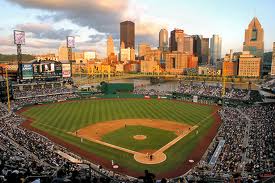
The Pirates blew a golden opportunity there. After years of attendance decline (they dropped to an average of 12,577 fans per game in 1995), the 2001 season saw fans come out in droves to the new stadium.
But what did they do with the 2001 average attendance of 30,834? As one might guess with a team that finished tied for the worst record in baseball at 62-100, they dropped back to 23,148 fans per game in 2002.
It’s basically been falling ever since, hitting 19,479 in 2009.
In every year since 1992 except the 2001 season, the Pirates are at half the league average in attendance.
It’s not something that you can blame on a market. In fact, just stop blaming markets and fans altogether. You bought the team, you knew what you were getting into, the market, the stadium situation, all that. You either want to own that particular team and try to make it a winner or you don’t.
Lots of small market teams draw fans – as long as they are competitive. Look at the Indianapolis Colts or the Oklahoma City Thunder. Good players and good teams bring in fans. Fans want to watch their home team contend.
Forget actually winning, we just want contending. Contending means you have a chance.
As a kid, I enjoyed the underdog. In many ways, I still do. Some of my favorite teams have been underdogs. Others are the big market bad boys who spend among the most. For instance, the Boston Red Sox paid $52 million out in revenue sharing in 2008, but they also spent $147 million.
The difference between the Sox (2nd in payroll) and the Pirates (29th of out 30) was astronomical, both in the money and wins departments, as the Sox paid three times as much for their roster as the Pirates did – and the Sox revenue sharing dues were more than what the Pirates paid for their entire roster.
Even if the Pirates could not afford a decent team for the last 18 years, why didn’t they try something, anything, to prove they cared? The Oakland A’s did not have any money either and they turned to stats and metrics to get the most bang for their buck. They’ve even got Brad Pitt starring in a movie about it – “Moneyball”.
The Chicago Cubs haven’t won a World Series in 102 years, but for the most part, they’re trying. You don’t find them on the list of those receive revenue sharing (yes, there are other reasons, like TV contracts and a massive fan base).
For crying out loud, even the Florida Marlins try once every seven years before selling off half the team. They’ve won two World Series titles in the last 15 years just by growing talent and having one season to see if it wins before blowing it up. The Pirates don’t even do that.
Until now. Now is there chance to redeem just a little bit of the last shameful 18 years. To give back to the poor schmucks that stayed with the Pirates and kept coming to games and buying the black and gold.
With a 50-44 record, the Pirates are a half-game up in the NL Central. Granted, the Central is perhaps the weakest division in baseball – but the Pirates are right there. There’s a little thing called the trade deadline just around the corner.
Do something, Pirates.
Pick up an arm. Pick up a bat. Hell, pick up both. There are difference makers out there. Just do something. Anything.
Just try.
 worldbetweenlines.com