Baltimore Ravens, Crime, ESPN, Michael Wilbon, NFL, NFL Lockout, Ray Lewis, Sal Palantonio

CSI: NFL

Well, the jig is up.
And I would have gotten away with it too, if it weren’t for those meddling football players.
Namely, Ray Lewis.
I had already planned out no less than four bank heists for this fall, you know, since there will be nothing to do on Sunday afternoons without the NFL, but then Baltimore Ravens linebacker Ray Lewis had to go and expose my plan – along with thousands of others plans for crime – when he exposed our evil ways in an interview with ESPN’s Sal Palantonio earlier this week.
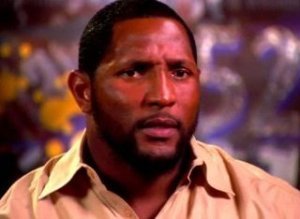
“Do this research if we don’t have a season – watch how much evil…which we call crime…watch how much crime picks up if you take away our game,” Lewis said.
Ever the dramatist, when Lewis was asked by Palantonio why he thought that, he sadly, yet passionately replied: “There’s nothing else to do, Sal.”
How did he read my mind? Does Ray Lewis have me on surveillance? Is Ray Lewis a part-time psychic? Does he know about those Algebra II assignments I didn’t complete all by myself in high school? I am freaking out a little.
In all seriousness (or not), let’s take a look at his claim.
Is it possible that we’re so obsessed with the NFL that in its absence, average Americans will run amok? Riots. Looting. Smashing windows. I’m picturing another “Pirates of the Caribbean” sequel. Or perhaps a new spinoff for the CSI series.
Well, if it were true, then wouldn’t crime therefore increase each year when the NFL season ends and decrease each fall?
(Hint: it doesn’t.)
There is one demographic where in fact the NFL season does serve as a potential deterrent to crime: among NFL players themselves. According to John Mitchell of Grio.com, arrests among NFL players have spiked during the lockout.
And if crime is bound to increase somewhere due to football or lack thereof, it is actually the opposite of Lewis’ take.
Justin Wolfers, a contributor to Freakonomics, reported recently on a study showing that crime rates increase during college football game days. Assaults, vandalism and general disorderly conduct increased on game days in cities of home teams, but were basically non-existent in the cities of the visitors.
Huh.
So, when people go to football games and get drunk tailgating or by having many $8 beers from the overpriced concession stands (only in the NFL, since college football bans alcohol sales inside the stadium), you are telling me that would cause them to act out after leaving the stadium? Total mind-blower.
Now, let us get back to Lewis.
Lewis thinks the NFL lockout affects “way more than us” – the owners and the players, because “there’s too many people that live through us, people live through us.”
Moments later, when discussing the root cause of the lockout, Lewis replied that it is all because of ego.
Um, hey Ray, do you think there is a little bit of super-sized ego going on when you claim that all fans live through you and they will turn to crime in the absence of being able to see you tackle someone?
Lewis has always been a bit dramatic and preachy, and it’s obvious that many players around the league look up to him. All that has served to boost his ego and put him in a place where he feels comfortable expressing his opinions.
All of his opinions.
ESPN’s Michael Wilbon made a great point on yesterday’s Pardon The Interruption, when he said that in the current media age of Twitter and Facebook, we are taking every sound bite and dissecting it like a dead frog in freshman biology. Wilbon said it is not worth it and we should not feel the need to find every angle to every little thing an athlete says.
He is absolutely right, we should not, mainly because it causes other athletes to feel like their voice is powerful and effective and worst of all, should be heard.
This blog rips and dissects all the time, but with good reason. For decades, leading up to around 2000, we blindly worshiped our sports heroes, as well as politicians, without knowing anything about them.
But we are learning more and more about who they truly are, not only because the media is 24/7 and won’t stop until it gets the quote, but also because athletes are now readily offering up opinions on their own. Sometimes it is funny, sometimes it is sad. Sometimes it is just plain nonsensical.
We can either ignore what we learn or accept it. We can still idolize them, but they become more human. We realize they do and say stupid things, just like we do. Just because someone is not a good person or has clear moral flaws has very little to do with how good they are at their respective sport. Likewise, just because someone is good at their respective sport doesn’t make them an authority on issues such as politics or race.
Or crime.
It’s not like because Ray Lewis is a Super Bowl champion and future Hall of Famer he is suddenly a renowned expert on the mind of criminals, right?
Maybe if the lockout drags on and the NFL misses games, Ray can take his two talents, one for delivering violent hits with force and the other for sniffing out evil and work for the Baltimore police department. He would not even need a gun or taser, really.
Guess I should cancel the grand theft auto I had planned for late September in Maryland.
Standard
Andrew Bynum, Dwayne Wade, Indiana Pacers, J.J. Barea, Jermaine O'Neal, Lamar Odom, LeBron James, Los Angeles Lakers, Rajon Rondo, Ron Artest

Something About Stones and Glass Houses

As sports fans, the collective lot of us sure have selective memories. How we define dirty play and label people has become mesmerizing.
It’s really a psycho-analysis of deeper issues. Take this past week in the NBA, for example.
Los Angeles Lakers center Andrew Bynum and forward Lamar Odom are facing somewhat deserved backlash following their actions that resulted in ejections during the Lakers Game 4 loss to the Dallas Mavericks in the Western Conference semifinals.
As the back-to-back defending champions went out with a whimper, Odom and Bynum decided to take their frustrations out physically on their opponents.
First, Odom body blocked Mavericks forward Dirk Nowitzki and was ejected with a flagrant foul – grade 2. Then, less than a minute later, the 285-pound, 7-foot Bynum delivered a nasty forearm shiver in the chest of Dallas guard J.J. Barea – while Barea was in mid-air. Naturally, Bynum was booted for his actions.
The NBA suspended Bynum for five games at the start of next season and fined him $25,000. Odom will likely receive a similar fate, only reduced in the number of games and fine.
Was it wrong? Yes. Was it dirty? Yes, absolutely.
But there is a growing number of people who are outraged by Bynum and Odom, calling them dirty players and the Lakers a classless franchise.
In fact, here’s a quote from a friend of mine:
These guys are classless, embarrassing, and horrible examples to all the kids out there playing ball. I now officially HATE the Lakers.”
Really? Do we really want to go down that path?
Because I think we’re entering a dangerous area as fans when we start generalizing and making disingenuous blanket statements about people.
Bynum and Odom’s actions were certainly in poor taste, they were dirty plays and were uncalled for. They deserved to be fined and suspended. But until that moment, neither had shown anything remotely similar in their on-court behavior.
It’s ironic that the immediate media and fan backlash was nearly the exact opposite when compared to the infamous Indiana Pacers-Detroint Pistons brawl in November 2004.
The “Malice at the Palace” began with about 46 seconds remaining in the game, when Pistons center Ben Wallace was fouled from behind by Pacers forward Ron Artest. Wallace took exception and shoved Artest. As you would expect in the NBA, this led to a lot of pushing and shoving from the players on both teams.
Artest went over and laid down on the scorer’s table and put on a radio headset to speak with Pacers radio broadcaster Mark Boyle and a fan threw a cup of Diet Coke at Artest while he was laying on the table. Artest responded by bulldozing his way into the stands and punching the wrong person. Shortly behind him was teammate Stephen Jackson, who went into the stands, fists flying.
More players – from both teams – headed into the stands, with fans running onto the court to escape the frenzy. Artest was confronted by two fans on the court and teammate Jermaine O’Neal took a running start and decked one of them in the jaw. The game was called off, as the scene was complete chaos, with folding chairs and debris being hurled onto the floor. Nine people were injured.
Shall we reassess what we determine as classless and an embarrassment to an organization?
Not yet? Well, then by all means, let’s keep going.
The Pacers-Pistons post-game commentary was certainly interesting. Studio analysts John Saunders and Tim Legler laid the blame on the Pistons fans, with Saunders calling the fans “a bunch of punks.” Rarely at a loss for words, Stephen A. Smith said that some of the fans should be arrested. He made no mention of the players.
We all lose our cool, the difference is how far do we take it? Is either of these situations, Bynum/Odom or the “Malice at the Palace” acceptable? Of course not. But the point is there are varying degrees here and apparently it only took us seven years to forget that.

Within 48 hours, Bynum had called Barrea several times to apologize. He issued a public apology during his exit interview on Tuesday. 

My actions…don’t represent me, my upbringing, this franchise or any of the Laker fans out there that want to watch us and want us to succeed,” Bynum said. “Furthermore, and more importantly, I want to actually apologize to J.J. Barea for doing that. I’m just glad that he wasn’t seriously injured in the event and all I can say is, I’ve looked at [the replay], it’s terrible and it definitely won’t be happening again.” 

Take that in contrast to this, from Jermaine O’Neal following the Pacers-Pistons brawl in 2004:

“We all knew the league is 80-85 percent black; we all know that,” O’Neal told the Indianapolis Star. “We didn’t talk about the baseball player [Texas Rangers relief pitcher Frank Francisco] just breaking a lady’s nose with a chair because she was talking. They didn’t talk about that for weeks, did they? Every day for six weeks, you see something on TV about it. They didn’t talk about [former St. Louis Blues player Mike Danton] trying to kill his agent. These are people that are not black, and that touched me a little bit because that’s totally unfair for this league to be judged off one incident.”

Race should have little to do with it. 

I said should, because on some level, it might. That brawl in 2004 brought some issues that had been bubbling for years to the surface, most notably, the declining relationships between fans who were (and are) mostly white and a league full of players who were (and are) mostly black. In addition to a league covered by a mostly white media and owners of teams who are white. So I would be remiss if I did not acknowledge that there could be some truth to what O’Neal said at the time. 

But race was used by O’Neal in the wrong way – as a distraction from the point at hand. Maybe the fans shouldn’t be throwing cups and maybe the players shouldn’t go charging into the stands looking to lay a Mike Tyson hook on someone. 

Just a thought.

Dirty plays have always been a lightning rod of conversation. We always want to know how mad the person on the receiving end was. We call the dirty play disher a cheap shot artist and embarrassing. But when it goes too far, it makes us uncomfortable, so we just write it all off as one and the same. 

It is not the same.

We call it dirty and classless when it happens on the court – when everything is at a distance. Remember the Miami Heat and New York Knicks brawls? Jeff Van Gundy wrapped around the legs of players? How about Charles Barkley fighting Shaquille O’Neal, or Kermit Washington decking Rudy Tomjanovich? 

If those situations happened post-Palace brawl, we might have reacted differently. Perhaps the outcry would have been much like it has been this week for the Lakers, Bynum and Odom. 

What can we take away from all of this? That we’re more sensitive now to on and off court physicality?
That may explain why nearly every game, if two players get wrapped up or someone goes down, there’s an overreaction – and then a chain reaction. 

Case in point: Boston Celtics guard Rajon Rondo gets hurt (dislocated elbow) after getting tangled up with Dwayne Wade in Game 3 last Saturday night. The fall is ugly, the injury nearly vomit inducing. Rondo comes back later in the game, is limited, but guts it out. When he returns, many members of the Heat, including Wade, check on him to make sure he’s OK. Game continues, Celtics win.

After the game, someone asks Wade, who’s sitting next to LeBron James, about the play and mentions the word “dirty”. James scoffs and mumbles, “That’s retarded.”

Boom – new controversy: LeBron James is insensitive to those with mental disabilities.

Sure enough, James started off his Game 4 post-game press conference issuing an apology. 

Sure enough, that story will grow. Someone will call it classless and embarrassing. 

The cycle will just continue until we’re all oversensitive to every little thing. 

On second thought…too late.

Standard
Uncategorized

The Cruelty of Time

One of the most underrated TV shows of the past two years has been an NBA production called “The Association”, which chronicles the season from start to finish of one NBA team. Last year, it was the Los Angeles Lakers; this year, it’s the Boston Celtics.
Beginning with training camp, viewers get an all access look at the Celtics as they try to get back to the NBA Finals and win another banner.
But this is the ultimate reality show. Exclusive interviews with players who are sharing their back stories, workout habits and feelings on the team’s performance. For a team that includes NBA stars like Kevin Garnett, Ray Allen, Paul Pierce, Rajon Rondo, Shaquille O’Neal and coach Doc Rivers, it’s truly been must see TV for any basketball fan.
From chronicling Shaquille O’Neal’s re-injury less than five minutes into his comeback against the Detroit Pistons on April 3, to the urgency of the Big Three, it was some of the most compelling scenes of stuff that happens in and around a sport.
The final episode, which aired last week, was jarring to any fan between the ages of 25 and 40.
It was perhaps more reality than I wanted to deal with. It was a window into the reality of what time does to the body, specifically with O’Neal.
At one time, Shaquille O’Neal was one of the most amazing athletes I’d ever seen. From the moment I saw his “Don’t fake the funk on a nasty dunk” commercial as a rookie with the Orlando Magic, both O’Neal’s personality and athleticism were uncontrollable. He really seemed like Superman.
Tell me what you see? I know what I see…memories of my teenage years, watching O’Neal shatter backboards and abuse opposing centers with an absolute force.
For a few years, he was an unstoppable machine in the post. It’s why the Lakers won three rings with him, why he won another with the Heat and made a Finals appearance with the Magic in 1995.
Shaq’s best season had to be 1999-2000. Leading the Lakers to the title, his first, Shaq averaged 29.7 points, 13.6 rebounds, 3.8 assists and 3.0 blocks per game, while shooting nearly 58 percent from the field. Those are simply crazy stats over an 82 game season.
Years from now, we’ll see highlights and briefly remember Shaq that way – an agile 7-footer with so much speed, size and raw force he couldn’t be contained. But time has already altered our memories of him. My 9-year-old son thinks he’s an old, injury-plagued back-up who looks out of shape.
In reality, both are true.
As with most NBA centers and really all players, years of playing 82-plus games a year is not kind on the body. During “The Association: Boston Celtics” finale last week, he admitted as much, saying that getting old was hard because you don’t recover from a tweaked ankle or hamstring like you used to. Shaq alluded to some 39-year-old guy watching right now in his office thinking the same thing.
And he’s right. I’m only in my early 30s, but I’ve already noticed it. Old injuries flare up, new ones emerge. I could hurt my back bending over to tie a shoe and the pain is debilitating.
As fans, when that reality hits us, it changes our perspective on how we view players and teams each year. A Laker fan, I used to despise the Spurs and Celtics. Now, I’m slightly torn and somehow want to see them hang on for a little bit longer, but I know they won’t.
Go back and look at Shaq’s stats again. Notice the games played category? He’s never played a full 82-game season. Since 2004-05, O’Neal has only played in more than 61 games once – with Phoenix in 2008-09, when he played 75.
It just takes longer to recover. It’s a young man’s game and we’re witnessing a changing of the guard. 

The question is, what happens to the old men who were once young men?

A 22-year-old (Derrick Rose of the Chicago Bulls) will be named NBA MVP today. The young Memphis Grizzlies beat the fundamental Spurs in six games in the first round. Other youthful teams, like the Bulls, Heat, Hawks and Thunder are all still alive. The Grizzlies were the Western Conference’s 8-seed, the Spurs were the best NBA team in the regular season. It’s only the second time that kind of upset has occurred in a seven game series.
But the regular season is a veteran’s playground – dealing with the rigors of the road, the bumps and bruises. The regular season encourages sustained excellence and mental toughness.
The playoffs, however, are about much more: how much farther, harder and faster can you push yourself after a five month season? For guys like Shaq, Tim Duncan, Kobe Bryant, Kevin Garnett and so many more, it’s a challenge just to get to the playoffs in one piece. Often they don’t. Kobe’s dealt with a litany of minor injuries the past few years, Garnett missed much of the playoffs in 2009. Duncan just can’t keep up with guys like Zach Randolph every other night for 10 days straight.
We haven’t had a changing of the guard quite like this in the NBA, not since the early 1990s, when Jordan’s Bulls began usurping the Pistons, Lakers and Celtics.
Blake Griffin’s raw skills, along with Howard’s, are breathtaking until you realize that you have seen something similar before. I saw it in Kobe, KG, Shaq…they did it too.
Back then, I was all for seeing guys like Jordan pass Isiah, Magic and Bird. I loved seeing Kobe going toe-to-toe with Michael in ’97 and ’98 – young guns taking over from the old men who should just get out of the game before the embarrass themselves.
And then I hit 30. Now I know there’s more to it than that. It’s not so easy to give up something you love so much, something you’ve poured all your energy into. Even though your body tells you it’s closing time, your mind and heart tell you that you’ve been there before and can do it again.
Maybe that’s why Garnett slaps himself in the head, head-butts the goalpost, and bounces around like a pool of sweat. Maybe it’s why Kobe and Ray Allen shoot hundreds of jumpers – three hours before a playoff game. It’s why Jordan dragged his flu-ridden body around the court in Utah during the legendary Finals and why Willis Reed limped back out in ’70. It’s why Charles Barkley had to literally blow out his knee to the point he couldn’t walk before he could literally walk away.
It can’t be over – I’m not ready for it to be over. I can still do it.”
The same heart of a champion we credit for greatness is the same childlike stubbornness that makes them push on and on in later years.
And that’s what I thought of when I saw Shaq limping down a dark corridor to the Celtics locker room. Head down, a look on his face that was both pained and blank – like he expected it to happen. Juxtaposed with that was young Celtics All-Star point guard Rajon Rondo back on the floor during the game, cutting and stopping on a dime, breaking ankles and displaying a fifth gear of speed.
You have to laugh a little bit then at how excited we get when Kobe dunks on a second-rate center like Emeka Okafor in the Lakers first round match-up with the Hornets. Or when he really turns it up for the All-Star game to prove he still belongs. We know it’s still there, so does he. It just doesn’t come out every day to play.
One day Rondo will be Shaq. One day the torch will be passed unwillingly from one generation to the next. One day we’ll forget how good he was.
They don’t go because they want to. They go because they are made to.
It’s a young man’s game – and youth is fleeting.
Standard